
Method Statement — Shallow Isolated Pad Footing Construction – Method Statement
AI-assisted method statement with matching ITP, PDF download, and Excel export.
More than a static template
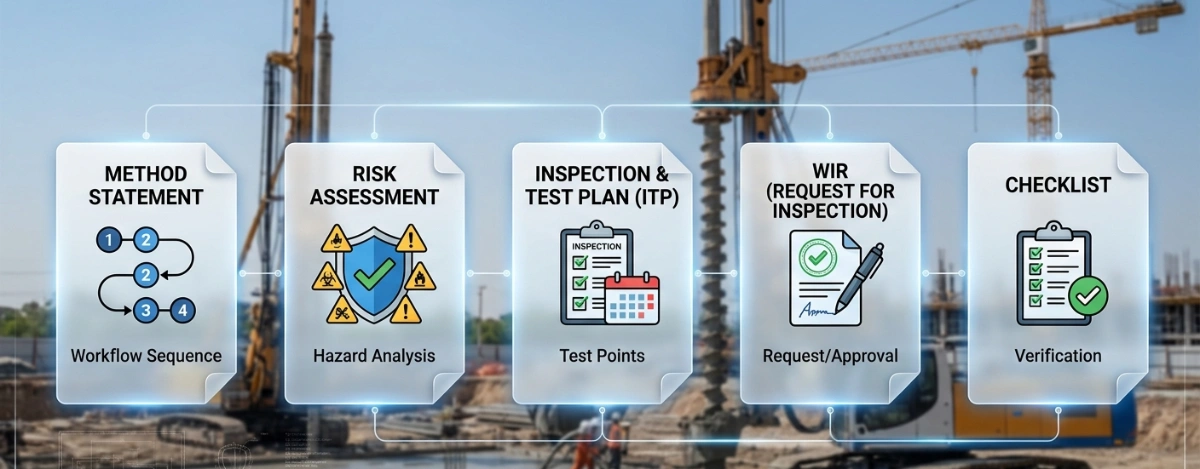
Unlike a downloadable Word or PDF template, this method statement is an AI-assisted editable starting point connected directly to a matching Inspection and Test Plan. Every section is structured, project-adaptable, and ready to export.
- AI-assisted drafting — Customize every section with AI for your specific project scope.
- Linked ITP — A matching inspection and test plan is generated alongside the method statement.
- Multiple export formats — Download as a formatted PDF or editable Excel spreadsheet.
- Editable starting point, not a final document — Review, verify, and adjust all content against your project requirements before use.
Static template vs. Quollnet workflow
| Feature | Static template | Quollnet |
|---|---|---|
| Project-specific content | Manual fill-in required | AI-assisted customization |
| Linked ITP | Separate document, no link | Matching ITP included |
| Export formats | Usually PDF only | PDF and Excel |
| Structured sections | Free-form layout | 13 standardized sections |
| Saved to your account | Local file only | Cloud-saved, reusable |
| Content accuracy | You verify everything | AI-assisted, you still verify |
| Cost | Often free but time-intensive | Free to customize and download |
What you can customize
When you save this method statement to your account, every section becomes editable. The following 13 sections are included:
- Scope — Defines the activity and its boundaries.
- References — Standards, specifications, and drawings.
- Responsibilities — Roles and accountabilities.
- Resources — Labour, plant, and equipment summary.
- Materials — Materials and compliance requirements.
- Equipment — Tools and equipment details.
- Prerequisites — Hold points and pre-conditions.
- Method sequence — Step-by-step construction sequence.
- Safety controls — HSE risk controls and PPE.
- Environmental controls — Environmental mitigation measures.
- QA/QC — Quality inspection and test requirements.
- ITP — Inspection and Test Plan table (has its own page).
- Attachments — Referenced drawings and documentation.
Why this method statement is used
This method statement is used to define and communicate the approved procedure for carrying out method statement — shallow isolated pad footing construction on site. It ensures the work is planned in advance, the correct resources and controls are in place, and all personnel understand responsibilities, sequence, quality requirements, and safety controls before work begins. It aligns site execution with the documented scope and acceptance expectations.
Who uses this method statement
This method statement is used by contractors, site supervisors, project engineers, QA/QC engineers, HSE officers, consultants, and client representatives. It serves as a shared reference for planning, execution, supervision, inspection, and approval of the activity on site.
When it is prepared and submitted
The method statement is prepared before the work activity starts and submitted as part of the pre-construction documentation package for review and approval.
Who reviews or approves it
The method statement is usually submitted to the client representative, consultant, resident engineer, or project management consultant for review and approval before the work commences.
Important approval note
This method statement is an AI-assisted editable starting point, not a pre-approved document. Before use on any project, all content must be reviewed and approved by the relevant parties (superintendent, principal contractor, or client representative) in accordance with your contract and project quality plan.
For example: if your specification requires a departure from a referenced standard, that departure must be documented and approved separately — this method statement will not capture that automatically. Always verify against your applicable drawings, specifications, and regulatory requirements.
Method statement content
Scope
Overview
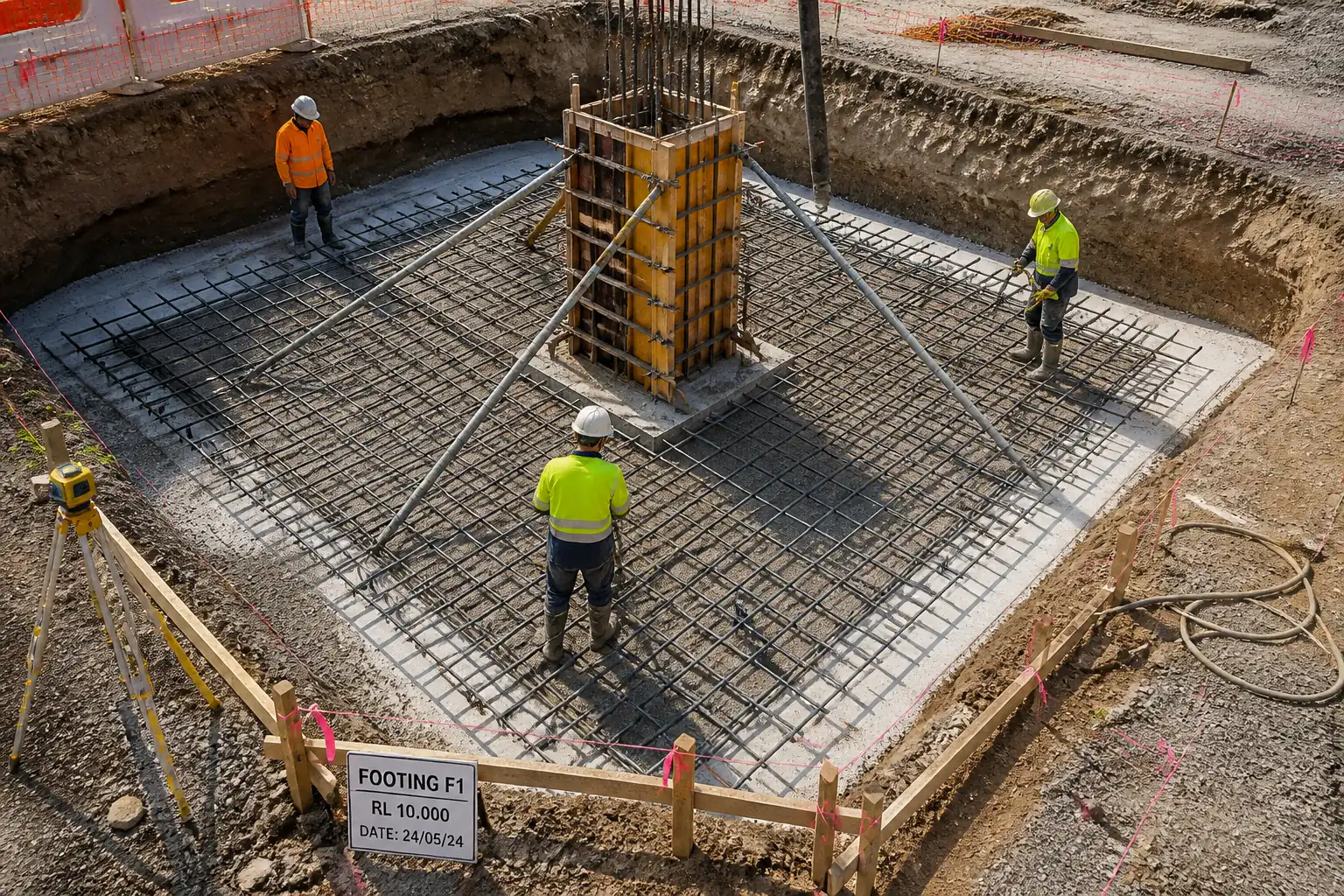
This method covers the end-to-end construction of shallow isolated pad footings and associated pedestals, including:
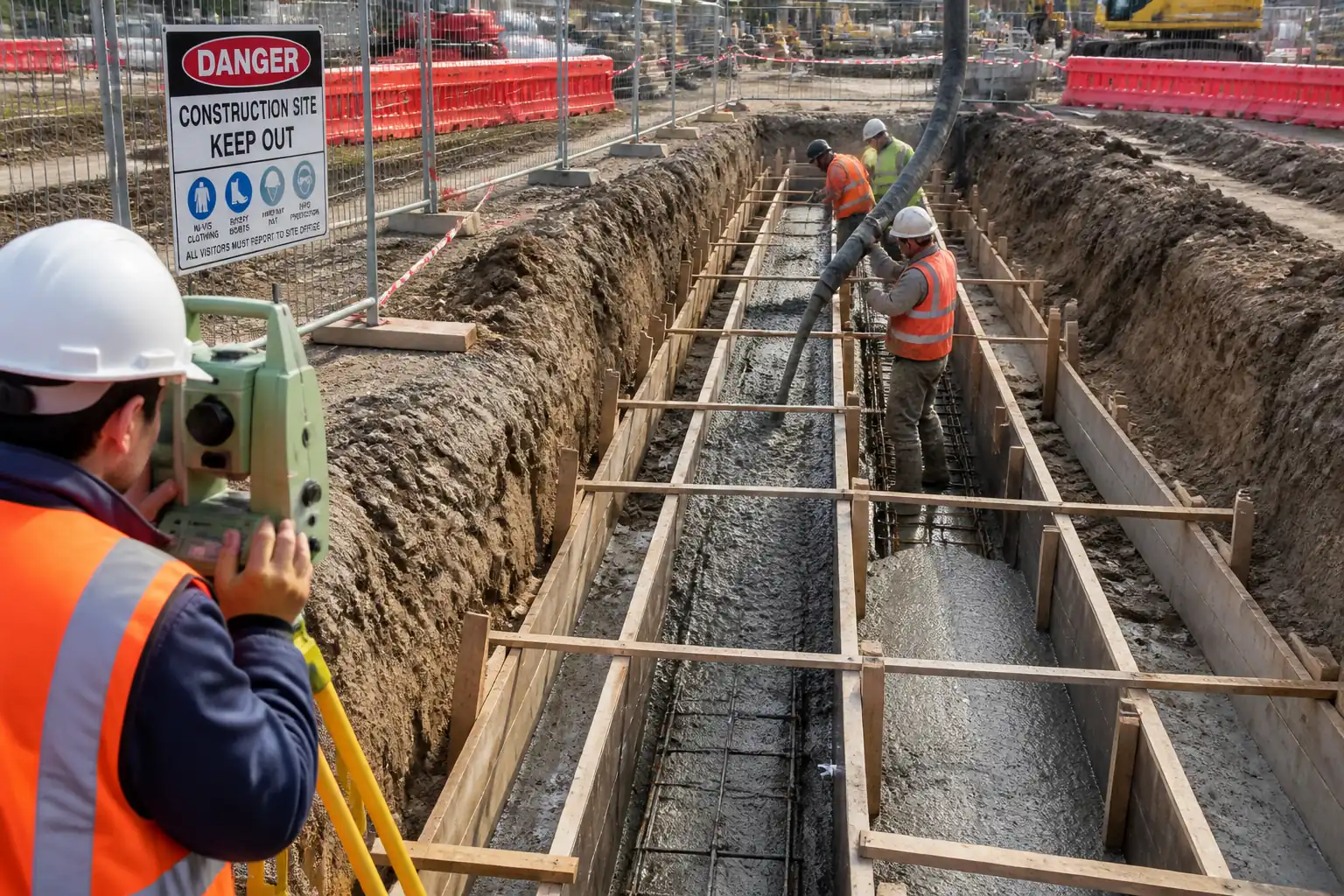
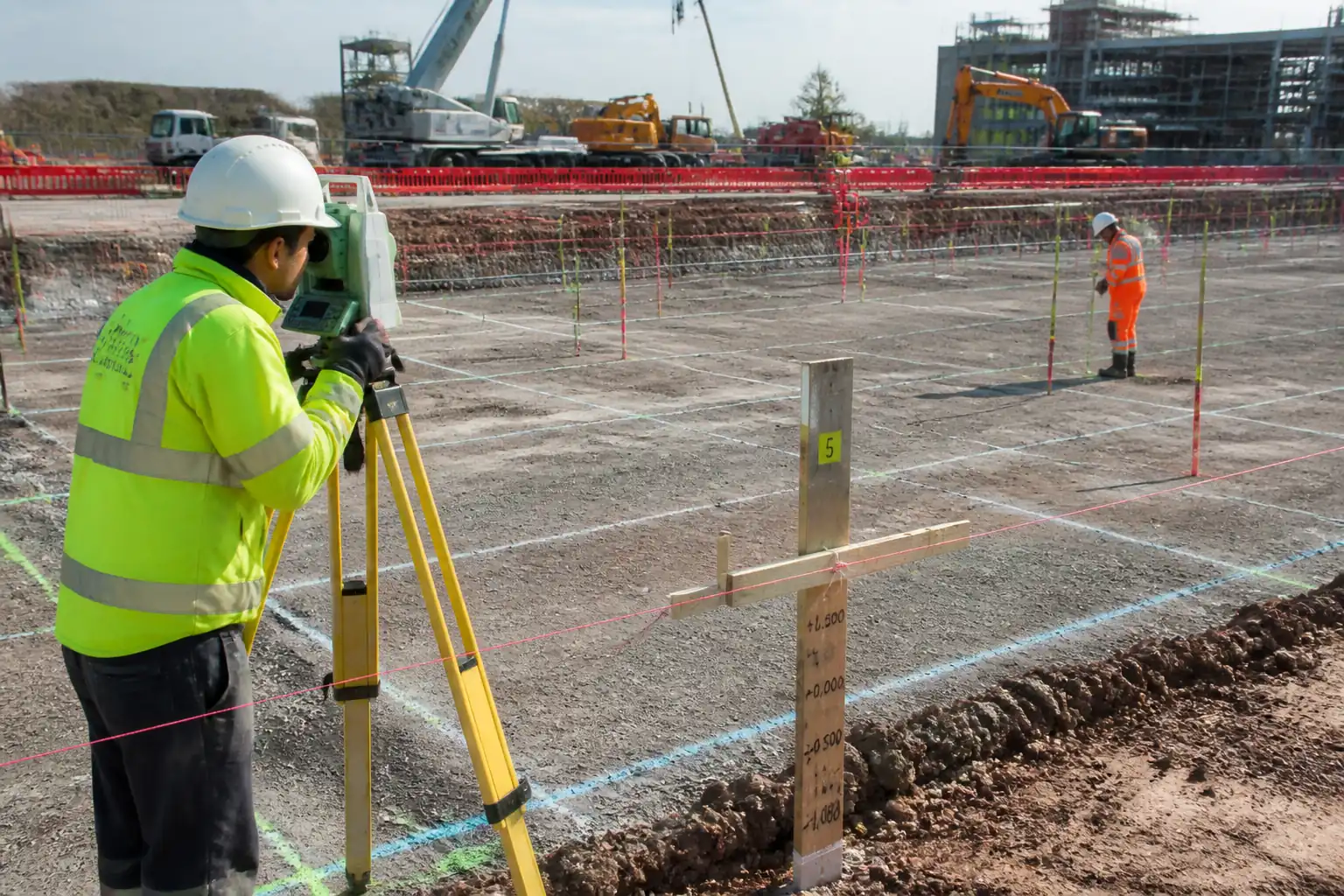
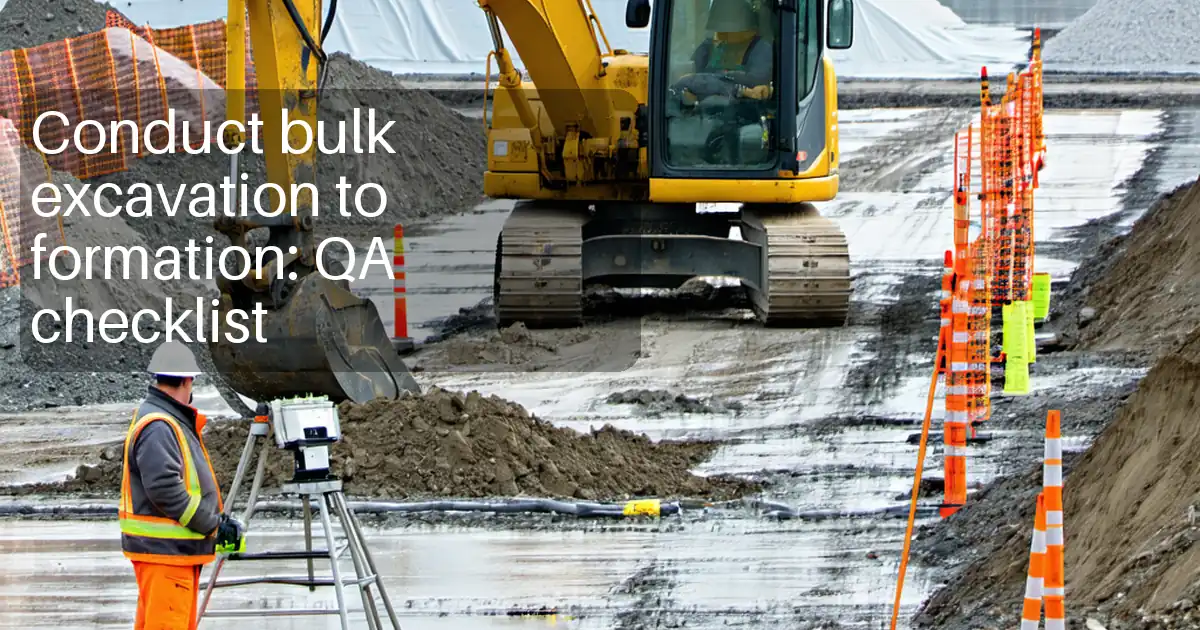
- Setting out and excavation to formation level
- Dewatering (as required) and formation preparation
- Blinding concrete placement and finishing
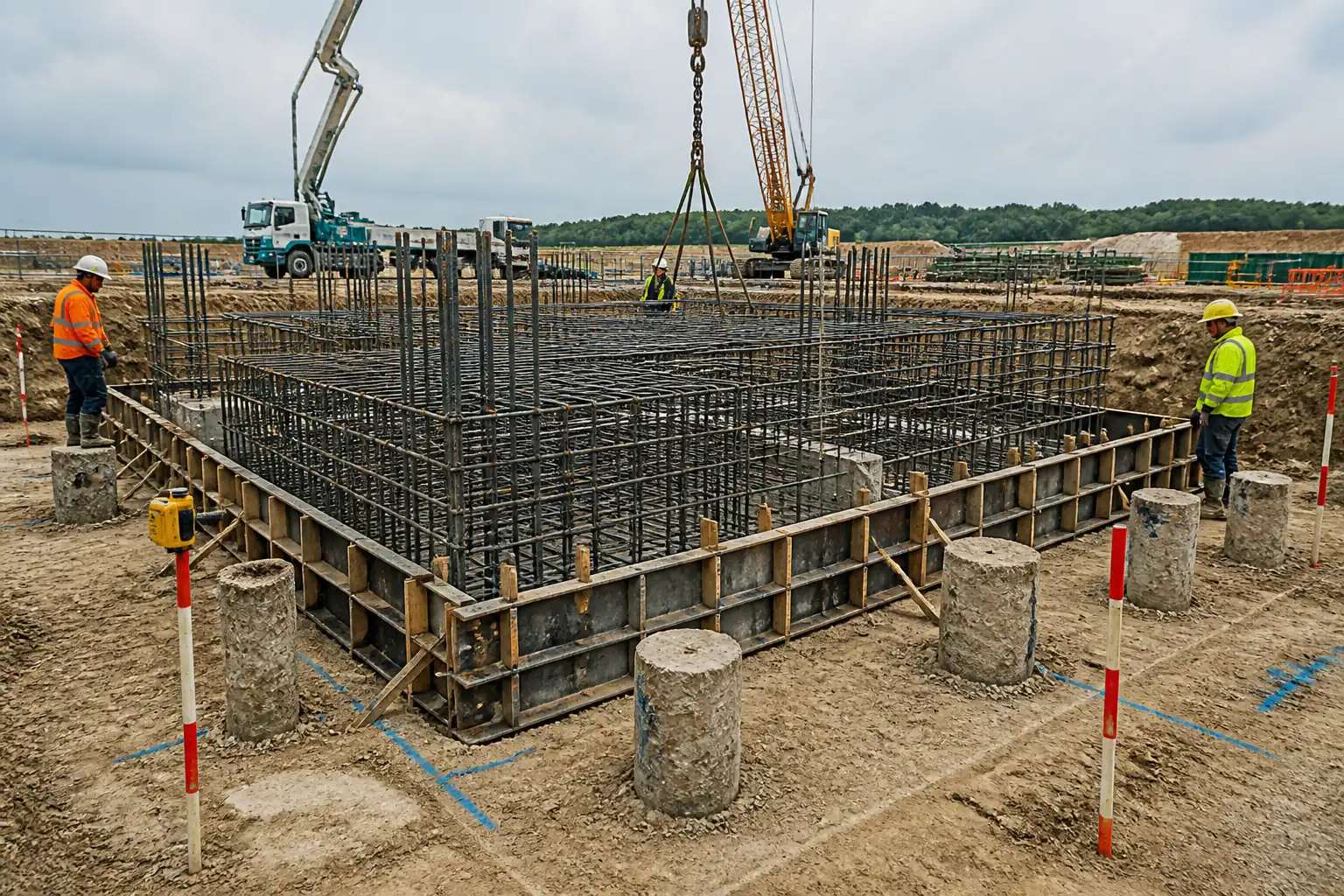
- Reinforcement bar (rebar) fixing, cover control, and inspection
- Formwork/shuttering for pad edges (if above formation) and pedestals
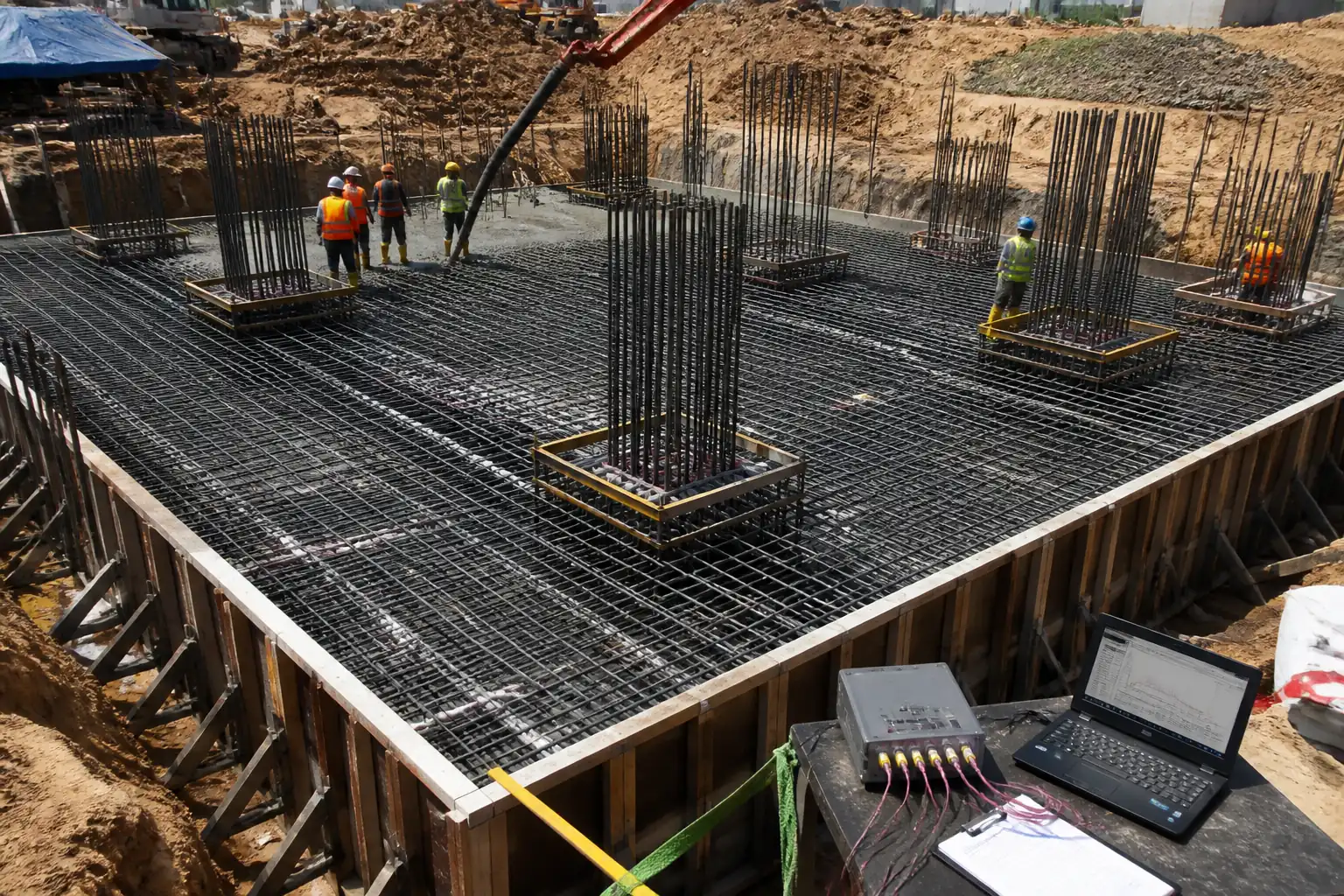
- Concrete receipt, placement, consolidation (vibration), finishing, and curing
- Backfilling and compaction around completed pedestals/footings
- Survey control and as-built records
Works will be executed in accordance with approved Issued for Construction (IFC) drawings, project specifications, and referenced international standards. Where project-specific values are not provided, benchmark values are proposed and marked [Verify per project specifications].
References
| Document Type | Reference / Number | Revision | Notes |
|---|---|---|---|
| Standard | BS 6031 | ||
| Standard | BS EN 13670 | ||
| Standard | BS EN 206 | ||
| Standard | ACI 117 | ||
| Standard | BS 8666 | ||
| Standard | ASTM A615 / BS 4449 | ||
| Standard | BS EN 12350 / 12390 | ||
| Standard | ASTM D698 / D6938 / BS 1377 | ||
| Standard | ACI 301 / ACI 347 | ||
| Standard | ASTM C309 |
Responsibilities
| Role | Responsibility | Name / Party |
|---|---|---|
| Project Manager | Ensure permits, approvals, and resources are in place. | Contractor |
| Construction Manager | Sequencing, productivity, and HSE enforcement. | Contractor |
| Site Engineer | Survey control, ITP compliance, checklists, and records. | Contractor |
| QA/QC Engineer | Sampling, testing, inspection requests, NCRs and CARs. | Contractor |
| HSE Officer | Toolbox talks, inspections, permits, incident management. | Contractor |
| Land Surveyor | Provide coordinates and levels; control checks. | Contractor |
| Foreman | Ensure compliance to method and safety controls. | Contractor |
| Geotechnical Engineer | Approve formation or remediation measures. | Consultant |
| Lab | Provide accredited test reports on time. | Independent |
Resources (Manpower)
| Resource Type | Description | Quantity | Remarks |
|---|---|---|---|
| Manpower | Formwork erection/striking | 2–4 [Verify per workfront] | |
| Manpower | Rebar fixing, couplers, cover control | 3–6 [Verify] | |
| Manpower | Placement, vibration, finishing, curing | 4–8 [Verify] | |
| Manpower | Excavator/roller/loader operation | 2–3 [Verify] | |
| Manpower | Vehicle/plant and lifting guidance | 1–2 [Verify] |
Materials
| Material | Specification / Grade | Quantity | Remarks |
|---|---|---|---|
| Concrete (blinding) | Slump S2–S3 (50–150 mm) [Verify] | As per drawings | |
| Concrete (structural) | Workability S3/S4; max w/c per exposure class [Verify] | As per drawings | |
| Rebar | Cut/bent per BS 8666; couplers per BS EN 1992-1-1 approvals [Verify] | As per BBS | |
| Formwork | Tight joints; adequate stiffness | As required | |
| Curing Compound | Type 1D or 2 [Verify] | 5–7 m²/L coverage [Verify] | |
| Selected Fill | 95% MDD (Std Proctor) target [Verify] | As per drawings | |
| Spacers | Compressively adequate; non-absorbent (for plastic) | As required |
Equipment & Plant
| Equipment | Capacity / Type | Quantity | Inspection Required |
|---|---|---|---|
| Excavator | 20–30 t [Verify] | 1–2 | Yes |
| Plate Compactor / Rammer | 15–25 kN [Verify] | 1–2 | Yes |
| Smooth drum / Padfoot | 2–8 t [Verify] | 1 | Yes |
| Concrete Pump | 35–50 m³/h [Verify] | As required | Yes |
| Vibrator (poker) | 25–50 mm head; 12,000–15,000 vpm | 2 (1 working + 1 standby) | Yes |
| Total Station/Level | 1 set | Yes | |
| Cutter/Bender | As required | Yes | |
| Hand tools | As required | Yes |
Prerequisites & Preparations
Approvals & Documentation
- Approved IFC drawings, rebar BBS, and this method statement/ITP.
- Material approvals: concrete mix designs, rebar mill certificates, formwork materials, curing compound datasheet [Verify per project submittal process].
- Permits to Work (excavation, lifting, concrete pour) and task-specific risk assessment [Verify per project HSE plan and local regulations].
- Underground utility clearance: latest utility drawings, GPR/EML scans, and trial pits where required.
- Calibration certificates for survey equipment, weighing scales, and lab apparatus.
Site Setup
- Establish benchmarks, gridlines, and reference datums. Set out pad corners with offsets and provide protection.
- Access/egress routes, exclusion zones, barriers, signage, and lighting.
- Dewatering plan and discharge consent if water ingress is anticipated; silt control measures ready.
- Concrete washout area lined and bunded (alkaline control).
Pre-Start Checks
- Pre-construction meeting and toolbox talk addressing specific hazards, sequence, hold/witness points.
- Plant/Equipment pre-start inspections; verify test tags and operators' competency.
- Verify formwork drawings for pedestals, embedment/anchor setting details; coordinate MEP sleeves if any.
- Confirm weather forecast, ambient temperature limits, and curing provisions (e.g., windbreaks, curing compound stock).
- Ensure standby vibrator available and power supply compatible (or petrol units).
- Issue Inspection Request (IR) scheduling for hold/witness points.
Method Sequence
| Step | Activity | Description | Responsibility | Inspection / Hold Point |
|---|---|---|---|---|
| 1 | Setting Out & Survey Control | Survey and mark pad locations/levels using total station; provide offset stakes and nail marks; protect with barriers. | Surveyor / Site Engineer | Check against grid and benchmarks |
| 2 | Excavation to Formation Level | Excavate to required plan/level; side slopes or shoring as required; segregate topsoil/waste; avoid over-excavation. | Foreman / Operator | Visual; formation probing |
| 3 | Dewatering (if required) | Pump out seepage; maintain dry formation; route water through silt bag/tank. | Site Engineer | Check turbidity and flow path |
| 4 | Formation Approval | Engineer/Geotechnical review; proof-rolling/light compaction; remediate soft spots by undercut and replacement. | Site/Geotechnical Engineer | Witness point |
| 5 | Blinding Concrete Placement | Place 50 mm nominal lean concrete; strike to level; broom finish to provide key; cure to permit rebar access. | Concrete Crew | Slump/temp at truck; surface finish check |
| 6 | Reinforcement Fixing | Fix bottom/top mats, laps/couplers, and chairs/spacers; maintain cover; tag bars to BBS; secure against flotation. | Steel Fixers | Hold point prior to formwork/pour |
| 7 | Formwork/Shuttering (Pad Edges as Needed) | Install side forms if pad above formation; ensure rigidity, alignment, tight joints; apply release agent; provide access. | Carpenters | Dimensional/plumb check |
| 8 | Pedestal Formwork & Starters | Erect pedestal forms; fix starter bars/anchors per template; brace to resist pour pressures. | Carpenters/Steel Fixers | Hold point prior to concrete |
| 9 | Pre-Pour Inspection & Pour Card | Joint inspection of rebar, forms, cleanliness, access, lighting, pour sequence; sign pour card. | Site Engineer / QA/QC / Consultant | Hold point |
| 10 | Concrete Receipt & Tests | Receive concrete with valid delivery ticket; verify mix ID, time, slump, temp; make specimens. | QA/QC | Witness slump/air/temp |
| 11 | Placement & Vibration | Place in layers ≤300–400 mm; vibrate with poker (head 25–50 mm) to refusal; avoid rebar/form contact; maintain continuity. | Concrete Crew | Supervision; segregation watch |
| 12 | Finishing & Curing | Strike off; apply curing compound uniformly at ~5 m²/L [Verify] or commence wet curing for ≥7 days [Verify]; protect edges. | Concrete Crew | Curing application check |
| 13 | Formwork Striking (Pad/Pedestal) | Strike when concrete achieves adequate strength; avoid damage to arises; repair minor defects as per procedure. | Carpenters | Surface check |
| 14 | Backfilling Around Footings/Pedestals | Commence after concrete attains ≥70% fck [Verify]; place selected fill in 200–300 mm layers; compact to 95% MDD (Std Proctor) [Verify]; use light compaction within 0.5 m of pedestal. | Foreman / Operator | Witness density tests |
| 15 | As-Built Survey & Handover | Survey final top-of-footing/pedestal levels and coordinates; compile QA dossier and redlines. | Surveyor / QA/QC | Document review |
Health & Safety Controls
Task-Specific Hazards and Controls
- Hazard: Underground utility strike during excavation
- Consequence: Electrocution, gas release, flooding, service outage
- Engineering/Procedural Control: Utility survey (GPR/EML), review latest utility drawings, permit to dig, trial holes by hand, exclusion zones
- Required PPE: Dielectric gloves (if applicable), safety boots, hard hat, hi-vis, eye protection
- Collective Measure: Barriers and spotter/banksman; plant/people segregation
-
Inspection/Permit/Supervision: Excavation PTW; daily briefing; supervision by Site Engineer; stop work if uncharted services found [Verify per project HSE plan and local regulations]
-
Hazard: Excavation collapse/fall into excavation
- Consequence: Burial, serious injury, falls
- Engineering/Procedural Control: Slope or shore to design; keep surcharge >1 m from edge; safe access ladders; edge protection
- Required PPE: Helmets, boots with ankle support, gloves
- Collective Measure: Guardrails or demarcation; trench boxes where required
-
Inspection/Permit/Supervision: Daily trench inspection; competent person sign-off; permit for confined excavation where applicable
-
Hazard: Plant–people interface (excavator, dumpers, rollers)
- Consequence: Struck-by, crush injuries
- Engineering/Procedural Control: One-way routes, banksman, reversing alarms, spotters; exclusion zones 360° around plant
- Required PPE: Hi-vis, helmet, boots
- Collective Measure: Physical barriers and marshals
-
Inspection/Permit/Supervision: Plant inspection checklists; operator competency cards; traffic management plan
-
Hazard: Lifting of rebar bundles/formwork panels
- Consequence: Dropped loads, caught-between
- Engineering/Procedural Control: Certified lifting gear, rigging plan, tag lines, no-go zones under loads
- Required PPE: Helmets with chin strap, gloves, eye protection, boots
- Collective Measure: Crane/pick-and-carry permits; banksman
-
Inspection/Permit/Supervision: Lifting plan approval; gear inspection; appointed person supervision
-
Hazard: Rebar impalement/exposed bar ends
- Consequence: Puncture/impalement injuries
- Engineering/Procedural Control: Install mushroom caps or timber protection on all exposed vertical bars
- Required PPE: Gloves, eye protection
- Collective Measure: Edge protection, signage
-
Inspection/Permit/Supervision: Daily foreman inspection; rectify immediately
-
Hazard: Wet concrete exposure (alkaline burns)
- Consequence: Skin/eye burns, dermatitis
- Engineering/Procedural Control: Provide barrier creams, wash stations; avoid direct contact; use proper placement tools
- Required PPE: Alkali-resistant gloves, long sleeves, goggles/face shield, rubber boots
- Collective Measure: Concrete washout station; emergency eyewash
-
Inspection/Permit/Supervision: SDS available; toolbox talk; HSE monitoring
-
Hazard: Vibration and noise from compactors/vibrators
- Consequence: HAVS, hearing damage
- Engineering/Procedural Control: Tool selection with low HAVS, rotation, trigger-time logging
- Required PPE: Hearing protection, anti-vibration gloves
- Collective Measure: Noise barriers where feasible
-
Inspection/Permit/Supervision: HAVS records; equipment maintenance
-
Hazard: Working near edges/uneven ground and slips/trips
- Consequence: Sprains/fractures
- Engineering/Procedural Control: Good housekeeping, level access, mats over rebar
- Required PPE: Boots with slip-resistant soles
- Collective Measure: Walkways and lighting
-
Inspection/Permit/Supervision: Daily housekeeping inspection
-
Hazard: Concrete pump line failure/pressure burst
- Consequence: Struck-by, concrete spray
- Engineering/Procedural Control: Secure lines, inspect clamps/gaskets, pressure test per supplier guidance, maintain clear escape routes
- Required PPE: Eye/face protection, gloves, long sleeves
- Collective Measure: Exclusion zone around line bends
-
Inspection/Permit/Supervision: Pump inspection certificate; operator competency
-
Hazard: Manual handling of formwork and rebar
- Consequence: Strains/musculoskeletal injuries
- Engineering/Procedural Control: Team lifts, mechanical aids, weight limits
- Required PPE: Gloves, supportive footwear
- Collective Measure: Use of trolleys/fork attachments
- Inspection/Permit/Supervision: Manual handling training records
Note: All measures to be aligned with the project HSE plan and local regulations; escalate any deviation or unexpected condition immediately.
Environmental Controls
Controls and Monitoring
- Sediment Control: Use silt fences, straw bales, or settlement tanks for dewatering discharge. Inspect after rainfall. Keep discharge within permitted turbidity limits [Verify per permit].
- Concrete Washout: Provide lined, bunded washout pit; collect and dispose of solids via licensed waste contractor; do not discharge alkaline water to ground/surface drains.
- Noise: Limit high-noise operations to approved hours; maintain equipment; deploy temporary barriers near receptors [Verify].
- Dust: Water spray during excavation/backfilling in dry conditions; cover stockpiles and trucks; wheel-wash at site exit.
- Waste Management: Segregate timber, steel offcuts, concrete waste; maintain waste transfer notes; reuse excavated material if compliant.
- Spill Prevention: Store fuels/chemicals in bunded areas; spill kits at pumps and plant refueling points; immediate containment and reporting.
- Biodiversity/Archaeology (if applicable): Stop work and notify if sensitive finds encountered.
- Materials Efficiency: Optimize batch sizes to reduce waste; return unused concrete within allowable time or use pre-approved reuse options.
- Monitoring & Records: Maintain dewatering logs, waste manifests, noise/dust monitoring records as required by EMP.
Quality Assurance / Quality Control
General
- Comply with ITP hold/witness points. Submit Inspection Requests (IRs) minimum 24 hours prior.
- Use only approved materials with current certificates.
Testing & Frequencies [Verify per project specifications]
- Concrete workability (slump): each truck; temperature: each truck; air content (if specified): each truck.
- Concrete strength: 1 set of cubes/cylinders per 50 m³ (minimum 1 set per pour/day). Cure and test to BS EN 12390 or ASTM C39.
- Backfill compaction: In-situ density 1 test per 250 m² per layer or as specified.
- Rebar: Visual check of grade/heat numbers; coupler installation checks 100% where used.
Tolerances and Acceptance
- Setting out: plan ±10 mm; level ±5 mm [Verify].
- Formation: level ±10 mm; firm, no soft spots.
- Blinding: thickness 50±10 mm; level ±10 mm.
- Rebar: spacing ±10 mm; cover 50–75 mm as specified, tolerance −10/+10 mm [Verify]; laps per design/code.
- Formwork/pedestal: plan ±10 mm; verticality ±5 mm per 3 m; no grout loss; arises intact.
- Concrete finish: top level ±10 mm; surface free of honeycombing and laitance; defects repaired per approved method.
Documentation
- Maintain pour cards, checklists, IRs, calibration certs, delivery tickets, test reports, as-built surveys, and NCR/CAR where applicable.
Nonconformance & Corrective Actions
- Identify, record NCR; agree rectification with Engineer (e.g., grout repair, epoxy mortar, surface grinding) and re-inspect before proceeding.
Hold & Witness Points (typical)
- HP1: Formation approval
- HP2: Rebar and formwork inspection
- HP3: Pre-pour inspection and pour release
- WP1: Concrete tests during pour
- WP2: Backfill compaction tests
Attachments
- Sample checklists: Excavation/Formation ITR; Rebar & Formwork ITR; Pre-Pour Checklist; Backfill Compaction ITR
- Typical pour card template
- Curing log template
- Manufacturer datasheets: curing compound, form release agent, couplers (if used)
- Calibration certificates (survey equipment, vibrators PAT, nuclear gauge if used)
- Approved mix design summary and BBS extracts
- Traffic management plan and lifting plan extracts
- Emergency response plan (contact list, nearest medical facility)
Note: Replace templates with project-specific approved forms and registers.
This content is a read-only public reference. Download or customize to get an editable version.
ITP preview
The first inspection activities from the linked ITP for Method Statement — Shallow Isolated Pad Footing Construction:
| Activity | Inspection / Test | Acceptance Criteria | Responsibility | Record |
|---|---|---|---|---|
| Setting Out | Level and coordinate checks | Plan ±10 mm; level ±5 mm [Verify] | Site Engineer / Surveyor | Survey report; ITR-SO-01 |
| Excavation to Formation | Visual/level checks; formation probe | Level ±10 mm; bearing stratum approved; dry/clean | Site Engineer / Geotechnical (as req.) | ITR-EX-01; photos |
| Dewatering (if any) | Discharge quality checks (turbidity/pH) [Verify] | No standing water; compliant discharge | Site Engineer | Dewatering log; ITR-DW-01 |
Showing 3 of 13 inspection activities. View full ITP →
Related Inspection and Test Plan
An Inspection and Test Plan (ITP) is available for Method Statement — Shallow Isolated Pad Footing Construction. The ITP defines the inspection activities, acceptance criteria, hold and witness points, responsible parties, and records required to verify the work described in this method statement.
View the Method Statement — Shallow Isolated Pad Footing Construction ITP →Frequently asked questions
Continue with related Quollnet resources connected to this method statement.