
Method Statement – Installation of Street Lighting Columns, Foundations, Wiring, Earthing, and Lux-Level Verification – Method Statement
AI-assisted method statement with matching ITP, PDF download, and Excel export.
More than a static template
Unlike a downloadable Word or PDF template, this method statement is an AI-assisted editable starting point connected directly to a matching Inspection and Test Plan. Every section is structured, project-adaptable, and ready to export.
- AI-assisted drafting — Customize every section with AI for your specific project scope.
- Linked ITP — A matching inspection and test plan is generated alongside the method statement.
- Multiple export formats — Download as a formatted PDF or editable Excel spreadsheet.
- Editable starting point, not a final document — Review, verify, and adjust all content against your project requirements before use.
Static template vs. Quollnet workflow
| Feature | Static template | Quollnet |
|---|---|---|
| Project-specific content | Manual fill-in required | AI-assisted customization |
| Linked ITP | Separate document, no link | Matching ITP included |
| Export formats | Usually PDF only | PDF and Excel |
| Structured sections | Free-form layout | 13 standardized sections |
| Saved to your account | Local file only | Cloud-saved, reusable |
| Content accuracy | You verify everything | AI-assisted, you still verify |
| Cost | Often free but time-intensive | Free to customize and download |
What you can customize
When you save this method statement to your account, every section becomes editable. The following 13 sections are included:
- Scope — Defines the activity and its boundaries.
- References — Standards, specifications, and drawings.
- Responsibilities — Roles and accountabilities.
- Resources — Labour, plant, and equipment summary.
- Materials — Materials and compliance requirements.
- Equipment — Tools and equipment details.
- Prerequisites — Hold points and pre-conditions.
- Method sequence — Step-by-step construction sequence.
- Safety controls — HSE risk controls and PPE.
- Environmental controls — Environmental mitigation measures.
- QA/QC — Quality inspection and test requirements.
- ITP — Inspection and Test Plan table (has its own page).
- Attachments — Referenced drawings and documentation.
Why this method statement is used
This method statement is used to define and communicate the approved procedure for carrying out method statement – installation of street lighting columns, foundations, wiring, earthing, and lux-level verification on site. It ensures the work is planned in advance, the correct resources and controls are in place, and all personnel understand responsibilities, sequence, quality requirements, and safety controls before work begins. It aligns site execution with the documented scope and acceptance expectations.
Who uses this method statement
This method statement is used by contractors, site supervisors, project engineers, QA/QC engineers, HSE officers, consultants, and client representatives. It serves as a shared reference for planning, execution, supervision, inspection, and approval of the activity on site.
When it is prepared and submitted
The method statement is prepared before the work activity starts and submitted as part of the pre-construction documentation package for review and approval.
Who reviews or approves it
The method statement is usually submitted to the client representative, consultant, resident engineer, or project management consultant for review and approval before the work commences.
Important approval note
This method statement is an AI-assisted editable starting point, not a pre-approved document. Before use on any project, all content must be reviewed and approved by the relevant parties (superintendent, principal contractor, or client representative) in accordance with your contract and project quality plan.
For example: if your specification requires a departure from a referenced standard, that departure must be documented and approved separately — this method statement will not capture that automatically. Always verify against your applicable drawings, specifications, and regulatory requirements.
Method statement content
Scope
Overview
This method statement covers all activities for the installation of street lighting columns and associated works, including:
- Permit-to-dig, utility clearance, and traffic management setup.
- Setting out, foundation excavation, formwork (if required), reinforcement and anchor bolt cage placement, conduits/ducts, and earthing electrode installation.
- Concrete placement, compaction, finishing, and curing.
- Backfilling and surface reinstatement.
- Column delivery, lifting and erection, alignment, and torqueing of anchor nuts.
- Luminaire and bracket installation, photocell/CMS node fitment, wiring, terminations, earthing, labeling.
- Pre-commissioning electrical tests, energization coordination, and functional checks.
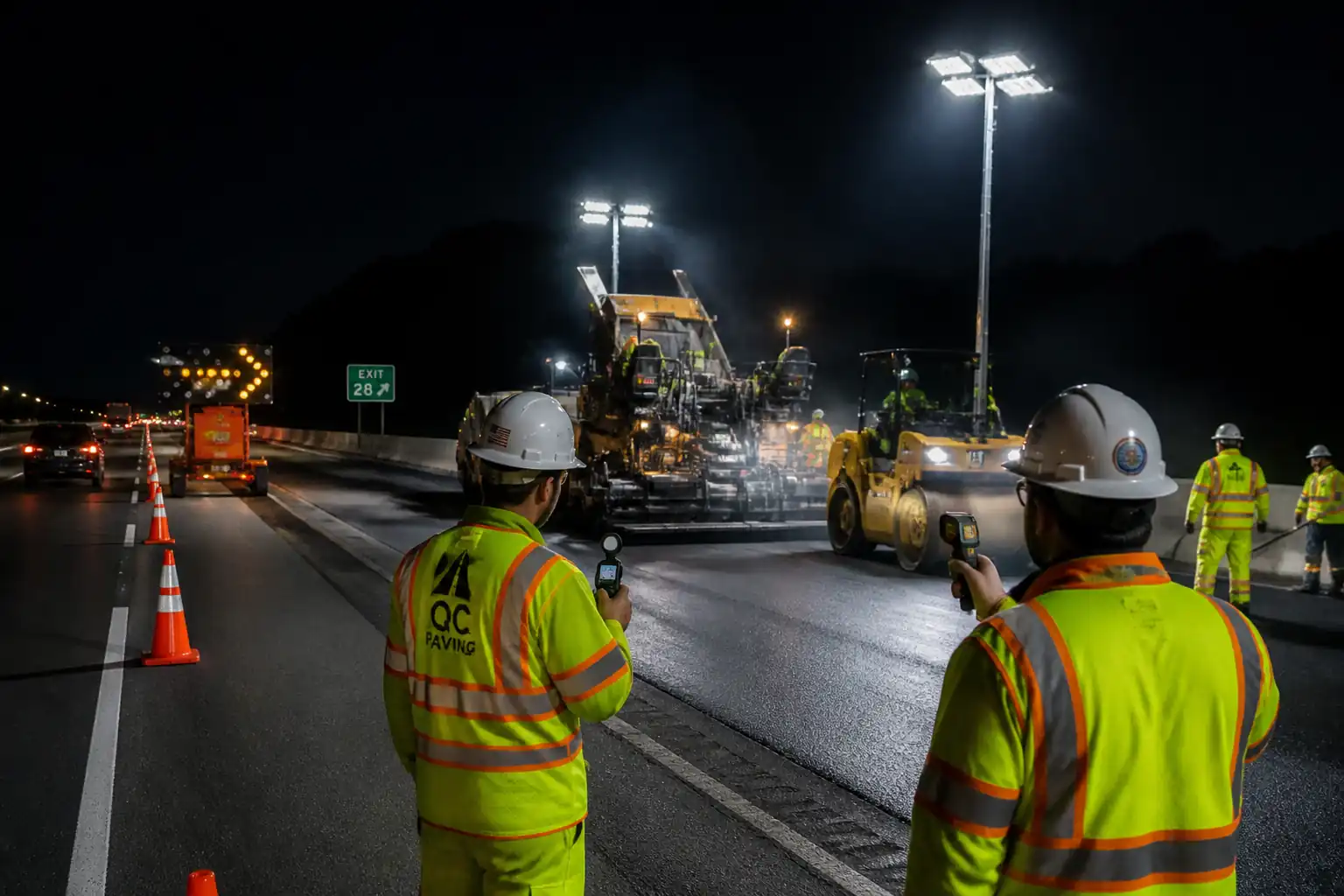
- Night-time illuminance or luminance verification per EN 13201.
Exclusions
- Upstream LV feeder modifications by the utility/DNO unless stated.
- Trench excavation beyond the immediate column foundation, unless otherwise specified.
- Permanent road marking and major civil reconstruction (beyond reinstatement of disturbed areas).
Location
- As per Issued for Construction (IFC) drawings and setting-out data for .
References
| Document Type | Reference / Number | Revision | Notes |
|---|---|---|---|
| EN 13201 (all parts) – Road lighting (design, performance, measurement, energy) [Verify applicable parts] | |||
| BS EN 40 – Lighting columns | |||
| IEC 60364 / BS 7671 (IET Wiring Regulations) – LV electrical installations [Project to confirm edition] | |||
| IEC 60598 – Luminaires; EN 13032 – Light and lighting – Measurement and presentation of photometric data | |||
| EN 206 / BS 8500 or ACI 318/ACI 301 – Concrete specification and construction [Verify per project] | |||
| BS 4449 – Steel for reinforcement; BS 8666 – Scheduling and bending | |||
| ISO 898-1 (mechanical properties), ISO 4014/4017 bolts, ISO 4032 nuts, ISO 7093 washers; ISO 10684 hot-dip galvanizing | |||
| IEC 60364-5-54 – Earthing arrangements; IEEE Std 81 – Guide for measuring earth resistance [Verify per project] | |||
| Manual on Uniform Traffic Control Devices (MUTCD) or local traffic code; BS 6031 – Code of practice for earthworks; Temporary Works (BS 5975) [Verify per jurisdiction] | |||
| BS 1377 – Compaction testing; ASTM D698/D1557 – Proctor density (equivalent) [Verify per project] |
Responsibilities
| Role | Responsibility | Name / Party |
|---|---|---|
| PM | Project Manager | Contractor |
| SE | Site Engineer | Contractor |
| HSE | HSE Manager | Contractor |
| Surveyor | Land Surveyor | Contractor |
| LE | Licensed Electrician/Commissioning Engineer | Contractor |
| QA/QC | QA/QC Engineer | Contractor |
| Lift Supv | Lifting Supervisor/Appointed Person | Contractor |
| Client Rep | Engineer/Client Representative | Employer/Engineer |
Resources
| Resource Type | Description | Quantity | Remarks |
|---|---|---|---|
| Manpower | Civil gang (2–4) for excavation, rebar, formwork. | 1 crew | Adjust for production rate |
| Manpower | Electrical team (2–3) for wiring, terminations, testing. | 1 team | |
| Manpower | Site Engineer, HSE Officer, Lifting Supervisor. | As required | |
| Manpower | Land Surveyor and assistant. | 1 team |
Materials
| Material | Specification / Grade | Quantity | Remarks |
|---|---|---|---|
| Concrete | EN 206/BS 8500 or ACI 318 compliant [Verify] | Per drawing | |
| Rebar | BS 4449 Grade B500B/B500C [Verify] | Per BBS | |
| Bolts/Nuts/Washers | ISO 898-1 Grade 8.8; ISO 10684 galvanizing [Verify] | Per foundation | |
| Lighting Column | BS EN 40 compliant | As per BOQ | |
| Luminaire Assembly | IEC 60598; EN 60529 IP rating; photometry per EN 13032 | As per BOQ | |
| Cables | XLPE/SWA/PVC 0.6/1 kV; internal H07RN-F or equivalent [Verify] | As required | |
| Earthing Materials | IEC 60364-5-54 compliant | Per column | |
| Ducts | HDPE SN rating per project; color coding per utility [Verify] | As required | |
| Consumables | IP66/IP68 glands; tinned copper lugs; halogen-free labels [Verify] | As required |
Equipment
| Equipment | Capacity / Type | Quantity | Inspection Required |
|---|---|---|---|
| Excavator | 5–12 t [Verify] | Daily pre-use check | |
| Compactors | 50–100 kg | Daily pre-use check | |
| Survey instruments | Calibration in date | ||
| Hiab/Crane | 5–12 t·m [Verify] | LOLER/third-party certificate | |
| MEWP | Working height 10–20 m | Thorough exam in date | |
| Concrete equipment | Cleanliness/calibration as applicable | ||
| Electrical test gear | Calibration in date | ||
| Lux meter / Luminance camera | Calibration in date | ||
| CAT & Genny / GPR | Function check daily |
Prerequisites
- Approved IFC drawings, column schedules, foundation details, and lighting design report.
- Approved ITP, risk assessment/TRA, method statement, lifting plan, and traffic management plan.
- Permit-to-dig and utility NOCs; latest utility maps; pre-excavation scan with CAT & Genny and, where required, GPR. [Verify per project HSE plan and local regulations]
- Approved concrete mix design, material submittals (columns, luminaires, bolts, cables, ducts, earthing), and manufacturer data sheets.
- Calibrations in date for torque wrenches, survey instruments, electrical testers, lux meter.
- Competency and certifications: Licensed Electrician, Lifting Supervisor/Appointed Person, crane/Hiab operator, banksman, MEWP operator, traffic marshals.
- Weather check: no lifting above specified wind speed (typically ≤9 m/s), no concrete pour during heavy rain uncontrolled, temperature controls per spec. [Verify]
- Temporary works design for excavation support/formwork where required.
- Coordination with DNO/utility for isolation/energization, switching schedules, and permits.
- Site access, laydown area, and protection of public/pedestrians.
- Pre-start briefing and toolbox talk addressing specific hazards and controls.
Method Sequence
| Step | Activity | Description | Responsibility | Inspection / Hold Point |
|---|---|---|---|---|
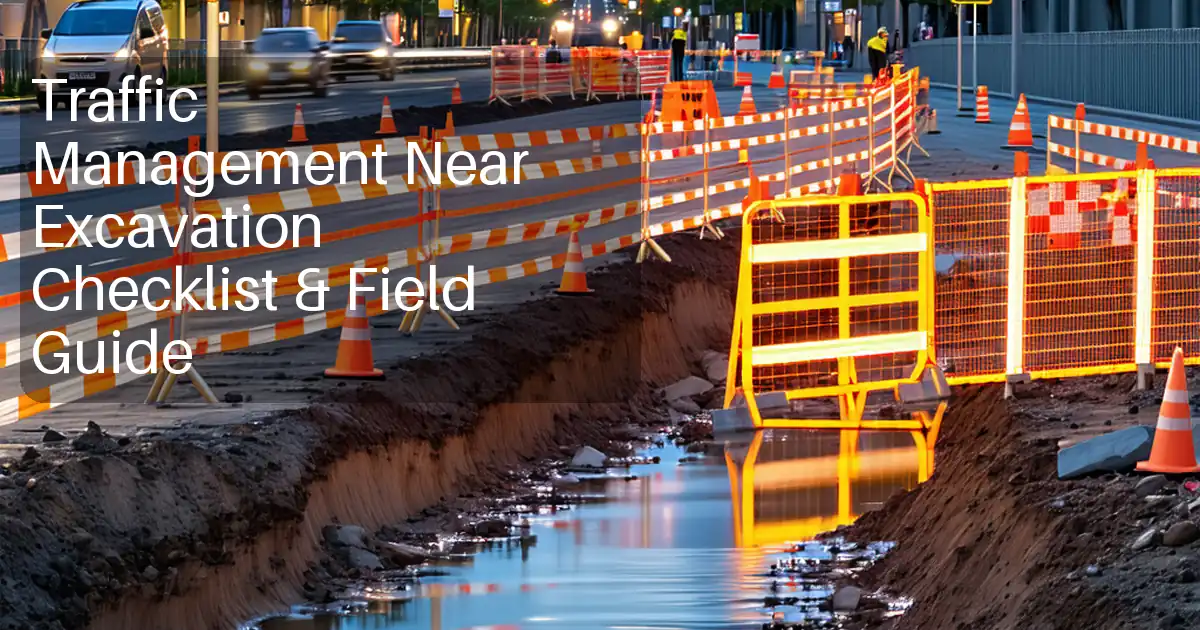
| 1 | Traffic management and site establishment | Install signage, cones, barriers, and pedestrian diversions per approved traffic plan. Establish exclusion zones and laydown area. | Site Engineer / Traffic Supervisor | HSE walkthrough |
| 2 | Utility detection and permit-to-dig | Review utility drawings; scan area with CAT & Genny (and GPR if specified). Mark utilities. Obtain signed PTW. | Site Engineer / HSE | Utility marks verified |
| 3 | Setting out | Set out foundation center, orientation (door orientation as per design), and levels using total station. | Surveyor | Witness point |
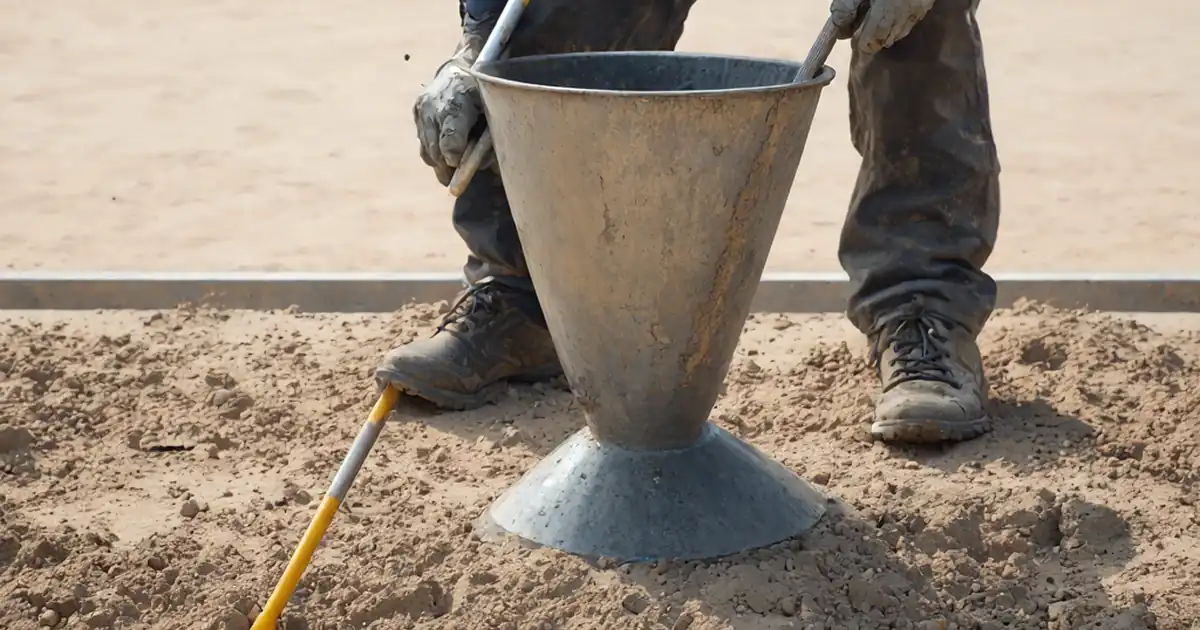
| 4 | Excavation | Excavate to foundation size/depth per drawings. Provide shoring/benching as needed. Manage groundwater if encountered. | Foreman / Site Engineer | Hold point before blinding |
| 5 | Formation preparation | Trim formation; proof-roll; compact subgrade; place blinding (50–75 mm) if specified. | Site Engineer | Hold point |
| 6 | Ducts and earthing provisions | Install ducts, draw rope, bends, and markers. Drive/assemble earth rod and bond to rebar (where specified) and to column earth bar via earth conductor. | Electrician / Site Engineer | Witness point |
| 7 | Reinforcement and anchor bolt cage | Fix reinforcement per BBS. Position anchor bolt cage using template; ensure bolt projection, circle, plumb, and level; secure against float or movement during pour. Set door/orientation marks. | Site Engineer / QA/QC | Hold point pre-pour |
| 8 | Concrete placement | Receive concrete with delivery tickets. Check slump and temperature. Place in layers ≤300 mm, vibrate to full compaction, avoid displacing bolts. Finish top surface to level and texture as specified. Protect ducts and earthing leads. | Foreman / QA/QC | Witness tests |
| 9 | Curing and early-age protection | Maintain curing regime (min 3–7 days depending on class and exposure). Protect from load/vibration. | Site Engineer | Routine |
| 10 | Backfilling and reinstatement | After concrete gains required strength (e.g., 75% fck [Verify]), backfill in layers ≤200 mm, compact to specified density. Reinstate surface finishes. | Foreman / QA/QC | Witness compaction tests |
| 11 | Column delivery and inspection | Inspect columns and accessories for damage, coating, and ID tags. Store on padded supports. | QA/QC | Incoming material inspection |
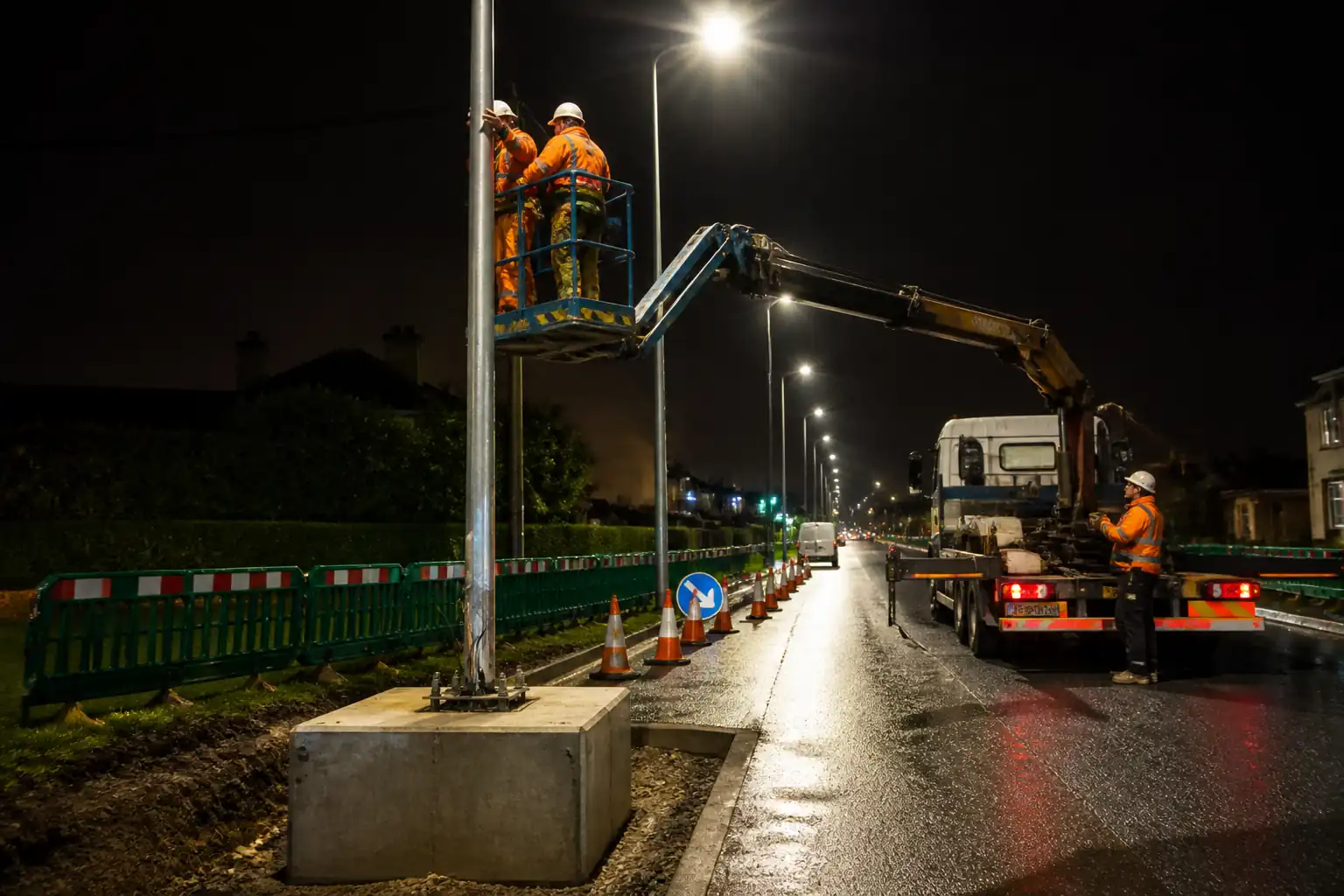
| 12 | Column erection (lifting) | Attach certified slings at designated lifting points. Lift and set column onto foundation; install washers and nuts; plumb column using leveling nuts and shims. | Lifting Supervisor / Foreman | Witness |
| 13 | Alignment and torqueing | Align door orientation and outreach per design. Tighten nuts in star pattern with calibrated torque wrench. | Site Engineer / QA/QC | Survey plumbness |
| 14 | Luminaire and bracket installation | Mount bracket and luminaire; set tilt as per design; install photocell/CMS node. Ensure correct IP-rated glands and drip loops. | Electrician | Visual |
| 15 | Wiring and terminations | Pull in cables via ducts; terminate at cut-outs, fuses, and in luminaire; bond earths; label circuits and column IDs. | Electrician | Witness |
| 16 | Pre-commissioning electrical tests | Perform dead tests: continuity of CPC, insulation resistance at 500 V DC, polarity; earth electrode resistance (3-point or clamp). | Electrician / QA/QC | Hold point before energization |
| 17 | Energization and functional check | Coordinate with DNO/utility for safe energization. Verify switching, photocell/CMS operation, luminaire function. | Electrician / Client Rep | Witness point |
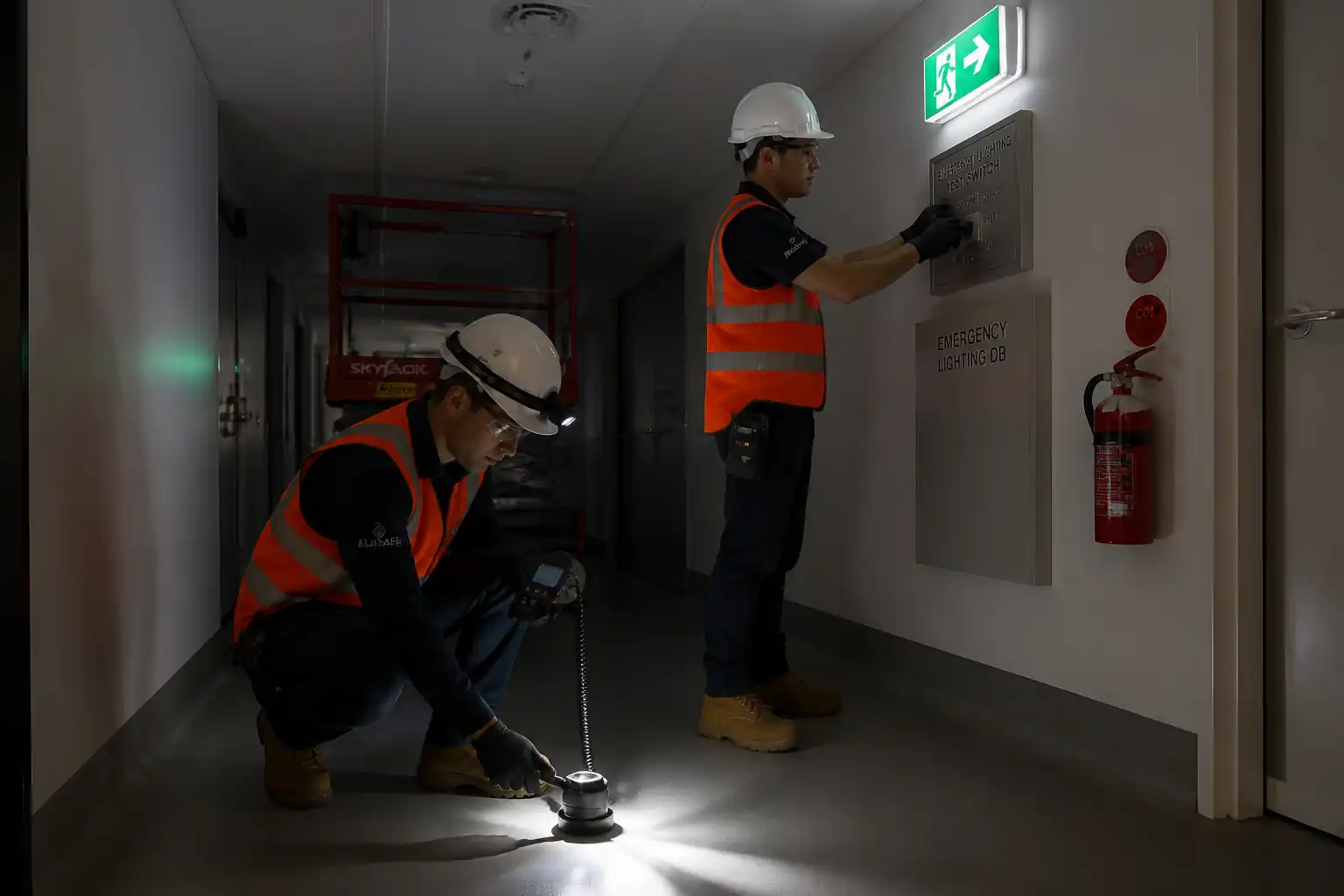
| 18 | Lux/Luminance verification | Conduct night-time measurements per EN 13201-4. Use calibrated Class A lux meter (illuminance) or luminance camera where required. Establish measurement grid per design class; measure after minimum 2 h stabilization. Compute average and uniformity. | Lighting Engineer / QA/QC | Witness by Client |
| 19 | As-built and handover | Complete as-built drawings (locations, invert levels, ducts, cable routes, test results), O&M manuals, warranties, and snag rectification. | Site Engineer / QA/QC | Final inspection |
Health, Safety, and Environment – Safety Controls
Key Task-Specific Hazards and Controls
1) Hazard: Underground utility strike (electric, gas, telecom, water)
- Likely consequence: Electrocution, explosion, major service outage.
- Engineering/procedural control: Approved permit-to-dig; review latest utility maps; CAT & Genny scan and mark-up; hand-dig trial holes within influence zones; maintain minimum exclusion offsets; appoint utility spotter.
- Required PPE: Class 00/0 arc-rated gloves for proximity to LV, dielectric boots where required, safety helmet with face shield, hi-vis, cut-resistant gloves.
- Collective preventive measure: Physical barriers over exposed utilities; insulated matting if needed; lockout/tagout coordination with utility.
- Inspection/permit/supervision: PTW signed; utility scan records; supervisor presence during trial holes; [Verify per project HSE plan and local regulations].
2) Hazard: Traffic interface and public exposure
- Likely consequence: Vehicle collision with plant/personnel; public injury.
- Engineering/procedural control: Traffic Management Plan with signage, tapers, barriers, and pedestrian diversions; work during off-peak/night as permitted; traffic marshals; vehicle beacons and reversing alarms.
- Required PPE: Hi-vis class 3, helmets, safety boots, cut-resistant gloves.
- Collective preventive measure: Rigid barriers, crash cushions where required; designated access points; speed restriction.
- Inspection/permit/supervision: TMP approval; daily checks by Traffic Supervisor; police/authority permit where applicable.
3) Hazard: Excavation collapse/falls into excavation
- Likely consequence: Crushing, entrapment, fall injury.
- Engineering/procedural control: Shoring/benching per temporary works design; safe access/egress; edge protection; no surcharge loads within 1 m; dewatering plan if groundwater.
- Required PPE: Helmets, boots, gloves; where required, harness for edge work.
- Collective preventive measure: Guardrails and toe boards; trench boxes.
- Inspection/permit/supervision: Daily excavation inspection; after rainfall; temporary works register; excavation permit.
4) Hazard: Lifting/erection of columns
- Likely consequence: Load drop, crush injury, struck-by.
- Engineering/procedural control: Appointed Person lift plan; certified crane/Hiab and lifting accessories; tag lines; exclusion zone; weather limits (no lifting above ~9 m/s wind) [Verify].
- Required PPE: Helmets with chin strap, gloves, boots, eye protection.
- Collective preventive measure: Barriers; banksman control; radio communication.
- Inspection/permit/supervision: LOLER/3rd-party certs; pre-lift checklist; lifting supervisor present.
5) Hazard: Work at height (MEWP)
- Likely consequence: Falls, dropped objects.
- Engineering/procedural control: MEWP with valid inspection; operator IPAF; harness with short lanyard attached to approved point; tools tethered; ground assessment and leveling.
- Required PPE: Full body harness, lanyard, helmet with chin strap, gloves, eye protection.
- Collective preventive measure: Exclusion zone; debris net where appropriate.
- Inspection/permit/supervision: MEWP inspection in date; daily pre-use check; WAH permit if required.
6) Hazard: Electrical shock/arc during testing and energization
- Likely consequence: Serious injury/fatality, fire.
- Engineering/procedural control: Dead testing before energization; LOTO; test with calibrated instruments; competent electrician only; insulated tools.
- Required PPE: Arc-rated clothing as required, dielectric gloves, eye/face protection.
- Collective preventive measure: Barriers and signage during live testing; remove public access.
- Inspection/permit/supervision: Electrical permit to work; supervision by Licensed Electrician.
7) Hazard: Concrete chemical burns, dust and silica exposure
- Likely consequence: Skin/eye injury; respiratory irritation.
- Engineering/procedural control: Wet methods for cutting where feasible; dust suppression; proper handling of cement; wash stations.
- Required PPE: Nitrile gloves, safety goggles/face shield, long sleeves; FFP2/FFP3 mask if dust.
- Collective preventive measure: Localized extraction or water suppression.
- Inspection/permit/supervision: SDS available; HSE monitoring.
8) Hazard: Noise and vibration from plant
- Likely consequence: Hearing damage; nuisance complaints.
- Engineering/procedural control: Use compliant equipment; schedule noisy work daytime; rotate staff.
- Required PPE: Hearing protection (SNR per noise level).
- Collective preventive measure: Acoustic screens where applicable.
- Inspection/permit/supervision: Noise monitoring as required by permit.
9) Hazard: Adverse weather (rain, lightning, high winds)
- Likely consequence: Slips, lifting instability, electrical hazards.
- Engineering/procedural control: Stop lifting in high winds; suspend outdoor electrical works during lightning; secure materials; non-slip measures.
- Required PPE: Weather-appropriate PPE.
- Collective preventive measure: Weather watch protocol.
- Inspection/permit/supervision: Supervisor authority to stop work.
10) Hazard: Manual handling of luminaires/bolts
- Likely consequence: Strains/sprains.
- Engineering/procedural control: Use mechanical aids; team lifts; keep within handling limits.
- Required PPE: Gloves, boots.
- Collective preventive measure: Trolleys, lifting aids.
- Inspection/permit/supervision: Manual handling training.
Environmental Controls
- Spoil and waste: Segregate excavated material; dispose of contaminated spoil at approved facility; reuse suitable material for backfill where permitted.
- Concrete washout: Provide lined washout pit or removal by supplier; prohibit washout on ground or near drains.
- Silt and runoff: Use silt socks/booms; protect gullies; prevent fines from entering watercourses.
- Noise and vibration: Comply with permitted working hours; maintain equipment; use acoustic barriers if required; monitor as per plan.
- Dust control: Water spray for cutting/excavation in dry conditions; cover stockpiles; limit vehicle speeds.
- Spills: Spill kits at workface; drip trays for plant; immediate containment and reporting; store fuels/chemicals in bunded areas.
- Lighting pollution: Aim and tilt luminaires per design to limit spill and glare; verify during night testing; adjust if required within design tolerance.
- Materials stewardship: Use RoHS-compliant luminaires; recycle packaging, cable drums, scrap metals; dispose of lamps/drivers per WEEE or local e-waste rules.
- Flora/fauna and public realm: Protect existing trees and street furniture; maintain safe pedestrian routes; restore surfaces to original condition or better. [Verify per project environmental plan]
Quality Assurance and Quality Control
- Material control: Approvals prior to delivery; verify markings, certificates (rebar mill certs, bolts grade/galvanizing, luminaire photometry and IP rating, cable test certificates).
- Calibration: All measuring and test equipment in date; retain copies of calibration certificates.
- Concrete QA: Slump test per truck; temperature checks; cast cubes/cylinders at frequencies per spec (typ. 1 set/50 m³ or per pour) [Verify]; curing monitored.
- Anchor bolts survey: Pre-pour and post-pour survey of bolt circle, projection, and level; nonconformities to be rectified before erection.
- Backfill QA: Density tests per layer/lot (typ. 1 test/20 m³ or per 25 m length) [Verify].
- Electrical QA: Dead tests recorded (continuity, IR, polarity); earth resistance measured; labels and circuit schedules updated.
- Torque QA: Record final torque values with tool ID and calibration reference; re-check after 24–48 h if specified.
- Lux/luminance survey: Conduct per EN 13201-4 with calibrated instruments; report to include grid, average, uniformity, conditions, and deviations.
- Documentation: ITP compliance, IRs, MIRs, NCRs, corrective actions, as-builts with coordinates, test records, O&M manuals, warranties.
- Acceptance: Works accepted only after all hold/witness points cleared, tests passed, and documentation approved.
Attachments
- Approved IFC drawings for columns, foundations, and cable routes.
- Lighting design report with EN 13201 class, pole heights, outreach, tilt, and photometry.
- Column, luminaire, and bracket datasheets; manufacturer installation manuals.
- Concrete mix design and material approvals; rebar BBS; galvanizing certificates.
- Lifting plan and rigging certificates.
- Traffic Management Plan and permits.
- Calibration certificates for torque wrenches, survey instruments, electrical testers, and lux meter.
- ITP forms, inspection request templates, and checklists.
- Risk Assessment/TRA and Method Statement sign-off sheets.
- O&M manual templates and warranty letters.
This content is a read-only public reference. Download or customize to get an editable version.
ITP preview
The first inspection activities from the linked ITP for Method Statement – Installation of Street Lighting Columns, Foundations, Wiring, Earthing, and Lux-Level Verification:
| Activity | Inspection / Test | Acceptance Criteria | Responsibility | Record |
|---|---|---|---|---|
| Permits and utility clearance | Permit-to-dig; utility scan records | PTW approved; utilities marked and protected | Site Engineer / HSE | Approved PTW; scan logs; photos |
| Setting out | Location/orientation check | Position ±10 mm; orientation ±2° [Verify] | Surveyor / QA/QC | Setting-out sheet; IR |
| Excavation and formation | Dimensions, level, ground condition | Plan ±50 mm; depth +0/−20 mm; firm base | Site Engineer / QA/QC | IR; photos |
Showing 3 of 15 inspection activities. View full ITP →
Related Inspection and Test Plan
An Inspection and Test Plan (ITP) is available for Method Statement – Installation of Street Lighting Columns, Foundations, Wiring, Earthing, and Lux-Level Verification. The ITP defines the inspection activities, acceptance criteria, hold and witness points, responsible parties, and records required to verify the work described in this method statement.
View the Method Statement – Installation of Street Lighting Columns, Foundations, Wiring, Earthing, and Lux-Level Verification ITP →Frequently asked questions
Continue with related Quollnet resources connected to this method statement.