
Inspection and Test Plan for Method Statement: Commissioning of Lighting Control Systems (Occupancy, Daylight Harvesting, Scheduling, Scenes, Energy Sequences)
AI-assisted inspection and test plan connected to a method statement, with PDF and Excel export.
More than a static template
Unlike a downloadable Word or PDF template, this ITP is an AI-assisted editable starting point directly connected to its method statement. Every inspection activity, hold point, and acceptance criterion is structured and ready to adapt to your project.
- AI-assisted customization — Tailor inspection activities and acceptance criteria to your specific project scope.
- Linked method statement — This ITP is connected to the corresponding method statement describing the work sequence.
- Multiple export formats — Download as a formatted PDF or editable Excel spreadsheet.
- Editable starting point, not a final document — Review and verify all content against your project specifications and standards before use.
What you can customize
When you save this ITP to your account, every inspection row becomes editable. You can add, remove, or modify:
- Inspection activity — Description of what is being inspected.
- Inspection type — Hold point (H), Witness point (W), Review (R), or Monitor (M).
- Responsibility — Contractor, subcontractor, engineer, or client.
- Frequency — How often the inspection occurs.
- Acceptance criteria — Referenced standard or specification requirement.
- Records — Forms, test reports, or checklists required as evidence.
Why this ITP is used
To verify the installed lighting control system meets design, code, and energy performance requirements before handover.
Who uses this inspection and test plan
Specialist commissioning engineers, QA/QC, the Engineer/Consultant, and the Client/FM for witnessing and acceptance.
When this ITP is prepared and submitted
After installation verification and power/network readiness, through functional testing and prior to handover.
Who receives or approves this ITP
Engineer/Consultant and Client/FM for witnessing and acceptance.
Inspection scope
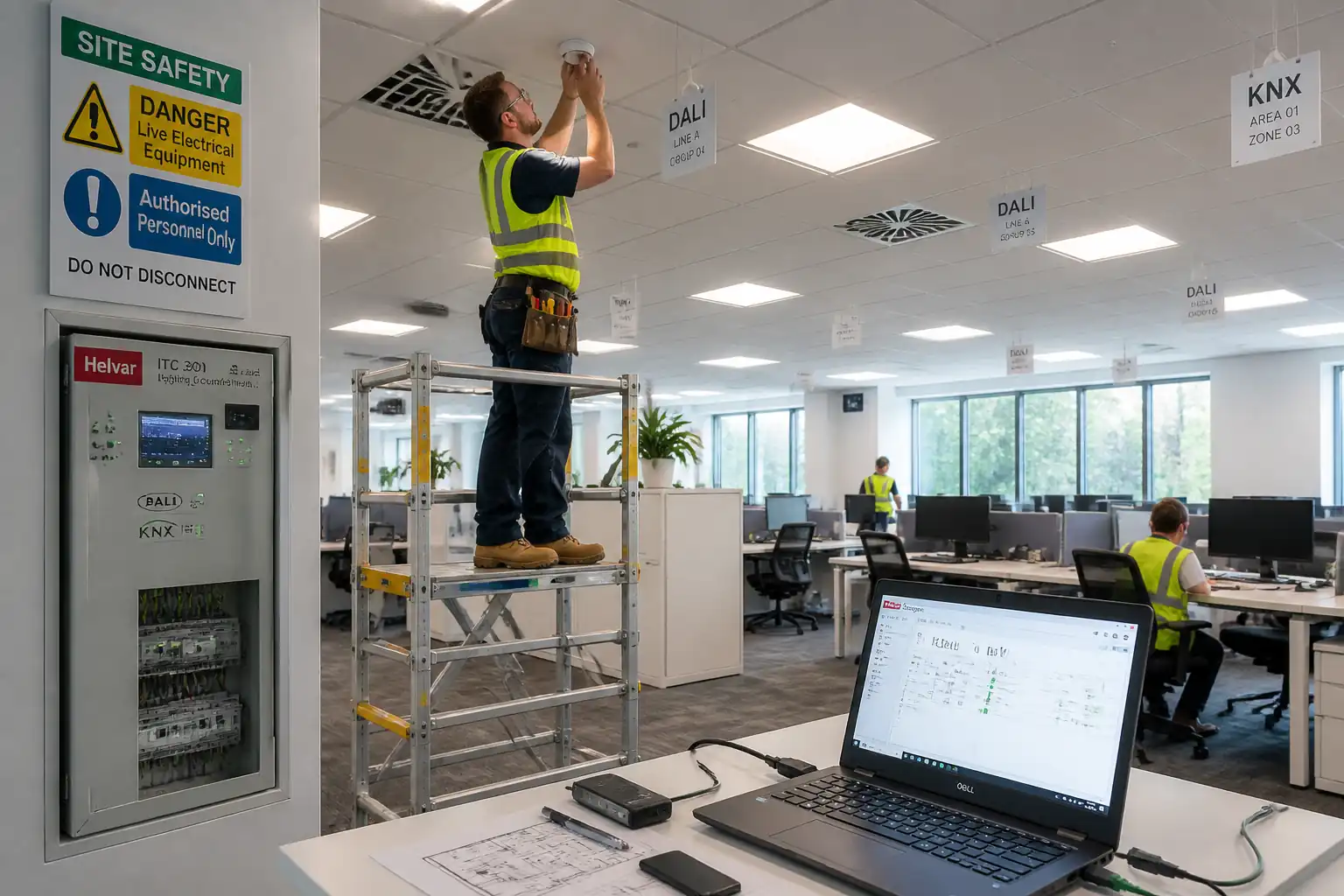
From pre-commissioning checks and bus health to functional testing of occupancy, daylight, scenes, scheduling, energy sequences, BMS integration, and life-safety interfaces.
Typical hold, witness, and review points
Electrical tests and bus health (H), addressing and parameter loading (W), occupancy/daylight/scene tests (W), life-safety interface (H), handover docs (W).
Typical inspection records
Device verification sheets, bus health reports, lux logs, screenshots, trend exports, point lists, cause & effect forms, handover sign-offs.
Important approval note
This ITP is an AI-assisted editable starting point, not a pre-approved document. Before use on any project, all inspection activities, hold points, and acceptance criteria must be reviewed and approved by the relevant parties (superintendent, principal contractor, or client representative) in accordance with your contract and project quality plan.
Always verify acceptance criteria against your applicable drawings, specifications, and regulatory requirements. Hold points must be confirmed with the relevant authority before work proceeds past that point.
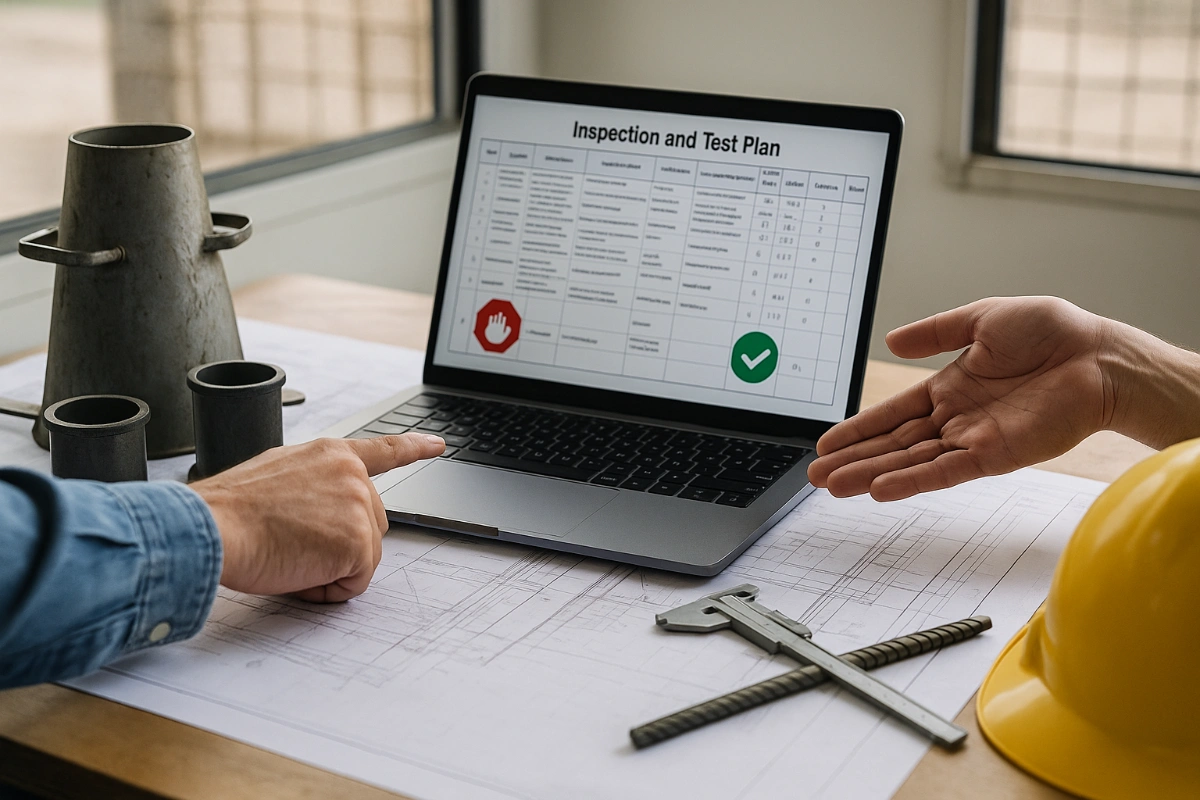
Inspection and test plan
| Activity | Inspection / Test | Acceptance Criteria | Responsibility | Record |
|---|---|---|---|---|
| Pre-commissioning documentation review | Approved submittals, narratives, drawings, ITP, permits | All approvals in place; no blockers | LCS / QA-QC / Engineer | Pre-commissioning checklist |
| Visual installation verification | Device type, location, label vs drawings | 100% correct devices; no damage | LCS / EC / Engineer | Room verification sheets |
| Electrical tests and bus health | IEC 60364-6 tests; DALI V=16±2 V; I<250 mA; ≤64 devices/line; length ≤300 m [Verify]; KNX ≈29 V within tolerance | All within limits; recorded with instrument IDs | EC / LCS / Engineer | Electrical/bus test report |
| Firmware/version confirmation | Device/version list | All at approved versions | LCS / Vendor | Firmware register/screenshots |
| Addressing and device discovery | DALI addressing map; KNX group addresses; BACnet device IDs unique | 0 duplicates; 100% discovered | LCS / Engineer | Address maps export |
| Parameter loading (logic, timeouts, trims) | Compare against approved parameter matrix | All zones match matrix | LCS / Engineer | Parameter export (checksum) |
| Occupancy/vacancy functional test | Detection speed ≤1 s; timeout 10–20 min or per spec; partial-ON/OFF per narrative; no nuisance triggers | 100% zones pass | LCS / Engineer | Occupancy test sheets |
| Daylight harvesting calibration | Target illuminance maintained within ±10% (or ±30 lx) in test conditions; stable without hunting | All daylight zones pass | LCS / Engineer | Lux logs + calibration screenshots |
| Scene setting verification | Scenes recall ≤1 s; levels within ±5% or ±30 lx; labels correct | All scenes per matrix | LCS / End User / Engineer | Scene matrix and sign-off |
| Time schedules/astronomic | Events occur within ±1 min; DST/holiday override as set | Sample week verified | LCS / Engineer | Event logs/screenshots |
| Energy-saving sequences and demand response | DR command trims 20–30% within 60 s; sweep-off correct; task minima not violated | All sequences per narrative | LCS / Engineer | Trend logs 24–72 h |
| BMS/EMS integration | Sample ≥10 points; read/write as authorized; time sync common | No naming/unit mismatches; stable comms | LCS / BMS / Engineer | Point-to-point sheets |
| Life-safety interface testing | Fire alarm to safe-state within ≤5 s; emergency unaffected; restore on reset | All interfaces pass | EC / LCS / FA Vendor / Engineer | Cause & effect forms |
| Handover documentation and training | O&M, backups, training delivered | Package accepted by Engineer/FM | LCS / MC / FM | Handover sign-off, attendance logs |
This table is a read-only public reference. Download the PDF or Excel version, or customize this ITP to edit it for your project.
Frequently asked questions
Related method statement
This Inspection and Test Plan is associated with the Method Statement: Commissioning of Lighting Control Systems (Occupancy, Daylight Harvesting, Scheduling, Scenes, Energy Sequences) method statement, which describes the step-by-step construction sequence, resources, materials, equipment, safety controls, and environmental controls for this activity.
View the Method Statement: Commissioning of Lighting Control Systems (Occupancy, Daylight Harvesting, Scheduling, Scenes, Energy Sequences) method statement →Continue with related inspection, method statement, article, and checklist resources.