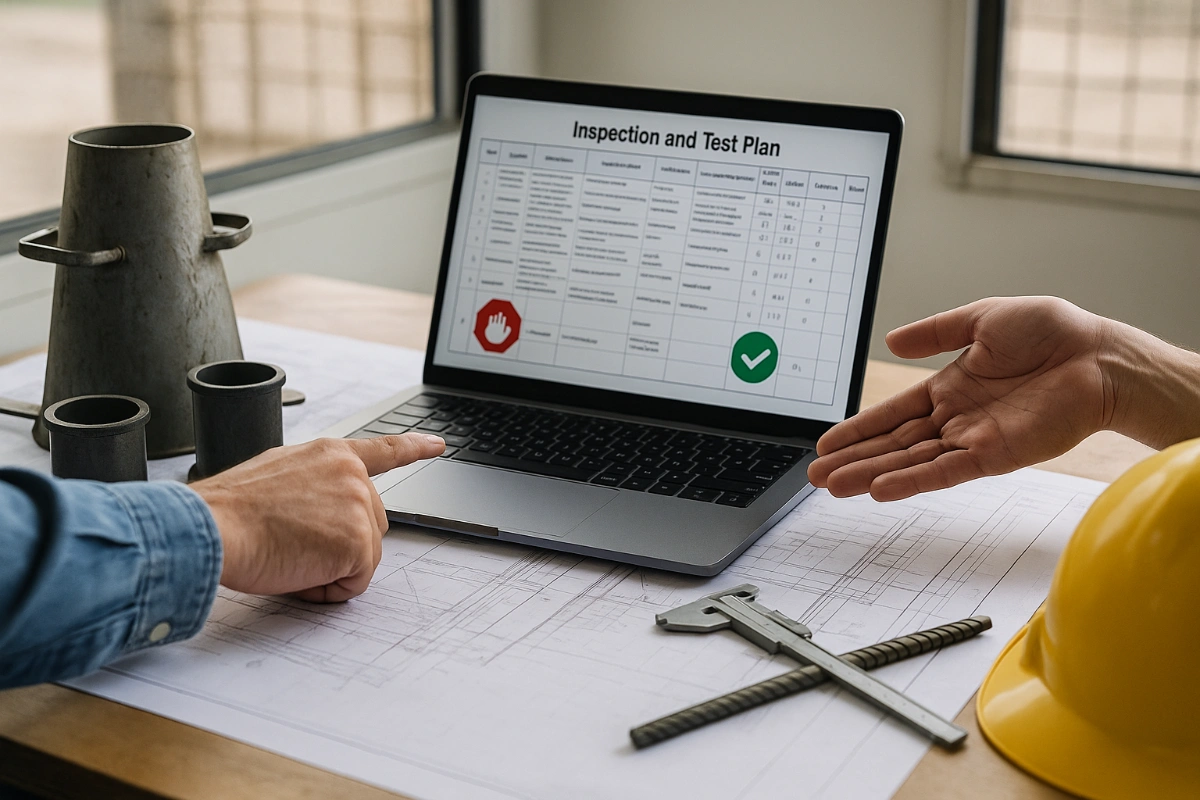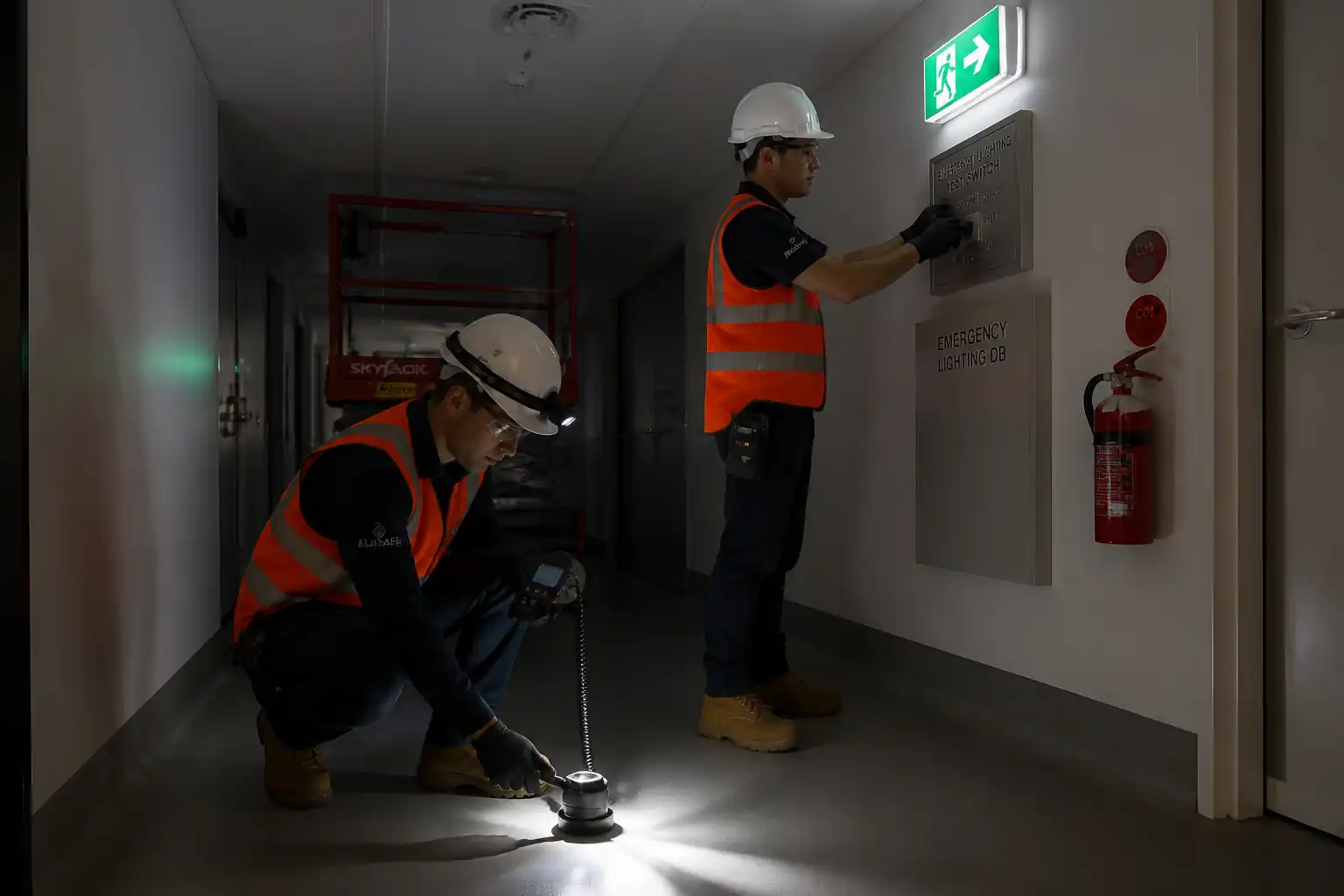

Inspection and Test Plan for Method Statement: Testing & Commissioning of Emergency Lighting Systems
AI-assisted inspection and test plan connected to a method statement, with PDF and Excel export.
More than a static template
Unlike a downloadable Word or PDF template, this ITP is an AI-assisted editable starting point directly connected to its method statement. Every inspection activity, hold point, and acceptance criterion is structured and ready to adapt to your project.
- AI-assisted customization — Tailor inspection activities and acceptance criteria to your specific project scope.
- Linked method statement — This ITP is connected to the corresponding method statement describing the work sequence.
- Multiple export formats — Download as a formatted PDF or editable Excel spreadsheet.
- Editable starting point, not a final document — Review and verify all content against your project specifications and standards before use.
What you can customize
When you save this ITP to your account, every inspection row becomes editable. You can add, remove, or modify:
- Inspection activity — Description of what is being inspected.
- Inspection type — Hold point (H), Witness point (W), Review (R), or Monitor (M).
- Responsibility — Contractor, subcontractor, engineer, or client.
- Frequency — How often the inspection occurs.
- Acceptance criteria — Referenced standard or specification requirement.
- Records — Forms, test reports, or checklists required as evidence.
Why this ITP is used
To ensure all emergency lighting components meet design and code requirements before handover.
Who uses this inspection and test plan
Contractor QA/QC, Commissioning Engineers, and the Engineer/Client for witnessing and acceptance.
When this ITP is prepared and submitted
From pre-test readiness through functional and duration testing to final acceptance.
Who receives or approves this ITP
Engineer/Client for review, witnessing, and approval.
Inspection scope
Covers documentation, visual inspections, electrical testing, functional checks, photometric verification, duration testing, interfaces, and labeling.
Typical hold, witness, and review points
Pre-test readiness (HP), DALI/ATS setup (WP), duration test (HP), final acceptance (HP).
Typical inspection records
Checklists, electrical tests, ATS/DALI exports, duration logs, lux surveys, asset register, logbook, completion certificate.
Important approval note
This ITP is an AI-assisted editable starting point, not a pre-approved document. Before use on any project, all inspection activities, hold points, and acceptance criteria must be reviewed and approved by the relevant parties (superintendent, principal contractor, or client representative) in accordance with your contract and project quality plan.
Always verify acceptance criteria against your applicable drawings, specifications, and regulatory requirements. Hold points must be confirmed with the relevant authority before work proceeds past that point.
Inspection and test plan
| Activity | Inspection / Test | Acceptance Criteria | Responsibility | Record |
|---|---|---|---|---|
| Document and Permit Review | Verify AFC drawings, schedules, O&M, risk assessments, permits, calibration certs. | Documents approved; permits active; instruments in calibration. | Commissioning Manager / QA/QC | Pre-commissioning checklist; approvals |
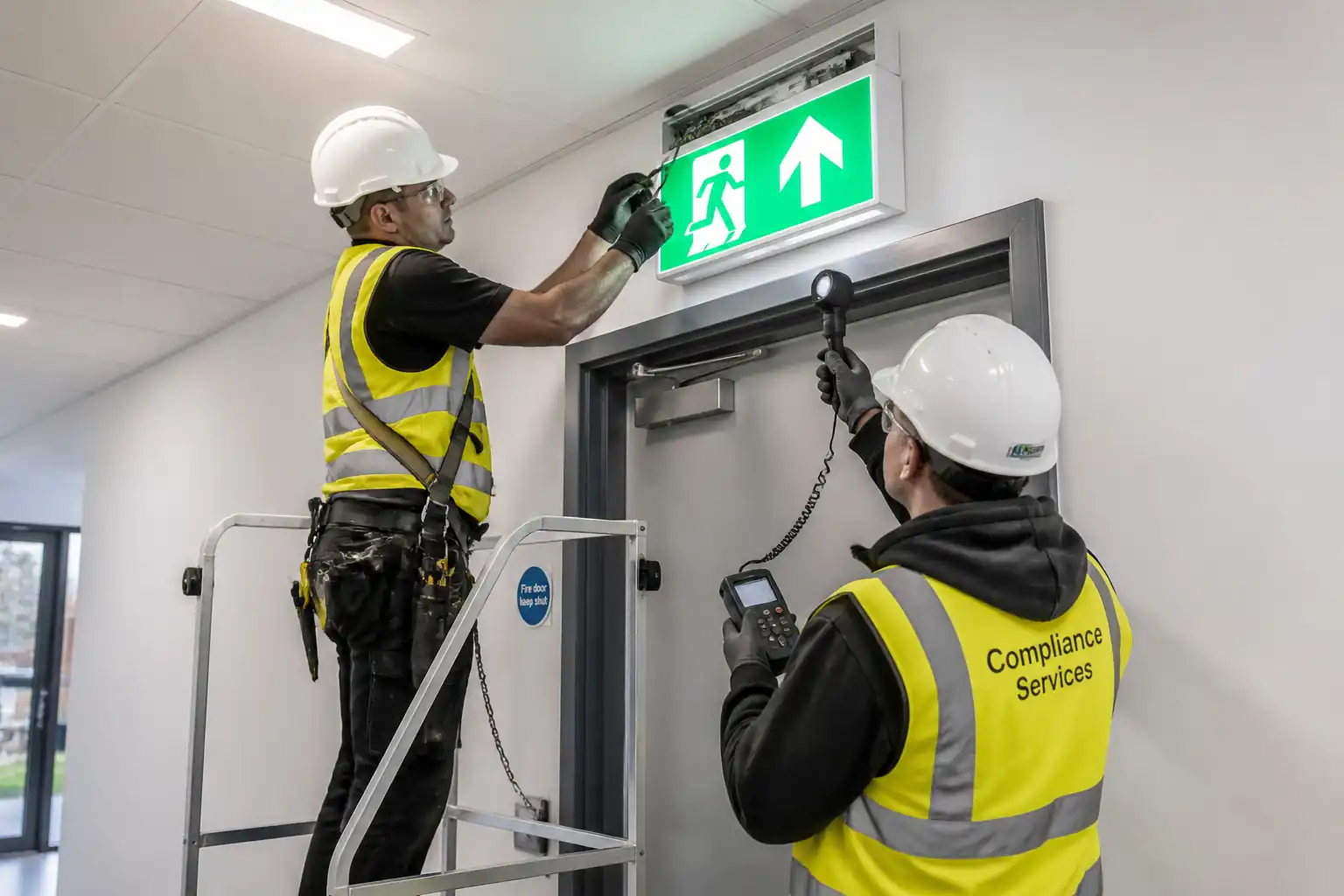
| Installation Readiness Visual Inspection | Check luminaire types, locations, fixings, signage orientation, IP ratings where required. | Matches drawings/spec; no damage; correct labels placeholders. | QA/QC Engineer; ER/Client (witness) | Visual inspection checklist; photos |
| Wiring Continuity/Polarity/IR (Dead) | Continuity, polarity; IR at 500 V DC on wiring-only or 250 V DC with control gear as allowed. | Continuity within design limits; IR ≥1 MΩ (or per code) and correct polarity. | Electrician; QA/QC | Electrical test records |
| Live Supply and Charger Check | Measure supply voltage; verify charger float voltage/current per vendor; charging LEDs on. | Voltage within ±10% nominal; charger within vendor spec. | Commissioning Tech; QA/QC | Live check sheet; vendor form |
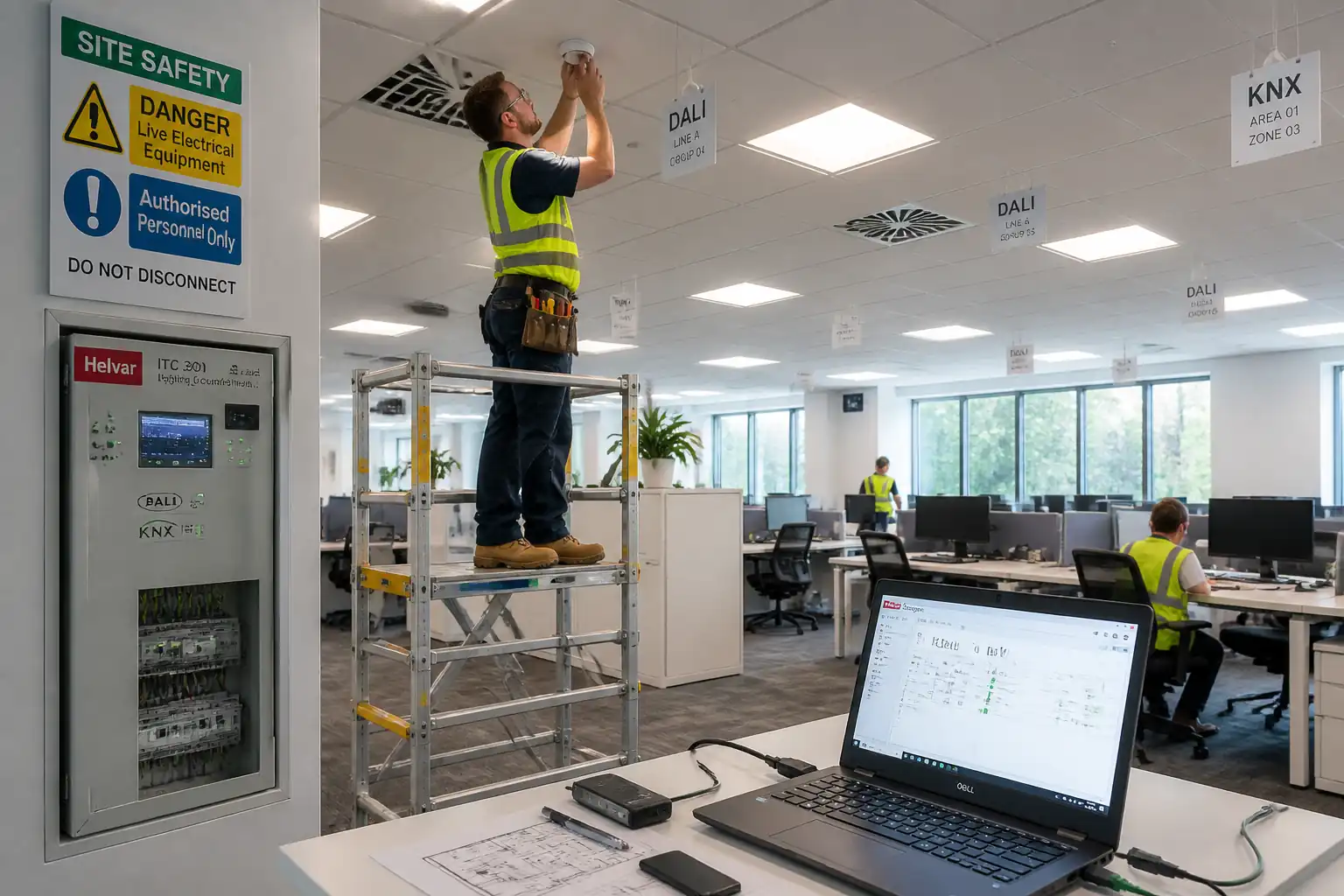
| DALI/ATS Setup (if applicable) | Scan, address, group, assign test schedules; backup configuration. | All devices found; no bus errors; schedules saved. | Controls Engineer; ER/Client (witness) | DALI/ATS commissioning report; backup file |
| Battery Initial Charge | Record start/finish of initial charge period. | Full charge period achieved per vendor/spec. | Commissioning Tech; QA/QC | Charge log |
| Functional Test (Short) | Simulate mains failure per circuit/group; confirm operation and response time. | All units illuminate in correct mode; changeover ≤0.5 s (BS EN 1838). | Commissioning Tech; QA/QC; ER/Client (witness optional) | Functional test sheets; punch list |
| Exit Route Coverage Verification | Check coverage of routes, stairs, fire equipment, exits; signage correctness. | All critical points covered per BS 5266 guidance. | QA/QC; ER/Client (witness) | Coverage checklist; marked drawings |
| Photometric Measurements | Lux readings on escape routes and open areas; high-risk tasks where applicable. | Escape route ≥1 lx; open area ≥0.5 lx; high-risk ≥15 lx or 10% normal [BS EN 1838] [Verify]. | QA/QC; ER/Client (witness) | Lux survey with meter details |
| Duration (Autonomy) Test | Simulate mains failure for full rated time; monitor illuminance drop; note failures. | All units sustain required minima for rated duration; central battery autonomy achieved. | Commissioning Manager; ER/Client (hold) | Duration test log; ATS export |
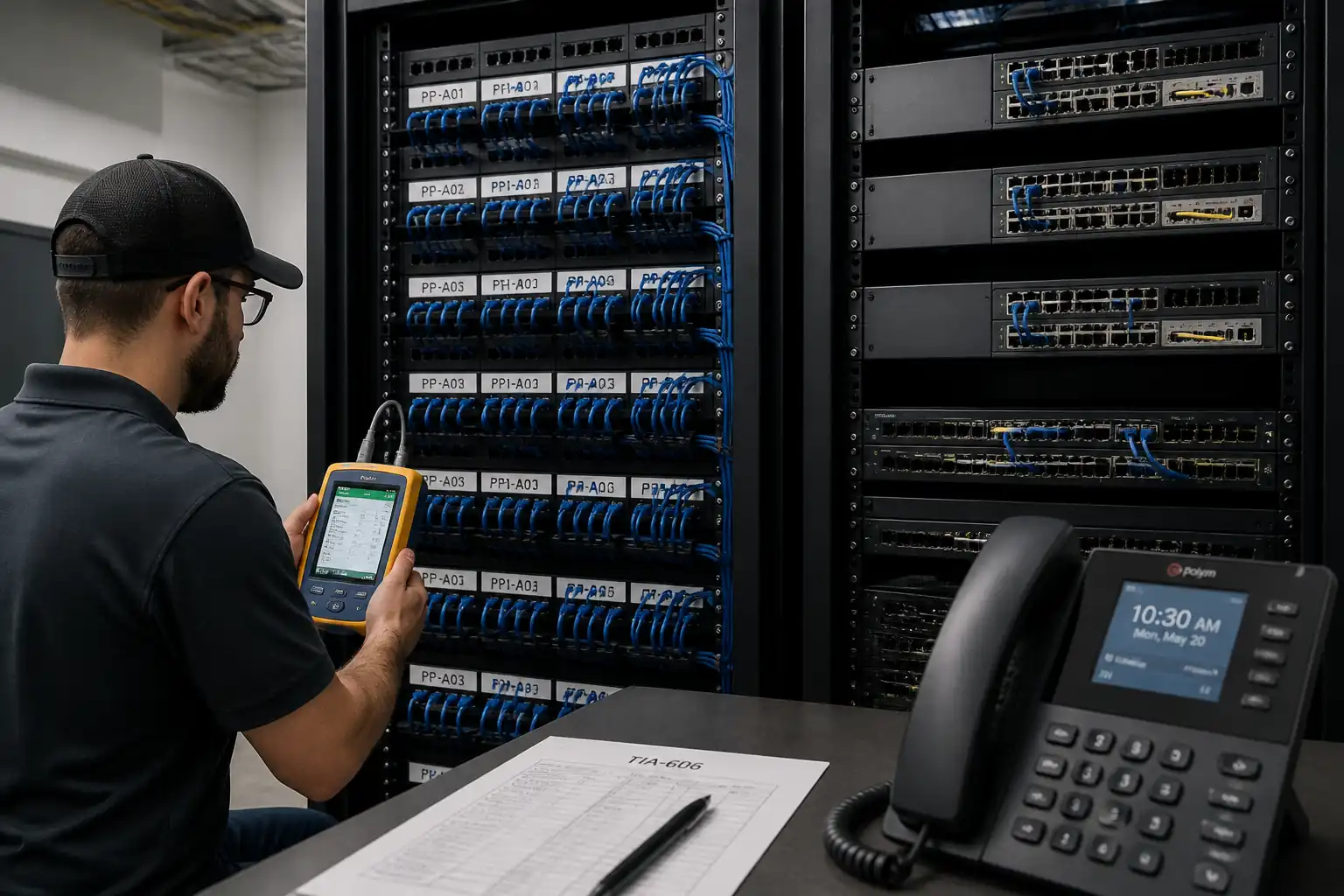
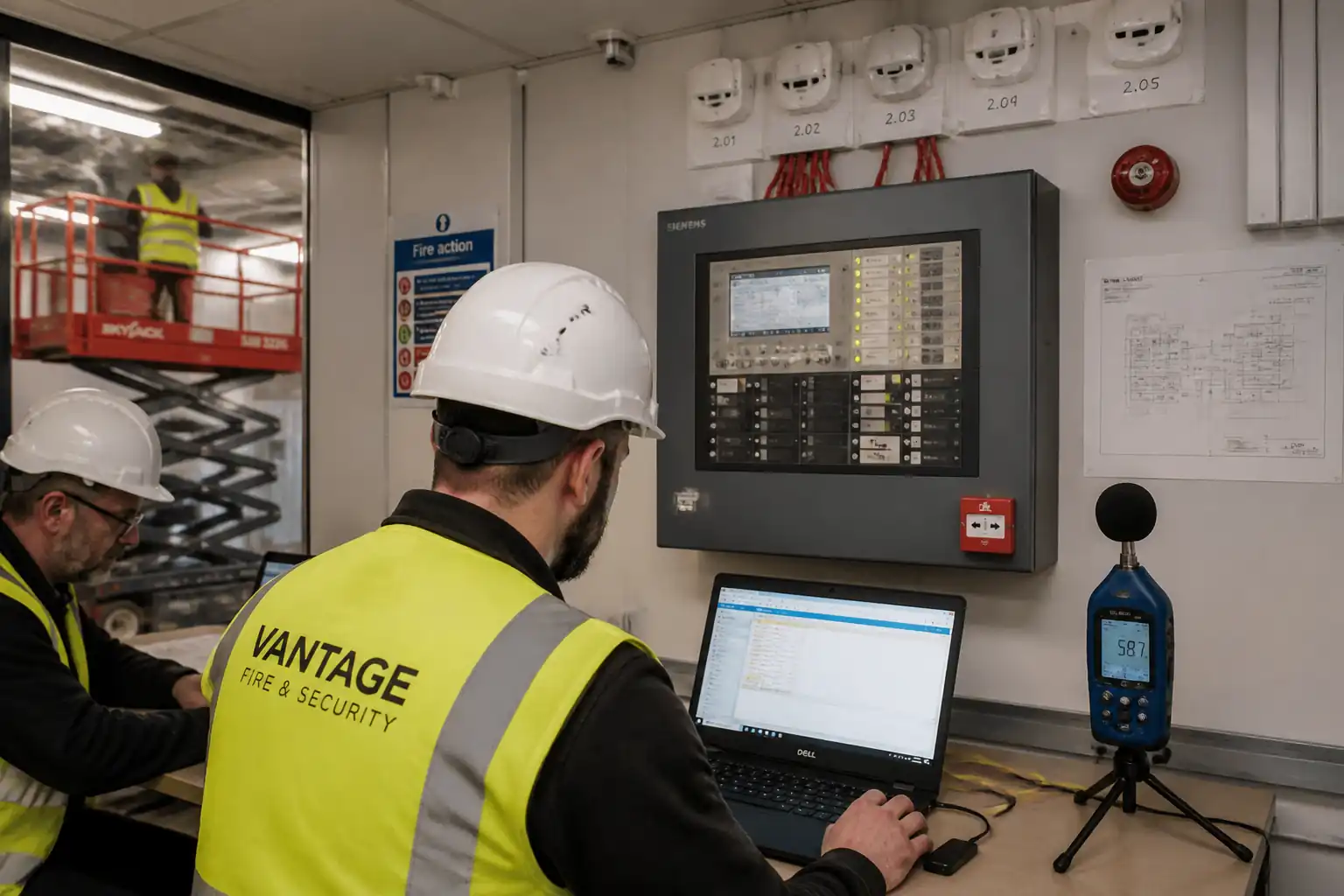
| System Interfaces and Restoration | Verify automatic restoration/recharge; check ATS/DALI/BMS logs; alarm status. | No persistent faults; correct event logging. | Controls Engineer; QA/QC | Interface test record; screenshots |
| Labeling, Asset Register, Logbook | Check labels affixed; asset IDs match register; logbook entries completed. | 100% assets labeled and recorded; logbook complete per BS 5266. | QA/QC | Asset register; photos; logbook |
| Final Acceptance | Submit complete test pack; close all NCRs/SNAGs; training delivered. | Engineer acceptance with no open defects. | Commissioning Manager; ER/Client (hold) | Completion certificate; handover dossier |
This table is a read-only public reference. Download the PDF or Excel version, or customize this ITP to edit it for your project.
Frequently asked questions
Related method statement
This Inspection and Test Plan is associated with the Method Statement: Testing & Commissioning of Emergency Lighting Systems method statement, which describes the step-by-step construction sequence, resources, materials, equipment, safety controls, and environmental controls for this activity.
View the Method Statement: Testing & Commissioning of Emergency Lighting Systems method statement →Continue with related inspection, method statement, article, and checklist resources.