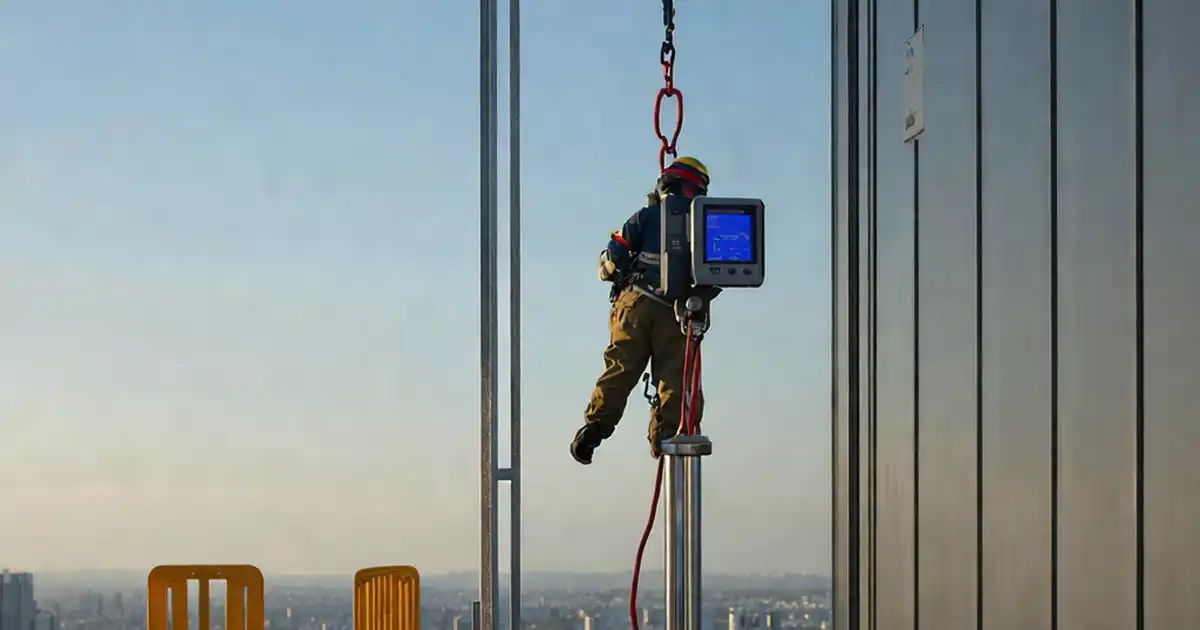
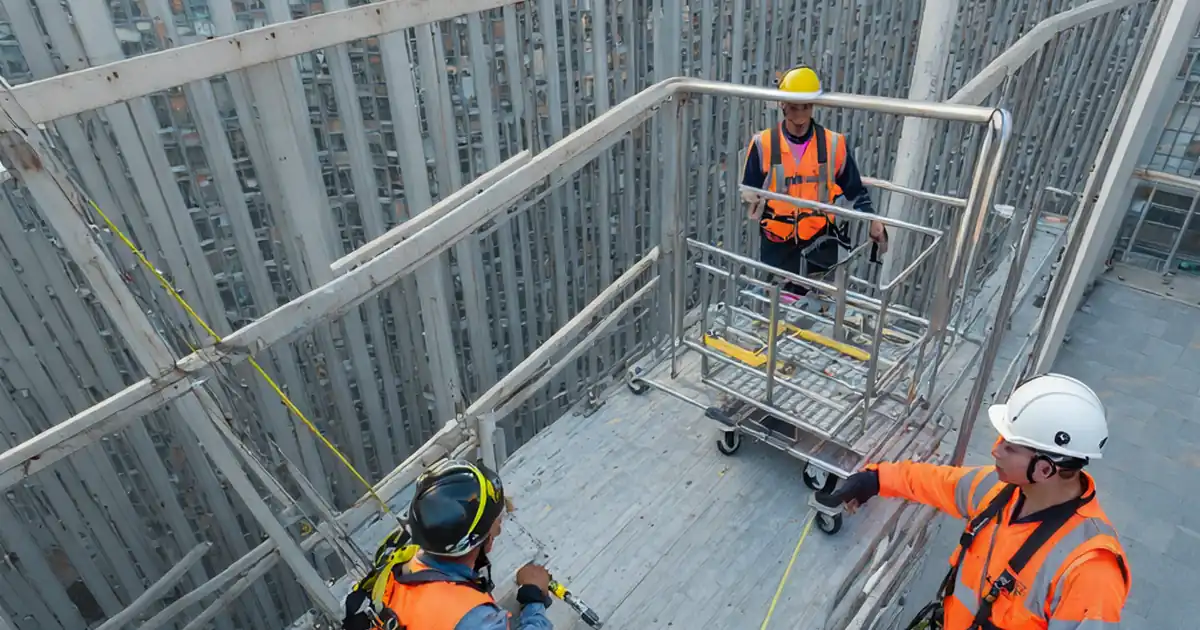
Test Façade Cleaning-Access Provisions and Safe-Reach Zones
Definition: Test façade cleaning-access provisions and safe-reach zones to confirm permanent and temporary systems enable full, safe coverage for window cleaning teams, facility managers, and third-party inspectors.
- Verify BMU, monorail, davit, and rope-anchor functionality and coverage.
- Prove safe-reach zones meet cleaning access without overreaching or bypassing controls.
- Document loads, clearances, interlocks, and rescue plans with photo evidence.
- Use interactive, commentable checklist; export results with QR code authentication.
Test façade cleaning-access provisions and safe-reach zones is a focused procedure to validate building maintenance units, monorails, davit systems, rope access anchors, and swing stages for safe, efficient window-cleaning coverage. This checklist concentrates on façade access testing, confirming reach envelopes, interface controls, and rescue readiness while avoiding unrelated topics like interior maintenance or structural façade integrity. By challenging the system with functional runs, proof loads per approved project specifications and authority requirements, and physical reach mapping, you reduce fall hazards, avoid blind spots, and prevent overreaching. You will verify BMU cradles and monorail trolleys, inspect anchor layout and labeling, measure clearances, and confirm emergency descent equipment. The outcome is documented evidence that the access solution reliably reaches all required surfaces within safe working limits, with traceable signatures, calibrated tools, and captured photos. Start in interactive mode to tick off actions, leave comments on findings, attach images, and export a signed report to PDF/Excel with a secured QR code.
- Confirm that permanent and temporary façade access systems provide 100% cleaning coverage without unsafe overreach. The process validates BMU slewing, monorail traverses, davit mast locations, rope access anchor spacing, and swing stage operations, capturing calibrated measurements, photo evidence, and sign-offs to support commissioning and operational readiness.
- Interactive online checklist with tick, comment, and export features secured by QR code. Teams can attach photos, calibration certificates, and mark-up reach maps; supervisors co-sign digitally; and stakeholders receive a tamper-evident record that clearly traces deviations, corrective actions, and final acceptance per approved project specifications and authority requirements.
- Reduce fall exposure and downtime by proving equipment function, rescue plans, and reach zones before occupancy. The checklist flags conflicts such as parapet interference, insufficient drop lengths, obstructed tracks, and limited anchor coverage, enabling timely corrections that safeguard cleaning contractors and protect façade finishes from preventable damage.
Documentation and Planning
Permanent Access Systems (BMU/Monorail)
Rope Access and Anchors
Safe-Reach Zones Verification
Power, Controls, and Rescue
Handover and Records
Planning, Equipment Readiness, and Risk Controls
Start by aligning the latest façade access drawings with real equipment on the roof and elevations. Confirm calibration for load cells, torque wrenches, laser measures, and anemometers; out-of-date tools invalidate results. Walk the roof to locate BMU rails, monorails, davit bases, and rope anchors, matching each to the plan and tag. Address housekeeping—remove trip hazards and secure loose items near parapets. Brief all parties on task sequencing, safe zones, and rescue routing. Before testing, run a wind check; suspend elevated trials if gusts exceed manufacturer limits. Record PPE and inspect lifelines and connectors. Define acceptance cues in advance: torque bands, functional outcomes, clearance minimums, and full-coverage targets. When everyone understands evidence requirements—photos, readings, videos, signatures—testing flows faster and rework reduces. Keep a live issue log to capture deviations and assign corrective actions with deadlines.
- Use only calibrated tools with in-date certificates.
- Verify each anchor, rail, and davit matches approved drawings.
- Brief rescue method and establish exclusion zones below.
- Define acceptance cues and evidence before starting.
- Stop elevated tests in winds beyond manufacturer limits.
Functional Proving of BMU, Monorail, and Davit Systems
Prove BMU rails and carriages through full travel and slewing, first unloaded, then with a controlled test load per approved project specifications and authority requirements. Confirm interlocks, limit switches, emergency stops, and emergency descent behave fail-safe. For monorails, verify alignment, trolley free-running, and end-stop integrity. Check parapet rollers and rope paths to prevent snagging and façade contact. For davits, ensure bases are secure, posts plumb, and outreach adequate. Document power supply checks, RCD performance, and communication coverage along the drop. Acceptance focuses on smooth motion, correct stopping, stable standoff, and absence of unusual noise or vibration. Evidence includes videos of traverses, screenshots of controller diagnostics, torque logs, and alignment readings. Any binding, erratic speed, or excessive sway signals remedial alignment or maintenance before operational release.
- Operate unloaded first, then add controlled test load.
- Verify all safety interlocks and limit switches function.
- Ensure trolleys and cradles move without binding.
- Maintain 100–300 mm façade standoff during trials.
- Capture videos and readings for each travel path.
Mapping Safe-Reach Zones and Proving Full Coverage
Translate the maintenance strategy into measurable reach. Create a façade grid and simulate every drop line; record maximum lateral reach and standoff with laser measures and gauges. Validate that cleaners can operate within body-safe reach without leaning beyond about 600 mm, and that no panel requires bypassing interlocks or ad-hoc tie-offs. Identify obstacles—fins, ledges, signage—and either confirm adequate bypass clearance or propose adjustments. Check tie-backs align drops vertically to minimize swing. For rope access, confirm anchor spacing supports ascent, descent, and work positioning while maintaining dual-rope principles. Acceptance is full grid coverage, stable cradle behavior, verified communications, and rehearsed rescue in target time. Provide annotated elevations showing coverage, photos at critical edges, and a logged list of exceptions with corrective actions and dates.
- Grid the façade and record reach at each panel.
- Flag obstructions; define safe bypass or redesign.
- Require dual-rope principles for rope access work.
- Prove vertical alignment and minimal lateral swing.
- Attach annotated reach maps to the final record.
How to Use This Interactive Façade Access Testing Checklist
- Preparation: Gather access plans, permits, manufacturer manuals, and calibration certificates. Assemble BMU keys, rope access kit, load cell, torque wrench, laser measure, anemometer, radios, and PPE. Establish exclusion zones and rescue team readiness.
- Open the checklist on a tablet/phone. Start interactive mode and assign roles to team members (operator, spotter, inspector, photographer) for efficient field execution.
- During testing: Tick items as completed, add comments for variances, and attach photos/videos and measurement screenshots directly to each step for traceability.
- Use the reach-map attachment feature to upload annotated elevations. Link grid panels to corresponding checklist items for quick cross-referencing.
- Pause and resume: Use save points to halt during weather holds or lift operations. The app timestamps entries and preserves location context.
- Export: Generate a commentable preview, then export as PDF/Excel for stakeholders. The export includes photos, signatures, and tool calibration references.
- Sign-Off: Capture digital signatures from the contractor, facility manager, and independent inspector. Validate the report via embedded QR code authentication.
- Archive and share: Store the signed report in your document control system and send the QR-secured link to maintenance and safety teams.

Call to Action
- Start Checklist Tick off tasks, leave comments on items or the whole form, and export your completed report to PDF or Excel—with a built-in QR code for authenticity.
- Download Excel - Façade Cleaning-Access Testing & Safe-Reach Zones
- Download PDF - Façade Cleaning-Access Testing & Safe-Reach Zones
- View Image - Façade Cleaning-Access Testing & Safe-Reach Zones
Cite & Embed
“Façade Cleaning-Access Testing & Safe-Reach Zones by Quollnet”
with a link to
this source page.
FAQ
Question: What constitutes full coverage when testing safe-reach zones on a façade?
Question: How often should BMU, monorail, and rope anchors be tested for cleaning access?
Question: What measurements are most critical during façade access verification?
Question: How do I handle areas that remain unreachable after initial testing?
Related Articles
Broader reading and guidance connected to this checklist topic.


Master Construction Project Cashflow With Cashflowpot

Related Checklists
Keep the workflow moving with nearby templates chosen from similar checklist content.