
Inspection and Test Plan for Method Statement: Nighttime Asphalt Paving Operations for Highway Rehabilitation
AI-assisted inspection and test plan connected to a method statement, with PDF and Excel export.
More than a static template
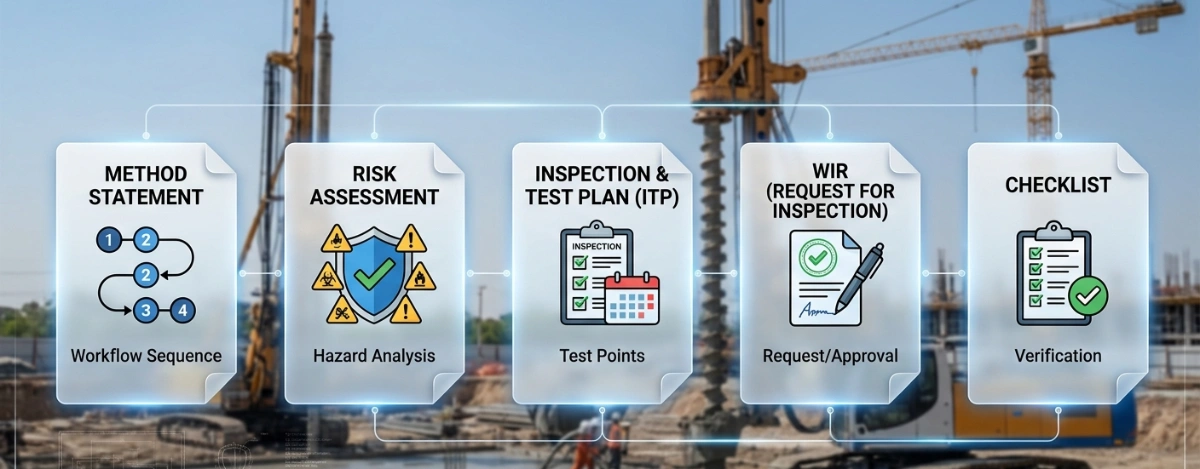
Unlike a downloadable Word or PDF template, this ITP is an AI-assisted editable starting point directly connected to its method statement. Every inspection activity, hold point, and acceptance criterion is structured and ready to adapt to your project.
- AI-assisted customization — Tailor inspection activities and acceptance criteria to your specific project scope.
- Linked method statement — This ITP is connected to the corresponding method statement describing the work sequence.
- Multiple export formats — Download as a formatted PDF or editable Excel spreadsheet.
- Editable starting point, not a final document — Review and verify all content against your project specifications and standards before use.
What you can customize
When you save this ITP to your account, every inspection row becomes editable. You can add, remove, or modify:
- Inspection activity — Description of what is being inspected.
- Inspection type — Hold point (H), Witness point (W), Review (R), or Monitor (M).
- Responsibility — Contractor, subcontractor, engineer, or client.
- Frequency — How often the inspection occurs.
- Acceptance criteria — Referenced standard or specification requirement.
- Records — Forms, test reports, or checklists required as evidence.
Why this ITP is used
To ensure each activity in night paving meets safety, quality, and permit requirements through planned inspections and tests.
Who uses this inspection and test plan
Contractor’s QC team, Site Engineer, HSE Officer, Traffic Management Supervisor, and the Engineer/Client Representative.
When this ITP is prepared and submitted
Before, during, and after each night shift of paving to control quality and safety at hold and witness points.
Who receives or approves this ITP
Engineer/Client Representative per contract.
Inspection scope
Pre-start permits and lighting checks, surface/tack verification, mix temperatures, paving/compaction controls, joint quality, density, thickness, and smoothness.
Typical hold, witness, and review points
Hold: Lighting verification; First sub-lot compaction pattern; Opening to traffic. Witness: Tack coat application; Paver setup trial strip.
Typical inspection records
ITP checklist, temperature and lux logs, compaction and density records, lab test reports, delivery tickets, photos, and approvals.
Important approval note
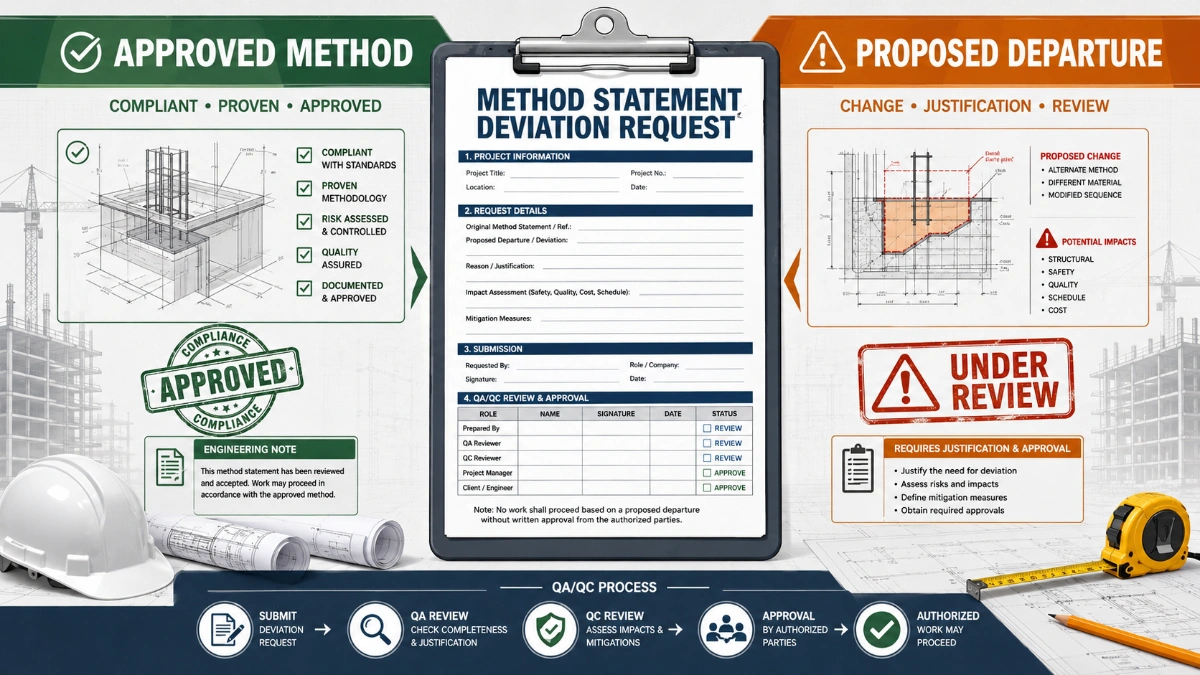
This ITP is an AI-assisted editable starting point, not a pre-approved document. Before use on any project, all inspection activities, hold points, and acceptance criteria must be reviewed and approved by the relevant parties (superintendent, principal contractor, or client representative) in accordance with your contract and project quality plan.
Always verify acceptance criteria against your applicable drawings, specifications, and regulatory requirements. Hold points must be confirmed with the relevant authority before work proceeds past that point.
Inspection and test plan
| Activity | Inspection / Test | Acceptance Criteria | Responsibility | Record |
|---|---|---|---|---|
| Pre-start approvals and permits | Verify approved MS/ITP, TTM plan, night work permit, lighting plan | All approvals in place; permit conditions embedded in shift plan | PM / TMS / HSE | Permit pack; pre-start checklist |
| Lighting setup and verification (Hold) | Lux measurements at task, roller, and general zones; glare check from traffic view | Task 100–150 lux; roller 50–100 lux; general 20–50 lux; uniformity ≤10:1; no direct glare [Verify] | Lighting Tech / HSE / Engineer | Lighting verification log; photos |
| Surface condition | Cleanliness/dryness check; repairs complete | Clean, dry, sound; temperature ≥ minimum per spec | Site Engineer / Foreman | Prep checklist |
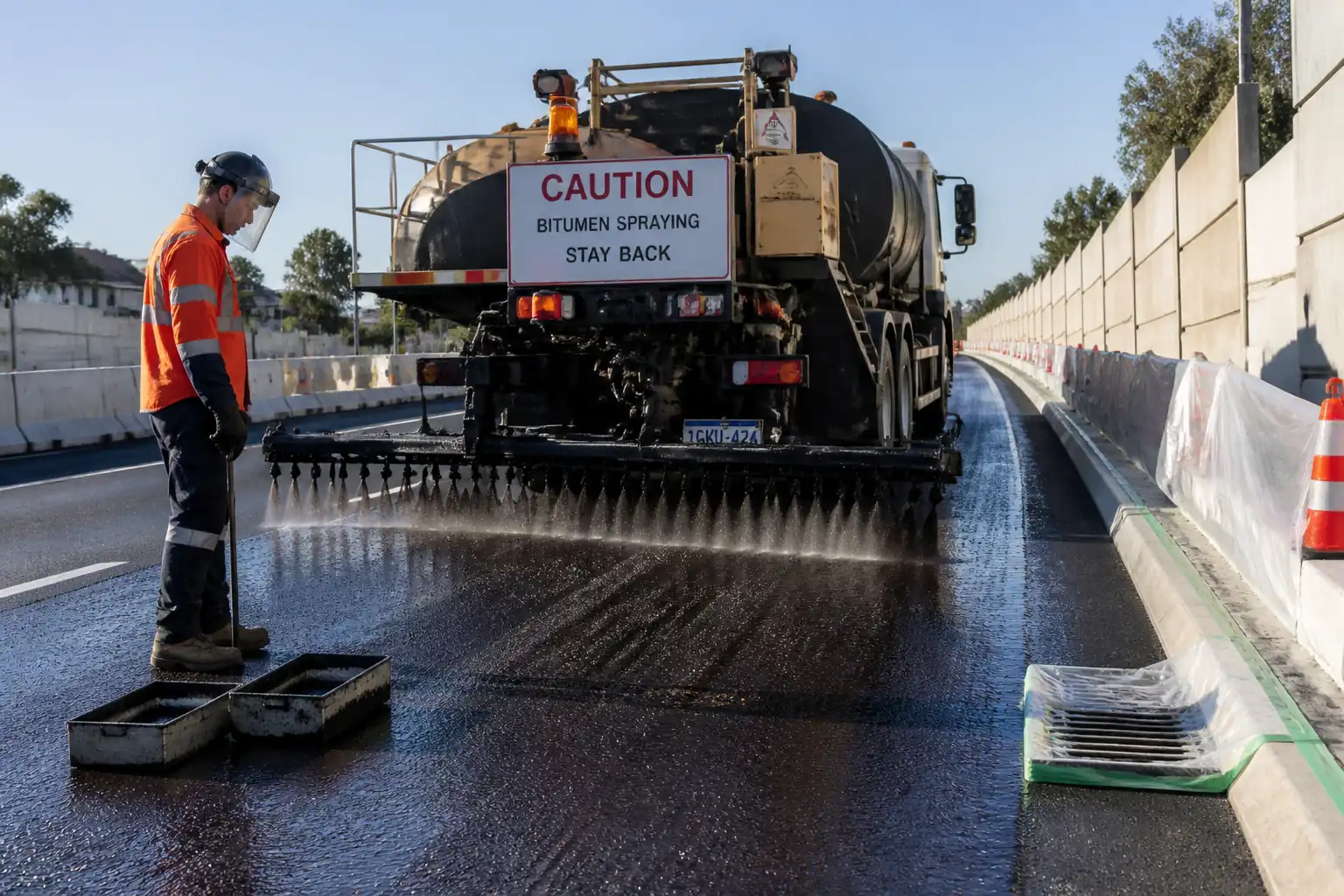
| Tack coat application (Witness) | Tray test for residual rate; break check | Residual binder 0.25–0.45 kg/m² (milled) [Verify]; fully broken before paving | Foreman / QC | Spray log; tray test sheet |
| Asphalt delivery temperature | Probe temperature at truck center and quarter points | Arrival ≥135°C HMA (typ.); WMA per TDS [Verify] | QC / Foreman | Temperature log; tickets |
| Paver setup and initial 30 m (Witness) | Layer thickness and crossfall checks; screed settings | Thickness −5/+10 mm; crossfall ±0.3%; grade within tolerance [Verify] | Engineer / Site Engineer | Setup sheet; survey record |
| Thermal profiling | IR camera scan immediately behind screed | Thermal differential ≤10–15°C across mat [Verify] | QC | Thermal map |
| Compaction (Hold for first sub-lot) | Establish/verify roller pattern; density gauge readings | Achieve target density (e.g., ≥94% of Gmm) on trial locations before release [Verify] | QC / Engineer / Roller Ops | Compaction log; gauge correlation sheet |
| Longitudinal joint quality | Joint straightness and density (cores/gauge) | Straightness ≤10 mm in 3 m; joint density within 1–2% of mat [Verify] | QC / Foreman | Joint inspection form; test results |
| Materials compliance | Binder content (ignition); gradation (sieve); Gmm; Gmb of cores; air voids | Within JMF tolerance bands [Verify] | QC Lab | Lab test reports; lot summary |
| Thickness and smoothness | Core thickness; 3 m straightedge | Thickness −5/+10 mm; smoothness ≤6 mm in 3 m [Verify] | Surveyor / QC | Core logs; straightedge records |
| Opening to traffic (Hold) | Final inspection; temperature of surface; TTM changeover sequence | Surface ≤60°C; clean; no loose material; approvals granted | CM / Engineer / TMS | Opening authorization; photos |
This table is a read-only public reference. Download the PDF or Excel version, or customize this ITP to edit it for your project.
Frequently asked questions
Related method statement
This Inspection and Test Plan is associated with the Method Statement: Nighttime Asphalt Paving Operations for Highway Rehabilitation method statement, which describes the step-by-step construction sequence, resources, materials, equipment, safety controls, and environmental controls for this activity.
View the Method Statement: Nighttime Asphalt Paving Operations for Highway Rehabilitation method statement →Continue with related inspection, method statement, article, and checklist resources.