
Method Statement: Mineral Wool Roll/Batt Insulation Installation in Residential Loft Spaces – Method Statement
AI-assisted method statement with matching ITP, PDF download, and Excel export.
More than a static template
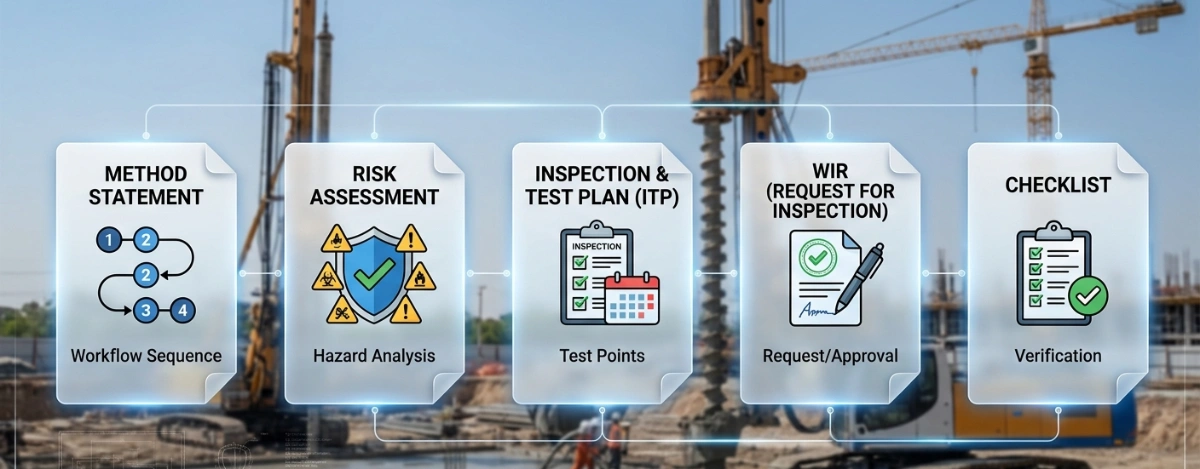
Unlike a downloadable Word or PDF template, this method statement is an AI-assisted editable starting point connected directly to a matching Inspection and Test Plan. Every section is structured, project-adaptable, and ready to export.
- AI-assisted drafting — Customize every section with AI for your specific project scope.
- Linked ITP — A matching inspection and test plan is generated alongside the method statement.
- Multiple export formats — Download as a formatted PDF or editable Excel spreadsheet.
- Editable starting point, not a final document — Review, verify, and adjust all content against your project requirements before use.
Static template vs. Quollnet workflow
| Feature | Static template | Quollnet |
|---|---|---|
| Project-specific content | Manual fill-in required | AI-assisted customization |
| Linked ITP | Separate document, no link | Matching ITP included |
| Export formats | Usually PDF only | PDF and Excel |
| Structured sections | Free-form layout | 13 standardized sections |
| Saved to your account | Local file only | Cloud-saved, reusable |
| Content accuracy | You verify everything | AI-assisted, you still verify |
| Cost | Often free but time-intensive | Free to customize and download |
What you can customize
When you save this method statement to your account, every section becomes editable. The following 13 sections are included:
- Scope — Defines the activity and its boundaries.
- References — Standards, specifications, and drawings.
- Responsibilities — Roles and accountabilities.
- Resources — Labour, plant, and equipment summary.
- Materials — Materials and compliance requirements.
- Equipment — Tools and equipment details.
- Prerequisites — Hold points and pre-conditions.
- Method sequence — Step-by-step construction sequence.
- Safety controls — HSE risk controls and PPE.
- Environmental controls — Environmental mitigation measures.
- QA/QC — Quality inspection and test requirements.
- ITP — Inspection and Test Plan table (has its own page).
- Attachments — Referenced drawings and documentation.
Why this method statement is used
This method statement is used to define and communicate the approved procedure for carrying out method statement: mineral wool roll/batt insulation installation in residential loft spaces on site. It ensures the work is planned in advance, the correct resources and controls are in place, and all personnel understand responsibilities, sequence, quality requirements, and safety controls before work begins. It aligns site execution with the documented scope and acceptance expectations.
Who uses this method statement
This method statement is used by contractors, site supervisors, project engineers, QA/QC engineers, HSE officers, consultants, and client representatives. It serves as a shared reference for planning, execution, supervision, inspection, and approval of the activity on site.
When it is prepared and submitted
The method statement is prepared before the work activity starts and submitted as part of the pre-construction documentation package for review and approval.
Who reviews or approves it
The method statement is usually submitted to the client representative, consultant, resident engineer, or project management consultant for review and approval before the work commences.
Important approval note
This method statement is an AI-assisted editable starting point, not a pre-approved document. Before use on any project, all content must be reviewed and approved by the relevant parties (superintendent, principal contractor, or client representative) in accordance with your contract and project quality plan.
For example: if your specification requires a departure from a referenced standard, that departure must be documented and approved separately — this method statement will not capture that automatically. Always verify against your applicable drawings, specifications, and regulatory requirements.
Method statement content
Scope
Overview
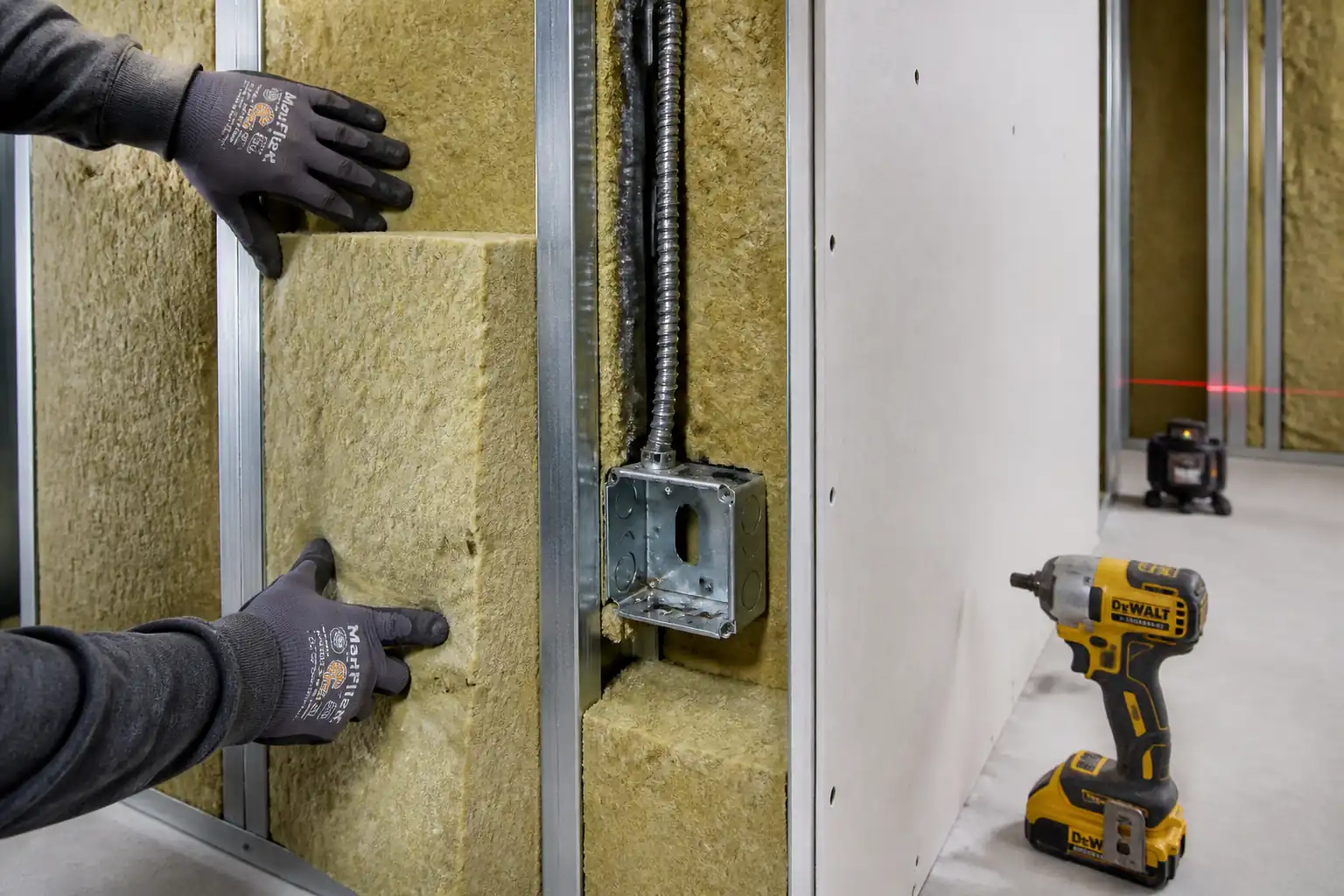
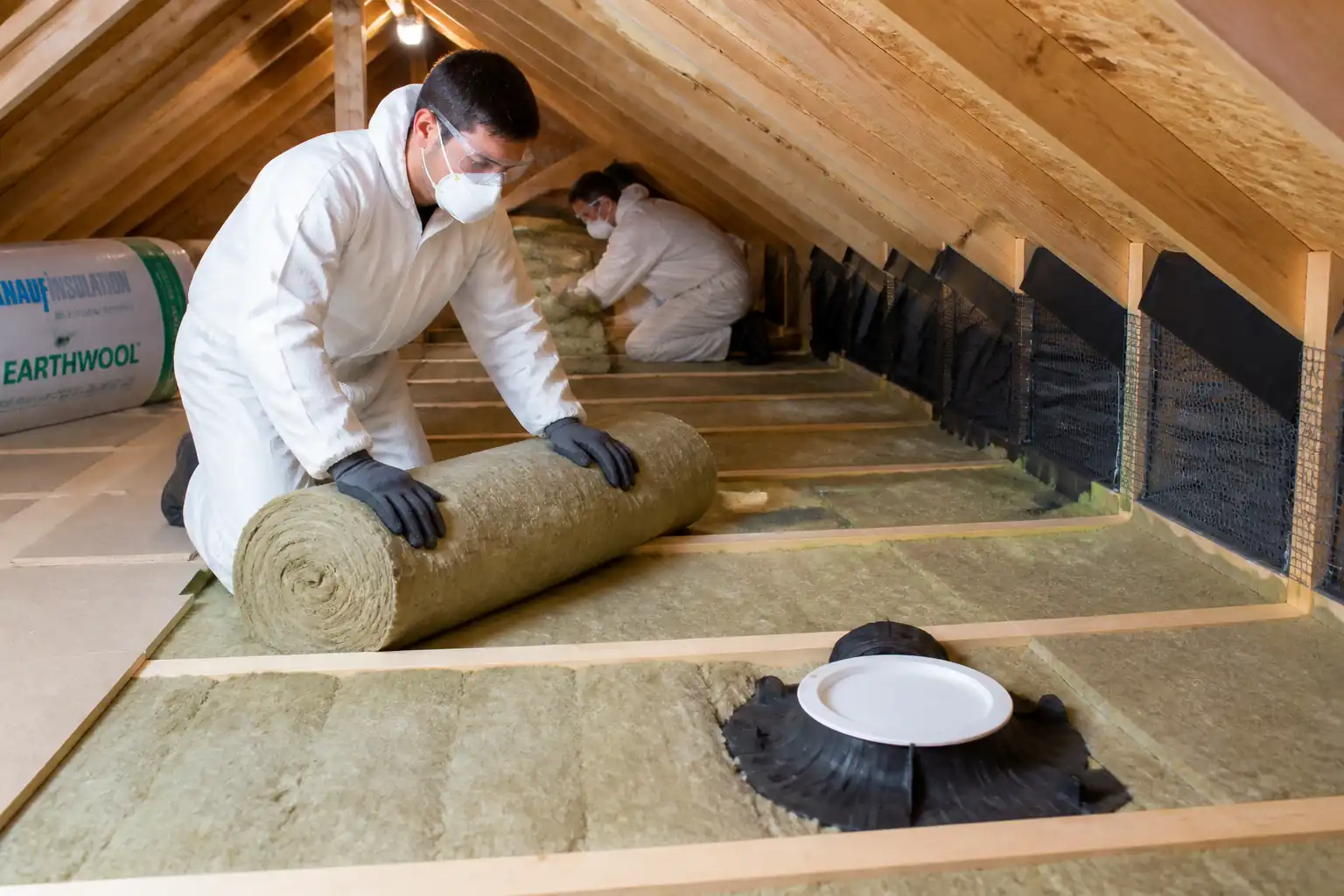
This method covers supply, handling, preparation, and installation of mineral wool roll or batt insulation at ceiling level in residential loft (cold roof) spaces, including:
- Cleaning and inspection of ceiling joists, services, and substrates.
- Installation of a first insulation layer between joists.
- Installation of a second (cross) layer over joists to reduce thermal bridging.
- Maintaining continuous eaves ventilation pathways using baffles/rafter vents.
- Coordination with electrical services, downlights, flues, water tanks, and access hatches.
- QA/QC measurements, records, and ITP sign-offs.
Exclusions
- Structural alterations to roof framing.
- Replacement of roof underlay or external roofing works.
- Major electrical rewiring (beyond minor repositioning/isolations necessary for safe installation).
- Vapour control layer below ceiling (assumed existing per design) unless specified.
Objectives
- Achieve the specified thermal performance (U-value/R-value) without thermal bridges.
- Maintain required ventilation and moisture management in accordance with standards.
- Deliver a safe, clean installation with complete records and compliance to specification.
Key Performance Targets [Verify per project specifications]
- Total insulation thickness: typically 270–300 mm (e.g., 100 mm between joists + 170–200 mm cross-layer).
- Eaves ventilation pathway: continuous clear airway, typically ≥50 mm at eaves using baffles.
- Gaps between adjacent insulation pieces: ≤5 mm; compression ≤10% of nominal thickness.
- Timber moisture content before covering: ≤20%.
References
| Document Type | Reference / Number | Revision | Notes |
|---|---|---|---|
| Standard | BS EN 13162 – Thermal insulation products for buildings – Factory made mineral wool (MW) products – Specification. | Product compliance and CE/DoP documentation. | |
| Standard | BS 5250 – Management of moisture in buildings. | Ventilation and condensation risk management for cold roofs. | |
| Standard | ISO 6946 – Building components – Thermal resistance and transmittance – Calculation method. | For design verification of U-values/R-values. | |
| Standard | ISO 9972 – Determination of building airtightness – Fan pressurization method. | Optional post-works airtightness verification where specified. | |
| Guidance/Code | PAS 2030 (where applicable) – Energy efficiency retrofit – Installation requirements. | Process control and handover for retrofit works. | |
| Standard | ASTM C665 – Mineral-Fiber Blanket Thermal Insulation for Light Frame Construction (alternative where applicable). | Material properties and installation guidance (non-UK projects). | |
| Standard | BS 5422 – Thermal insulating materials for building equipment and industrial installations – Specification (for pipe/tank insulation). | For insulating water tanks/pipes within lofts. |
Responsibilities
| Role | Responsibility | Name / Party |
|---|---|---|
| Project Manager | Project Manager | Main Contractor |
| Site Supervisor | Site Supervisor/Foreman | Main Contractor |
| HSE Manager | HSE Manager | Main Contractor |
| QA/QC Engineer | QA/QC Engineer | Main Contractor |
| Trade Operatives | Insulation Installers | Subcontractor |
| Electrician | Qualified Electrician | Approved Subcontractor |
| Storekeeper | Storekeeper | Main Contractor |
Resources
| Resource Type | Description | Quantity | Remarks |
|---|---|---|---|
| Labour | Insulation installers | 2–4 | Based on loft area and access constraints. |
| Supervision | Site Supervisor/Foreman | 1 | |
| QA/QC | QA/QC Engineer (shared) | 1 (shared) | |
| HSE | HSE Officer (shared) | 1 (shared) |
Materials
| Material | Specification / Grade | Quantity | Remarks |
|---|---|---|---|
| Mineral wool (glass/stone) | Thickness: 100–200 mm per layer; Density: 10–40 kg/m³ [Verify] | As per BOQ | |
| Ventilation baffles | Width per rafter spacing; fixings/staples included | As required | |
| Raised deck supports | Height ≥ total insulation thickness [Verify] | As required | |
| Pipe lagging, tank jackets | Thickness per BS 5422 for location/diameter [Verify] | As required | |
| Seals and insulation | Achieve equivalent R-value to surrounding area [Verify] | As required | |
| Downlight covers | IC rating/fire rating per luminaire [Verify] | As required |
Equipment
| Equipment | Capacity / Type | Quantity | Inspection Required |
|---|---|---|---|
| Ladders | 1–2 | Yes | |
| Lighting | As required | Yes | |
| Temporary decking | Set | Yes | |
| Measurement | Set | ||
| Hand tools | Set | ||
| Stapler | 1–2 | ||
| Vacuum | 1 | ||
| Moisture meter | 1 (shared) | ||
| IR camera | 1 (shared) |
Prerequisites
- Approved drawings/details, specifications, and this Method Statement/ITP.
- Material approvals: DoP/CE, safety datasheets, product data, fire classification.
- HSE: Task risk assessment and toolbox talk completed; access plan for loft hatch; ladder inspection records; RCD in place.
- Electrical: Identify and isolate/verify relevant lighting circuits and junction boxes where interaction is required. Permit-to-work for electrical tasks [Verify per project HSE plan and local regulations].
- Survey and make safe: Check for asbestos-containing materials (e.g., old vermiculite). If suspected, stop work and arrange testing. Wildlife checks (e.g., bats) where locally required [Verify per project HSE plan and local regulations].
- Moisture: Inspect roof for leaks; timber moisture content ≤20% before covering; any wet/damp material to be rectified/replaced.
- Services/tanks: Confirm treatment of downlights, transformers, flues, water tanks, and pipe insulation strategy.
- Resident communication (if occupied): Schedule, noise, dust, and access arrangements confirmed.
- Protection: Floor protection at access routes; dust sheets; waste bags and designated bins on site.
Method Sequence
| Step | Activity | Description | Responsibility | Inspection / Hold Point |
|---|---|---|---|---|
| 1 | Access, isolation, and safety setup | Set up safe access to loft hatch. Install barriers/edge protection at hatch. Provide adequate lighting. Isolate/verify relevant electrical circuits for downlights/junction boxes where interaction is expected. | Site Supervisor / Electrician | Supervisor check |
| 2 | Initial survey and moisture check | Inspect roof for leaks, damp insulation, or biological contamination. Measure random timber moisture content. | QA/QC Engineer | QA/QC |
| 3 | Clear and clean loft area | Remove debris, old damp/contaminated insulation (bag and dispose). Retain sound dry insulation only if permitted by spec. Vacuum dust using HEPA unit. Establish safe crawl boards spanning ≥3 joists. | Insulation Installers | Supervisor |
| 4 | Eaves ventilation protection (baffles) | Install rafter/eaves baffles from soffit area to maintain continuous air path above insulation. Fix with staples as per manufacturer. | Insulation Installers | QA/QC |
| 5 | Services and hazard coordination | Identify and mark downlights, transformers, junction boxes, flues/chimneys, water tanks and pipes. Fit approved downlight covers/fire hoods where required. Plan cable routes to sit above top insulation layer or derate as per electrician's instruction. | Electrician / Installers | Supervisor/Electrician |
| 6 | First layer between joists | Lay mineral wool rolls/batts snugly between joists to full joist depth without gaps or excessive compression. Cut neatly around obstructions. Do not block eaves; stop at baffle line. | Installers | Supervisor |
| 7 | Second cross-layer over joists | Install continuous cross-layer perpendicular to joists to achieve specified total thickness (typically 270–300 mm). Stagger joints; ensure continuity over joists and at perimeters; maintain access walkway if required using raised deck supports to avoid compression. | Installers | QA/QC |
| 8 | Water tanks and pipes | Insulate pipework per BS 5422 and wrap tank sides and top with approved jackets. Do not insulate tank base unless specified. Maintain safe access. | Installers | QA/QC |
| 9 | Loft hatch insulation and draught sealing | Apply perimeter draught seals to hatch. Fix rigid/roll insulation to back of hatch to achieve equivalent R to surrounding area. Ensure hatch closes flush without snagging. | Installers | Supervisor |
| 10 | Final QA checks and cleaning | Measure thickness grid; confirm eaves airway continuity; verify downlight/flue clearances; ensure cables above insulation or derated. Remove waste and vacuum. Restore power and test lighting if disturbed. | QA/QC Engineer / Electrician | QA/QC final |
Safety Controls (Task-Specific)
Principal Hazards and Controls
- Hazard: Fall through ceiling/joists in loft space.
- Likely consequence: Serious injury from fall to room below.
- Engineering/procedural control: Install crawl boards spanning ≥3 joists; maintain edge protection at hatch; restrict access; maintain good lighting.
- Required PPE: Safety footwear with good grip, hard hat (where head strike risk), knee pads, gloves.
- Collective measures: Temporary guard/handrail at hatch; signage and exclusion zone.
-
Inspection/permit/supervision: Pre-use inspection of boards and ladders; supervisor to brief; work-at-height permit where required [Verify per project HSE plan and local regulations].
-
Hazard: Electrical shock from downlights, junction boxes, or cables.
- Likely consequence: Electric shock, burns, fire.
- Engineering/procedural control: Identify and isolate affected circuits; lock-out/tag-out; use a qualified electrician for covers/clearances; keep metallic tools away from exposed terminals.
- PPE: Electrically insulated gloves (when appropriate), eye protection.
- Collective measures: RCD-protected temporary power; barriers around open junctions.
-
Inspection/permit/supervision: Electrical permit-to-work; verification of isolation; inspection by electrician.
-
Hazard: Overheating/fire risk around non-IC downlights and flues.
- Likely consequence: Fire, heat damage.
- Engineering/procedural control: Maintain manufacturer clearances (typ. ≥75 mm) around non-IC luminaires and transformers; install certified downlight covers/hoods; maintain ≥50 mm minimum from flues/chimneys or per local code [Verify].
- PPE: Gloves, eye protection.
- Collective measures: Use non-combustible mineral wool; clear marking of restricted areas.
-
Inspection/permit/supervision: QA/QC and electrician witness checks before close-out.
-
Hazard: Mineral wool fibers and dust.
- Likely consequence: Respiratory and skin/eye irritation.
- Engineering/procedural control: Use low-dust handling; avoid power cutting; damp-wipe surfaces post-install; use HEPA vacuum; minimize disturbance.
- PPE: Coveralls with hood, long sleeves, gloves, safety goggles, FFP3/N95 respirator [Verify per project HSE plan and local regulations].
- Collective measures: Ventilate loft by opening hatch; schedule dusty tasks when area unoccupied below.
-
Inspection/permit/supervision: HSE inspections; COSHH assessment available on site.
-
Hazard: Heat stress or poor air quality in confined lofts (hot weather).
- Likely consequence: Fatigue, heat illness.
- Engineering/procedural control: Limit exposure time, work/rest cycles, hydration; monitor temperature; provide mechanical ventilation if required via hatch fan.
- PPE: Lightweight breathable coveralls; hydration packs.
- Collective measures: Buddy system; temperature monitoring.
-
Inspection/permit/supervision: Supervisor to manage breaks; record in site diary.
-
Hazard: Biological contamination (rodent droppings/guano) or suspected asbestos in old insulation.
- Likely consequence: Disease exposure or hazardous fibers.
- Engineering/procedural control: Stop work if suspect ACM; arrange testing/clearance. For guano/rodents, use appropriate disinfectant and PPE; bag and dispose as per waste regulations.
- PPE: FFP3 respirator, disposable coveralls, gloves, goggles.
- Collective measures: Area isolation; controlled removal procedure by licensed contractor when required.
- Inspection/permit/supervision: Asbestos survey report; permit for hazardous waste handling [Verify per project HSE plan and local regulations].
Environmental Controls
- Waste segregation: Bag offcuts and removed old insulation separately. Treat contaminated/damp materials as non-recyclable; clean product offcuts may be recyclable via manufacturer schemes [Verify]. Keep records of waste transfer notes.
- Dust control: Avoid mechanical cutting; use sealed bags; HEPA vacuum final clean. Close doors below hatch to limit dust migration.
- Moisture/ventilation: Do not block eaves or ridge ventilation. Install baffles to maintain continuous airflow. Rectify roof leaks before covering.
- Energy efficiency: Ensure loft hatch is draught-sealed and insulated to comparable R-value to reduce heat loss.
- Noise: Hand tools only; schedule within permitted hours [Verify].
- Wildlife/ecology: Check for protected species (e.g., bats). Stop and consult an ecologist if evidence is found [Verify per local regulations].
- Packaging: Minimize plastic waste; compress packaging; return pallets where applicable.
- Spill prevention: Keep adhesives/sealants (if used) contained; no chemical storage in loft.
QA/QC Requirements
Controls and Measurements
- Product verification: Check DoP/CE, batch numbers, thickness, λD, fire class; store dry and off the floor.
- Substrate condition: Confirm dry, sound joists; moisture ≤20%. Any leaks rectified.
- Eaves airway measurement: Verify continuous airway at each rafter bay where insulation reaches eaves; typical target ≥50 mm [Verify].
- Thickness verification: After second layer, measure at minimum 1 point per 5 m² (≥10 points per dwelling) plus each perimeter and around obstructions. Acceptance: thickness within −10 mm/+10 mm of specified; compression ≤10%.
- Continuity: Visual inspection for gaps >5 mm; joints tight; insulation extends to perimeters without blocking ventilation.
- Services clearances: 100% check of downlight/transformer clearances per manufacturer (typ. ≥75 mm) and flue clearances (typ. ≥50 mm) [Verify]. Cables either above insulation or derated/relocated as confirmed by electrician; no junction boxes buried.
- Hatch and walkway: Hatch sealing and insulation complete; walkways/use of loft legs prevent compression over insulated areas.
- Optional thermal imaging: If conditions allow ΔT ≥10°C, inspect representative areas to confirm continuity and identify thermal bridges. Record images in report.
- Records: ITP checklists, thickness logs with sketch/grid, photos (eaves, around lights/flues, hatch), delivery notes, DoP/CE, training/toolbox records, NCRs and close-out.
Nonconformance
- Record NCR for: missing baffles, blocked eaves, thickness below tolerance, uncovered services clearances, wet substrates. Correct and re-inspect before handover.
Attachments
- Approved product datasheets and DoP/CE for mineral wool, baffles, downlight covers, loft legs.
- COSHH/SDS for mineral wool and any sealants/adhesives.
- Eaves ventilation detail and typical section (showing baffle and 1st/2nd layers).
- Downlight clearance detail and manufacturer instructions.
- Loft hatch sealing/insulation detail.
- ITP checklists and thickness log templates.
- Risk Assessment and Toolbox Talk material.
- Waste management plan and disposal route.
- Photo checklist (eaves, services, hatch, thickness grid).
This content is a read-only public reference. Download or customize to get an editable version.
ITP preview
The first inspection activities from the linked ITP for Method Statement: Mineral Wool Roll/Batt Insulation Installation in Residential Loft Spaces:
| Activity | Inspection / Test | Acceptance Criteria | Responsibility | Record |
|---|---|---|---|---|
| Pre-start HSE and permits | Permits in place; toolbox talk completed; access/lighting verified | All required permits/briefings completed; safe access installed; RCD in place | Site Supervisor / HSE | Permit, TBT register, pre-start checklist |
| Materials receipt/verification | Check DoP/CE, λD, thickness, fire class, batch labels; storage dry | Compliant to BS EN 13162; documentation complete; no damage/wet packs | QA/QC Engineer / Storekeeper | Delivery notes, DoP/CE copies, inspection log |
| Substrate/moisture inspection | Visual and moisture readings (spot) | No active leaks; timber moisture ≤20% | QA/QC Engineer | Inspection report with readings/photos |
Showing 3 of 10 inspection activities. View full ITP →
Related Inspection and Test Plan
An Inspection and Test Plan (ITP) is available for Method Statement: Mineral Wool Roll/Batt Insulation Installation in Residential Loft Spaces. The ITP defines the inspection activities, acceptance criteria, hold and witness points, responsible parties, and records required to verify the work described in this method statement.
View the Method Statement: Mineral Wool Roll/Batt Insulation Installation in Residential Loft Spaces ITP →Frequently asked questions
Continue with related Quollnet resources connected to this method statement.