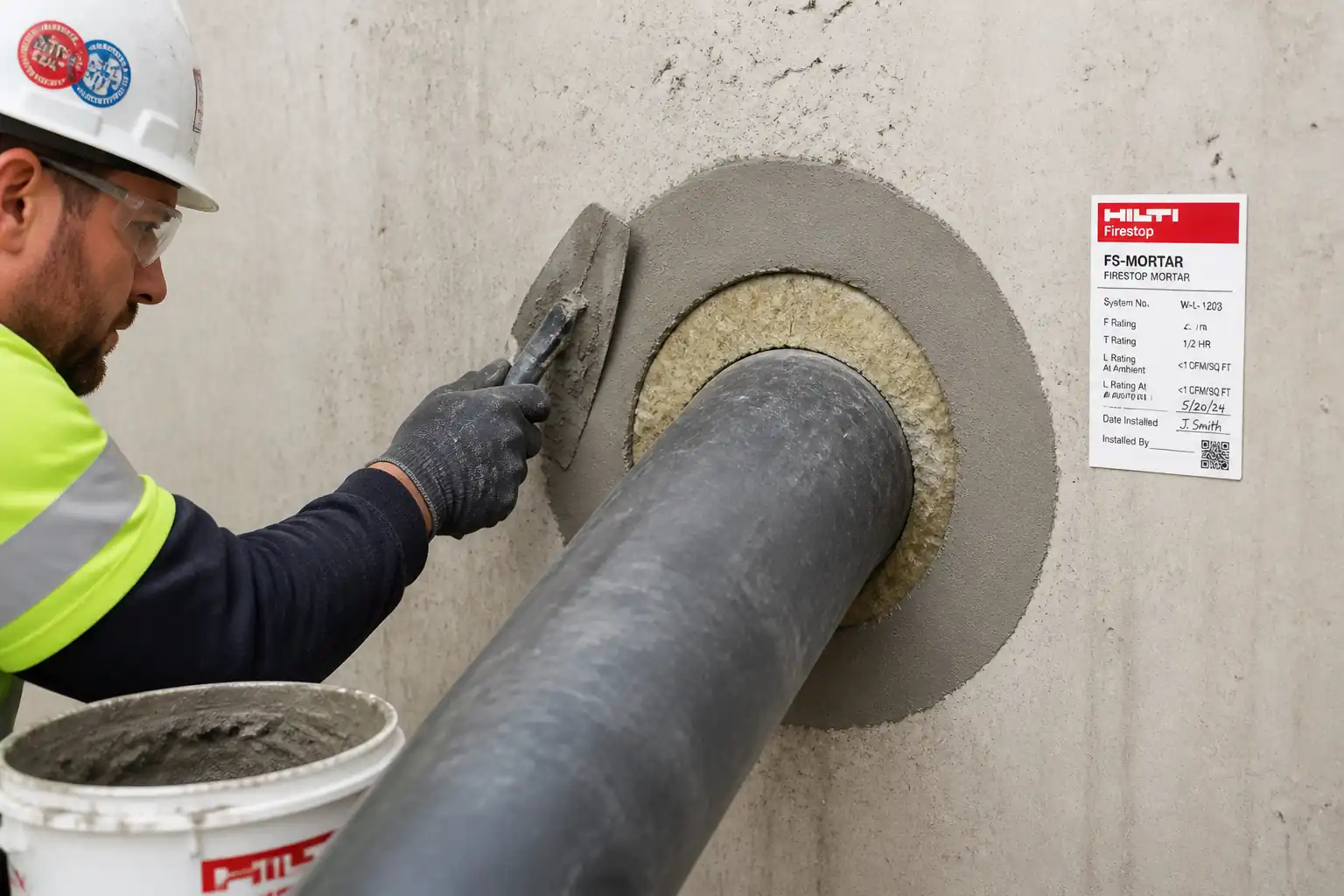

Method Statement: Firestop Mortar Sealing of Non-Combustible Metal Pipe Penetrations (with Insulation Continuity and Sleeve Provision) – Method Statement
AI-assisted method statement with matching ITP, PDF download, and Excel export.
More than a static template
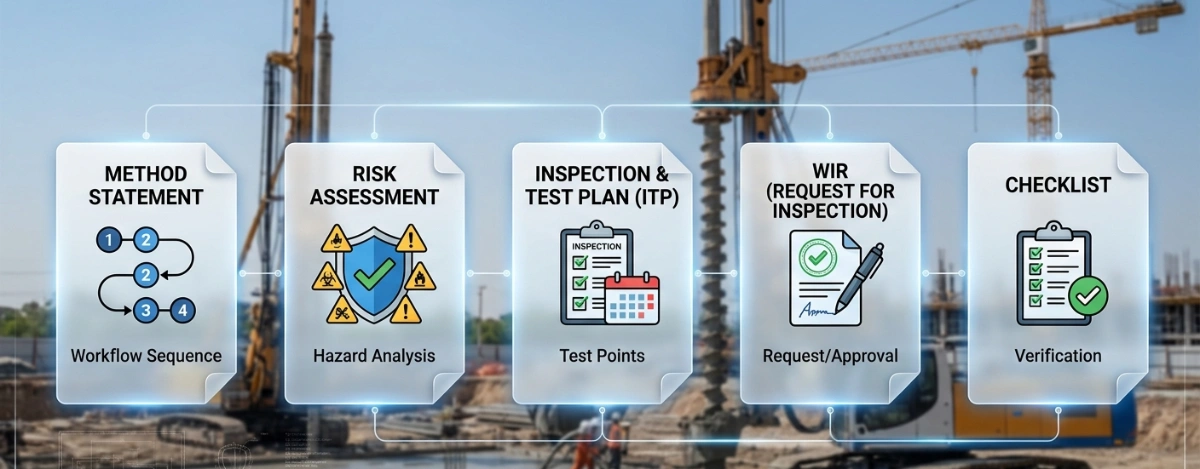
Unlike a downloadable Word or PDF template, this method statement is an AI-assisted editable starting point connected directly to a matching Inspection and Test Plan. Every section is structured, project-adaptable, and ready to export.
- AI-assisted drafting — Customize every section with AI for your specific project scope.
- Linked ITP — A matching inspection and test plan is generated alongside the method statement.
- Multiple export formats — Download as a formatted PDF or editable Excel spreadsheet.
- Editable starting point, not a final document — Review, verify, and adjust all content against your project requirements before use.
Static template vs. Quollnet workflow
| Feature | Static template | Quollnet |
|---|---|---|
| Project-specific content | Manual fill-in required | AI-assisted customization |
| Linked ITP | Separate document, no link | Matching ITP included |
| Export formats | Usually PDF only | PDF and Excel |
| Structured sections | Free-form layout | 13 standardized sections |
| Saved to your account | Local file only | Cloud-saved, reusable |
| Content accuracy | You verify everything | AI-assisted, you still verify |
| Cost | Often free but time-intensive | Free to customize and download |
What you can customize
When you save this method statement to your account, every section becomes editable. The following 13 sections are included:
- Scope — Defines the activity and its boundaries.
- References — Standards, specifications, and drawings.
- Responsibilities — Roles and accountabilities.
- Resources — Labour, plant, and equipment summary.
- Materials — Materials and compliance requirements.
- Equipment — Tools and equipment details.
- Prerequisites — Hold points and pre-conditions.
- Method sequence — Step-by-step construction sequence.
- Safety controls — HSE risk controls and PPE.
- Environmental controls — Environmental mitigation measures.
- QA/QC — Quality inspection and test requirements.
- ITP — Inspection and Test Plan table (has its own page).
- Attachments — Referenced drawings and documentation.
Why this method statement is used
This method statement is used to define and communicate the approved procedure for carrying out method statement: firestop mortar sealing of non-combustible metal pipe penetrations (with insulation continuity and sleeve provision) on site. It ensures the work is planned in advance, the correct resources and controls are in place, and all personnel understand responsibilities, sequence, quality requirements, and safety controls before work begins. It aligns site execution with the documented scope and acceptance expectations.
Who uses this method statement
This method statement is used by contractors, site supervisors, project engineers, QA/QC engineers, HSE officers, consultants, and client representatives. It serves as a shared reference for planning, execution, supervision, inspection, and approval of the activity on site.
When it is prepared and submitted
The method statement is prepared before the work activity starts and submitted as part of the pre-construction documentation package for review and approval.
Who reviews or approves it
The method statement is usually submitted to the client representative, consultant, resident engineer, or project management consultant for review and approval before the work commences.
Important approval note
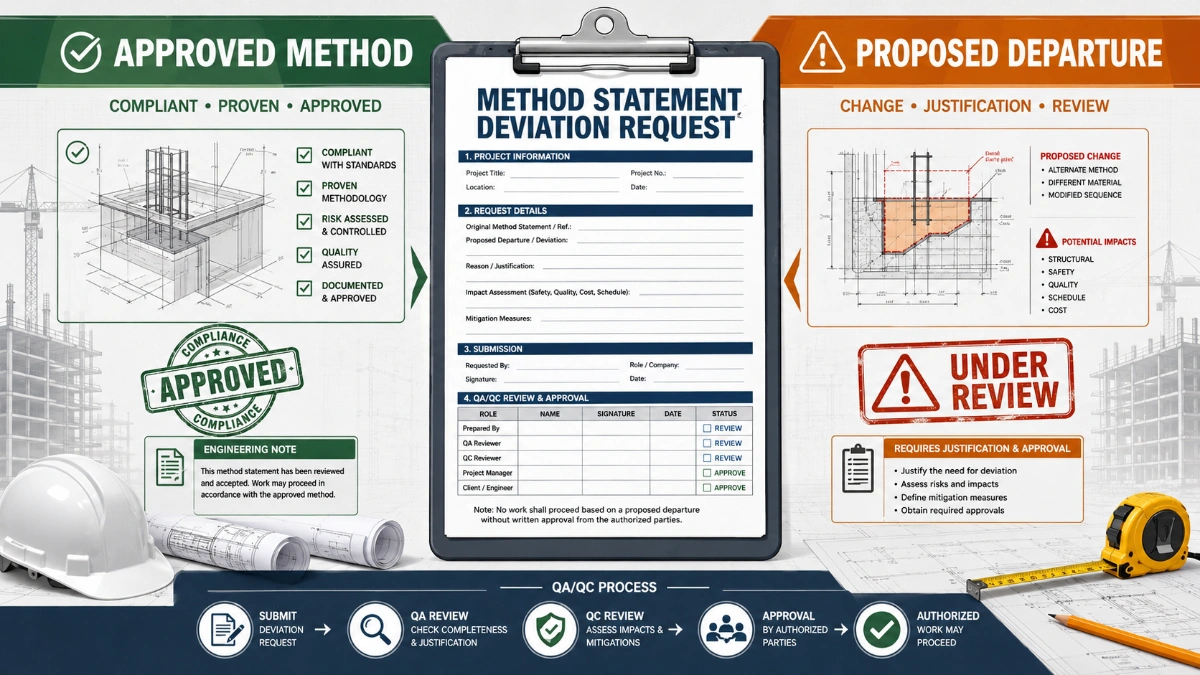
This method statement is an AI-assisted editable starting point, not a pre-approved document. Before use on any project, all content must be reviewed and approved by the relevant parties (superintendent, principal contractor, or client representative) in accordance with your contract and project quality plan.
For example: if your specification requires a departure from a referenced standard, that departure must be documented and approved separately — this method statement will not capture that automatically. Always verify against your applicable drawings, specifications, and regulatory requirements.
Method statement content
Scope
Purpose
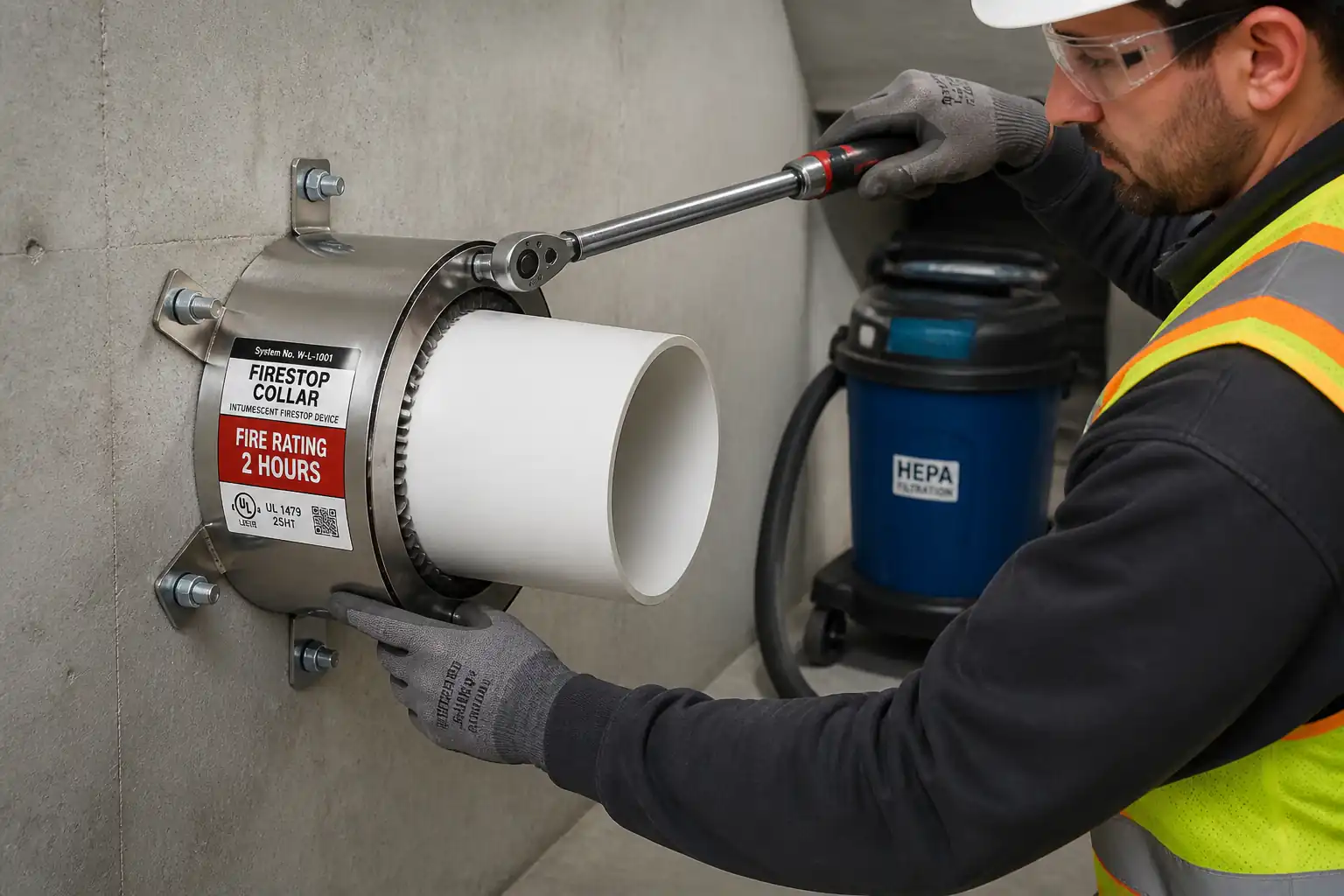
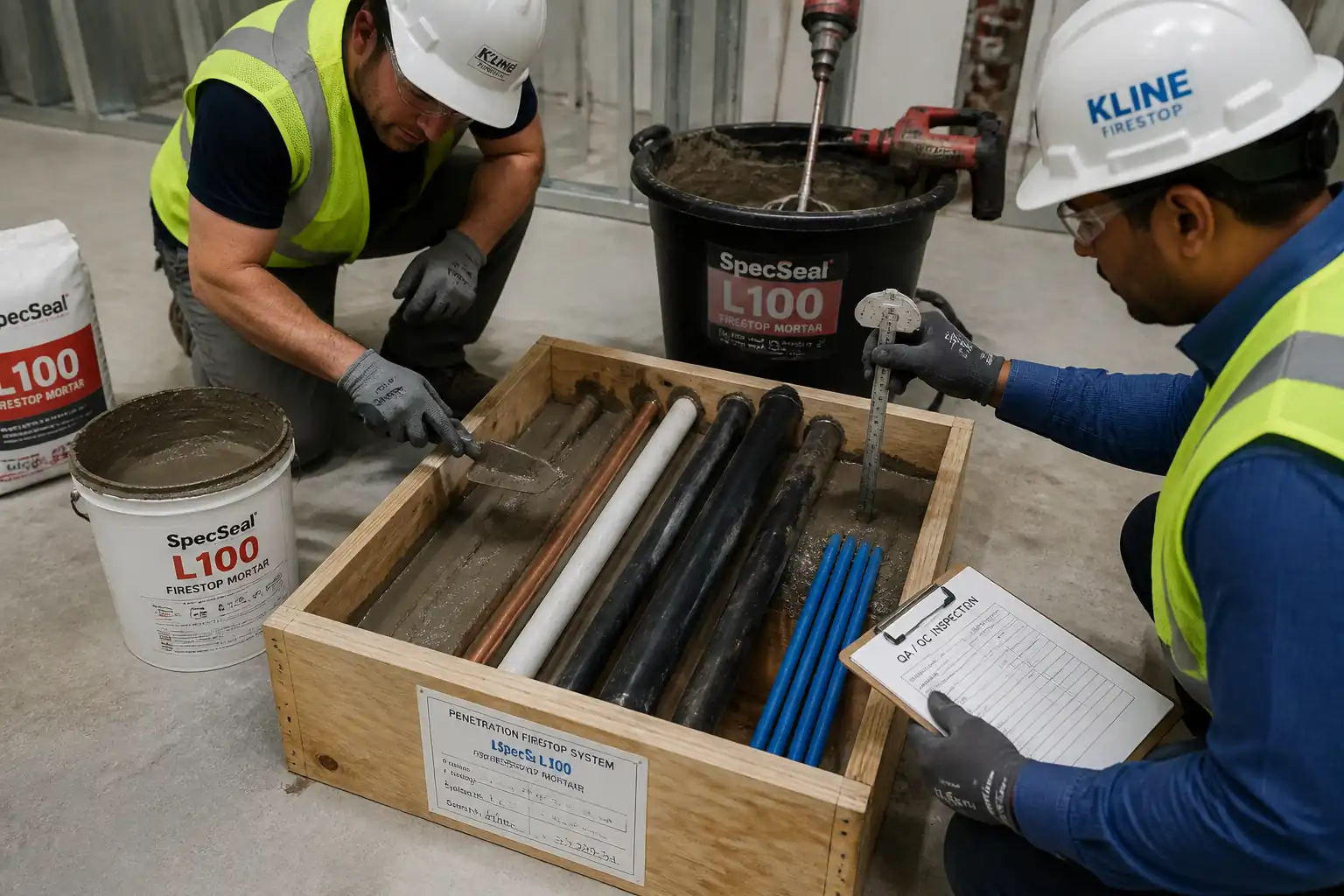
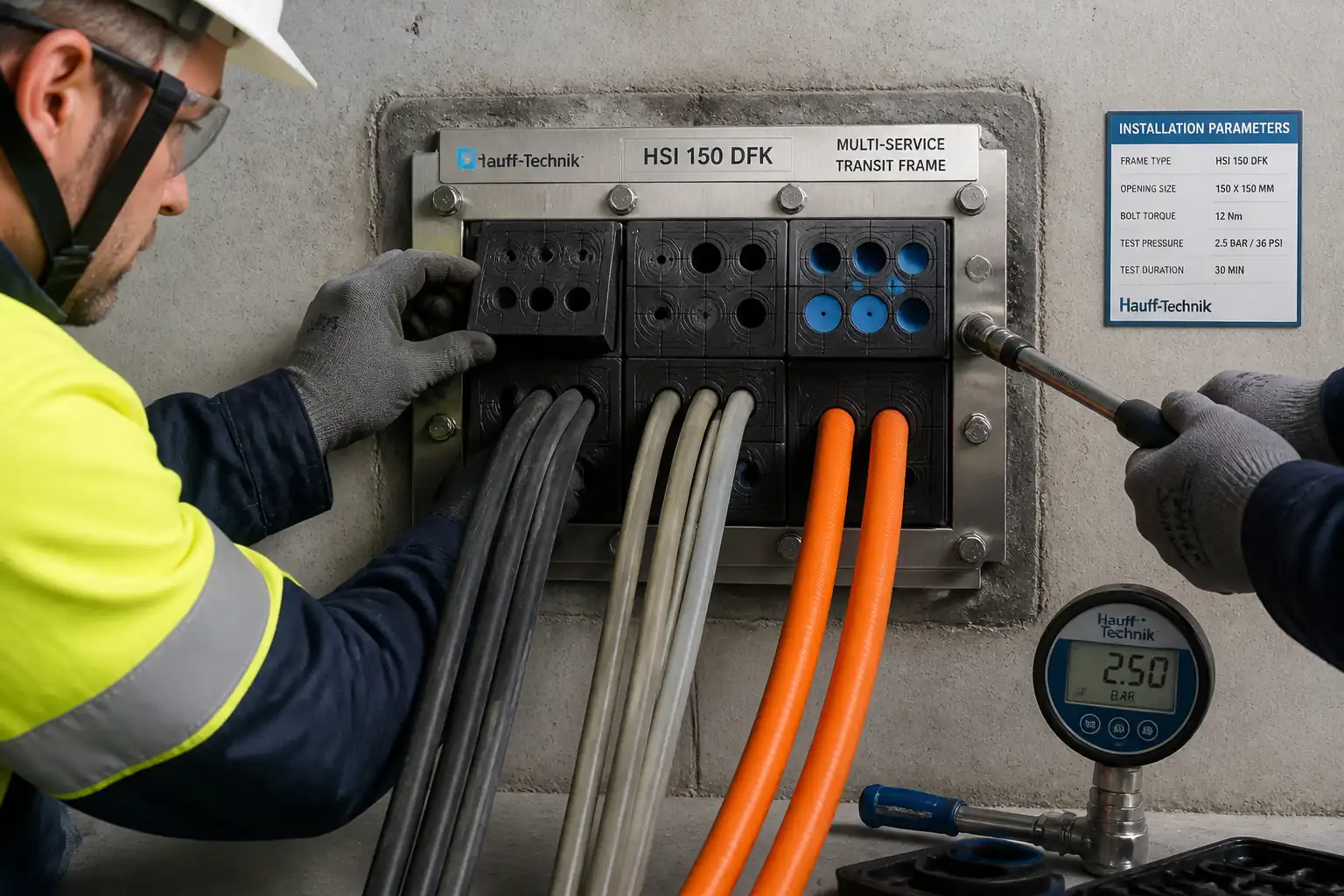
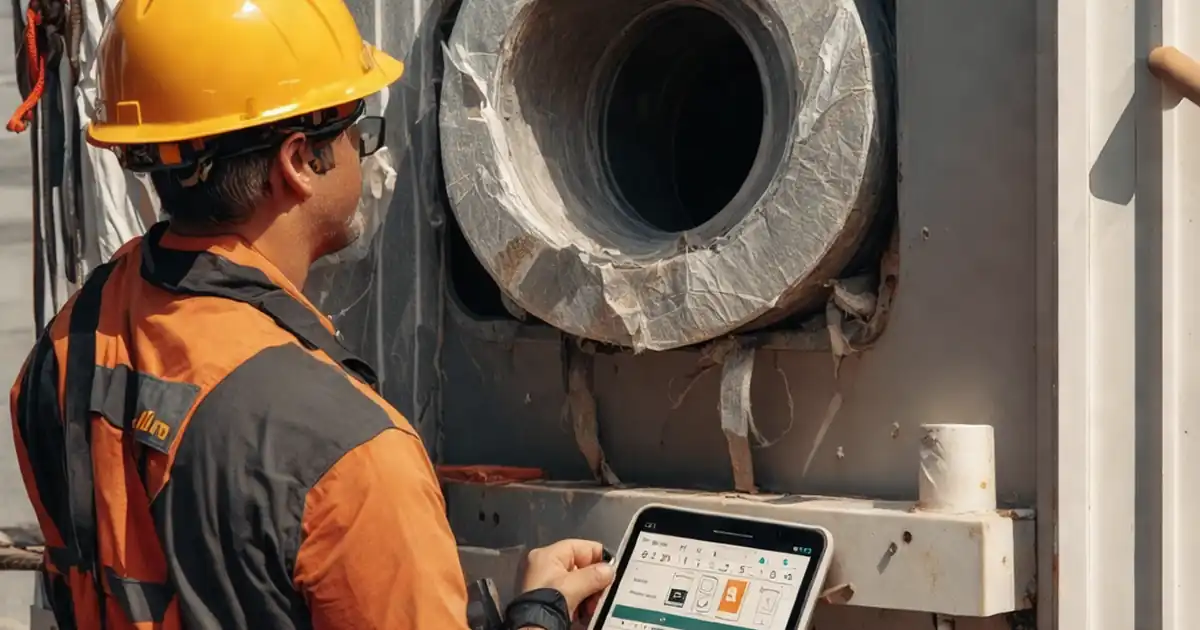
Provide a detailed, standardized procedure to install and inspect fire-resistance-rated penetration seals for non-combustible metal pipes (e.g., carbon steel, stainless steel, copper) passing through fire-rated walls and floors using proprietary, third-party-tested firestop mortar systems. The method addresses sleeve use, backing material, mortar mixing and depth of fill, continuity of pipe insulation, clearances to combustible materials, curing, identification, documentation, and the inspection hold point prior to covering.
Extent
- Applicable to rigid walls and floors (concrete, CMU) of fire resistance rating (FRR) 1–4 hours [Verify per project specifications].
- Pipe sizes typically DN15–DN300 [Verify].
- Includes pipes with thermal/acoustic insulation; combustible insulation treatment and continuity reinstatement are covered.
- Excludes dynamic movement joints and penetrations for combustible pipes (separate systems required).
Objectives
- Achieve a firestop performance (integrity and insulation) equal to or exceeding the host assembly FRR, per the approved tested system.
- Deliver smoke/leakage performance where required (e.g., L-rating, S-rating) [Verify per project specifications].
- Ensure correct documentation, traceability, and hold-point inspection before concealment.
References
| Document Type | Reference / Number | Revision | Notes |
|---|---|---|---|
| Standard | ASTM E814; UL 1479; ASTM E119; ASTM E84; ASTM E2307 | Use the specific listing that matches the project system [Verify]. | |
| Standard | EN 1366-3; EN 13501-2 | Use ETA/European Assessment Documents where applicable. | |
| Code | NFPA 101; IBC; local code [Verify] | Local AHJ requirements govern. | |
| Manufacturer | Approved product system number [Insert] | System must match pipe type, size, insulation, wall/floor thickness and rating. | |
| Standard/Plan | Project HSE Plan; QA/QC Plan |
Responsibilities
| Role | Responsibility | Name / Party |
|---|---|---|
| PM | Ensure approved firestop systems and procurement. | Main Contractor |
| SE | Dimensional checks, annular space control, documentation. | Main Contractor |
| QA/QC | Verify compliance with listings; control of batch numbers. | Main Contractor |
| HSE | Toolbox talks, PPE compliance, environmental controls. | Main Contractor |
| Installer | Mixing, packing, finishing, labeling. | Specialist Subcontractor |
| Vendor Rep | Issue visit report where applicable. | Manufacturer |
| Consultant | Acceptance and sign-off. | Engineer/Client |
Resources
| Resource Type | Description | Quantity | Remarks |
|---|---|---|---|
| Personnel | 1 x Site Engineer; 1 x QA/QC; 1 x HSE Officer (shared); 2–4 x Certified Firestop Installers; 1 x Helper. | Typical crew 4–6 | |
| Training | Manufacturer-approved installer training; toolbox talk on alkaline mortar hazards, working at height near soffits, and inspection requirements. |
Materials
| Material | Specification / Grade | Quantity | Remarks |
|---|---|---|---|
| Mortar | |||
| Mineral Wool | |||
| Steel Sleeve | |||
| Mesh/Lath | |||
| Insulation |
Equipment
| Equipment | Capacity / Type | Quantity | Inspection Required |
|---|---|---|---|
| 1 set per crew | |||
| Full kit | |||
Prerequisites
- Approved submittals: firestop system listing(s) matching each penetration condition (pipe material/size, insulation type/thickness, wall/floor thickness, FRR), TDS/SDS, and shop drawings.
- Penetration register prepared with unique IDs and corresponding approved system numbers.
- Host assembly verified to be complete and rated; surfaces sound and clean; moisture not excessive; void edges free of loose material.
- Pipework installed, pressure tested (if required), supported independently on both sides within 0.5 m of penetration to limit movement into seal [Verify per listing]. No supports bearing on firestop mortar.
- Area access cleared; adjacent finishes protected; services de-energized/isolated where hot surfaces or moving parts are present [Verify].
- First-of-kind mock-up (if required) witnessed and accepted prior to production works.
- HSE: Task-specific risk assessment approved; PTW for working at height/MEWP and any confined/service riser access; SDS briefed; eyewash available near mixing station.
- Calibration/verification: measuring containers marked; depth gauges available.
Method Sequence
| Step | Activity | Description | Responsibility | Inspection / Hold Point |
|---|---|---|---|---|
| 1 | Verify approved system and tag penetration | Confirm the UL/ETA system matches pipe OD, insulation, FRR, and substrate. Affix temporary tag with penetration ID and system number. | Site Engineer / QA-QC | Document check |
| 2 | Prepare opening and pipe | Remove debris, laitance, and contaminants. Wire-brush edges. Vacuum clean. Lightly pre-dampen concrete/CMU surfaces to SSD; no free water. Deburr sleeve edges if present. | Installer | Visual cleanliness |
| 3 | Install sleeve (if specified) | Fit galvanized steel sleeve centered in opening. Maintain annular gap per listing (typical 10–25 mm) [Verify]. Sleeve flush with both faces unless the system requires projection. Secure to prevent movement. | Installer | Dimensional check |
| 4 | Install backing/support | Insert mineral wool backing where listed, compressed 20–40%. For floors or large voids (>150 mm span), install galvanized lath/mesh fixed @ ≤400 mm c/c to support wet mortar. | Installer | Compression/spacing check |
| 5 | Insulation continuity and combustible insulation setback | If pipe is insulated with combustible material (e.g., elastomeric, PIR, phenolic), remove it typically ≥200 mm from each face and replace with non-combustible mineral wool of same thickness; reinstate jacketing and vapor barrier after curing. If already non-combustible insulation, continue through penetration per listing. | Installer | Material/type/thickness check |
| 6 | Mix firestop mortar | Measure clean water into tub (start low end of ratio). Gradually add powder while mixing with paddle mixer for 2–3 minutes to lump-free consistency. Allow 1–2 minutes rest; remix briefly. Do not exceed water:binder ratio (typ. 0.12–0.16 by weight) and do not retemper after initial set. Ambient/application temp 5–35°C [Verify]. | Installer | Monitor ratio and pot life |
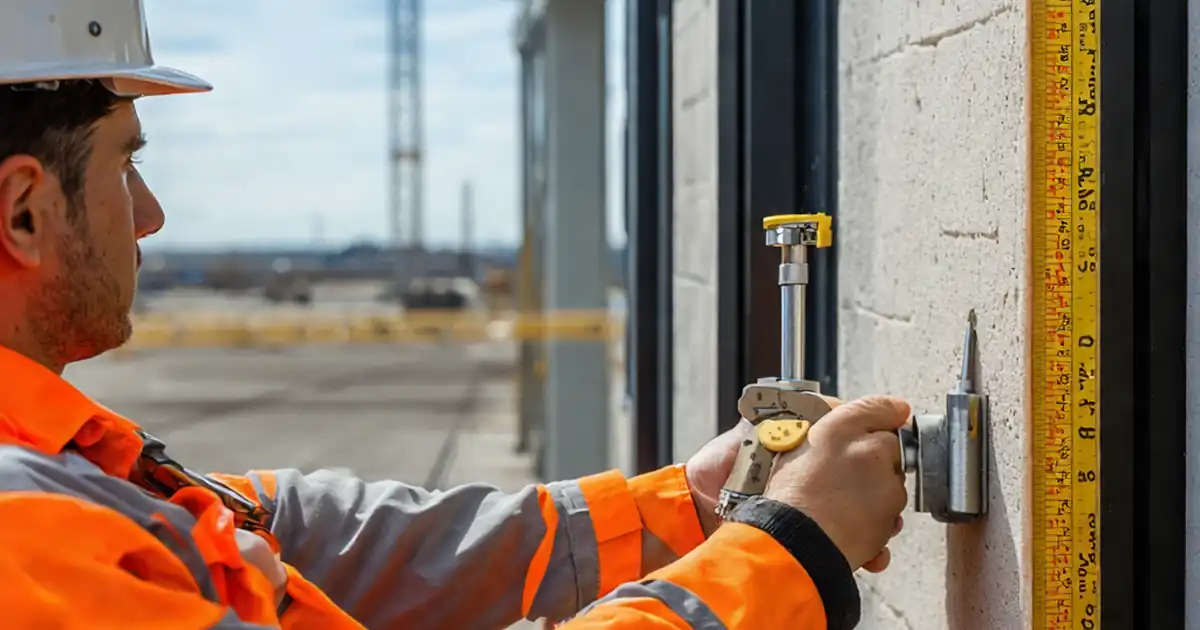
| 7 | Place and compact mortar | Pack mortar tightly around pipe and into annulus from one face, working to eliminate voids. Where access permits, place from both sides. Achieve minimum mortar depth per system (typ. ≥100 mm or full-depth for higher ratings) [Verify]. Trowel flush with face unless recess/finish specified. | Installer | Depth gauge; visual for voids |
| 8 | Clearance to combustible materials | Maintain minimum separation between firestop system and unrelated combustible materials (cables, foam, wood) typically ≥50 mm unless the tested system permits contact or treatment [Verify]. | Installer | Spacing check |
| 9 | Curing and protection | Protect from vibration/impact. Prevent water exposure and rapid drying. Typical initial set 2–5 h; protect for 24 h before applying jacketing/finishes [Verify]. | Installer | Periodic check |
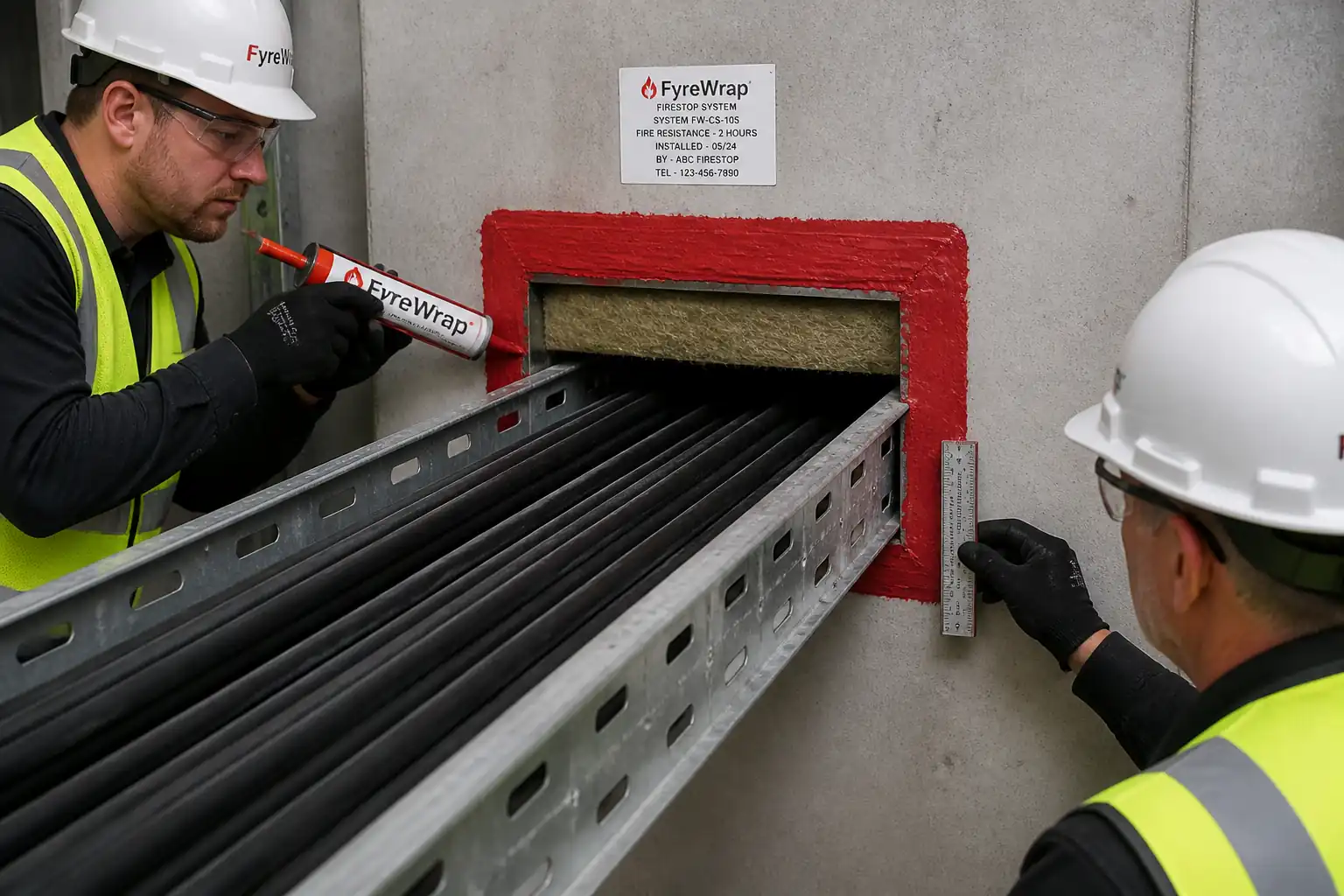
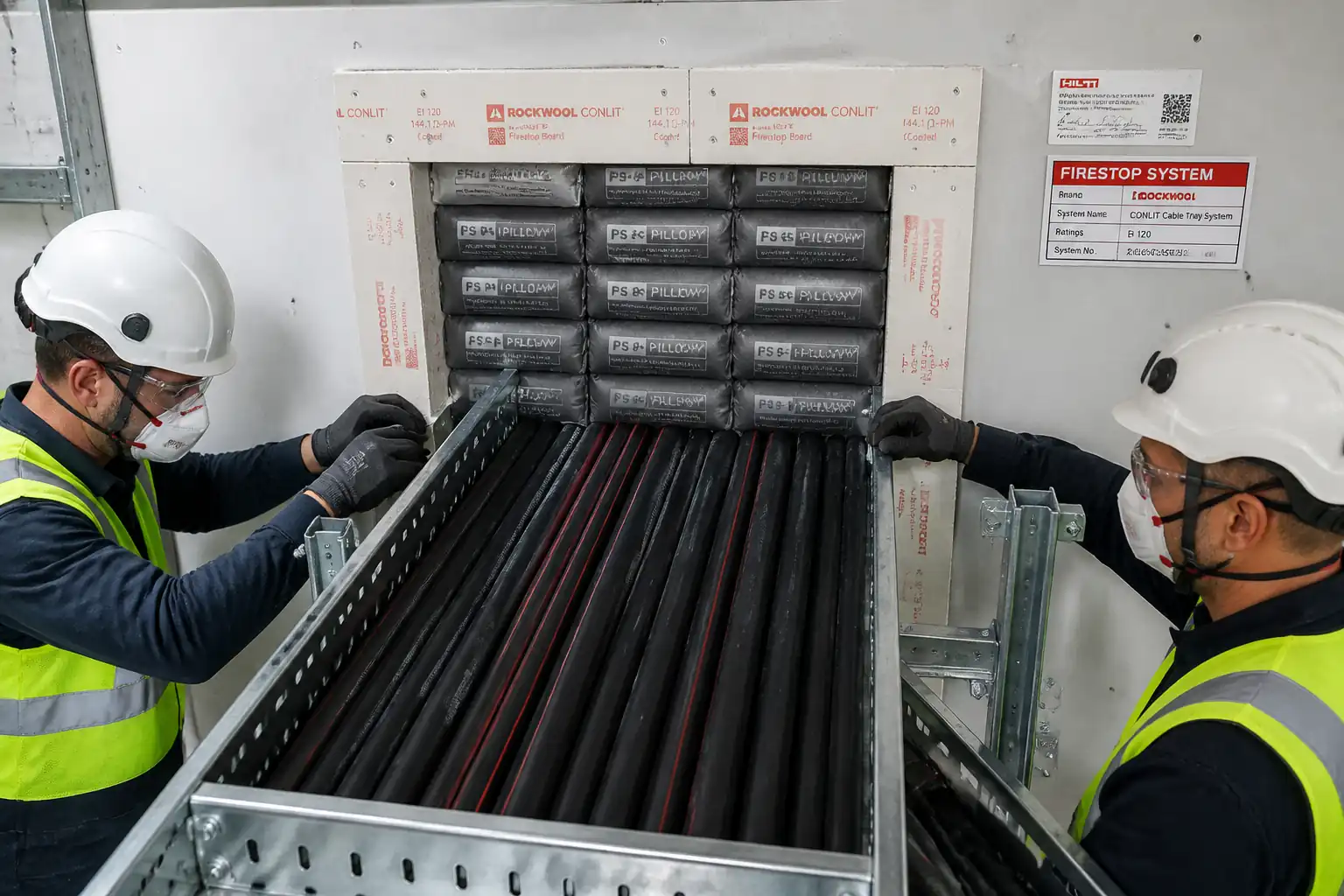
| 10 | Identification and labeling | Apply permanent firestop label adjacent to penetration stating system number, FRR, installer, date, and unique ID. | Installer / QA-QC | Label content/position |
| 11 | Inspection hold point before covering | Notify Consultant/QA-QC for inspection prior to concealing with insulation jacketing, enclosures, or architectural finishes. Provide access and all records. | QA-QC | Hold point |
| 12 | Reinstatement of insulation/jacketing and closeout | After release, reinstate insulation/jacketing and vapor barrier continuity. Update as-builts and penetration log. Submit warranty and product data. | Installer / QA-QC | Final check |
Safety Controls (Task-Specific)
Principal Hazards and Controls
- Hazard: Alkaline/cementitious mortar exposure (skin/eye burns)
- Consequence: Chemical burns, dermatitis, eye injury
- Engineering/Procedural Control: Use closed mixing area with splash guards; measure water first; no hand mixing; provide eyewash within 10 m.
- Required PPE: Alkali-resistant gloves (EN 374), long sleeves, safety goggles/face shield (EN 166), coveralls, waterproof boots.
- Collective Measure: Mixing station barriered and signed; spill kits/neutralizer available.
-
Inspection/Permit/Supervision: SDS briefing; HSE inspection of mixing station; TBT completed.
-
Hazard: Silica/cement dust during surface prep
- Consequence: Respiratory irritation, long-term lung disease
- Engineering/Procedural Control: HEPA vacuum attachment; wet wipe/pre-dampen; prohibit dry sweeping.
- Required PPE: FFP2/FFP3 or N95/N99 respirator [Verify per HSE plan]; safety goggles.
- Collective Measure: Local exhaust/HEPA vac; dust barriers if indoors.
-
Inspection/Permit/Supervision: HSE monitoring; housekeeping checks.
-
Hazard: Working at height at soffits/risers
- Consequence: Falls, dropped objects
- Engineering/Procedural Control: Use podiums/MEWPs with guardrails; tool lanyards; exclusion zone below.
- Required PPE: Full body harness with lanyard (if MEWP), hardhat with chin strap, safety footwear.
- Collective Measure: Edge protection; toe boards; spotter.
-
Inspection/Permit/Supervision: PTW for WAH/MEWP; daily equipment inspection tags; supervisor oversight.
-
Hazard: Contact with hot or live services
- Consequence: Burns, service damage, leaks
- Engineering/Procedural Control: Confirm isolation/temperature status; apply heat shields; maintain required setbacks from hot lines.
- Required PPE: Heat-resistant gloves, long sleeves, eye protection.
- Collective Measure: Lock-out/tag-out where applicable; barriers.
-
Inspection/Permit/Supervision: PTW/LOTO [Verify]; coordination with MEP lead.
-
Hazard: Manual handling of 20–25 kg mortar bags and access equipment
- Consequence: Strains, crush injuries
- Engineering/Procedural Control: Team lifts; bag lifter or trolley; store at waist height; pre-stage near workface.
- Required PPE: Gloves, safety footwear.
- Collective Measure: Material hoist; mechanical aids.
-
Inspection/Permit/Supervision: Manual handling training; HSE observation.
-
Hazard: Sharp edges on sleeves/mesh
- Consequence: Lacerations
- Engineering/Procedural Control: Deburr/cap edges; use shears not grinders where possible.
- Required PPE: Cut-resistant gloves (EN 388), long sleeves.
- Collective Measure: Edge guards; housekeeping.
-
Inspection/Permit/Supervision: Pre-use inspection by supervisor.
-
Hazard: Electrical risks from powered mixers/lighting
- Consequence: Shock, electrocution
- Engineering/Procedural Control: 110 V center-tapped or RCD-protected circuits; dry area; intact cables.
- Required PPE: Dielectric gloves when connecting, dry footwear.
- Collective Measure: Spill containment to keep area dry.
- Inspection/Permit/Supervision: Weekly PAT/visual checks; lockable distribution boards.
[Verify per project HSE plan and local regulations]
Environmental Controls
- Mortar washout water: High pH; collect in designated containers; neutralize and dispose via approved contractor—no discharge to drains.
- Dust/air quality: Use HEPA vacuums; pre-dampen surfaces; install temporary seals to prevent dust migration to occupied areas; schedule noisy/dusty works off-hours.
- Waste segregation: Empty bags (paper/plastic) segregated; hardened leftover mortar disposed as inert construction waste; track quantities.
- Spill prevention: Store materials on trays; keep mixing area on impermeable sheeting; immediate cleanup of cement spills.
- Noise/vibration: Maintain equipment in good order; limit working hours near occupied spaces.
- Material efficiency: Mix only quantities that can be placed within pot life; record batch sizes to minimize waste.
- Packaging and SDS management: Retain SDS on site; ensure containers are closed and protected from moisture.
- Energy/use of MEWP: Shut down idling equipment; LED task lighting.
[Verify per project environmental plan and local regulations]
Quality Assurance / Quality Control
Submittals and Approvals
- Manufacturer’s listings (UL/ETA) and TDS/SDS for each penetration condition.
- Installer competency certificates and training records.
- Penetration register with unique IDs and system references.
Control of Materials
- Check expiry dates and batch numbers; store dry at 5–35°C.
- Verify mineral wool density and thickness; sleeves/mesh gauge.
Execution Controls
- Annular space: Maintain per listing (typ. 10–25 mm) [Verify]. Measure at four quadrants.
- Backing: Mineral wool compressed 20–40% to achieve required packing density.
- Mortar: Water ratio within TDS; no retempering; placed within pot life; minimum depth not less than 100 mm or as listed [Verify].
- Pipe supports: Independent of firestop; supports within 0.5 m of penetration both sides [Verify].
- Insulation continuity: Reinstated with non-combustible material; combustible insulation set back typically ≥200 mm each side [Verify].
- Clearance to combustibles: Maintain ≥50 mm unless listed otherwise [Verify].
- Identification: Permanent labels installed.
Inspection and Test Frequency
- 100% visual inspection of each penetration.
- Dimensional verification (annulus and depth) on 100% of first 10 penetrations of each type, then minimum 25% sampling per shift thereafter; revert to 100% if nonconformance found.
- Documentation: Photos with scale showing annulus and depth prior to covering; batch logs.
Acceptance Criteria
- Conforms to the specific UL/ETA system; FRR equal to host assembly; no voids or cracks; smooth flush finish; correct labeling; all records complete.
Nonconformance
- Record NCR with root-cause and corrective action; no repair or covering without QA/QC and Consultant approval.
Records
- ITP checklists, penetration register, photo log, batch/mix log, delivery notes, training and toolbox records, inspection releases.
Attachments
- Approved firestop system listing(s) and TDS/SDS (attach specific system numbers for each penetration type).
- Penetration register template and sample completed entries.
- ITP checklist forms and hold point notification form.
- Toolbox talk materials (alkaline mortar hazards; working at height near soffits).
- Risk assessment and PTW examples (MEWP/WAH, confined risers) [Verify per project HSE plan].
- Manufacturer’s installation guide and warranty terms.
- Photo log examples showing required measurement evidence (annulus and depth).
This content is a read-only public reference. Download or customize to get an editable version.
ITP preview
The first inspection activities from the linked ITP for Method Statement: Firestop Mortar Sealing of Non-Combustible Metal Pipe Penetrations (with Insulation Continuity and Sleeve Provision):
| Activity | Inspection / Test | Acceptance Criteria | Responsibility | Record |
|---|---|---|---|---|
| Pre-works verification | Check approved UL/ETA system vs field condition; verify host assembly rating; verify pipe material/size/insulation. | Exact match to approved listing; deviations resolved by RFI. | QA/QC Engineer | ITP form; submittal approval; photos |
| Opening and surface preparation | Cleanliness and pre-damp condition (SSD) of concrete/CMU; edges sound. | Dust-free; no loose material; slightly damp, no standing water. | Site Engineer / QA-QC | Checklist; photo record |
| Sleeve installation (if applicable) | Measure annular space, alignment, sleeve gauge, projection/flush condition. | Annular gap within listing tolerance (typ. 10–25 mm) [Verify]; sleeve stable. | QA/QC Engineer | Measurement sheet; photos |
Showing 3 of 10 inspection activities. View full ITP →
Related Inspection and Test Plan
An Inspection and Test Plan (ITP) is available for Method Statement: Firestop Mortar Sealing of Non-Combustible Metal Pipe Penetrations (with Insulation Continuity and Sleeve Provision). The ITP defines the inspection activities, acceptance criteria, hold and witness points, responsible parties, and records required to verify the work described in this method statement.
View the Method Statement: Firestop Mortar Sealing of Non-Combustible Metal Pipe Penetrations (with Insulation Continuity and Sleeve Provision) ITP →Frequently asked questions
Continue with related Quollnet resources connected to this method statement.