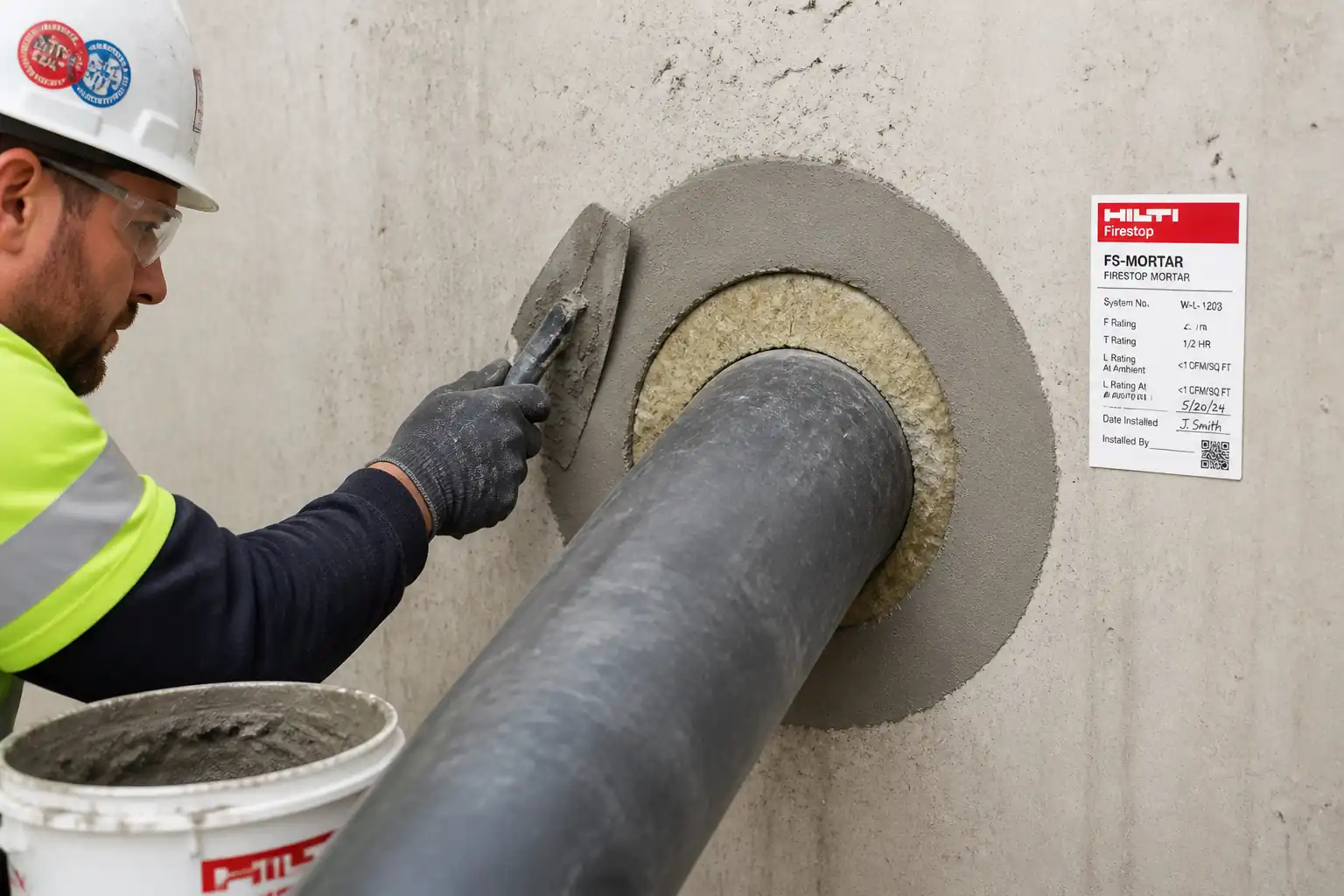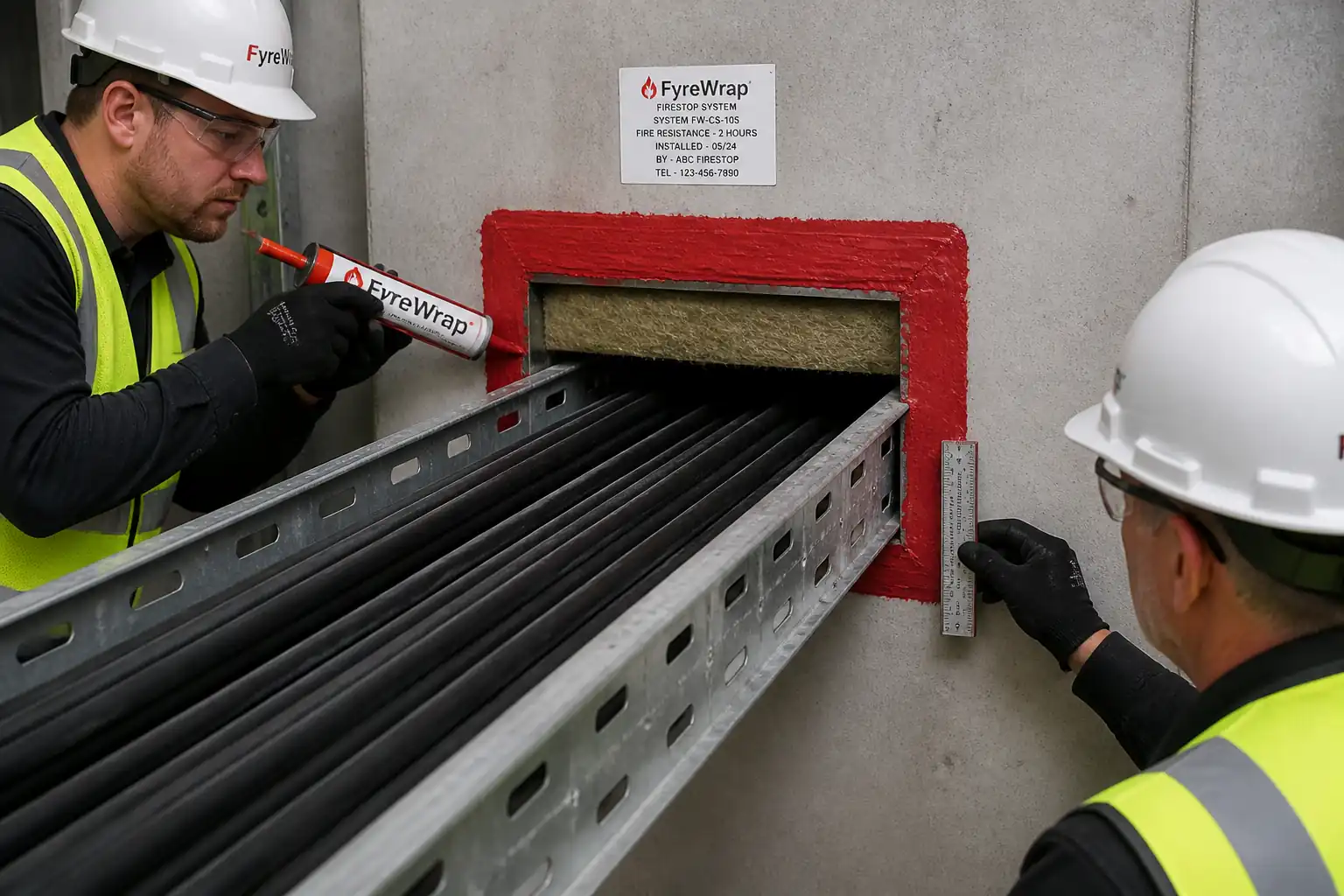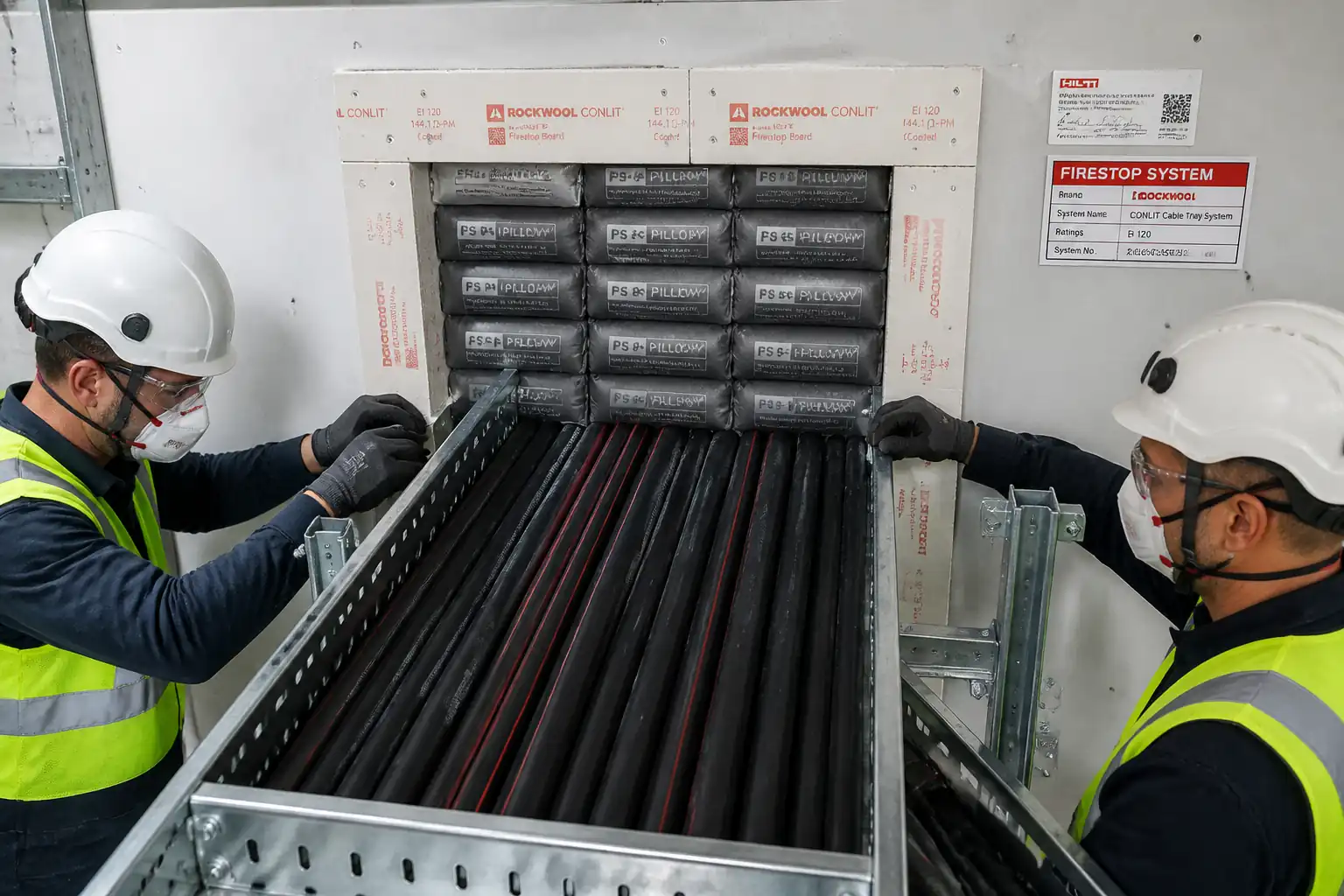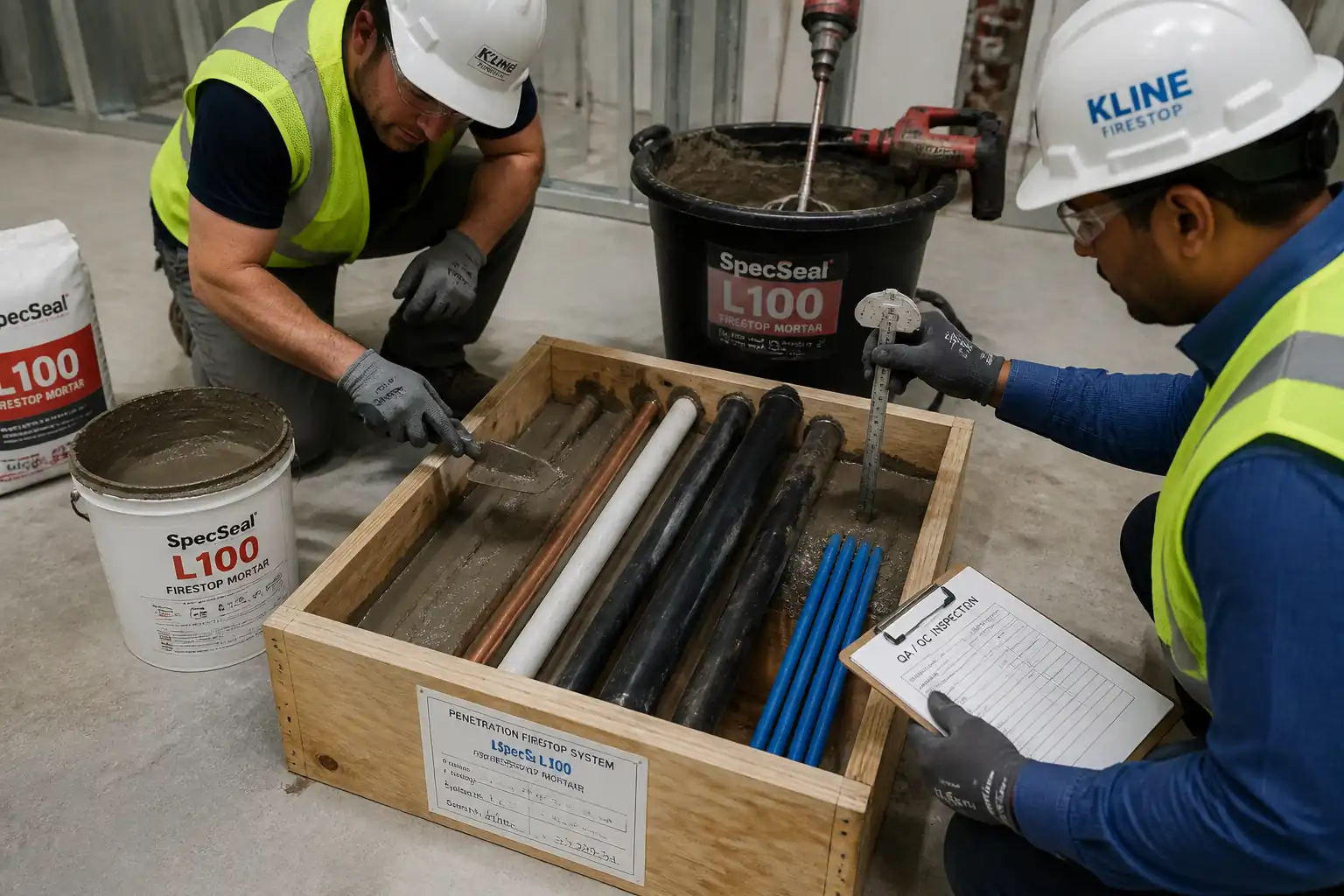

Inspection and Test Plan for Method Statement: Penetration Seals for Combustible Pipes (PVC, HDPE) through Fire-Rated Walls and Floors using Intumescent Firestop Collars
AI-assisted inspection and test plan connected to a method statement, with PDF and Excel export.
More than a static template
Unlike a downloadable Word or PDF template, this ITP is an AI-assisted editable starting point directly connected to its method statement. Every inspection activity, hold point, and acceptance criterion is structured and ready to adapt to your project.
- AI-assisted customization — Tailor inspection activities and acceptance criteria to your specific project scope.
- Linked method statement — This ITP is connected to the corresponding method statement describing the work sequence.
- Multiple export formats — Download as a formatted PDF or editable Excel spreadsheet.
- Editable starting point, not a final document — Review and verify all content against your project specifications and standards before use.
What you can customize
When you save this ITP to your account, every inspection row becomes editable. You can add, remove, or modify:
- Inspection activity — Description of what is being inspected.
- Inspection type — Hold point (H), Witness point (W), Review (R), or Monitor (M).
- Responsibility — Contractor, subcontractor, engineer, or client.
- Frequency — How often the inspection occurs.
- Acceptance criteria — Referenced standard or specification requirement.
- Records — Forms, test reports, or checklists required as evidence.
Why this ITP is used
To verify each penetration seal matches a tested system, is correctly fixed/packed, and achieves the specified fire resistance rating.
Who uses this inspection and test plan
QA/QC engineers, site engineers, specialist firestop installers, consultants, and authorities.
When this ITP is prepared and submitted
Applied from submittal approval through installation, final inspection, and handover documentation.
Who receives or approves this ITP
Consultant/Engineer/Authority Having Jurisdiction (as contractually required).
Inspection scope
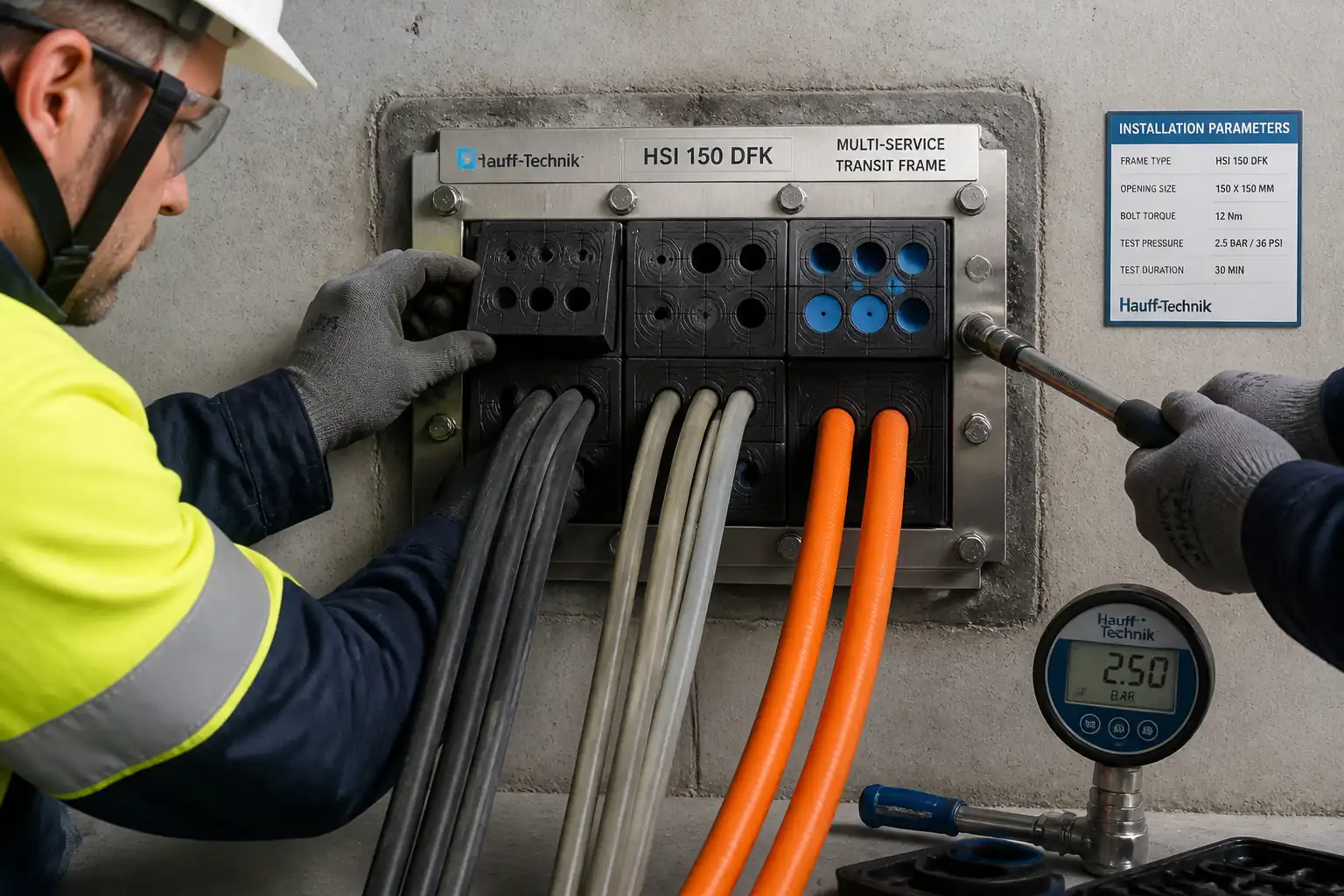
Covers materials, substrate prep, annular gap treatment, collar installation, fixings, linked collars, labeling, and documentation.
Typical hold, witness, and review points
Hold: system approval, collar fixing, final inspection. Witness: substrate prep, gap packing, linked collars, activation demo.
Typical inspection records
Checklists, batch logs, torque/pull-out results, photo dossier, permits, as-builts, firestop register entries.
Important approval note
This ITP is an AI-assisted editable starting point, not a pre-approved document. Before use on any project, all inspection activities, hold points, and acceptance criteria must be reviewed and approved by the relevant parties (superintendent, principal contractor, or client representative) in accordance with your contract and project quality plan.
Always verify acceptance criteria against your applicable drawings, specifications, and regulatory requirements. Hold points must be confirmed with the relevant authority before work proceeds past that point.
Inspection and test plan
| Activity | Inspection / Test | Acceptance Criteria | Responsibility | Record |
|---|---|---|---|---|
| Review/Approval of Firestop System Selection (per location) | Verify UL/ETA system matches element and service conditions | System code approved; deviations resolved by EJ | QA/QC Engineer / Consultant | Approved submittals; ITP sign-off; RFI/EJ if any |
| Material Receiving Inspection | Check certificates, batch numbers, shelf life, condition | Compliant with approvals; undamaged; traceable | QA/QC Engineer | Receiving report; COA/COC; photos |
| Substrate and Opening Preparation | Visual; measure annular gap; substrate soundness/cleanliness | Gap within limits; surfaces clean/dry; accessibility confirmed | Site Engineer / QA/QC | Inspection checklist; photos |
| Annular Gap Packing and Sealant (if required) | Measure packing depth; verify compression; sealant thickness/continuity | Depth/compression per IFU; continuous sealant; no voids | QA/QC Engineer | Checklist; photos |
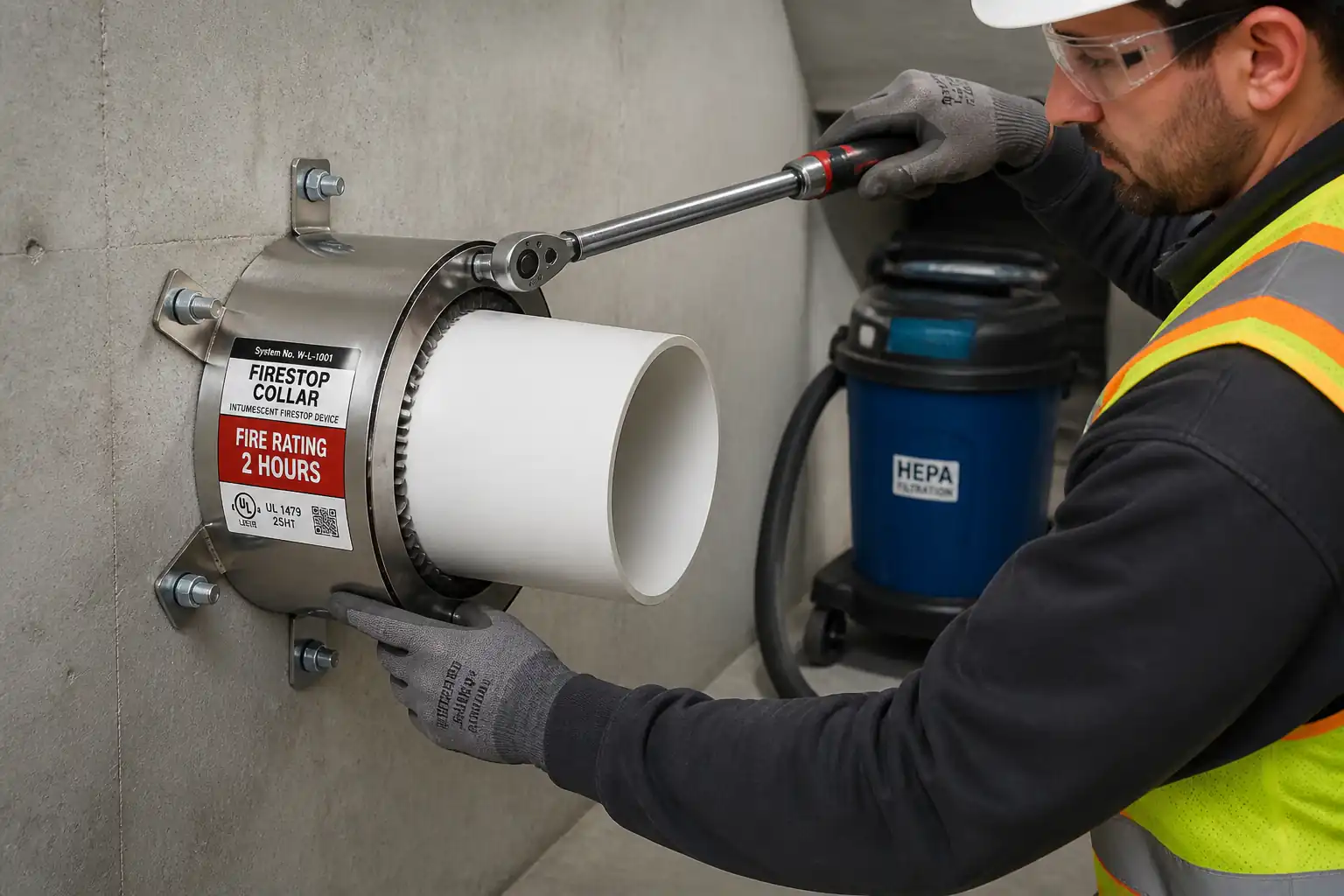
| Collar Positioning and Fixing (each face as applicable) | Verify collar size/model; all tabs fixed; anchor type/embedment; torque sampling | Correct model/size; anchors stainless of approved type; embedment ≥ specified; torque 5–7 N·m or per TDS [Verify] | QA/QC Engineer / Consultant | Torque log; photos; anchor pull-out tests (if required) |
| Linked Collars for Clustered Pipes | Check approved linking kit used; spacing to adjacent collars/services | Linked per manufacturer; minimum spacing achieved or EJ provided | QA/QC Engineer | Photos; sketch/as-built |
| Final Inspection and Labeling | Visual both faces; measurement re-check; label content and placement | Matches tested system; labels present and legible; workmanship acceptable | QA/QC Engineer / Consultant | Final ITP checklist; photo dossier; register entry |
| Activation Demonstration (intumescent sample only) | Heat spare sample to observe expansion; record | Intumescent activates as per TDS; safe hot-work controls in place | Manufacturer Rep / QA/QC | Demo report; photos/video; hot work permit |
This table is a read-only public reference. Download the PDF or Excel version, or customize this ITP to edit it for your project.
Frequently asked questions
Related method statement
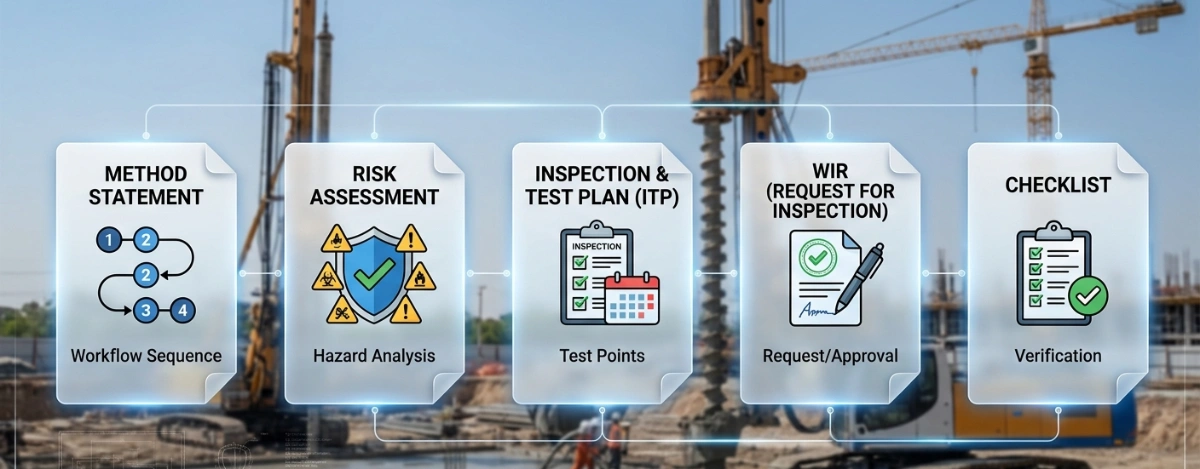
This Inspection and Test Plan is associated with the Method Statement: Penetration Seals for Combustible Pipes (PVC, HDPE) through Fire-Rated Walls and Floors using Intumescent Firestop Collars method statement, which describes the step-by-step construction sequence, resources, materials, equipment, safety controls, and environmental controls for this activity.
View the Method Statement: Penetration Seals for Combustible Pipes (PVC, HDPE) through Fire-Rated Walls and Floors using Intumescent Firestop Collars method statement →Continue with related inspection, method statement, article, and checklist resources.