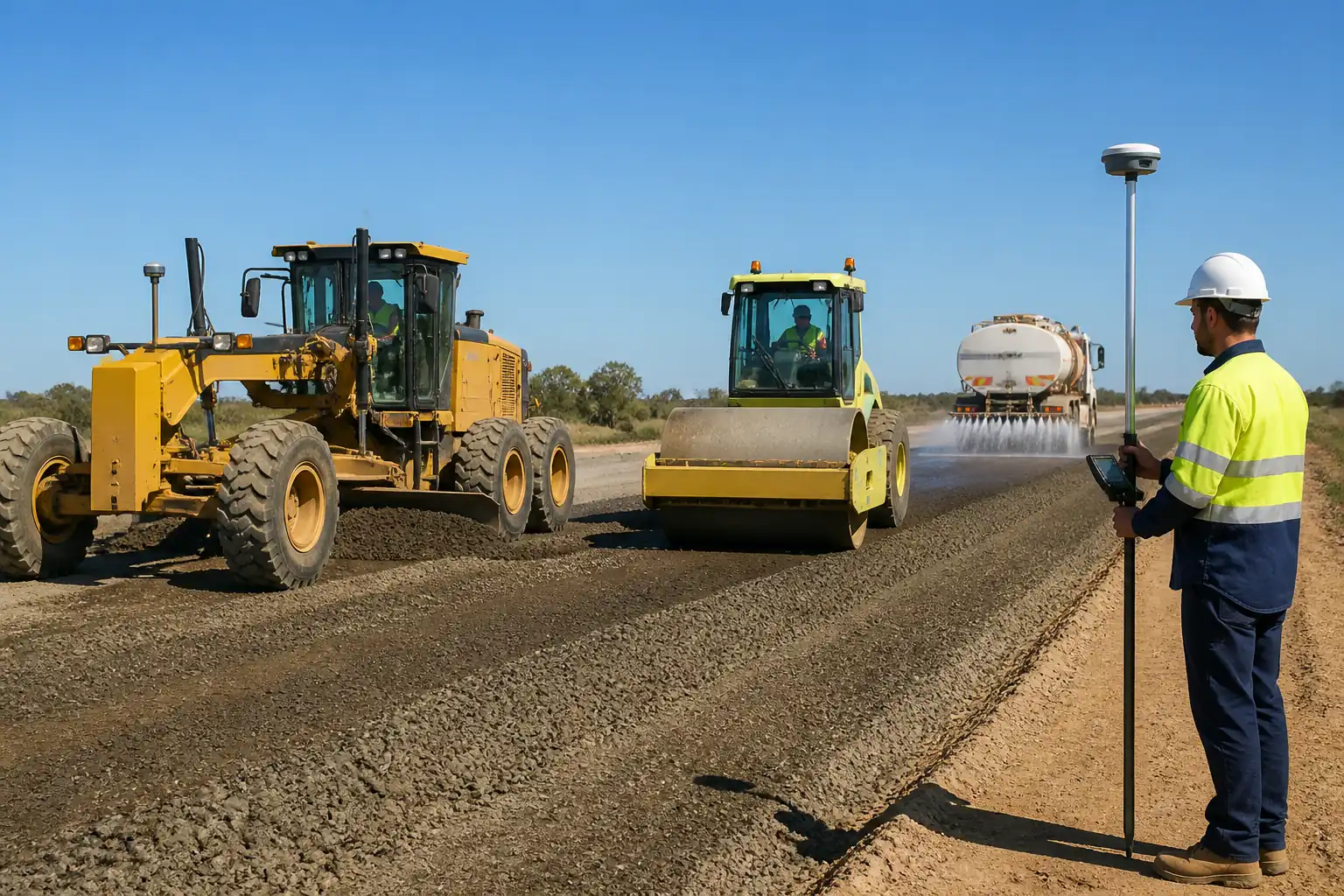

Method Statement – Granular Sub-Base (GSB) Installation (Type 1 / Type 2 Unbound Mixtures) – Method Statement
AI-assisted method statement with matching ITP, PDF download, and Excel export.
More than a static template
Unlike a downloadable Word or PDF template, this method statement is an AI-assisted editable starting point connected directly to a matching Inspection and Test Plan. Every section is structured, project-adaptable, and ready to export.
- AI-assisted drafting — Customize every section with AI for your specific project scope.
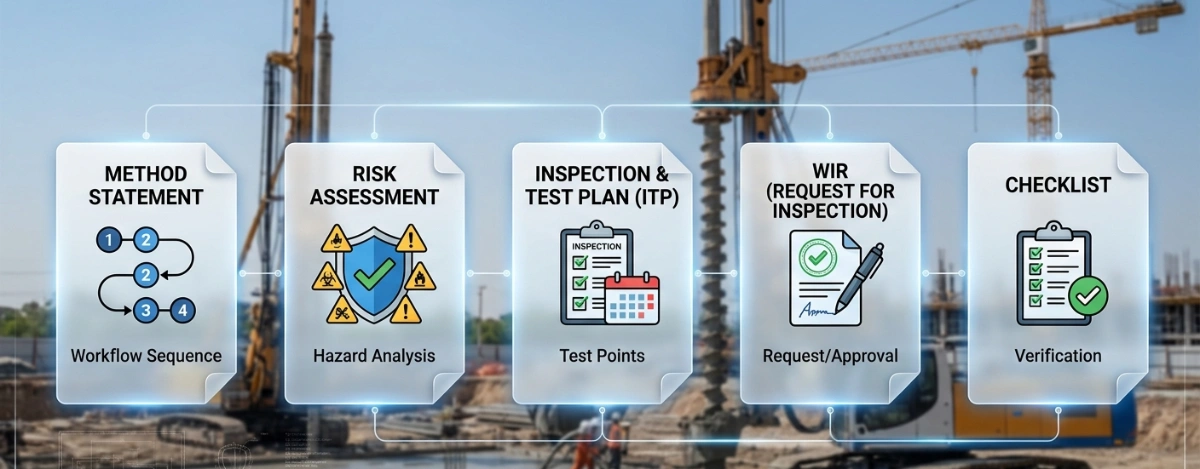
- Linked ITP — A matching inspection and test plan is generated alongside the method statement.
- Multiple export formats — Download as a formatted PDF or editable Excel spreadsheet.
- Editable starting point, not a final document — Review, verify, and adjust all content against your project requirements before use.
Static template vs. Quollnet workflow
| Feature | Static template | Quollnet |
|---|---|---|
| Project-specific content | Manual fill-in required | AI-assisted customization |
| Linked ITP | Separate document, no link | Matching ITP included |
| Export formats | Usually PDF only | PDF and Excel |
| Structured sections | Free-form layout | 13 standardized sections |
| Saved to your account | Local file only | Cloud-saved, reusable |
| Content accuracy | You verify everything | AI-assisted, you still verify |
| Cost | Often free but time-intensive | Free to customize and download |
What you can customize
When you save this method statement to your account, every section becomes editable. The following 13 sections are included:
- Scope — Defines the activity and its boundaries.
- References — Standards, specifications, and drawings.
- Responsibilities — Roles and accountabilities.
- Resources — Labour, plant, and equipment summary.
- Materials — Materials and compliance requirements.
- Equipment — Tools and equipment details.
- Prerequisites — Hold points and pre-conditions.
- Method sequence — Step-by-step construction sequence.
- Safety controls — HSE risk controls and PPE.
- Environmental controls — Environmental mitigation measures.
- QA/QC — Quality inspection and test requirements.
- ITP — Inspection and Test Plan table (has its own page).
- Attachments — Referenced drawings and documentation.
Why this method statement is used
This method statement is used to define and communicate the approved procedure for carrying out method statement – granular sub-base (gsb) installation (type 1 / type 2 unbound mixtures) on site. It ensures the work is planned in advance, the correct resources and controls are in place, and all personnel understand responsibilities, sequence, quality requirements, and safety controls before work begins. It aligns site execution with the documented scope and acceptance expectations.
Who uses this method statement
This method statement is used by contractors, site supervisors, project engineers, QA/QC engineers, HSE officers, consultants, and client representatives. It serves as a shared reference for planning, execution, supervision, inspection, and approval of the activity on site.
When it is prepared and submitted
The method statement is prepared before the work activity starts and submitted as part of the pre-construction documentation package for review and approval.
Who reviews or approves it
The method statement is usually submitted to the client representative, consultant, resident engineer, or project management consultant for review and approval before the work commences.
Important approval note
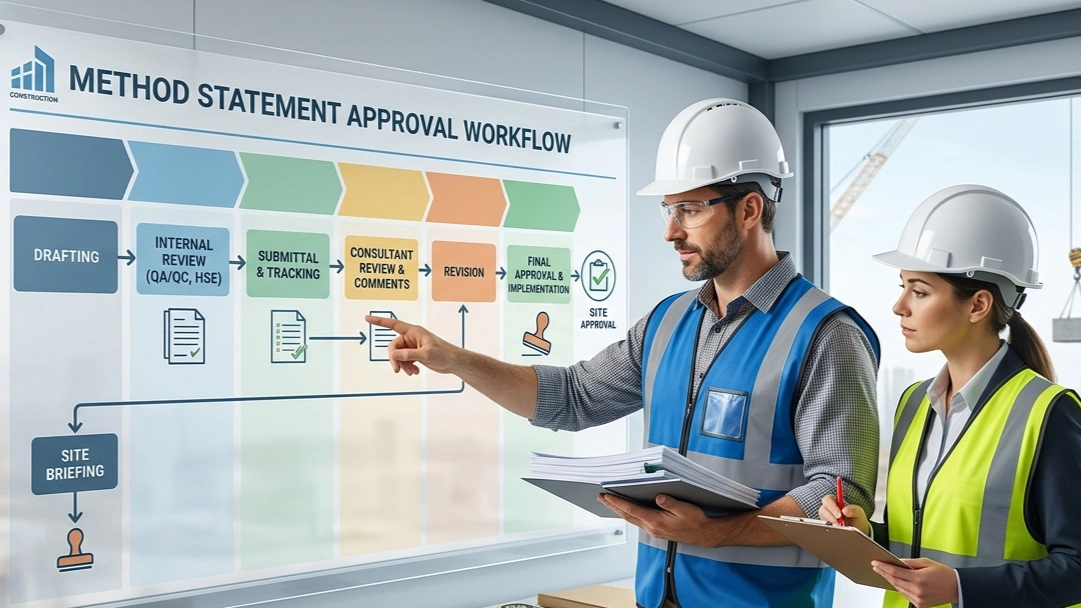
This method statement is an AI-assisted editable starting point, not a pre-approved document. Before use on any project, all content must be reviewed and approved by the relevant parties (superintendent, principal contractor, or client representative) in accordance with your contract and project quality plan.
For example: if your specification requires a departure from a referenced standard, that departure must be documented and approved separately — this method statement will not capture that automatically. Always verify against your applicable drawings, specifications, and regulatory requirements.
Method statement content
Scope
Overview
This method statement defines the procedures, resources, and controls for constructing granular sub-base (GSB) layers using Type 1 or Type 2 unbound mixtures beneath pavements, access roads, footways, hardstandings, and similar works. Activities include material receipt and verification, stockpile and segregation control, formation verification, geotextile (if specified), setting-out, moisture conditioning, spreading, compaction, field density and moisture testing, surface level/regularity checks, cross-fall verification, rectification, protection, and handover.
Objectives
- Achieve specified layer thickness, density, moisture content, surface tolerances, and cross-fall within the approved design and project specifications.
- Prevent material segregation and contamination.
- Ensure HSE-compliant execution and environmental protection.
Typical Acceptance Targets [Verify per project specifications]
- Material: Type 1 or Type 2 unbound mixtures conforming to BS EN 13285 and BS EN 13242 grading and quality requirements.
- Layer compacted thickness per drawings (typically 125–200 mm per layer). Loose thickness generally not exceeding 200–225 mm to achieve compaction.
- Moisture content during compaction: within approximately -2% to +1% of Optimum Moisture Content (OMC) determined by BS EN 13286-2 (Heavy/Modified Proctor) or ASTM D1557/AASHTO T180 equivalent.
- Compaction: ≥95% of Maximum Dry Density (MDD) by BS EN 13286-2 (or ASTM D1557) unless otherwise specified.
- Surface regularity: 3 m straightedge deviation ≤10 mm; local depressions to be corrected.
- Level tolerance: typically ±10 mm (sub-base) from design; verify per drawings.
- Cross-fall: typically within ±0.3% of design gradient; verify per drawings.
References
| Document Type | Reference / Number | Revision | Notes |
|---|---|---|---|
| Standard | BS EN 13285 | ||
| Standard | BS EN 13242 | Includes fines content and durability requirements [Verify per project specifications] | |
| Standard | BS EN 13286-2, -47 (and relevant parts) | Select method per project lab procedures | |
| Standard | ASTM D1556, ASTM D6938 | Use one consistent method project-wide | |
| Standard | ASTM D1557 / AASHTO T180 | Alternative to BS EN 13286-2 | |
| Standard | BS EN 1097-2, 1097-6; BS EN 933-1, -3 | ||
| Specification | Manual of Contract Documents for Highway Works (SHW) or Project Specs | Use where contract adopts UK highway standards | |
| Standard | ISO 9001, 14001, 45001 | For management systems only |
Responsibilities
| Role | Responsibility | Name / Party |
|---|---|---|
| Project Manager | Ensure method/ITP approvals, allocate resources, liaise with Employer/Engineer | Contractor |
| Site Engineer | Control surveys, as-built, coordinate testing | Contractor |
| QA/QC Engineer | Review material certs, approve test plans, witness tests | Contractor |
| Surveyor | Maintain control network, calibrate equipment | Contractor |
| HSE Officer | Toolbox talks, inspections, permits, incident management | Contractor |
| Foreman | Sequence control, workmanship, exclusion zones | Contractor |
| Laboratory | Conduct tests to approved methods and report results | Third Party/Contractor |
| Engineer | Witness inspections, approve lots, issue punch lists | Engineer |
Resources
| Resource Type | Description | Quantity | Remarks |
|---|---|---|---|
| Manpower | Foreman (1), Site Engineer (1), Surveyor (1), QA/QC (1), HSE Officer (1), Roller Operator (1–2), Grader Operator (1), Water Bowser Driver (1), Dump Truck Drivers (2–6), General Operatives (4–8) [Adjust to production rate] | As listed | |
| Manpower | Field density/moisture technician(s), lab technician(s) | 1–2 per shift |
Materials
| Material | Specification / Grade | Quantity | Remarks |
|---|---|---|---|
| Type 1 GSB | BS EN 13285 Type 1 | As per BOQ | [Verify per project specifications] |
| Type 2 GSB | BS EN 13285 Type 2 | As per BOQ | [Verify per project specifications] |
| Water | As required | ||
| Geotextile | BS EN ISO 10319/ISO 12236 | As per drawings |
Equipment
| Equipment | Capacity / Type | Quantity | Inspection Required |
|---|---|---|---|
| Grader | 1 | ||
| Roller | 1–2 | ||
| Roller | 1 | ||
| Bowser | >8,000 L | 1 | |
| Dump Truck | 2–6 | ||
| Plate Compactor | As needed | ||
| Survey kit | As required | ||
| NDG/Sand-cone kit | 1 set | ||
| QA tools | 1 set |
Prerequisites
Approvals and Documentation
- IFC drawings, pavement design, and specifications approved.
- Material submittals (Type 1/Type 2 aggregate) approved with source, grading, and quality certificates.
- Method Statement and ITP approved.
- Calibration certificates for survey instruments and testing equipment in date.
Site Conditions
- Formation/subgrade inspected and accepted: correct level, compaction, drainage, and stability; defects rectified. Proof-rolled as required.
- Utilities located/marked; protection measures in place. Permit to Dig if trimming formation adjacent to services. [Verify per project HSE plan and local regulations]
- Weather forecast checked; avoid compaction during heavy rain or freezing conditions.
HSE
- Task-specific risk assessment and toolbox talk completed for plant–people interface, dust/noise, WBV, radiation (if nuclear gauge), and night work.
- Traffic management and plant exclusion zones established and briefed.
- PTWs obtained where required (e.g., night work, radiation, work near live traffic). [Verify per project HSE plan and local regulations]
Quality
- Lot boundaries defined (e.g., by area/chainage/daywork) for traceability.
- Target tolerances and test frequencies agreed with the Engineer.
- Trial section (if specified) completed to confirm roller type/passes and test parameters. [Verify per project specifications]
Method Sequence
| Step | Activity | Description | Responsibility | Inspection / Hold Point |
|---|---|---|---|---|
| 1 | Receive and Verify Aggregates | Check delivery tickets against approved source and material type; visually inspect for cleanliness and consistent grading; reject loads with excessive fines/clay lumps or contamination. | Foreman/QA-QC | Random visual checks each load |
| 2 | Stockpile Management | Build stockpiles on firm, drained, clean surface; height typically ≤3–4 m with side slopes stable; tip from the toe and push up to minimize segregation; separate by type/lot; cover if rain likely. | Foreman | Daily stockpile inspection |
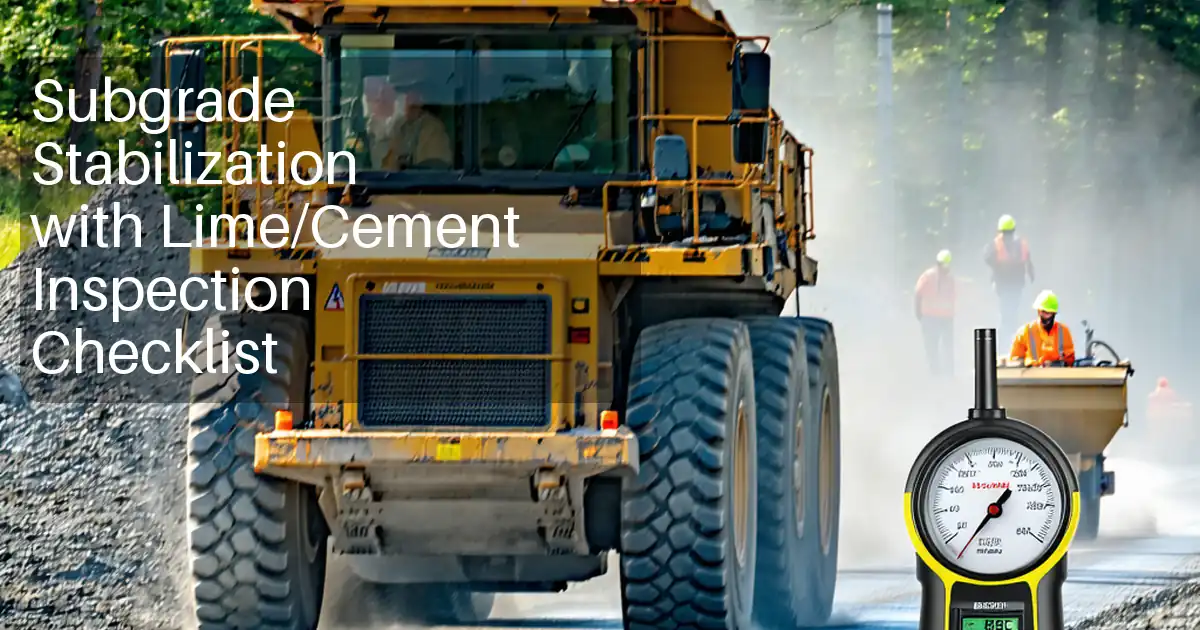
| 3 | Formation Acceptance and Geotextile (if required) | Survey formation levels and cross-falls; proof-roll with 8–12 t roller or loaded dump truck; mark soft spots for remediation; lay geotextile separator if specified, overlapped ≥300 mm and secured. | Site Engineer/Surveyor | IR to Engineer for formation approval |
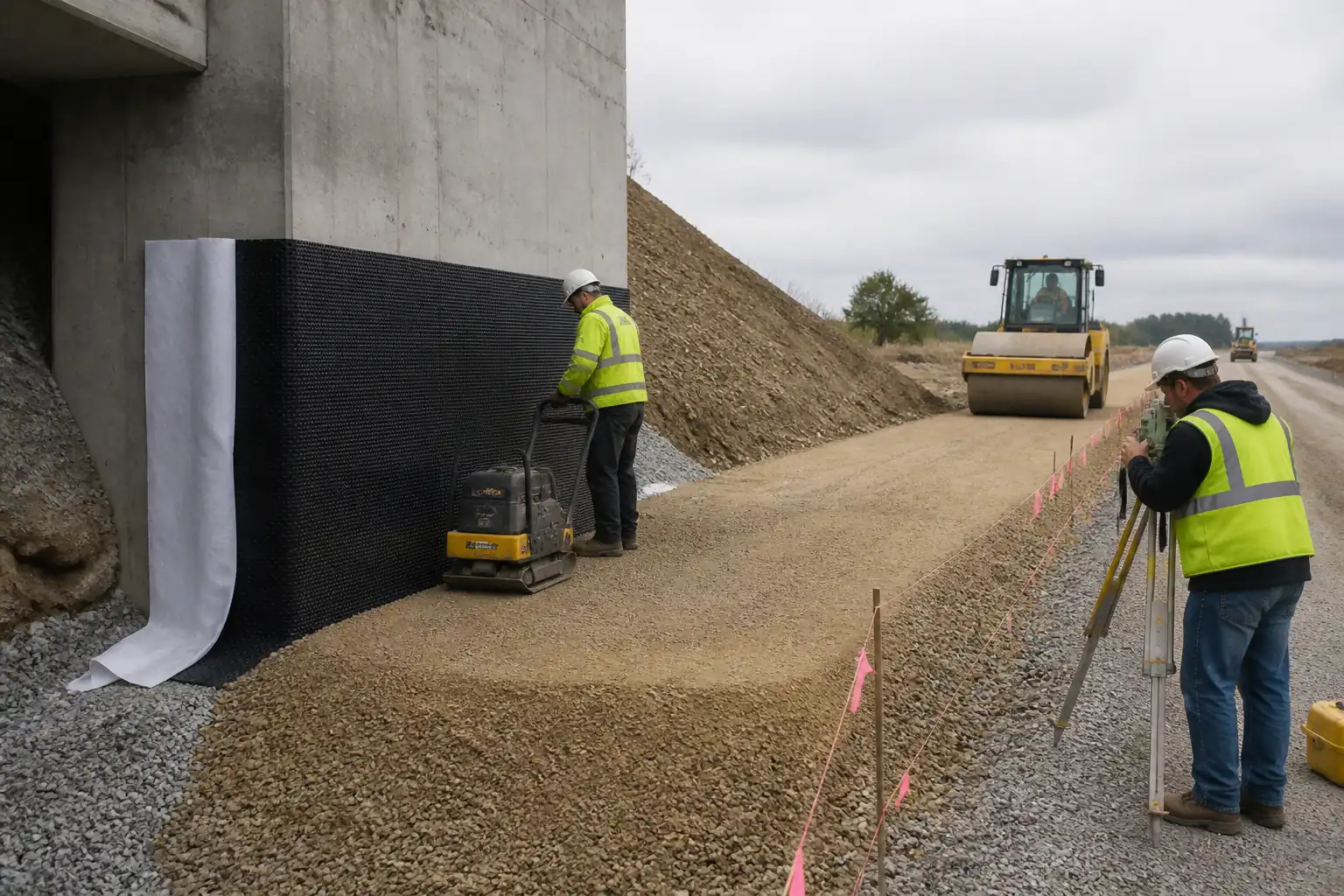
| 4 | Setting Out and Level Control | Establish control points/benchmarks; set string lines or machine control; define lot boundaries and layer thickness targets. | Surveyor/Site Engineer | Check control network |
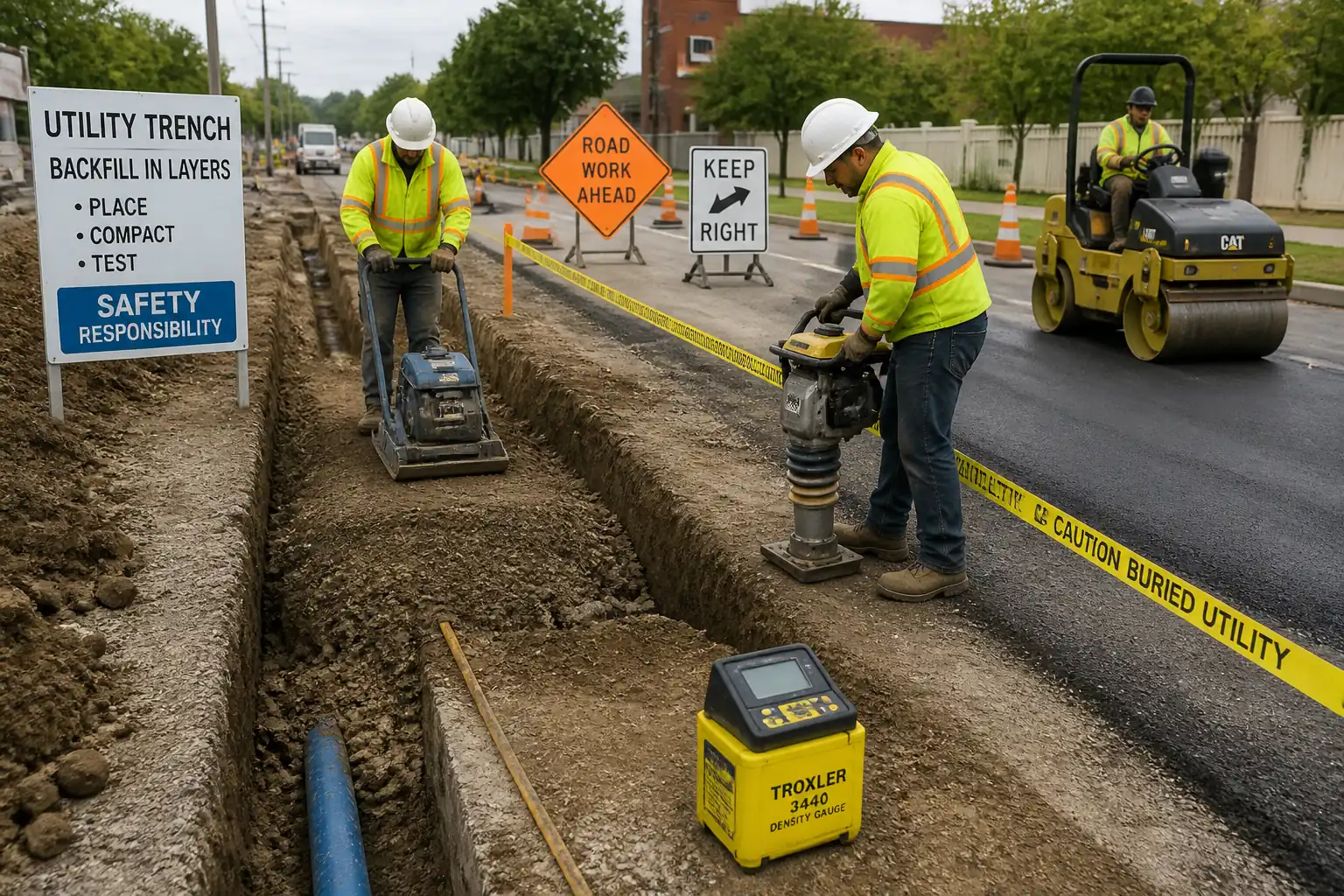
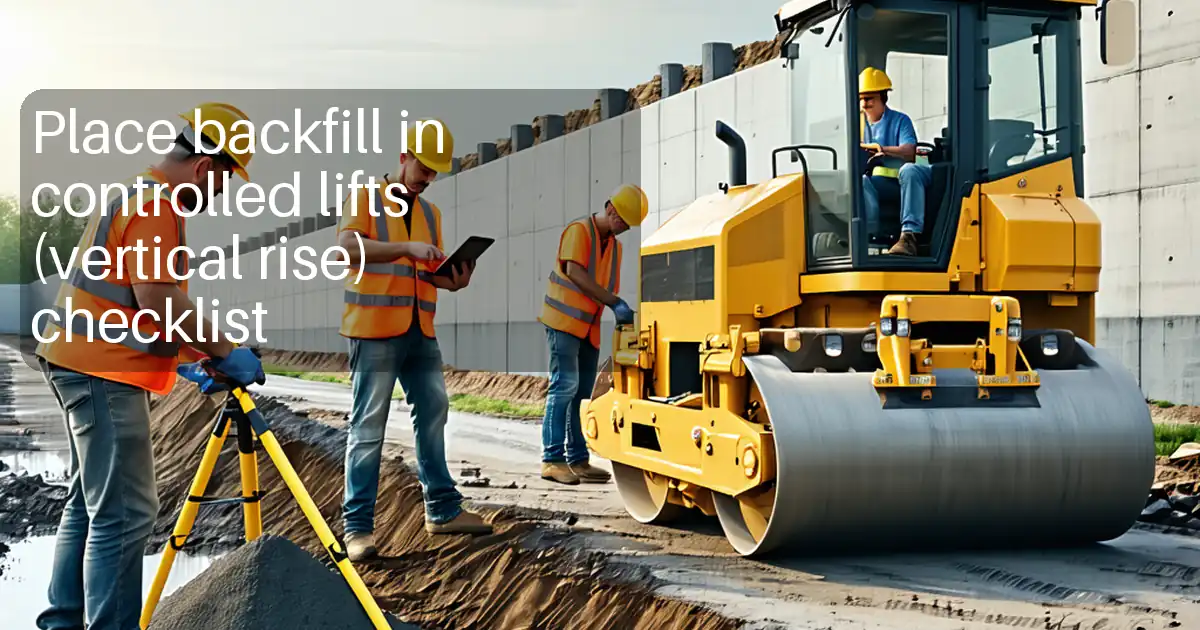
| 5 | Spreading – First Pass | Place GSB using dumpers in short, controlled tips; avoid end-dumping from height >1 m; spread with grader to loose thickness typically 150–200 mm to achieve compacted 125–150 mm; avoid pushing long distances to reduce segregation. | Foreman/Grader Operator | Visual spreading inspection |
| 6 | Moisture Conditioning | Measure in-situ moisture; if below OMC, apply water in light, even passes and mix with grader/reclaimer; if above OMC, aerate by scarifying and turning; recheck moisture before rolling. | Foreman/QA-QC | Moisture checks per lot |
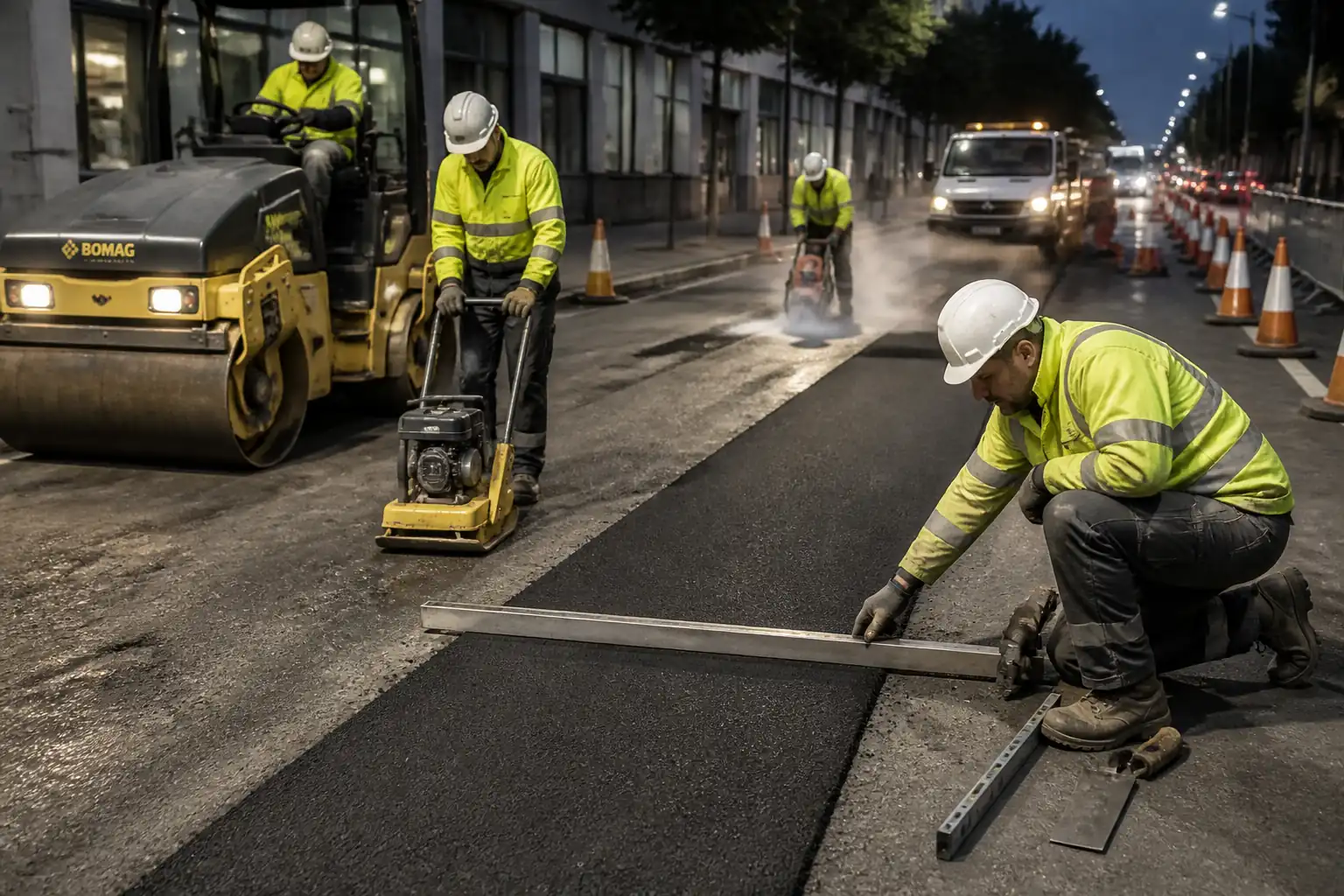
| 7 | Compaction – Mainline | Compact with 8–12 t vibratory roller: initial breakdown passes in vibratory mode, speed 3–5 km/h, drum overlap ≥150 mm; intermediate passes adjust amplitude to avoid over-compaction; finish with static or low vibration to iron surface. | Foreman/Roller Operator | Monitor passes and coverage |
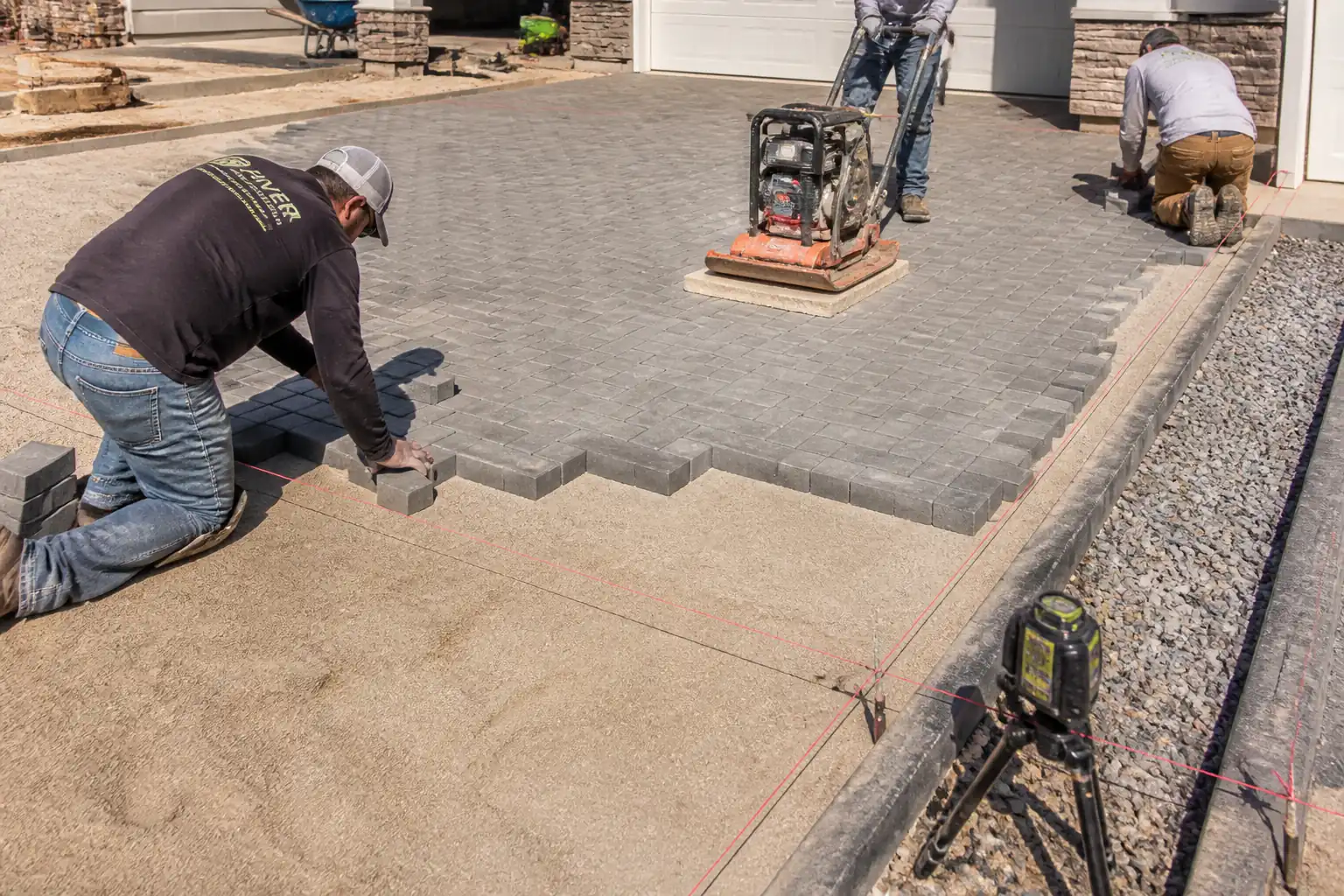
| 8 | Edge and Confined Area Compaction | Use tandem roller or plate compactor within 0.5 m of edges, upstands, or around utilities; additional passes as necessary. | Foreman | Edge compaction checks |
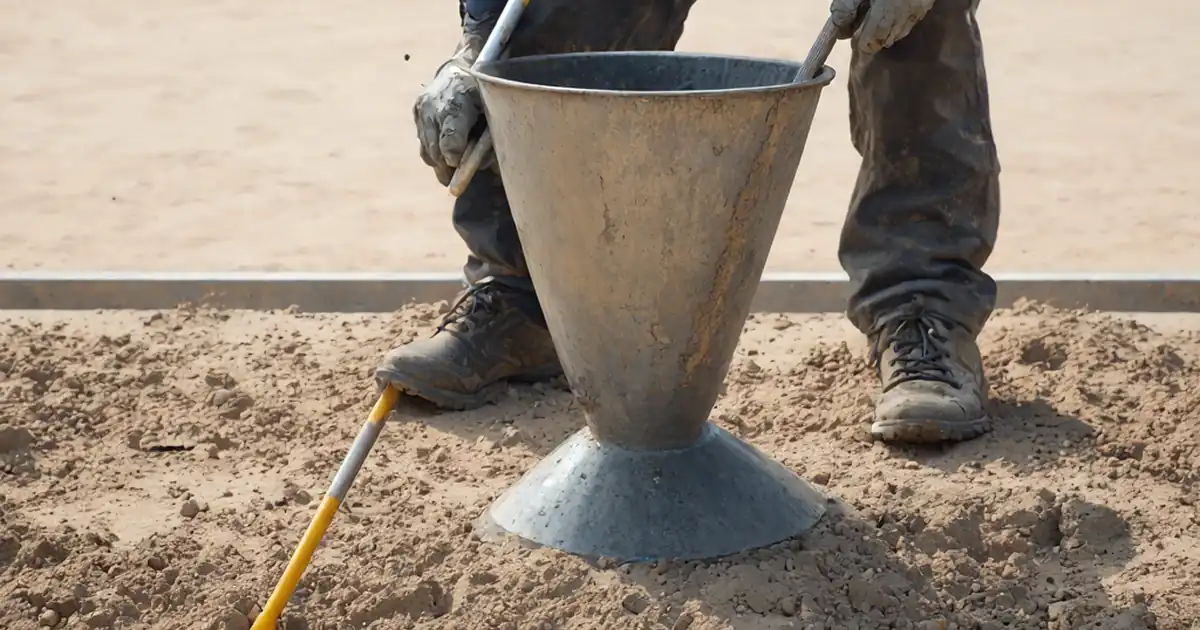
| 9 | Field Density and Moisture Testing | Perform tests after compaction but before trimming next layer; locate tests randomly and include wheel paths/edges. Increase frequency for nonconforming areas. | QA/QC and Lab | Witness by Engineer as per ITP |
| 10 | Trimming and Surface Regularity | Grade to final level and cross-fall using grader/laser; check with survey and 3 m straightedge; correct local highs/lows by rework and re-compact. | Site Engineer/Foreman | Survey and straightedge checks |
| 11 | Thickness Verification | Measure compacted thickness at test pits/cores at representative locations or by survey of formation and GSB levels; restore pits and re-compact. | QA/QC | Witness by Engineer |
| 12 | Rectification of Nonconformities | For density failures: rework moisture and re-compact; for thin areas: add material and re-compact; for high spots: trim and re-compact; re-test until compliant. | Foreman/QA-QC | NCR/CAR raised if repeated |
| 13 | Protection of Completed Layer | Implement traffic control to prevent rutting/contamination; prohibit sharp turning of heavy plant; if contaminated or softened by rain, scarify, recondition, and re-compact before next layer. | Foreman/HSE | Daily inspection |
| 14 | Final Inspection and Handover | Submit IR with test summaries, as-built levels, and lot records for Engineer’s acceptance prior to overlying works. | QA/QC/Site Engineer | Engineer witness/accept |
Safety Controls
Task-Specific Hazards and Controls
- Hazard: Plant–pedestrian interface (dumpers, rollers, graders).
- Likely consequence: Struck-by/crush injuries or fatalities.
- Engineering/procedural control: Segregated work zones with barriers and banksmen; one-way haul routes; REVERSE alarms and flashing beacons; radio contact; spotter for reversing; exclusion zones around operating plant (≥5 m or as per risk assessment); dedicated pedestrian walkways.
- Required PPE: High-visibility clothing, safety boots, hard hat, gloves, eye protection.
- Collective preventive measure: Physical barriers and traffic management plan with signage; lighting for night work.
-
Inspection/permit/supervision: Daily plant inspection; traffic management inspection; competent banksmen; TBT records. [Verify per project HSE plan and local regulations]
-
Hazard: Vibration exposure (whole-body vibration to operators).
- Likely consequence: Musculoskeletal disorders, fatigue.
- Engineering/procedural control: Select modern rollers with vibration isolation; limit exposure times; rotate operators; maintain seat suspensions; adhere to manufacturer’s speed/amplitude settings.
- PPE: Anti-vibration seat, appropriate clothing; hearing protection as needed.
- Collective preventive measure: Task rotation schedule and monitoring of exposure.
-
Inspection/permit/supervision: Supervisor to track exposure durations.
-
Hazard: Dust generation during spreading/compaction.
- Likely consequence: Respiratory irritation, reduced visibility.
- Engineering/procedural control: Pre-wet material; water bowser with fine spray; reduce drop heights; halt works in high winds if visibility impaired.
- PPE: Dust masks (minimum FFP2/N95) when dust is visible; safety glasses.
- Collective preventive measure: Bowser on standby; speed limits to reduce dust plumes.
-
Inspection/permit/supervision: HSE inspections; environmental monitoring as required.
-
Hazard: Noise from plant operations.
- Likely consequence: Hearing damage, nuisance to neighbors.
- Engineering/procedural control: Use compliant equipment; schedule noisy activities within permitted hours; maintain mufflers.
- PPE: Ear protection (SNR as per assessment).
- Collective preventive measure: Noise barriers if required near receptors.
-
Inspection/permit/supervision: Noise monitoring logs where specified. [Verify]
-
Hazard: Underground/adjacent services and structures (edge compaction).
- Likely consequence: Service damage, utility strike, structural disturbance.
- Engineering/procedural control: Utility plans and CAT/Genny scans; hand-expose within tolerance; restrict vibratory mode within agreed offsets to services/structures; use small compactor near sensitive assets.
- PPE: Standard PPE; insulated tools when near electrical services.
- Collective preventive measure: Permit to Dig and mark-out.
-
Inspection/permit/supervision: PTD approval; supervisor sign-off before compaction adjacent to services. [Verify]
-
Hazard: Slips/trips and uneven surfaces.
- Likely consequence: Sprains/fractures.
- Engineering/procedural control: Maintain tidy access; define walkways; illuminate at night; promptly repair potholes/soft spots.
- PPE: Safety boots with ankle support.
- Collective preventive measure: Good housekeeping regime.
-
Inspection/permit/supervision: Daily site walk inspections.
-
Hazard: Radiation from nuclear density gauge (if used).
- Likely consequence: Radiation exposure, contamination if damaged.
- Engineering/procedural control: Licensed operators only; gauge in lockable transport case; exclusion during readings; follow manufacturer SOP.
- PPE: Dosimeter (if required), gloves when handling.
- Collective preventive measure: Radiation safety plan and spill kit for damaged source.
-
Inspection/permit/supervision: Radiation permit/licensing, leak tests, calibration in date. [Verify per local regulations]
-
Hazard: Hot weather/cold weather working.
- Likely consequence: Heat stress/hypothermia; poor compaction results.
- Engineering/procedural control: Adjust shift times; provide hydration/warm shelters; postpone compaction during freezing/heavy rainfall.
- PPE: Weather-appropriate PPE.
- Collective preventive measure: Environmental working limits in method.
-
Inspection/permit/supervision: Supervisor weather checks and go/no-go decisions.
-
Hazard: Manual handling of test equipment and straightedges.
- Likely consequence: Strains, pinches.
- Engineering/procedural control: Use team lifts, mechanical aid where possible; store tools close to point of use.
- PPE: Gloves, safety boots.
- Collective preventive measure: Manual handling training.
- Inspection/permit/supervision: Supervisor to enforce safe lifting techniques.
Environmental Controls
Controls and Mitigations
- Dust: Maintain moisture conditioning; use water bowser with fine spray; limit tipping heights; reduce vehicle speeds; suspend if dust migrates beyond boundary. Record dust control in daily logs.
- Noise and Vibration: Work within permitted hours; maintain equipment; consider temporary acoustic barriers near receptors; monitor PPV at sensitive structures if required (typical limit ≤5 mm/s PPV at nearest structure) [Verify per project specifications].
- Stormwater and Sediment: Prevent runoff from stockpiles with silt fences/berms; do not allow muddy water to enter drains; place stockpiles away from watercourses; provide temporary sumps and pump through silt bags if dewatering is required.
- Material Management: Separate material types; prevent fuel/oil leaks; maintain spill kits at fuelling points; refuel over drip trays. Any contaminated material to be segregated as waste and disposed per waste management plan.
- Public Interface: Wheel wash/road sweeping to prevent track-out; signage and barriers maintained; respond to complaints promptly.
- Resource Efficiency: Optimize haul distances; avoid over-watering; prevent wastage by correct layer thickness planning.
- Ecology/Archaeology: Stop work and notify if protected species or finds are encountered. [Verify per project HSE plan and local regulations]
- Documentation: Maintain environmental inspection checklists and incident logs.
Quality Assurance and Quality Control
Quality Controls
- Pre-Works: Verify approvals, material certifications, and equipment calibrations. Establish lot sizes and testing frequencies.
- Process Control: Record roller passes, moisture conditioning actions, and any rework. Maintain uniform layer thickness.
- Testing Regime [Verify per project specifications]:
- Laboratory MDD/OMC: 1 per source change or at least per 1,000 m³.
- Field density/moisture: Minimum 1 per 200–250 m² per layer; include edges and wheel paths; increase after failures.
- Grading checks: 1 per 500–1,000 tonnes or per lot.
- Surface regularity: 100% of area by 3 m straightedge sweeps at 10 m intervals or tighter.
- Level and cross-fall: Survey on 10 m grid (carriageways) or 5 m for footways/critical areas; spot checks at grade changes.
- Thickness: At least 1 pit per 500 m² or per lot; correlate with survey deltas when practical.
- Acceptance Criteria [Verify per project specifications]:
- Material complies with BS EN 13285/13242 and approved submittal.
- Relative compaction ≥95% of MDD (BS EN 13286-2 or ASTM D1557) with moisture within -2% to +1% of OMC.
- Surface: 3 m straightedge ≤10 mm; level ±10 mm; cross-fall ±0.3%.
- Thickness: Average ≥ design; local tolerance -10 mm/+15 mm.
- Nonconformance Management: Raise NCR for repeated failures; define corrective actions; re-test to confirm compliance.
- Records: Delivery tickets, test reports, survey/as-built data, ITP checklists, IR approvals, roller pass logs, TBT and HSE records.
Attachments
- Approved IFC drawings and pavement design details.
- Approved material submittals and supplier certifications (Type 1/Type 2).
- Trial section report and established roller pass regime (if conducted).
- Traffic management plan and plant–people interface plan.
- HSE risk assessment, method-specific toolbox talk, and PTWs.
- Calibration certificates for survey and testing equipment.
- ITP checklists, field density/moisture forms, surface regularity logs, survey reports.
- As-built survey files (native + PDF) and lot acceptance records.
This content is a read-only public reference. Download or customize to get an editable version.
ITP preview
The first inspection activities from the linked ITP for Method Statement – Granular Sub-Base (GSB) Installation (Type 1 / Type 2 Unbound Mixtures):
| Activity | Inspection / Test | Acceptance Criteria | Responsibility | Record |
|---|---|---|---|---|
| Material delivery and certification | Check CoC/DoP; verify source and grading certificates | Material complies with BS EN 13285/13242 and approved submittal | QA/QC Engineer | Material approval; delivery tickets; certificates |
| Stockpile condition and segregation control | Check separation by type/lot; no contamination; drainage in place | No cross-contamination; minimal segregation; controlled height/slopes | Foreman / QA/QC | Stockpile inspection log |
| Formation approval / geotextile installation (if required) | Survey levels; proof-rolling; visual checks; geotextile overlaps | Firm, stable formation; levels within tolerance; geotextile overlapped ≥300 mm and secured | Site Engineer / Engineer (Witness) | IR approval; survey report; photos |
Showing 3 of 11 inspection activities. View full ITP →
Related Inspection and Test Plan
An Inspection and Test Plan (ITP) is available for Method Statement – Granular Sub-Base (GSB) Installation (Type 1 / Type 2 Unbound Mixtures). The ITP defines the inspection activities, acceptance criteria, hold and witness points, responsible parties, and records required to verify the work described in this method statement.
View the Method Statement – Granular Sub-Base (GSB) Installation (Type 1 / Type 2 Unbound Mixtures) ITP →Frequently asked questions
Continue with related Quollnet resources connected to this method statement.