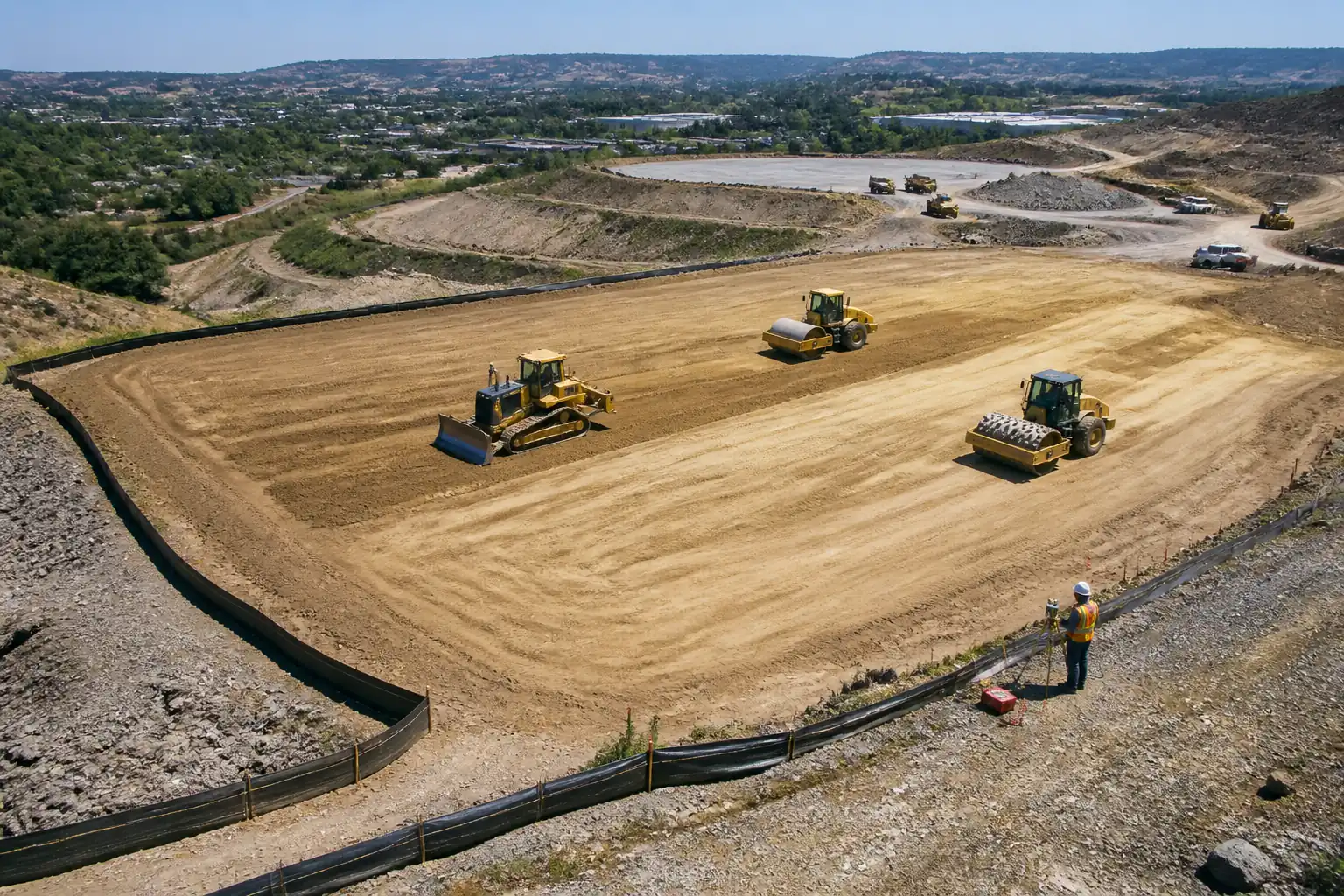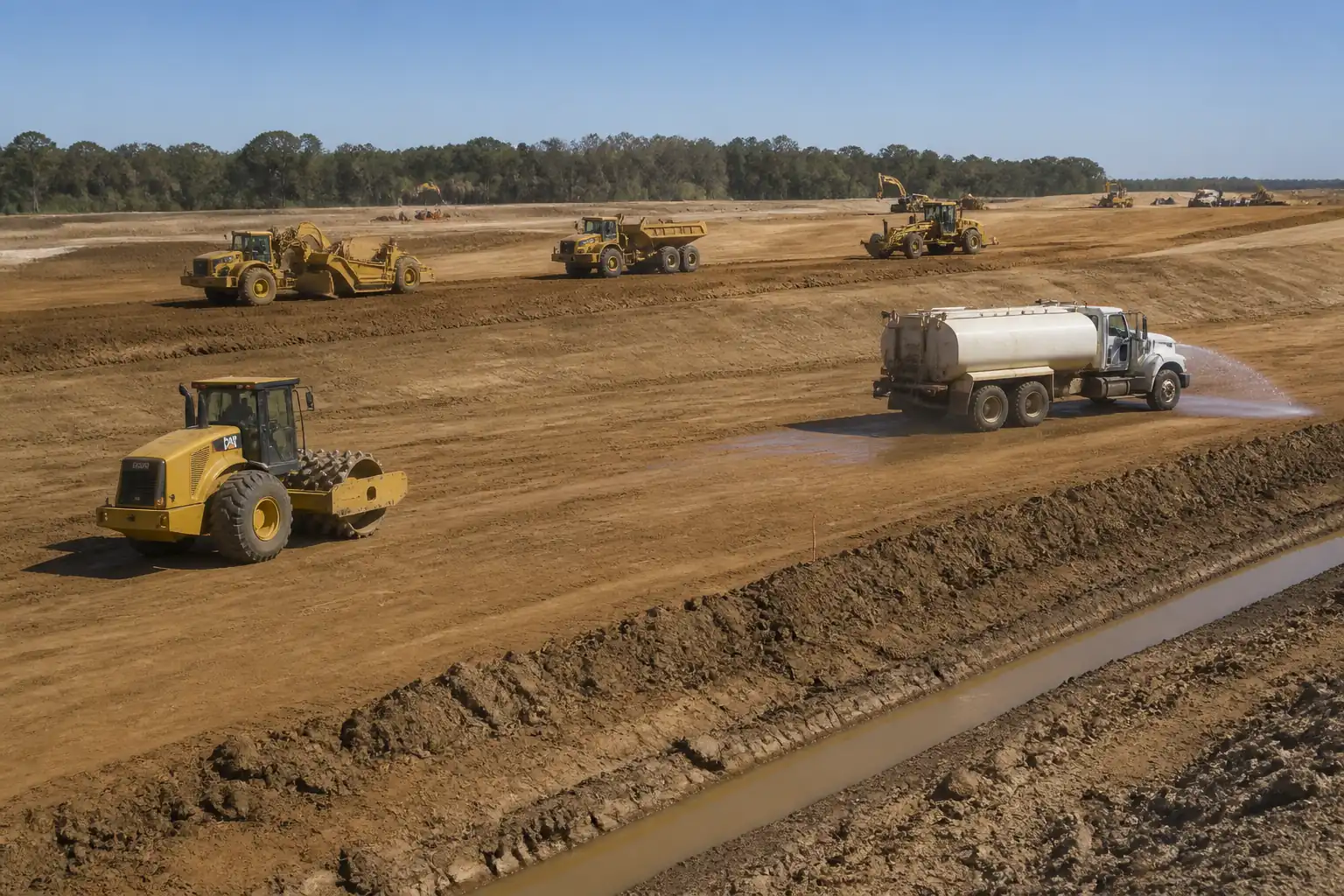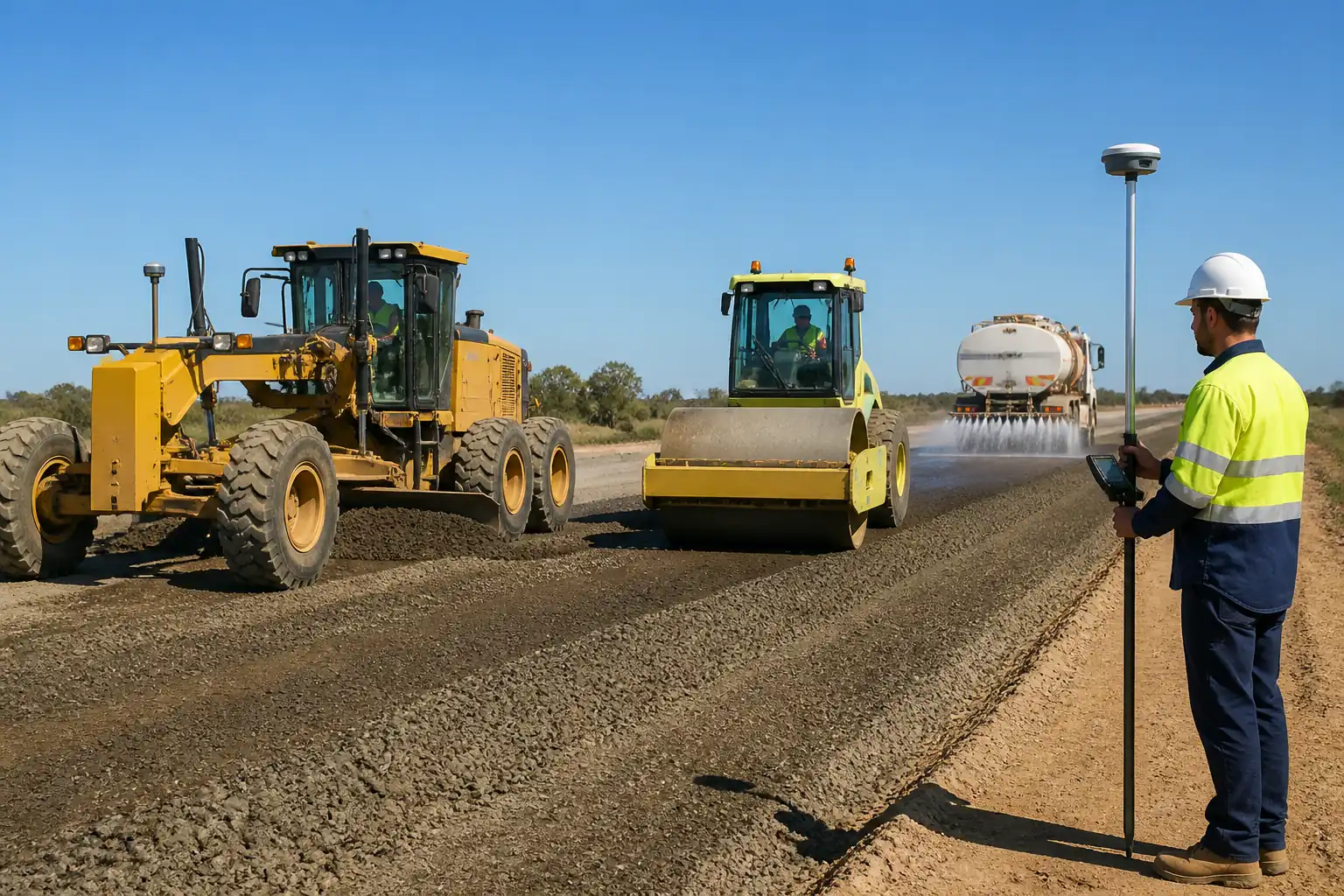

Inspection and Test Plan for Method Statement: Subgrade Preparation and Compaction for Highway Construction
AI-assisted inspection and test plan connected to a method statement, with PDF and Excel export.
More than a static template
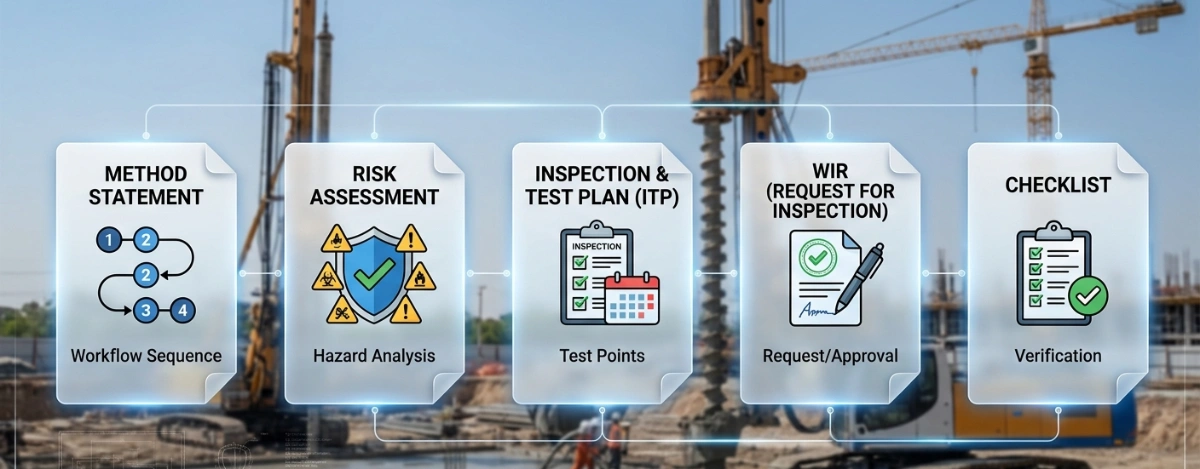
Unlike a downloadable Word or PDF template, this ITP is an AI-assisted editable starting point directly connected to its method statement. Every inspection activity, hold point, and acceptance criterion is structured and ready to adapt to your project.
- AI-assisted customization — Tailor inspection activities and acceptance criteria to your specific project scope.
- Linked method statement — This ITP is connected to the corresponding method statement describing the work sequence.
- Multiple export formats — Download as a formatted PDF or editable Excel spreadsheet.
- Editable starting point, not a final document — Review and verify all content against your project specifications and standards before use.
What you can customize
When you save this ITP to your account, every inspection row becomes editable. You can add, remove, or modify:
- Inspection activity — Description of what is being inspected.
- Inspection type — Hold point (H), Witness point (W), Review (R), or Monitor (M).
- Responsibility — Contractor, subcontractor, engineer, or client.
- Frequency — How often the inspection occurs.
- Acceptance criteria — Referenced standard or specification requirement.
- Records — Forms, test reports, or checklists required as evidence.
Why this ITP is used
To ensure subgrade meets specified density, moisture, and level tolerances with documented evidence before sub-base placement.
Who uses this inspection and test plan
Used by the Contractor’s QA/QC team, Site Engineers, and witnessed by the Engineer/Employer’s Representative.
When this ITP is prepared and submitted
Applied throughout subgrade preparation from formation trimming through final acceptance and release to sub-base.
Who receives or approves this ITP
Engineer/Employer’s Representative for review, witnessing, and approval.
Inspection scope
Covers survey control, formation condition, moisture conditioning, proof rolling, density/moisture testing, and levels/evenness.
Typical hold, witness, and review points
Survey verification (Hold), proof rolling (Hold/Witness), in-situ density (Hold/Witness), final release to sub-base (Hold).
Typical inspection records
ITP checklists, field density/moisture reports, proof-rolling sheets, survey level grids, NCR/CAR, and release memos.
Important approval note
This ITP is an AI-assisted editable starting point, not a pre-approved document. Before use on any project, all inspection activities, hold points, and acceptance criteria must be reviewed and approved by the relevant parties (superintendent, principal contractor, or client representative) in accordance with your contract and project quality plan.
Always verify acceptance criteria against your applicable drawings, specifications, and regulatory requirements. Hold points must be confirmed with the relevant authority before work proceeds past that point.
Inspection and test plan
| Activity | Inspection / Test | Acceptance Criteria | Responsibility | Record |
|---|---|---|---|---|
| Pre-start documentation | Check approvals, Proctor curves, TMP, permits | Approvals in place; current Proctor for soil types; permits active. | QA/QC Engineer | Pre-start checklist |
| Survey control verification (HOLD) | TBM check, control traverse, instrument calibration | Control within tolerances; instruments calibrated. | Site Engineer/Surveyor; Engineer Rep (Witness) | Survey verification report |
| Site clearing/stripping | Visual inspection | Formation free of organic/unsuitable material. | Site Engineer | Inspection record; photos |
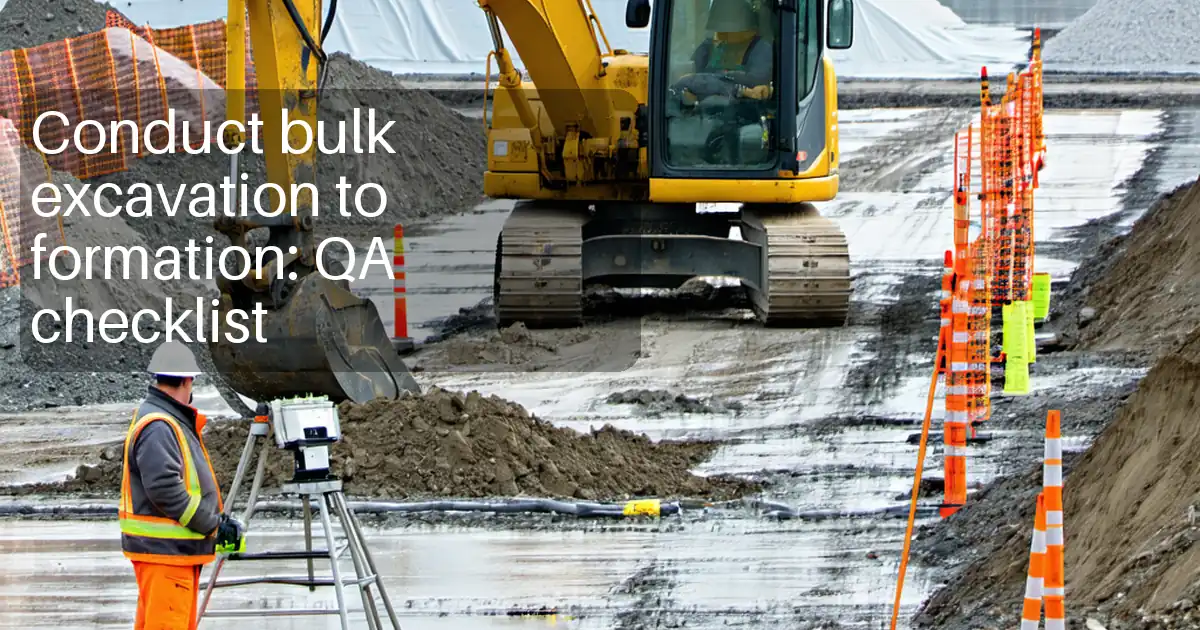
| Formation trimming and shaping | Level survey, crossfall check | Levels ±20 mm; crossfall within ±0.5% [Verify]. | Site Engineer/Surveyor | Survey sheet |
| Moisture conditioning (pre-proof roll) | Moisture tests | OMC ±2% [Verify]. | QA/QC Tech | Moisture test reports |
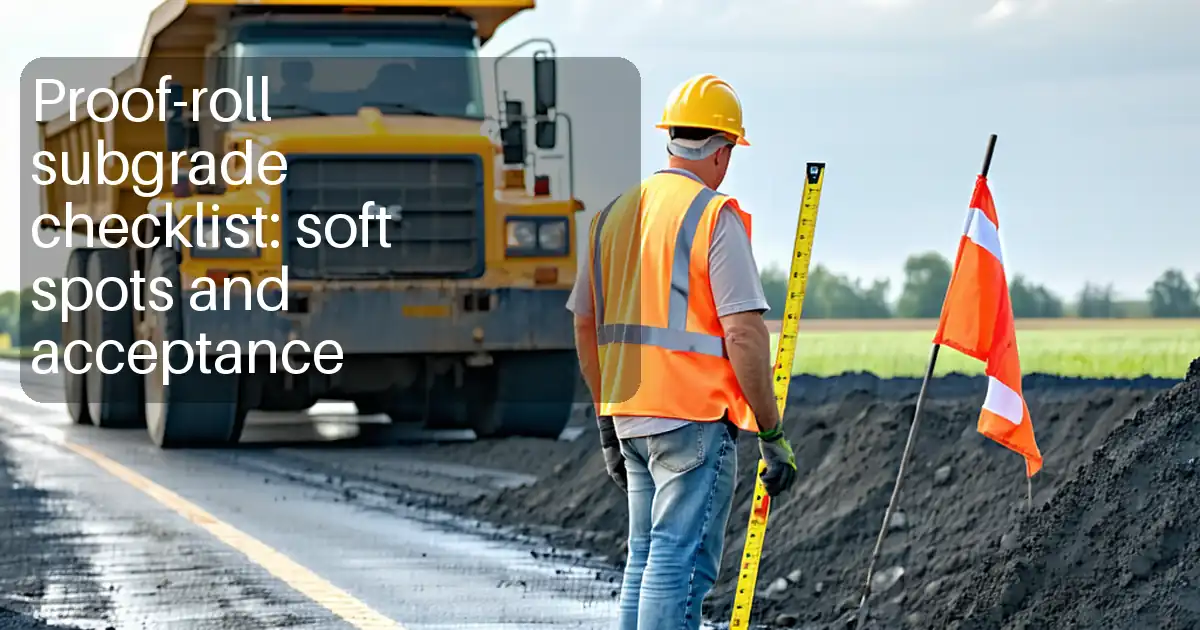
| Proof rolling—pre-compaction (HOLD) | Observation; measurement of rutting/deflection | No pumping/cracking; rutting/deflection ≤25 mm; soft spots identified and logged. | Site Engineer; Engineer Rep (Witness) | Proof-rolling sheet |
| Soft spot remediation | Visual, density/moisture as required | Remediated zones meet criteria for density/levels/proof roll. | Site Engineer | Remediation log; test reports |
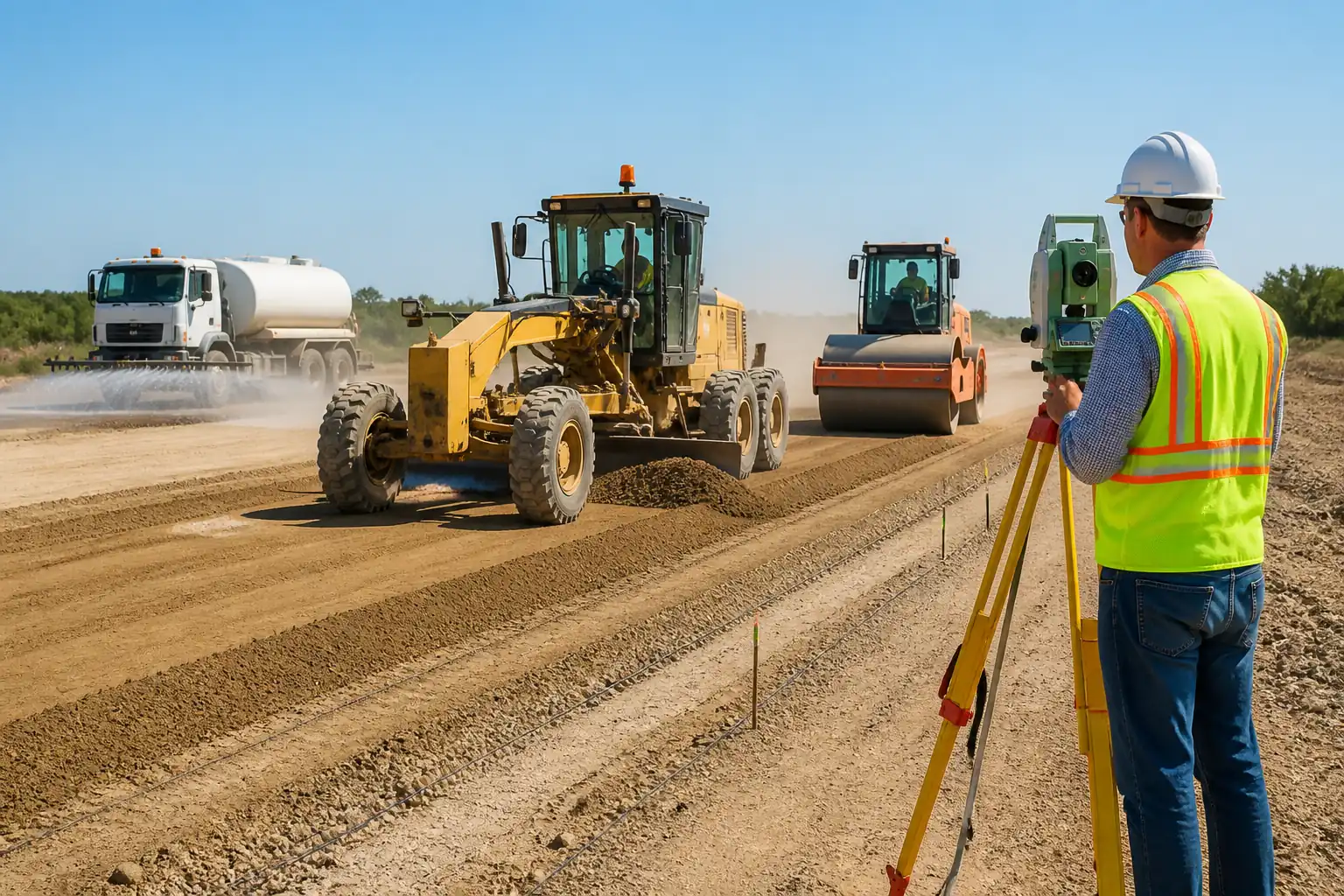
| Compaction process control | Check roller settings, passes, speed | Rolling pattern with 1/3 overlap; speed 3–5 km/h; no slippage/wave. | Foreman/QA-QC | Daily compaction log |
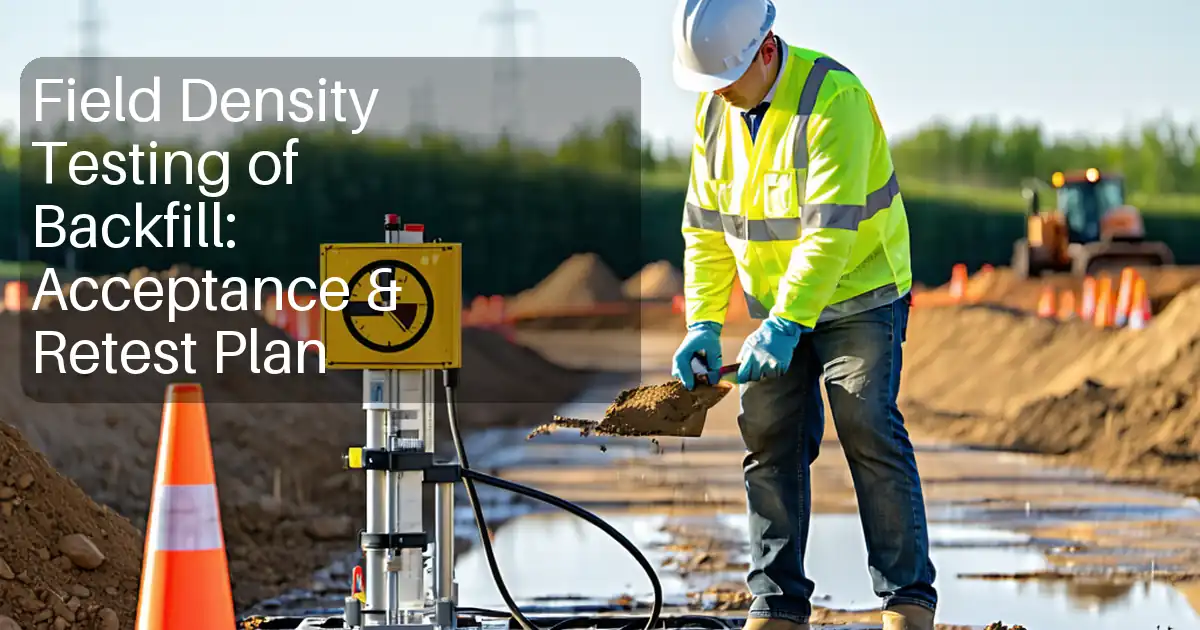
| In-situ density and moisture testing (HOLD) | ASTM D1556/D6938; D2216/D4944 | Traffic lanes ≥98% MDD; shoulders/medians ≥95% MDD; moisture OMC ±2% [Verify]. | QA/QC Tech; Engineer Rep (Witness) | Field density reports; correlation sheets |
| Level and evenness checks | Total station/level; 3 m straightedge | Levels ±20 mm; evenness ≤20 mm under 3 m; crossfall within ±0.5%. | Surveyor/QA-QC | Survey reports; straightedge checklist |
| Re-proof rolling after remedial works (if specified) | Observation/DCP as needed | Meets proof-roll criteria; no pumping/rutting >25 mm. | Site Engineer | Proof-roll sheet |
| Final acceptance and release to sub-base (HOLD) | Review dossier: densities, moisture, levels, proof-rolling, NCR close-out | All acceptance criteria met; lot signed-off; surface protected. | QA/QC; Engineer Rep | RFI/IR, release memo |
This table is a read-only public reference. Download the PDF or Excel version, or customize this ITP to edit it for your project.
Frequently asked questions
Related method statement
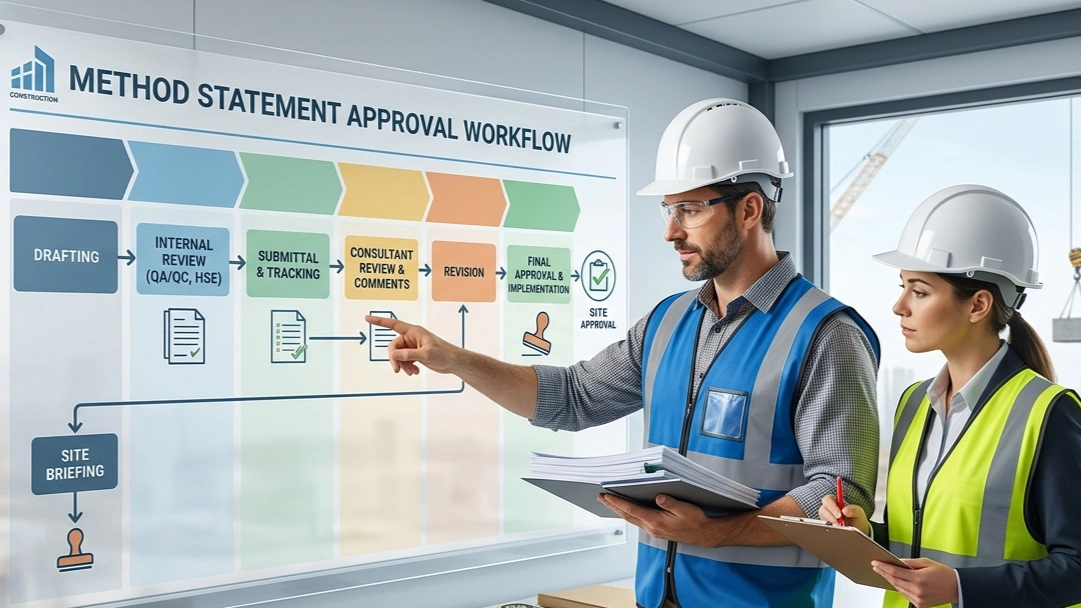
This Inspection and Test Plan is associated with the Method Statement: Subgrade Preparation and Compaction for Highway Construction method statement, which describes the step-by-step construction sequence, resources, materials, equipment, safety controls, and environmental controls for this activity.
View the Method Statement: Subgrade Preparation and Compaction for Highway Construction method statement →Continue with related inspection, method statement, article, and checklist resources.