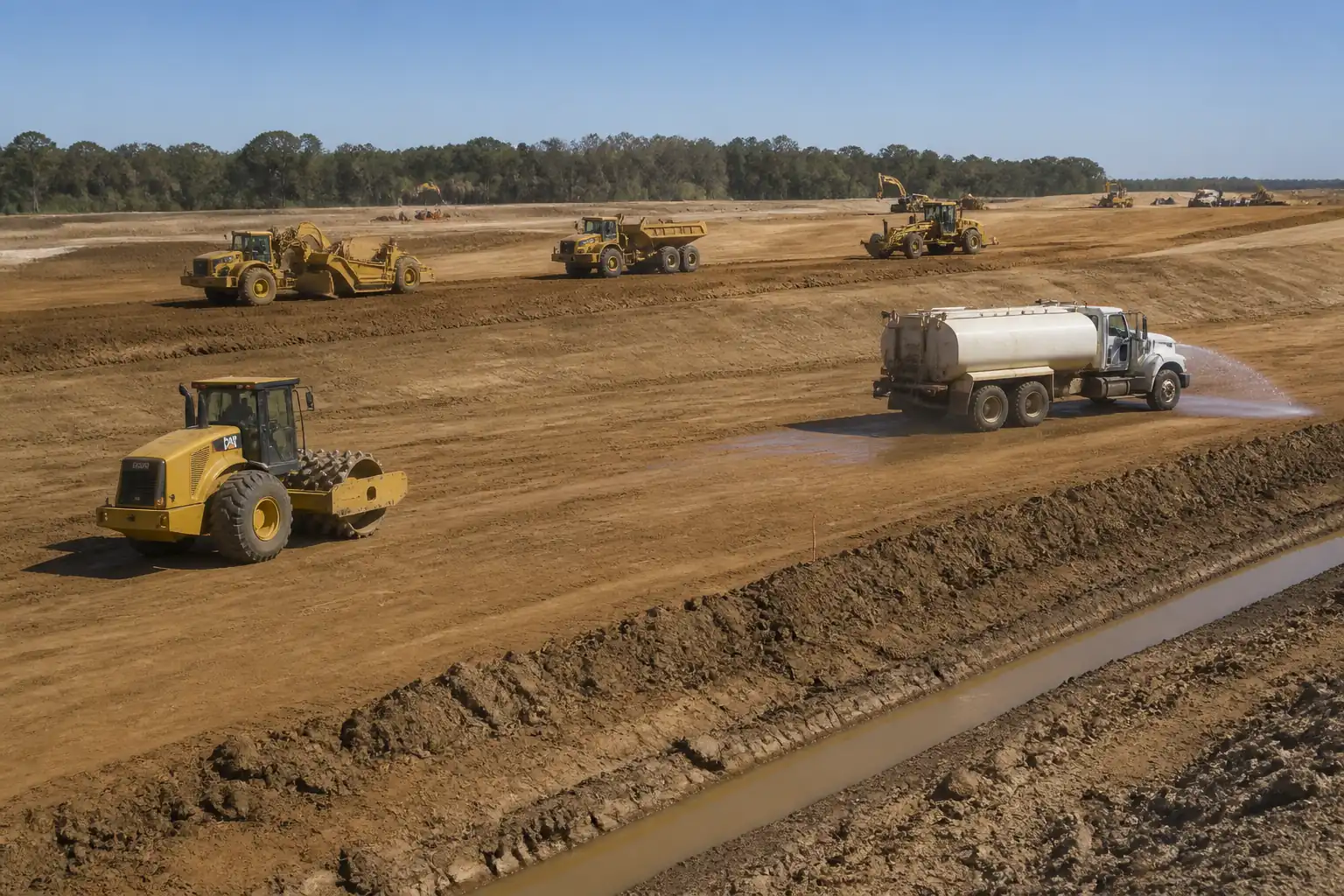

Method Statement: Bulk Cut-to-Fill Earthmoving for Platform Formation (Scrapers & ADTs) with Layered Compaction and Survey Control – Method Statement
AI-assisted method statement with matching ITP, PDF download, and Excel export.
More than a static template
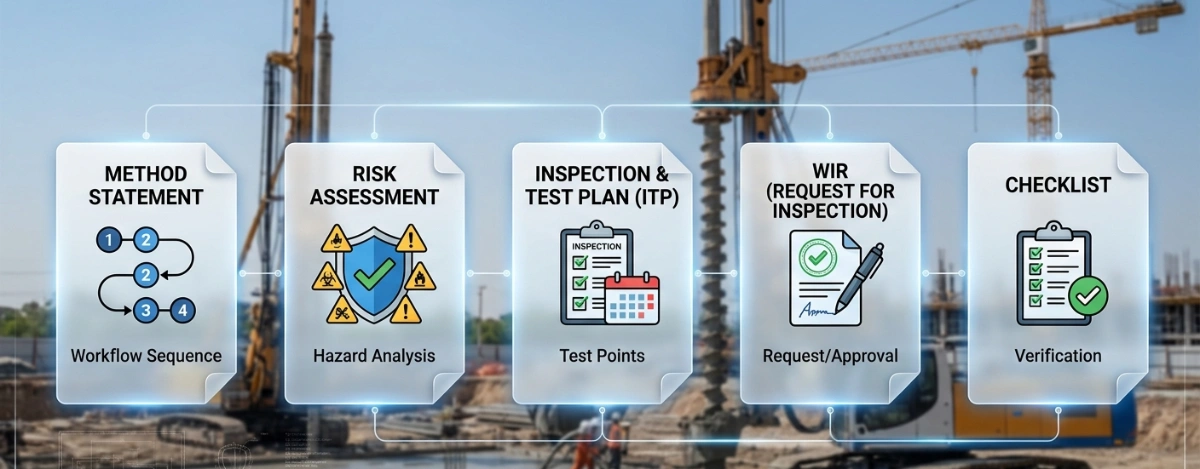
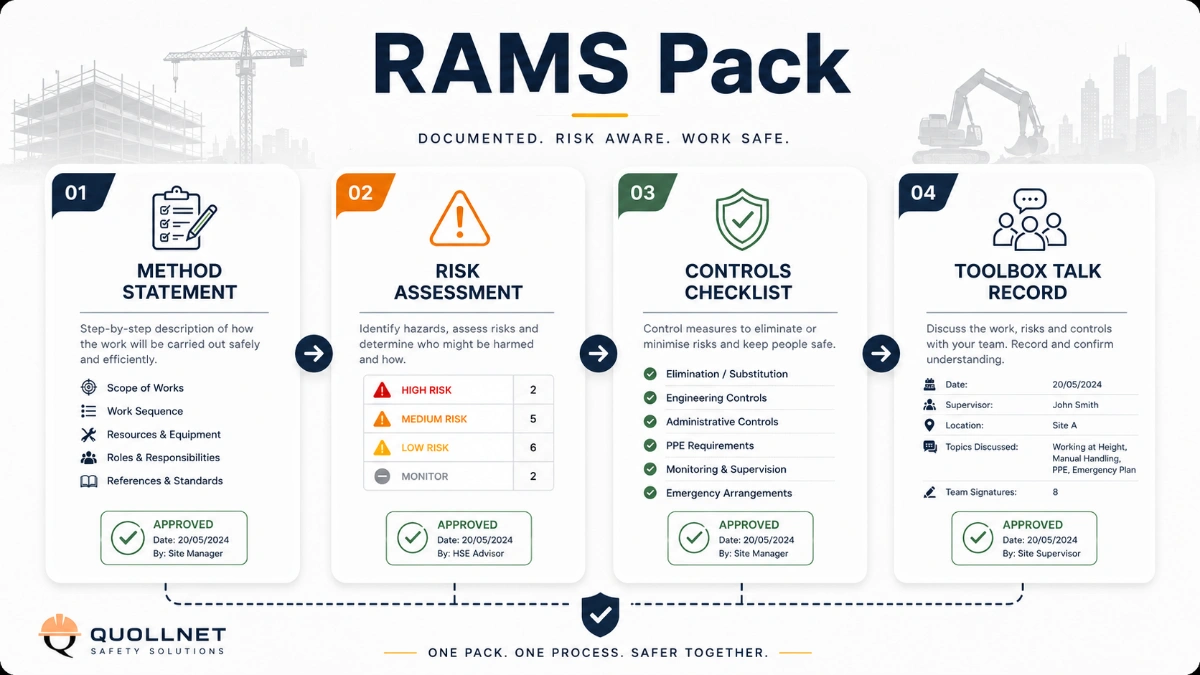
Unlike a downloadable Word or PDF template, this method statement is an AI-assisted editable starting point connected directly to a matching Inspection and Test Plan. Every section is structured, project-adaptable, and ready to export.
- AI-assisted drafting — Customize every section with AI for your specific project scope.
- Linked ITP — A matching inspection and test plan is generated alongside the method statement.
- Multiple export formats — Download as a formatted PDF or editable Excel spreadsheet.
- Editable starting point, not a final document — Review, verify, and adjust all content against your project requirements before use.
Static template vs. Quollnet workflow
| Feature | Static template | Quollnet |
|---|---|---|
| Project-specific content | Manual fill-in required | AI-assisted customization |
| Linked ITP | Separate document, no link | Matching ITP included |
| Export formats | Usually PDF only | PDF and Excel |
| Structured sections | Free-form layout | 13 standardized sections |
| Saved to your account | Local file only | Cloud-saved, reusable |
| Content accuracy | You verify everything | AI-assisted, you still verify |
| Cost | Often free but time-intensive | Free to customize and download |
What you can customize
When you save this method statement to your account, every section becomes editable. The following 13 sections are included:
- Scope — Defines the activity and its boundaries.
- References — Standards, specifications, and drawings.
- Responsibilities — Roles and accountabilities.
- Resources — Labour, plant, and equipment summary.
- Materials — Materials and compliance requirements.
- Equipment — Tools and equipment details.
- Prerequisites — Hold points and pre-conditions.
- Method sequence — Step-by-step construction sequence.
- Safety controls — HSE risk controls and PPE.
- Environmental controls — Environmental mitigation measures.
- QA/QC — Quality inspection and test requirements.
- ITP — Inspection and Test Plan table (has its own page).
- Attachments — Referenced drawings and documentation.
Why this method statement is used
This method statement is used to define and communicate the approved procedure for carrying out method statement: bulk cut-to-fill earthmoving for platform formation (scrapers & adts) with layered compaction and survey control on site. It ensures the work is planned in advance, the correct resources and controls are in place, and all personnel understand responsibilities, sequence, quality requirements, and safety controls before work begins. It aligns site execution with the documented scope and acceptance expectations.
Who uses this method statement
This method statement is used by contractors, site supervisors, project engineers, QA/QC engineers, HSE officers, consultants, and client representatives. It serves as a shared reference for planning, execution, supervision, inspection, and approval of the activity on site.
When it is prepared and submitted
The method statement is prepared before the work activity starts and submitted as part of the pre-construction documentation package for review and approval.
Who reviews or approves it
The method statement is usually submitted to the client representative, consultant, resident engineer, or project management consultant for review and approval before the work commences.
Important approval note
This method statement is an AI-assisted editable starting point, not a pre-approved document. Before use on any project, all content must be reviewed and approved by the relevant parties (superintendent, principal contractor, or client representative) in accordance with your contract and project quality plan.
For example: if your specification requires a departure from a referenced standard, that departure must be documented and approved separately — this method statement will not capture that automatically. Always verify against your applicable drawings, specifications, and regulatory requirements.
Method statement content
Scope
Work Scope
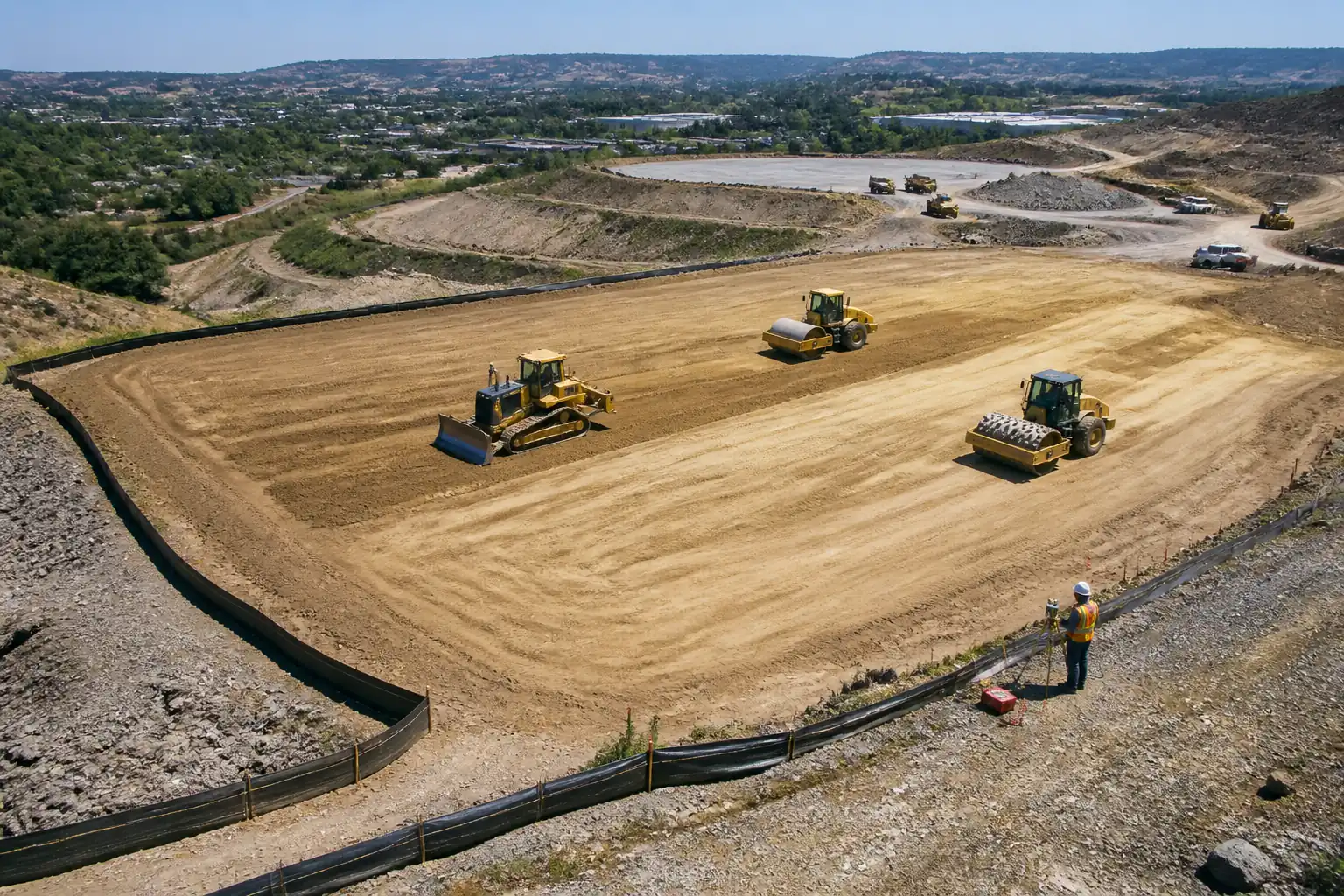
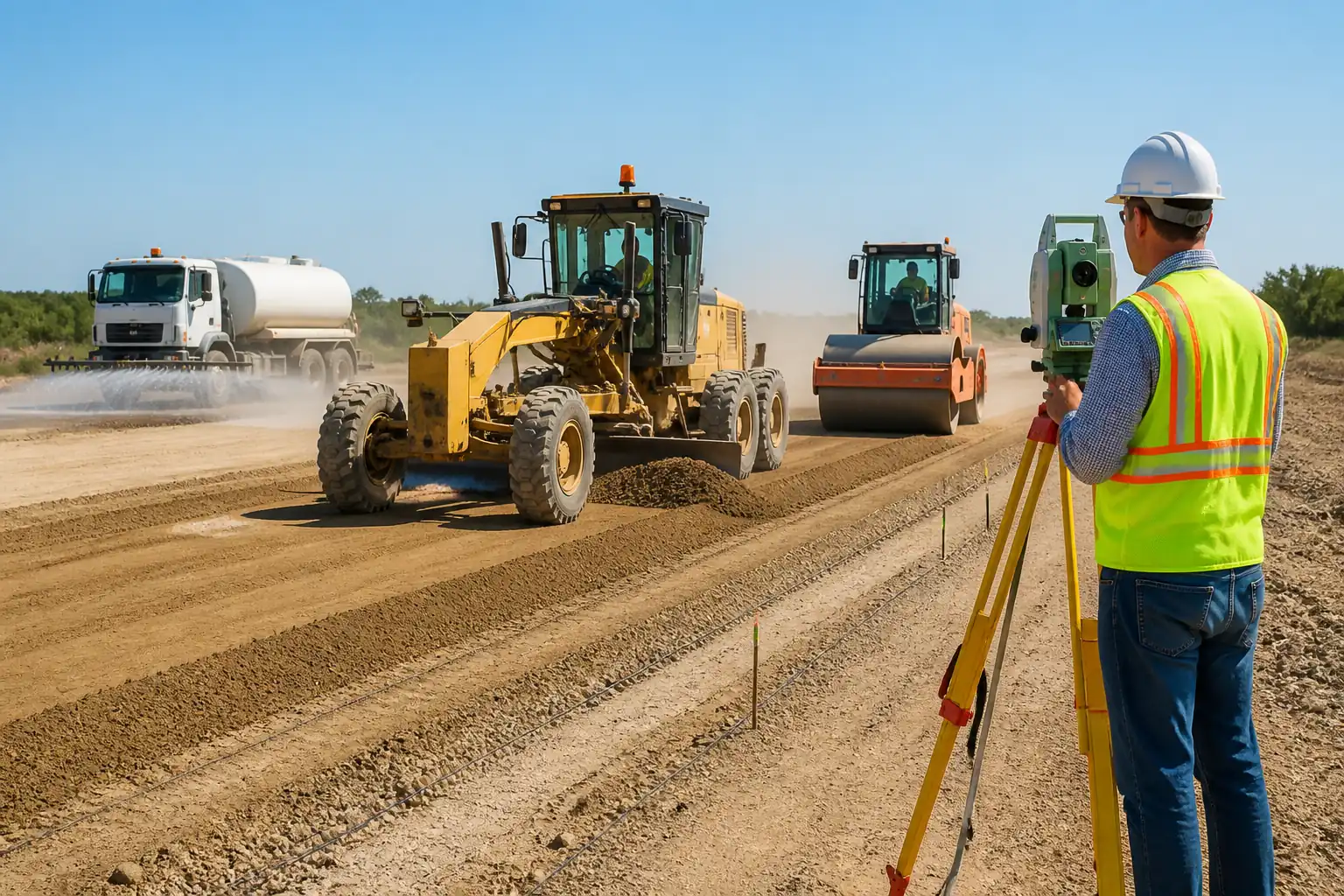
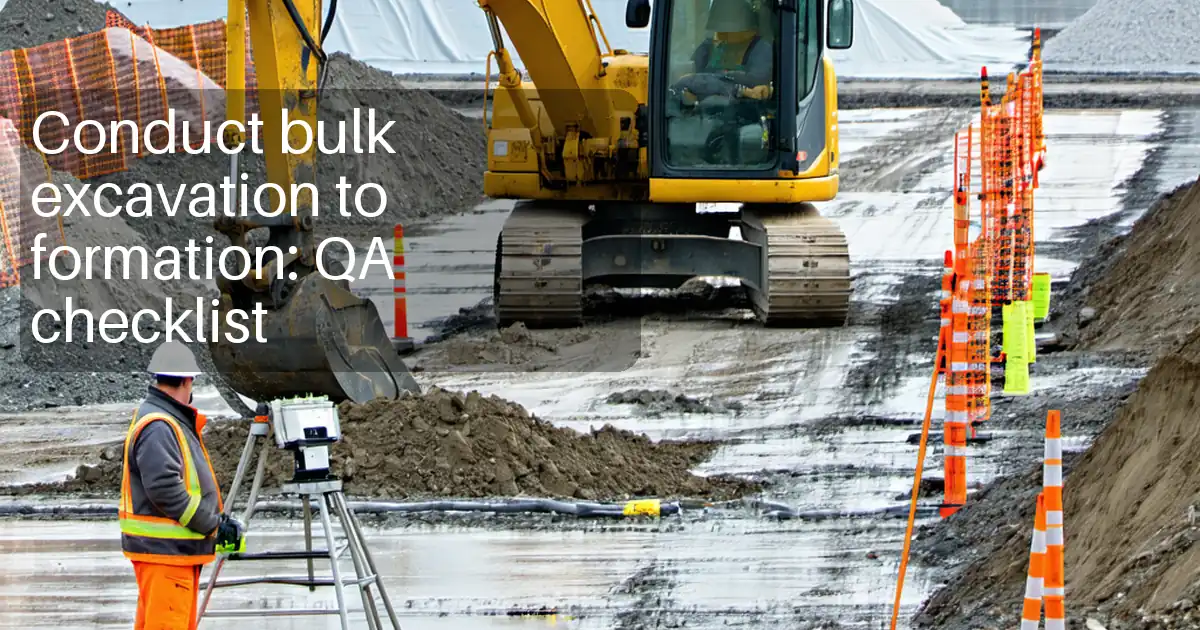
- Bulk cut-to-fill earthmoving to construct engineered formation platforms and side slopes using scrapers and articulated dump trucks (ADTs), supported by dozers, graders, water carts, and rollers.
- Establishment of haul roads, traffic management within work zone, and temporary drainage/erosion controls.
- Stripping of topsoil/organics, selection and processing of suitable fill from cut or approved borrow sources, stockpiling and re-use of topsoil.
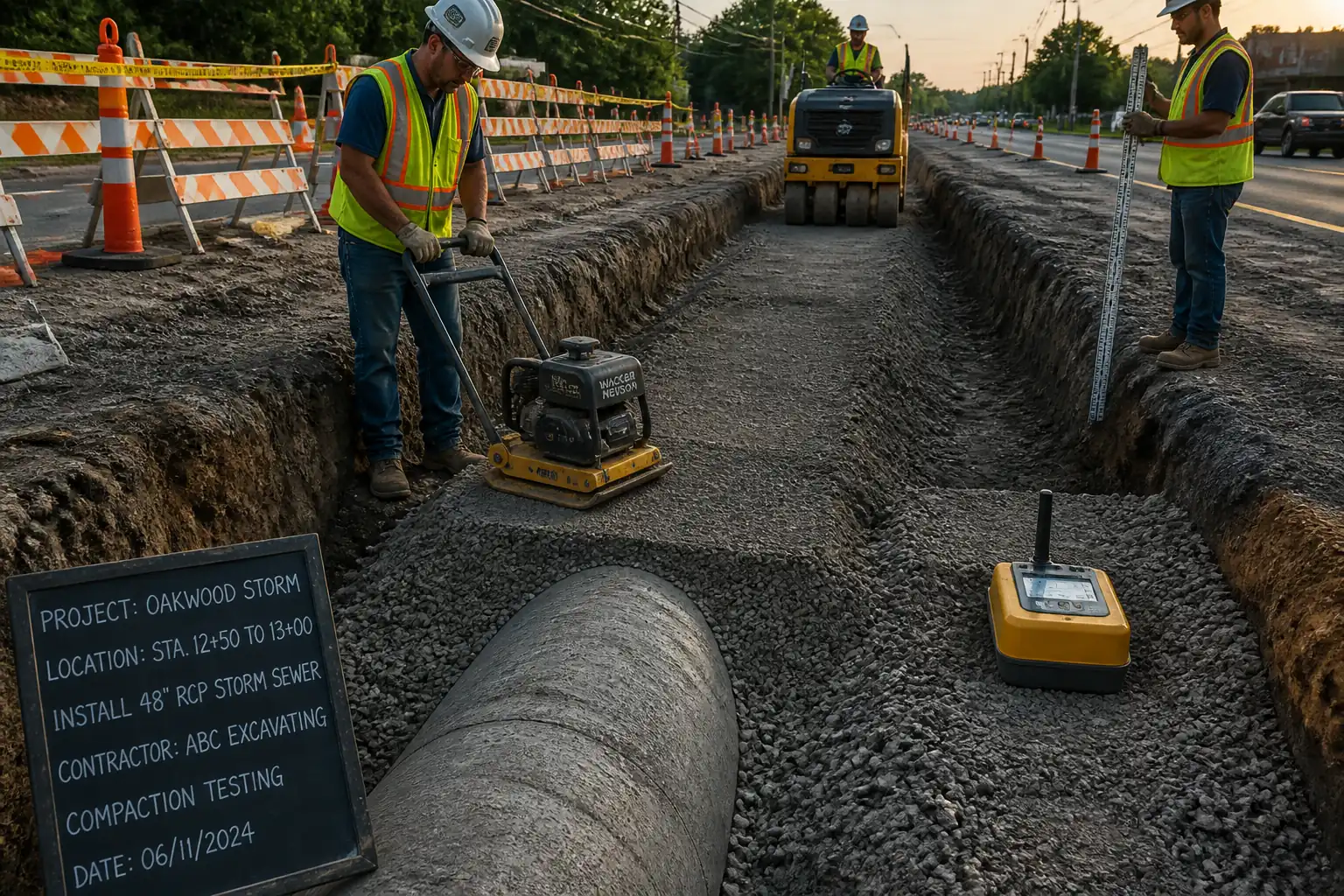
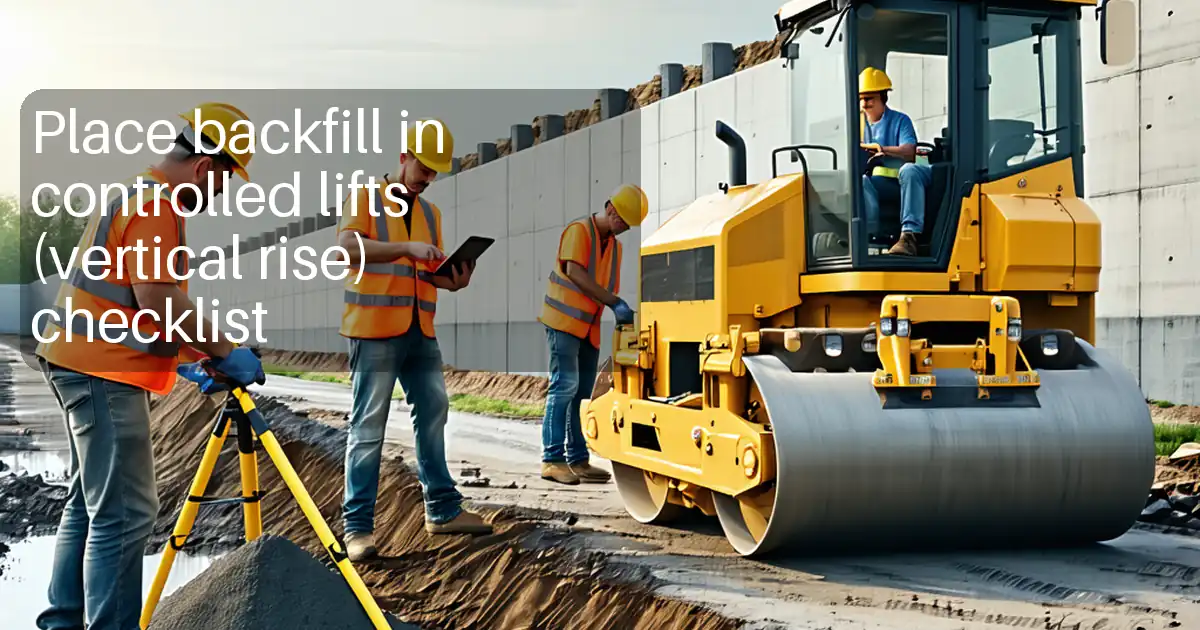
- Placement of fill in controlled layers (lifts), moisture conditioning to target range, and compaction using appropriate rollers.
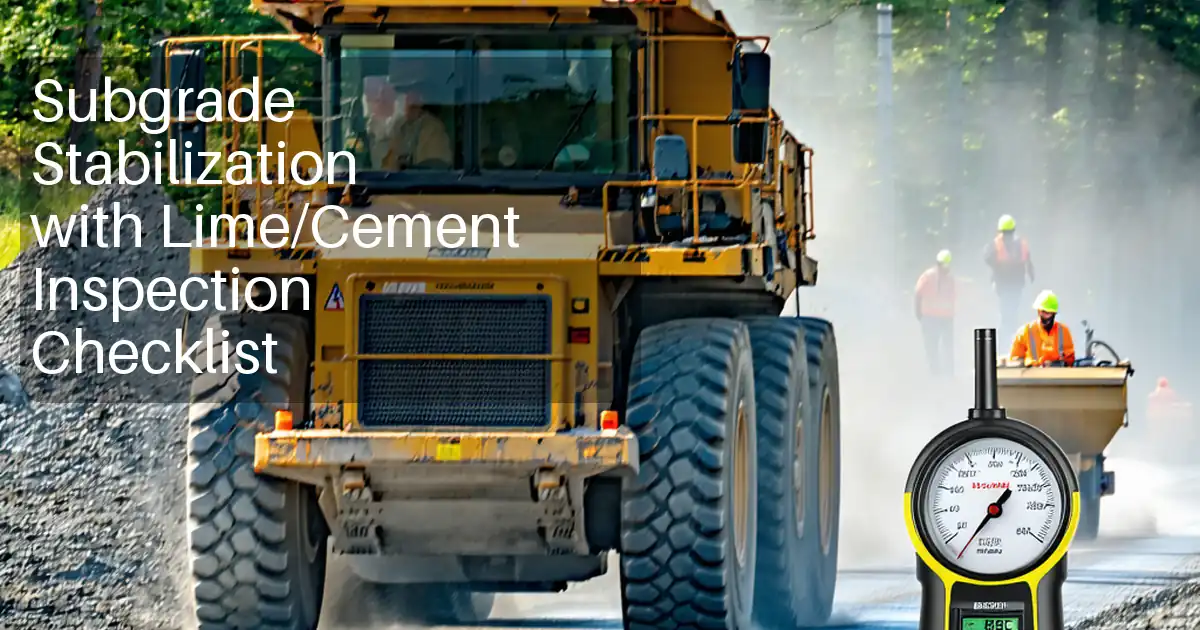
- Proof-rolling and rectification of unsuitable or yielding subgrade or fill layers, including localized stabilization measures if approved.
- Quality testing per lift (in-situ density/moisture), survey checks for layer thickness, final levels, and slopes.
- Final trimming of platform and slopes to tolerance and preparation for subsequent works.
Out of Scope (by others unless stated)
- Clearing of major obstructions, relocation of utilities, chemical stabilization (lime/cement), and permanent drainage structures, unless specifically directed.
Key Performance Targets [Verify per project specifications]
- Compaction: ≥98% of MDD (Modified Proctor, ASTM D1557) for building platforms; ≥95–98% of MDD for general fill as specified.
- Moisture: within −2% to +2% of OMC at time of compaction.
- Layer thickness: typically 200–300 mm loose, 150–225 mm compacted (established by test strip).
- Formation level tolerance: typically ±20–30 mm; slope gradient tolerance: ±0.5% or ±50 mm, whichever governs.
- Testing frequency: e.g., 1 density/moisture test per 250–500 m³ or per 500 m² per lift.
References
| Document Type | Reference / Number | Revision | Notes |
|---|---|---|---|
| Standard | BS 6031: Code of practice for earthworks | General earthworks practice and tolerances. [Verify per project specifications] | |
| Standard | BS 1377 (Parts): Methods of test for soils for civil engineering purposes | Sampling, moisture content, classification tests (Atterberg), and in-situ density (sand cone). | |
| Standard | ASTM D1557 / D698 | Laboratory compaction (Modified/Standard Proctor) to determine MDD/OMC. Specify which is governing. [Verify] | |
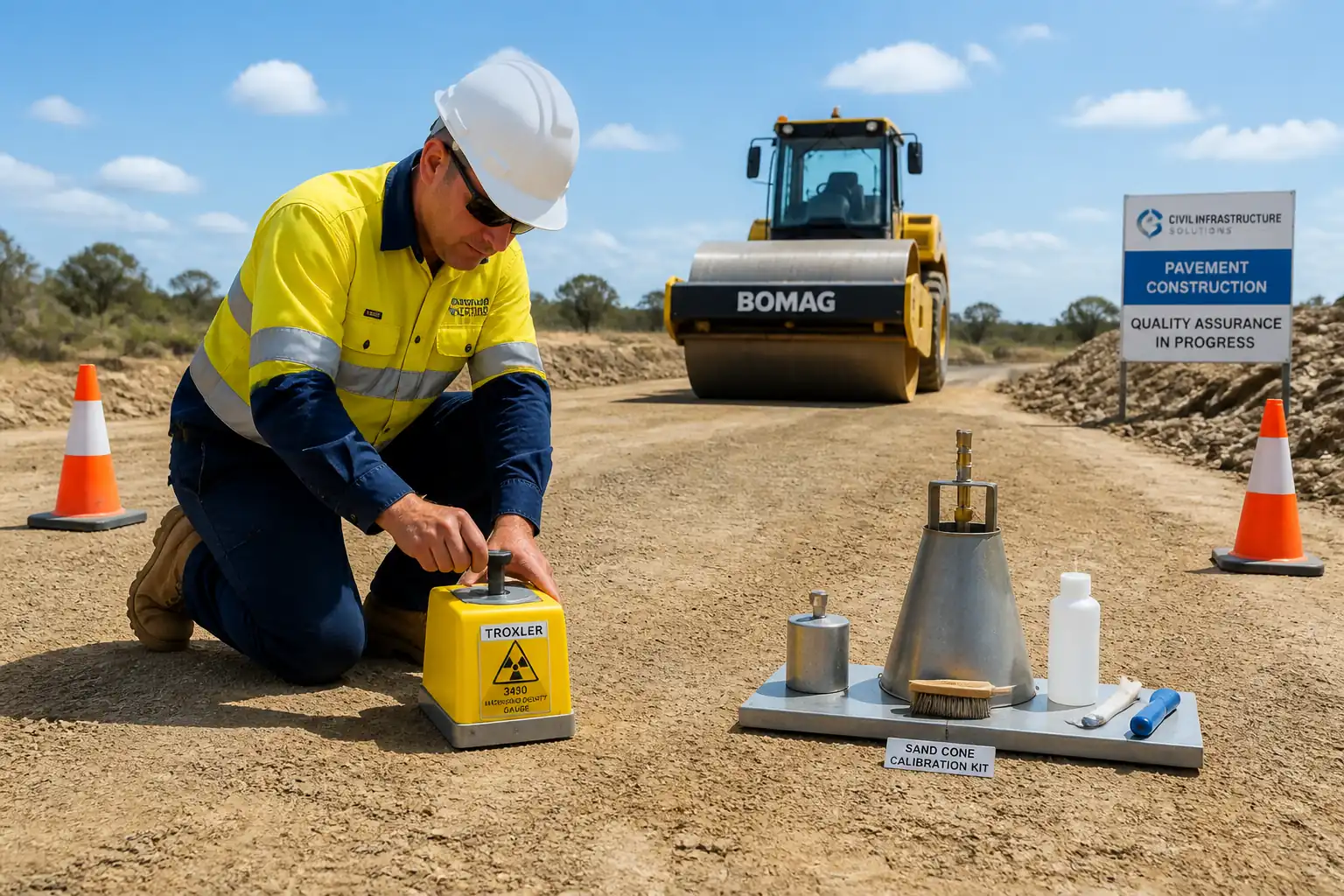
| Standard | ASTM D6938 | In-place density and moisture by nuclear gauge. Calibration and licensing required. | |
| Standard | ASTM D1556 / D2167 / D2216 / D6938 | Sand cone, rubber balloon, moisture content, and nuclear methods for field/control testing. | |
| Standard | BS EN ISO 9001 / 14001 / 45001 | Quality, environmental, and occupational health & safety management systems. | |
| Guideline | CIRIA C502 & local highway/earthworks specs | Good practice for compaction and fill placement. [Verify local guidance] |
Responsibilities
| Role | Responsibility | Name / Party |
|---|---|---|
| Project Manager | Overall delivery, resources, program, commercial controls | Contractor |
| Construction Manager / Site Agent | Daily coordination, sequences, permits, stakeholder communications | Contractor |
| Senior Land Surveyor | Setting out, survey control, machine control uploads, as-builts | Contractor |
| Earthworks Supervisor / Foreman | Implements method statement, supervises operators and labour, production reporting | Contractor |
| Quality Manager / QA Engineer | Approves ITP, inspections, test requests, NCRs, close-out | Contractor |
| Geotechnical Laboratory Technician | Sampling and testing (Proctor, density/moisture, classification), reporting | Independent / Contractor |
| HSE Manager / Officer | HSE plan, task risk assessments, permits, audits, incident response | Contractor |
| Engineer / Superintendent / Employer’s Representative | Review/approve method, hold/witness inspections | Engineer |
| Plant Operators (Scraper, ADT, Dozer, Grader, Roller, Water Truck) | Operate scrapers/ADTs/rollers/graders per plan, prestart checks | Contractor |
Resources
| Resource Type | Description | Quantity | Remarks |
|---|---|---|---|
| Earthworks Supervisor | 1 | Experienced in mass haul planning and scraper operations | |
| Survey Crew | 1–2 crews | GPS base/rover, machine control capable | |
| Quality Technician (Field) | 1–2 | Nuclear gauge licensed tester | |
| HSE Officer | 1 | Earthworks & plant interface experience |
Materials
| Material | Specification / Grade | Quantity | Remarks |
|---|---|---|---|
| General fill / Selected engineered fill | Meets project grading/plasticity/CBR requirements [Verify per project specifications] | As required | Well-graded, free of organics/contaminants; max particle size typically ≤75 mm within 300 mm of formation [Verify] |
| Water for moisture conditioning | Clean, free from harmful substances [Verify] | As required | Potable or clean non-saline water; avoid excess fines washout |
| Geotextile separator (optional) | Non-woven/woven per project spec [Verify] | If required | For separation over weak/soft subgrade; strength class per design |
Equipment
| Equipment | Capacity / Type | Quantity | Inspection Required |
|---|---|---|---|
| Motor scrapers | 20–40 m³ bowl | 2–6 | |
| Articulated dump trucks (ADTs) | 25–40 t payload | 4–12 | |
| Dozers with rippers (GPS-enabled) | 150–300 kW | 1–3 | |
| Motor graders (GPS/UTS) | 3.5–5 m moldboard | 1–2 | |
| Compaction rollers | 10–20 t (vibratory smooth drum/padfoot), 15–25 t pneumatic | 2–4 | |
| Water trucks/bowsers | 10–20 kL | 1–3 | |
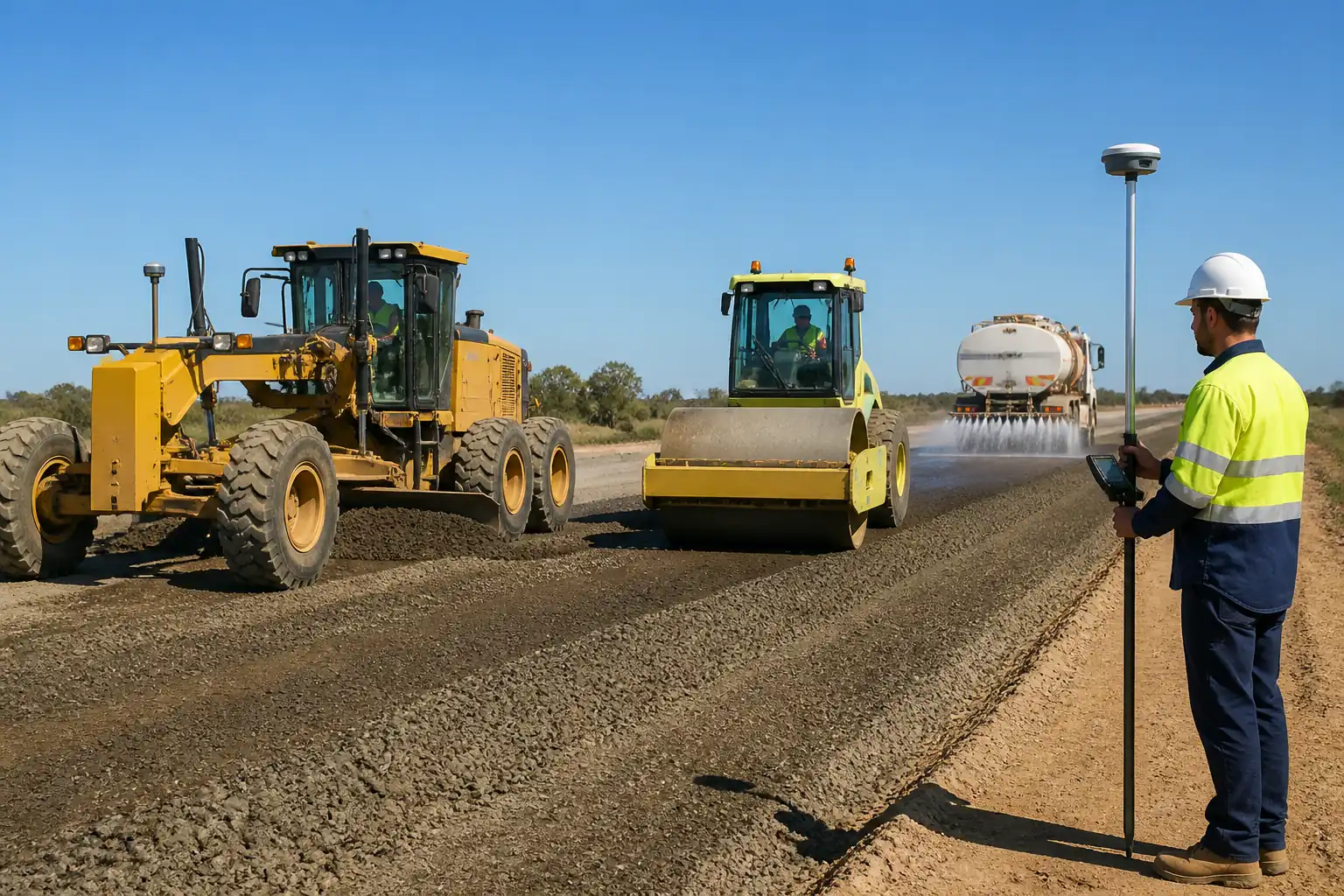
| Survey GNSS + Total Station (UTS) | RTK capable | 1 set | |
| Nuclear density gauge | Density/moisture | As needed |
Prerequisites
Approvals & Documentation
- Approved method statement, risk assessment, and ITP. Permits to Work for earthworks, traffic management, and radiation (nuclear gauge) [Verify per project HSE plan and local regulations].
- Approved drawings, latest model/surface for platform levels and slopes; survey control network established and verified (closure <10 mm + 1 ppm typical) [Verify].
- Material approvals: Borrow/cut source test results (grading, PI, CBR, sulfate if relevant) and selected Proctor method (ASTM D1557 or D698) with MDD/OMC defined for each material type.
- Calibration certificates: survey instruments (≤12 months), nuclear gauge (manufacturer schedule), water truck meters, roller meters if applicable.
Site Readiness
- Utility clearance and permits for excavation; mark-outs complete. Exclusion zones established for overhead/underground services.
- Environmental controls installed: silt fences, diversion drains, sediment basin (if required), stabilized site access (rumble grid/wheel wash).
- Haul roads planned and staked: width ≥7–10 m, max sustained gradient typically ≤10% for ADTs, adequate passing bays, berms on high edges.
- Weather contingency plan: stop-work criteria for rainfall/winds; covered stockpiles or staged production to avoid saturation.
- Prestart briefings and plant prestart inspections completed; operators competent and inducted; traffic management plan implemented.
Method Sequence
| Step | Activity | Description | Responsibility | Inspection / Hold Point |
|---|---|---|---|---|
| 1 | Prestart & Controls | Toolbox talk on hazards, sequence, and exclusion zones; confirm permits, survey control, test methods, and hold points. Upload latest design to machine control. | Site Agent / Surveyor | HSE inspection and survey control checklists signed-off |
| 2 | Surface Preparation | Define work limits; strip vegetation and topsoil (typ. 150–300 mm) and stockpile separately. Remove deleterious/unsuitable materials. | Earthworks Supervisor | IR for topsoil stripping depth and stockpile location |
| 3 | Haul Road Establishment | Construct/allot haul routes with adequate drainage, signage, speed limits, edge berms at high fills, sight distance and lighting (if night shift). | Construction Manager | Daily haul road inspection |
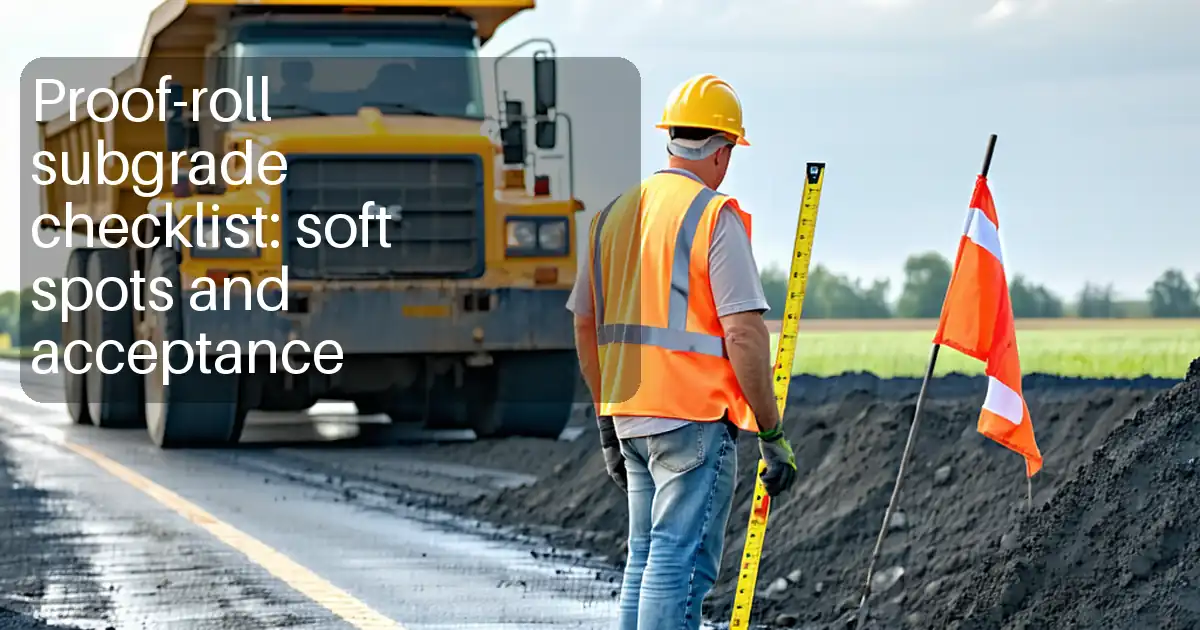
| 4 | Subgrade Proof-Roll | Scarify 100–150 mm, moisture condition to near OMC, compact; proof-roll with 10–12 t smooth drum roller or loaded ADT. | Supervisor / QA | Witness by Engineer if hold point |
| 5 | Cut Operations | Scrapers/dozers cut from designated areas; segregate unsuitable and oversize (>75–150 mm depending on layer depth) [Verify]. Avoid mixing wet and dry strata without conditioning. | Earthworks Supervisor | Material suitability checks |
| 6 | Hauling & Placement | Haul by scrapers/ADTs to fill area; tip in windrows; dozer/graders spread uniformly to design pattern. Maintain edge safety berms on fills >1.5 m height. | Supervisor | Routine supervision and spot checks |
| 7 | Layer Thickness Control | Place in controlled lifts: target 200–300 mm loose (to achieve 150–225 mm compacted) per test strip outcome. | Supervisor / Surveyor | Depth pins/plates; survey spot levels per grid |
| 8 | Moisture Conditioning | Condition material using water trucks and mixing (dozer/grader/aeration) to achieve OMC within −2% to +2% at time of compaction. | Supervisor / QA Tech | Field moisture checks (nuclear gauge or speedy) |
| 9 | Compaction (Test Strip then Production) | Establish roller type, amplitude, and passes by test strip. Apply established rolling pattern; stagger joints; avoid over-vibration on granular near surface. | Supervisor / QA | Engineer witness of test strip (Hold Point) |
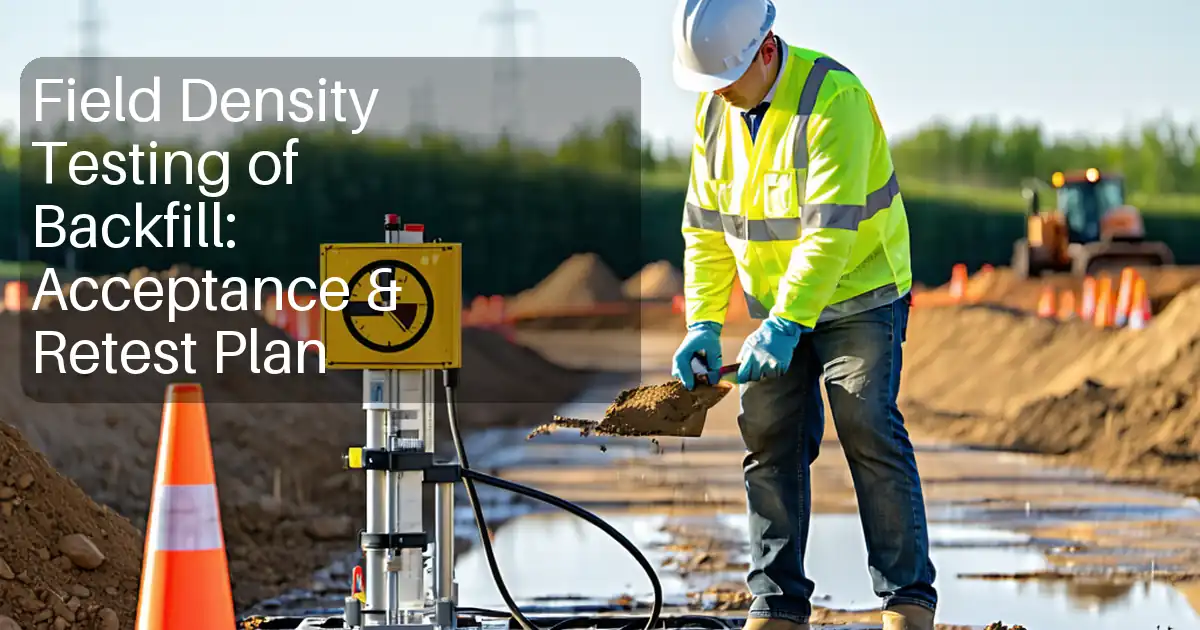
| 10 | In-situ Density & Moisture Testing | Perform field tests per frequency (e.g., 1/250–500 m³ or 1/500 m² per lift) at random locations; increase testing in suspect areas. | QA Tech / Independent Lab | Witness points per ITP |
| 11 | Survey Check of Each Lift | Survey spot levels and slopes; confirm layer build-up to design; update mass haul if needed. Machine control surfaces updated as required. | Surveyor | QA review |
| 12 | Rectification of Nonconformances | Identify soft/failed tests; rework by scarify–recondition–recompact; if persistent, consider drying, lime/cement treatment, geotextile, or undercut with granular replacement (Engineer approval). | Supervisor / QA / Engineer | Hold for re-test |
| 13 | Final Trim & Proof-Roll | Trim to final levels and crossfalls with grader; seal surface by finishing roller; proof-roll platform and access routes. | Supervisor / Surveyor | Engineer witness (as required) |
| 14 | Demobilization & As-built | Remove temporary works not required; tidy haul roads; install or maintain erosion controls until permanent works. Submit as-built models, density summary, and lot register. | Site Agent / Surveyor / QA | Final inspection |
Health, Safety & Environment - Task-Specific Safety Controls
Principal Hazards and Controls
- Heavy plant–personnel interface
- Hazard: Collision with scrapers/ADTs/rollers.
- Consequence: Serious injury/fatality.
- Engineering/Procedural Control: Segregate work zones; one-way haul circuits; defined pedestrian routes; plant–people exclusion (≥5 m); plant fitted with 360° cameras, beacons, alarms; dedicated spotters at pinch points; speed limits and overtaking bans on haul roads.
- Required PPE: High-vis (Class 3), hard hat, steel-toe boots, gloves, eye protection.
- Collective Measure: Physical barriers, banksmen, and radio communications protocol.
-
Inspection/Permit/Supervision: Daily plant prestart; traffic management audit; competent banksman; supervisor oversight.
-
Plant rollover/edge instability on fills and slopes
- Hazard: Edge failure or excessive side slope operation.
- Consequence: Rollover, crush injury.
- Control: Maintain edge berms (≥0.5 m high) on fills; minimum stand-off distance from edge = 1.5× tire height for ADTs unless engineered berm provided; limit transverse operation to manufacturer-rated slope; do not compact within 1 m of edge with vibratory mode on unsupported fills.
- PPE: As above; seat belts mandatory.
- Collective Measure: Edge berms/stop logs, engineered staged formation.
-
Inspection/Permit/Supervision: Supervisor to inspect edges per shift; geotechnical approval for high fills.
-
Underground/overhead services strikes
- Hazard: Contact with buried utilities or overhead lines.
- Consequence: Electrocution, rupture, explosion, service outage.
- Control: Permit-to-dig; utility locating (GPR/cable locator); trial pits before mass excavation; exclusion near overheads, maintain statutory clearances.
- PPE: Dielectric gloves as needed, standard PPE.
- Collective Measure: Physical barriers and signage at no-go zones.
-
Inspection/Permit/Supervision: PTD authorization; inspection of trial pits; supervision during work within proximity limits.
-
Dust generation and visibility impairment
- Hazard: Reduced visibility, respiratory irritation.
- Consequence: Collision, health effects.
- Control: Water carts for dust suppression; speed limits; cease work under dust storms/high winds; use windrows as visual guides; fit ADTs with cab filtration.
- PPE: Safety glasses/goggles, particulate masks (P2/P3) if required.
- Collective Measure: Route planning to minimize exposed areas.
-
Inspection/Permit/Supervision: Environmental monitoring (PM10/PM2.5) where required.
-
Noise and vibration exposure
- Hazard: Prolonged exposure to high dB from plant/rollers.
- Consequence: Hearing damage, nuisance to community.
- Control: Maintain equipment; restrict hours; use broadband alarms; vibration near structures assessed.
- PPE: Hearing protection (SNR per site assessment).
- Collective Measure: Acoustic management plan; barriers where needed.
-
Inspection/Permit/Supervision: Noise monitoring per plan.
-
Working with nuclear density gauge (ionizing radiation)
- Hazard: Radiation exposure, source security.
- Consequence: Health impact, regulatory breach.
- Control: Licensed operator; ALARA principles; controlled area set-out; transport/storage in approved container; leak tests and calibration current.
- PPE: Dosimeter/TLD as required, gloves when handling.
- Collective Measure: Exclusion zone cones/signs; buddy system.
-
Inspection/Permit/Supervision: Radiation PTW; records of usage; audits by RSO. [Verify per project HSE plan and local regulations]
-
Refuelling and spills
- Hazard: Fuel/chemical spill during refuelling.
- Consequence: Fire, soil/water contamination.
- Control: Designated refuelling bay with spill kit and drip trays; automatic shutoff nozzles; hot works prohibited during refuelling; fire extinguishers on all plant.
- PPE: Nitrile gloves, safety glasses.
- Collective Measure: Bunded storage; emergency response plan.
-
Inspection/Permit/Supervision: Weekly inspection of fuel systems; spill logs.
-
Night or reduced-visibility operations (if applicable)
- Hazard: Poor visibility for operators and ground crew.
- Consequence: Collision, run-over.
- Control: Task lighting to ≥50 lux on active areas; plant lighting compliant; reflective PPE; traffic marshals.
- PPE: High-vis with retroreflective strips.
- Collective Measure: Light towers positioned to avoid glare.
-
Inspection/Permit/Supervision: Night-work permit; illumination checks.
-
Heat stress / cold stress
- Hazard: Extreme temperatures.
- Consequence: Heat exhaustion/hypothermia.
- Control: Hydration plan, shaded breaks, work-rest cycles; appropriate clothing.
- PPE: Weather-appropriate PPE.
- Collective Measure: Welfare facilities.
- Inspection/Permit/Supervision: Supervisor to monitor; first aid available.
Environmental Controls
Erosion & Sediment Control
- Install perimeter silt fences, diversion drains, check dams; stabilize discharge points; maintain sediment basins where required. Inspect after rain events.
- Grade platforms to temporary falls to prevent ponding; maintain outlet protection.
Dust, Mud, and Air Quality
- Water carts to maintain moisture on haul roads and active faces; apply eco-approved suppressants if needed [Verify per local regulations].
- Stabilized site access (rumble grids/wheel wash) to prevent tracking mud onto public roads; street sweeping as required.
- Monitor PM10/PM2.5 if mandated; adjust operations under adverse winds.
Noise & Vibration
- Comply with working hour restrictions; maintain plant; use broadband reversing alarms; provide community notification where required.
Materials and Waste
- Segregate and stockpile topsoil (vegetation-free) for later reuse; protect from erosion with low, stable batters and cover if long-term.
- Manage unsuitable/contaminated material per waste hierarchy; dispose at licensed facilities.
- Control oversize: break down or remove; do not place within 300 mm of formation unless permitted.
Water Management
- Keep fuels/chemicals >50 m from watercourses where feasible; bund storage areas; spill response kits at refuelling and water points.
- Prevent discharge of turbid water; use settlement or filtration prior to release; monitor turbidity as required.
Ecology/Heritage
- Stop-work and notify if protected species or archaeological finds are encountered; implement exclusion and specialist review.
Compliance and Monitoring
- Environmental inspections daily; after rainfall >10–15 mm event; maintain records. All measures to be verified per project EMP and local regulations.
Quality Assurance & Quality Control
Hold and Witness Points
- Hold: Test strip approval for each distinct material/roller configuration.
- Hold: Subgrade proof-roll acceptance prior to first fill lift.
- Witness: Field density/moisture testing per lift per ITP frequency.
- Hold: Final level and slope inspection prior to handover.
Testing and Acceptance
- Laboratory compaction: Determine MDD/OMC per ASTM D1557 (Modified) unless project specifies ASTM D698 (Standard). Clearly state governing method on all reports. [Verify]
- Density/Moisture: Field tests via ASTM D6938 (nuclear) or ASTM D1556/D2167; acceptance criteria typically ≥98% MDD (platforms) and moisture within −2% to +2% OMC [Verify].
- Frequency: Typical minimum 1 test per 250–500 m³ or 1 per 500 m² per lift; increase for variability or nonconformances. [Verify]
- Layer thickness: Check via pins/holes and survey; within ±10% of target loose thickness unless specified otherwise.
- Proof-rolling: No visible deflection/pumping; rutting ≤10 mm; remediate soft spots and re-test.
- Final levels/slopes: Survey against design; platform level ±20–30 mm; slope gradient ±0.5% or ±50 mm [Verify].
Records & Traceability
- Lotting/area referencing per grid; maintain daily compaction logs (roller type, passes, lift thickness, moisture addition), test locations, and survey reports.
- Calibration certificates for test devices and survey equipment; operator licenses (nuclear gauge).
- NCR raised for any failed tests; corrective action logged; re-test prior to next lift.
As-Builts and Handover
- Deliver as-built surface model and contours, density/moisture test summary by lot, materials source approvals, and inspection requests with approvals.
Attachments
- Earthworks mass haul plan and haul road drawings.
- Traffic Management Plan and plant–people interaction layout.
- Erosion and Sediment Control Plan (ESCP) and temporary drainage details.
- Test strip method and rolling pattern sheets.
- Field density/moisture test forms; lot register template.
- Survey control report; machine control data sign-off; as-built templates.
- Permits: Permit-to-dig, radiation PTW, night-work permit (if applicable).
- Plant prestart checklists and maintenance records.
- Emergency response plan including spill response and first aid.
- Manufacturer datasheets for rollers and nuclear gauge safety documentation.
This content is a read-only public reference. Download or customize to get an editable version.
ITP preview
The first inspection activities from the linked ITP for Method Statement: Bulk Cut-to-Fill Earthmoving for Platform Formation (Scrapers & ADTs) with Layered Compaction and Survey Control:
| Activity | Inspection / Test | Acceptance Criteria | Responsibility | Record |
|---|---|---|---|---|
| Approvals & Prestart | Check approved MS/ITP, permits, calibrations, operator competencies | All approvals current; calibration certificates valid | Contractor QA / Engineer | Approval register, PTWs, calibration certs |
| Survey Control Establishment | Verification of control network (closure, benchmarks) | Compliant with project survey standards | Surveyor | Survey control report |
| Topsoil Stripping | Visual inspection of depth and stockpile placement | Organo-mineral horizon removed (typ. 150–300 mm) [Verify] | Supervisor / QA / Engineer | IR, photo record, topsoil log |
Showing 3 of 15 inspection activities. View full ITP →
Related Inspection and Test Plan
An Inspection and Test Plan (ITP) is available for Method Statement: Bulk Cut-to-Fill Earthmoving for Platform Formation (Scrapers & ADTs) with Layered Compaction and Survey Control. The ITP defines the inspection activities, acceptance criteria, hold and witness points, responsible parties, and records required to verify the work described in this method statement.
View the Method Statement: Bulk Cut-to-Fill Earthmoving for Platform Formation (Scrapers & ADTs) with Layered Compaction and Survey Control ITP →Frequently asked questions
Continue with related Quollnet resources connected to this method statement.