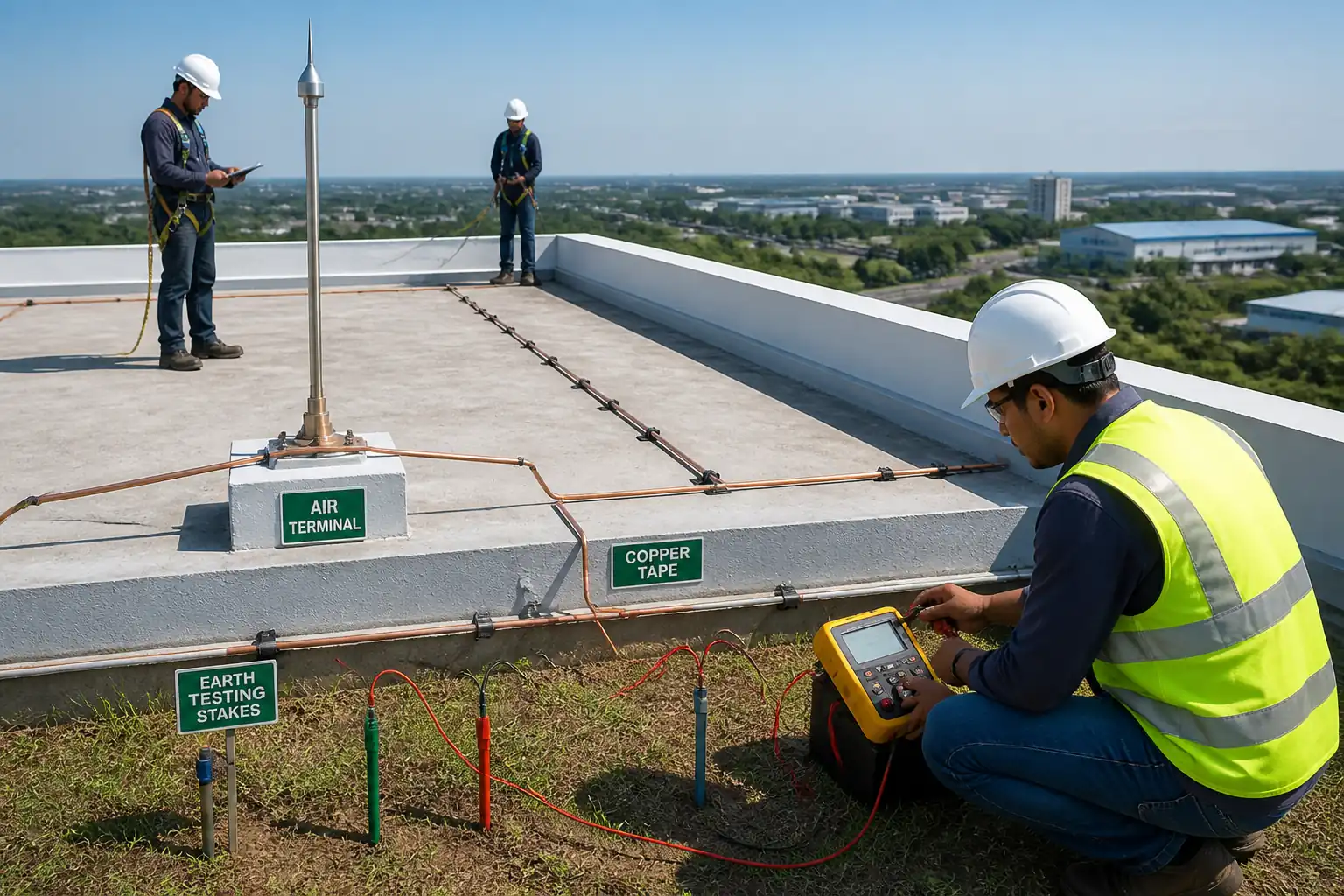

Method Statement: Testing and Commissioning of Lightning Protection System (LPS) – Method Statement
AI-assisted method statement with matching ITP, PDF download, and Excel export.
More than a static template
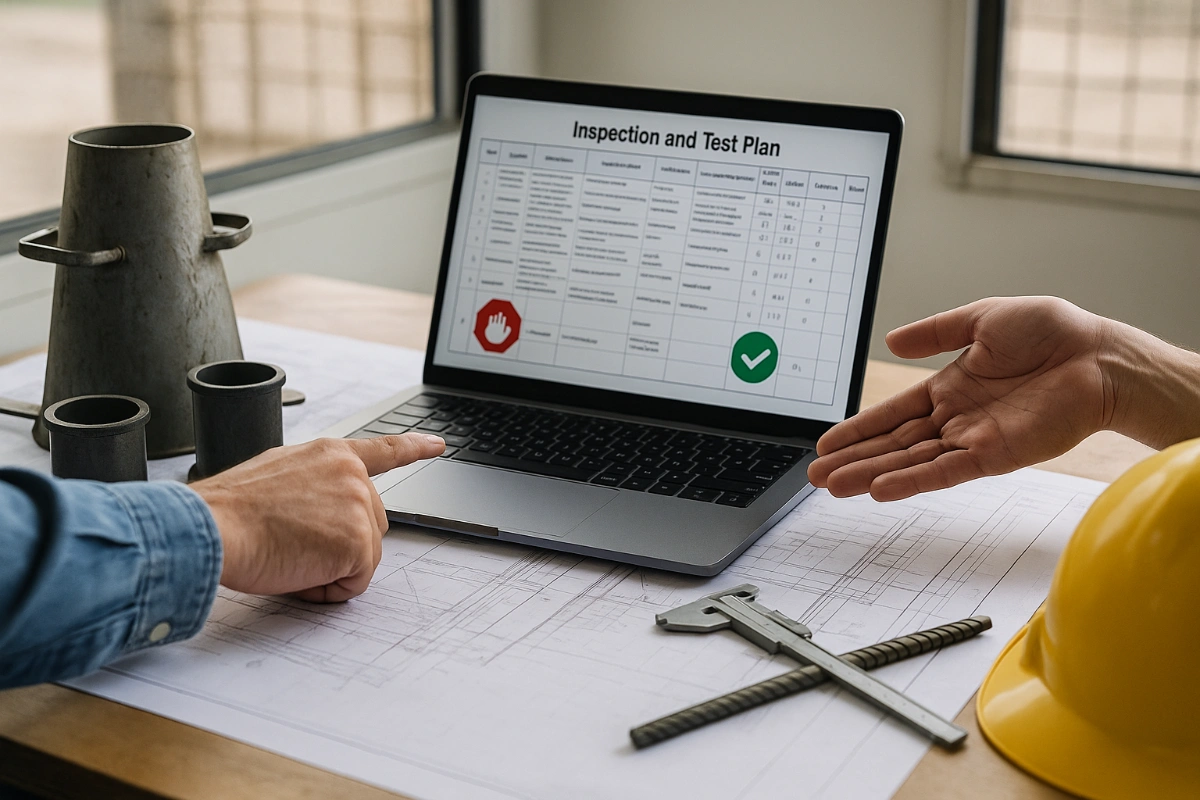
Unlike a downloadable Word or PDF template, this method statement is an AI-assisted editable starting point connected directly to a matching Inspection and Test Plan. Every section is structured, project-adaptable, and ready to export.
- AI-assisted drafting — Customize every section with AI for your specific project scope.
- Linked ITP — A matching inspection and test plan is generated alongside the method statement.
- Multiple export formats — Download as a formatted PDF or editable Excel spreadsheet.
- Editable starting point, not a final document — Review, verify, and adjust all content against your project requirements before use.
Static template vs. Quollnet workflow
| Feature | Static template | Quollnet |
|---|---|---|
| Project-specific content | Manual fill-in required | AI-assisted customization |
| Linked ITP | Separate document, no link | Matching ITP included |
| Export formats | Usually PDF only | PDF and Excel |
| Structured sections | Free-form layout | 13 standardized sections |
| Saved to your account | Local file only | Cloud-saved, reusable |
| Content accuracy | You verify everything | AI-assisted, you still verify |
| Cost | Often free but time-intensive | Free to customize and download |
What you can customize
When you save this method statement to your account, every section becomes editable. The following 13 sections are included:
- Scope — Defines the activity and its boundaries.
- References — Standards, specifications, and drawings.
- Responsibilities — Roles and accountabilities.
- Resources — Labour, plant, and equipment summary.
- Materials — Materials and compliance requirements.
- Equipment — Tools and equipment details.
- Prerequisites — Hold points and pre-conditions.
- Method sequence — Step-by-step construction sequence.
- Safety controls — HSE risk controls and PPE.
- Environmental controls — Environmental mitigation measures.
- QA/QC — Quality inspection and test requirements.
- ITP — Inspection and Test Plan table (has its own page).
- Attachments — Referenced drawings and documentation.
Why this method statement is used
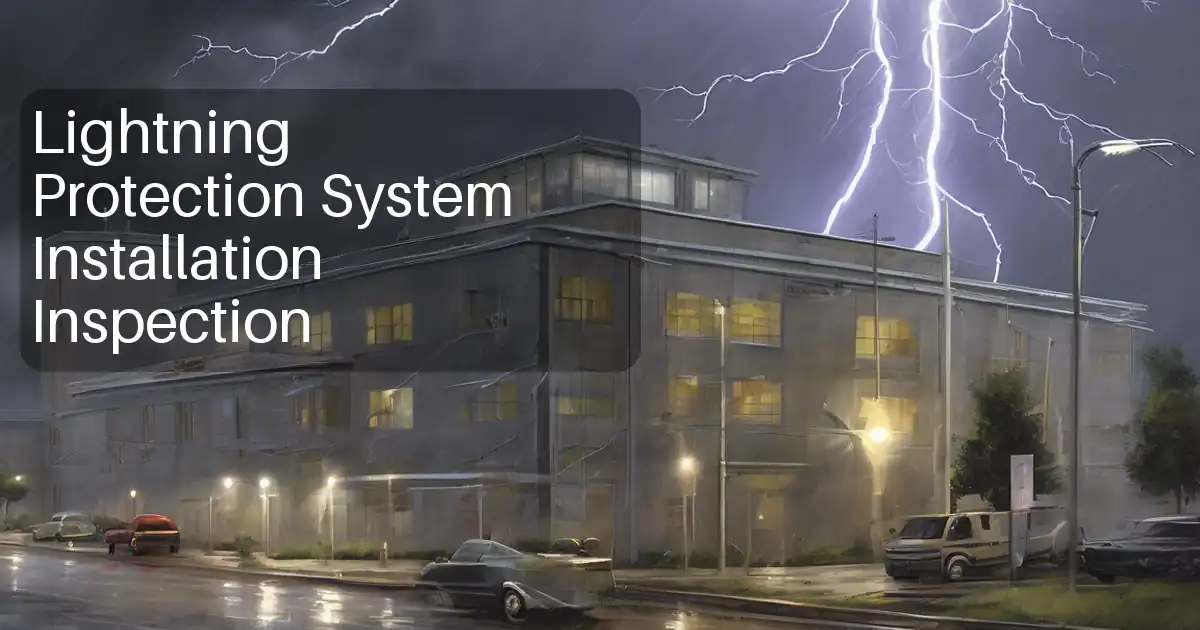
This method statement is used to define and communicate the approved procedure for carrying out method statement: testing and commissioning of lightning protection system (lps) on site. It ensures the work is planned in advance, the correct resources and controls are in place, and all personnel understand responsibilities, sequence, quality requirements, and safety controls before work begins. It aligns site execution with the documented scope and acceptance expectations.
Who uses this method statement
This method statement is used by contractors, site supervisors, project engineers, QA/QC engineers, HSE officers, consultants, and client representatives. It serves as a shared reference for planning, execution, supervision, inspection, and approval of the activity on site.
When it is prepared and submitted
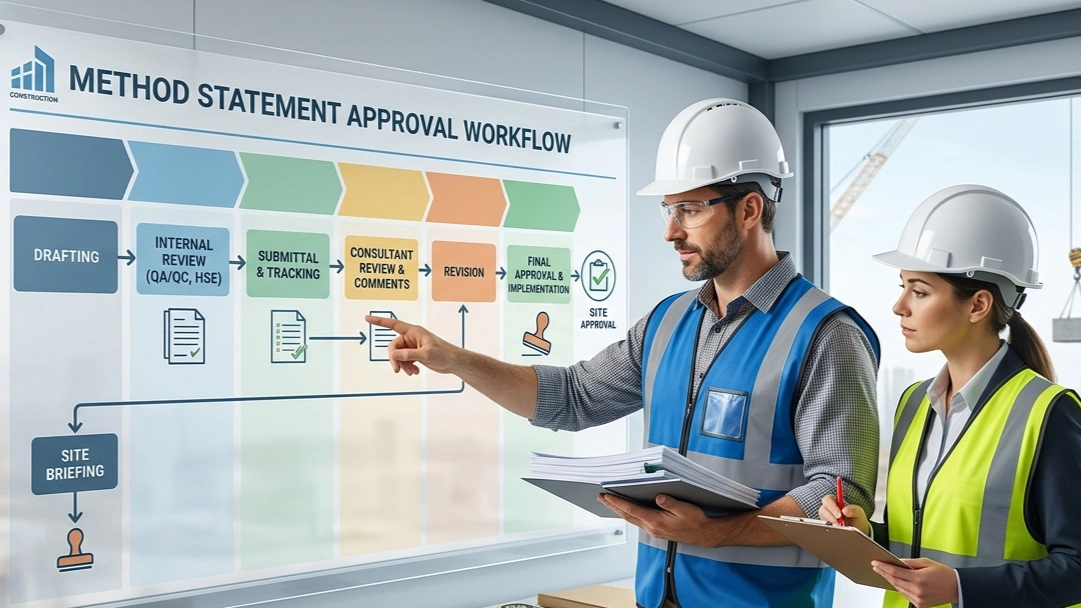
The method statement is prepared before the work activity starts and submitted as part of the pre-construction documentation package for review and approval.
Who reviews or approves it
The method statement is usually submitted to the client representative, consultant, resident engineer, or project management consultant for review and approval before the work commences.
Important approval note
This method statement is an AI-assisted editable starting point, not a pre-approved document. Before use on any project, all content must be reviewed and approved by the relevant parties (superintendent, principal contractor, or client representative) in accordance with your contract and project quality plan.
For example: if your specification requires a departure from a referenced standard, that departure must be documented and approved separately — this method statement will not capture that automatically. Always verify against your applicable drawings, specifications, and regulatory requirements.
Method statement content
Scope
Work Included
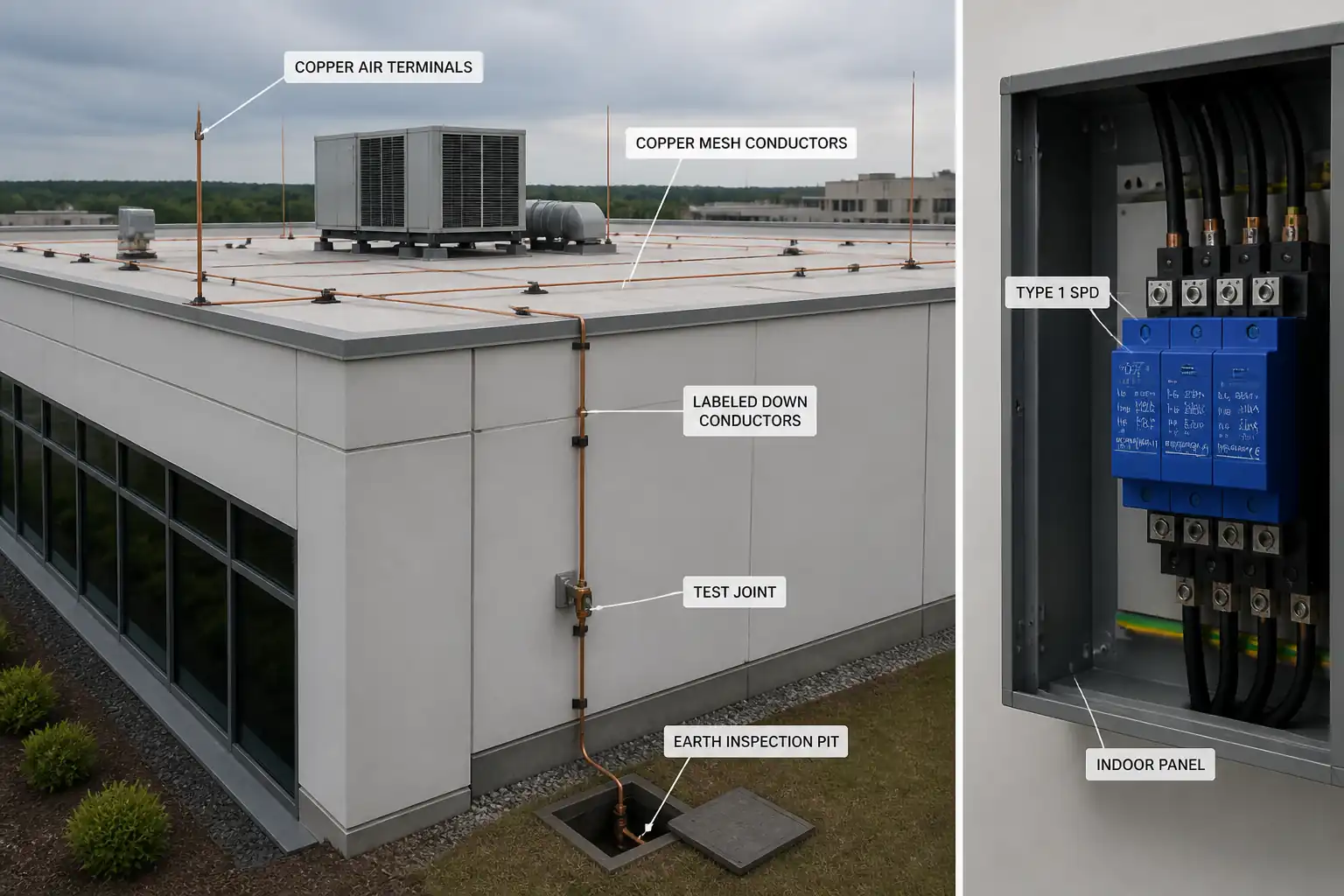
- Pre-commissioning document review of approved LPS design, as-built drawings, and component certifications.
- Physical inspection of air terminals and air-termination network against approved drawings.
- Verification of down conductors: routing, fixings, continuity, and test link accessibility.
- Equipotential bonding checks to metallic services/structures and verification of separation distances where bonding is not provided.
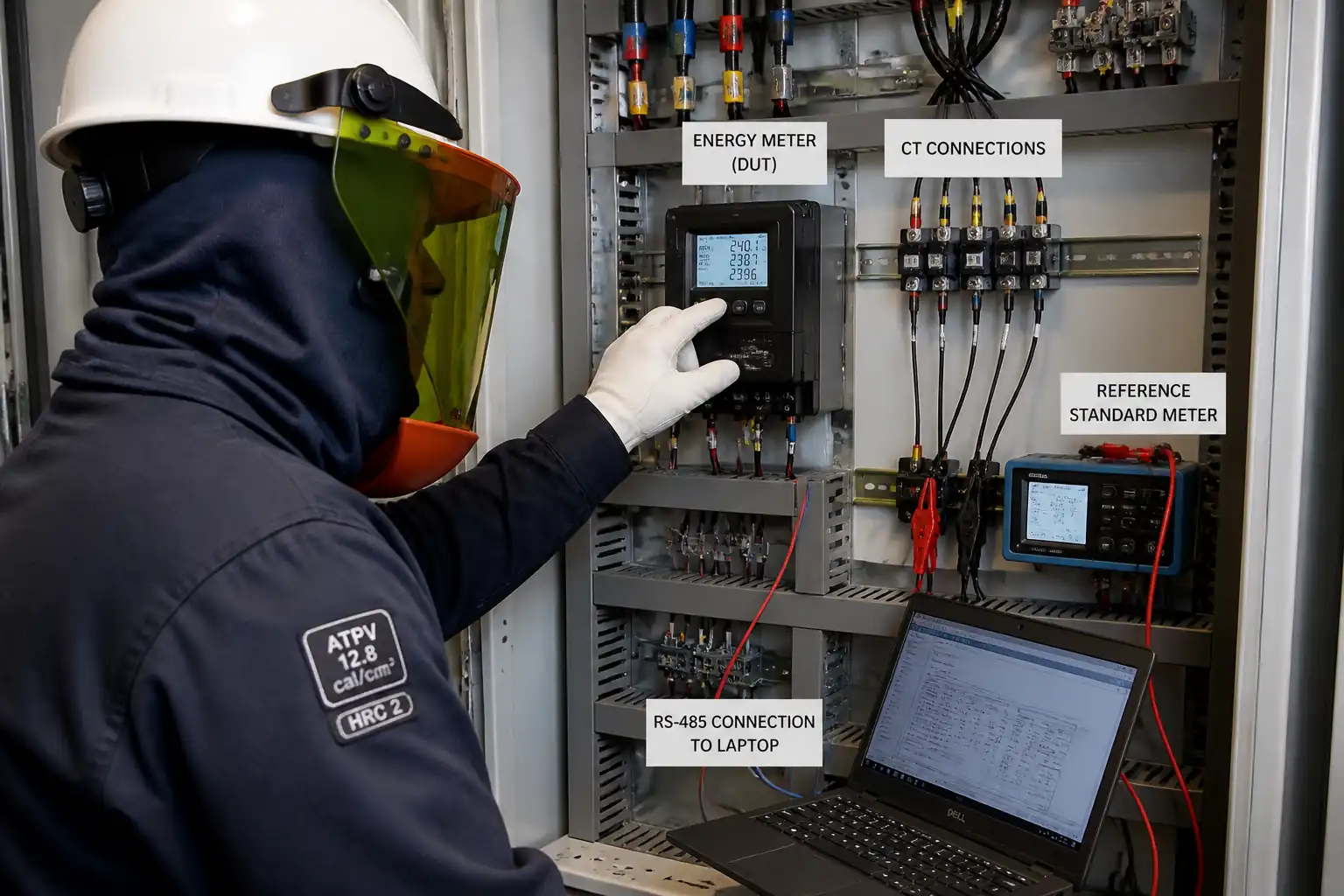
- Earth termination system testing (fall-of-potential or clamp method) including test link operation and reinstatement.
- Corrosion and mechanical protection review of all exposed/embedded LPS components.
- QA/QC inspections, ITP hold/witness points, defect rectification and re-testing.
- Compilation of test records, calibration certificates, red-line markups, as-built dossier, and completion/commissioning certificate.
Exclusions
- LPS redesign or risk assessment calculations (verification is against approved design).
- Supply/installation of new electrodes or LPS components except minor replacements/repairs agreed by NCR/SI.
Constraints/Assumptions
- Building remains operational; coordination required to avoid service disruptions.
- Testing conducted in fair weather; no testing during thunderstorms or when roof is wet/slippery.
References
| Document Type | Reference / Number | Revision | Notes |
|---|---|---|---|
| Standard | IEC/BS EN 62305 | Use for system principles and verification; specific class per design [Verify]. | |
| Standard | IEC/BS EN 62561 | Component compliance and markings. | |
| Standard | IEC 61557-4/-5 | Instrumentation performance requirements. | |
| Standard | IEEE 81 | Recommended practice for fall-of-potential method and probe spacing. | |
| Standard | NFPA 780 | Use only if mandated by contract [Verify]. | |
| Standard | ISO 1461 | For verifying zinc coating thickness where applicable. | |
| Project | Values marked [Verify per project specifications] to be confirmed here. |
Responsibilities
| Role | Responsibility | Name / Party |
|---|---|---|
| Project Manager | Ensure method and ITP approvals; facilitate hold/witness; sign-off completion. | Contractor |
| Site Engineer | Execute sequence, coordinate access, verify against drawings, collect records. | Contractor |
| QA/QC Engineer | Perform/verify inspections and tests, manage NCR/SI, maintain calibration records. | Contractor |
| Technician | Conduct continuity and earth resistance tests; ensure safe isolation/use of test links; prepare test reports. | Contractor/Subcontractor |
| HSE Officer | Issue/verify PTWs, conduct TBT, monitor WAH controls, weather and exclusion zones. | Contractor |
| Consultant Rep | Witness hold points and accept test results; sign ITRs and completion. | Consultant/Client |
| Access Supervisor | Install and inspect temporary edge protection/anchor lines; supervise WAH. | Contractor |
Resources
| Resource Type | Description | Quantity | Remarks |
|---|---|---|---|
| Manpower | 2x Testing Technicians + 1x QA/QC Engineer + 1x Site Engineer | 4 | |
| Manpower | 2x Rope/WAH Operatives or Roof Access Technicians | 2 | |
| Manpower | HSE Officer shared across works | 1 |
Materials
| Material | Specification / Grade | Quantity | Remarks |
|---|---|---|---|
| Clamps | IEC/BS EN 62561-1 compliant | As required [Verify] | |
| Fixings | Corrosion resistant; torque per manufacturer | As required [Verify] | |
| Protective materials | Compatible with Cu/Al/HDG | As required [Verify] | |
| Labels | UV and weather resistant | As required [Verify] |
Equipment
| Equipment | Capacity / Type | Quantity | Inspection Required |
|---|---|---|---|
| Earth Tester | 1 set | ||
| Clamp Earth Tester | 1 | ||
| Micro-ohmmeter | 1 | ||
| WAH Gear | As required | ||
| Tools | Set | ||
| Meas/Doc | Set |
Prerequisites
- Approved Method Statement and ITP with scheduled hold/witness points.
- Latest approved LPS design/as-built drawings and risk assessment defining LPS class and separation distances.
- Calibrated test instruments (certificates within validity) and technician competency records.
- PTWs: Work at Height, Roof Access, Electrical/Instrumentation Testing [Verify per project HSE plan and local regulations].
- Weather conditions: No thunderstorms forecast; wind below safe WAH limits [Verify per site policy]. Roof surfaces dry and free from slip hazards.
- Access arrangements, edge protection or lifeline anchors installed and inspected.
- All test links/earth pits located, cleared, and made accessible; temporary barriers prepared.
- Coordination with building operations to avoid interference with sensitive equipment; agree on test probe locations (no utility strike risk).
- Emergency plan briefed; first aid and rescue provisions for WAH in place.
- Pre-testing toolbox talk and risk assessment briefing completed.
Method Sequence
| Step | Activity | Description | Responsibility | Inspection / Hold Point |
|---|---|---|---|---|
| 1 | Kick-off and Document Review | Confirm approved drawings/specifications, LPS class, electrode layout, bonding details, and prior NCRs. Prepare test plan and sketch showing probe positions. | Site Engineer / QA/QC | Review meeting; equipment calibration verified |
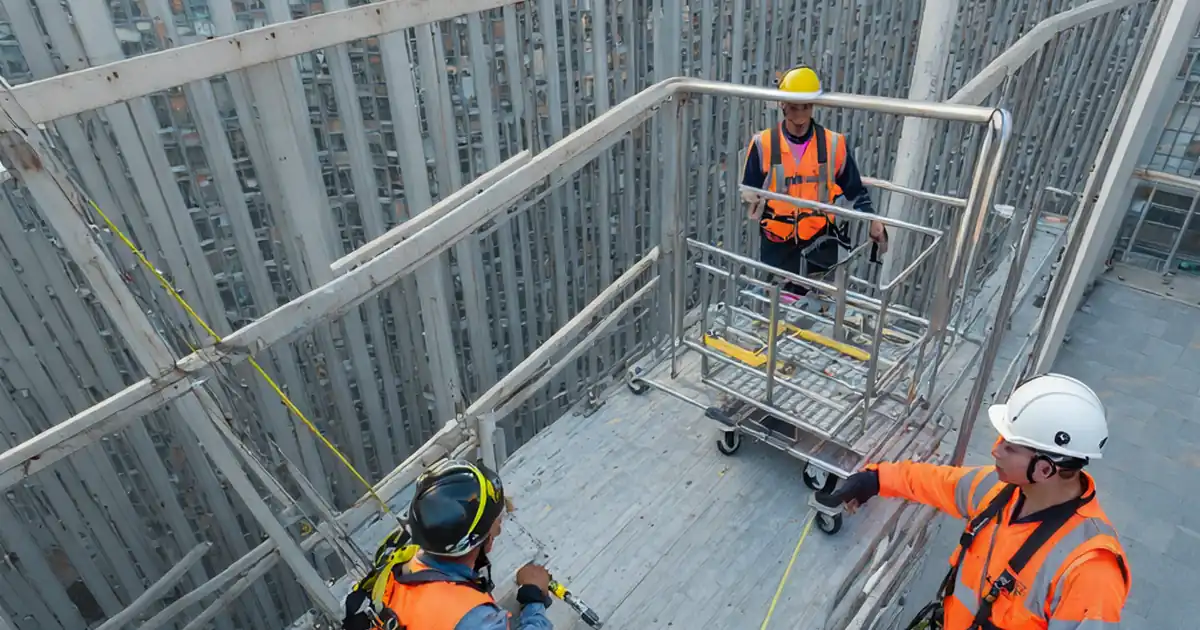
| 2 | Access and Safety Setup | Establish roof access controls, install/inspect lifelines/edge protection, set exclusion zones below, post lightning/weather monitor. | HSE Officer / Access Supervisor | WAH equipment inspection |
| 3 | Air-Termination Inspection | Inspect air terminals: type, height, straightness, fixings, spacing and coverage against drawings; verify integrity of mesh/ridge tapes and joints. | QA/QC Engineer | Visual with measurement and photos |
| 4 | Down Conductor Route and Fixings | Trace each down conductor from roof to test link; verify straight vertical routing, spacing per design, mechanical protection, and labeling of test links. | Site Engineer / QA/QC | Visual, torque check on accessible clamps |
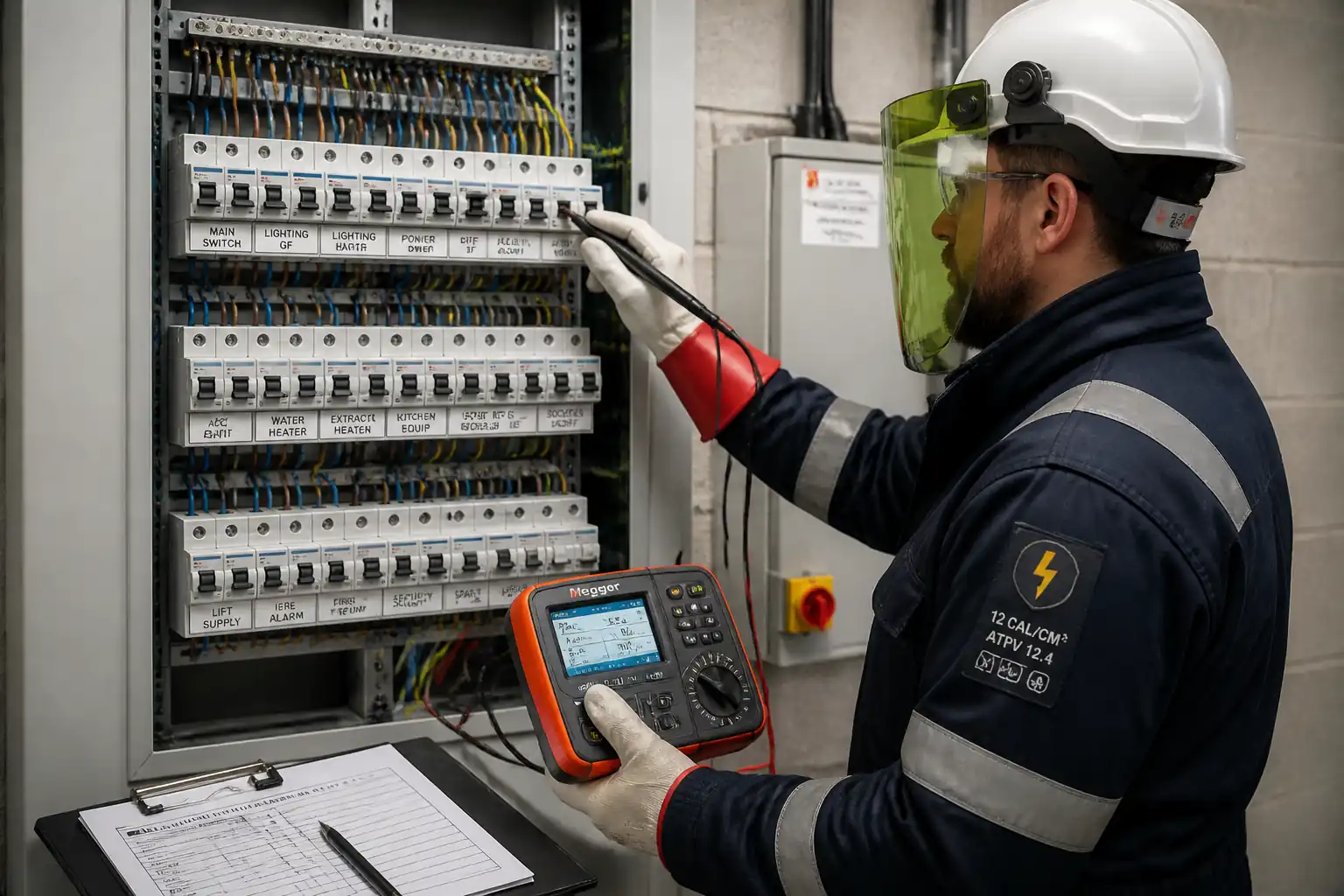
| 5 | Continuity Test of Down Conductors | Open test link; measure continuity from air terminal connection to test link using micro-ohmmeter (≥200 mA). Record end-to-end resistance per down conductor. | Testing Technician | Continuity test per IEC 61557-4 |
| 6 | Bonding Verification | Verify bonds to structural steel, metal roofs, HVAC, tanks, masts, and services at entry points; check clamps type/condition and separation distances where bonding not provided. | QA/QC Engineer | Visual, continuity spot-checks |
| 7 | Earth Resistance Testing – Setup | Isolate each earth electrode at its test link (without compromising building electrical earthing). Lay out test leads; drive current (C) and potential (P) stakes in line with electrode under test. | Testing Technician | Verify safe isolation at test links |
| 8 | Earth Resistance Measurement – Fall-of-Potential | Use 3-pole method per IEEE 81/IEC 61557-5. Place C stake ~30–50 m from electrode (≥5–10× electrode depth). Place P stake at ~62% of distance. Record R at 52%, 62%, 72% positions to confirm plateau. | Testing Technician | |
| 9 | Earth Resistance – Alternative Clamp Method | Where disconnection not possible and multiple parallel paths exist, use clamp-on tester around down conductor with all paths connected. Take multiple readings at different conductors to infer system resistance. | Testing Technician | |
| 10 | Corrosion and Mechanical Protection Review | Inspect for bi-metallic interfaces; confirm use of dielectric spacers/grease; check HDG coating condition; verify conduit/mechanical protection in traffic or exposed areas. | QA/QC Engineer | Visual; coating gauge where required |
| 11 | Restoration of Test Links and Labels | Reconnect all test links to normal service; apply torque; install/confirm labels and update pit/test link schedules. | Testing Technician / Site Engineer | Visual and torque check |
| 12 | Documentation and Handover | Compile ITRs, calibrated instrument records, photo logs, test data, as-built markups. Close NCRs and retest if required. Submit completion certificate. | QA/QC Engineer / Project Manager | Document review |
Health, Safety and Environment (HSE) – Task-Specific Safety Controls
Principal Hazards and Controls
1) Working at Height on Roofs
- Hazard: Falls from edges, fragile surfaces, skylights.
- Consequence: Fatal fall injuries.
- Engineering/Procedural Control: Install edge protection or certified temporary lifelines; use designated access routes; cover/guard fragile elements; maintain 3-point contact on ladders; suspend work in high winds or wet conditions.
- Required PPE: Full body harness with double lanyard, energy absorber; non-slip safety boots; helmet with chin strap; gloves.
- Collective Measure: Guardrails, warning lines, toe boards, roof hatch controls.
- Inspection/Permit: WAH PTW; pre-use inspection of harness/lifelines (tagged within validity); daily HSE inspection; rescue plan and kit ready [Verify per project HSE plan and local regulations].
2) Lightning/Adverse Weather Exposure
- Hazard: Electrical discharge during thunderstorms.
- Consequence: Electrocution, burns.
- Engineering/Procedural Control: Weather monitoring; stop work and evacuate elevated areas when lightning within site-defined radius (e.g., 10–15 km) [Verify]; do not handle air terminals during storms.
- PPE: Standard PPE; do not rely on PPE for lightning protection.
- Collective Measure: Safe shelters designated; clear go/no-go criteria.
- Inspection/Permit: HSE to monitor weather; record stoppages.
3) Utility Strikes from Driving Test Stakes
- Hazard: Impact on buried services.
- Consequence: Electrocution, gas release, flooding, service disruption.
- Engineering/Procedural Control: Obtain and review utility maps; use cable avoidance tools; hand-dig trial holes if uncertainty; maintain minimum offsets from known utilities; avoid paved/serviced corridors.
- PPE: Dielectric gloves where required, helmet, eye protection, boots.
- Collective Measure: Barriers and signage around test area; banksman to control public/traffic interface.
- Inspection/Permit: Permit to Dig (where applicable); pre-task scan records; supervision by Site Engineer.
4) Electrical Testing and Temporary Disconnections
- Hazard: Inadvertent disconnection of building protective bonding; induced voltages in leads.
- Consequence: Loss of protection; shock.
- Engineering/Procedural Control: Only isolate LPS test links as per drawings; do not disconnect main earthing conductor or protective bonding while facility energized; use fused test leads; verify zero potential before touch.
- PPE: Insulated gloves when handling conductors; eye protection.
- Collective Measure: Tag/lock local test links during isolation; barricade earth pits.
- Inspection/Permit: Electrical testing PTW; supervision by Authorized Technician; check with Electrical Supervisor before isolation.
5) Manual Handling and Access Equipment
- Hazard: Strains from carrying gear to roof; trips.
- Consequence: Musculoskeletal injury.
- Engineering/Procedural Control: Use hoists/lifts; break loads into small kits; maintain clear walkways; good housekeeping.
- PPE: Gloves, safety footwear.
- Collective Measure: Team lifts for heavy items; storage staging areas.
- Inspection/Permit: Housekeeping inspections; lifting equipment certificates.
6) Corrosion Protection Materials and Hot Surfaces
- Hazard: Exposure to bituminous compounds/solvents; burns from sun-heated metal.
- Consequence: Dermatitis, minor burns, inhalation irritation.
- Engineering/Procedural Control: Use low-VOC products where possible; apply in ventilated areas; follow SDS; avoid work at peak heat.
- PPE: Chemical-resistant gloves, eye protection, long sleeves.
- Collective Measure: Shade, hydration stations.
- Inspection/Permit: SDS available; COSHH/chemical permits as applicable.
7) Public/Occupied Building Interface
- Hazard: Falling objects from roof edges; unauthorized access to test zones.
- Consequence: Injury to occupants/public.
- Engineering/Procedural Control: Establish exclusion zones with debris netting or toe boards; tool lanyards for work near edges; schedule off-peak hours.
- PPE: Helmets for workers and authorized visitors in zone.
- Collective Measure: Spotters and barricades at entry points.
- Inspection/Permit: Daily HSE walkdown; signage verified in place.
Environmental Controls
- Soil Disturbance from Stakes: Minimize number and depth of probes; avoid landscaped/archaeological zones; reinstate ground and turf after removal; photograph before/after.
- Waste Management: Collect and dispose of worn clamps, packing, tapes, and damaged fixings via segregated waste streams; no disposal of metal to general waste.
- Chemical Use: Follow SDS for corrosion inhibitors/cleaners; prevent run-off to drainage; use spill kits; prohibit use of salts or chemicals to alter soil resistivity during testing.
- Noise and Vibration: Limit hammering for stakes to daytime hours; use manual driving where feasible; notify neighbors if near boundaries.
- Roof Membrane Protection: Use pads under tools; prohibit dragging of conductors/tools; immediate repair of any punctures.
- Flora/Fauna: Avoid nesting/bird disturbance on roofs; reschedule if protected species present [Verify per local regulations].
Quality Assurance and Quality Control
General
- All measuring instruments shall have valid calibration certificates traceable to national/international standards.
- 100% of down conductors, test links, bonds, and earth electrodes to be inspected and tested unless otherwise approved in writing.
Acceptance Criteria [Verify per project specifications]
- Continuity (down conductors): End-to-end resistance typically ≤1.0 Ω from air terminal to test link; no open circuits.
- Bonding: Resistance across each bond typically ≤0.5 Ω; bond type per IEC/BS EN 62561-1; separation distance per approved design where bonding omitted.
- Earth Resistance: Each individual electrode and the combined system to meet project requirement. Typical benchmarks: single electrode ≤10 Ω; combined ring ≤1–2 Ω. Multi-point readings at 52/62/72% within ±5% of each other to confirm reliability.
- Components: Air terminals, clamps, tapes, rods certified to IEC/BS EN 62561; galvanizing thickness where specified per ISO 1461.
ITP and Records
- Hold/Witness points as defined in Method Sequence and ITP; no progression beyond hold points without Consultant sign-off.
- Records: Checklists, torque logs, continuity/earth test reports with site sketches and distances, photos with date/time, calibration copies, NCRs/closeouts, as-built markups, completion certificate.
Nonconformance and Retesting
- Document deviations via NCR; propose corrective actions (tighten/replace clamps, add bonds, augment electrodes, improve routing/protection). Re-test after rectification. Trend analysis if repeated failures.
Handover Dossier
- Index, approvals, test plans, ITRs, raw data, calculations (if any), material/component certificates, as-built drawings, O&M/testing recommendations, completion certificates.
Attachments
- Sample checklists: Air-termination inspection, down conductor routing, bonding verification, corrosion/mechanical protection.
- Test report templates: Continuity test (IEC 61557-4), Earth resistance (IEEE 81/IEC 61557-5) with site sketches and stake distances.
- Calibration certificates for earth testers, clamp meters, and micro-ohmmeters.
- PTW templates: Work at Height, Roof Access, Electrical Testing, Permit to Dig.
- Risk assessment and toolbox talk materials specific to LPS testing.
- Manufacturer data sheets and certificates of conformity for LPS components (IEC/BS EN 62561).
- As-built redlines and final drawings.
- Completion/commissioning certificate template.
This content is a read-only public reference. Download or customize to get an editable version.
ITP preview
The first inspection activities from the linked ITP for Method Statement: Testing and Commissioning of Lightning Protection System (LPS):
| Activity | Inspection / Test | Acceptance Criteria | Responsibility | Record |
|---|---|---|---|---|
| Pre-commissioning Document Review | Verify approvals, drawings, calibration, competencies | All approvals current; instruments calibrated; team competent; risk assessment briefed | QA/QC Engineer / Consultant | ITR-01; Calibration list; TBT record |
| Access/WAH Setup Inspection | Verify permits, edge protection/lifelines, exclusion zones | PTWs valid; equipment tagged; rescue plan available | HSE Officer / Consultant | ITR-02; PTWs; WAH inspection tags |
| Air-Termination Visual Inspection | Visual vs drawings; component conformity | Conforms to approved layout; no damage/corrosion; correct fixings | QA/QC Engineer / Consultant | ITR-03; Photo log |
Showing 3 of 11 inspection activities. View full ITP →
Related Inspection and Test Plan
An Inspection and Test Plan (ITP) is available for Method Statement: Testing and Commissioning of Lightning Protection System (LPS). The ITP defines the inspection activities, acceptance criteria, hold and witness points, responsible parties, and records required to verify the work described in this method statement.
View the Method Statement: Testing and Commissioning of Lightning Protection System (LPS) ITP →Frequently asked questions
Continue with related Quollnet resources connected to this method statement.