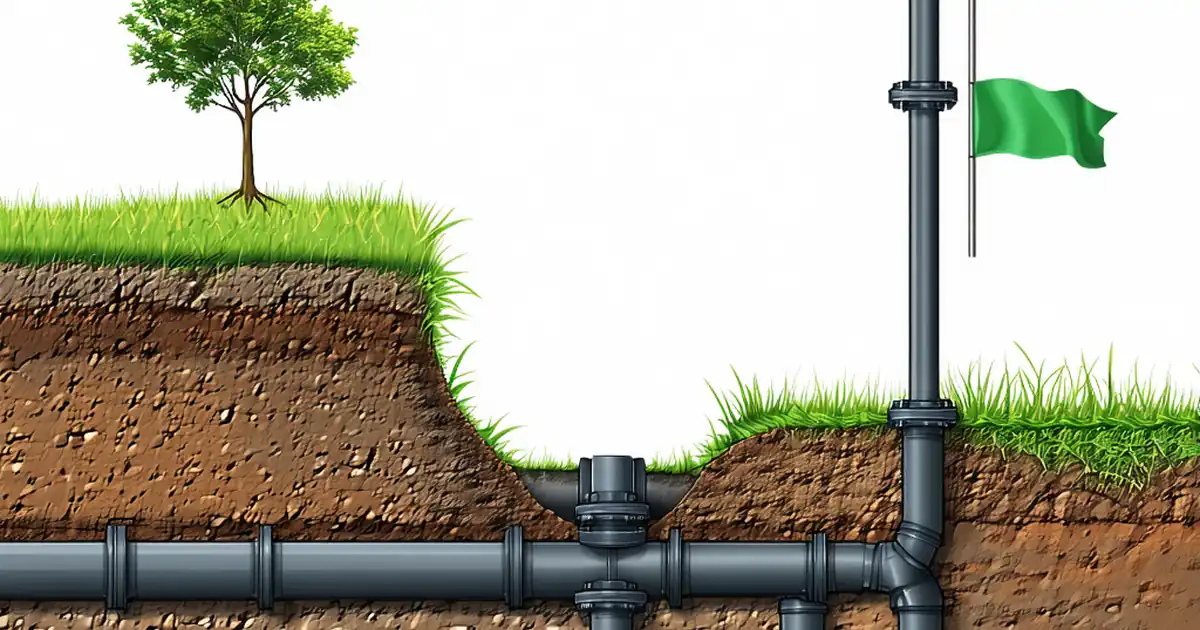
Method Statement: Pipeline Pigging, Cleaning and Gauging Prior to Testing/Commissioning – Method Statement
AI-assisted method statement with matching ITP, PDF download, and Excel export.
More than a static template
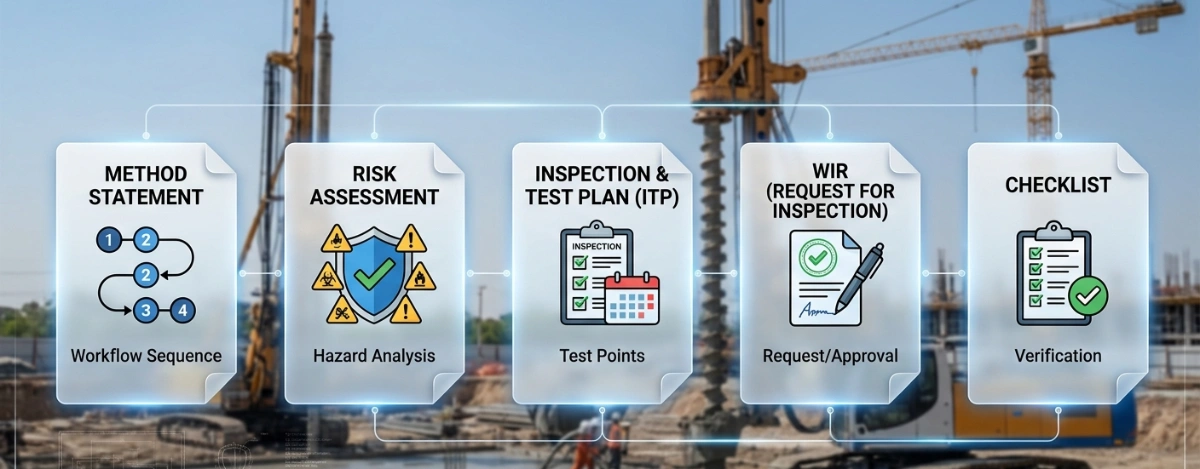
Unlike a downloadable Word or PDF template, this method statement is an AI-assisted editable starting point connected directly to a matching Inspection and Test Plan. Every section is structured, project-adaptable, and ready to export.
- AI-assisted drafting — Customize every section with AI for your specific project scope.
- Linked ITP — A matching inspection and test plan is generated alongside the method statement.
- Multiple export formats — Download as a formatted PDF or editable Excel spreadsheet.
- Editable starting point, not a final document — Review, verify, and adjust all content against your project requirements before use.
Static template vs. Quollnet workflow
| Feature | Static template | Quollnet |
|---|---|---|
| Project-specific content | Manual fill-in required | AI-assisted customization |
| Linked ITP | Separate document, no link | Matching ITP included |
| Export formats | Usually PDF only | PDF and Excel |
| Structured sections | Free-form layout | 13 standardized sections |
| Saved to your account | Local file only | Cloud-saved, reusable |
| Content accuracy | You verify everything | AI-assisted, you still verify |
| Cost | Often free but time-intensive | Free to customize and download |
What you can customize
When you save this method statement to your account, every section becomes editable. The following 13 sections are included:
- Scope — Defines the activity and its boundaries.
- References — Standards, specifications, and drawings.
- Responsibilities — Roles and accountabilities.
- Resources — Labour, plant, and equipment summary.
- Materials — Materials and compliance requirements.
- Equipment — Tools and equipment details.
- Prerequisites — Hold points and pre-conditions.
- Method sequence — Step-by-step construction sequence.
- Safety controls — HSE risk controls and PPE.
- Environmental controls — Environmental mitigation measures.
- QA/QC — Quality inspection and test requirements.
- ITP — Inspection and Test Plan table (has its own page).
- Attachments — Referenced drawings and documentation.
Why this method statement is used
This method statement is used to define and communicate the approved procedure for carrying out method statement: pipeline pigging, cleaning and gauging prior to testing/commissioning on site. It ensures the work is planned in advance, the correct resources and controls are in place, and all personnel understand responsibilities, sequence, quality requirements, and safety controls before work begins. It aligns site execution with the documented scope and acceptance expectations.
Who uses this method statement
This method statement is used by contractors, site supervisors, project engineers, QA/QC engineers, HSE officers, consultants, and client representatives. It serves as a shared reference for planning, execution, supervision, inspection, and approval of the activity on site.
When it is prepared and submitted
The method statement is prepared before the work activity starts and submitted as part of the pre-construction documentation package for review and approval.
Who reviews or approves it
The method statement is usually submitted to the client representative, consultant, resident engineer, or project management consultant for review and approval before the work commences.
Important approval note
This method statement is an AI-assisted editable starting point, not a pre-approved document. Before use on any project, all content must be reviewed and approved by the relevant parties (superintendent, principal contractor, or client representative) in accordance with your contract and project quality plan.
For example: if your specification requires a departure from a referenced standard, that departure must be documented and approved separately — this method statement will not capture that automatically. Always verify against your applicable drawings, specifications, and regulatory requirements.
Method statement content
Scope
Purpose
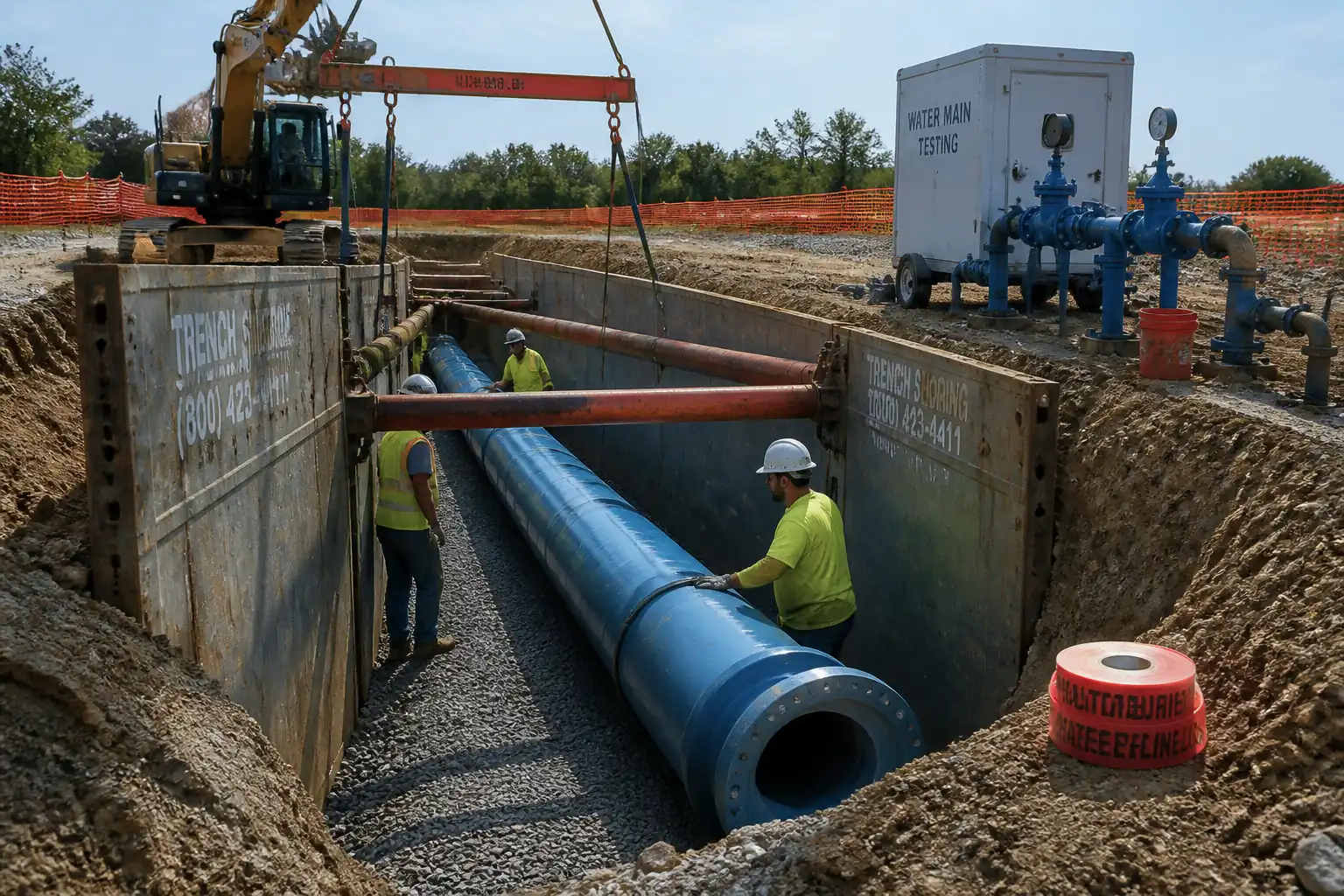
This method defines the procedures, resources, quality controls, and HSE measures for pipeline pigging, mechanical cleaning, and gauging prior to hydrostatic testing or commissioning.
Scope of Work
- Prepare and verify pipeline section limits and isolation for pigging.
- Set up and leak-test pig launcher and receiver assemblies.
- Select, assemble, and run cleaning pigs and a gauging plate pig.
- Control pigging pressures, flows, and speed; implement pressure relief and venting.
- Track pigs and manage safety exclusion zones.
- Receive and inspect debris; classify, collect, and dispose of waste.
- Inspect and evaluate gauging plate acceptance.
- Compile QA/QC records, hold/witness points, and cleaning reports.
Pipeline Applicability
- Onshore transmission/distribution pipelines for gas or liquids, carbon steel or CRA-lined, DN ≥ 4 in [Verify per project specifications].
- Pre-commissioning cleaning prior to hydrotest (liquid lines) or prior to gas-in (gas lines) [Verify per project commissioning plan].
Exclusions
- Full hydrostatic testing and drying after hydrotest (covered under separate method).
- In-line inspection (ILI) tool runs beyond basic gauging (covered under separate method).
References
| Document Type | Reference / Number | Revision | Notes |
|---|---|---|---|
| Standard | ASME B31.4 | Use for liquid pipelines as applicable. | |
| Standard | ASME B31.8 | ||
| Recommended Practice | API RP 1160 | ||
| Standard Practice | NACE/AMPP SP0102 | ||
| Standard | API 1163 | ||
| Recommended Practice | API RP 1110 | ||
| Standard | BS EN 1594 | ||
| Standard | DNV-ST-F101 | ||
| Standard | ISO 9001/14001/45001 | ||
| Manual | OEM | ||
| Specification | Values marked [Verify per project specifications]. |
Responsibilities
| Role | Responsibility | Name / Party |
|---|---|---|
| Construction Manager | Construction Manager | Contractor |
| Pipeline Superintendent | Pipeline Superintendent | Contractor |
| Pigging Supervisor | Pigging Supervisor | Specialist Subcontractor |
| QA/QC Engineer | QA/QC Engineer | Contractor |
| HSE Manager | HSE Manager/Officer | Contractor |
| Client Rep | Client Representative | Client |
| TPI | TPI Inspector | Independent |
| Permit Coordinator | Permit Coordinator | Contractor |
| Technician | Tracking Technician | Specialist Subcontractor |
Resources
| Resource Type | Description | Quantity | Remarks |
|---|---|---|---|
| Personnel | Pigging Supervisor (1), Technicians (4–8), Riggers (2), Crane Operator (1) [Verify]. | 8–12 | |
| Personnel | HSE Officer (1), Fire Watch (1), Flagmen/Banksmen (2). | 4 | |
| Personnel | QA/QC Engineer (1), Inspector (1), Client Rep/TPI (as required). | 2–3 |
Materials
| Material | Specification / Grade | Quantity | Remarks |
|---|---|---|---|
| Polyurethane foam | OEM | As per runs | |
| Polyurethane/Steel | OEM | As required | |
| Al/Steel | Project Spec/OEM | 1–2 | |
| OEM | 1 per pig | ||
| OEM | As required | ||
| Project Spec | As required |
Equipment
| Equipment | Capacity / Type | Quantity | Inspection Required |
|---|---|---|---|
| Launcher/Receiver | Design rating | 1 set each | Yes |
| Compressor | 8–10 bar | 1–2 | Yes |
| N2 trailers | Up to MOP | As required | Yes |
| Pump | 10–30 bar | 1 | Yes |
| PRV | 2+ | Yes | |
| Gauges/Logger | As required | Yes | |
| Signaller/Locator | 2–6 | Yes | |
| Vent Stack | 1 | Yes | |
| Crane/Slings | As required | Yes | |
| Gas Detector | 2–4 | Yes | |
| Radios | As required |
Prerequisites
- Approved method statement, risk assessment, and ITP.
- Permits to Work (PTW) approved: excavation/open trench (if any), pressure testing/pigging, hot work (if applicable), lifting, confined space (if applicable) [Verify per project HSE plan and local regulations].
- Line identified and section limits confirmed against P&IDs, alignment sheets, and isometrics. All tie-ins/branches isolated, blinds/spades installed per blind list and tagged.
- Verify pipeline free of open ends; vents and drains identified and controlled; check valve orientation confirmed.
- ESD/ESV and isolation valves function-tested as applicable; lock-out/tag-out (LOTO) established.
- Launcher/receiver closures inspected; seals/O-rings in good condition; interlocks operate.
- Instruments calibrated (pressure, temperature, data logger); calibration within 6 months [Verify].
- Emergency response plan briefed; muster points and exclusion zones established (min 15 m around launcher/receiver; increase as required by risk assessment) [Verify per site constraints].
- Utilities and services available (power, air, nitrogen/water as planned, lighting).
- Waste management plan approved; containers for debris and contaminated materials staged.
- Toolbox talk held; roles, communication protocol, and hand signals agreed.
- Weather and wind direction checked to plan venting and noise mitigation; community notifications arranged if needed.
Method Sequence
| Step | Activity | Description | Responsibility | Inspection / Hold Point |
|---|---|---|---|---|
| 1 | Pre-start briefing and PTW | Conduct toolbox talk on pigging hazards, pressure control, line-of-fire, and emergency actions. Confirm PTW, LOTO, blind list, and drawings on site. | Pigging Supervisor / HSE | Witness |
| 2 | Launcher/receiver setup | Position, level, and secure launcher and receiver. Verify supports and earthing. Apply OEM grease to closure seals; check interlocks. | Mechanical Supervisor | Surveillance |
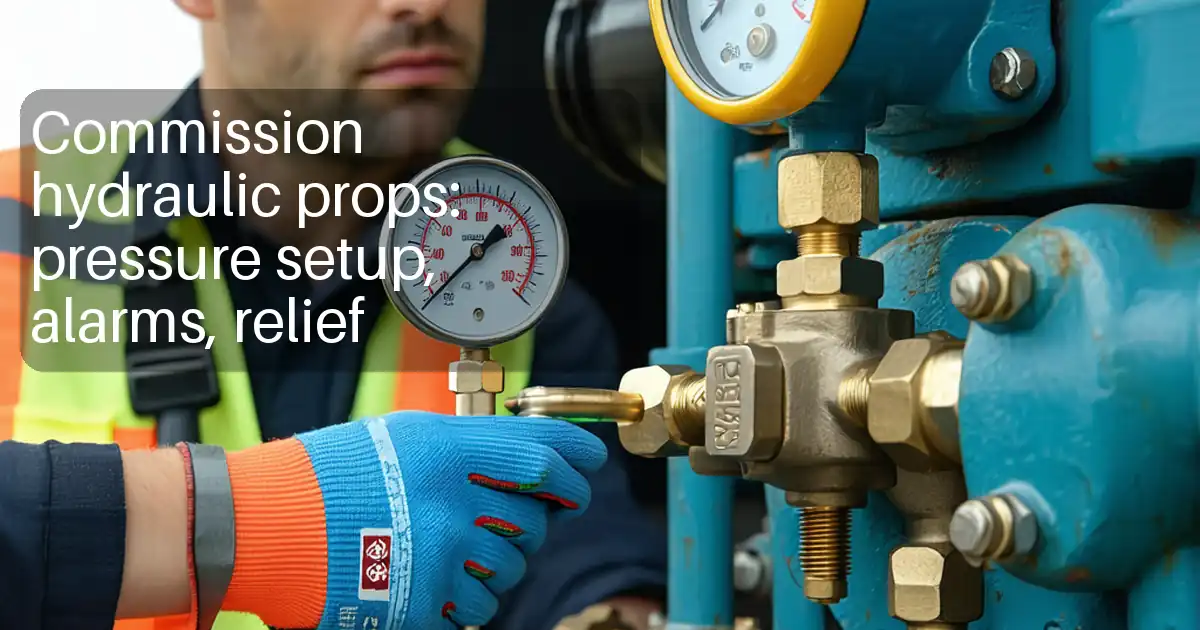
| 3 | Instrumentation and PRV setup | Install calibrated gauges at launcher and receiver; connect data logger. Install PRV/PSV and set to ≤90% of lowest rated component [Verify]. Route relief/vent to stack with silencer. | QA/QC / Pigging Supervisor | Witness |
| 4 | Leak test of launcher/receiver | Hydro or pneumatic leak test per project spec (preferred hydro): pressurize to 1.1× design/MAWP of trap for ≥30 min; soap test closures/joins. | Mechanical Supervisor / QA/QC | Hold Point |
| 5 | Install signallers and plan tracking | Install non-intrusive signallers at launcher, midpoints, and receiver. Verify pig transmitter frequency and locator operation. | Tracking Technician | Witness |
| 6 | Pig selection and gauging plate sizing | Select initial foam cleaning pig(s), then cup/disc pig with gauging plate. Machine/verify gauging plate diameter at 95% of nominal ID [Verify]. Record measurements. | Pigging Supervisor / QA/QC | Hold/Witness |
| 7 | Load initial cleaning pig | Depressurize and verify zero-energy of launcher; open closure with interlock; insert foam pig; install transmitter if required; close and secure closure; re-pressurize trap gradually. | Pigging Supervisor / Mechanical | Witness |
| 8 | Run cleaning pig(s) | Start propelling medium. Control pig speed at 0.5–1.0 m/s [Verify]. Monitor differential pressure (DP) across pig and pressure at trap. Adjust flow to avoid stalls/surges. | Pigging Supervisor | Surveillance |
| 9 | Receive and inspect debris | Isolate and depressurize receiver; open with interlock; remove pig; collect debris via screens/baskets. Weigh and log debris; check for metal fragments. | Pigging Supervisor / HSE | Witness |
| 10 | Repeat cleaning runs | Repeat foam/brush pigs until debris and discoloration reduce to acceptable levels. | Pigging Supervisor | Surveillance |
| 11 | Gauging run | Install bi-directional pig with gauging plate and transmitter; run at 0.5–1.0 m/s [Verify]. Track continuously. | Pigging Supervisor / Tracking Tech | Witness |
| 12 | Gauging plate assessment | On receipt, inspect plate for deformation/cuts. Measure max chord reduction/flattening. | QA/QC / Client Rep | Hold Point |
| 13 | Optional swabbing/drying | If specified (e.g., gas service), run swab pigs until dryness achieved (dew point at operating pressure ≤ -10°C to -20°C) [Verify]. | Commissioning Engineer | Witness |
| 14 | Documentation and handover | Compile pig run logs, pressure/speed graphs, debris logs, calibration certs, gauging report, and ITRs. Obtain client/TPI sign-off. | QA/QC Engineer | Review |
| 15 | Demobilization and reinstatement | Remove temporary equipment, restore blinds/valve status as per next activity plan, tidy site, update as-built P&IDs. | Pipeline Superintendent | Surveillance |
Safety Controls
Task-specific hazards and controls
- Hazard: Stored energy/overpressure during pigging and at closures
- Likely consequence: Catastrophic release, projectile pig, serious injury/fatality.
- Engineering/procedural control: PRVs set ≤90% of lowest rated component; calibrated gauges; slow pressurization/depressurization; interlocked closures with pressure equalization valves; enforce exclusion zone ≥15 m around launcher/receiver (increase if pneumatic or high pressure) [Verify per project HSE plan and local regulations].
- Required PPE: Hard hat, safety glasses/face shield, hearing protection, gloves, FR clothing, safety boots.
- Collective preventive measure: Physical barriers, danger tape, signage "No entry – pressure operations"; spotter to enforce line-of-fire control.
-
Inspection/permit/supervision: PTW for pressure operations; Supervisor authorization before opening; PRV calibration certs verified by QA/QC.
-
Hazard: Inert gas (N2) asphyxiation and oxygen deficiency
- Likely consequence: Unconsciousness, fatality.
- Engineering/procedural control: Use gas detectors (O2/LEL); vent to height; position downwind; avoid confined spaces; purge plans reviewed; continuous atmospheric monitoring during venting.
- Required PPE: Personal gas monitor, standard PPE; SCBA available for emergencies.
- Collective preventive measure: Establish upwind muster; ventilation and windsock; training on asphyxiation hazards.
-
Inspection/permit/supervision: Gas test logs; HSE supervision during purging/venting; PTW with confined space controls if applicable.
-
Hazard: Hydrocarbon gas presence/ignition (if product residues)
- Likely consequence: Fire/explosion, burns.
- Engineering/procedural control: Gas-free test <10% LEL before opening closures; use non-sparking tools; bond/ground equipment; hot work controls when needed; use flame arrestor on vent if specified.
- Required PPE: FR clothing, anti-static gear, gloves, eye/face protection.
- Collective preventive measure: Hot work permits; fire watch with extinguishers; keep ignition sources >15 m away.
-
Inspection/permit/supervision: LEL logs; fire watch checklist; hot work PTW.
-
Hazard: Noise from venting/compressors
- Likely consequence: Hearing damage.
- Engineering/procedural control: Acoustic silencers on vents; plan venting during low-sensitivity periods; maintain distance.
- Required PPE: Class 5 earplugs/earmuffs.
- Collective preventive measure: Noise assessment and zoning.
-
Inspection/permit/supervision: HSE noise monitoring where required.
-
Hazard: Dropped objects during pig handling/lifting
- Likely consequence: Crush injuries.
- Engineering/procedural control: Certified lifting gear; taglines; no hands under load; use pig trolleys.
- Required PPE: Helmet with chin strap, gloves, safety boots.
- Collective preventive measure: Exclusion under load; lifting plan and appointed person.
-
Inspection/permit/supervision: Lifting certificates; pre-lift check; permit to lift if required.
-
Hazard: Manual handling/ergonomics
- Likely consequence: Strains/sprains.
- Engineering/procedural control: Use mechanical aids; team lifts; break down components where possible.
- Required PPE: Gloves, supportive footwear.
- Collective preventive measure: Manual handling training; rotate tasks.
-
Inspection/permit/supervision: Supervisor oversight.
-
Hazard: Pressurized hose/connection failure
- Likely consequence: Whiplash, impact injury.
- Engineering/procedural control: Restrain hoses; whip-checks; rated fittings; secure routing away from walkways; pressure test hoses prior to use.
- Required PPE: Eye/face protection, gloves.
- Collective preventive measure: Barriers and trench plates where hoses cross access.
-
Inspection/permit/supervision: Hose inspection tags; pressure rating check.
-
Hazard: Traffic and mobile plant at site
- Likely consequence: Collision/run-over.
- Engineering/procedural control: Traffic management plan; segregated pedestrian routes; banksmen for reversing.
- Required PPE: Hi-vis clothing.
- Collective preventive measure: Signage and speed limits.
-
Inspection/permit/supervision: Daily traffic brief by Supervisor.
-
Hazard: Adverse weather (wind during venting)
- Likely consequence: Gas drift to occupied areas.
- Engineering/procedural control: Monitor wind; suspend venting if wind direction unsafe; extend exclusion zone.
- Required PPE: As standard.
- Collective preventive measure: Windsock installation.
- Inspection/permit/supervision: HSE approval before venting.
Environmental Controls
- Emissions from venting: Use silencers and, where required, temporary flare/thermal oxidizer to minimize hydrocarbon release [Verify per local regulations]. Plan venting during favorable wind; record vent durations/volumes.
- Waste debris handling: Collect solids in sealed containers; segregate metal fragments; classify as non-hazardous/hazardous per Waste Management Plan. Track weights and disposal manifests; no on-ground dumping.
- Liquid effluents (if water push/cleaning): Contain and sample for oil-in-water, pH, TSS; discharge only to permitted system with limits [Verify per permit]. Use filtration/oil-water separation if needed.
- Noise: Acoustic silencers, schedule high-noise activities during daytime; maintain complaint log for community interfaces where applicable.
- Spills/leaks: Spill kits staged; drip trays under connections; immediate containment and reporting per SPCC/site procedures.
- Wildlife/vegetation: Protect nearby habitats; no venting/blowdown directed toward fauna or crops; reinstate ground protection mats after works.
- Housekeeping: Maintain clean work area; remove temporary materials after completion; waste tracking per ISO 14001 practices.
QA/QC
Quality Controls
- Calibration: Pressure gauges/data loggers calibrated within 6 months; accuracy ≤1% FS. PRVs with valid bench-set certificates (±5%).
- Dimensional checks: Gauging plate diameter = 95% of nominal ID ±0.5 mm [Verify]; pig OD 0.5–1% over ID [Verify]. Records with traceable calipers/micrometers.
- Tracking verification: Pre-run function test of signallers and transmitter. Continuous tracking log with timestamps at each checkpoint.
- Speed/DP control: Record distance and time between signallers to calculate pig speed; maintain within 0.5–1.0 m/s [Verify]. Record DP and line pressure; investigate spikes.
- Cleanliness acceptance: Two consecutive cleaning runs show (a) debris mass change ≤5%, (b) total debris ≤0.05 kg/km [Verify], and (c) foam/effluent visibly clean. Alternative project criteria to govern if different [Verify per project specifications].
- Gauging acceptance: No tears/cuts >10 mm; no flattening/ovalization >10% of gauging plate diameter; no severe gouges/burrs. If non-conforming, identify probable location using tracking times/distances; raise NCR; correct defect and repeat run.
- Documentation: Pig Run Logs, Debris Logs with weights/photos, Gauging Inspection Reports, Calibration Certificates, PRV set sheets, Pressure/Speed plots, ITRs with signatures of Contractor, Client, and TPI (as applicable).
- Nonconformance: NCR raised for deviations; corrective action approved prior to continuation. Hold points cannot be passed without written release.
Attachments
- Sample Pig Run Log (fields: date, pig type, transmitter ID, start/stop times, checkpoint times, DP, pressure, speed, remarks).
- Debris Log Template (weights, photos, waste classification, manifest number).
- Gauging Plate Dimensional Inspection Form (target, actual, instrument used, tolerance, sign-offs).
- Calibration Certificate Register (gauges, data logger, PRVs, gas detectors).
- PRV Bench Set Sheet.
- Launcher/Receiver Leak Test ITR.
- Tracking Setup and Function Test Checklist.
- Risk Assessment and Job Hazard Analysis (JHA).
- Emergency Response Plan (pig stuck, overpressure, gas detection, spill).
- Site Layout showing exclusion zones, vent stack, traffic plan.
This content is a read-only public reference. Download or customize to get an editable version.
ITP preview
The first inspection activities from the linked ITP for Method Statement: Pipeline Pigging, Cleaning and Gauging Prior to Testing/Commissioning:
| Activity | Inspection / Test | Acceptance Criteria | Responsibility | Record |
|---|---|---|---|---|
| Document approvals and pre-start meeting | Verify approved Method Statement, ITP, RA, PTW; toolbox attendance. | Approvals in place; participants briefed/signed. | Contractor QA/QC; Client Rep (W) | ITR-01; Attendance Sheet |
| Launcher/receiver installation check | Visual, torque check, interlock function. | Correct orientation; bolts torqued; seals intact. | QA/QC; Client/TPI (W) | ITR-02; Checklist |
| Instrumentation & PRV calibration | Review calibration certs and PRV set sheet. | Within calibration; PRV set ≤90% of lowest rating [Verify]. | QA/QC (R); Client (W) | ITR-03; Cal Certs |
Showing 3 of 13 inspection activities. View full ITP →
Related Inspection and Test Plan
An Inspection and Test Plan (ITP) is available for Method Statement: Pipeline Pigging, Cleaning and Gauging Prior to Testing/Commissioning. The ITP defines the inspection activities, acceptance criteria, hold and witness points, responsible parties, and records required to verify the work described in this method statement.
View the Method Statement: Pipeline Pigging, Cleaning and Gauging Prior to Testing/Commissioning ITP →Frequently asked questions
Continue with related Quollnet resources connected to this method statement.