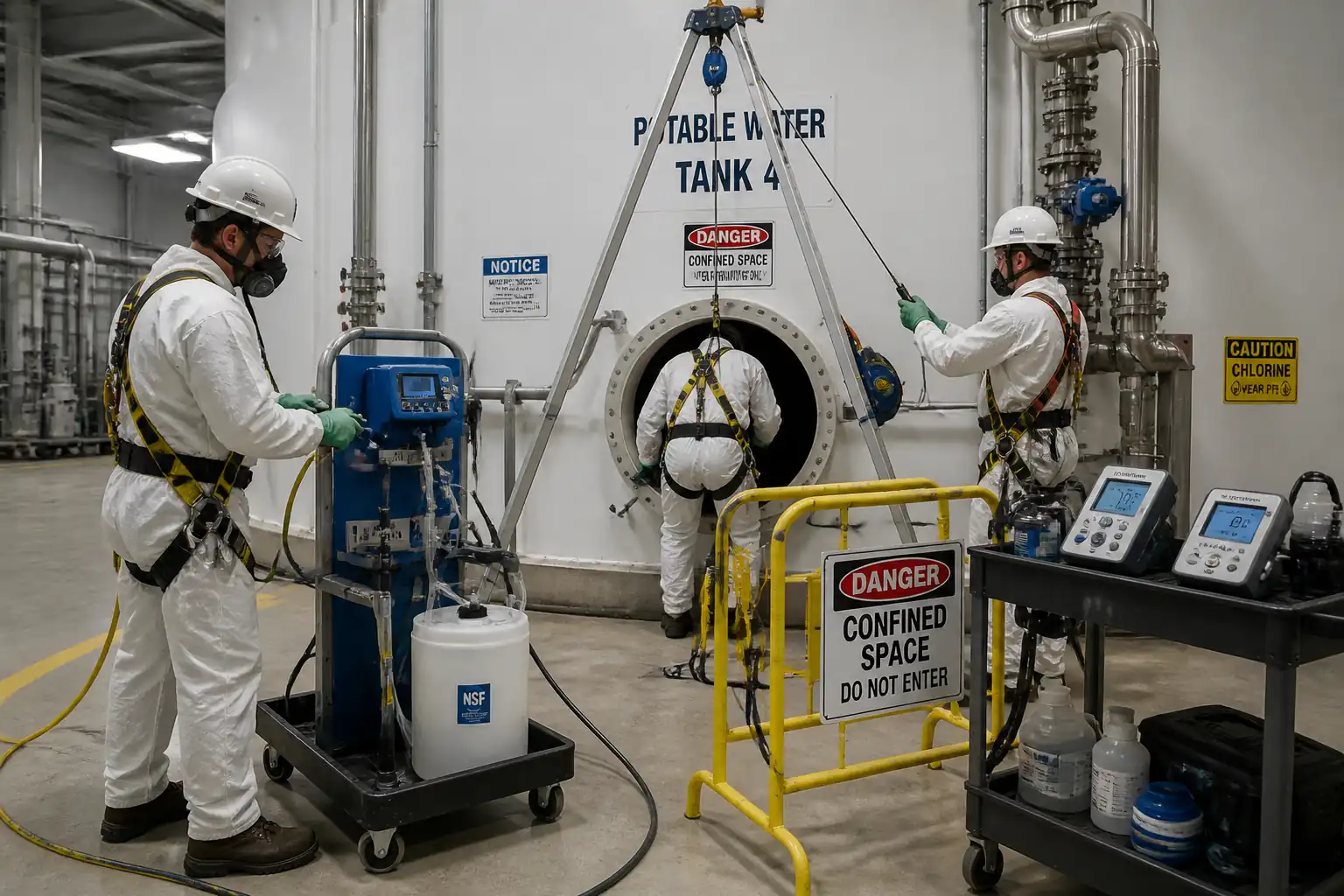

Method Statement: Cleaning, Disinfection, and Chlorination of Domestic Water Storage Tanks and Distribution Piping – Method Statement
AI-assisted method statement with matching ITP, PDF download, and Excel export.
More than a static template
Unlike a downloadable Word or PDF template, this method statement is an AI-assisted editable starting point connected directly to a matching Inspection and Test Plan. Every section is structured, project-adaptable, and ready to export.
- AI-assisted drafting — Customize every section with AI for your specific project scope.
- Linked ITP — A matching inspection and test plan is generated alongside the method statement.
- Multiple export formats — Download as a formatted PDF or editable Excel spreadsheet.
- Editable starting point, not a final document — Review, verify, and adjust all content against your project requirements before use.
Static template vs. Quollnet workflow
| Feature | Static template | Quollnet |
|---|---|---|
| Project-specific content | Manual fill-in required | AI-assisted customization |
| Linked ITP | Separate document, no link | Matching ITP included |
| Export formats | Usually PDF only | PDF and Excel |
| Structured sections | Free-form layout | 13 standardized sections |
| Saved to your account | Local file only | Cloud-saved, reusable |
| Content accuracy | You verify everything | AI-assisted, you still verify |
| Cost | Often free but time-intensive | Free to customize and download |
What you can customize
When you save this method statement to your account, every section becomes editable. The following 13 sections are included:
- Scope — Defines the activity and its boundaries.
- References — Standards, specifications, and drawings.
- Responsibilities — Roles and accountabilities.
- Resources — Labour, plant, and equipment summary.
- Materials — Materials and compliance requirements.
- Equipment — Tools and equipment details.
- Prerequisites — Hold points and pre-conditions.
- Method sequence — Step-by-step construction sequence.
- Safety controls — HSE risk controls and PPE.
- Environmental controls — Environmental mitigation measures.
- QA/QC — Quality inspection and test requirements.
- ITP — Inspection and Test Plan table (has its own page).
- Attachments — Referenced drawings and documentation.
Why this method statement is used
This method statement is used to define and communicate the approved procedure for carrying out method statement: cleaning, disinfection, and chlorination of domestic water storage tanks and distribution piping on site. It ensures the work is planned in advance, the correct resources and controls are in place, and all personnel understand responsibilities, sequence, quality requirements, and safety controls before work begins. It aligns site execution with the documented scope and acceptance expectations.
Who uses this method statement
This method statement is used by contractors, site supervisors, project engineers, QA/QC engineers, HSE officers, consultants, and client representatives. It serves as a shared reference for planning, execution, supervision, inspection, and approval of the activity on site.
When it is prepared and submitted
The method statement is prepared before the work activity starts and submitted as part of the pre-construction documentation package for review and approval.
Who reviews or approves it
The method statement is usually submitted to the client representative, consultant, resident engineer, or project management consultant for review and approval before the work commences.
Important approval note
This method statement is an AI-assisted editable starting point, not a pre-approved document. Before use on any project, all content must be reviewed and approved by the relevant parties (superintendent, principal contractor, or client representative) in accordance with your contract and project quality plan.
For example: if your specification requires a departure from a referenced standard, that departure must be documented and approved separately — this method statement will not capture that automatically. Always verify against your applicable drawings, specifications, and regulatory requirements.
Method statement content
Scope
Included Activities
- Drain-down, isolation, and lock-out/tag-out (LOTO) of potable water storage tanks and associated distribution network within the work limits.
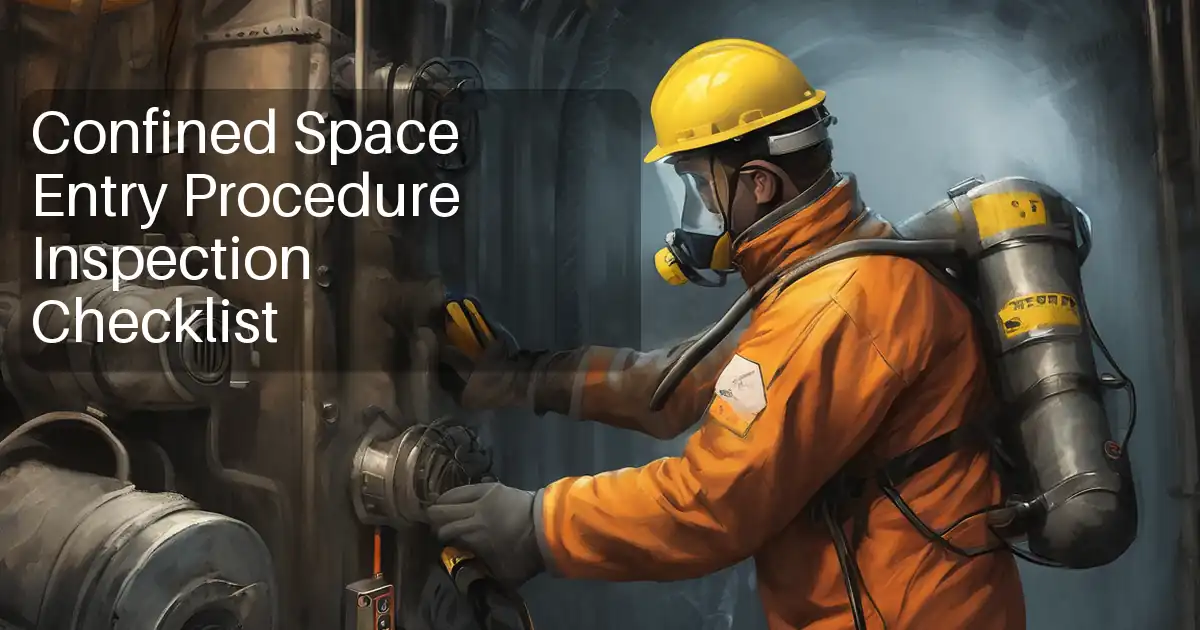
- Confined space entry (CSE) to tanks, mechanical cleaning, detergent wash and rinse.
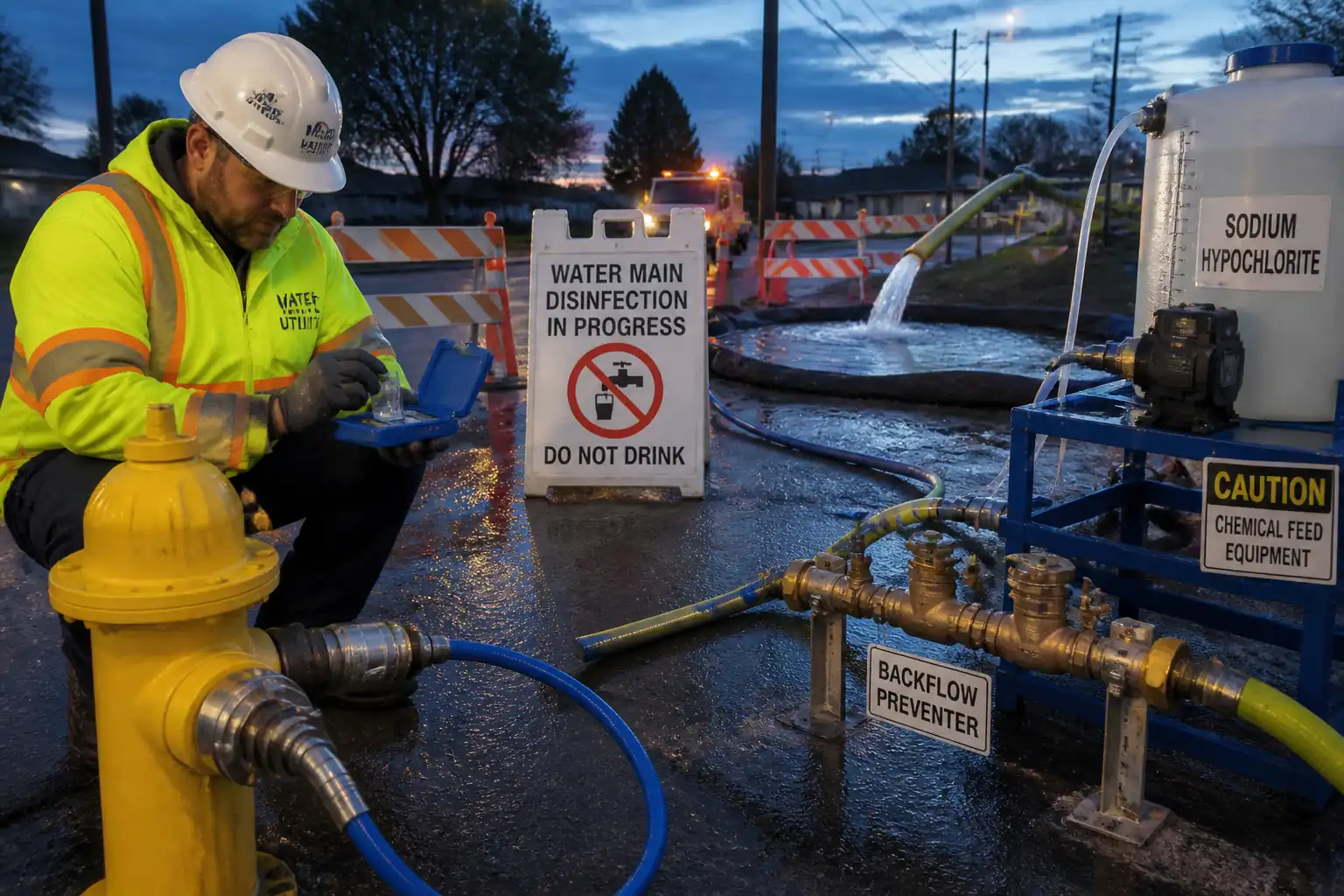
- Chlorination of tanks and piping using approved sodium hypochlorite or calcium hypochlorite to specified concentrations and hold times.
- High-velocity flushing of pipework; monitoring of turbidity, pH, and free chlorine residual.
- Dechlorination and controlled discharge of waste water.
- Collection of chemical and microbiological water samples under ISO sampling protocols; submission to ISO/IEC 17025-accredited laboratory; reporting and acceptance.
- Re-disinfection if results fall outside acceptance criteria.
Exclusions
- Structural repair or recoating of tank linings (managed under separate method).
- Pressure testing and leak testing of pipelines (separate ITP/method).
- Permanent connection to public mains without authority approval.
Work Limits
- From isolation valves at connection to incoming potable supply to the farthest terminal outlets within the building/network, and all compartments of the potable water storage tank(s). [Verify per project drawings]
Objectives
- Deliver microbiologically safe potable water meeting project and authority requirements with documented evidence.
References
| Document Type | Reference / Number | Revision | Notes |
|---|---|---|---|
| AWWA C651 | Methods for chlorination of distribution mains: continuous feed, slug, or tablet methods [Verify method selection]. | ||
| AWWA C652 | Spray or fill methods; minimum concentrations and contact times for tanks. | ||
| BS 8558 | Latest | UK practice; complements BS EN 806 series. | |
| BS EN 806-4 | Latest | Operations and maintenance; includes flushing and hygiene measures. | |
| EN ISO 19458 | Latest | Defines sampling purposes, techniques, transport, and storage for microbiology. | |
| APHA/AWWA/WEF Standard Methods (e.g., 4500-Cl, 9222/9223) | Latest | Analytical methods for chlorine residual, total coliforms, E. coli, turbidity, etc. | |
| BS EN ISO 6222 | Latest | ||
| WHO GDWQ | Latest | Benchmark values for pH, residual chlorine at point of use, microbiological safety. | |
| ISO 45001 / Local CSE Code | Latest | Apply project HSE Plan and local CSE regulations [Verify per project HSE plan and local regulations]. | |
| NSF/ANSI/CAN 60 | Latest | Chlorine products and additives to be certified for potable water use. |
Responsibilities
| Role | Responsibility | Name / Party |
|---|---|---|
| Project Manager | Overall compliance with method, standards, and ITP; approval of calculations and sampling plan; liaison with Engineer/Authority. | Contractor |
| Site/Commissioning Engineer | Pre-start checks, isolations, sequencing, hold/witness coordination, on-site chlorine calculations, field test logs, and as-built sampling map. | Contractor |
| HSE Officer / CSE Supervisor | Confined space entry control, atmospheric testing, rescue plan, PPE verification, chemical handling supervision. | Contractor |
| Chlorination Specialist / Plumber | Set up dosing rigs, perform mechanical cleaning, mixing and application of disinfectant, flushing and dechlorination execution. | Contractor |
| Water Quality Technician | Sample collection per ISO 19458, field measurements, custody seals, transport to accredited lab within holding times. | Contractor or Accredited Lab |
| Engineer / Client Representative | Witness inspections and tests at notified points; review and accept documentation and test results. | Engineer/Client |
Resources
| Resource Type | Description | Quantity | Remarks |
|---|---|---|---|
| Personnel | 9–12 | ||
| Service | As required | ||
| Temporary Works | Lot |
Materials
| Material | Specification / Grade | Quantity | Remarks |
|---|---|---|---|
| Sodium hypochlorite solution | Available chlorine certified; supplier CoA required. | ||
| Calcium hypochlorite (HTH) | Use for stock solutions; avoid direct tablet method unless approved. | ||
| Detergent/Cleaning agent | Dilution 0.1–0.5% [Verify]. | ||
| Sodium thiosulfate (Na2S2O3) | Crystals or 10% solution; analytical grade. | ||
| Microbiology sample bottles (100 mL) | ISO 19458 compliant. | ||
| Field reagents and standards | Standard Methods compliant; within expiry. |
Equipment
| Equipment | Capacity / Type | Quantity | Inspection Required |
|---|---|---|---|
| Confined space gas detector | |||
| CSE rescue system | |||
| Ventilation fan/blower | >1,500 m³/h [Verify] | ||
| Mechanical cleaning tools | Pressure washer 1,500–2,500 psi [Verify] | ||
| Chemical dosing pump and static mixer | 0–30 L/h @ 5 bar [Verify] | ||
| Free chlorine meter | 0–5 mg/L and 0–20 mg/L ranges | ||
| Turbidity meter | 0–1,000 NTU | ||
| Portable pH/EC meter with buffers | pH 2–12 | ||
| Flushing standpipe and hoses | Up to 50 mm | ||
| Dechlorination diffuser / dispersion hose | |||
| Sample transport coolers | 2–8 °C |
Prerequisites
- Approved method statement, risk assessment/COSHH, and ITP.
- Isolation plan approved; LOTO devices and confirmation of zero flow/pressure at boundaries.
- Confined Space Entry permit; rescue plan; equipment pre-use inspections logged.
- Calibration certificates (<= 6 months or per OEM) for gas detector, chlorine meter, turbidity meter, pH meter [Verify per project QA plan].
- Chemical SDS available on site; emergency eyewash and shower operational.
- Backflow prevention device (Type BA or equivalent) installed on potable temporary supplies.
- Lab accreditation (ISO/IEC 17025) verified; sampling plan with locations and quantities approved.
- Notification to Client/Facilities and, where required, Local Water Authority of planned chlorination and discharge arrangements [Verify regulatory requirement].
- Verification that all civil/mechanical works are complete, pressure-tested, cleaned of construction debris, and protected from contamination.
- Weather and access constraints checked; tank drainage and discharge route confirmed and permitted.
Method Sequence
| Step | Activity | Description | Responsibility | Inspection / Hold Point |
|---|---|---|---|---|
| 1 | Pre-start briefing and permits | Conduct toolbox talk covering CSE, chemical handling, emergency response. Issue CSE Permit and Permit-to-Work. Verify isolation boundaries and discharge permits. | Site Engineer / HSE | Permit review; sign-on sheet |
| 2 | System isolation and drain-down | Close inlet/outlet/isolation valves; apply LOTO; crack low-point drains; vent high points to avoid vacuum. Drain tank to approved sump/IBC for neutralization. | Plumber / Specialist | Verify zero flow/pressure; valve positions recorded |
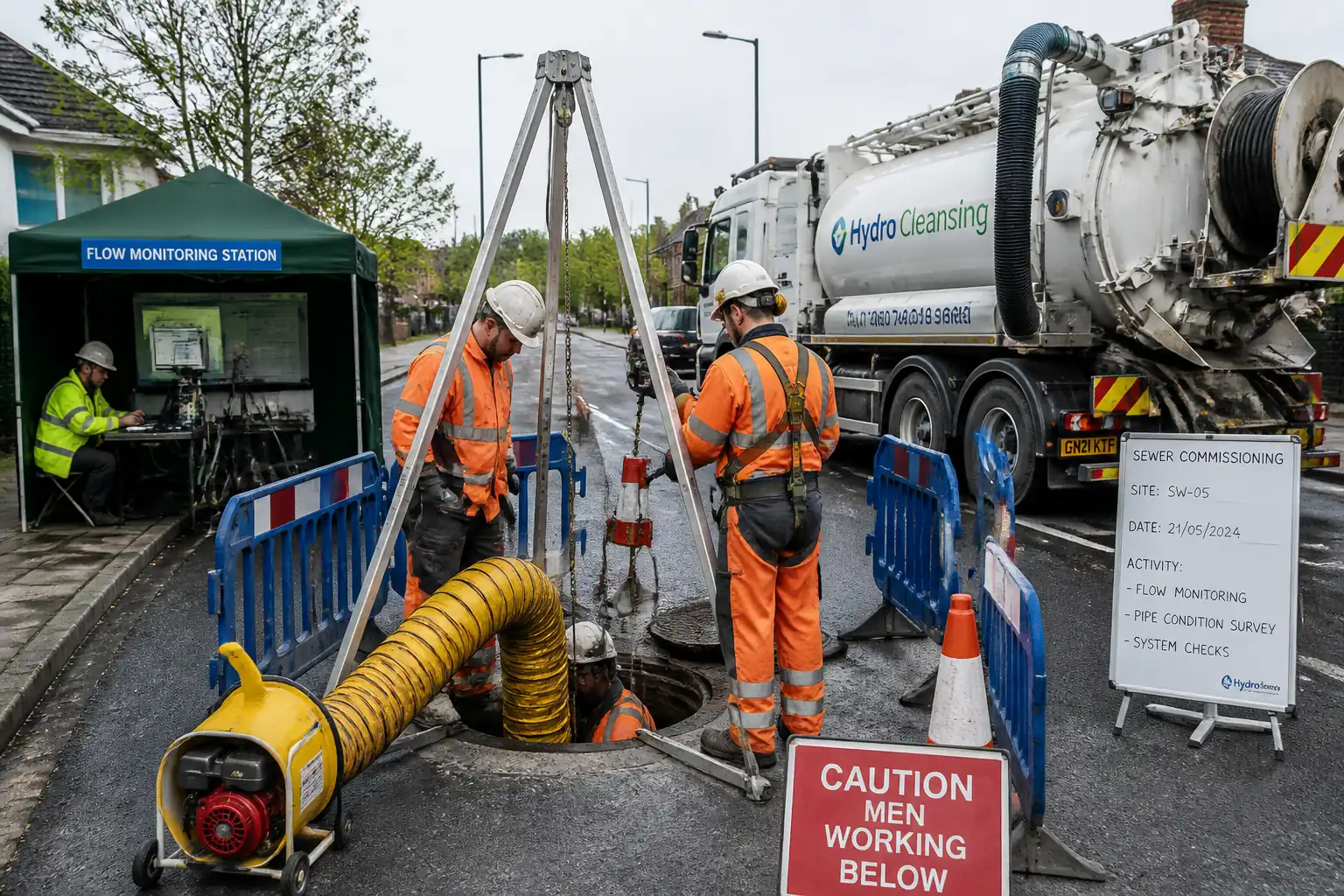
| 3 | Tank entry set-up (CSE) | Test atmosphere (O2 19.5–23.5%, LEL <10%, H2S <10 ppm) [Verify per project]. Install tripod/rescue, ventilation, 24–50 V lighting, communication. Appoint topman/attendant. | CSE Supervisor | Gas test pre-entry and continuous |
| 4 | Mechanical cleaning of tank | Remove sludge/debris; scrub internal surfaces with non-metallic brushes and potable-grade detergent (0.1–0.5%). Rinse with potable water. Use controlled-pressure washer (1,500–2,500 psi) avoiding coating damage. | Specialist Crew | Visual inspection of cleanliness; residue check at sumps/corners |
| 5 | Pre-flush distribution pipework | Open outlets/hydrants sequentially; flush at velocity 1.0–1.5 m/s [Verify] until clear. Measure turbidity periodically at extremities. | Plumber / Specialist | Flow and turbidity checks |
| 6 | Prepare chlorine stock solution and dosing | Calculate dose: Required chlorine (g) = Target mg/L × Volume (m³). Example: 50 mg/L × 100 m³ = 5,000 g available Cl2. For 12% NaOCl, volume ≈ 5,000 g / (0.12 × 1,000 g/L) ≈ 41.7 L. Mix in clean tank/IBC; verify concentration with colorimeter. | Chlorination Specialist | Calculation check; reagent batch verification |
| 7 | Tank disinfection (fill method) | Fill tank with potable water and dose to achieve 50 mg/L FCR [Verify per AWWA C652]. Circulate using recirc pump to achieve mixing. Maintain 6–12 h contact; check FCR every 2 h at multiple points (>25 mg/L at end of contact) [Verify]. | Chlorination Specialist | FCR log; leakage/overflows monitored |
| 8 | Main/pipework disinfection (continuous feed) | Inject chlorine solution at upstream point to achieve 25–50 mg/L throughout network [Verify per AWWA C651]. Confirm arrival at extremities. Hold for 24 h (for 25 mg/L) or 6 h (for 50 mg/L). | Chlorination Specialist | Sampling at ends and branches |
| 9 | Dechlorination and controlled discharge | Dose sodium thiosulfate at discharge to neutralize chlorine. Verify residual <0.1–0.5 mg/L [Verify authority limit] and pH 6–9 prior to discharge to approved drain. Use diffuser to minimize erosion/aerosol. | Specialist Crew | Residual and pH checks at discharge point |
| 10 | Final flushing with potable water | Flush tank and network until FCR at outlets stabilizes at 0.2–0.5 mg/L, turbidity ≤1 NTU, and water is clear and non-odorous. | Plumber / Specialist | Field checks at representative points |
| 11 | Stabilization period prior to sampling | Fill system for normal operation. Allow 16–24 h stabilization (no further chemical dosing) [Verify with authority]. Maintain FCR at outlets within 0.2–0.5 mg/L. | Site Engineer | Spot checks of FCR |
| 12 | Sampling (chemical and microbiological) | Disinfect tap (flame/alcohol), run to steady state (2–3 min), reduce flow, collect sterile samples with thiosulfate. Record temp, FCR, pH, turbidity. Chill at 2–8 °C; deliver to lab within 6 h (max 24 h) [Verify]. | Water Quality Technician | Witness by Engineer if required |
| 13 | Laboratory testing and reporting | Accredited lab analyzes E. coli and Total Coliform (0 cfu/100 mL), HPC at 22°C/37°C (≤100–500 cfu/mL [Verify]), Legionella if specified (<100 cfu/L [Verify]); also pH, turbidity, FCR. | Accredited Laboratory | Review of lab QA; verify accreditation |
| 14 | Non-conformance and re-disinfection (if required) | If any result fails, investigate sources, re-clean as needed, repeat disinfection (Steps 6–13). Update RCA and corrective actions. | Project Manager / Site Engineer | NCR issuance and close-out |
| 15 | Handover | Submit dossier: permits, logs, calculations, FCR/turbidity/pH logs, sampling plan and CoC, lab results, calibration certs, as-built sampling map, approvals. | Site Engineer | Document review |
Health, Safety, and Environment (HSE) – Task-Specific Safety Controls
Major Hazards and Controls
1) Hazard: Confined space asphyxiation/toxic exposure (low O2, H2S, CO)
- Likely consequence: Unconsciousness, fatality
- Engineering/procedural control: CSE permit; pre-entry and continuous atmospheric monitoring (O2 19.5–23.5%, LEL <10%, H2S <10 ppm) [Verify]; forced ventilation; intrinsically safe lighting/communications; standby rescue with tripod and retrieval; max occupancy limits.
- Required PPE: Full-body harness, helmet with chin strap, gloves, safety boots, headlamp, gas monitor for entrant, eye protection.
- Collective preventive measure: Barriers and signage; topman/attendant controlling entry; rescue plan rehearsal; exclusion zone.
- Inspection/permit/supervision: CSE Permit; equipment pre-use checks; HSE/CSE Supervisor present.
2) Hazard: Chlorine chemical exposure (splash, inhalation)
- Likely consequence: Burns to skin/eyes, respiratory distress
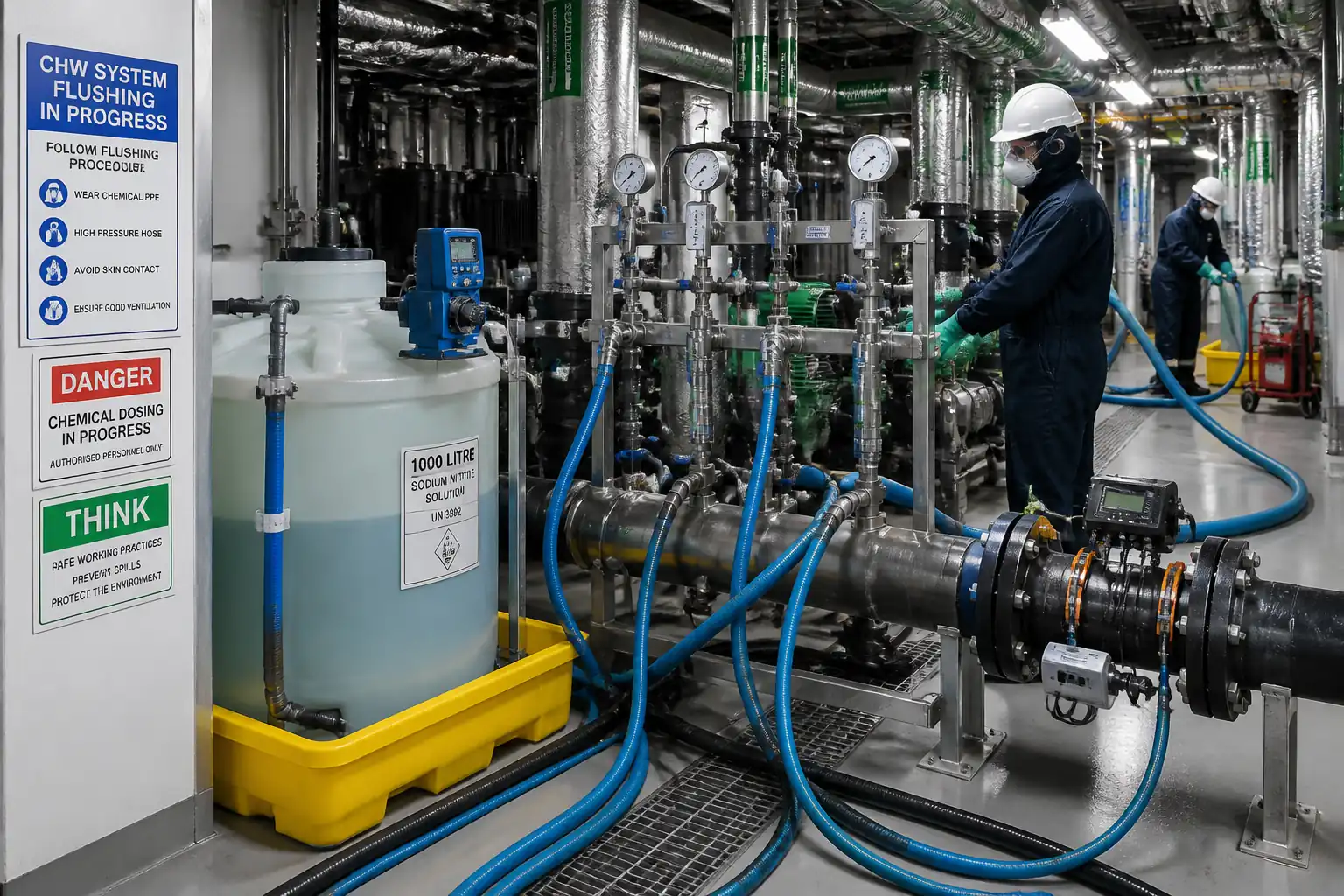
- Engineering/procedural control: Use closed dosing systems; prepare dilutions in well-ventilated area; never mix with acids; eyewash/shower within 10 m; decant using pumps; SDS available; limit stock to daily needs; spill containment.
- Required PPE: Chemical goggles/face shield, chemical-resistant gloves (nitrile/neoprene), acid-alkali suit or apron, rubber boots, respirator with acid gas/Cl cartridge if airborne chlorine risk assessed [Verify].
- Collective preventive measure: Chemical mixing station with bund (>110% of largest container); emergency response kit with sodium thiosulfate for neutralization.
- Inspection/permit/supervision: COSHH assessment; chemical handling checklist; supervisor oversight.
3) Hazard: Drowning/immersion in tanks
- Likely consequence: Fatality, hypothermia
- Engineering/procedural control: No lone working; fall prevention at manways; maintain <300 mm water depth during entry; stop filling during entry; rescue plan with retrieval line.
- Required PPE: Harness with retrieval, non-slip footwear, PFD if water depth >0.5 m [Verify].
- Collective preventive measure: Edge protection at access points; barriers.
- Inspection/permit/supervision: CSE permit; supervisor sign-off prior to any water re-introduction.
4) Hazard: Slip/trip from wet surfaces and hoses
- Likely consequence: Sprains, fractures
- Engineering/procedural control: Hose management; anti-slip mats; housekeeping; staged drainage.
- Required PPE: Slip-resistant boots, gloves.
- Collective preventive measure: Cable ramps; tidy zones.
- Inspection/permit/supervision: Daily HSE inspection; supervisor walkdowns.
5) Hazard: Pressure hose whip/jet injury from washers/flush lines
- Likely consequence: Lacerations, eye injury
- Engineering/procedural control: Rated hoses and couplings; whip-checks; pressure limited to approved range; trained operators only; depressurize before disconnecting.
- Required PPE: Eye/face protection, gloves, long sleeves.
- Collective preventive measure: Exclusion zone during high-pressure operations.
- Inspection/permit/supervision: Equipment inspection checklist.
6) Hazard: Working at height on tank roof/access
- Likely consequence: Fall from height
- Engineering/procedural control: Use fixed access ladders with cages/rails; fall arrest on exposed edges; keep roof free of trip hazards.
- Required PPE: Harness with lanyard, helmet with chin strap.
- Collective preventive measure: Guardrails or temporary barriers.
- Inspection/permit/supervision: Working at Height permit where applicable [Verify].
7) Hazard: Electrical hazards (temporary lighting/pumps in wet zones)
- Likely consequence: Electric shock, burns
- Engineering/procedural control: 24–50 V lighting; RCD protection; PAT-tested equipment; keep joints off wet floor; qualified electrician for connections.
- Required PPE: Dielectric gloves where needed, dry handling, insulated boots.
- Collective preventive measure: GFCI/RCD panels; lockable distribution boards.
- Inspection/permit/supervision: Electrical permit/inspection by competent person.
8) Hazard: Environmental release of chlorinated water
- Likely consequence: Aquatic toxicity, regulatory breach
- Engineering/procedural control: Dechlorination with sodium thiosulfate; verify residual <0.1–0.5 mg/L before discharge; approved discharge route; flow diffusion.
- Required PPE: As per chemical handling.
- Collective preventive measure: Bunded discharge connection, silt socks if required.
- Inspection/permit/supervision: Discharge permit; environmental monitoring logs.
[Verify per project HSE plan and local regulations]
Environmental Controls
- Dechlorination: Neutralize all chlorinated effluent to residual chlorine below authority limit (typ. <0.1 mg/L to <0.5 mg/L) before discharge. Confirm pH 6–9 and turbidity within local limits [Verify per permit].
- Discharge Routing: Use designated foul sewer or approved drain; never discharge to natural water bodies without approval. Employ diffuser to prevent erosion and aeration.
- Spill Prevention: Store chemicals in bunded area (>110% capacity). Provide spill kits and trained responders. Keep SDS available.
- Waste Management: Collect sludge/debris from tanks; dispose as non-hazardous or hazardous per characterization and local law. Record manifests.
- Water Use Optimization: Calculate expected flush volumes; sequence flushing to minimize water consumption while achieving velocities.
- Noise and Nuisance: Limit flushing to approved hours; use hose diffusers to reduce noise/spray.
- Protection of Building Occupants: Isolate outlets and post “Do Not Use” signs until acceptance. Prevent cross-connection using BA backflow preventers.
- Monitoring: Record FCR and pH at discharge; maintain log for authority inspection. Retain lab reports for environmental file.
Quality Assurance / Quality Control
- Instruments Calibration: Verify within validity and perform field checks with standards (chlorine check standard, turbidity standard, pH buffers). Record serial numbers.
- Chemical Quality: Use NSF/ANSI/CAN 60 certified hypochlorite; verify strength from CoA or titration. Record batch, manufacture date, and expiry.
- Dosing Calculations: Independent check by Site/Commissioning Engineer; record assumptions (volume, target mg/L, product %). Maintain ±10% accuracy.
- Process Logs: Maintain logs for cleaning, dosing, contact times, FCR checks (location, time, value), flushing volumes, dechlorination checks, and discharge authorizations.
- Sampling QA: ISO 19458-compliant techniques; use sterile, thiosulfate-dosed bottles; complete CoC; maintain 2–8 °C; deliver to lab within 6 h (max 24 h) [Verify]. Include field duplicates at 10% of locations and one field blank per sampling event.
- Acceptance Criteria (typical benchmarks; verify per spec/authority):
- Microbiology: E. coli 0 cfu/100 mL; Total Coliform 0 cfu/100 mL; HPC ≤100–500 cfu/mL at 22°C/37°C [Verify]; Legionella <100 cfu/L if required [Verify].
- Physico-chemical: FCR at outlets 0.2–0.5 mg/L; pH 6.5–8.5; turbidity ≤1 NTU [Verify per project].
- Nonconformance: Issue NCR for any failed result; perform root-cause analysis; re-clean/re-disinfect; re-sample until compliant.
- Handover: Submit full dossier with signed ITP, permits, calibration certs, logs, sampling plans, CoC, lab reports, and as-built sampling layout.
Attachments
- Sample: Chlorination Dose Calculation Sheet (with worked example)
- Sample: Flushing and FCR Log Sheet
- Sample: Dechlorination and Discharge Authorization Form
- Sample: Confined Space Entry Permit and Gas Log
- Sample: Sampling Plan and Chain of Custody (CoC) Form
- Calibration Certificates: Chlorine meter, turbidity meter, pH meter, gas detector
- SDS: Sodium hypochlorite, Calcium hypochlorite, Sodium thiosulfate, Detergents
- As-built Sampling Location Plan
This content is a read-only public reference. Download or customize to get an editable version.
ITP preview
The first inspection activities from the linked ITP for Method Statement: Cleaning, Disinfection, and Chlorination of Domestic Water Storage Tanks and Distribution Piping:
| Activity | Inspection / Test | Acceptance Criteria | Responsibility | Record |
|---|---|---|---|---|
| Method statement/ITP approval | Approval | Approved prior to work start. | Contractor/Engineer | Approved Method & ITP |
| Permits and CSE set-up | Checklist | Valid PTW/CSE; rescue equipment ready. | Contractor/HSE | PTW; CSE Permit; Gas Log |
| Isolation and drain-down | Zero pressure/flow | Isolation boundaries secured; LOTO applied. | Contractor | Isolation Log |
Showing 3 of 13 inspection activities. View full ITP →
Related Inspection and Test Plan
An Inspection and Test Plan (ITP) is available for Method Statement: Cleaning, Disinfection, and Chlorination of Domestic Water Storage Tanks and Distribution Piping. The ITP defines the inspection activities, acceptance criteria, hold and witness points, responsible parties, and records required to verify the work described in this method statement.
View the Method Statement: Cleaning, Disinfection, and Chlorination of Domestic Water Storage Tanks and Distribution Piping ITP →Frequently asked questions
Continue with related Quollnet resources connected to this method statement.