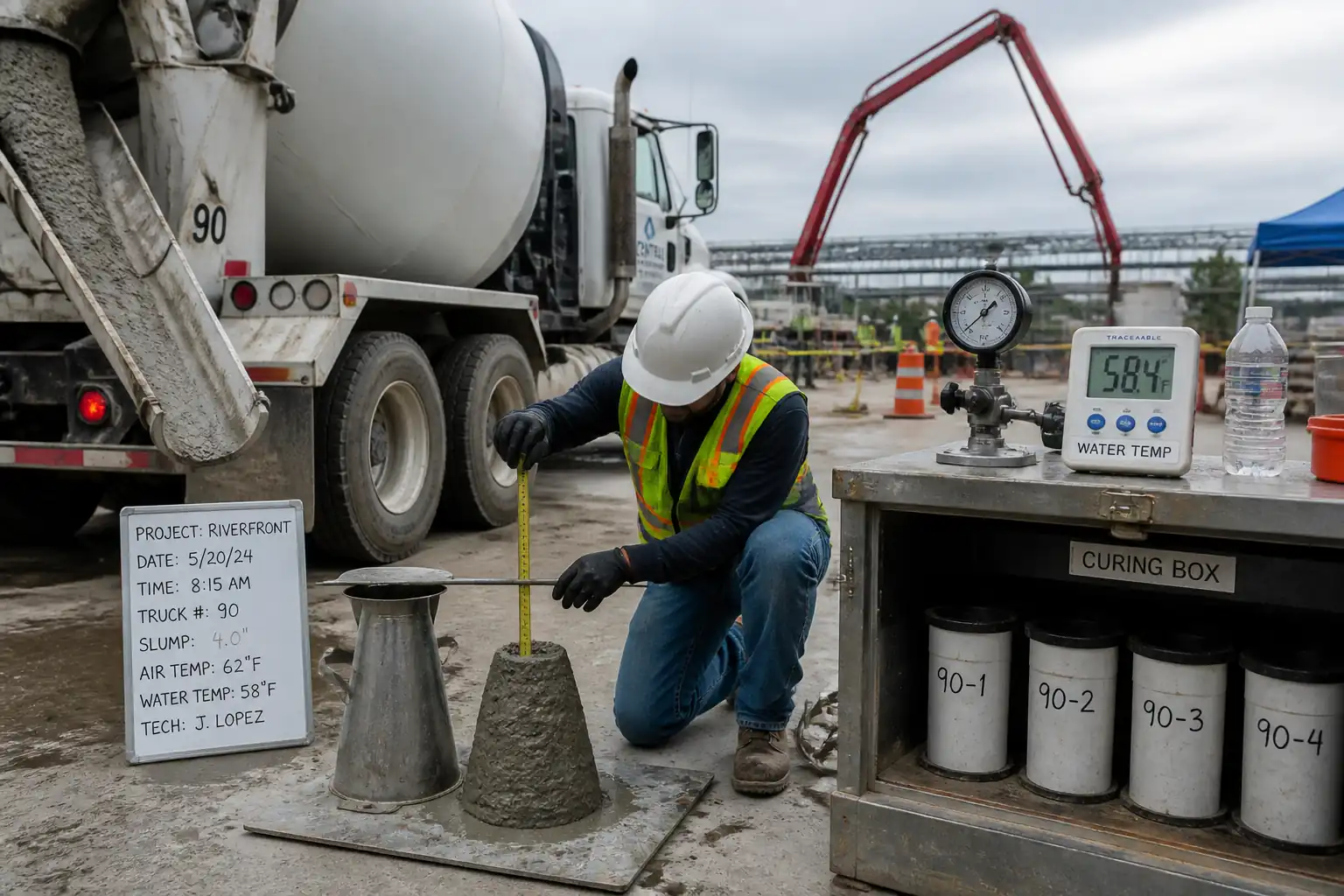

Inspection and Test Plan for Method Statement: Receiving and Acceptance Testing of Ready‑Mix Concrete on Site
AI-assisted inspection and test plan connected to a method statement, with PDF and Excel export.
More than a static template
Unlike a downloadable Word or PDF template, this ITP is an AI-assisted editable starting point directly connected to its method statement. Every inspection activity, hold point, and acceptance criterion is structured and ready to adapt to your project.
- AI-assisted customization — Tailor inspection activities and acceptance criteria to your specific project scope.
- Linked method statement — This ITP is connected to the corresponding method statement describing the work sequence.
- Multiple export formats — Download as a formatted PDF or editable Excel spreadsheet.
- Editable starting point, not a final document — Review and verify all content against your project specifications and standards before use.
What you can customize
When you save this ITP to your account, every inspection row becomes editable. You can add, remove, or modify:
- Inspection activity — Description of what is being inspected.
- Inspection type — Hold point (H), Witness point (W), Review (R), or Monitor (M).
- Responsibility — Contractor, subcontractor, engineer, or client.
- Frequency — How often the inspection occurs.
- Acceptance criteria — Referenced standard or specification requirement.
- Records — Forms, test reports, or checklists required as evidence.
Why this ITP is used
To ensure only conforming concrete is placed by verifying documentation and conducting calibrated field tests before discharge.
Who uses this inspection and test plan
QC inspectors, site engineers, third‑party labs, and the Engineer/Client for oversight and acceptance.
When this ITP is prepared and submitted
At each concrete delivery and during every pour requiring field acceptance tests and specimens.
Who receives or approves this ITP
Engineer/Client Representative for approval and witnessing as defined in contract.
Inspection scope
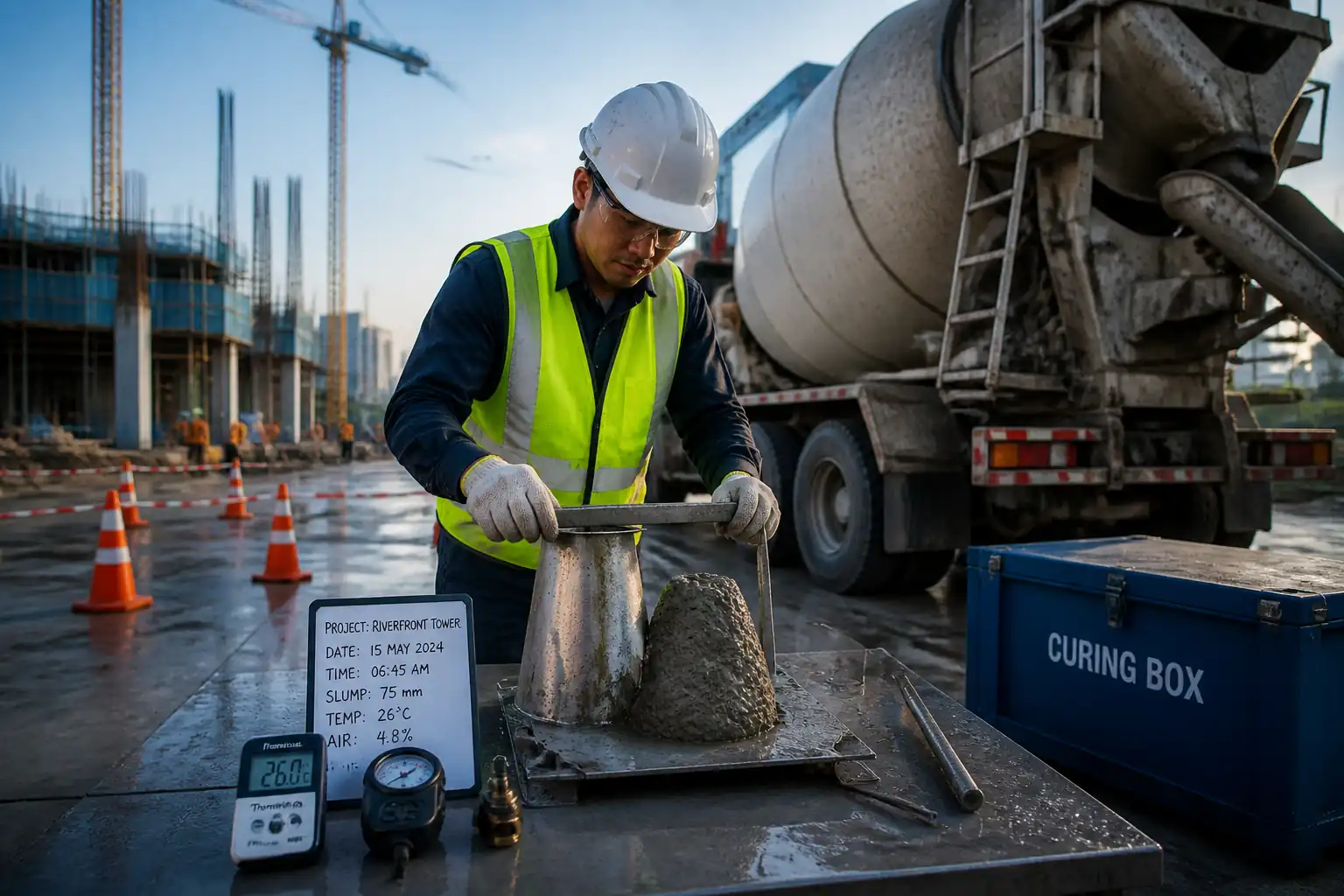
Covers delivery ticket review, sampling, temperature, slump/slump‑flow, air content, density/yield, specimen making, curing, and transport to lab.
Typical hold, witness, and review points
Hold: Ticket validation, acceptance release, NCR disposition. Witness: Sampling, specimen making, compressive strength testing (if specified).
Typical inspection records
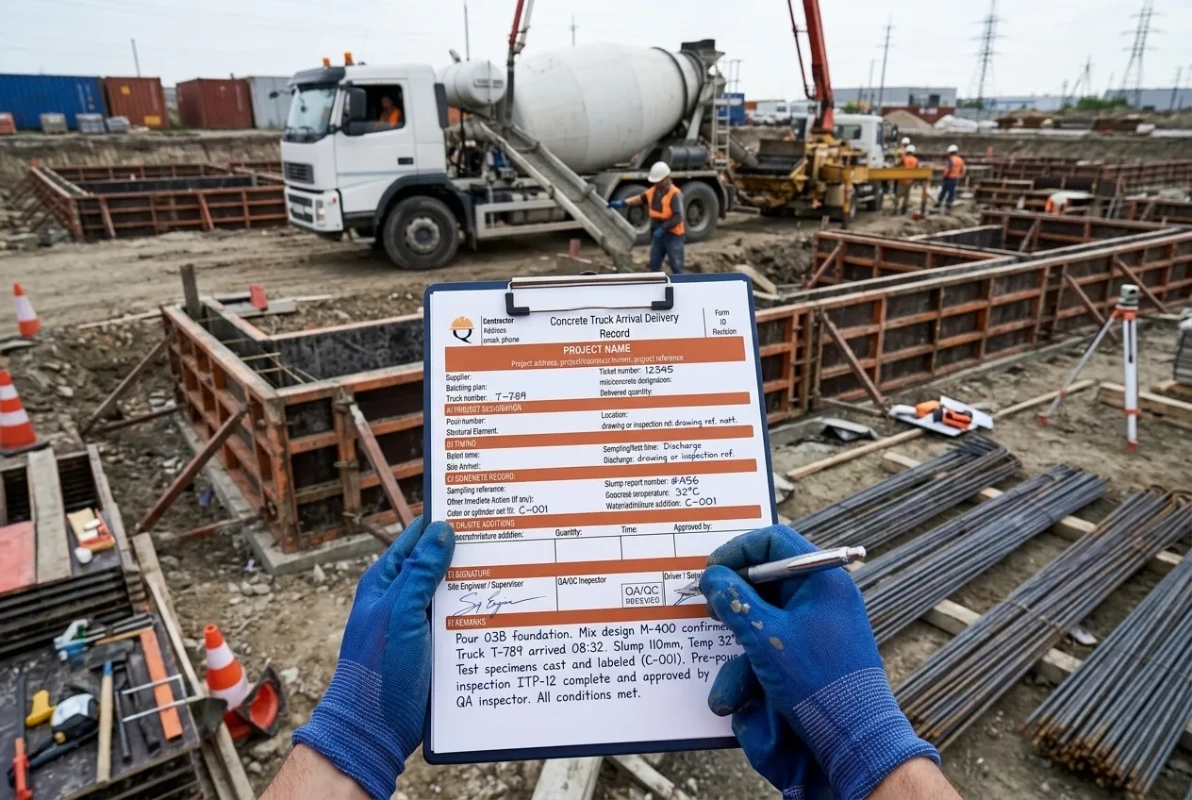
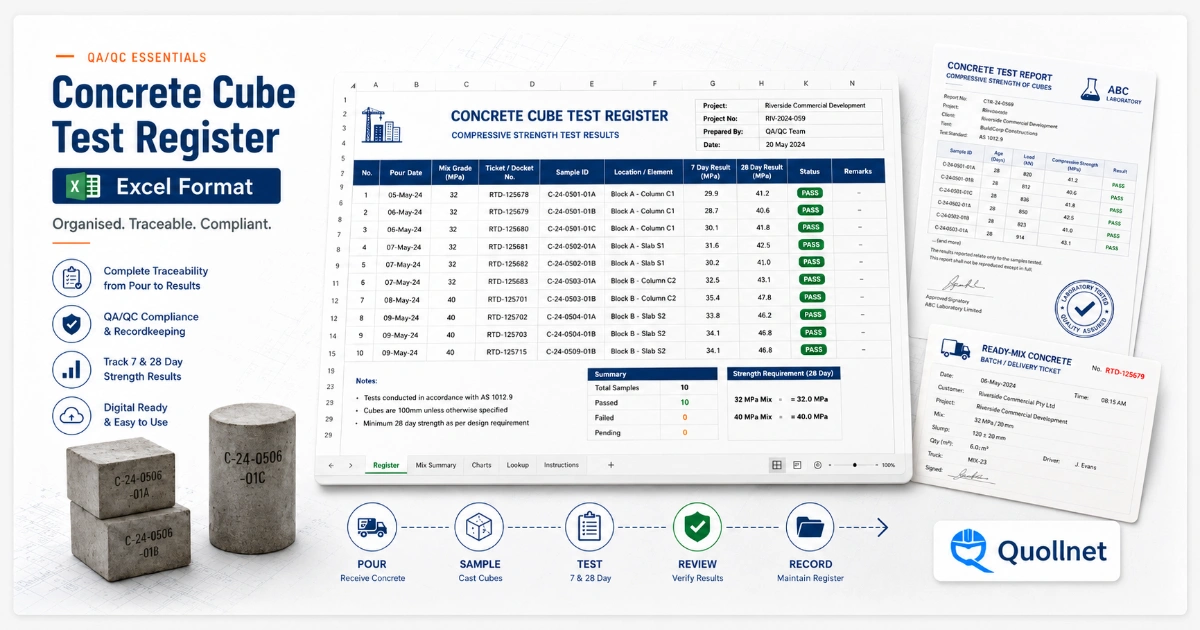
Delivery Ticket Checklist, Field Test Reports, Specimen Register, Curing Log, Lab Certificates, NCR/CAR, calibration records.
Important approval note
This ITP is an AI-assisted editable starting point, not a pre-approved document. Before use on any project, all inspection activities, hold points, and acceptance criteria must be reviewed and approved by the relevant parties (superintendent, principal contractor, or client representative) in accordance with your contract and project quality plan.
Always verify acceptance criteria against your applicable drawings, specifications, and regulatory requirements. Hold points must be confirmed with the relevant authority before work proceeds past that point.
Inspection and test plan
| Activity | Inspection / Test | Acceptance Criteria | Responsibility | Record |
|---|---|---|---|---|
| Supplier Prequalification | Plant certification, mix approvals | Approved supplier and mix designs on file | Contractor PM/QC; Engineer witness | Approval letter; Submittal register |
| Truck Arrival & Ticket Check | Ticket validation vs ASTM C94/EN 206 | Ticket complete; time since batching ≤90 min; revolutions within limit [Verify] | QC Inspector | Delivery Ticket Checklist |
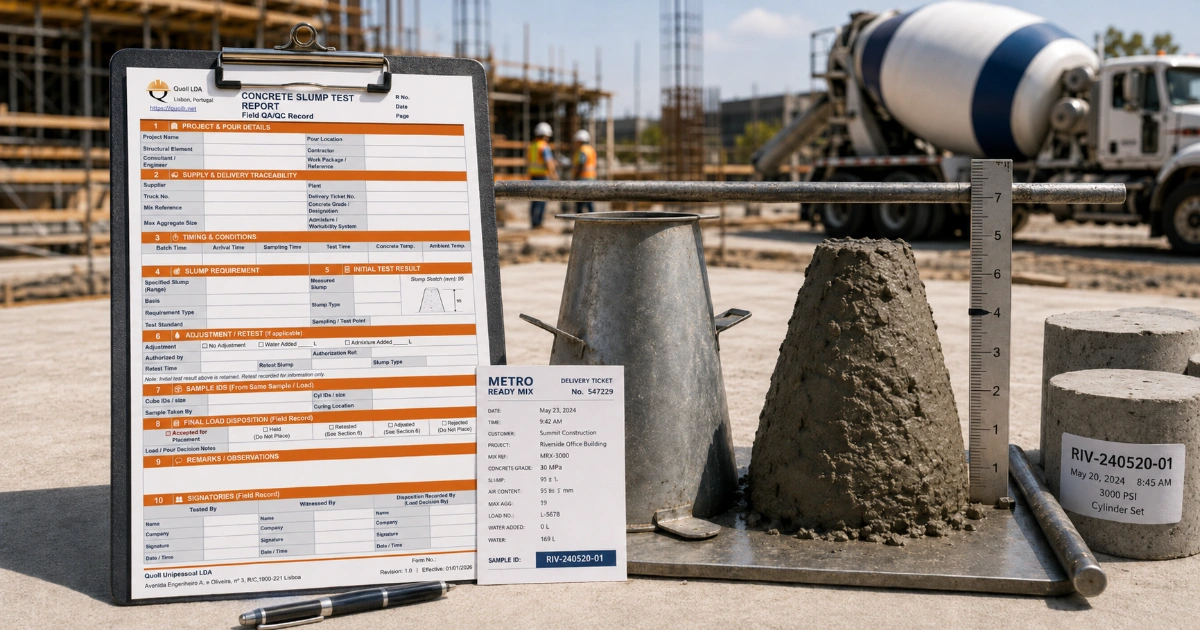
| Sampling of Concrete | ASTM C172/EN 12350‑1 | Representative composite sample | QC Technician | Field Concrete Test Report |
| Temperature Test | ASTM C1064 | Within specified range (typ. 5–32°C) [Verify] | QC Technician | Field Concrete Test Report |
| Slump (CVC) or Slump‑Flow (SCC) | ASTM C143 or C1611; EN 12350‑2/8 | Within specified target/tolerance [Verify] | QC Technician | Field Concrete Test Report |
| Air Content (if specified) | ASTM C231/C173; EN 12350‑7 | Within target ±1.5% (air‑entrained) [Verify] | QC Technician | Field Concrete Test Report |
| Density/Unit Weight & Yield (as required) | ASTM C138; EN 12350‑6 | Yield/density within specified tolerance [Verify] | QC Technician | Field Concrete Test Report |
| Acceptance Release for Placement | Review of field results & ticket | All parameters compliant; corrective actions documented if any | QC Engineer | Ticket endorsed; ITP sign‑off |
| Specimen Making | ASTM C31 / EN 12390‑2 | Correct number/size; proper consolidation and ID | QC Technician; Engineer witness (as required) | Specimen Register |
| Initial Curing (Field) | Temperature/humidity monitoring | 16–27°C; moist ≥95%; protected for 24±8 h | QC Technician | Curing Log |
| Transport to Lab & Standard Curing | COC verification; lab receipt | Specimens intact; curing at 23±2°C | QC Technician/Third‑Party Lab | COC; Lab Receipt |
| Compressive Strength Testing | ASTM C39 / EN 12390‑3 | Meets acceptance per ACI 318/EN 206 [Verify] | Third‑Party Lab; Engineer review | Lab Test Certificate |
| Nonconformance Handling | NCR and investigation | Engineer‑approved disposition | QC Engineer/PM | NCR; CAR; Investigation report |
This table is a read-only public reference. Download the PDF or Excel version, or customize this ITP to edit it for your project.
Frequently asked questions
Related method statement
This Inspection and Test Plan is associated with the Method Statement: Receiving and Acceptance Testing of Ready‑Mix Concrete on Site method statement, which describes the step-by-step construction sequence, resources, materials, equipment, safety controls, and environmental controls for this activity.
View the Method Statement: Receiving and Acceptance Testing of Ready‑Mix Concrete on Site method statement →Continue with related inspection, method statement, article, and checklist resources.