Verify secant pile wall concrete classes for primary/secondary assignments, specified strength classes, and overlap continuity, guiding site engineers and QA inspectors through practical acceptance criteria, records, and test evidence.
- Confirm hard and soft pile assignments match approved drawings and ITP.
- Verify concrete strength classes and testing align with project specifications.
- Check overlap continuity between adjacent piles to ensure watertight interlock.
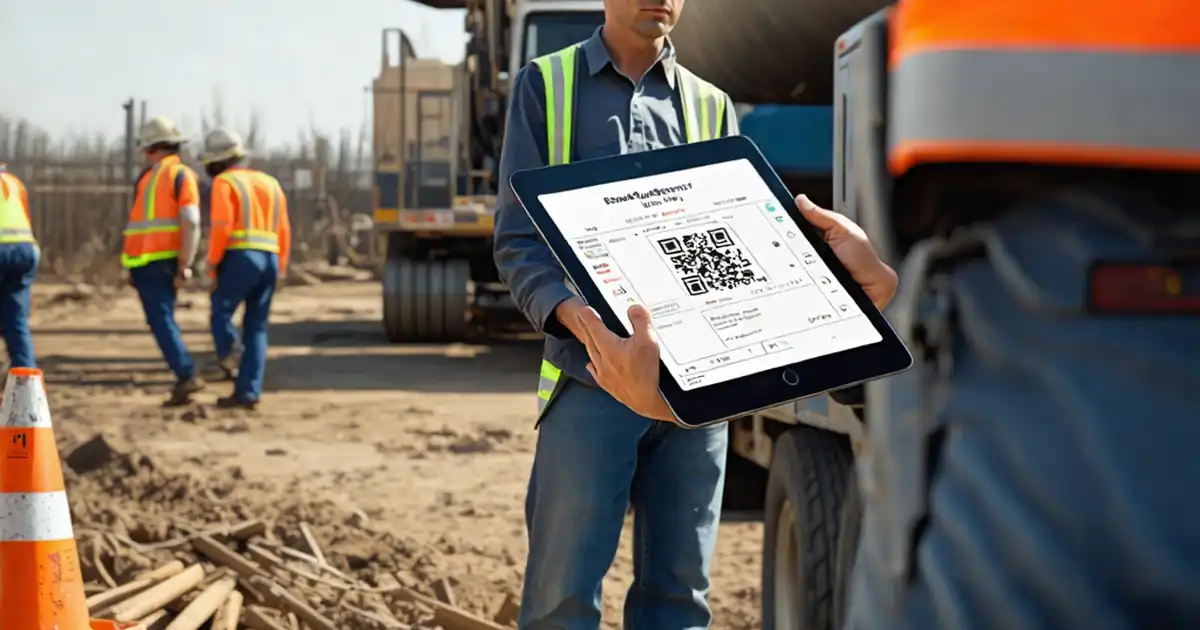
- Interactive, commentable checklist with export and QR code verification.
The checklist
Pre-Pour Documentation Review
- Confirm latest design info and ITP requirements before field works.
- Verify IFC drawings identify primary (soft) and secondary (hard) piles and sequencing; Method/Tool: drawing review with revision check; Acceptance/Evidence: latest approved revision logged, marked-up layout photo uploaded.
- Confirm approved concrete strength classes for soft and hard piles; Method/Tool: mix design submittal cross-check; Acceptance/Evidence: approved submittal reference and target fck (MPa) recorded.
- Plan sampling and testing frequencies for each class; Method/Tool: ITP and lab schedule; Acceptance/Evidence: test ages and sample counts logged against pile groups.
Materials and Mix Verification
- Match delivery ticket to pile ID and required class (soft/hard); Method/Tool: ticket-to-pile register; Acceptance/Evidence: class matches plan, ticket photo and batch time recorded.
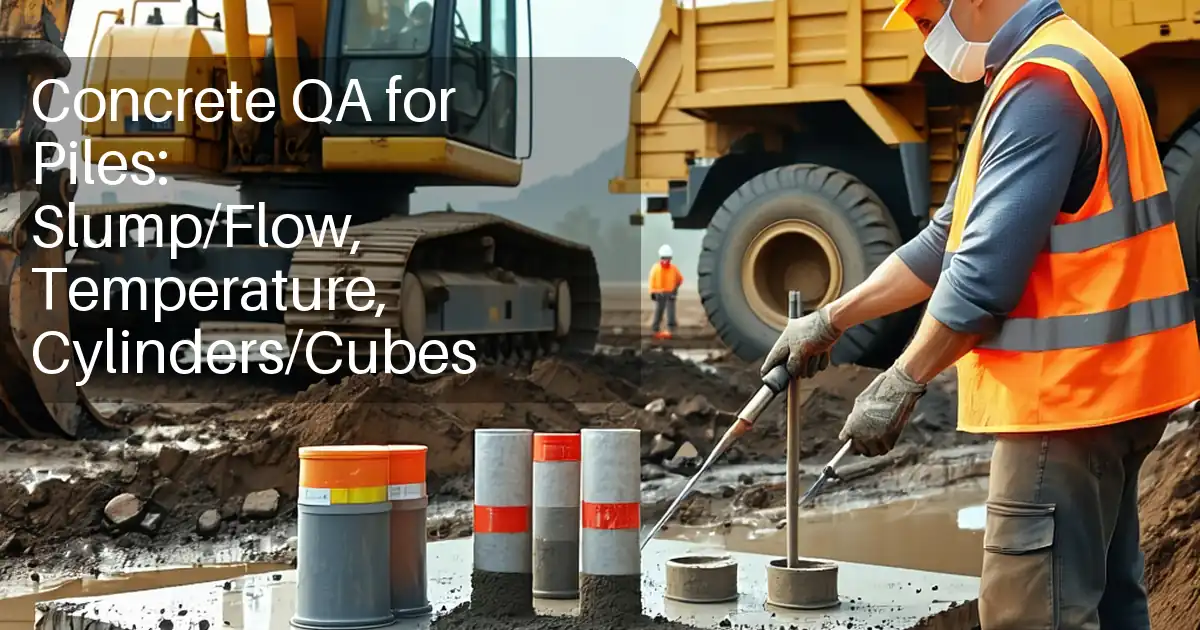
- Measure concrete temperature on arrival; Method/Tool: calibrated thermometer; Acceptance/Evidence: within specified limits per approved project specifications, reading recorded with timestamp.
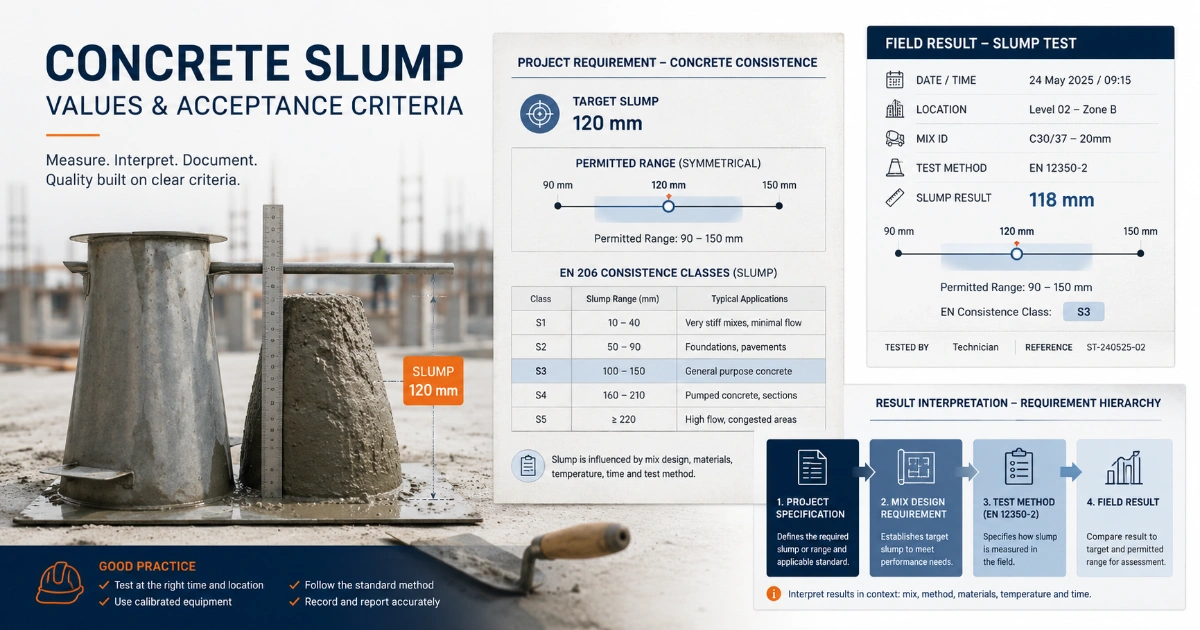
- Perform slump/slump-flow test; Method/Tool: cone/table and timer; Acceptance/Evidence: result within specified range, test photos and technician signature captured.
- Confirm mix ID links to approved strength class; Method/Tool: supplier mix code check; Acceptance/Evidence: mix code and approval reference logged, nonconformance raised if mismatch.
Drilling and Cage Placement Verification
- Verify bore diameter supports designed overlap; Method/Tool: auger/tooling check and drill log; Acceptance/Evidence: diameter ≥ specified, log and photo of tooling uploaded.
- Check bore verticality/alignment to maintain overlap; Method/Tool: inclinometer/drill mast gauge; Acceptance/Evidence: within specified deviation, record readings in pile log.
- Confirm reinforcement cage centering for secondary (hard) piles; Method/Tool: spacers and cover blocks; Acceptance/Evidence: specified cover achieved, spacer photos and measurements recorded.
Concreting and Overlap Continuity
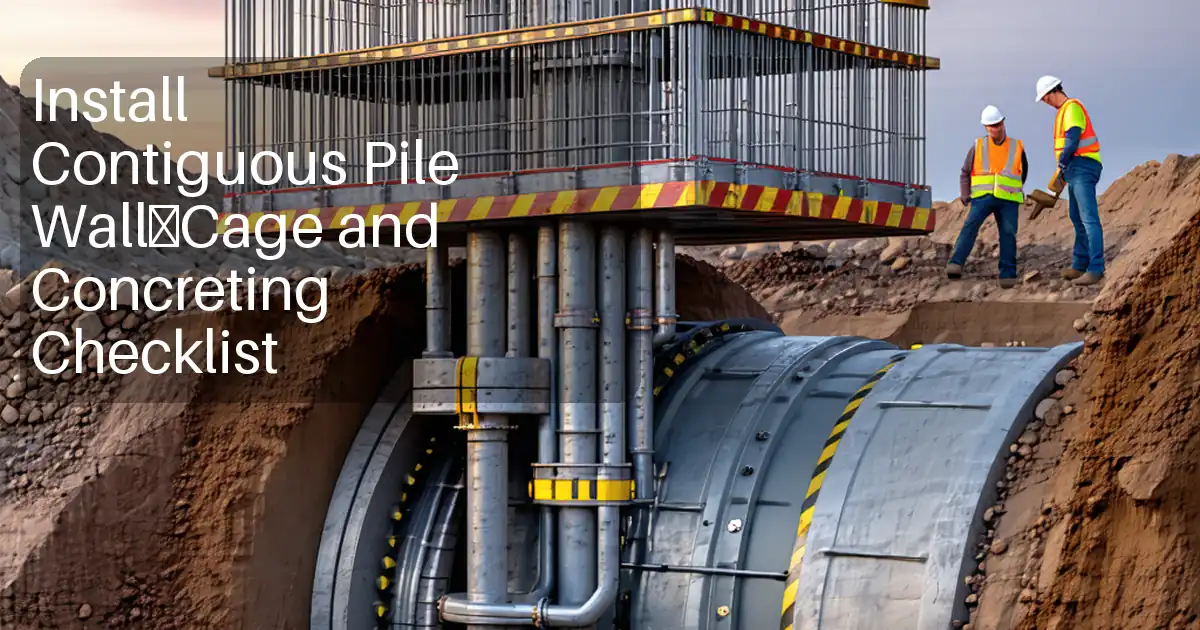
- Place primary (soft) pile concrete by tremie/casing extraction; Method/Tool: continuous head monitoring; Acceptance/Evidence: uninterrupted pour, theoretical vs actual volume within tolerance, log uploaded.
- Sequence secondary (hard) piles per approved method to cut into primaries; Method/Tool: sequence board and daily plan; Acceptance/Evidence: sequence followed, supervisor sign-off and photos recorded.
- Record secondary pile bite depth into adjacent primaries; Method/Tool: drill depth/cut-in gauges; Acceptance/Evidence: ≥ specified bite depth, depth values logged with chainage.
- Verify visual/physical evidence of cutting into soft concrete (paste on auger/tools); Method/Tool: photo documentation; Acceptance/Evidence: clear smear/cuttings captured and linked to pile ID.
- Prevent cold joints; Method/Tool: continuous concreting and standby supply; Acceptance/Evidence: no pour interruptions beyond allowable window, timesheet and batch intervals recorded.
Strength Class Compliance and Testing
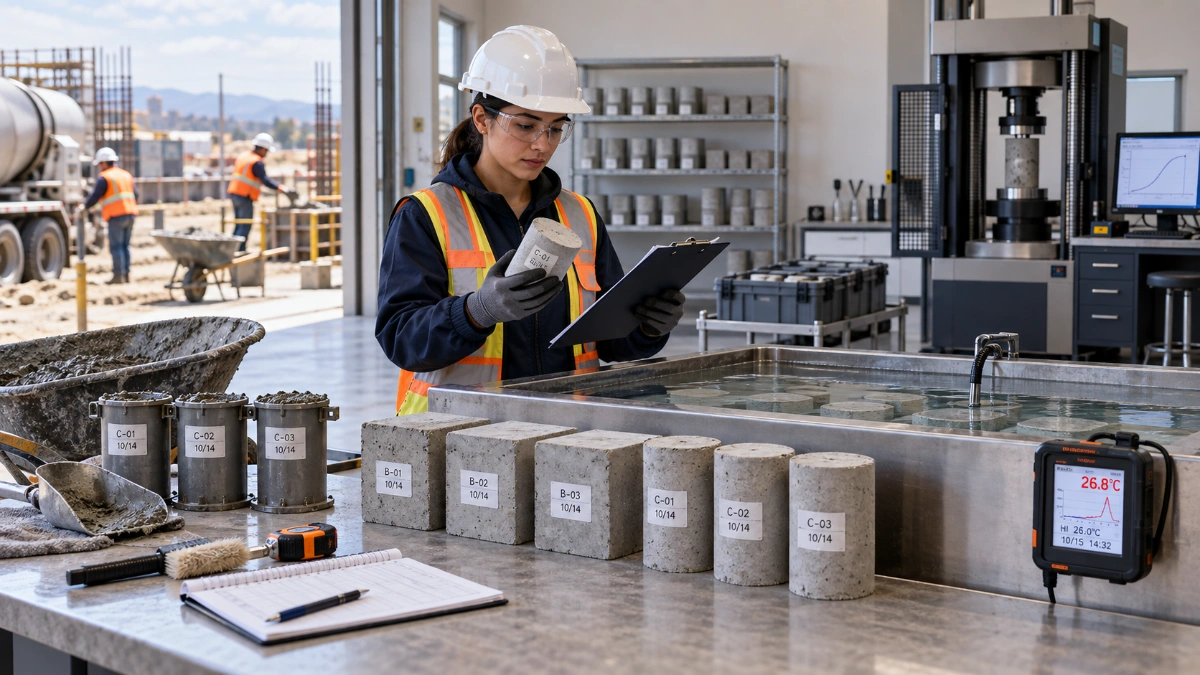
- Cast and label test specimens per class; Method/Tool: cube/cylinder molds and curing; Acceptance/Evidence: unique IDs tied to pile IDs, curing records and handover to lab.
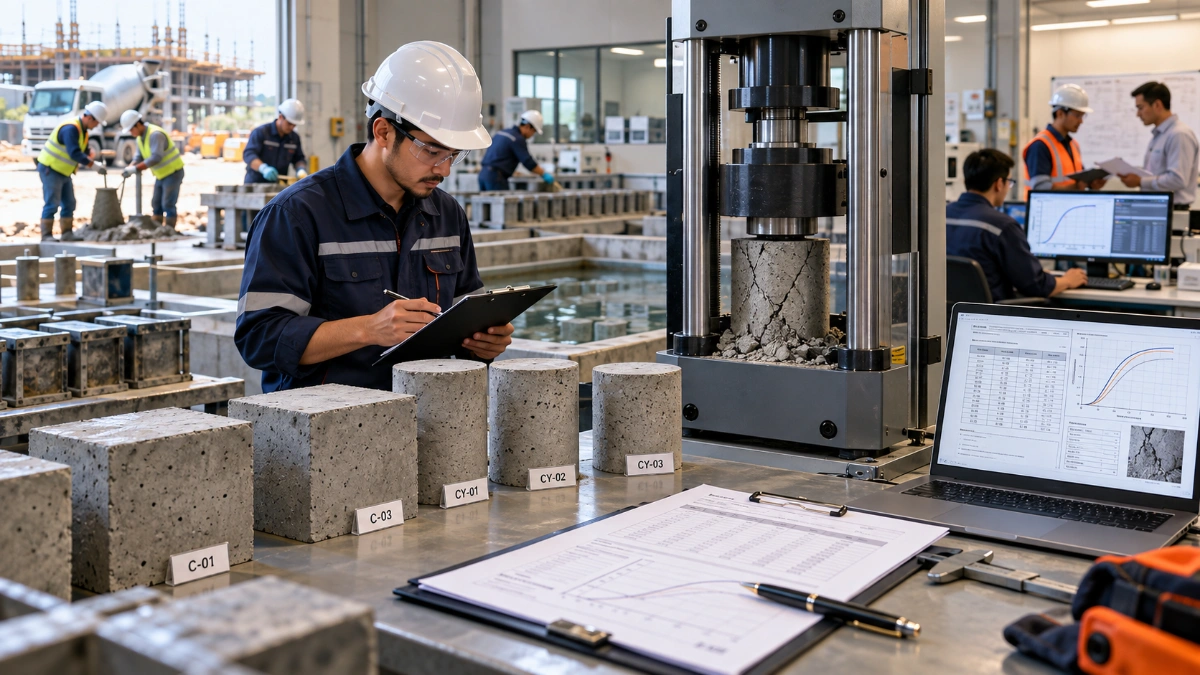
- Test compressive strength at specified ages; Method/Tool: accredited lab test; Acceptance/Evidence: results meet fck for each class (MPa), reports uploaded and reviewed.
- Verify early-age condition of primaries before cutting secondaries; Method/Tool: maturity/penetration check per method statement; Acceptance/Evidence: within approved green strength window, readings recorded.
- Trend results and correlate to locations; Method/Tool: dashboard of results vs chainage; Acceptance/Evidence: outliers flagged, engineer review comment and action recorded.
Records and Sign-off
- Complete daily pile log with class, volumes, times, and overlap notes; Method/Tool: digital logbook; Acceptance/Evidence: signed by supervisor and QA/QC, QR-linked entry saved.
- Archive delivery tickets, test reports, and overlap evidence; Method/Tool: structured folder with naming convention; Acceptance/Evidence: files indexed by pile ID, audit-ready listing exported.
- Issue conformance summary; Method/Tool: checklist export with photos; Acceptance/Evidence: digital signatures from contractor, consultant, and client representatives captured.
Preview the printable checklist
Preview page one below. Open the image or download the PDF for all pages.

At a glance
- Ensure the correct hard/soft pile sequence, verify concrete strength classes per approved project specifications and authority requirements, and document overlap continuity so the wall achieves its intended structural and groundwater performance with traceable evidence.
- Control risks by mapping delivery tickets to pile IDs, logging fresh concrete tests and batch times, recording secondary pile bite depths into primaries, and trending compressive strength results to confirm consistent compliance across the wall alignment.
- Interactive online checklist with tick, comment, and export features secured by QR code.
How to use this interactive secant wall verification checklist
- Preparation: Gather approved drawings, ITP, mix approvals, pile schedule, calibrated slump cone, thermometer, labels for specimens, PPE, and a camera/tablet. Confirm lab availability and concrete delivery sequence.
- Open the checklist: Start a new wall section by chainage, preload pile IDs and designated classes (soft/hard), and assign responsibilities to team members.
- During works: Tick items in real time, attach ticket photos, test results, and bite-depth readings. Use comments to flag issues and tag responsible parties for quick action.
- Sampling and tests: Record specimen IDs, curing location, and pickup times. Upload lab reports and link them to the correct pile IDs and concrete classes.
- Export and share: Generate PDF/Excel exports with embedded photos and timestamps. Use the QR code for on-site authentication and quick retrieval of the latest record.
- Sign-off: Capture digital signatures from contractor, consultant, and client. Archive the checklist and all evidence in the project QA repository.
Getting the hard/soft assignments right the first time
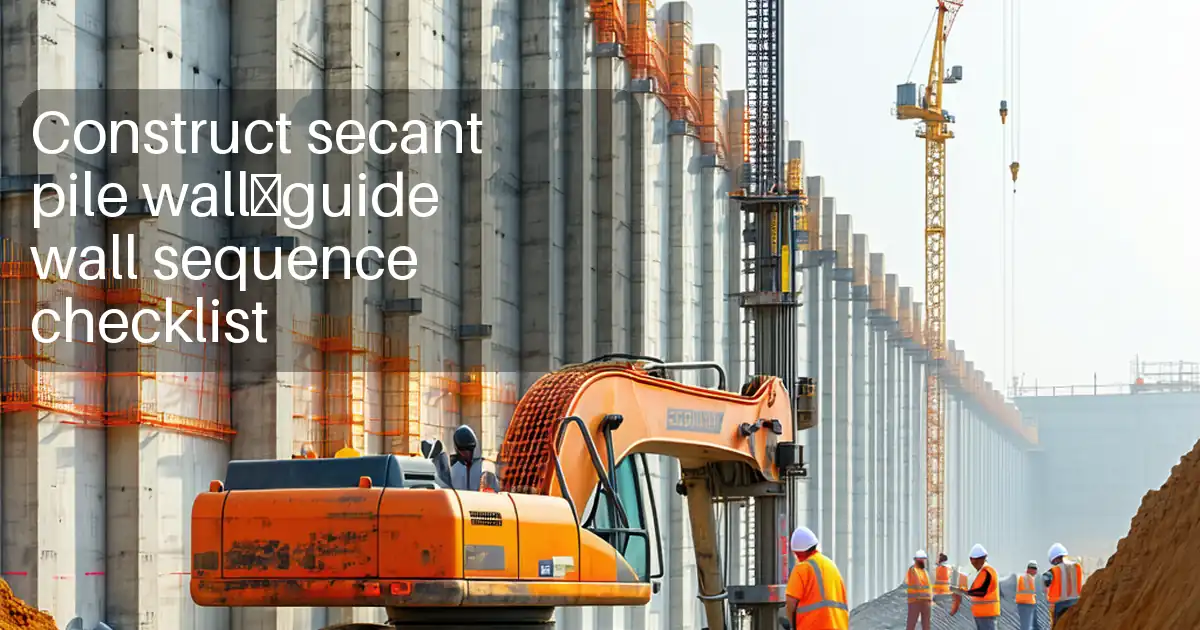
Accurate hard/soft assignment is the backbone of a reliable secant wall. Primary (soft) piles are typically placed first to allow the secondary (hard) piles to cut in and form the interlock. Before any pour, confirm the latest approved drawings and the inspection and test plan, then map each pile ID to its designated concrete strength class. Control starts at the gate: the delivery ticket must match the intended pile type and class, and the batch time should support uninterrupted placement. Fresh concrete checks—temperature and slump/slump-flow—help verify workability and protect against segregation, especially when placing by tremie under fluid. Record every reading and capture photos of tickets and tests tied to the pile ID. Misassigned classes increase cutting difficulty or reduce long-term performance. A disciplined ticket-to-pile register and daily plan prevent mix mix-ups and sequencing errors that are costly to correct.
- Lock drawings, ITP, and pile-class map before pours.
- Ticket-to-pile register prevents class mix-ups on site.
- Record temperature and slump with time-stamped photos.
- Keep uninterrupted supply to avoid cold joints.
Proving overlap continuity between adjacent piles
Continuity relies on drilling alignment and deliberate cutting of the secondary pile into the green/soft primary. Verify tooling diameter and mast alignment to preserve the designed overlap. During secondary drilling, record cut-in depth into each adjacent primary and look for paste smear on tooling to evidence interlock. Compare actual vs theoretical concrete volumes; rises during secondaries often indicate cutting into primaries. Maintain continuous concreting and verify tremie embedment to avoid inclusions. Where access allows, capture photos at the bite zone or of spoil that demonstrates cutting through the primary. All evidence should be georeferenced to chainage and pile IDs so gaps can be rapidly identified and corrective actions planned while equipment is still mobilized.
- Log bite depth into primaries for every secondary pile.
- Use tooling smear photos as interlock evidence.
- Compare actual vs theoretical volume for continuity cues.
- Keep alignment within specified deviation limits.
Strength classes and testing tied to performance
Each concrete class must meet its specified compressive strength and fresh properties. Sample and label cubes/cylinders from each placement, curing them correctly and testing at defined ages. Correlate results to pile IDs and positions to spot localized issues. For primaries, verify the early-age window that permits effective cutting by secondaries, using maturity or penetration checks as stated in the method statement. Any nonconformity—failed strength, incorrect class delivered, or inadequate overlap evidence—should trigger investigation, containment, and documented corrective actions. Trend charts by chainage offer fast visibility of systemic issues such as batching variations or extended haul times affecting workability.
- Link test specimens to pile IDs and chainage.
- Meet specified fck for each class in MPa.
- Validate early-age condition before secondary cutting.
- Raise NCRs and trend results for patterns.