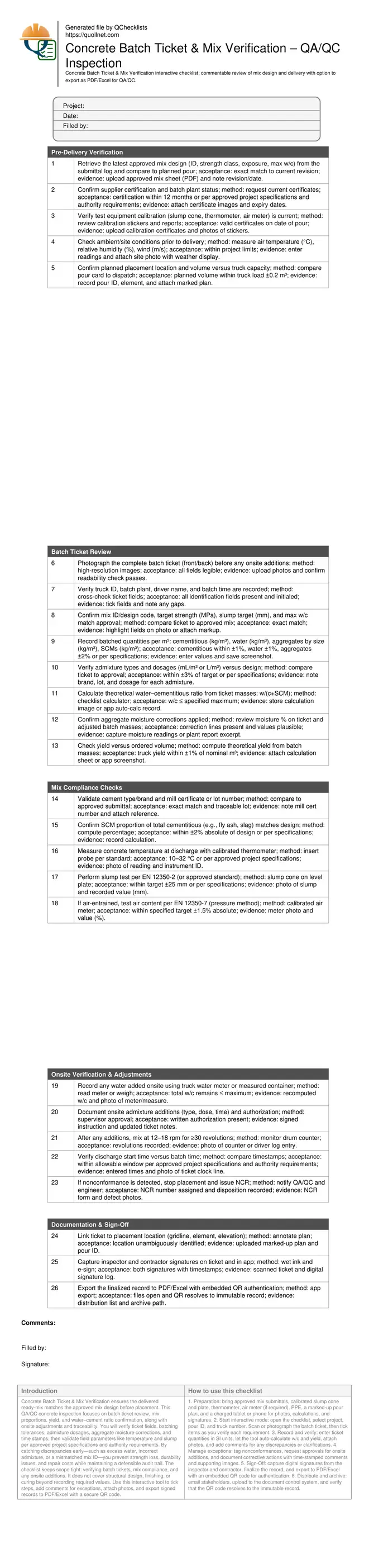
Concrete Batch Ticket & Mix Verification – QA/QC Inspection
Definition: Concrete Batch Ticket & Mix Verification is a QA/QC process for inspectors and site engineers to confirm mix design compliance, batching accuracy, and delivery traceability before concrete placement on construction projects.
- Confirms mix design, batching tolerances, and delivery traceability before placement.
- Reduces strength risk by verifying w/c ratio and admixture dosages.
- Uses ticket photos, calculations, and signatures to prove compliance.
- Interactive, commentable checklist with export and QR code verification.
Concrete Batch Ticket & Mix Verification ensures the delivered ready-mix matches the approved mix design before placement. This QA/QC concrete inspection focuses on batch ticket review, mix proportions, yield, and water–cement ratio confirmation, along with onsite adjustments and traceability. You will verify ticket fields, batching tolerances, admixture dosages, aggregate moisture corrections, and time stamps, then validate field parameters like temperature and slump per approved project specifications and authority requirements. By catching discrepancies early—such as excess water, incorrect admixture, or a mismatched mix ID—you prevent strength loss, durability issues, and repair costs while maintaining a defensible audit trail. The checklist keeps scope tight: verifying batch tickets, mix compliance, and any onsite additions. It does not cover structural design, finishing, or curing beyond recording required values. Use this interactive tool to tick steps, add comments for exceptions, attach photos, and export signed records to PDF/Excel with a secure QR code.
- Reduce rework and durability failures by validating w/c ratio, admixture dosage, moisture corrections, and yield before placement. Verified batch tickets and onsite measurements create traceable evidence that the delivered mix truly matches the approved design.
- Standardize QA/QC flow from pre-delivery preparation to ticket photo capture, calculations, and sign-off. Clear acceptance cues, SI units, and required attachments help field teams avoid omissions and prove compliance under audit.
- Interactive online checklist with tick, comment, and export features secured by QR code.
- Accelerate approvals with automated calculations, legibility checks, and digital signatures. Exportable PDF/Excel reports and embedded QR authentication streamline handover to contractors, consultants, and owners while preserving an immutable record.
- This checklist is for site QA/QC inspection of ready-mix concrete batch tickets and delivery records. For detailed formulas, water-cement ratio checks, yield review, and technical verification, see the concrete mix verification guide or use QMix Auditor.
Pre-Delivery Verification
Batch Ticket Review
Mix Compliance Checks
Onsite Verification & Adjustments
Documentation & Sign-Off
What to capture on the batch ticket—fields that matter
A defensible batch ticket tells the story of your concrete before placement. Capture high-resolution photos of the entire ticket front and back while it is clean and dry. Verify the mix ID, target strength, exposure class, target slump, and maximum water–cementitious ratio match the approved design. Check that batched quantities per cubic metre for cementitious materials, total water, graded aggregates, SCMs, and admixture dosages are present and within batching tolerances. Confirm aggregate moisture corrections and adjusted batch masses are shown, and that truck ID, plant, driver, and batch time are complete and initialed. These details support yield calculations, w/c ratio checks, and traceability across lots and pours. If any field is missing or illegible, resolve it with the supplier before accepting the load. Record all values in SI units, and attach any supplementary plant reports or calibration excerpts to strengthen the record.
- Photograph the ticket clearly before any onsite additions.
- Match mix ID and limits to the approved submittal.
- Record batched quantities per m³ with tolerances noted.
- Confirm moisture corrections and adjusted batch masses.
- Ensure IDs and time stamps are complete and initialed.
Calculations that protect strength and durability
Two quick calculations protect the structure: water–cementitious ratio and yield. Use ticket masses to compute w/c as water divided by total cementitious materials (cement plus SCMs) by mass. Verify it does not exceed the specified maximum; if onsite water is added, recompute and document authorization. Next, check theoretical yield to ensure the delivered load will place the ordered volume; significant negative variance may indicate batching or moisture issues. Confirm SCM proportion aligns with the design to maintain durability targets such as sulfate resistance or low permeability. Where air entrainment is required, verify the target range to preserve freeze–thaw performance. Record readings for temperature and slump using calibrated equipment, noting acceptance cues from project specifications and authority requirements. Attach calculation screenshots and instrument photos so anyone can audit your numbers later without ambiguity.
- Compute w/c from ticket masses and recheck after water additions.
- Compare theoretical yield to ordered volume (±1% typical).
- Keep SCM percentage within the approved design range.
- Record calibrated slump and temperature readings in SI units.
Onsite changes and creating an airtight audit trail
If changes occur onsite—water or admixture additions—document type, quantity, time, and authorization. After any addition, spin the drum for sufficient revolutions to restore uniformity, then repeat key field tests. Cross-check batch time against discharge start to confirm delivery within allowable windows per the approved specifications. When nonconformances arise, stop placement, issue a nonconformance report, and seek disposition before proceeding. Close the loop with precise traceability: link the ticket to the pour location, attach a marked-up plan, and capture inspector and contractor signatures. Finally, export the record to PDF/Excel with a QR code that resolves to an immutable version-controlled copy for audits. Distribute to stakeholders and archive in your document control system so future tests, cores, or investigations can correlate performance to the exact delivered mix.
- Document onsite additions with authorization and redo critical checks.
- Verify discharge time complies with project time limits.
- Issue NCRs promptly when acceptance criteria are not met.
- Export reports with QR authentication and archive systematically.
How to Use This Interactive QA/QC Checklist
- Preparation: bring approved mix submittals, calibrated slump cone and plate, thermometer, air meter (if required), PPE, a marked-up pour plan, and a charged tablet or phone for photos, calculations, and signatures.
- Start interactive mode: open the checklist, select project, pour ID, and truck number. Scan or photograph the batch ticket, then tick items as you verify each requirement.
- Record and verify: enter ticket quantities in SI units, let the tool auto-calculate w/c and yield, attach photos, and add comments for any discrepancies or clarifications.
- Manage exceptions: tag nonconformances, request approvals for onsite additions, and document corrective actions with time-stamped comments and supporting images.
- Sign-Off: capture digital signatures from the inspector and contractor, finalize the record, and export to PDF/Excel with an embedded QR code for authentication.
- Distribute and archive: email stakeholders, upload to the document control system, and verify that the QR code resolves to the immutable record.
Call to Action
- Start Checklist Tick off tasks, leave comments on items or the whole form, and export your completed report to PDF or Excel—with a built-in QR code for authenticity.
- Download Excel - Concrete Batch Ticket & Mix Verification
- Download PDF - Concrete Batch Ticket & Mix Verification
- View Image - Concrete Batch Ticket & Mix Verification
- User QMix Auditor - Concrete Batch Ticket Verification Tool
Cite & Embed
“Concrete Batch Ticket & Mix Verification QA/QC Inspection Checklist by Quollnet”
with a link to
this source page.
FAQ
Question: What if critical fields on the batch ticket are missing or illegible?
Question: Can I add water onsite if the slump is below target?
Question: How do I reconcile a mismatch between the approved mix design and the ticket?
Question: What records should I keep for future audits or dispute resolution?
Related Articles
Broader reading and guidance connected to this checklist topic.
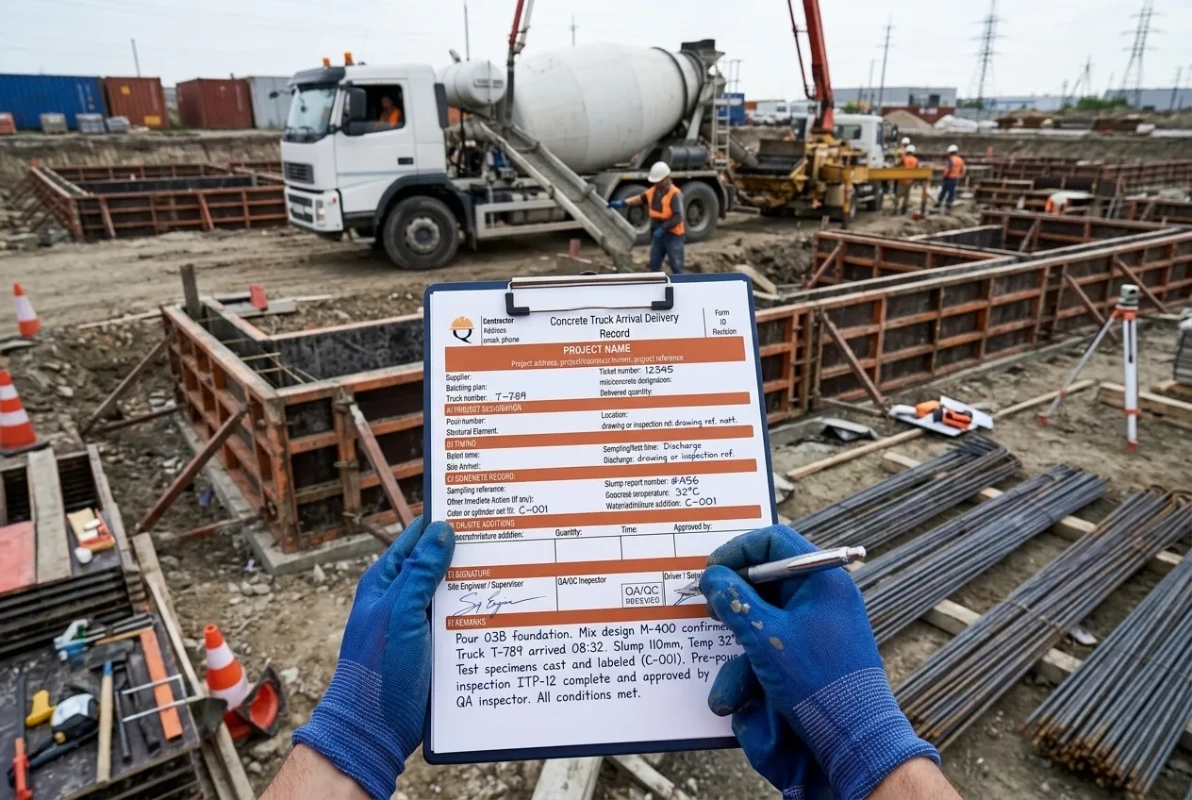
Concrete Truck Arrival & Delivery Record Template
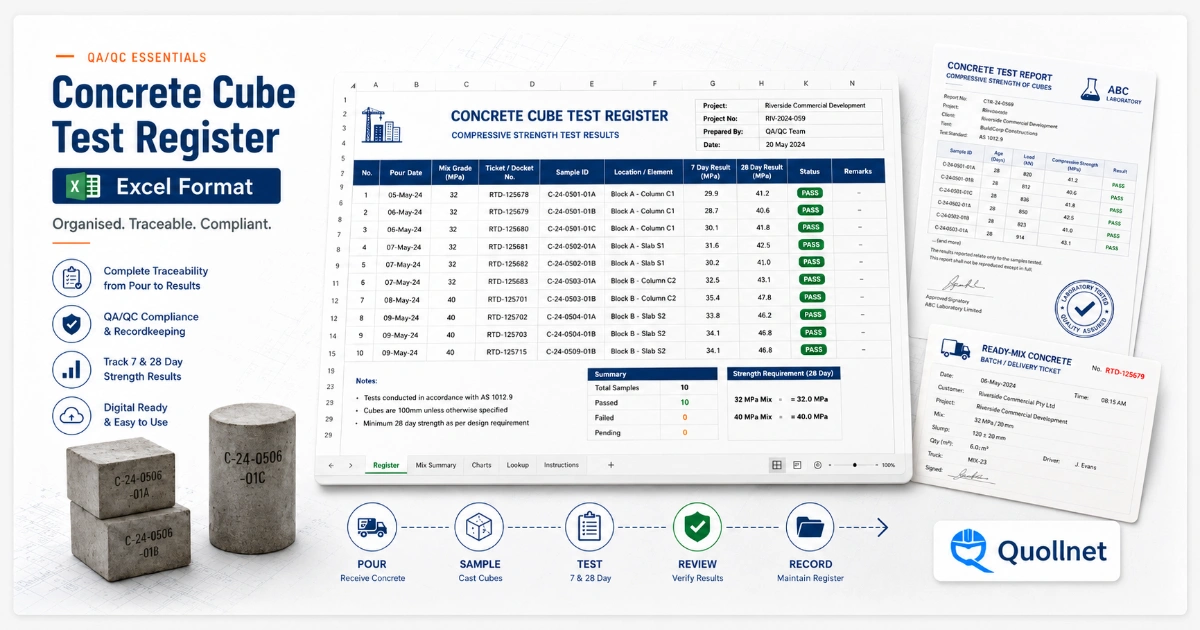
Concrete Cube Test Register Excel Format – Pdf & Excel Sample

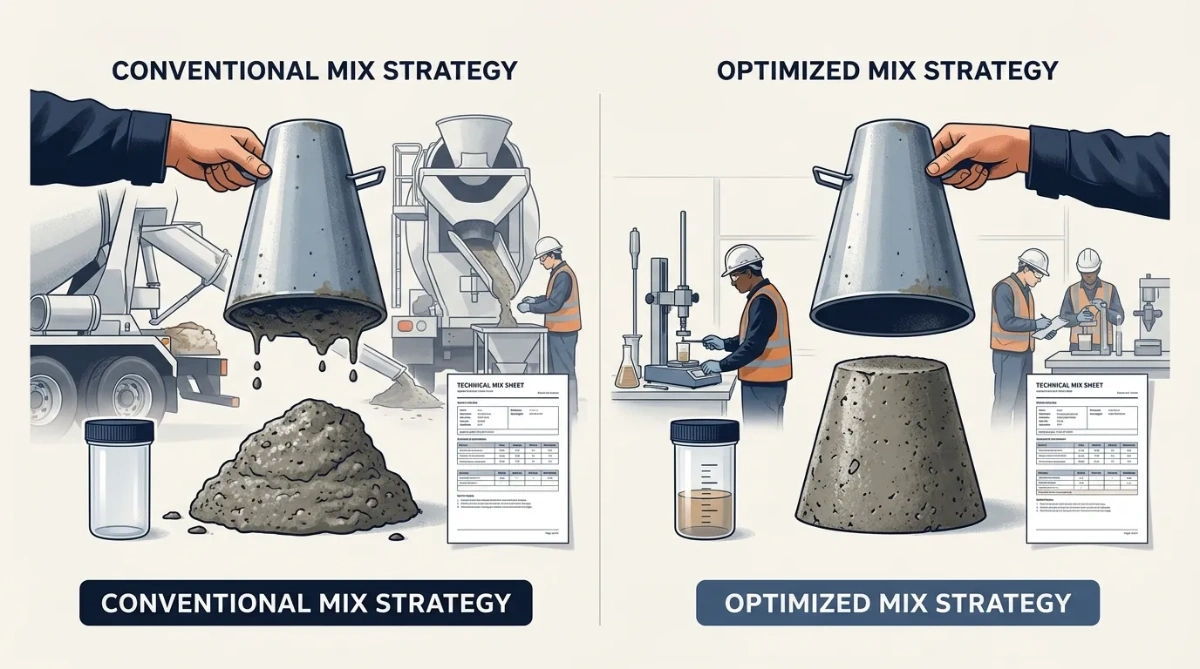
Plasticizers And Superplasticizers: How They Affect Concrete Slump

Concrete Cube Curing: Site Storage, Water Tank & Laboratory Requirements
Related Checklists
Keep the workflow moving with nearby templates chosen from similar checklist content.