
Method Statement: Ready-Mix Concrete Delivery Ticket Inspection and Point-of-Discharge Quality Testing – Method Statement
AI-assisted method statement with matching ITP, PDF download, and Excel export.
More than a static template
Unlike a downloadable Word or PDF template, this method statement is an AI-assisted editable starting point connected directly to a matching Inspection and Test Plan. Every section is structured, project-adaptable, and ready to export.
- AI-assisted drafting — Customize every section with AI for your specific project scope.
- Linked ITP — A matching inspection and test plan is generated alongside the method statement.
- Multiple export formats — Download as a formatted PDF or editable Excel spreadsheet.
- Editable starting point, not a final document — Review, verify, and adjust all content against your project requirements before use.
Static template vs. Quollnet workflow
| Feature | Static template | Quollnet |
|---|---|---|
| Project-specific content | Manual fill-in required | AI-assisted customization |
| Linked ITP | Separate document, no link | Matching ITP included |
| Export formats | Usually PDF only | PDF and Excel |
| Structured sections | Free-form layout | 13 standardized sections |
| Saved to your account | Local file only | Cloud-saved, reusable |
| Content accuracy | You verify everything | AI-assisted, you still verify |
| Cost | Often free but time-intensive | Free to customize and download |
What you can customize
When you save this method statement to your account, every section becomes editable. The following 13 sections are included:
- Scope — Defines the activity and its boundaries.
- References — Standards, specifications, and drawings.
- Responsibilities — Roles and accountabilities.
- Resources — Labour, plant, and equipment summary.
- Materials — Materials and compliance requirements.
- Equipment — Tools and equipment details.
- Prerequisites — Hold points and pre-conditions.
- Method sequence — Step-by-step construction sequence.
- Safety controls — HSE risk controls and PPE.
- Environmental controls — Environmental mitigation measures.
- QA/QC — Quality inspection and test requirements.
- ITP — Inspection and Test Plan table (has its own page).
- Attachments — Referenced drawings and documentation.
Why this method statement is used
This method statement is used to define and communicate the approved procedure for carrying out method statement: ready-mix concrete delivery ticket inspection and point-of-discharge quality testing on site. It ensures the work is planned in advance, the correct resources and controls are in place, and all personnel understand responsibilities, sequence, quality requirements, and safety controls before work begins. It aligns site execution with the documented scope and acceptance expectations.
Who uses this method statement
This method statement is used by contractors, site supervisors, project engineers, QA/QC engineers, HSE officers, consultants, and client representatives. It serves as a shared reference for planning, execution, supervision, inspection, and approval of the activity on site.
When it is prepared and submitted
The method statement is prepared before the work activity starts and submitted as part of the pre-construction documentation package for review and approval.
Who reviews or approves it
The method statement is usually submitted to the client representative, consultant, resident engineer, or project management consultant for review and approval before the work commences.
Important approval note
This method statement is an AI-assisted editable starting point, not a pre-approved document. Before use on any project, all content must be reviewed and approved by the relevant parties (superintendent, principal contractor, or client representative) in accordance with your contract and project quality plan.
For example: if your specification requires a departure from a referenced standard, that departure must be documented and approved separately — this method statement will not capture that automatically. Always verify against your applicable drawings, specifications, and regulatory requirements.
Method statement content
Scope
Purpose
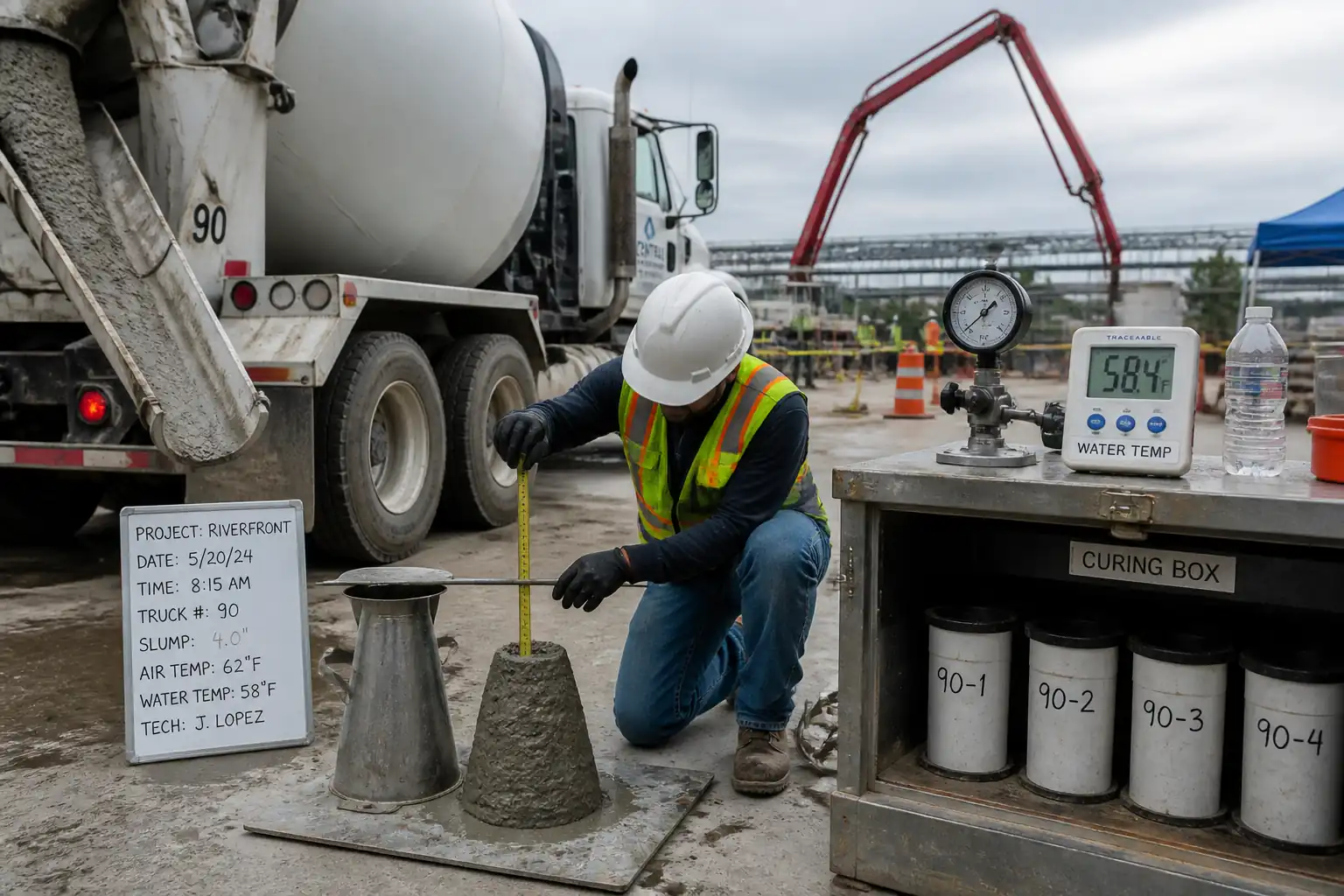
This method defines the procedures for inspection of ready-mixed concrete delivery documentation and execution of point-of-discharge quality tests, including: verification of batch-to-pour time/revolutions, slump testing, concrete temperature measurement, fresh density/yield checks, optional air content testing (where specified), and fabrication/initial curing of compressive strength cylinders. It includes acceptance/rejection criteria, hold/witness points, documentation, HSE controls, and QA/QC requirements.
Applicability
- All structural and non-structural ready-mix concrete delivered to .
- All pours utilizing transit mixers, pumps, or direct chute discharge.
Exclusions
- Mix design proportioning and plant batching controls (by supplier).
- Laboratory testing of hardened specimens (performed by accredited laboratory).
Objectives
- Ensure conformity with approved mix design and project specifications.
- Prevent placement of nonconforming concrete.
- Maintain traceable test records linked to each truckload and pour location.
References
| Document Type | Reference / Number | Revision | Notes |
|---|---|---|---|
| ASTM C94/C94M | |||
| ASTM C172/C172M | |||
| ASTM C143/C143M | |||
| ASTM C1064/C1064M | |||
| ASTM C231/C231M; ASTM C173/C173M | |||
| ASTM C138/C138M | |||
| ASTM C31/C31M | |||
| ASTM C39/C39M | |||
| ACI 301; ACI 305R; ACI 306R; ACI 318 | |||
| BS EN 206; BS 8500 |
Responsibilities
| Role | Responsibility | Name / Party |
|---|---|---|
| Contractor's Project Manager | ||
| QA/QC Engineer or Inspector (ASTM-certified/approved) | ||
| Field/Laboratory Technician (certified) | ||
| Site Engineer / Construction Supervisor | ||
| HSE Officer | ||
| Concrete Supplier | ||
| Engineer/Client Rep. |
Resources
| Resource Type | Description | Quantity | Remarks |
|---|---|---|---|
| Personnel | ASTM/ACI-certified; experienced in concrete QC. | 1 | |
| Personnel | Certified for C172, C143, C1064, C231/C173, C138, C31. | 1–3 [Verify per pour size] | |
| Personnel | Manages task-specific safety controls. | 1 | |
| Personnel | Operate equipment, support sampling access. | As required |
Materials
| Material | Specification / Grade | Quantity | Remarks |
|---|---|---|---|
| Concrete | Per mix design | ||
| Water | Clean | ||
| Release agent | Approved |
Equipment
| Equipment | Capacity / Type | Quantity | Inspection Required |
|---|---|---|---|
| Slump set | 2 sets for redundancy | Yes | |
| Thermometer | 2 | Yes | |
| Air meter | 1 | Yes | |
| Measure bucket | ~0.007–0.01 m³ | 1–2 | Yes |
| Molds | As per sampling plan | Yes | |
| Curing box | Holds planned specimens | 1+ | Yes |
| Admin | N/A | No |
Prerequisites
- Approved concrete mix design(s) and supplier submittals available on site.
- Current ITP with defined sampling/testing frequencies and hold/witness points.
- Calibrations: all testing equipment with valid certificates within required intervals [Verify per project QA plan].
- Defined acceptance criteria for slump, air (if applicable), temperature, density/yield, and time/revolutions [Verify per project specifications].
- Sampling plan: minimum number of test sets per pour (e.g., first truck of each mix each day, and at least one set per 50 m³ or part thereof) [Verify per project specifications].
- HSE controls and permits in place; toolbox talk completed; access/egress defined.
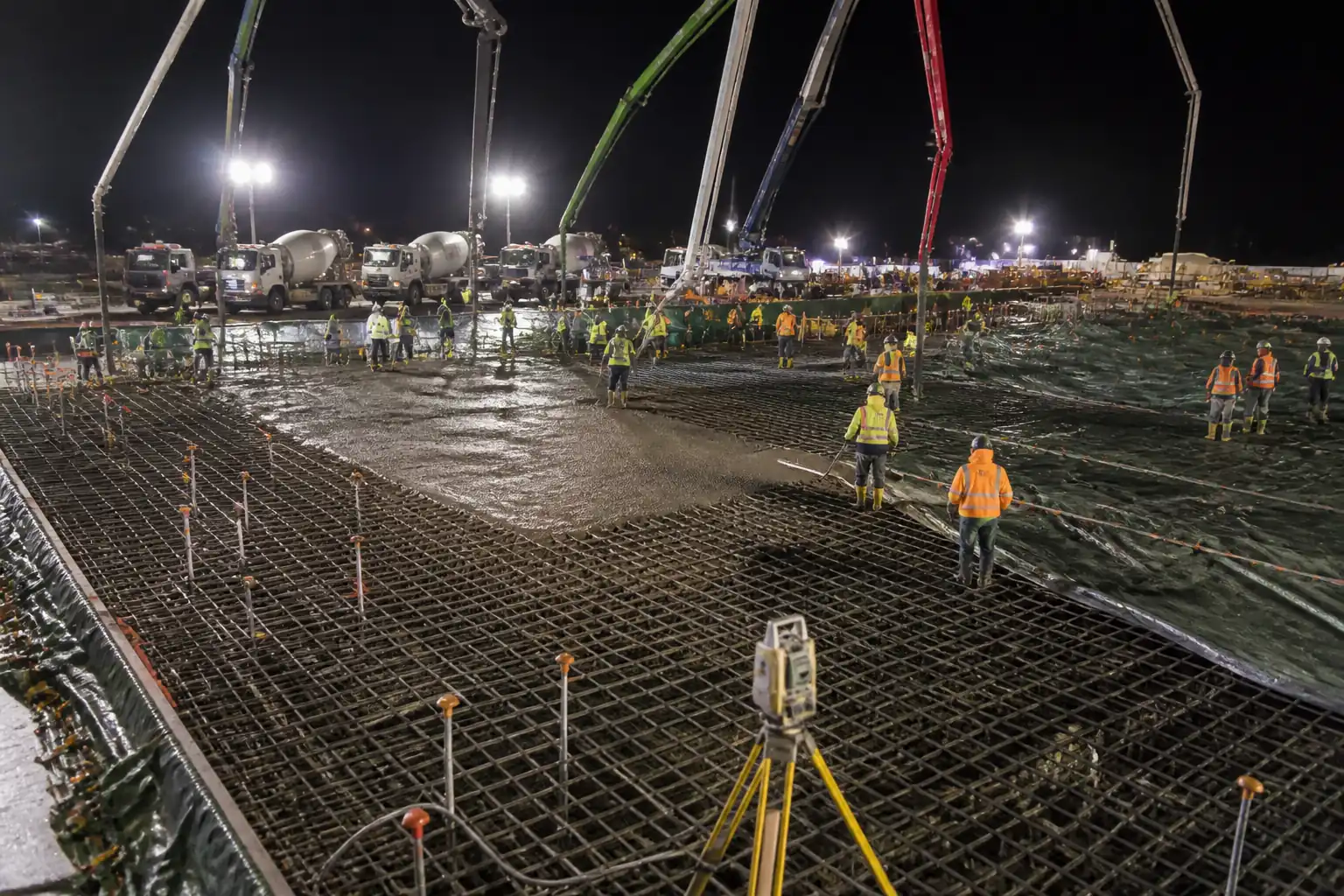
- Designated safe and level testing area near point of discharge; lighting for night pours.
- Curing box prepared, filled, energized, and stabilized within 16–27°C; transport to lab arranged within required time.
- Washout/waste management plan and spill kits in place.
- Weather plan for hot/cold conditions per ACI 305R/306R [Verify per project HSE plan and local regulations].
Method Sequence
| Step | Activity | Description | Responsibility | Inspection / Hold Point |
|---|---|---|---|---|
| 1 | Pre-pour briefing and setup | Conduct toolbox talk; review ITP, acceptance criteria, sampling frequencies, mix IDs, pour sequence; set up testing station, curing box (16–27°C), and documentation. | QA/QC + HSE + Site Engineer | Prestart checklist |
| 2 | Truck arrival control | Guide truck to testing bay; chock wheels; record arrival time and ambient conditions; establish exclusion zone with a banksman. | Site Engineer / HSE | Visual |
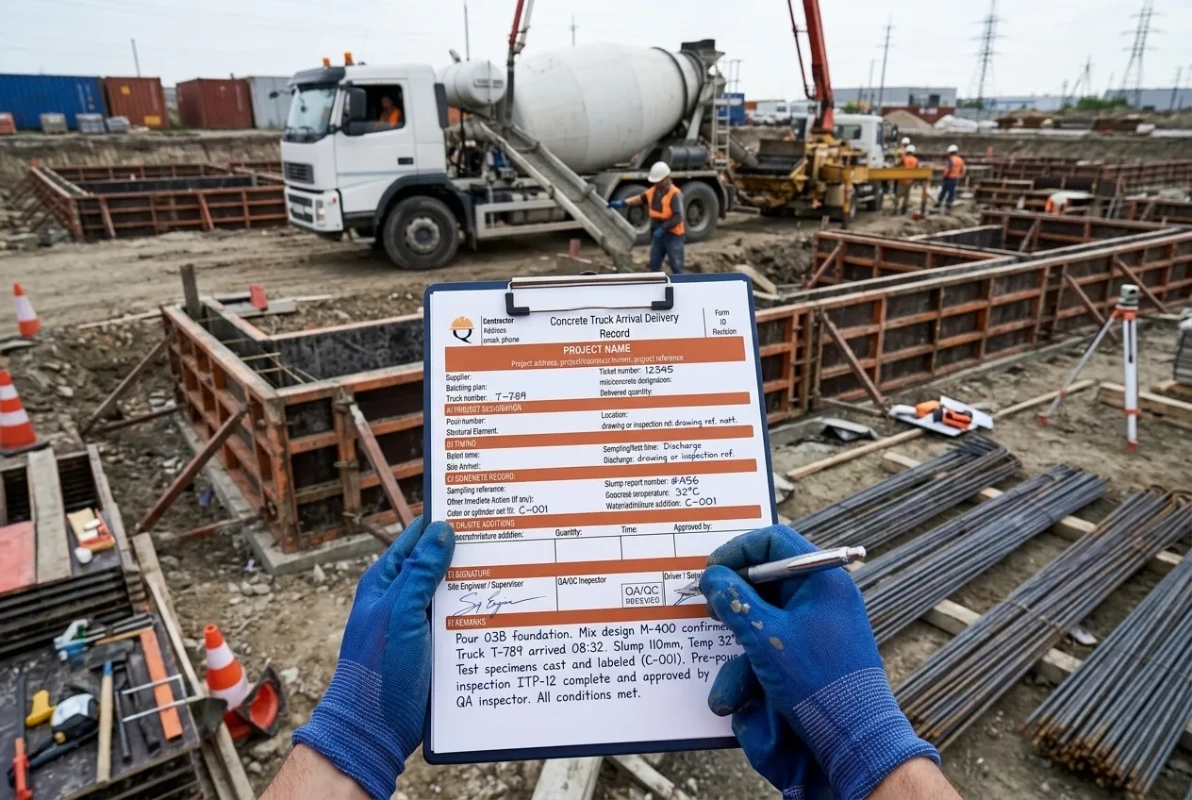
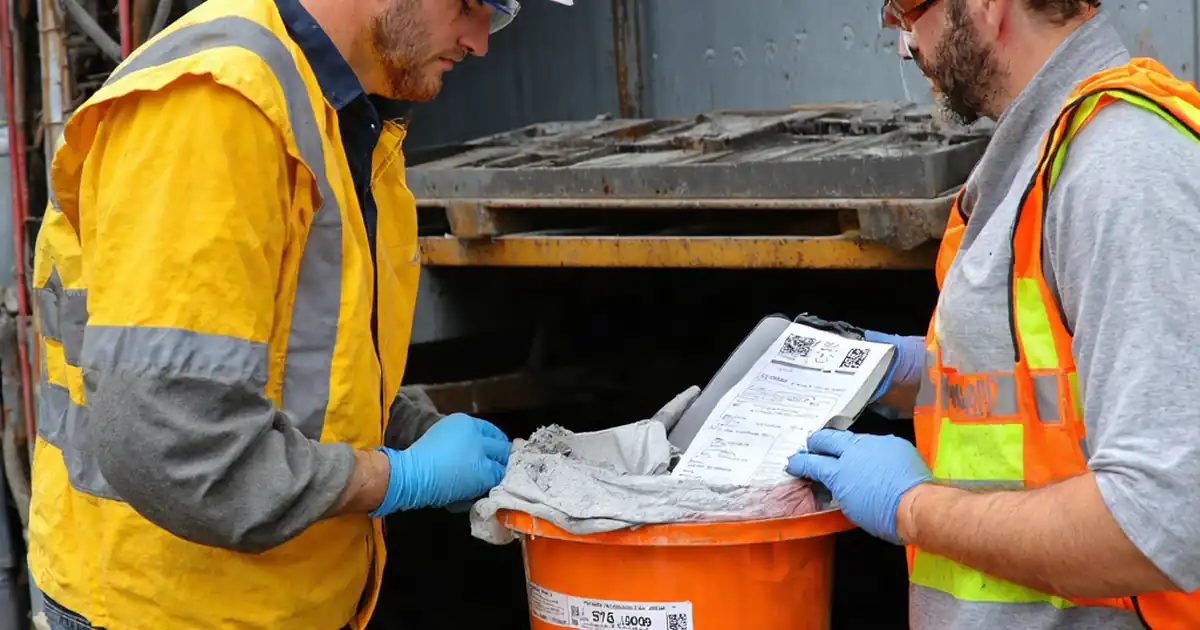
| 3 | Delivery ticket review (Hold Point H1) | Verify: plant ID, truck ID, mix ID, quantity, batch time, water added at plant, admixtures, target slump/air, W/Cmax, cementitious content, revolutions counter. Compute time since batching and check drum revolutions. | QA/QC Inspector | Ticket check |
| 4 | Decide on water addition (if slump low) | If permitted, add measured water ensuring W/Cmax not exceeded; document quantity; mix at least 30 revolutions at mixing speed; no water after any concrete has been discharged (unless specifically allowed) [Verify]. | QA/QC with Supplier | Witness |
| 5 | Sampling – composite per ASTM C172 | Obtain composite sample from the middle portion of discharge, from at least two portions; protect from evaporation and contamination; complete sampling within 15 min of first portion. | Technician | Observe sampling |
| 6 | Temperature test | Measure concrete temperature immediately after sampling; start within 5 min. | Technician | Instrument check |
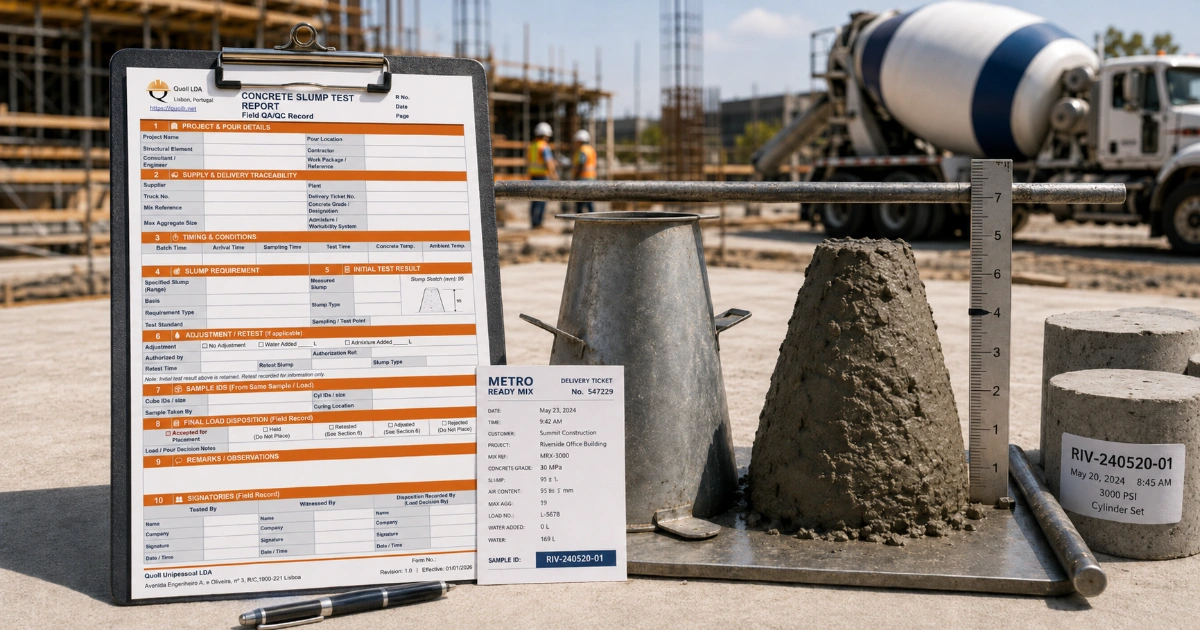
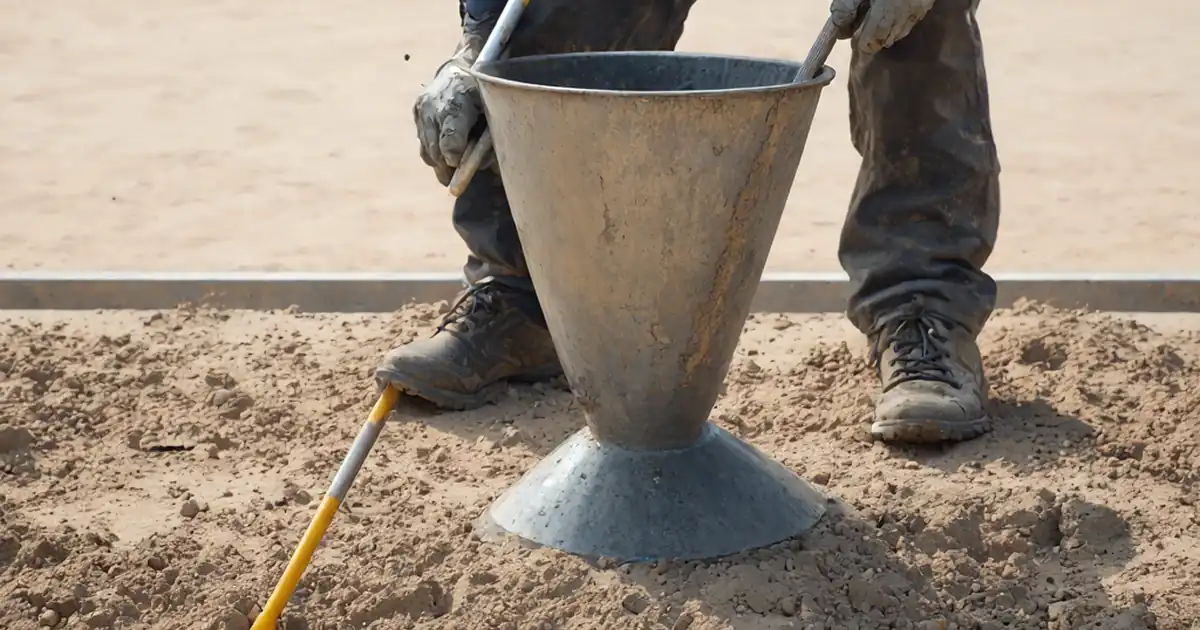
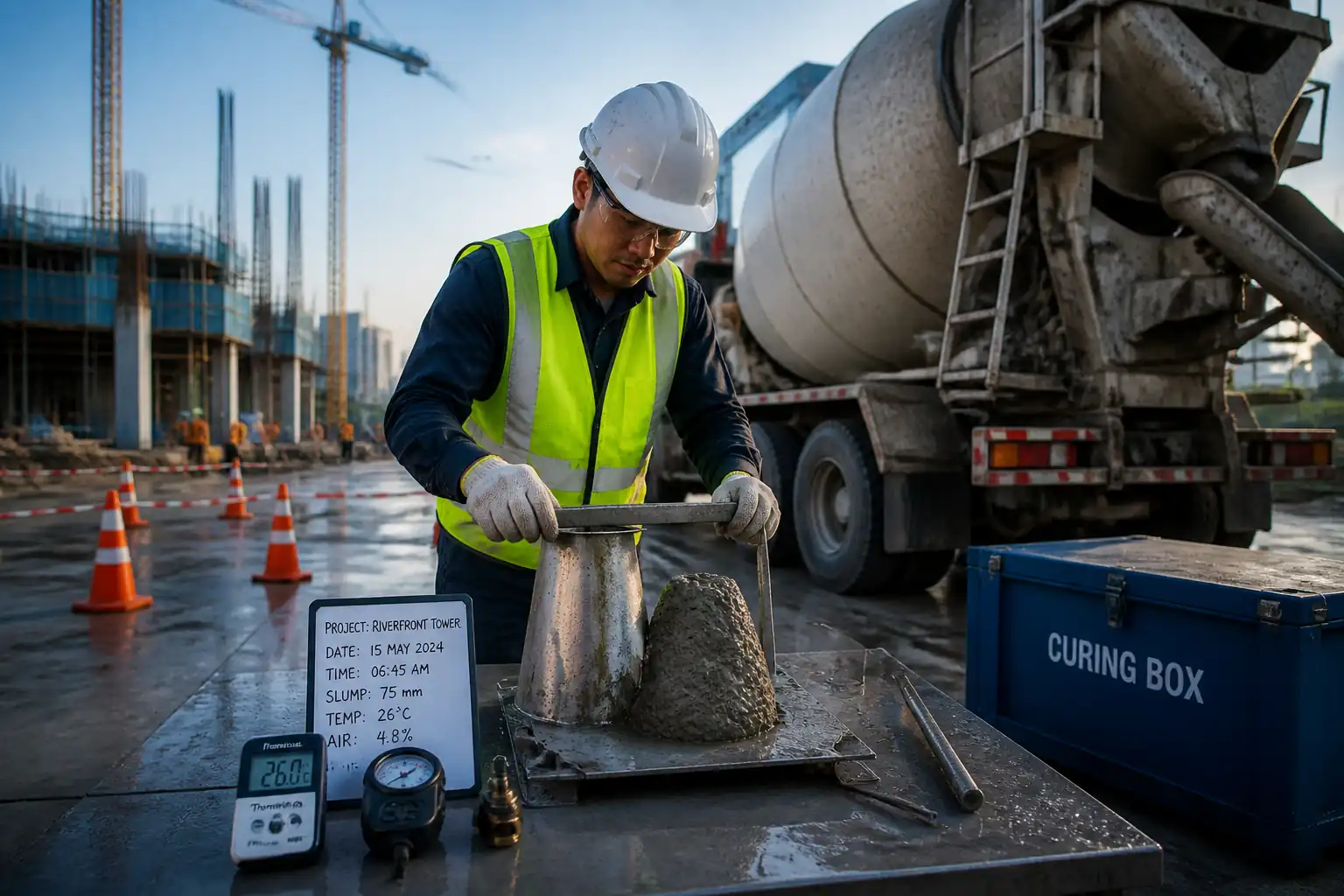
| 7 | Slump test | Perform slump within 5 min of obtaining final portion; place on rigid, level, non-absorbent surface; rod 25 times each layer; lift cone vertically in 5±2 s; measure to nearest 5 mm. | Technician | Witness by QA/QC |
| 8 | Air content (if specified) | For normal-weight concrete, use pressure meter; for lightweight or where required, use volumetric method. Start within 15 min of sampling. | Technician | Gauge zero check |
| 9 | Fresh density and yield | Determine unit weight and compute yield/gravimetric air; start within 15 min of sampling. | Technician | Volume verification |
| 10 | Acceptance decision before discharge | If time/temperature/slump/air/density within limits, authorize discharge to placement. If outside limits and cannot be corrected without exceeding W/Cmax or limits, reject load and direct to designated rejection/washout area. | QA/QC with Site Engineer | Checklist review |
| 11 | Cylinder fabrication (Hold Point H2) | Mold cylinders within 15 min of sampling. Number per set typically 6 (2x7-day, 2x28-day, 2xspare) or as specified [Verify]. Rodding/tapping per ASTM C31; cap/finish; label with unique ID (project, element, truck, time, location). | Technician; Witness Engineer | H2 Witness |
| 12 | Initial curing and storage | Immediately place cylinders in insulated curing box with water at 16–27°C; protect from disturbance; record min/max temperatures. | Technician | Daily temp log |
| 13 | Transport to laboratory | After initial curing, transport specimens upright, cushioned, protected from temperature extremes; handover with chain-of-custody. | Technician/Lab Courier | COC check |
| 14 | Documentation and closeout | Complete logs for each truck: ticket review, time, slump, temp, density, air (if any), cylinder IDs; update ITP; file calibrations and photos; raise NCR if nonconformance discovered. | QA/QC | QA review |
Health, Safety, and Environment – Safety Controls
Task-specific hazards and controls
- Hazard: Moving transit mixers and pumps in testing area.
- Likely consequence: Struck-by, crush injuries.
- Engineering/procedural control: Designate exclusion zone; use a trained banksman; wheel chocks; cone off test area; spot lighting at night.
- Required PPE: High-visibility vest, safety boots, hard hat.
- Collective measure: Traffic management plan; one-way flow and spotter communication protocol.
-
Inspection/permit/supervision: Daily traffic route inspection; banksman present; [Verify per project HSE plan and local regulations].
-
Hazard: Contact with fresh concrete (alkaline, contains admixtures).
- Likely consequence: Chemical burns, dermatitis, eye injury.
- Engineering/procedural control: Provide running water/eye wash; prohibit kneeling/hand contact; use compatible barrier cream.
- Required PPE: Alkali-resistant gloves, long sleeves, safety glasses with side shields or face shield.
- Collective measure: Safety data sheets available; HAZCOM briefing.
-
Inspection/permit/supervision: HSE spot checks; ensure wash stations operational.
-
Hazard: Manual handling of filled unit weight measures and cylinders (~8–18 kg each).
- Likely consequence: Musculoskeletal strain, dropped objects.
- Engineering/procedural control: Use trolleys/crates; team lift >15 kg; store at waist height.
- Required PPE: Safety boots, gloves.
- Collective measure: Manual handling training; mechanical aids available.
-
Inspection/permit/supervision: Supervisor monitors lifting practices.
-
Hazard: Pinch/entanglement at chutes/pump hoppers.
- Likely consequence: Hand injuries, amputations.
- Engineering/procedural control: Keep hands clear; lock-out of swing chutes during sampling; use scoops/containers not hands.
- Required PPE: Gloves, hard hat, safety glasses.
- Collective measure: Barrier around chute operating arc.
-
Inspection/permit/supervision: Operator control only; no testing under suspended loads.
-
Hazard: Pressurized air meter (if used).
- Likely consequence: Sudden release causing eye/face injury.
- Engineering/procedural control: Inspect gaskets/clamps; depressurize slowly per procedure.
- Required PPE: Face shield/safety glasses, gloves.
- Collective measure: Use calibrated, defect-free meters only.
-
Inspection/permit/supervision: Calibration log check; supervisor sign-off.
-
Hazard: Electrical risk from curing box and wet environment.
- Likely consequence: Electric shock, fire.
- Engineering/procedural control: RCD/GFCI protection; elevated cables; IP-rated equipment; keep connections dry.
- Required PPE: Dielectric gloves when handling plugs, as required.
- Collective measure: PAT testing per site rules.
-
Inspection/permit/supervision: Weekly inspection; permit if within wet area [Verify per project HSE plan and local regulations].
-
Hazard: Slips, trips, falls on wet surfaces and sample spills.
- Likely consequence: Sprains, fractures.
- Engineering/procedural control: Maintain clean, level, non-slip test platform; immediate cleanup of spills; cable management.
- Required PPE: Slip-resistant safety boots.
- Collective measure: Housekeeping regimen; anti-slip mats.
-
Inspection/permit/supervision: HSE inspections each shift.
-
Hazard: Heat/cold stress during hot/cold weather concreting.
- Likely consequence: Heat exhaustion, hypothermia.
- Engineering/procedural control: Shade/cooling or windbreaks; scheduled breaks; hydration; warm clothing.
- Required PPE: Weather-appropriate PPE.
- Collective measure: Environmental monitoring.
- Inspection/permit/supervision: Implement ACI 305R/306R measures; HSE monitoring.
Environmental Controls
- High-pH wash water management:
- Consequence: Soil/stream alkalinity damage.
- Control: Designated, lined washout with zero discharge; collect and dispose via approved vendor.
- PPE: Gloves, goggles.
- Collective measure: Bunding and signage.
-
Inspection/permit/supervision: Daily check of washout capacity; records retained.
-
Admixture/chemical handling:
- Consequence: Spills contaminating soil.
- Control: Store in secondary containment; transfer over drip trays; spill kits within 15 m.
- PPE: Chemical gloves, goggles.
- Collective measure: SDS on site; trained handlers only.
-
Inspection/permit/supervision: Spill log; reportable spill procedure [Verify per local regulations].
-
Noise during night pours:
- Consequence: Nuisance to receptors.
- Control: Maintain equipment; avoid unnecessary revving; use acoustic barriers where feasible.
- PPE: Hearing protection for staff.
- Collective measure: Community notification plan.
-
Inspection/permit/supervision: Noise monitoring if required by permit.
-
Waste minimization:
- Consequence: Excess landfill use.
- Control: Plan batch quantities; reject loads to designated area only; segregate waste.
- PPE: Standard site PPE.
- Collective measure: Waste management plan.
-
Inspection/permit/supervision: Monthly waste report.
-
Dust/mud tracking (site egress):
- Consequence: Public road contamination.
- Control: Wheel wash; road sweeper standby; gravel apron.
- PPE: High-vis; boots.
- Collective measure: Traffic management.
- Inspection/permit/supervision: Gate inspections.
Quality Assurance / Quality Control
QA/QC Controls
- Personnel competency: Testing by certified technicians (ASTM/ACI). Records of certifications retained.
- Equipment: Calibrations current; daily function checks logged; damaged apparatus removed from service.
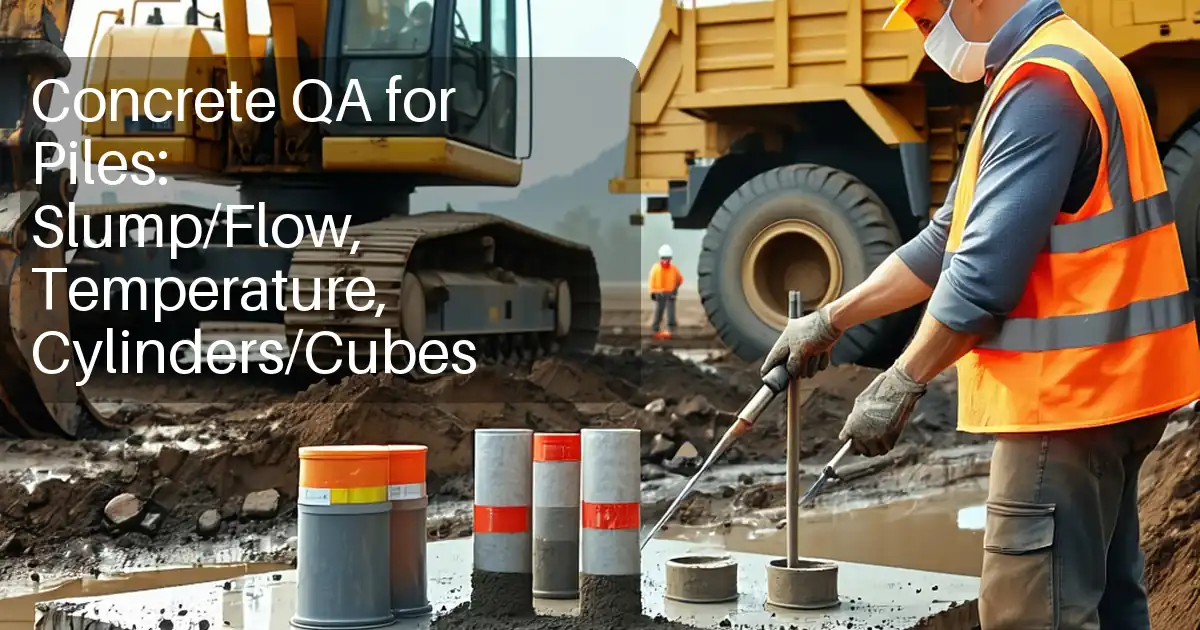
- Sampling/testing frequencies: As per ITP and project specs (typical: slump/temp every truck; air and density with each strength test set; minimum 1 set/50 m³ and first truck of each mix daily) [Verify per project specifications].
- Acceptance criteria:
- Batch-to-discharge: ≤ 90 min from batching or ≤ 300 revolutions (whichever governs) unless otherwise approved by Engineer with admixtures [ASTM C94] [Verify].
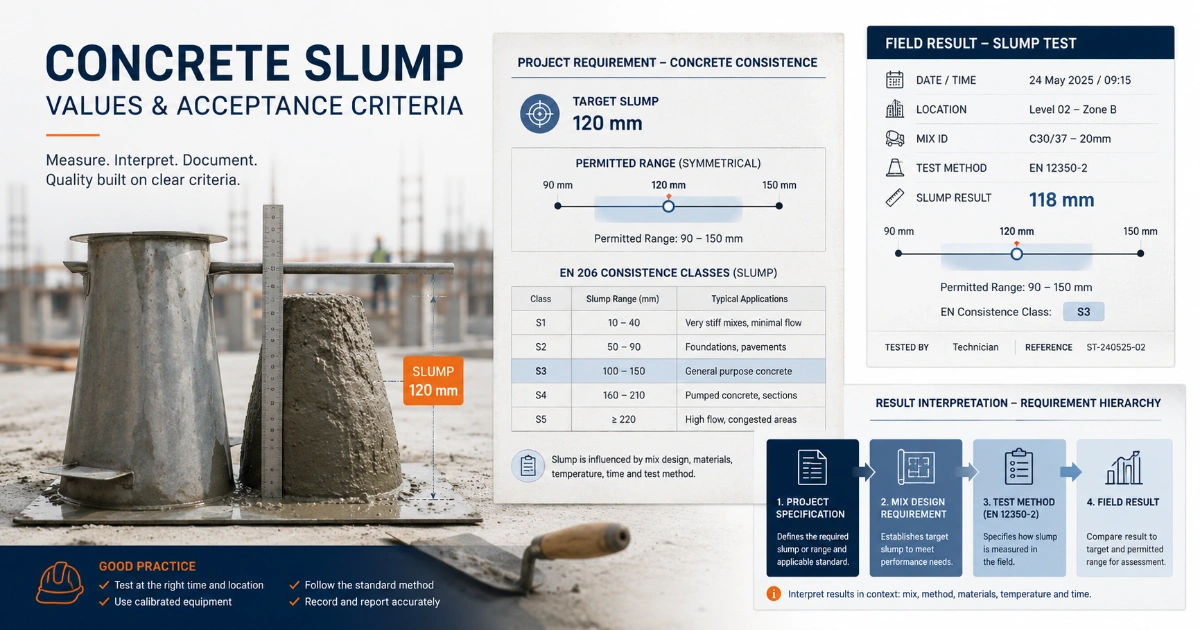
- Slump: Within specified target and tolerance (typical ±25 mm up to 100 mm target; ±40 mm above) [Verify].
- Temperature: Within specified range (typical 10–32°C) [Verify].
- Air content (if specified): Within target ±1.5% [Verify].
- Density/Yield: Within ±2% of theoretical density and yield within ±1.5% [Verify].
- Cylinders: Molded within 15 min; initial cure 16–27°C for 24–48 h; labeled and traceable [ASTM C31].
- Nonconformance process: If any criterion fails and cannot be corrected per ASTM C94 without exceeding W/Cmax, reject load; issue NCR; inform Engineer; record corrective actions.
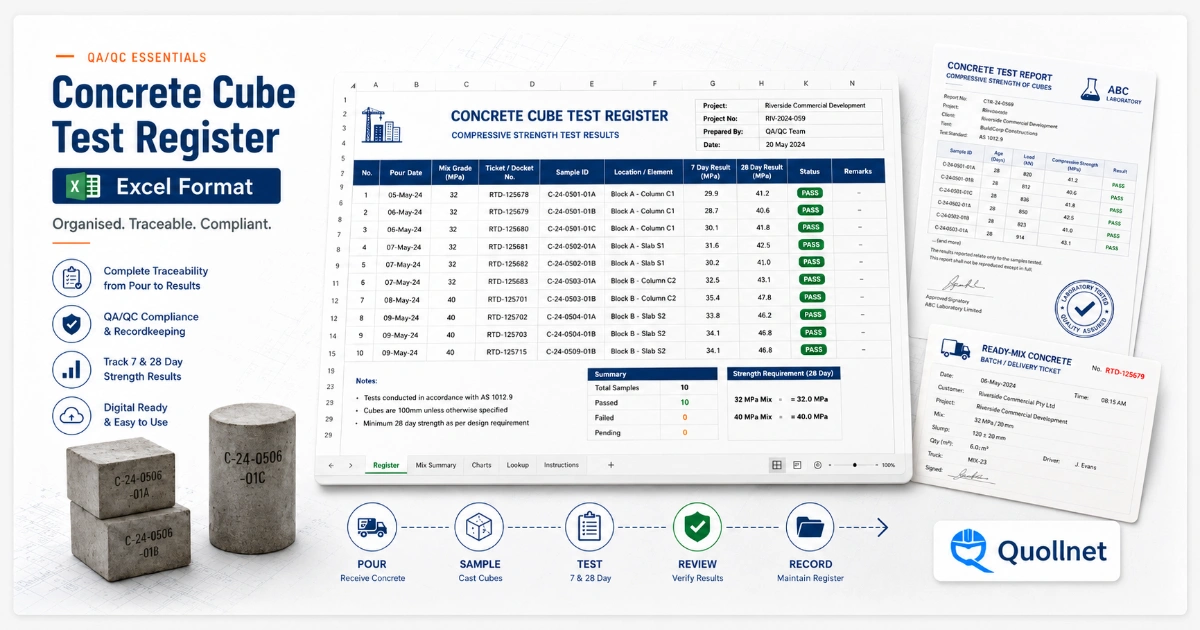
- Traceability: Unique IDs linking pour location, element, truck ticket, test logs, and cylinder sets; chain-of-custody to lab.
- Records retention: Delivery tickets, test logs, witness/hold signatures, calibration certs, curing logs, NCRs retained per contract.
- Trending: QA reviews compressive strength results (ASTM C39) and correlates with fresh properties; initiate preventive actions if trends deviate.
Attachments
- Sample form: Delivery Ticket Review Checklist (with time/revolutions calculator)
- Sample log: Slump, Temperature, Density/Air Test Log Sheet
- Sample form: Cylinder Fabrication Log and Chain-of-Custody
- Daily Curing Box Temperature Log (min/max)
- Water Addition Authorization/Witness Form
- Nonconformance Report (NCR) Template
- Equipment Calibration Register (slump set, thermometer, air meter, unit weight measure)
- Example calculation sheet for yield and gravimetric air (ASTM C138)
- Photographic record checklist for first truck and hold points
- Hot/Cold Weather Concreting checklist (per ACI 305R/306R)
This content is a read-only public reference. Download or customize to get an editable version.
ITP preview
The first inspection activities from the linked ITP for Method Statement: Ready-Mix Concrete Delivery Ticket Inspection and Point-of-Discharge Quality Testing:
| Activity | Inspection / Test | Acceptance Criteria | Responsibility | Record |
|---|---|---|---|---|
| Truck positioning and safety setup | Visual verification of exclusion zone, wheel chocks | Safe access and exclusion zone established | Site Engineer / HSE | Prestart checklist |
| Delivery ticket review (H1 – Hold) | Verify batch time, revolutions, mix ID, W/Cmax, admixtures, quantities | Time ≤ 90 min or per spec; revolutions ≤ 300; ticket complete | QA/QC Inspector; Engineer Witness | Ticket checklist; signatures |
| Sampling – composite sample | Sampling per ASTM C172 | Composite from middle discharge; sampling ≤ 15 min; protected | Technician | Sample ID record |
Showing 3 of 11 inspection activities. View full ITP →
Related Inspection and Test Plan
An Inspection and Test Plan (ITP) is available for Method Statement: Ready-Mix Concrete Delivery Ticket Inspection and Point-of-Discharge Quality Testing. The ITP defines the inspection activities, acceptance criteria, hold and witness points, responsible parties, and records required to verify the work described in this method statement.
View the Method Statement: Ready-Mix Concrete Delivery Ticket Inspection and Point-of-Discharge Quality Testing ITP →Frequently asked questions
Continue with related Quollnet resources connected to this method statement.