
Inspection and Test Plan for Method Statement – Imported Fill Acceptance, Classification, Source Testing, Stockpile Sampling, Rejection Protocol, and Delivery Docket Reconciliation
AI-assisted inspection and test plan connected to a method statement, with PDF and Excel export.
More than a static template
Unlike a downloadable Word or PDF template, this ITP is an AI-assisted editable starting point directly connected to its method statement. Every inspection activity, hold point, and acceptance criterion is structured and ready to adapt to your project.
- AI-assisted customization — Tailor inspection activities and acceptance criteria to your specific project scope.
- Linked method statement — This ITP is connected to the corresponding method statement describing the work sequence.
- Multiple export formats — Download as a formatted PDF or editable Excel spreadsheet.
- Editable starting point, not a final document — Review and verify all content against your project specifications and standards before use.
What you can customize
When you save this ITP to your account, every inspection row becomes editable. You can add, remove, or modify:
- Inspection activity — Description of what is being inspected.
- Inspection type — Hold point (H), Witness point (W), Review (R), or Monitor (M).
- Responsibility — Contractor, subcontractor, engineer, or client.
- Frequency — How often the inspection occurs.
- Acceptance criteria — Referenced standard or specification requirement.
- Records — Forms, test reports, or checklists required as evidence.
Why this ITP is used
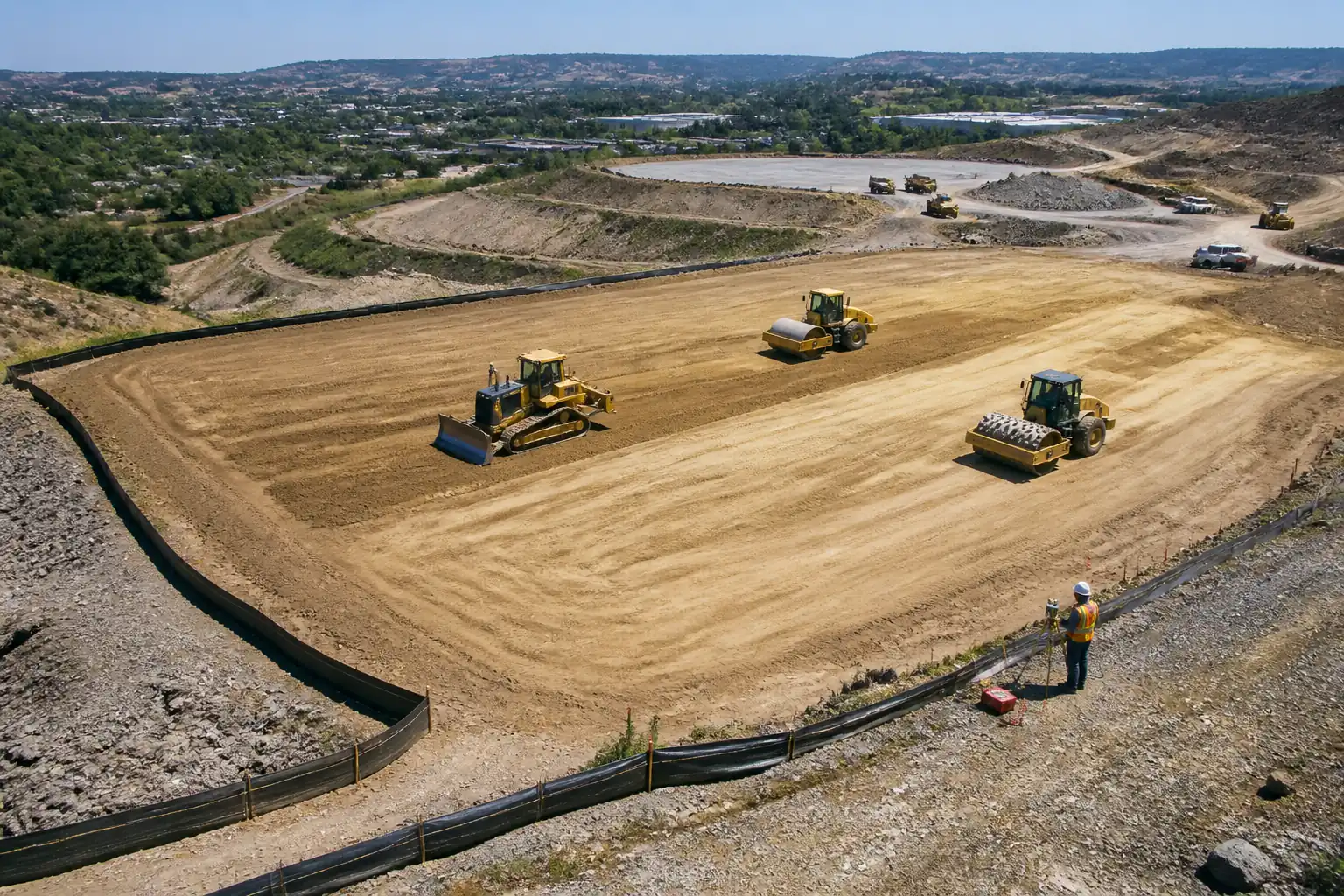
To ensure only compliant imported fill is accepted for earthworks, preventing defects, settlement, or contamination in the finished works.
Who uses this inspection and test plan
Contractor QA/QC, Materials Engineer, Independent Laboratory, and the Engineer/Principal’s Representative.
When this ITP is prepared and submitted
From initial source approval before first delivery through every lot’s acceptance prior to placement.
Who receives or approves this ITP
Engineer/Principal’s Representative for approval and oversight.
Inspection scope
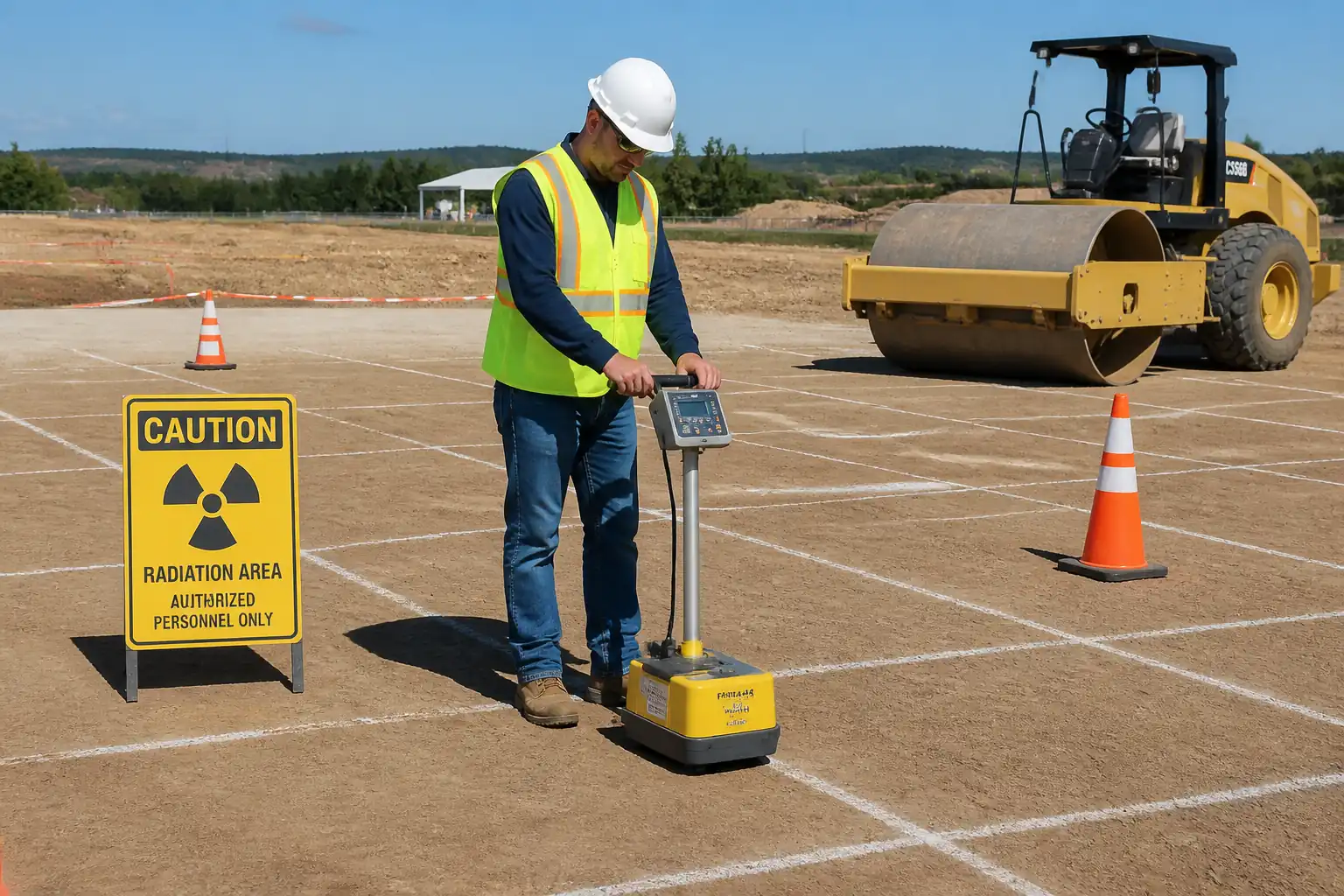
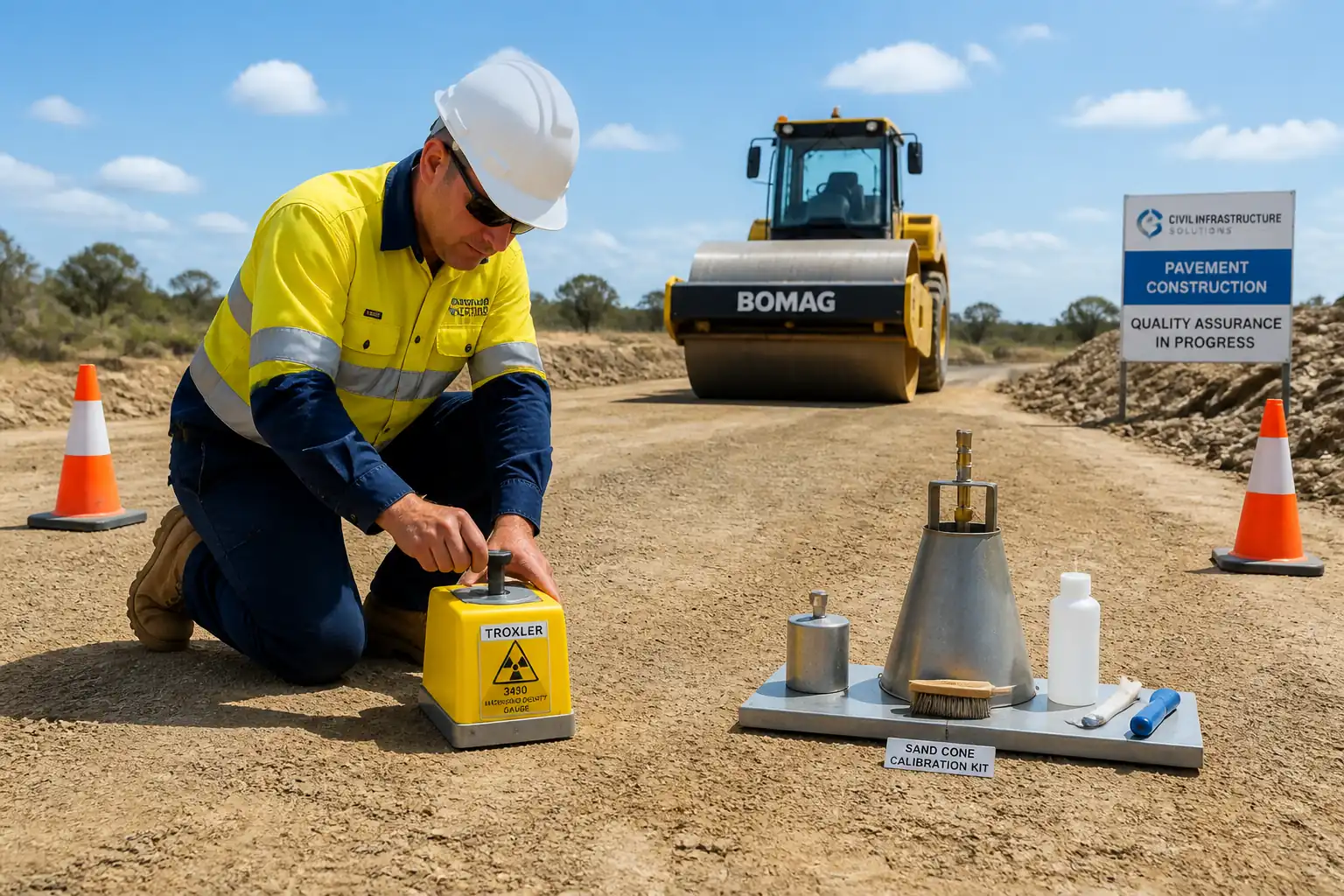
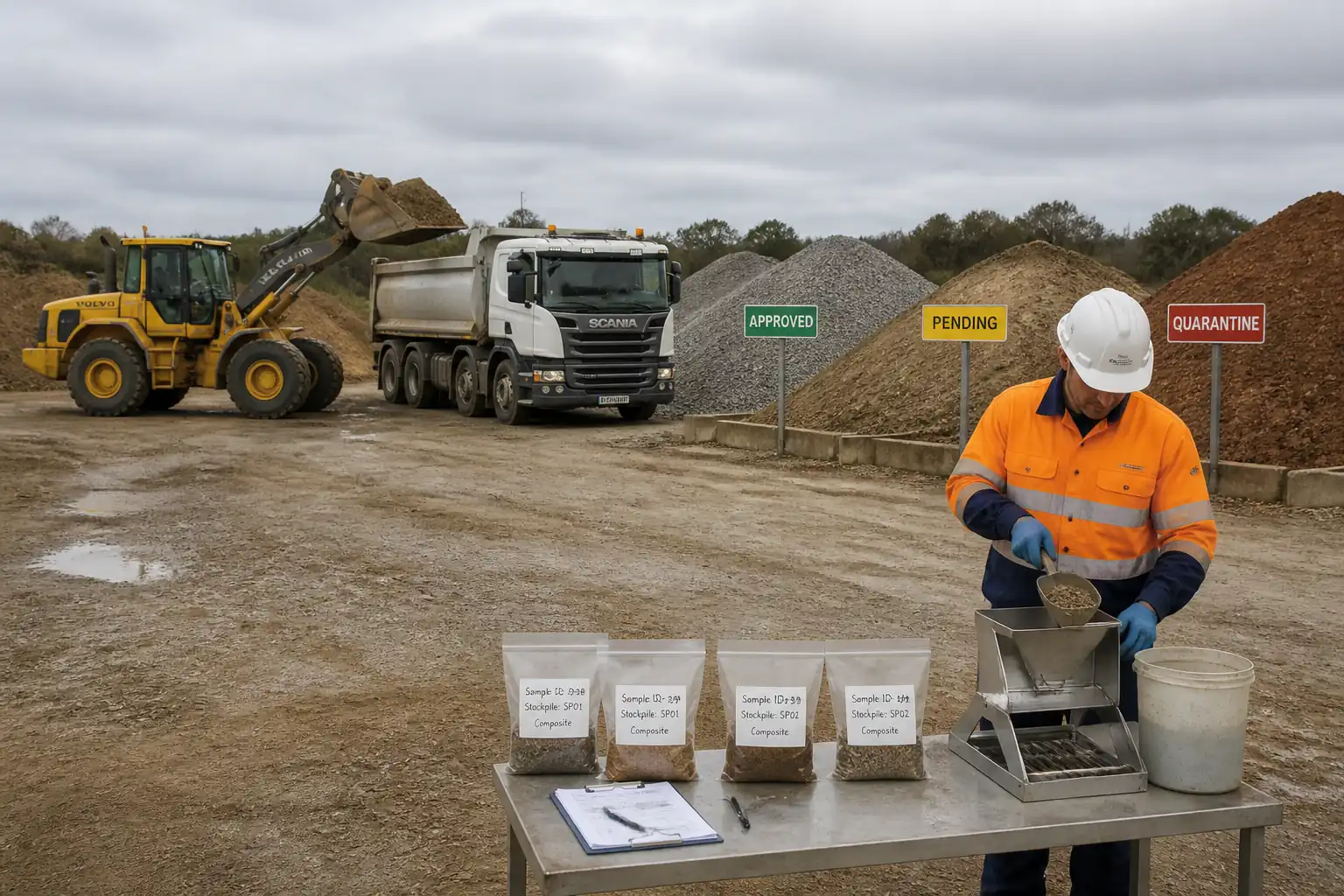
Visual inspection of deliveries, verification of dockets, representative sampling of stockpiles, laboratory testing, and formal lot release before placement.
Typical hold, witness, and review points
HP1: Source approval prior to deliveries. WP1: Stockpile sampling. HP2: Lot acceptance/release before placement.
Typical inspection records
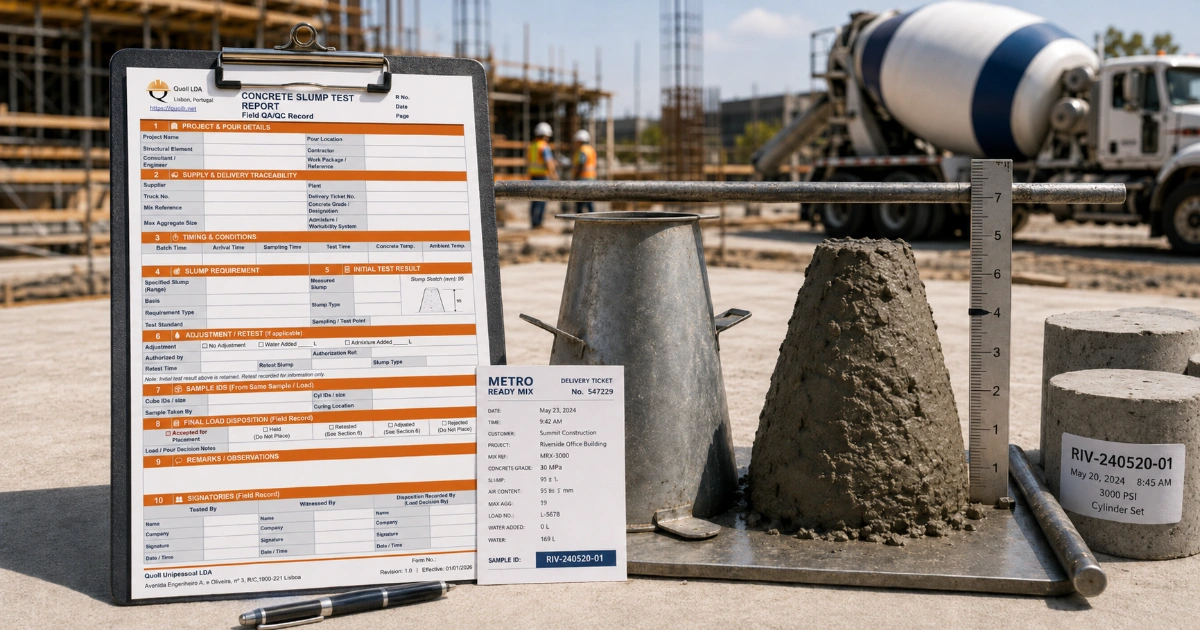
Source approvals, delivery dockets, sample COC, lab reports, lot registers, release certificates, NCR/CAR, calibration certificates.
Important approval note
This ITP is an AI-assisted editable starting point, not a pre-approved document. Before use on any project, all inspection activities, hold points, and acceptance criteria must be reviewed and approved by the relevant parties (superintendent, principal contractor, or client representative) in accordance with your contract and project quality plan.
Always verify acceptance criteria against your applicable drawings, specifications, and regulatory requirements. Hold points must be confirmed with the relevant authority before work proceeds past that point.
Inspection and test plan
| Activity | Inspection / Test | Acceptance Criteria | Responsibility | Record |
|---|---|---|---|---|
| Source qualification (initial) | Classification (ASTM D2487/D2488), LL/PL (ASTM D4318), Gradation (ASTM D6913), Moisture–Density (ASTM D698/D1557), organics/sulfates if required | Meets approved envelopes and thresholds; lab accredited; Engineer approval issued | Contractor QA/QC + Independent Lab; Witness: Engineer | Source Approval Report, test certificates |
| Delivery visual inspection and docket check (each load) | Visual per ASTM D2488; docket verification; quick moisture (ASTM D4944) as needed | Approved source; correct material; no visible contamination/oversize; documentation complete | Site Engineer/Materials Controller | Docket log with inspection stamp, photos of suspect loads |
| Stockpile lot setup and identification | Layout and signage check; survey pick-up | Lot IDs installed; segregation ensured; drainage in place | Site Engineer/Surveyor | Lot register, survey records, photos |
| Stockpile sampling (per lot) | Composite sampling (≥5 increments/lot); COC completion | Representative samples; correct labeling/sealing; safe method used | Field Technician; Witness: Engineer (WP1) | Sampling checklist, COC, photos |
| Laboratory testing – Gradation | ASTM D6913 + ASTM D1140 | Within approved gradation envelope [Verify per project specifications] | Independent Lab | Lab report |
| Laboratory testing – Atterberg limits | ASTM D4318 | PI and LL within limits (e.g., PI ≤ 20 general, ≤ 12 select) [Verify per project specifications] | Independent Lab | Lab report |
| Laboratory testing – Proctor (MDD/OMC) | ASTM D698 (general) or ASTM D1557 (structural/pavement) as specified | Valid curve established; aligns with material grading; used for downstream compaction criteria | Independent Lab | Lab report with curve and data |
| Additional tests (if specified) | Organics, sulfate/chloride, CBR, particle durability as specified | Within specified limits [Verify per project specifications] | Independent Lab | Certificates of analysis |
| Lot acceptance/release | Review of all results and records | All tests pass; documents complete; release issued before placement | Contractor QA/QC; Witness/Approval: Engineer | Lot Release Certificate |
| Nonconformance handling | Re-test after rectification; Engineer review | Only compliant lots proceed; rejected materials removed or reprocessed per approval | Contractor QA/QC | NCR/CAR, disposal/retest records |
This table is a read-only public reference. Download the PDF or Excel version, or customize this ITP to edit it for your project.
Frequently asked questions
Related method statement
This Inspection and Test Plan is associated with the Method Statement – Imported Fill Acceptance, Classification, Source Testing, Stockpile Sampling, Rejection Protocol, and Delivery Docket Reconciliation method statement, which describes the step-by-step construction sequence, resources, materials, equipment, safety controls, and environmental controls for this activity.
View the Method Statement – Imported Fill Acceptance, Classification, Source Testing, Stockpile Sampling, Rejection Protocol, and Delivery Docket Reconciliation method statement →Continue with related inspection, method statement, article, and checklist resources.