Nominated Subcontractor Proposal/Instruction Review Checklist
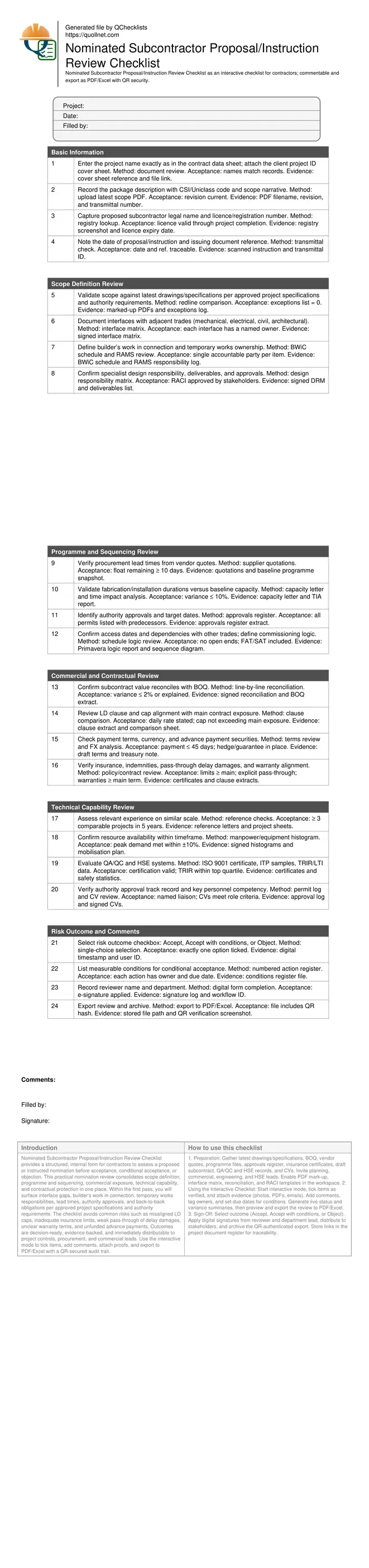
Definition: Nominated Subcontractor Proposal/Instruction Review Checklist helps contractors systematically accept, accept with conditions, or object to a nomination by verifying scope, programme, commercial risks, technical capability, and contractual protections.
- Clarifies scope, interfaces, BWiC, and specialist design responsibilities.
- Aligns programme logic with procurement, approvals, access, and commissioning.
- Captures LDs, insurance, payment, and pass-through risk in one view.
- Interactive, commentable, export-ready features with QR code verification.
Nominated Subcontractor Proposal/Instruction Review Checklist provides a structured, internal form for contractors to assess a proposed or instructed nomination before acceptance, conditional acceptance, or objection. This practical nomination review consolidates scope definition, programme and sequencing, commercial exposure, technical capability, and contractual protection in one place. Within the first pass, you will surface interface gaps, builder’s work in connection, temporary works responsibilities, lead times, authority approvals, and back-to-back obligations per approved project specifications and authority requirements. The checklist avoids common risks such as misaligned LD caps, inadequate insurance limits, weak pass-through of delay damages, unclear warranty terms, and unfunded advance payments. Outcomes are decision-ready, evidence-backed, and immediately distributable to project controls, procurement, and commercial leads. Use the interactive mode to tick items, add comments, attach proofs, and export to PDF/Excel with a QR-secured audit trail.
- Use a structured, internal review to determine acceptance, conditional acceptance, or objection of a nominated subcontractor. The form guides verifications across scope, interfaces, programme logic, and approvals, while documenting objective acceptance criteria, responsibilities, and evidence. This approach reduces disputes, protects float, and supports clean handovers to procurement and site.
- Commercial and contractual risks are captured with measurable thresholds: value reconciliation tolerances, payment periods, LD rates and caps, insurance limits, and pass-through language for delay damages and warranties. By linking each check to attachments and signatures, the record remains transparent, defendable, and simple to audit throughout delivery.
- Technical capability and resources are tested against recent relevant projects, manpower and equipment histograms, QA/QC and HSE systems, authority approval track record, and named key personnel. The result is a realistic delivery picture that aligns with procurement durations, fabrication capacities, and commissioning logic in the baseline programme.
- Interactive online checklist with tick, comment, and export features secured by QR code.
Basic Information
Scope Definition Review
Programme and Sequencing Review
Commercial and Contractual Review
Technical Capability Review
Risk Outcome and Comments
Why an Internal Nomination Review Matters
A rapid, structured review prevents downstream disputes and rework. Begin by aligning the nominated scope with the latest drawings and specifications, then close interface gaps with an owner-named matrix. Builder’s work in connection and temporary works must be explicitly allocated to avoid site standstills. Programme checks should reconcile procurement lead times, fabrication durations, and access milestones with realistic float. Commercial verification focuses on value reconciliation, LD rate and cap alignment, insurance limits, payment timing, and pass-through of delay damages and warranties. Technical capability is evidenced through recent comparable projects, resourcing plans, QA/QC, HSE stats, and named personnel. Each check states acceptance criteria and the documentary proof to upload, creating a defendable, action-oriented record.
- Use a signed interface matrix to assign ownership.
- Keep exceptions list to zero before acceptance.
- Retain supplier quotes for lead-time evidence.
- Align LD caps with main contract exposure.
Building a Defendable, Evidence-Backed Position
Turn subjective opinions into measurable thresholds. Tolerances such as ≤ 2% value variance or ≤ 10% duration deviation anchor decisions in data. Require verifiable documents: marked-up PDFs, approval registers, capacity letters, certificates, and statistics. Tag each attachment to its checklist item and person responsible. When conditions apply, phrase them as specific actions with owners and due dates. Exported outputs (PDF/Excel) should include a QR-secured hash so anyone in procurement, planning, or commercial can authenticate the review file. This approach accelerates internal approvals, supports claims management, and simplifies audits.
- State acceptance thresholds in numbers, not adjectives.
- Attach proofs directly to the relevant check.
- Use QR-secured exports to protect integrity.
- Assign owners and dates to all conditions.
Sequencing, Approvals, and Commissioning Integration
Programme credibility depends on tying nomination timing to procurement and authority cycles. Validate supplier lead times against float, confirm fabrication capacity from written commitments, and link site access to predecessor works with no open ends. List mandatory approvals with target dates and responsible parties, then map commissioning logic to include FAT/SAT and integrated system testing. Close the loop by feeding accepted durations back into the baseline and communicating impacts to upstream and downstream trades. These steps reduce idle labour, avoid out-of-sequence work, and protect completion milestones.
- Lock logic ties; avoid open-ended activities.
- Include FAT/SAT within commissioning windows.
- Name responsible parties for each approval.
- Feed verified durations into the baseline.
How to Run the Nomination Review and Capture Evidence
- Preparation: Gather latest drawings/specifications, BOQ, vendor quotes, programme files, approvals register, insurance certificates, draft subcontract, QA/QC and HSE records, and CVs. Invite planning, commercial, engineering, and HSE leads. Enable PDF mark-up, interface matrix, reconciliation, and RACI templates in the workspace.
- Using the Interactive Checklist: Start interactive mode, tick items as verified, and attach evidence (photos, PDFs, emails). Add comments, tag owners, and set due dates for conditions. Generate live status and variance summaries, then preview and export the review to PDF/Excel.
- Sign-Off: Select outcome (Accept, Accept with conditions, or Object). Apply digital signatures from reviewer and department lead, distribute to stakeholders, and archive the QR-authenticated export. Store links in the project document register for traceability.
Call to Action
- Start Checklist Tick off tasks, leave comments on items or the whole form, and export your completed report to PDF or Excel—with a built-in QR code for authenticity.
- Download Excel - Nominated Subcontractor Review Checklist
- Download PDF - Nominated Subcontractor Review Checklist
- View Image - Nominated Subcontractor Review Checklist
Cite & Embed
“Nominated Subcontractor Review Checklist by Quollnet”
with a link to
this source page.
FAQ
Question: When should I initiate the nominated subcontractor review?
Question: What evidence is critical to defend an objection or conditional acceptance?
Question: How do I test back-to-back obligations without rewriting the subcontract?
Question: What programme checks matter most for nomination timing?
Related Articles
Broader reading and guidance connected to this checklist topic.

Requisition Form: Materials, Services, Budget Control, And Logs
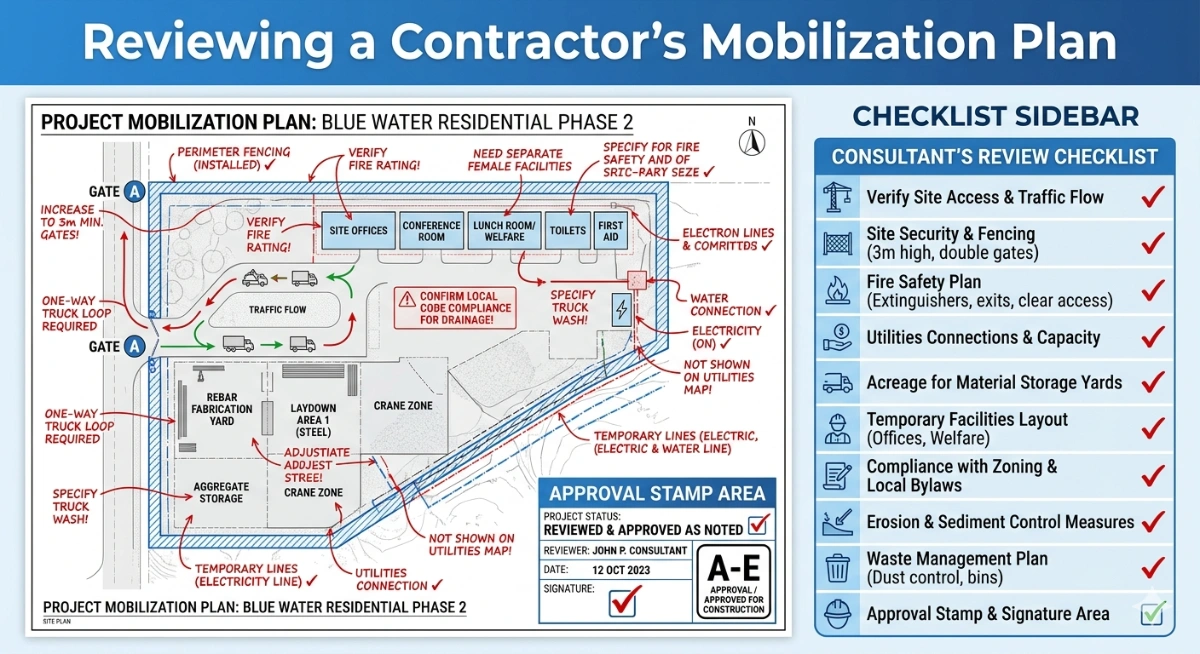
How To Review a Contractor’s Mobilization Plan

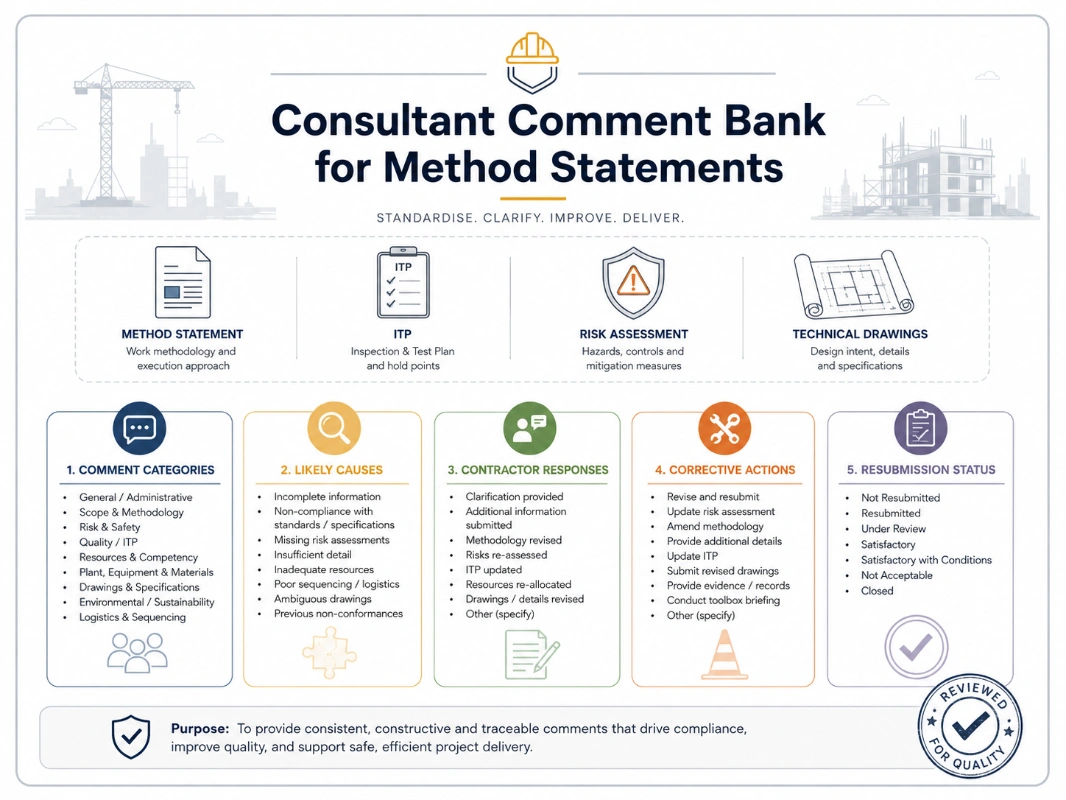
Consultant Comment Bank For Method Statements

Concrete Compressive Strength Acceptance Criteria: Aci 318-25 Vs En 206
Related Checklists
Keep the workflow moving with nearby templates chosen from similar checklist content.