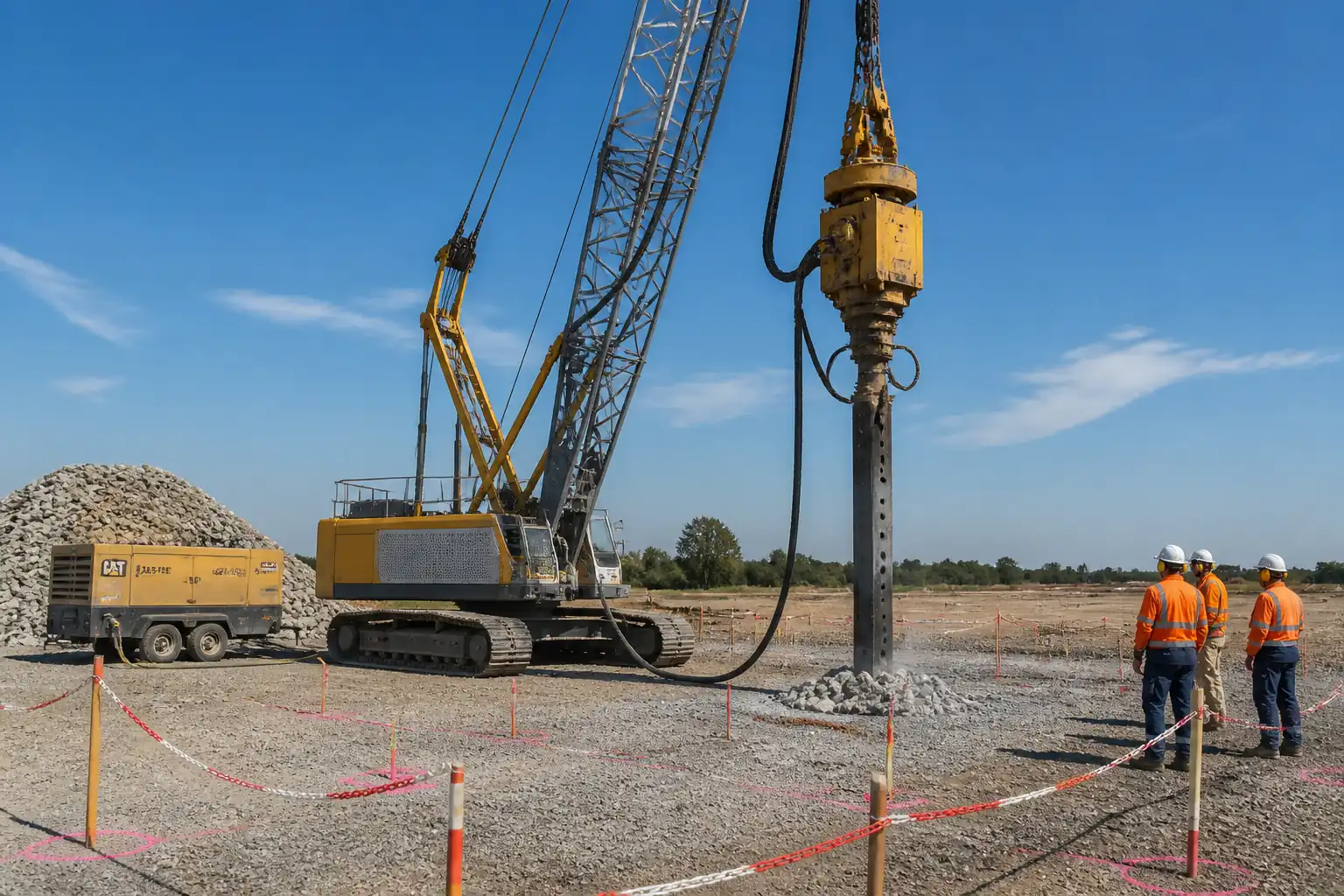

Inspection and Test Plan for Method Statement – Vibro-Compaction Works for Granular/Sandy Soils
AI-assisted inspection and test plan connected to a method statement, with PDF and Excel export.
More than a static template
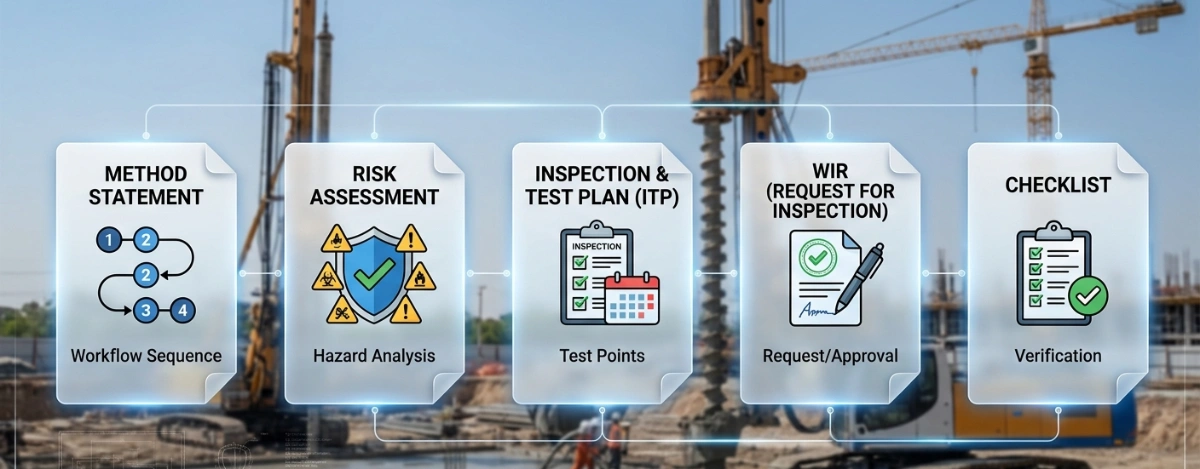
Unlike a downloadable Word or PDF template, this ITP is an AI-assisted editable starting point directly connected to its method statement. Every inspection activity, hold point, and acceptance criterion is structured and ready to adapt to your project.
- AI-assisted customization — Tailor inspection activities and acceptance criteria to your specific project scope.
- Linked method statement — This ITP is connected to the corresponding method statement describing the work sequence.
- Multiple export formats — Download as a formatted PDF or editable Excel spreadsheet.
- Editable starting point, not a final document — Review and verify all content against your project specifications and standards before use.
What you can customize
When you save this ITP to your account, every inspection row becomes editable. You can add, remove, or modify:
- Inspection activity — Description of what is being inspected.
- Inspection type — Hold point (H), Witness point (W), Review (R), or Monitor (M).
- Responsibility — Contractor, subcontractor, engineer, or client.
- Frequency — How often the inspection occurs.
- Acceptance criteria — Referenced standard or specification requirement.
- Records — Forms, test reports, or checklists required as evidence.
Why this ITP is used
To verify vibro-compaction is executed and evidenced to meet design performance with traceable inspections and tests.
Who uses this inspection and test plan
Contractor’s QA/QC team, Geotechnical Engineer, Independent Testing Agency, and the Engineer/Client’s Representative.
When this ITP is prepared and submitted
From pre-mobilization approvals through trial calibration, production compaction, post-treatment testing, and handover.
Who receives or approves this ITP
Engineer/Client’s Representative for approval and surveillance.
Inspection scope
Covers permits, platform, grid set-out, parameter calibration, production controls, CPT/SPT verification, settlement monitoring, and documentation.
Typical hold, witness, and review points
Hold: MS/ITP approval, trial parameter approval, lot acceptance via CPT/SPT, final dossier. Witness: grid set-out, production checks, monitoring readings.
Typical inspection records
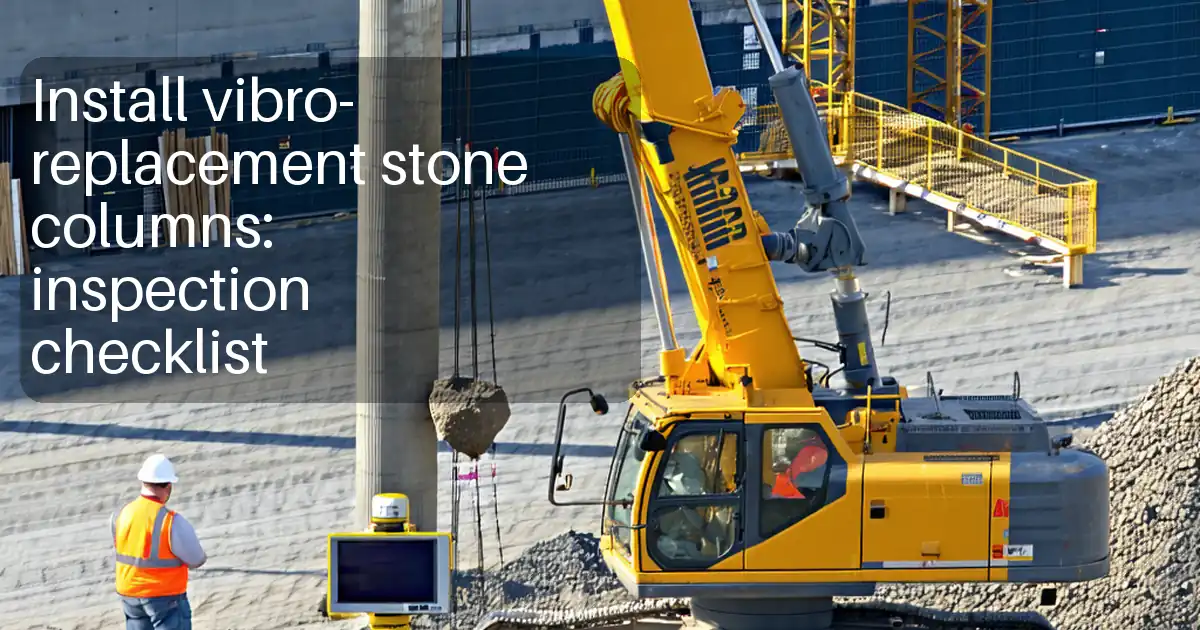
Daily rig logs, calibration certificates, CPT/SPT reports, monitoring logs, permits, as-built drawings, NCR/CCR forms.
Important approval note
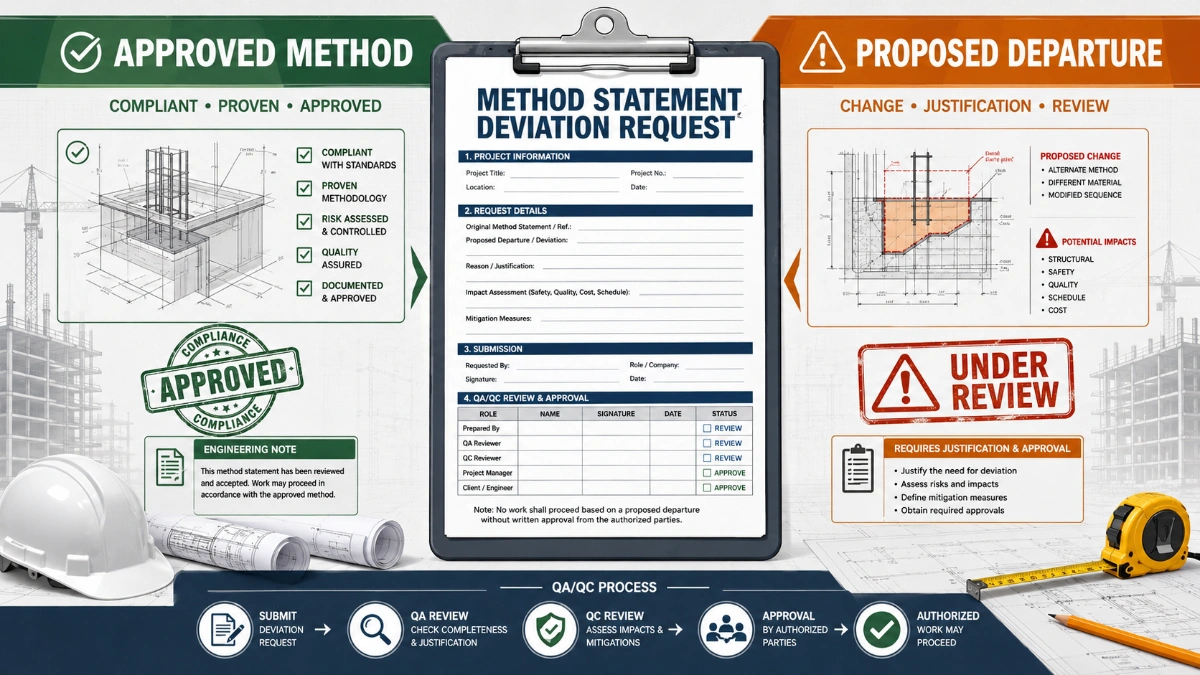
This ITP is an AI-assisted editable starting point, not a pre-approved document. Before use on any project, all inspection activities, hold points, and acceptance criteria must be reviewed and approved by the relevant parties (superintendent, principal contractor, or client representative) in accordance with your contract and project quality plan.
Always verify acceptance criteria against your applicable drawings, specifications, and regulatory requirements. Hold points must be confirmed with the relevant authority before work proceeds past that point.
Inspection and test plan
| Activity | Inspection / Test | Acceptance Criteria | Responsibility | Record |
|---|---|---|---|---|
| Method Statement, Risk Assessment, ITP Approval | Document check | Approved prior to works [Hold] | Contractor/Engineer | Approved MS/ITP/RAMS |
| Utility Clearance and Permit-to-Dig | GPR/CAT results; trial pits | Permit signed; services cleared [Hold] | Contractor/HSE | Permit-to-Dig; scan logs |
| Working Platform Certification | CBR/plate load; thickness check | Meets design capacity and level [Witness] | Contractor/Geotech | Platform certificate |
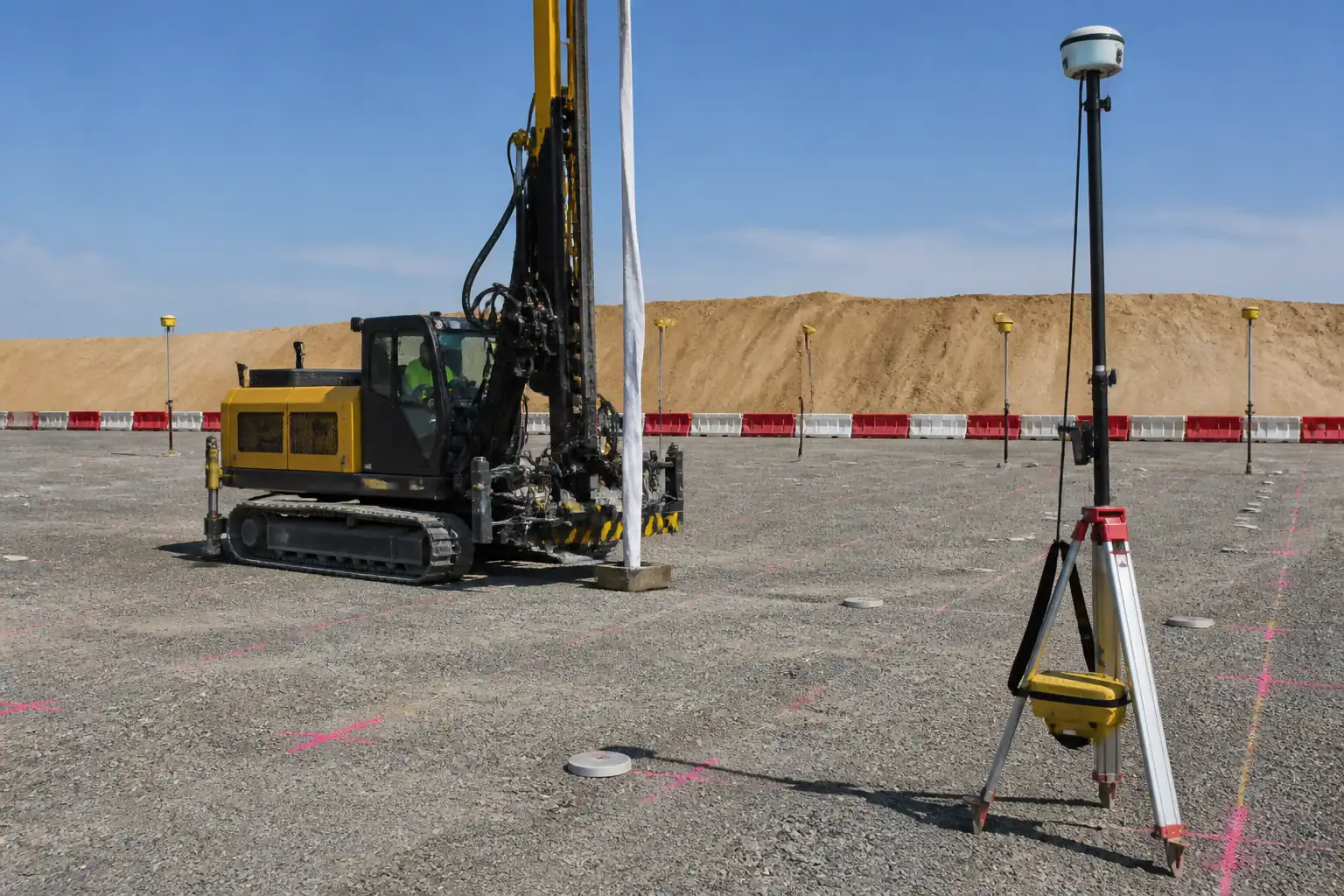
| Survey Control & Grid Set-out | Coordinate verification | Grid within ±0.15 m [Witness] | Surveyor/QA | Set-out report |
| Pre-Treatment CPT/SPT (Baseline) | ISO 22476-1 / -3; ASTM D5778/D1586 | Valid baseline data [Witness] | Testing Agency | Baseline test reports |
| Trial Area Vibro-Compaction | Monitor jet P/Q, pull rate, logs; CPT/SPT after trial | Parameters validated and approved [Hold] | Contractor/Engineer | Trial report; approval memo |
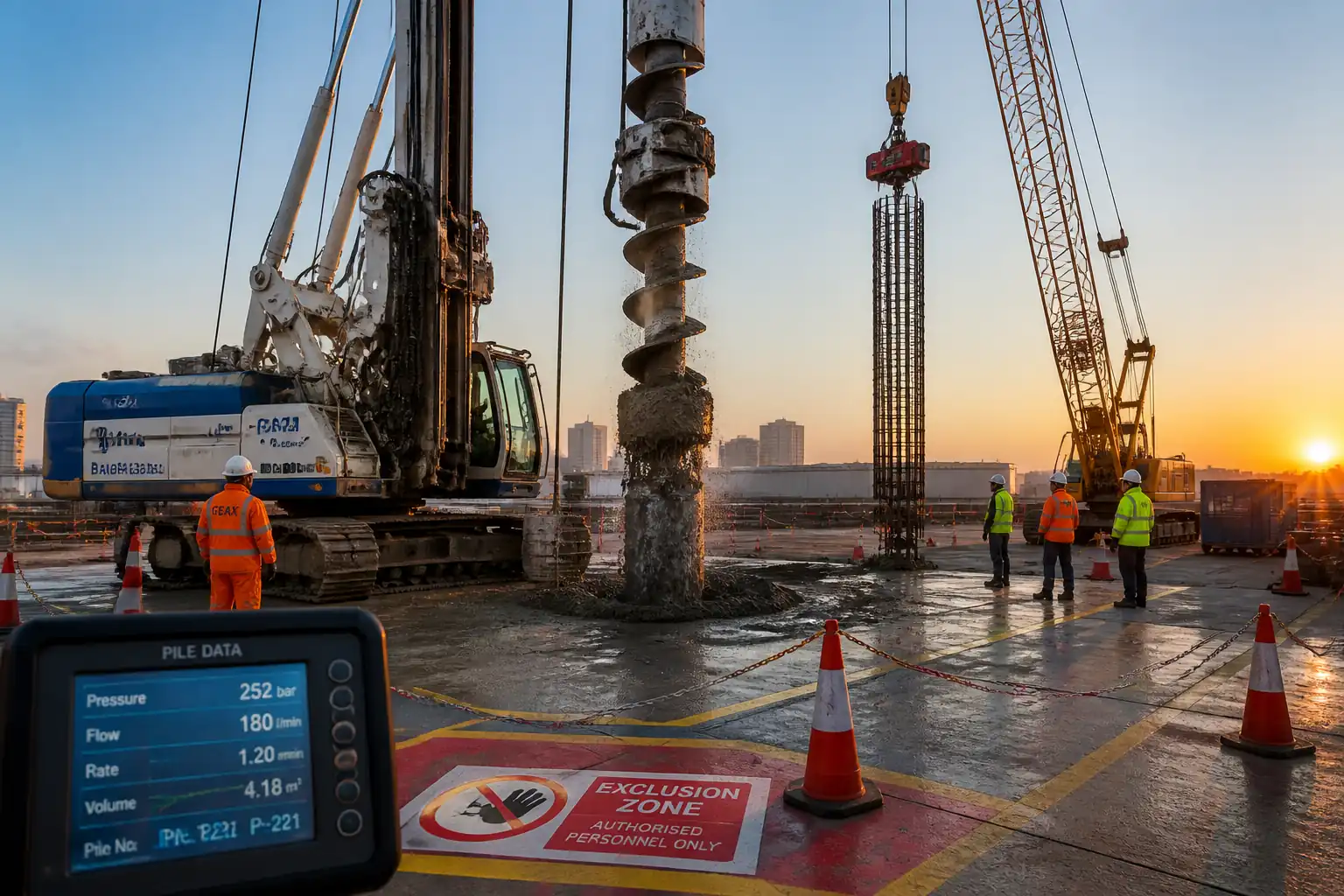
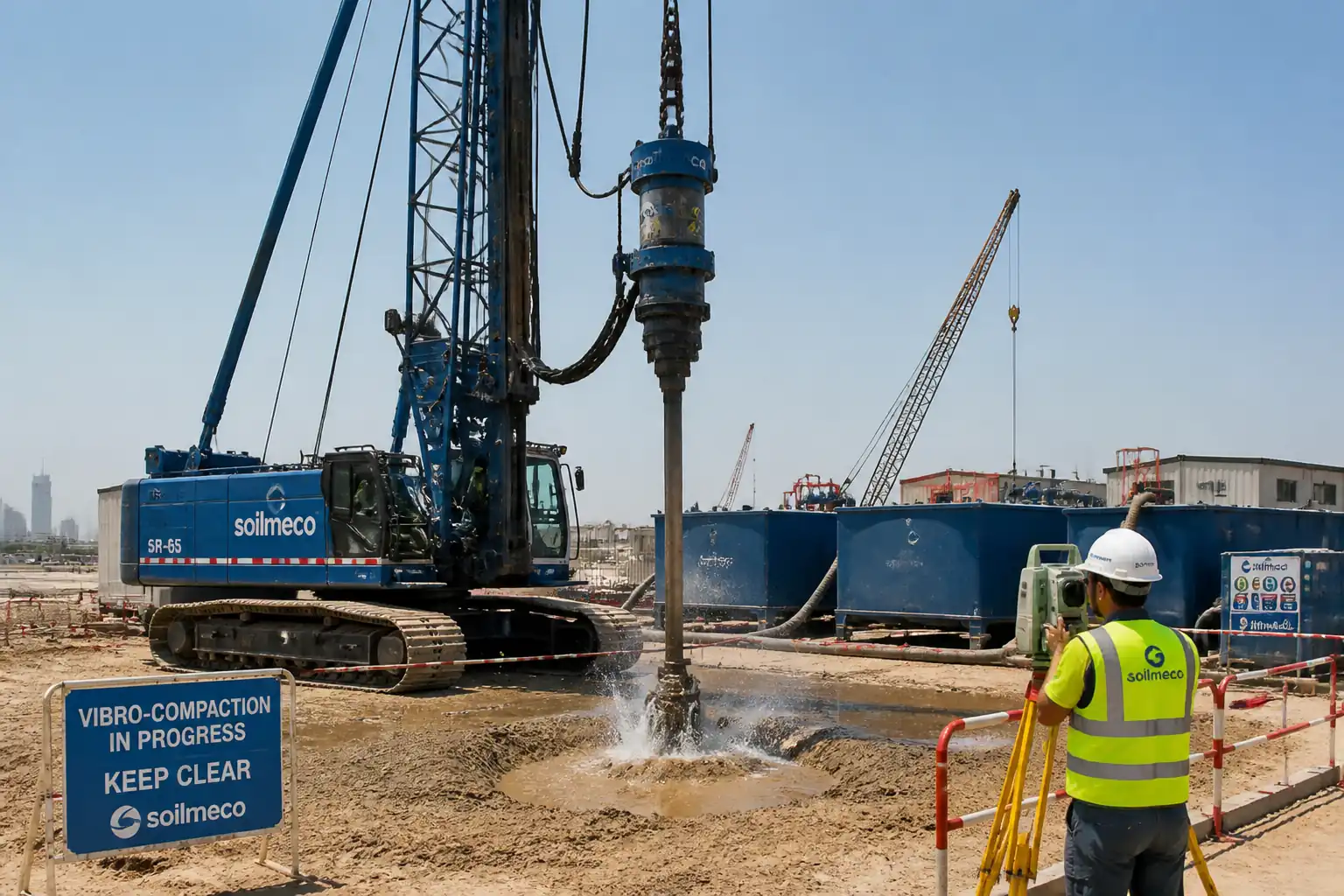
| Production Vibro-Compaction – Penetration & Step Extraction | Depth encoder; power draw; step timing | Depth ±0.5 m; pull 0.2–0.5 m/min; jet P/Q within ±10% [Witness] | Contractor/QA | Rig data logs; daily reports |
| Interim Verification CPTs | CPT/CPTu | Trends toward targets; adjust if needed [Witness] | Testing Agency/Engineer | Interim CPT reports |
| Post-Treatment CPT/SPT | CPT/CPTu; SPT N60 | Meets qc/N60/Dr criteria [Hold for lots] | Testing Agency/Engineer | Final test reports |
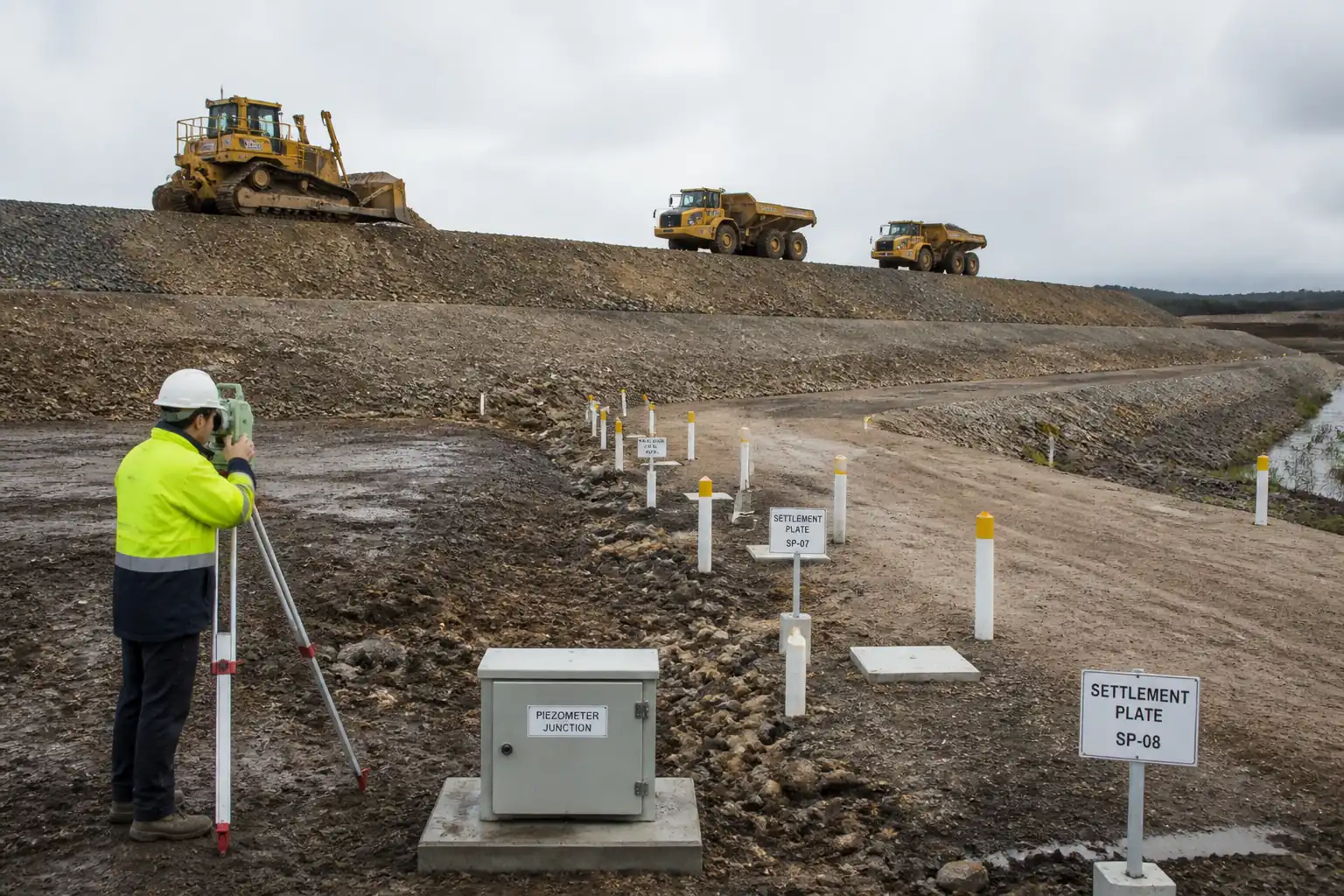
| Settlement Monitoring | Level surveys; readings vs trigger | Within project limits; actions if exceeded [Witness] | Surveyor/Geotech | Monitoring logs |
| As-Built Documentation & Handover | Document completeness | As-builts and compliance matrix accepted [Hold] | Contractor/QA | As-built dossier |
This table is a read-only public reference. Download the PDF or Excel version, or customize this ITP to edit it for your project.
Frequently asked questions
Related method statement
This Inspection and Test Plan is associated with the Method Statement – Vibro-Compaction Works for Granular/Sandy Soils method statement, which describes the step-by-step construction sequence, resources, materials, equipment, safety controls, and environmental controls for this activity.
View the Method Statement – Vibro-Compaction Works for Granular/Sandy Soils method statement →Continue with related inspection, method statement, article, and checklist resources.