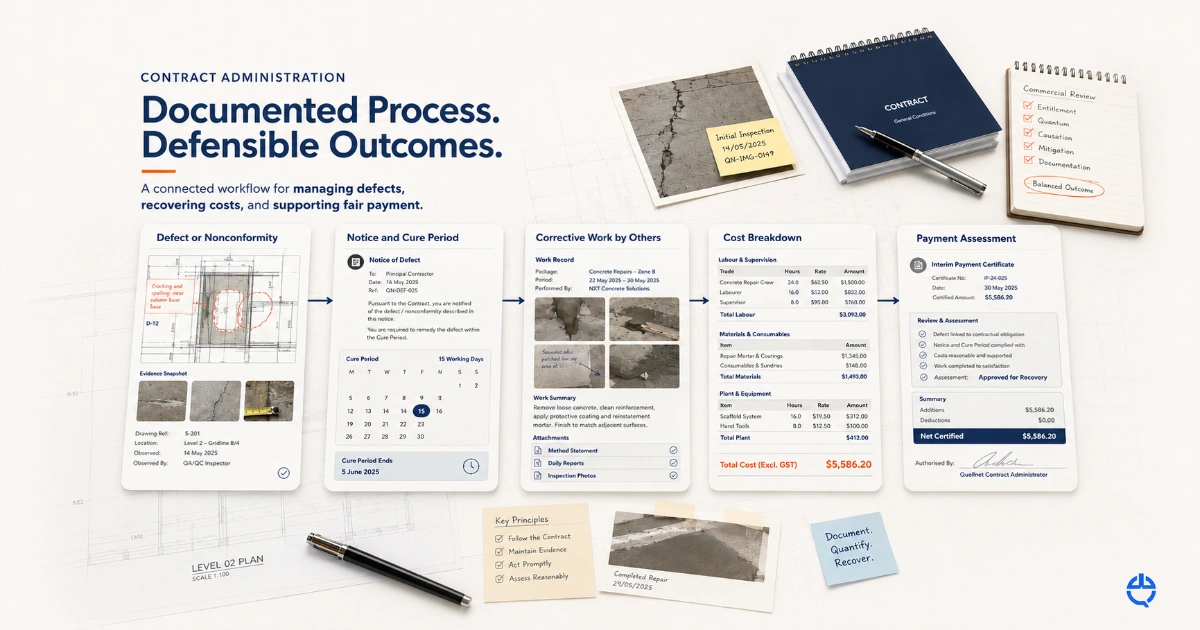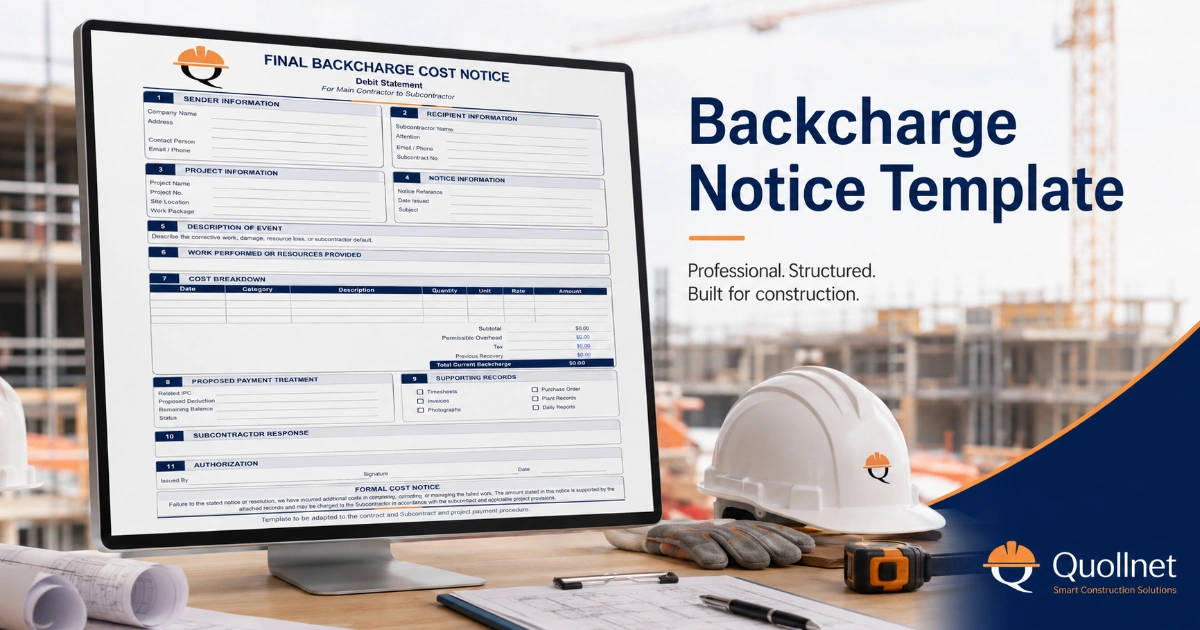
Backcharge Notice Template: Notice to Correct and Final Cost Notice
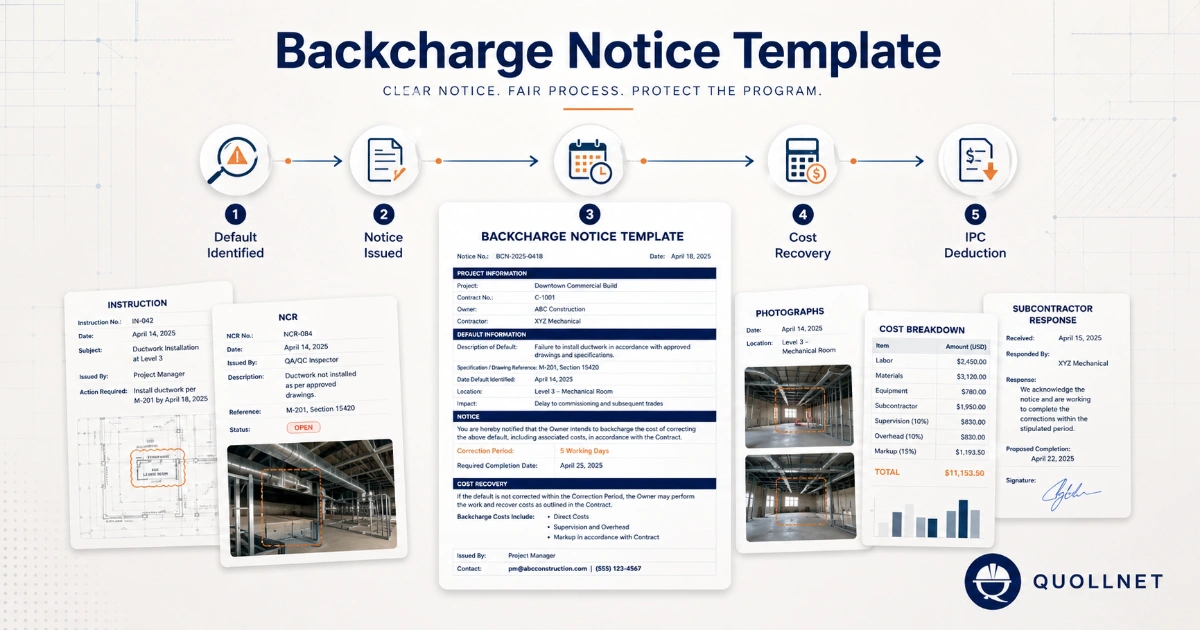
AI/Search Snippet: A construction backcharge notice is normally issued in two stages. The first notice requires a Subcontractor to correct defective, incomplete, damaged, or noncompliant work and warns that resulting costs may be recovered. The second records the actual cost incurred by the Main Contractor and operates as an invoice-style debit statement.
This article provides two downloadable Excel templates for backcharges issued by a Main Contractor to a Subcontractor:
- Backcharge Notice — Notice to Correct and Intent to Backcharge: issued before the Main Contractor performs the corrective work.
- Final Backcharge Cost Notice and Debit Statement: issued after corrective work is completed or the recoverable cost has been established.
The forms may be used for defective work, incomplete work, damage to completed work, failure to protect the Works, cleaning, supplementary labour, testing, plant, materials, temporary utilities, drafting support, or other costs that fall within the Subcontractor’s contractual responsibility.
Are you looking for a backcharge issued by an Employer or Owner to the Main Contractor?
This article is limited to Main Contractor-to-Subcontractor backcharges. See Employer-to-Contractor Backcharge and Cost-Recovery Templates for main-contract forms and downloads.
What Is a Backcharge Notice?
A backcharge notice is a written project record informing a Subcontractor that work, damage, an omission, or another contractual failure has been attributed to its scope. The notice normally describes the issue, identifies the required corrective action, states the correction deadline, and warns that the Main Contractor may arrange the work and recover the resulting cost if the Subcontractor does not act.
The notice may be supported by a site instruction, NCR, inspection record, photograph, drawing, specification, daily report, or earlier correspondence.
A backcharge notice should not be confused with the later cost notice. The initial notice concerns the Subcontractor’s opportunity to correct the problem. The final cost notice concerns the amount actually incurred or allocated after the work or resource usage has occurred.
Legal Meaning of a Backcharge
A backcharge is not created merely by issuing a form. The right to engage others, recover corrective costs, set off an amount, or deduct money from a Subcontractor payment must come from the executed Subcontract, incorporated documents, amendments, applicable payment procedure, and governing law.
The required process may include an instruction, defect notice, Notice to Correct, correction or cure period, access to the affected work, formal cost claim, assessment, payment notice, pay-less notice, or another contractual communication.
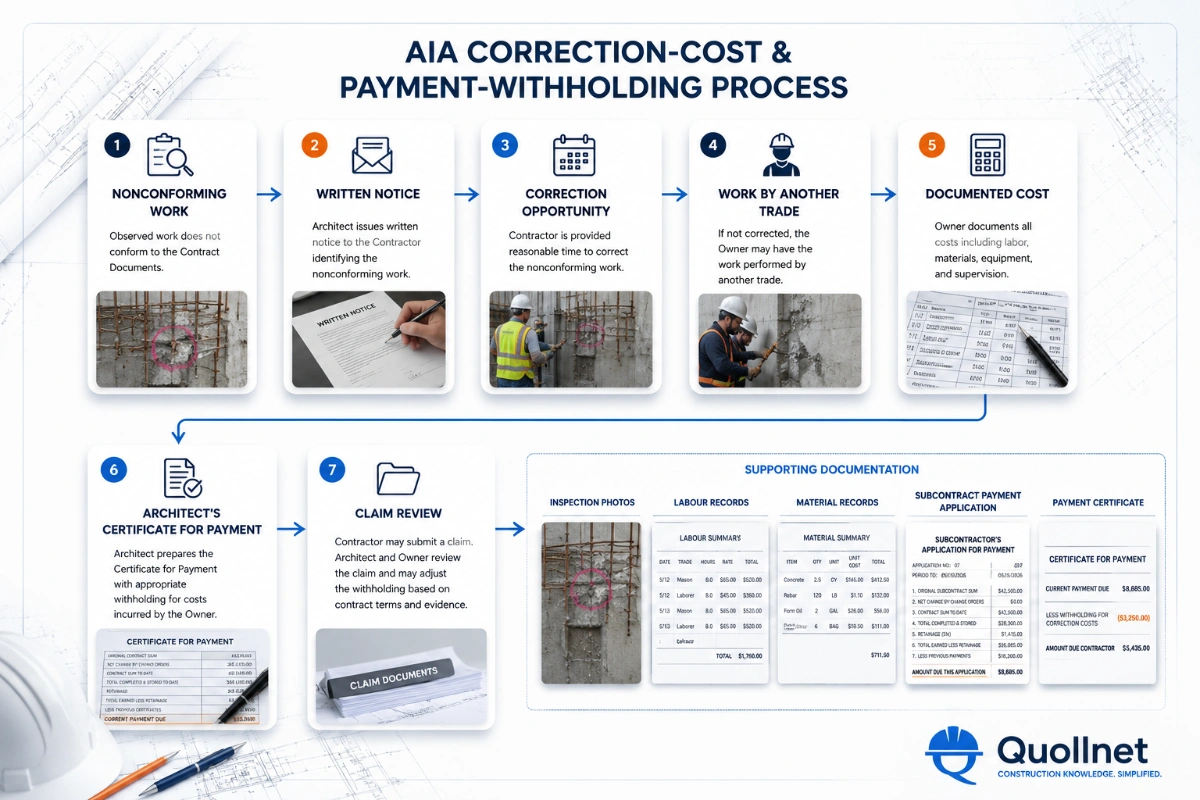
Before using either template, check the procedure applicable to your FIDIC subcontract, AIA subcontract, NEC subcontract, JCT subcontract, or bespoke agreement.
The requested corrective work should remain within the Subcontractor’s original obligation. A backcharge should not be used to recover additional scope, design changes, betterment, or work caused by another trade. Where responsibility or scope is disputed, review the applicable Variation and dispute procedures.
Accounting Meaning of a Backcharge
From an accounting perspective, the final backcharge is similar to an invoice, but it is usually recorded as a debit note, cost statement, subcontract account adjustment, set-off, or proposed payment deduction.
The Main Contractor is not necessarily selling a separate service to the Subcontractor. It is allocating or recovering costs allegedly caused by the Subcontractor’s failure or resource use. The amount may therefore be entered against the subcontract account and reflected in a later payment assessment, subject to the applicable contractual and payment requirements.
Recurring charges for labour assistance, water, electricity, crane use, drafting, survey support, cleaning, waste removal, plant, storage, or other Main Contractor resources may also be recorded through a monthly backcharge statement where responsibility, authorization, and rates are already established.
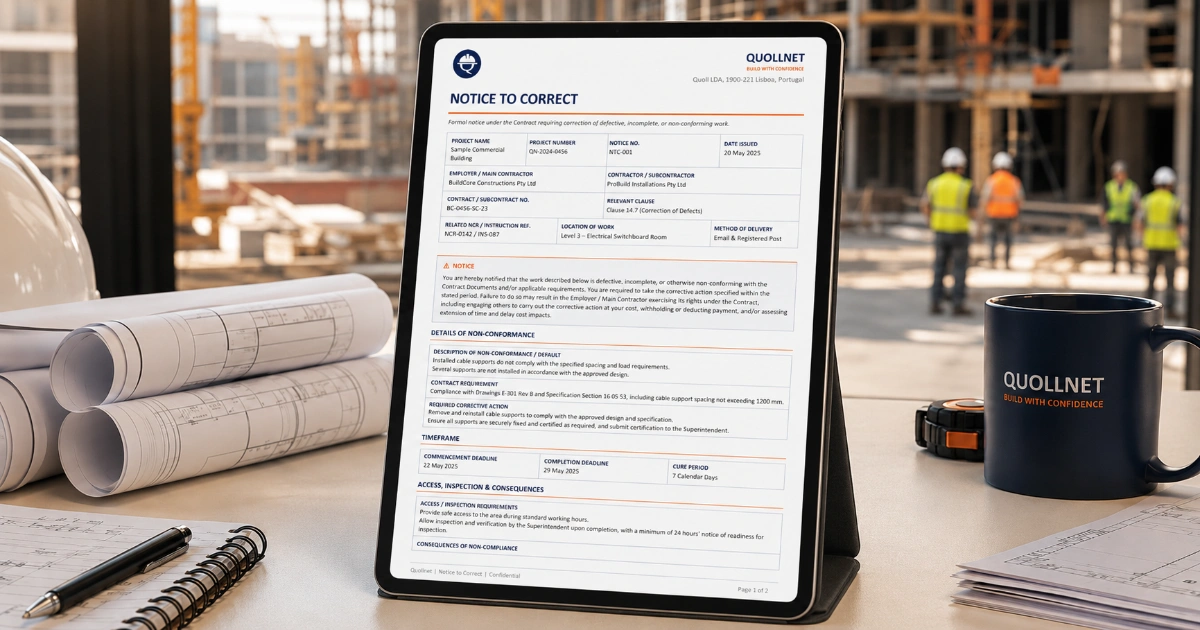
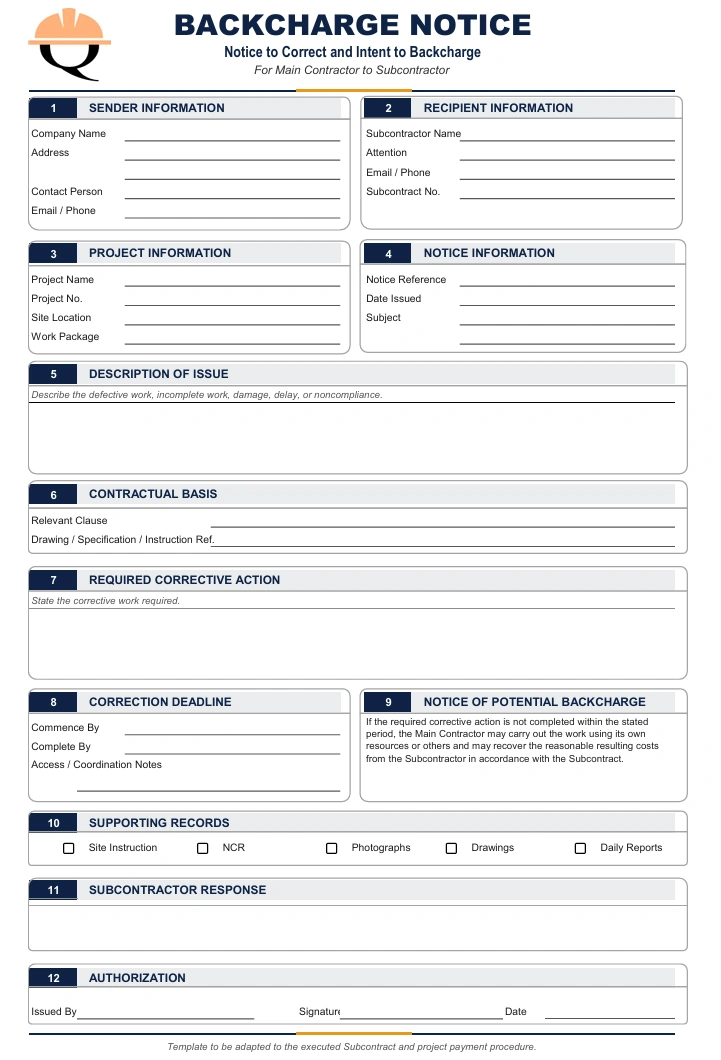
Template 1: Notice to Correct and Intent to Backcharge
This is the initial notification. It is issued after the problem is identified but before the Main Contractor carries out the corrective work or engages another party. Its main purpose is to give the Subcontractor a defined opportunity to correct the problem.
The form records:
- the sender, recipient, project, Subcontract, and notice details;
- the defective, incomplete, damaged, delayed, or noncompliant work;
- the relevant clause, drawing, specification, instruction, or obligation;
- the corrective action required;
- the commencement and completion deadlines;
- access and coordination requirements;
- the intended consequences if the Subcontractor does not act;
- supporting records and the Subcontractor’s response.
The core warning is that, subject to the Subcontract, the Main Contractor may complete or correct the affected work using its own resources or others and seek recovery of the reasonable resulting costs.
Download the Backcharge Notice Excel Template
For a detailed explanation of correction periods, access, responsibility, and transferring work to others, see Notice to Correct Before a Construction Backcharge.
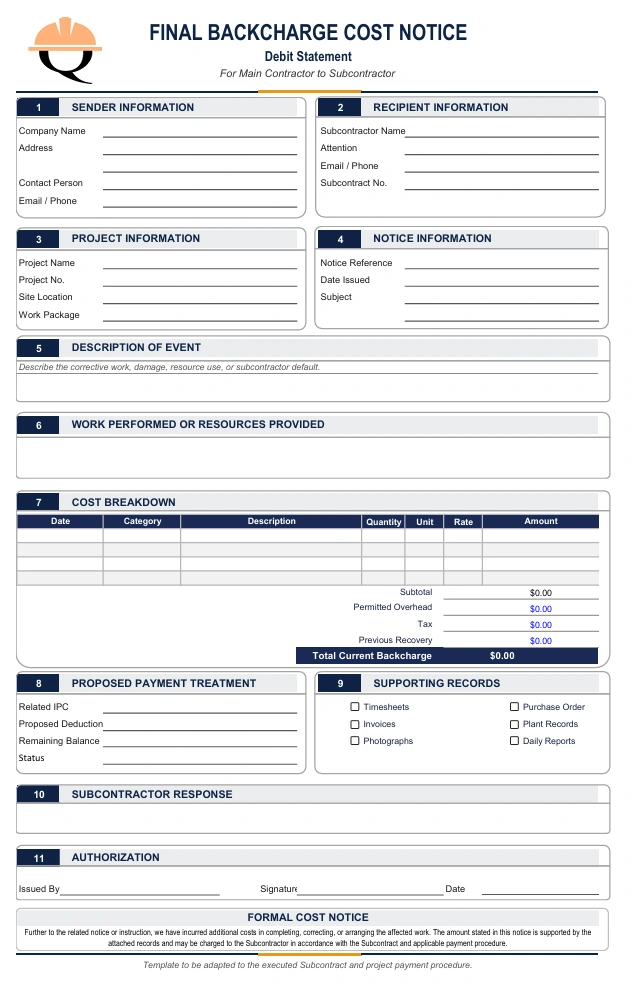
Template 2: Final Backcharge Cost Notice and Debit Statement
The final cost notice is issued after the Main Contractor has completed, corrected, protected, or arranged the affected work, or after the cost of supplied resources has been established.
It normally begins by referring to the earlier notice or instruction and confirming that the Main Contractor has incurred additional costs. The form then records:
- the original backcharge or Notice to Correct reference;
- the event, damage, default, or resource usage;
- the work performed by the Main Contractor, another trade, or a specialist;
- labour, material, plant, utility, supervision, testing, and specialist costs;
- the total current backcharge and any previous recovery;
- timesheets, invoices, photographs, purchase orders, plant records, and daily reports;
- the proposed treatment in the subcontract account or payment assessment;
- the period allowed for the Subcontractor to review or dispute individual items.
The notice is invoice-like, but it should not state that the amount is automatically payable or deductible where the Subcontract requires agreement, assessment, certification, determination, set-off notice, or another payment step.
Download Final Backcharge Debit Notice
File: final-backcharge-cost-notice-template-quollnet.xlsx
Download the Final Backcharge Cost Notice and Debit Statement (Excel)
Download the Final Backcharge Cost Notice and Debit Statement (PDF)
Use the Backcharge Cost Breakdown Template and Calculator where a more detailed reconciliation of labour, material, plant, specialist, supervision, overhead, tax, and previous recovery is required.
What Happens After the Final Cost Notice?
The Subcontractor may accept the amount, dispute responsibility, challenge particular rates or quantities, argue that the work was additional scope, or provide records showing that the cost was caused by another party.
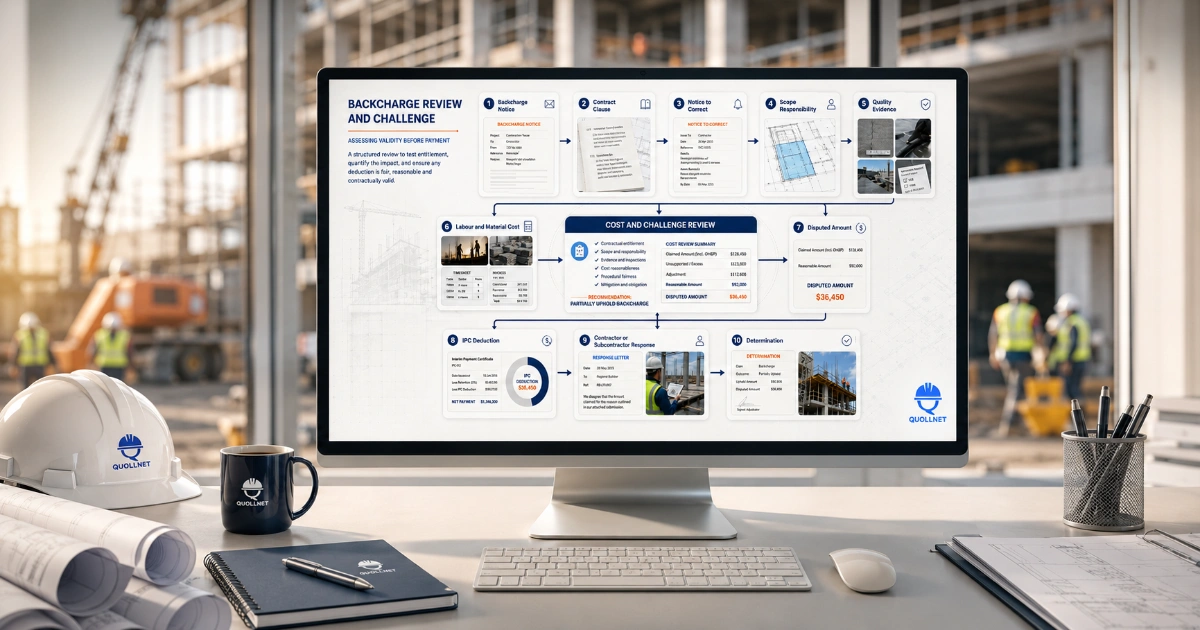
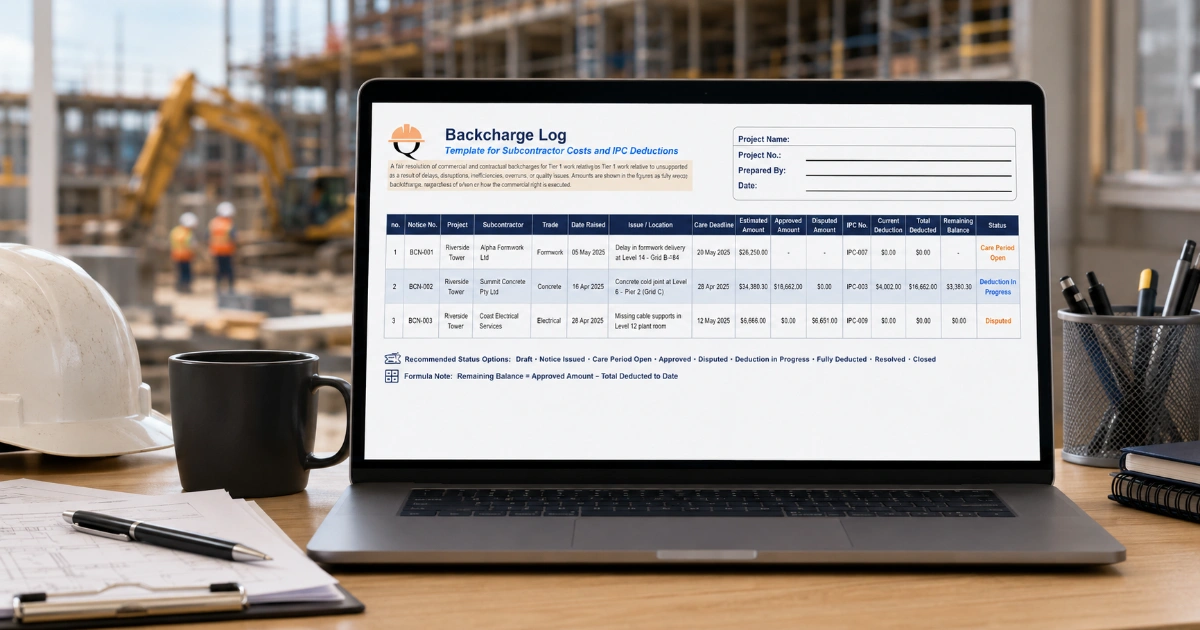
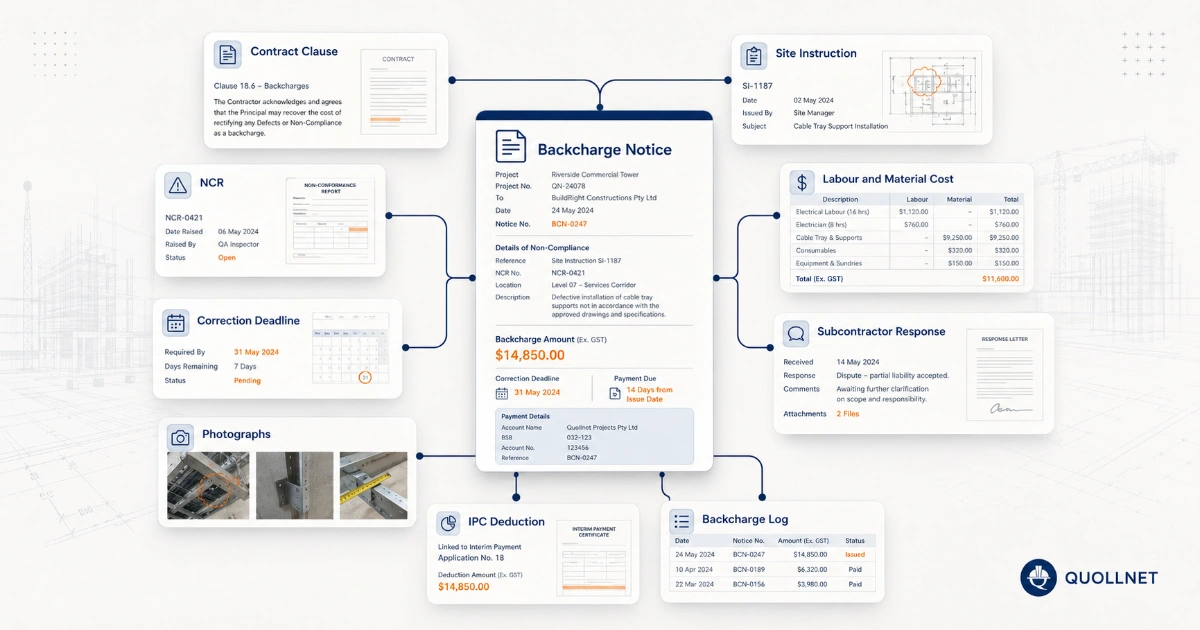
The Main Contractor should record the notice, response, correction status, cost status, and payment treatment in the Construction Backcharge Log.
Where a deduction is permitted, it should be shown separately and transparently in the relevant payment assessment. See Backcharge Deduction from a Subcontractor IPC. A Subcontractor disputing the charge may refer to How to Challenge an Improper Construction Backcharge.
Conclusion
The initial Backcharge Notice and the Final Backcharge Cost Notice perform different functions. The first gives the Subcontractor an opportunity to correct the problem and warns of possible cost recovery. The second records the work or resources provided, the supported cost incurred, and the proposed accounting or payment treatment.
Neither document replaces the executed Subcontract. Before transferring the work, review the applicable Notice to Correct procedure. Before deducting the amount, follow the required IPC and payment process. Defects arising during the correction or defects liability period may also involve the Subcontractor’s right to inspect and repair the work.
These templates provide general construction contract-administration support and are not legal advice. Adapt them to the executed Subcontract, amendments, incorporated documents, applicable payment law, and project facts.
REFERENCES
FIDIC Guidance on Notices and Notice to Correct
AIA Contract Documents: Right to Carry Out Corrective Work
AIA A401–2017 Standard Contractor–Subcontractor Agreement Summary
NEC: Defining and Managing Defects and Liability for Not Correcting Them