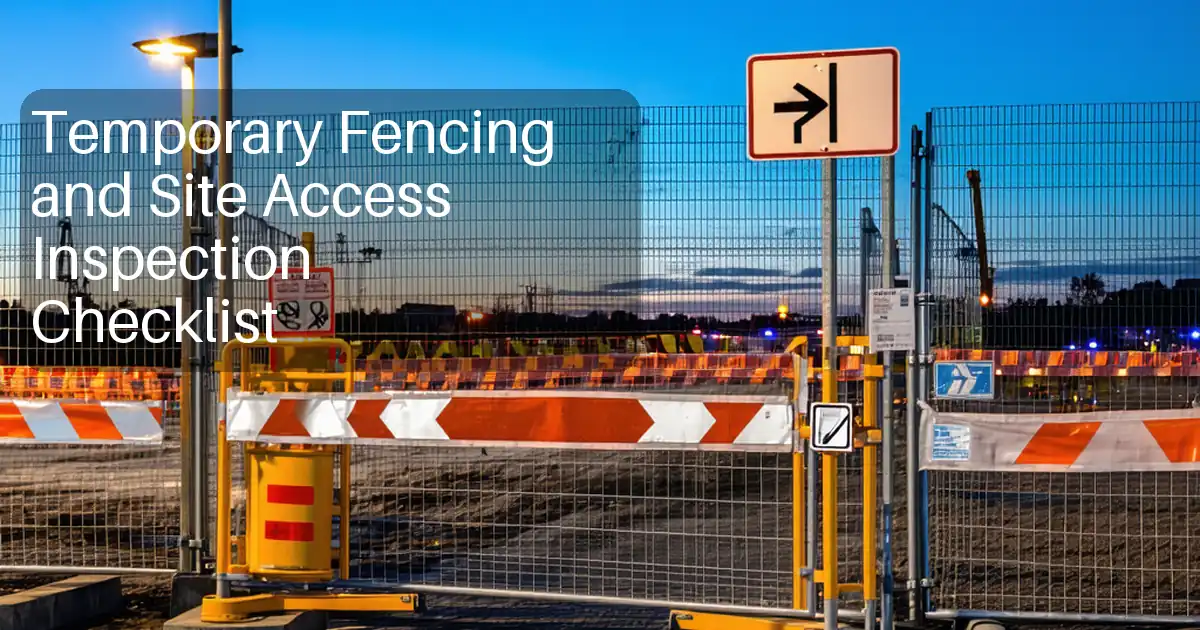

Method Statement: Site Main Access Gate Traffic Control for Heavy Construction Vehicles – Method Statement
AI-assisted method statement with matching ITP, PDF download, and Excel export.
More than a static template
Unlike a downloadable Word or PDF template, this method statement is an AI-assisted editable starting point connected directly to a matching Inspection and Test Plan. Every section is structured, project-adaptable, and ready to export.
- AI-assisted drafting — Customize every section with AI for your specific project scope.
- Linked ITP — A matching inspection and test plan is generated alongside the method statement.
- Multiple export formats — Download as a formatted PDF or editable Excel spreadsheet.
- Editable starting point, not a final document — Review, verify, and adjust all content against your project requirements before use.
Static template vs. Quollnet workflow
| Feature | Static template | Quollnet |
|---|---|---|
| Project-specific content | Manual fill-in required | AI-assisted customization |
| Linked ITP | Separate document, no link | Matching ITP included |
| Export formats | Usually PDF only | PDF and Excel |
| Structured sections | Free-form layout | 13 standardized sections |
| Saved to your account | Local file only | Cloud-saved, reusable |
| Content accuracy | You verify everything | AI-assisted, you still verify |
| Cost | Often free but time-intensive | Free to customize and download |
What you can customize
When you save this method statement to your account, every section becomes editable. The following 13 sections are included:
- Scope — Defines the activity and its boundaries.
- References — Standards, specifications, and drawings.
- Responsibilities — Roles and accountabilities.
- Resources — Labour, plant, and equipment summary.
- Materials — Materials and compliance requirements.
- Equipment — Tools and equipment details.
- Prerequisites — Hold points and pre-conditions.
- Method sequence — Step-by-step construction sequence.
- Safety controls — HSE risk controls and PPE.
- Environmental controls — Environmental mitigation measures.
- QA/QC — Quality inspection and test requirements.
- ITP — Inspection and Test Plan table (has its own page).
- Attachments — Referenced drawings and documentation.
Why this method statement is used
This method statement is used to define and communicate the approved procedure for carrying out method statement: site main access gate traffic control for heavy construction vehicles on site. It ensures the work is planned in advance, the correct resources and controls are in place, and all personnel understand responsibilities, sequence, quality requirements, and safety controls before work begins. It aligns site execution with the documented scope and acceptance expectations.
Who uses this method statement
This method statement is used by contractors, site supervisors, project engineers, QA/QC engineers, HSE officers, consultants, and client representatives. It serves as a shared reference for planning, execution, supervision, inspection, and approval of the activity on site.
When it is prepared and submitted
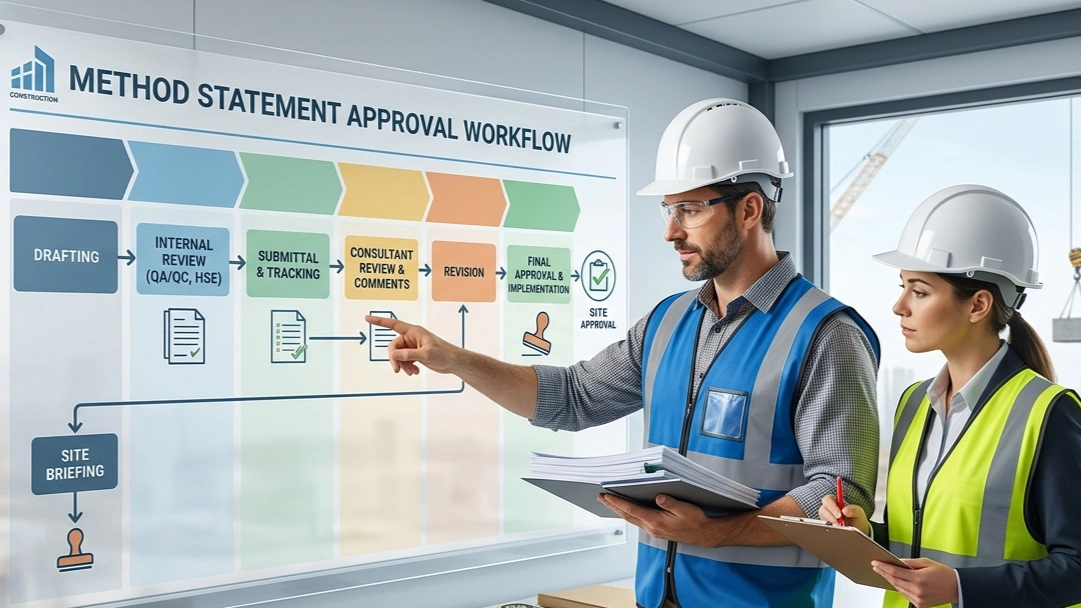
The method statement is prepared before the work activity starts and submitted as part of the pre-construction documentation package for review and approval.
Who reviews or approves it
The method statement is usually submitted to the client representative, consultant, resident engineer, or project management consultant for review and approval before the work commences.
Important approval note
This method statement is an AI-assisted editable starting point, not a pre-approved document. Before use on any project, all content must be reviewed and approved by the relevant parties (superintendent, principal contractor, or client representative) in accordance with your contract and project quality plan.
For example: if your specification requires a departure from a referenced standard, that departure must be documented and approved separately — this method statement will not capture that automatically. Always verify against your applicable drawings, specifications, and regulatory requirements.
Method statement content
Scope
Overview
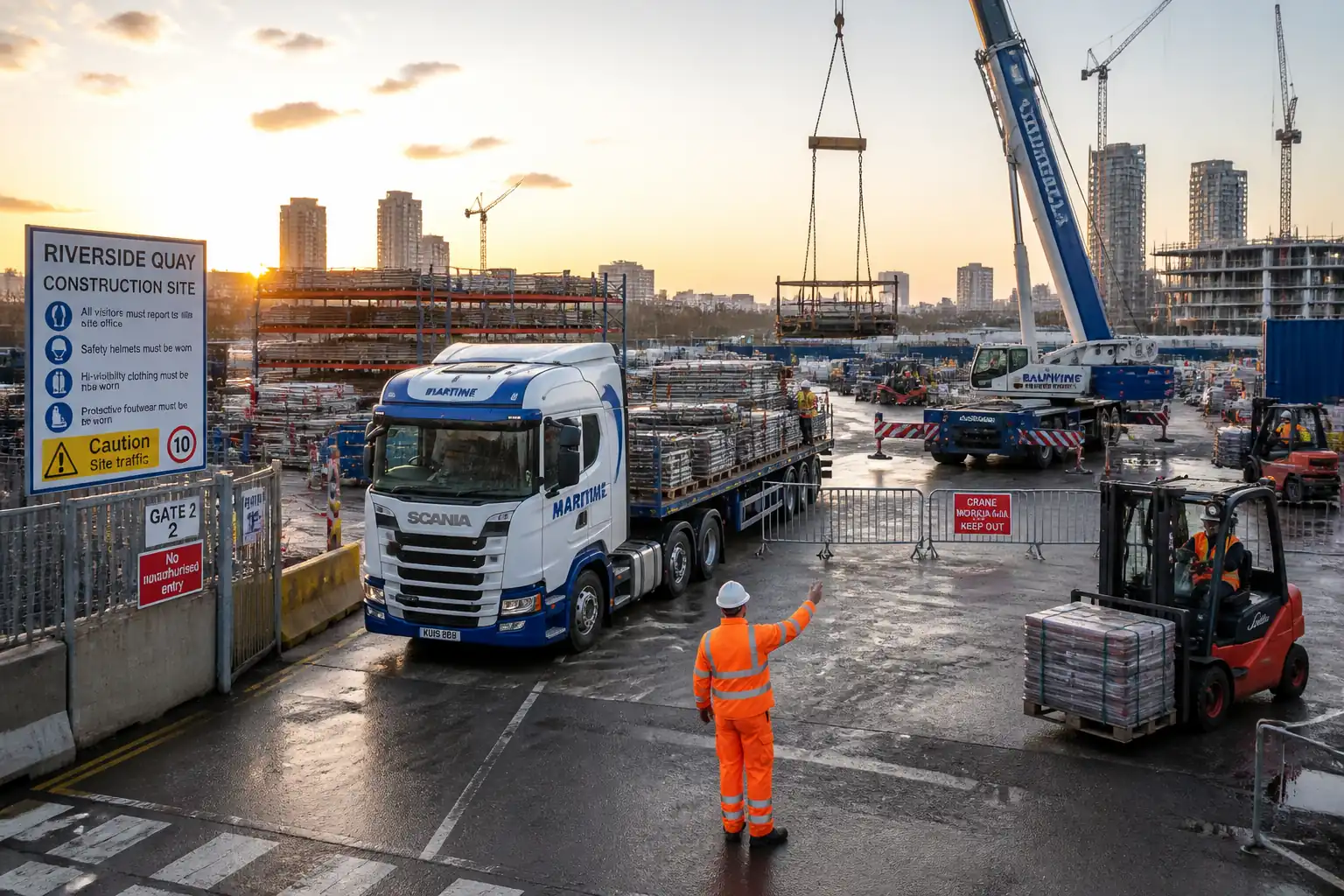
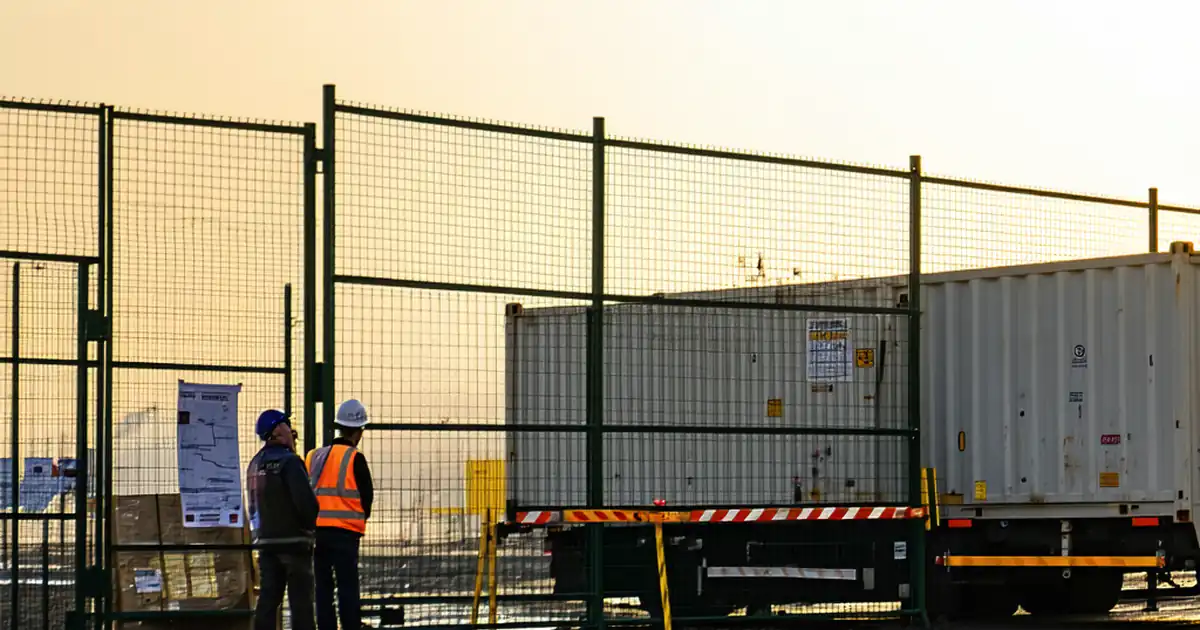
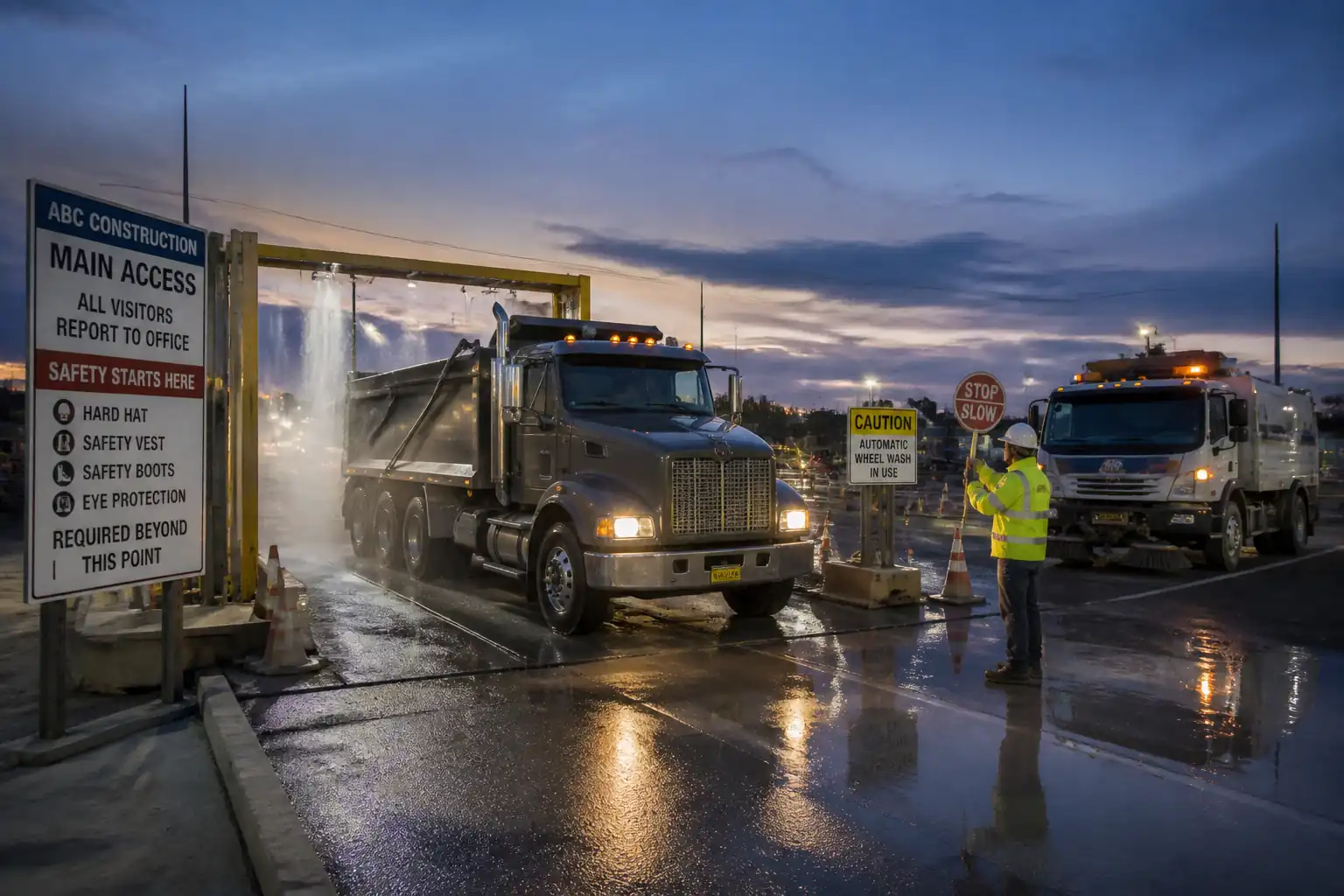
This method statement defines the traffic management, wheel-wash operation, mud tracking mitigation, and logging procedures for heavy construction vehicles (HCVs) using the main site access gate. It covers:
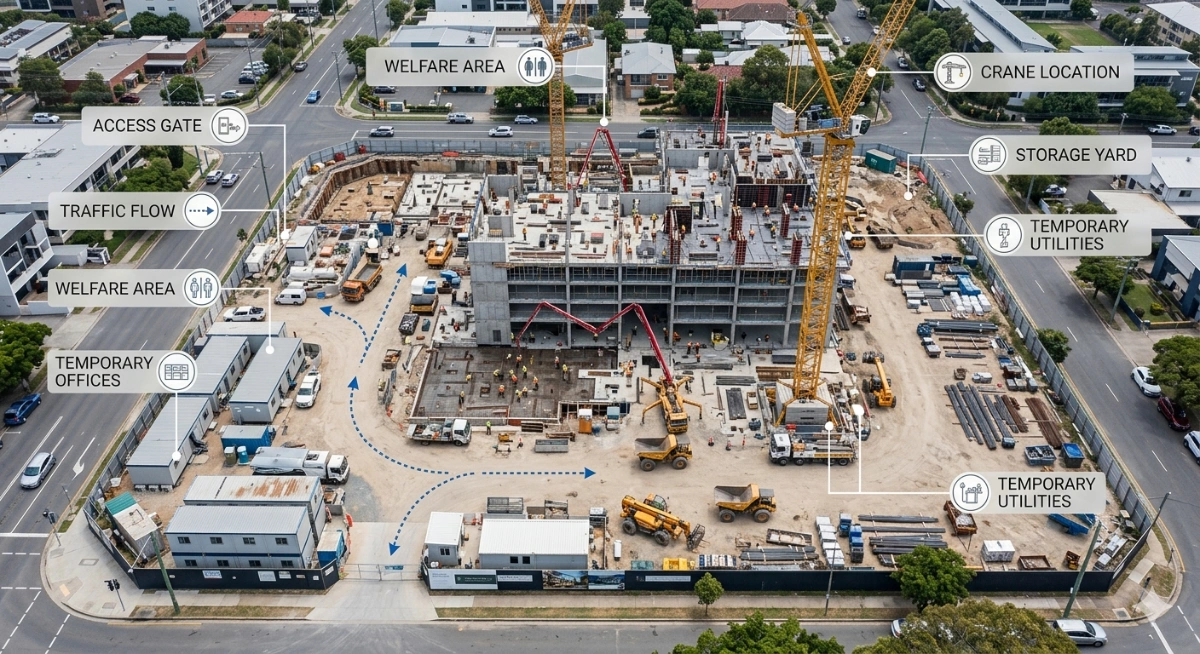
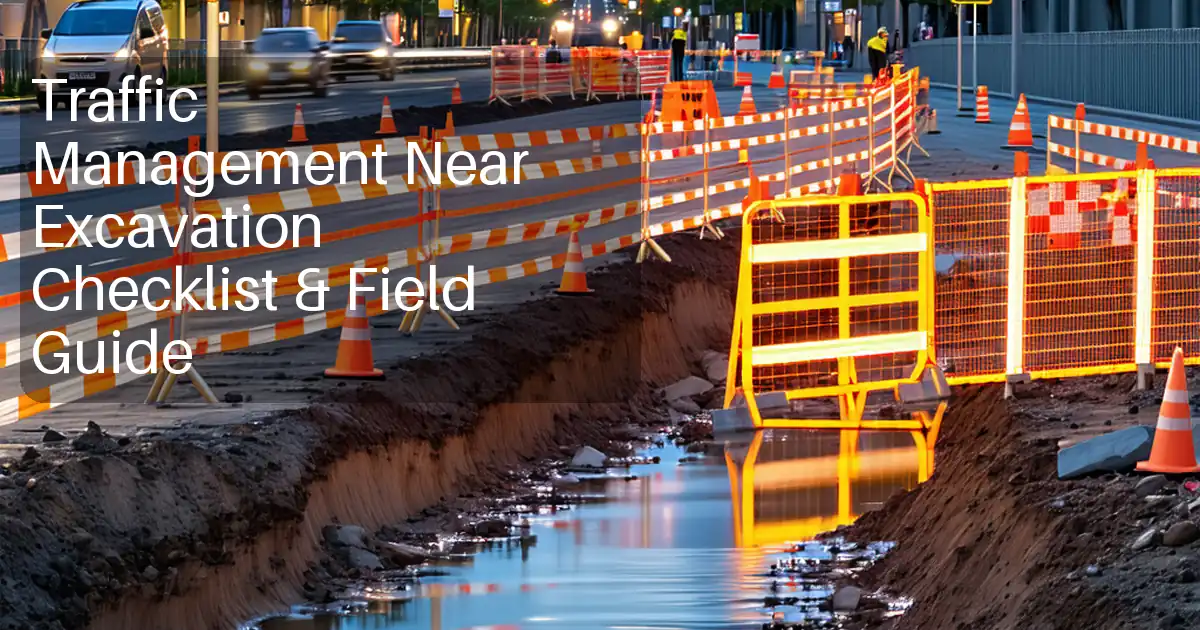
- Temporary Traffic Management (TTM) layout at gate interface with public roadway.
- Deployment and operation of fixed or modular wheel-wash system and rumble grid.
- Tire cleaning inspection protocol and mud tracking prevention/response.
- Flagger/banksman positioning and communication protocols.
- Vehicle entry/exit logging and queuing controls to avoid intersection blockage.
- Environmental controls for wheel-wash water, sediment, and street cleanliness.
- QA/QC inspections, records, and ITP.
Exclusions
- Long-haul route management beyond 500 m from site unless otherwise specified.
- Permanent roadway works (managed under separate method).
Work Constraints
- Works to comply with authority permits, approved Traffic Control Plan (TCP), and local regulations. Peak-hour restrictions may apply [Verify per Traffic Authority Permit].
- No operations during severe weather (visibility < 150 m, ice on wash platform, or flood risk) without additional controls.
References
| Document Type | Reference / Number | Revision | Notes |
|---|---|---|---|
| Standard | Manual on Uniform Traffic Control Devices (MUTCD) or local Traffic Signs Manual (e.g., UK Chapter 8) [Verify per jurisdiction] | Advance warning signage, tapers, flagging procedures, and device placement distances. | |
| Standard | ISO 39001 Road Traffic Safety Management Systems | Framework for managing road-traffic safety risks at site interfaces. | |
| Standard | ISO 45001 Occupational Health & Safety Management Systems | Worker safety, roles, training, and risk control verification. | |
| Standard | ISO 14001 Environmental Management Systems; IFC EHS Guidelines – Construction | Environmental controls for water, sediment, noise, and dust from gate operations. | |
| Guideline/Permit | Local Environmental Discharge Permit / Stormwater Pollution Prevention Plan (SWPPP) or equivalent [Verify per local law] | Wheel-wash water reuse/discharge, TSS limits, pH limits, settlement and filtration requirements. | |
| Standard | EN 1317 (temporary safety barriers) and EN 12899 (fixed vertical road traffic signs) [if applicable] | Conformity of barriers and signs used at gate frontage. |
Responsibilities
| Role | Responsibility | Name / Party |
|---|---|---|
| PM | Project Manager | Main Contractor |
| TSC/TWC | Traffic Safety Coordinator (TSC) / Temporary Works Coordinator (TWC) | Main Contractor |
| GS | Gate Supervisor (GS) | Main Contractor |
| Flagger/Banksman | Flaggers/Banksmen (accredited) | Main Contractor or Traffic Subcontractor |
| Env Tech | Environmental Technician / Wheel-Wash Operator | Main Contractor |
| Sweeper Op | Street Sweeper Operator (licensed) | Approved Vendor |
| Security | Security Clerk / Gatehouse | Main Contractor |
| QA/QC & HSE | QA/QC Engineer & HSE Officer | Main Contractor |
Resources
| Resource Type | Description | Quantity | Remarks |
|---|---|---|---|
| Personnel | Traffic management leadership and approval liaison | 1 | |
| Personnel | Gate supervision and coordination | 1 per shift | |
| Personnel | Flagging / banksman at public interface and in-yard reversing | 2–4 [Verify per TCP] | |
| Personnel | Wheel-wash operation, water testing, sediment handling | 1–2 | |
| Personnel | Sweeper operation (vacuum broom) | As scheduled or on-call | |
| Personnel | Security gatehouse for logging and documentation | 1 per gate |
Materials
| Material | Specification / Grade | Quantity | Remarks |
|---|---|---|---|
| Temporary road signs (advance warning, truck turning) | Compliant with MUTCD/Chapter 8 or local code [Verify] | As per TCP | |
| Cones, delineators, and barriers | EN 1317 or equivalent for barriers; cones to local speed-road class | As per TCP | |
| Silt socks, drain guards, geotextile | UV-stable geotextile; flow-compatible drain inserts | Per gate layout | |
| Spill kits (oil and general purpose) | Absorbent pads, booms, disposal bags; 120 L min each kit | 2 kits at gate |
Equipment
| Equipment | Capacity / Type | Quantity | Inspection Required |
|---|---|---|---|
| Wheel-wash system (modular or fixed) | Pump 50–150 L/min at 3–5 bar [Verify]; platform length 6–12 m; rumble grid ≥ 6 m | 1 set | Commissioning test required |
| Water storage tank / bowser | 10–30 m³ [Verify] | 1 | |
| Settlement tank/filtration unit | Two-stage settlement; sludge storage ≥ 1 m³ [Verify] | 1 | |
| Vacuum street sweeper | Road-legal; water spray suppression | On-call | |
| LED lighting towers | ≥ 50 lux at gate apron [Verify] | As required | |
| Two-way radios with headsets | UHF/VHF licensed frequencies [Verify] | 1 per operative |
Prerequisites
- Approvals: Signed Traffic Control Plan (TCP) approved by Road/Traffic Authority and Engineer. Permit to work on/near highway [Verify].
- Utilities: Confirm no temporary works encroach on buried/overhead utilities. Mark exclusion zones.
- Baseline survey: Photographic record of pavement condition 100 m either side of gate; record existing drainage inlets.
- Notifications: Neighbors, schools, and public transport authorities informed of start date, hours, and contact details.
- Training: Flagger accreditation valid; banksman and drivers briefed on hand signals and radio protocol; environmental and spill response training completed.
- Equipment readiness: Wheel-wash installed, commissioned; settlement tank cleaned; pumps and GFCI tested; backup manual pressure washer available.
- Weather: Freeze protection and anti-slip mats installed if ambient < 3°C; suspend wash during electrical storms; additional sweeping plan for wet days.
- Emergency plan: Incident response plan for traffic collisions or pollution events; emergency contact board displayed at gate.
Method Sequence
| Step | Activity | Description | Responsibility | Inspection / Hold Point |
|---|---|---|---|---|
| 1 | Set out and install TTM at gate | Deploy signs, cones, barriers, and tapers per approved TCP. Typical advance warning sign spacing: 60–200 m depending on approach speed (urban low-speed to rural higher-speed) [Verify per local code]. Provide no-parking zone 30–50 m each side of gate to preserve sightlines. | TSC / Traffic Subcontractor | TCP conformance check |
| 2 | Establish queuing and buffer zone inside site | Mark internal holding area sized for peak vehicles so no queue extends onto public road. Minimum buffer from gate: first truck stop line ≥ 10 m inside gate; turning radius clear of pedestrian routes. | Gate Supervisor | Layout verification |
| 3 | Install wheel-wash and rumble grid | Place rumble grid (≥ 6 m) before spray bay to break up debris. Install spray bars to cover tire sidewalls and tread; fit collection sump draining to settlement tank. Provide manual lance bay post-wash for stubborn debris. | Env Tech / M&E | Commissioning |
| 4 | Protect drainage | Install silt socks/geotextile around nearby gullies; place drain guards on first 2 inlets downstream. Position spill kit and bund wheel-wash area. | Env Tech | Drain protection check |
| 5 | Prestart briefing and comms test | Toolbox talk for all gate staff and drivers: signals, radio channel, speed limit (≤ 10 km/h inside gate [Verify]), right-of-way, and stop line positions. Test radios and backup whistles/air horns. | Gate Supervisor / HSE | Attendance record |
| 6 | Vehicle entry protocol | Flagger authorizes entry only when buffer is clear. Security logs vehicle ID, company, driver, time, load, and intended exit. Direct to holding area if gate occupied. | Flagger / Security | Spot audits |
| 7 | Wheel-wash operation | Vehicle traverses rumble grid then drive-through wash at ≤ 5 km/h. If visual debris remains, use manual lance targeting tread grooves and sidewalls. Allow 10–20 s drain time on textured apron. | Wheel-Wash Operator | Process check every 30 min |
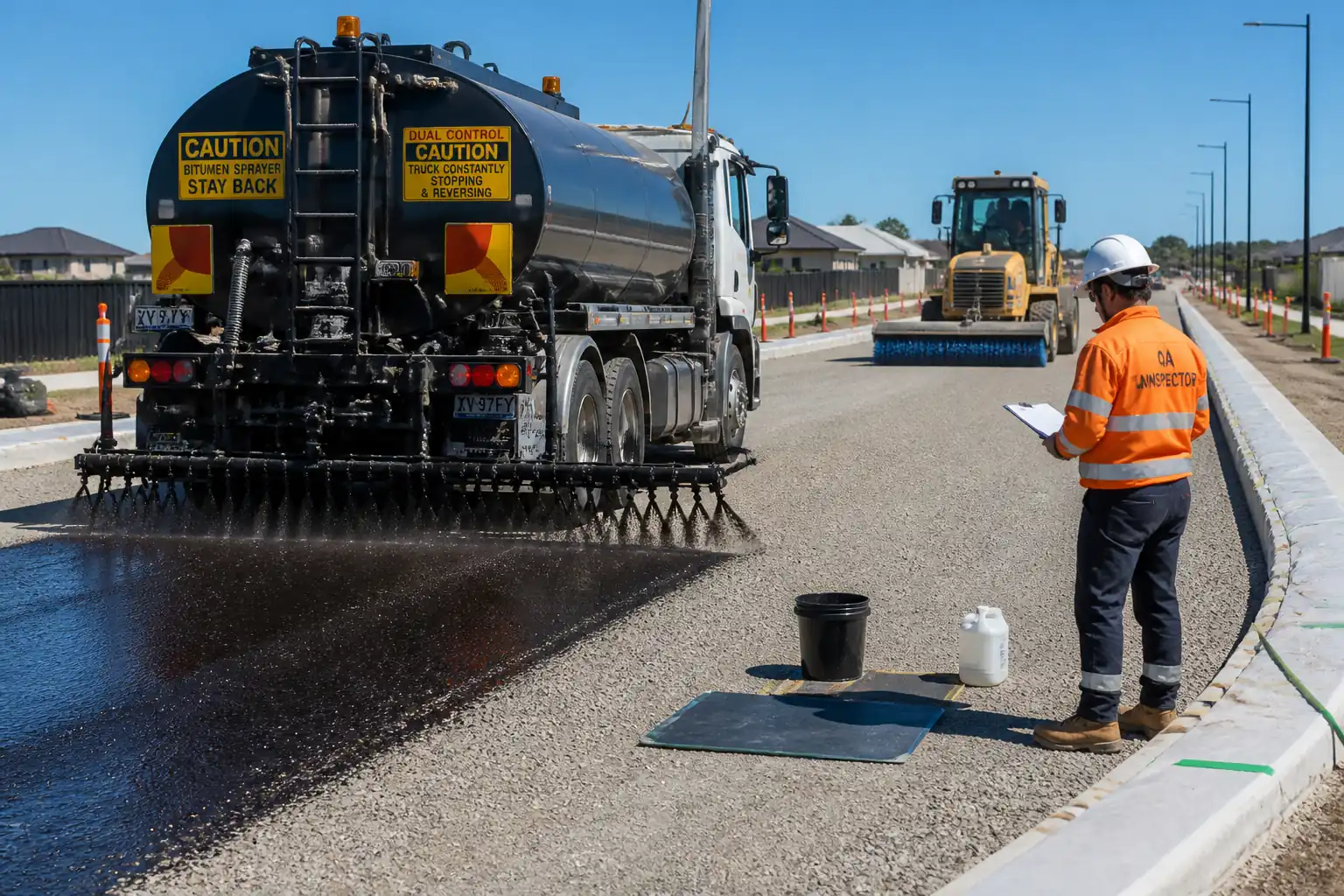
| 8 | Tire cleanliness inspection at exit | Inspector checks tires on contrast mat or plate. If > 5% of tread imprint shows visible soil film or any clod > 10 mm, rewash. Record pass/fail. | Env Tech / Gate Inspector | 100% vehicle check |
| 9 | Exit to public road with flagger control | Flagger confirms clear gap in traffic and signals exit. Second flagger positioned upstream if sight distance limited. Do not permit exit if queue would block adjacent intersection, pedestrian crossing, or bus stop. | Flaggers / GS | Supervisor oversight |
| 10 | Mud tracking monitoring and sweeping | Inspect 0–200 m road section downstream every 60 min (every 15 min during rain). Trigger sweeper if any visible track-out beyond property line or cumulative length of deposits > 5 m within lane. Immediate spot cleanup at drains. | Env Tech / Sweeper Op | Patrol log |
| 11 | Water quality and system maintenance | Test wheel-wash recirculated water daily for TSS and weekly for pH. Desludge settlement tank when sludge volume ≥ 30% capacity. Dispose sludge via licensed waste carrier. | Env Tech / Maintenance | Water tests; sludge depth gauge |
| 12 | Demobilization or shift close | Remove temporary signs only when gate closed. Final sweep and drain check. Secure wheel-wash, isolate power, and lock gate. File logs and daily report. | GS / Security | Closeout check |
Health, Safety and Welfare Controls
Principal Hazards and Controls
- Hazard: Interaction with live public traffic; vehicle strikes.
- Likely consequence: Serious injury/fatality to workers or public.
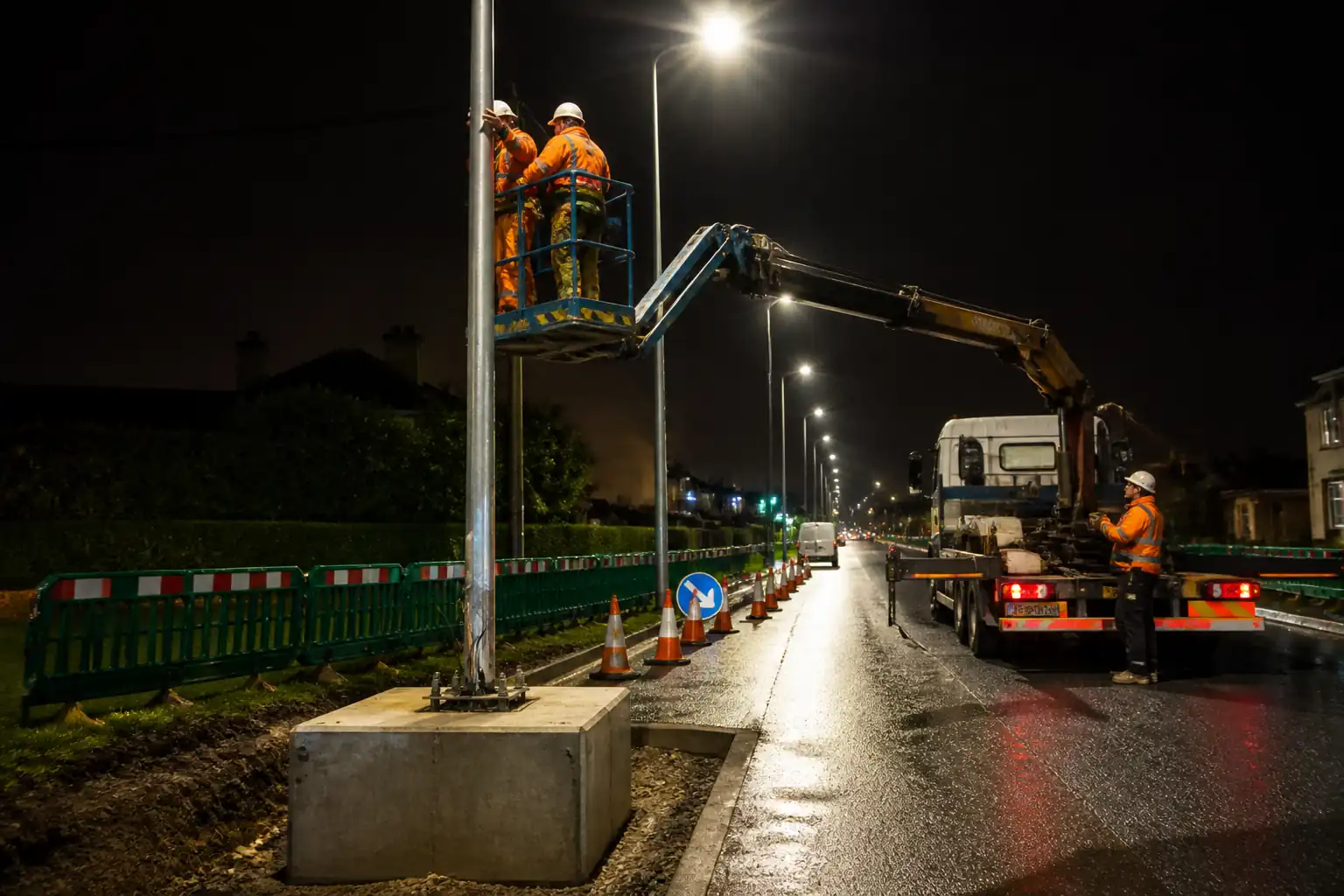
- Engineering/procedural control: Approved TCP; physical barriers; advance warning signs and cones per code; minimum sight distance preserved; two-stage flagging at restricted visibility; internal buffer so no public queue. Use speed limit ≤ 10 km/h in gate area [Verify].
- Required PPE: Hi-vis class 3, safety boots, helmet, gloves, eye protection.
- Collective preventive measure: Segregated pedestrian walkways; barrier-protected refuges for flaggers; illuminated signage at night.
-
Inspection/permit/supervision: Daily TTM inspection by TSC; permit to work on/near highway; supervision by Gate Supervisor.
-
Hazard: Reversing HCVs and blind spots inside gate.
- Likely consequence: Crush injuries, vehicle damage.
- Controls: Banksman-only reversing policy; dedicated reversing pads; convex mirrors; reversing alarms and strobes; no-go zones painted/railed.
- PPE: Hi-vis class 3, safety boots, helmet, radio headset.
- Collective: Physical barriers and marked exclusion zones.
-
Inspection/permit: Banksman accreditation; pre-use vehicle safety checks; supervisor spot-checks.
-
Hazard: Slip/trip on wet wheel-wash apron and rumble grid.
- Consequence: Falls, sprains.
- Controls: Anti-slip surfacing; grating with compliant gaps; housekeeping to remove algae/silt; handrails where elevated; keep hoses routed overhead or protected.
- PPE: Slip-resistant boots, gloves.
- Collective: Drainage and bunding to prevent pooling; dedicated walkways.
-
Inspection/permit: Daily apron inspection; weekly maintenance checklist.
-
Hazard: High-pressure water and electrical equipment.
- Consequence: Lacerations, electrocution.
- Controls: Guarded spray bars; lockable control panel; GFCI/RCD protection; IP-rated equipment; pressure relief valve; safe distance and shields for manual lancing.
- PPE: Eye/face protection, waterproof gloves, arc-rated if specified, hearing protection if >85 dB.
- Collective: Emergency stop buttons; exclusion while lancing.
-
Inspection/permit: Electrical inspection/tagging; operator training; permit to use pressure washer [Verify per HSE plan].
-
Hazard: Night/low-visibility operations.
- Consequence: Traffic collisions.
- Controls: Lighting towers providing ≥ 50 lux at gate without glare; retroreflective signs; additional conspicuity on workers.
- PPE: Hi-vis class 3, head torch if required.
- Collective: Temporary illumination of approach signage.
-
Inspection/permit: Night-work permit; lux level checks.
-
Hazard: Manual handling of barriers and drain guards.
- Consequence: Strains, crush injuries.
- Controls: Team lifts, trolleys; modular lighter devices; pinch-point awareness.
- PPE: Gloves, boots.
- Collective: Use water-filled barriers where suitable.
-
Inspection/permit: Manual handling training verified.
-
Hazard: Public interface and aggressive behavior.
- Consequence: Conflict, distraction leading to accidents.
- Controls: Do not engage beyond protocol; escalate to GS; install CCTV; clear public information boards and hotline.
- PPE: Standard site PPE.
- Collective: Secure perimeter; signage.
- Inspection/permit: Security presence; incident logging.
[Verify per project HSE plan and local regulations].
Environmental Controls
- Dirty water management: Operate closed-loop wheel wash where feasible. Settlement tank with two-stage sedimentation; filter socks on discharge line. Discharge to sewer/storm only under permit. Typical limits: TSS < 100 mg/L; pH 6.5–8.5 [Verify per permit].
- Sludge handling: Pump/collect sludge when ≥ 30% tank capacity. Store in sealed containers on impermeable surface; dispose via licensed waste carrier with consignment note.
- Drain protection: Fit silt socks and drain guards on first two downstream inlets; inspect twice daily and after rainfall; clean when 25% silted.
- Mud tracking mitigation: Rumble grid + wheel wash; inspect 0–200 m downstream at defined frequency; deploy vacuum sweeper within 30 min of trigger.
- Spill prevention: Bunded refueling away from drains; spill kits at gate; immediate containment with booms; notify authorities as required.
- Noise: Schedule sweeping during permitted hours; fit white-noise alarms on equipment where allowed; maintain < 75 dBA at site boundary daytime [Verify].
- Dust: Wet suppression on dry days at gate apron; speed control; cover loads.
- Waste: Used filters, PPE, and silt disposed as non-hazardous/hazardous per test results [Verify].
- Nuisance: Keep footways clear; clean signage; provide community notice board with contact details.
[Verify per project Environmental Management Plan and local regulations].
Quality Assurance / Quality Control
-
Hold/Witness Points:
1. HOLD: Approval of Traffic Control Plan by Authority prior to opening gate.
2. WITNESS: Wheel-wash commissioning (pressure, coverage, emergency stop).
3. WITNESS: First vehicle tire cleanliness inspection and criteria demonstration. -
Inspections and Frequencies:
- TTM device condition: start of shift and after adverse weather.
- Tire cleanliness: 100% of exiting HCVs.
- Mud tracking patrol: hourly; every 15 min during rain.
- Water quality: TSS daily; pH weekly (or per permit).
- Sludge depth: twice weekly (sludge judge).
-
Lighting levels (night works): weekly.
-
Acceptance Criteria:
- No queue extends onto public road; no intersection blockage event.
- Tire cleanliness: no clods > 10 mm; < 5% visibly contaminated tread imprint at check mat; zero visible track-out beyond property line.
- Wheel wash pressure within 3–5 bar [Verify] and full coverage.
- TTM compliant with approved TCP and code.
-
Water discharge within permitted limits; no visible sheen to surface water.
-
Records:
-
Daily gate diary, entry/exit logs, tire inspection checklists, TTM inspection sheets, water test results, sweeper tickets, waste consignment notes, incident/near-miss forms, photo logs.
-
Nonconformance:
- Immediate corrective action (rewash, sweeping, adjust TTM). Record NCR, root-cause, and preventive action. Escalate to PM and Authority if public impact occurred.
Attachments
- Approved Traffic Control Plan (TCP) drawing with device schedule.
- Flagger/banksman positioning sketch with sightlines and safe refuges.
- Wheel-wash manufacturer datasheets, pump curves, and O&M manual.
- Settlement tank/filtration schematic and discharge permit.
- Street sweeping route map and on-call contractor details.
- Gate entry/exit log template and tire cleanliness checklist.
- Daily TTM inspection checklist and environmental patrol form.
- Emergency/incident response plan and contact list.
- Pre- and post-condition road/drain photo records.
- Training and accreditation records for flaggers and banksmen.
This content is a read-only public reference. Download or customize to get an editable version.
ITP preview
The first inspection activities from the linked ITP for Method Statement: Site Main Access Gate Traffic Control for Heavy Construction Vehicles:
| Activity | Inspection / Test | Acceptance Criteria | Responsibility | Record |
|---|---|---|---|---|
| Approval of Traffic Control Plan (TCP) | Review against local code and project requirements | Authority and Engineer approval prior to implementation | Project Manager / TSC | Approved TCP, permit/consent letter |
| TTM installation at gate | Physical verification of signs, tapers, barriers | Conforms to approved TCP; devices stable and retroreflective | TSC / Traffic Subcontractor | TTM installation checklist; photos |
| Wheel-wash commissioning | Pressure test, spray coverage test, E-stop function | Operating pressure 3–5 bar [Verify]; 100% wheel/lower chassis coverage; E-stop functional | Env Tech / M&E | Commissioning sheet; gauge readings |
Showing 3 of 8 inspection activities. View full ITP →
Related Inspection and Test Plan
An Inspection and Test Plan (ITP) is available for Method Statement: Site Main Access Gate Traffic Control for Heavy Construction Vehicles. The ITP defines the inspection activities, acceptance criteria, hold and witness points, responsible parties, and records required to verify the work described in this method statement.
View the Method Statement: Site Main Access Gate Traffic Control for Heavy Construction Vehicles ITP →Frequently asked questions
Continue with related Quollnet resources connected to this method statement.