
Inspection and Test Plan for Method Statement: Safe Operation of Mobile Elevating Work Platforms (MEWPs)
AI-assisted inspection and test plan connected to a method statement, with PDF and Excel export.
More than a static template
Unlike a downloadable Word or PDF template, this ITP is an AI-assisted editable starting point directly connected to its method statement. Every inspection activity, hold point, and acceptance criterion is structured and ready to adapt to your project.
- AI-assisted customization — Tailor inspection activities and acceptance criteria to your specific project scope.
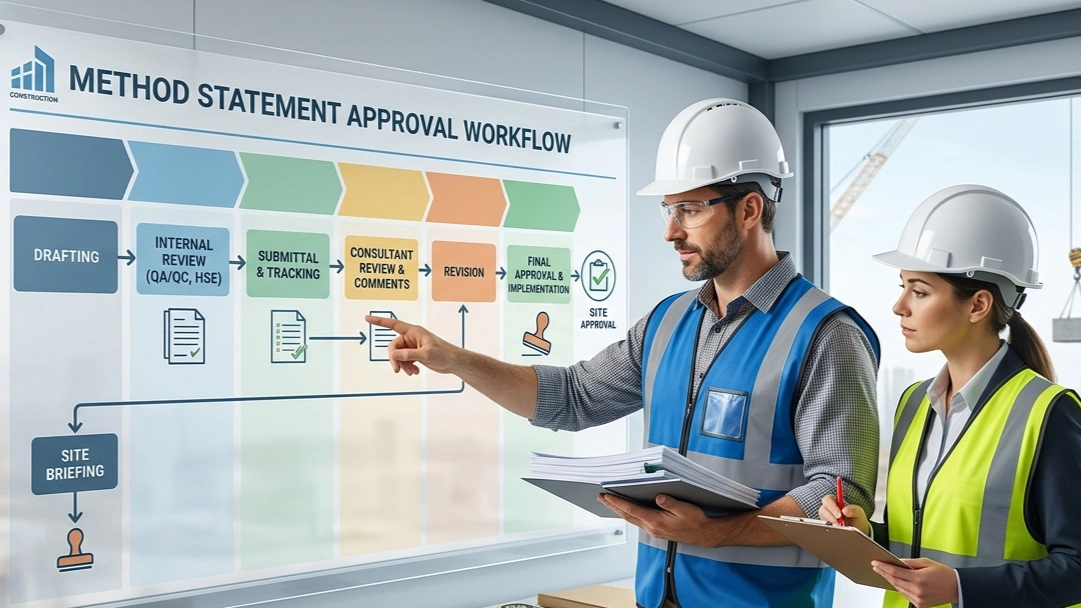
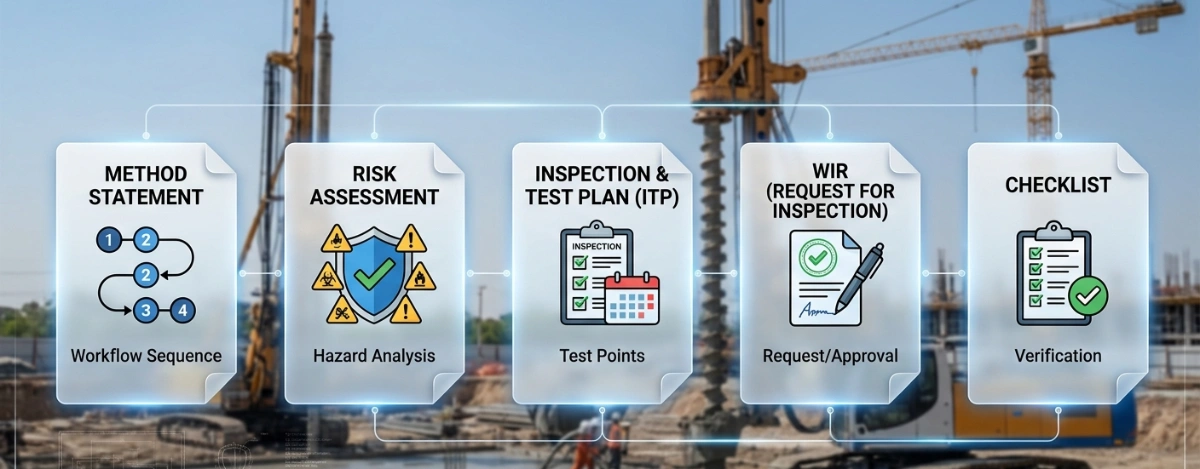
- Linked method statement — This ITP is connected to the corresponding method statement describing the work sequence.
- Multiple export formats — Download as a formatted PDF or editable Excel spreadsheet.
- Editable starting point, not a final document — Review and verify all content against your project specifications and standards before use.
What you can customize
When you save this ITP to your account, every inspection row becomes editable. You can add, remove, or modify:
- Inspection activity — Description of what is being inspected.
- Inspection type — Hold point (H), Witness point (W), Review (R), or Monitor (M).
- Responsibility — Contractor, subcontractor, engineer, or client.
- Frequency — How often the inspection occurs.
- Acceptance criteria — Referenced standard or specification requirement.
- Records — Forms, test reports, or checklists required as evidence.
Why this ITP is used
To assure MEWP activities meet safety, quality, and regulatory requirements through defined inspections and acceptance criteria.
Who uses this inspection and test plan
Supervisors, HSE officers, plant technicians, and QA/QC engineers use the ITP for verification and records.
When this ITP is prepared and submitted
Before setup, during operations, and after use; repeated each shift or when equipment/site conditions change.
Who receives or approves this ITP
Client/Engineer for review and approval as part of RAMS submittal.
Inspection scope
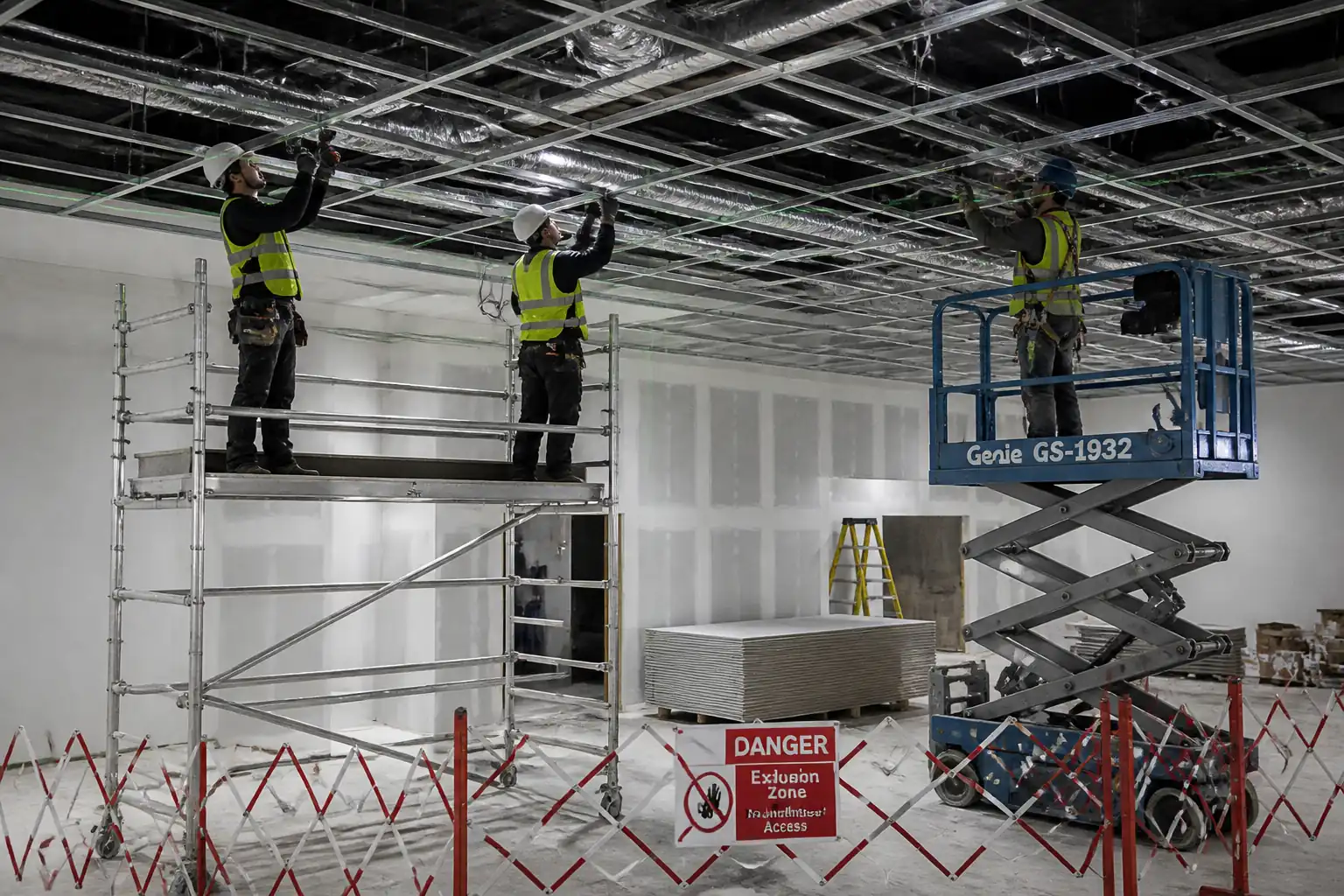
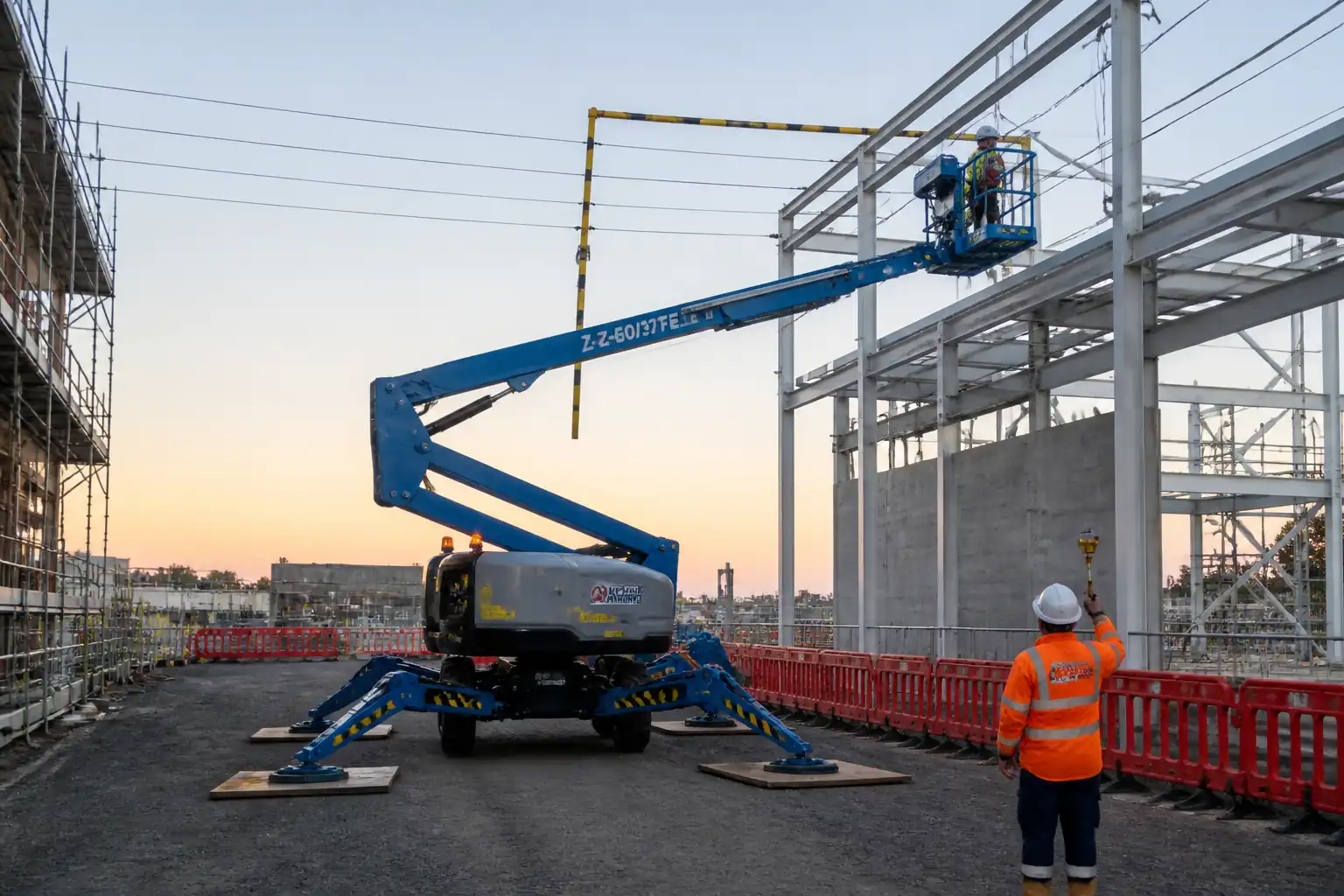
Covers documentation, ground conditions, utilities clearance, exclusion zones, function tests, weather limits, PPE, movement controls, and shutdown.
Typical hold, witness, and review points
Hold: ground assessment, re-commissioning after repair. Witness: initial emergency lowering test per shift or at start of works.
Typical inspection records
Pre-use checklists, competency/familiarization logs, ground bearing calculations, clearance records, weather logs, defect/maintenance reports.
Important approval note
This ITP is an AI-assisted editable starting point, not a pre-approved document. Before use on any project, all inspection activities, hold points, and acceptance criteria must be reviewed and approved by the relevant parties (superintendent, principal contractor, or client representative) in accordance with your contract and project quality plan.
Always verify acceptance criteria against your applicable drawings, specifications, and regulatory requirements. Hold points must be confirmed with the relevant authority before work proceeds past that point.
Inspection and test plan
| Activity | Inspection / Test | Acceptance Criteria | Responsibility | Record |
|---|---|---|---|---|
| Operator competency verification | Verify license/card and familiarization | Valid training/authorization for MEWP category; familiarization record present. | Supervisor | Training register copy |
| Equipment certification review | Check thorough exam ≤6 months [Verify] and maintenance status | Certificates current; no outstanding safety defects. | Supervisor / HSE | Certificate log |
| Ground condition & bearing calc | Inclinometer reading; bearing calc; mat sizing | Slope within spec; capacity ≥ demand × FoS 1.5–2.0; mats installed if required. | Engineer / Supervisor | Ground assessment sheet |
| Powerline/overhead clearance | Tape/laser measurement of clearance | Clearance ≥ statutory/utility requirement (typ. 3–10 m by voltage) [Verify]. | Supervisor | Clearance checklist |
| Exclusion zone establishment | Compare to TMP drawing | Barriers and signage installed; buffer ≥2 m beyond swing radius [Verify]. | Supervisor / Banksman | TMP sign-off |
| Pre-use inspection & function test | Controls, brakes, steering, lift, emergency stop, aux lowering | All systems serviceable; no leaks; decals legible; alarms operational. | Operator | Daily checklist |
| Weather/wind monitoring | Anemometer reading logged | Wind ≤ manufacturer limit (typ. 12.5 m/s) [Verify]; lightning stand-down enforced. | Operator / HSE | Weather log |
| Harness/lanyard verification (boom) | Check certification/inspection tag; anchor suitability | Harness inspected and in date; correct lanyard type; attached to designated anchor. | Supervisor | PPE inspection record |
| Controlled movement in live area | Check speed, spotter presence, route adherence | Speed ≤5 km/h [Verify]; spotter present; routes followed; alarms/beacons active. | Supervisor / Banksman | Daily log |
| Emergency/rescue readiness check | Auxiliary descent tested pre-task | Emergency lowering operational; rescuer designated and briefed; rescue time target ≤10 min [Verify]. | Supervisor / Appointed Person | Rescue readiness checklist |
| Post-use condition & isolation | Leaks/defects; battery/fuel; isolation applied | No new defects/leaks; machine isolated; charging/refueling safe. | Operator | Post-use checklist |
| Defect rectification & re-commissioning | Post-repair functional test | All rectified; test passed; records updated before return to service. | Technician | Service report |
This table is a read-only public reference. Download the PDF or Excel version, or customize this ITP to edit it for your project.
Frequently asked questions
Related method statement
This Inspection and Test Plan is associated with the Method Statement: Safe Operation of Mobile Elevating Work Platforms (MEWPs) method statement, which describes the step-by-step construction sequence, resources, materials, equipment, safety controls, and environmental controls for this activity.
View the Method Statement: Safe Operation of Mobile Elevating Work Platforms (MEWPs) method statement →Continue with related inspection, method statement, article, and checklist resources.