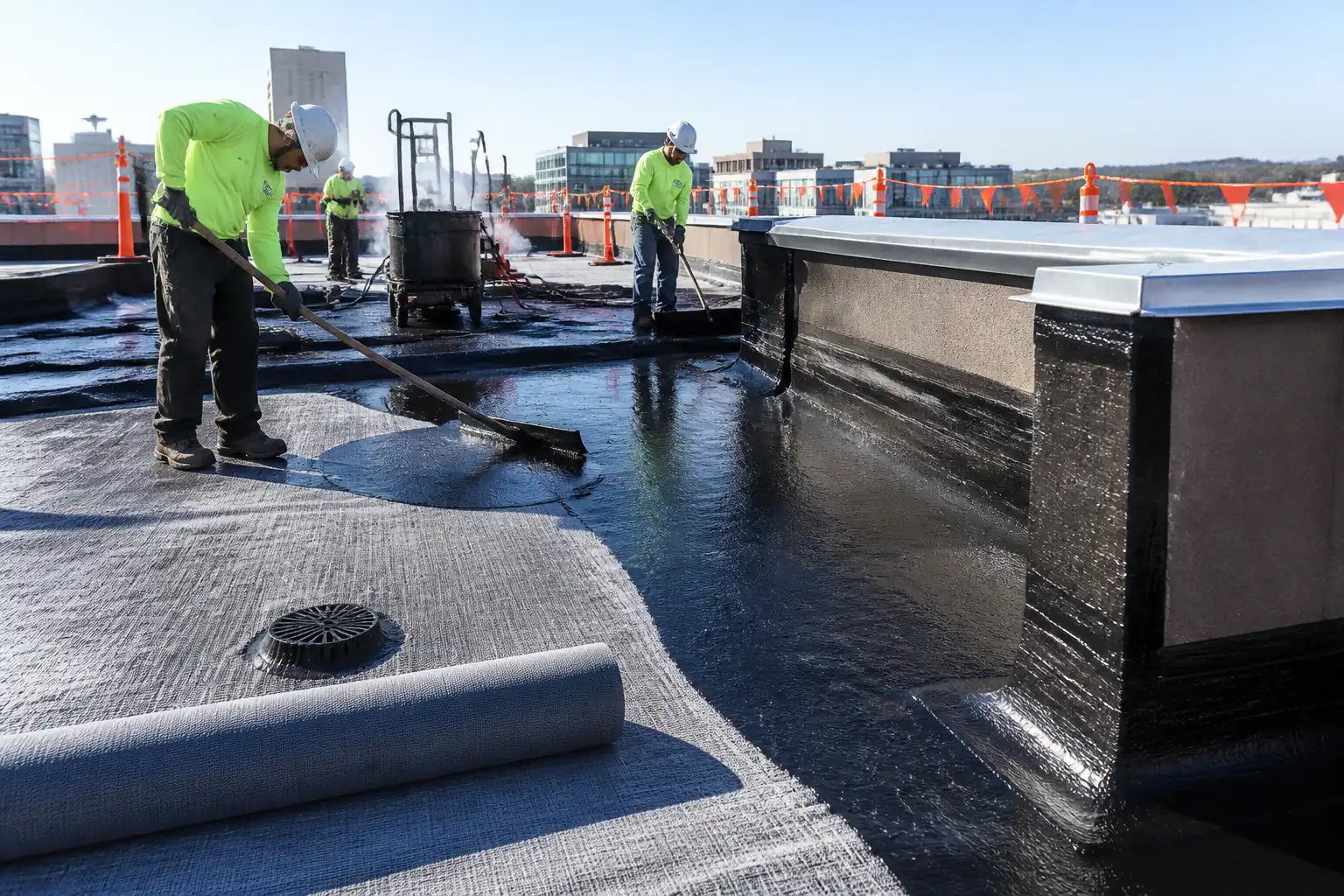

Inspection and Test Plan for Method Statement: Liquid-Applied Polyurethane Waterproofing for Internal Wet Areas
AI-assisted inspection and test plan connected to a method statement, with PDF and Excel export.
More than a static template
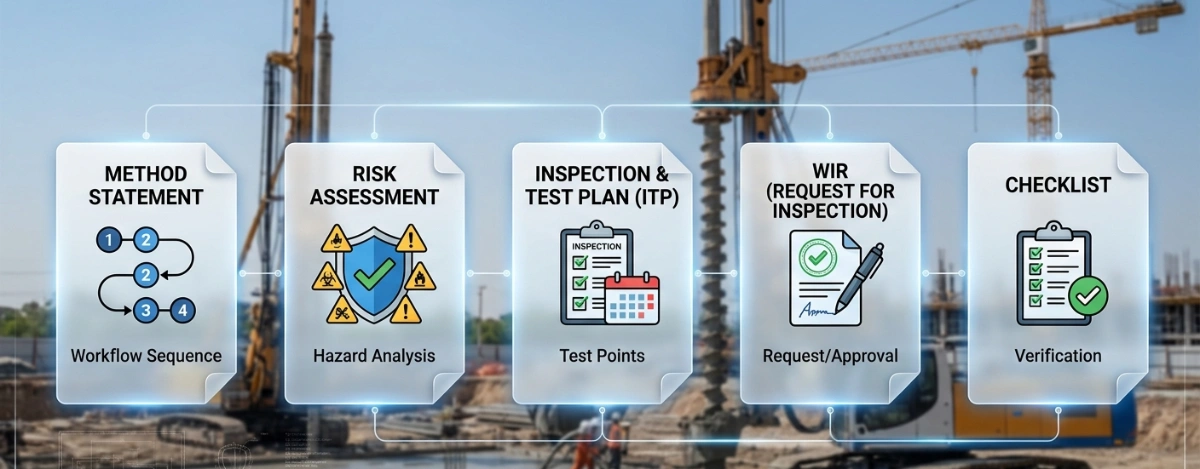
Unlike a downloadable Word or PDF template, this ITP is an AI-assisted editable starting point directly connected to its method statement. Every inspection activity, hold point, and acceptance criterion is structured and ready to adapt to your project.
- AI-assisted customization — Tailor inspection activities and acceptance criteria to your specific project scope.
- Linked method statement — This ITP is connected to the corresponding method statement describing the work sequence.
- Multiple export formats — Download as a formatted PDF or editable Excel spreadsheet.
- Editable starting point, not a final document — Review and verify all content against your project specifications and standards before use.
What you can customize
When you save this ITP to your account, every inspection row becomes editable. You can add, remove, or modify:
- Inspection activity — Description of what is being inspected.
- Inspection type — Hold point (H), Witness point (W), Review (R), or Monitor (M).
- Responsibility — Contractor, subcontractor, engineer, or client.
- Frequency — How often the inspection occurs.
- Acceptance criteria — Referenced standard or specification requirement.
- Records — Forms, test reports, or checklists required as evidence.
Why this ITP is used
To verify compliance of PU waterproofing works through structured inspections and tests before covering by finishes.
Who uses this inspection and test plan
QA/QC engineers, site engineers, specialist applicators, consultant/client representatives.
When this ITP is prepared and submitted
From surface preparation through final flood test and release for tiling, covering each installation stage.
Who receives or approves this ITP
Engineer/Consultant for approval and witnessing of hold points.
Inspection scope
Substrate condition, moisture levels, priming coverage, detailing quality, film thickness (WFT/DFT), curing, flood testing, and documentation.
Typical hold, witness, and review points
Moisture acceptance; DFT verification; 24-hour flood test; final release for tiling.
Typical inspection records
Checklists, moisture reports, WFT/DFT logs, calibration certificates, batch logs, flood test certificate, NCR/CAR close-outs.
Important approval note
This ITP is an AI-assisted editable starting point, not a pre-approved document. Before use on any project, all inspection activities, hold points, and acceptance criteria must be reviewed and approved by the relevant parties (superintendent, principal contractor, or client representative) in accordance with your contract and project quality plan.
Always verify acceptance criteria against your applicable drawings, specifications, and regulatory requirements. Hold points must be confirmed with the relevant authority before work proceeds past that point.
Inspection and test plan
| Activity | Inspection / Test | Acceptance Criteria | Responsibility | Record |
|---|---|---|---|---|
| Substrate condition and falls check | Straightedge tolerance; visual soundness; slope measurement | Falls 1:80–1:60; tolerance ±3 mm under 2 m; substrate sound, clean | Site Engineer / QA | Pre-application checklist; photos |
| Moisture testing | ASTM F2170 (RH) and/or F1869 (MVER) | RH ≤ 75–85% or MVER ≤ 3–5 lb/1000 ft²/24 h [Verify] | QA/QC Engineer | Moisture test report |
| Priming | Visual coverage; WFT if specified | Uniform film; no ponding; tack-free before next step | Applicator / QA | Primer inspection record; batch log |
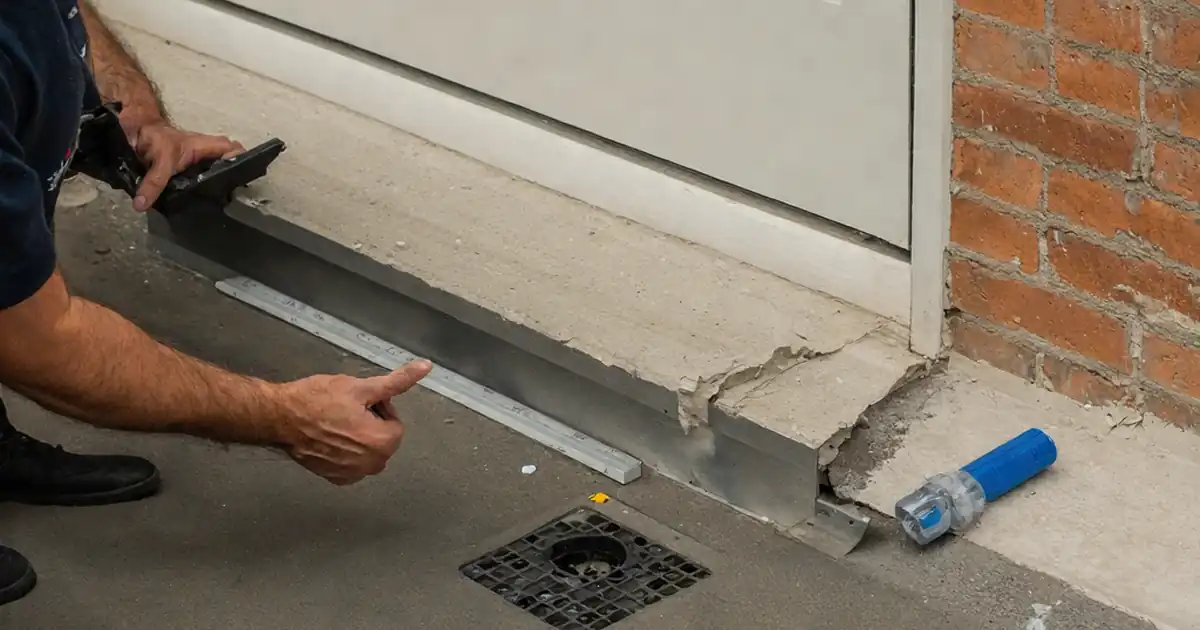
| Fillet and bond-breaker | Template gauge; visual continuity | Continuous fillet ≥20 mm radius; correct joint width/backer rod | Applicator / QA | Detailing checklist |
| Reinforcement at details | Visual; overlap measurement | Full embedment; laps ≥50 mm; no wrinkles/fish-mouths | Applicator / QA | Detail inspection form |
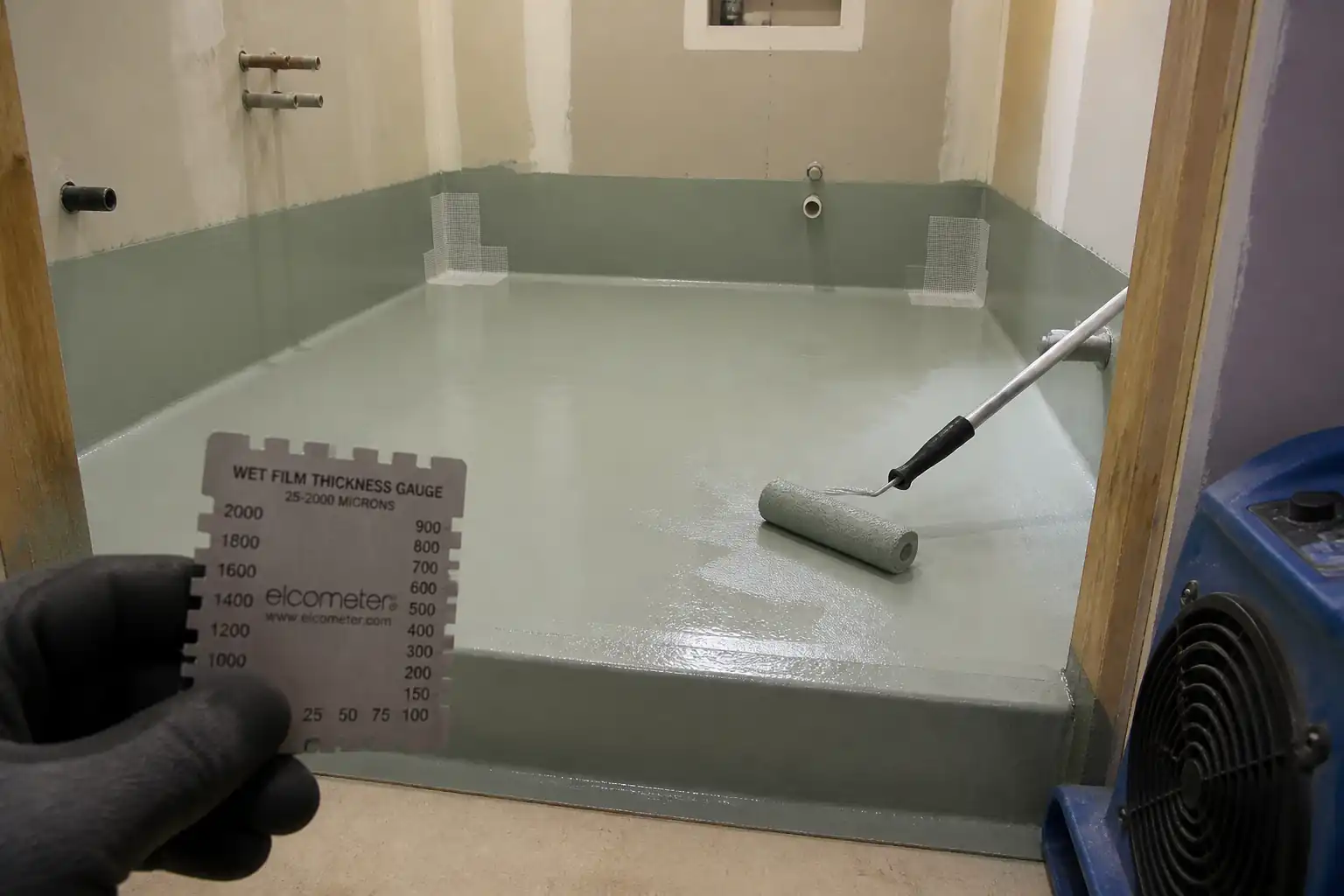
| PU Coat 1 application | WFT gauge readings grid-based | WFT per coat per TDS (typ. 0.6–0.8 mm) | Applicator / QA | WFT log with plan locations |
| Intercoat inspection | Visual; tack test | No pinholes; within max recoat window | QA/QC Engineer | Intercoat inspection record |
| PU Coat 2 application | WFT gauge readings | Cumulative thickness sufficient for DFT ≥ specified (typ. ≥1.2 mm) | Applicator / QA | WFT log update |
| DFT verification | DFT comb gauge / calculation from WFT and solids | Average DFT ≥ specified; no local thin spot < 90% of specified | QA/QC Engineer | DFT map; calculations |
| Cure status before flood test | Time/temperature check; tack-free | Meets immersion-ready cure time per TDS | Applicator / QA | Curing record |
| 24-hour flood test | Water level measurement; leakage inspection below | No leaks; water loss ≤ 2 mm after evaporation compensation | Site Engineer / Consultant (Witness) | Flood test certificate; photos |
| Adhesion (if specified) | ASTM D4541 pull-off | ≥0.7 MPa or per spec; cohesive failure preferred | Third Party / QA | Adhesion test report |
| Final inspection and release for tiling | Visual; documentation review | Membrane intact; all records complete; approvals in place | QA/QC Engineer / Consultant | Release/clearance form |
This table is a read-only public reference. Download the PDF or Excel version, or customize this ITP to edit it for your project.
Frequently asked questions
Related method statement
This Inspection and Test Plan is associated with the Method Statement: Liquid-Applied Polyurethane Waterproofing for Internal Wet Areas method statement, which describes the step-by-step construction sequence, resources, materials, equipment, safety controls, and environmental controls for this activity.
View the Method Statement: Liquid-Applied Polyurethane Waterproofing for Internal Wet Areas method statement →Continue with related inspection, method statement, article, and checklist resources.