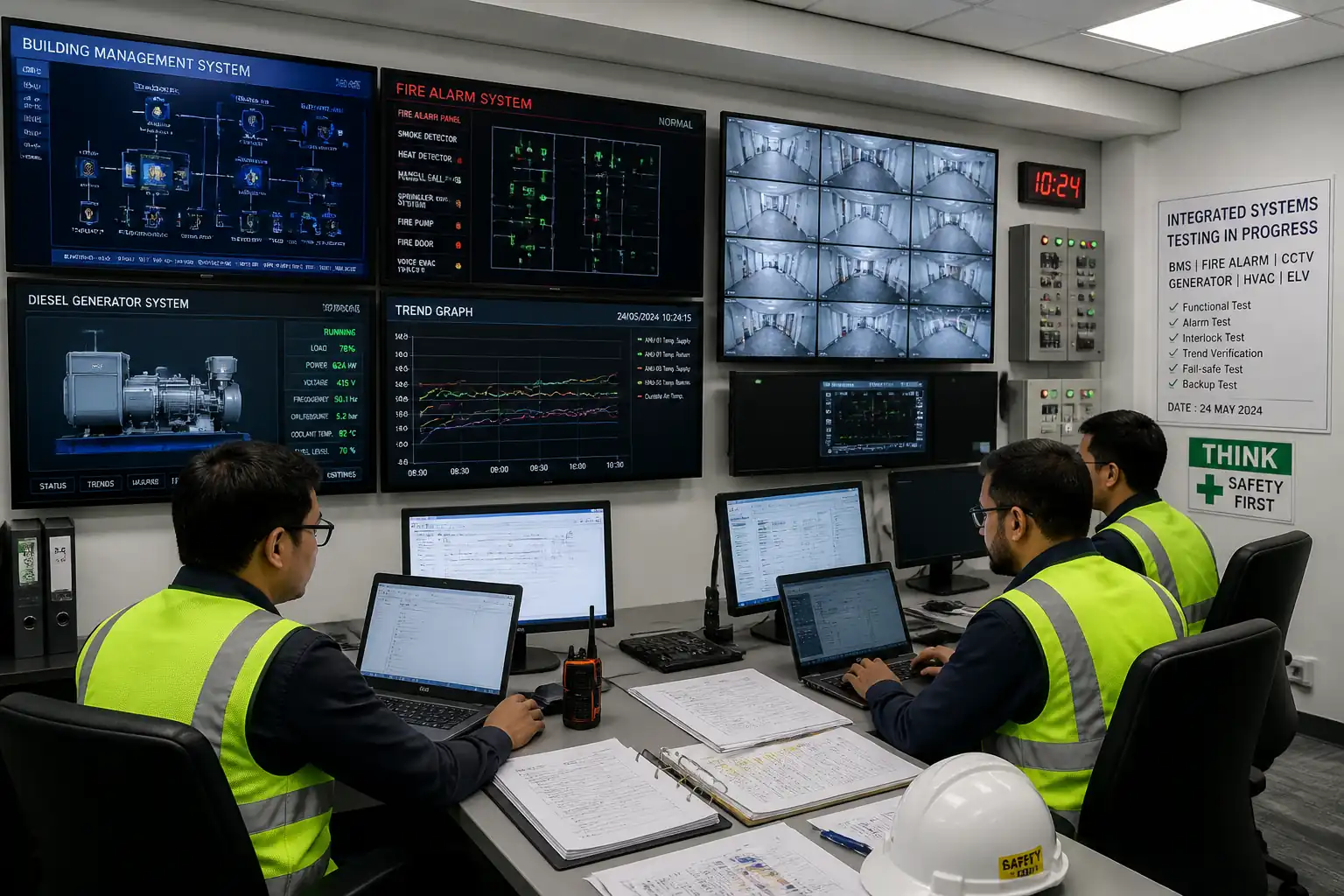

Method Statement: Final Integrated Systems Testing (IST) Demonstration for Project Completion – Method Statement
AI-assisted method statement with matching ITP, PDF download, and Excel export.
More than a static template
Unlike a downloadable Word or PDF template, this method statement is an AI-assisted editable starting point connected directly to a matching Inspection and Test Plan. Every section is structured, project-adaptable, and ready to export.
- AI-assisted drafting — Customize every section with AI for your specific project scope.
- Linked ITP — A matching inspection and test plan is generated alongside the method statement.
- Multiple export formats — Download as a formatted PDF or editable Excel spreadsheet.
- Editable starting point, not a final document — Review, verify, and adjust all content against your project requirements before use.
Static template vs. Quollnet workflow
| Feature | Static template | Quollnet |
|---|---|---|
| Project-specific content | Manual fill-in required | AI-assisted customization |
| Linked ITP | Separate document, no link | Matching ITP included |
| Export formats | Usually PDF only | PDF and Excel |
| Structured sections | Free-form layout | 13 standardized sections |
| Saved to your account | Local file only | Cloud-saved, reusable |
| Content accuracy | You verify everything | AI-assisted, you still verify |
| Cost | Often free but time-intensive | Free to customize and download |
What you can customize
When you save this method statement to your account, every section becomes editable. The following 13 sections are included:
- Scope — Defines the activity and its boundaries.
- References — Standards, specifications, and drawings.
- Responsibilities — Roles and accountabilities.
- Resources — Labour, plant, and equipment summary.
- Materials — Materials and compliance requirements.
- Equipment — Tools and equipment details.
- Prerequisites — Hold points and pre-conditions.
- Method sequence — Step-by-step construction sequence.
- Safety controls — HSE risk controls and PPE.
- Environmental controls — Environmental mitigation measures.
- QA/QC — Quality inspection and test requirements.
- ITP — Inspection and Test Plan table (has its own page).
- Attachments — Referenced drawings and documentation.
Why this method statement is used
This method statement is used to define and communicate the approved procedure for carrying out method statement: final integrated systems testing (ist) demonstration for project completion on site. It ensures the work is planned in advance, the correct resources and controls are in place, and all personnel understand responsibilities, sequence, quality requirements, and safety controls before work begins. It aligns site execution with the documented scope and acceptance expectations.
Who uses this method statement
This method statement is used by contractors, site supervisors, project engineers, QA/QC engineers, HSE officers, consultants, and client representatives. It serves as a shared reference for planning, execution, supervision, inspection, and approval of the activity on site.
When it is prepared and submitted
The method statement is prepared before the work activity starts and submitted as part of the pre-construction documentation package for review and approval.
Who reviews or approves it
The method statement is usually submitted to the client representative, consultant, resident engineer, or project management consultant for review and approval before the work commences.
Important approval note
This method statement is an AI-assisted editable starting point, not a pre-approved document. Before use on any project, all content must be reviewed and approved by the relevant parties (superintendent, principal contractor, or client representative) in accordance with your contract and project quality plan.
For example: if your specification requires a departure from a referenced standard, that departure must be documented and approved separately — this method statement will not capture that automatically. Always verify against your applicable drawings, specifications, and regulatory requirements.
Method statement content
Scope
Purpose
This method statement defines the procedures and controls for planning, executing, witnessing, documenting, and closing the Final Integrated Systems Testing (IST) demonstration to prove end-to-end functional integration of building systems prior to project completion and handover.
Systems in Scope
- Fire detection and alarm (FDA), voice alarm/public address (VA/PA), emergency voice communication (EVC) [where applicable]
- Firefighting systems interfaces (sprinkler/flow switches, pre-action/deluge, clean agent systems, fire pumps, sprinkler valves)
- Smoke control and pressurization systems (fans, dampers, AHU shutdowns, smoke curtains)
- Elevators/lifts (recall/homing, Fireman’s Service) and escalators (emergency stop)
- Power systems (normal, emergency generator, ATS, UPS, essential/non-essential segregation)
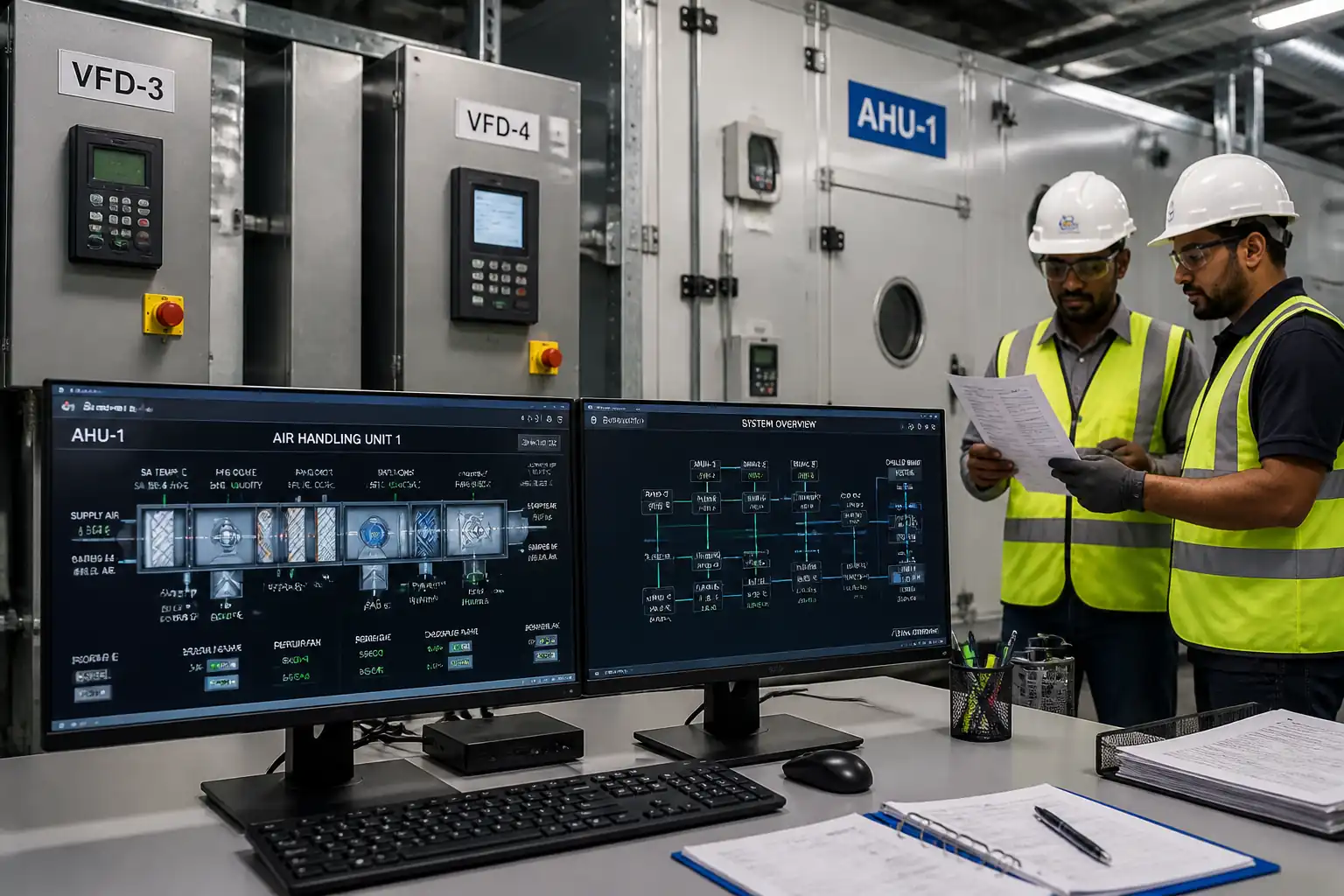
- Mechanical HVAC plant and controls (AHU shutdown, purge modes, emergency ventilation)
- Building Management System (BMS)/SCADA integration and time synchronization
- ELV/security systems (access control door release, CCTV call-up, intrusion alarms, intercom)
- Life-safety interfaces to building services (gas leak detection, water leak detection, flood alarms)
- ICT/network availability relevant to integration (redundant networks, time servers, gateways)
Out of Scope
- Pre-functional and system-specific SAT/FAT (assumed completed and signed prior to IST)
- Routine maintenance activities not required for testing
Objectives
- Demonstrate that the approved Cause & Effect Matrix and IST Test Scripts are fully satisfied under normal, emergency, and degraded modes.
- Verify cross-discipline responses, timings, interlocks, and fail-safe behaviors.
- Achieve zero outstanding Category A (life-safety/critical) defects and manage closure of lower-category items.
- Provide auditable records to support Practical Completion and Authorities’ acceptance [Verify per project specifications].
References
| Document Type | Reference / Number | Revision | Notes |
|---|---|---|---|
| NFPA 4: Standard for Integrated Fire Protection and Life Safety System Testing (latest edition) | Primary reference for integrated life-safety system testing; use where applicable [Verify per project specifications]. | ||
| NFPA 3: Standard for Commissioning of Fire Protection and Life Safety Systems | Commissioning framework for life-safety systems. | ||
| ASHRAE Guideline 0 & 1.1 (Commissioning Process and HVAC&R Systems) | Commissioning process and documentation protocols. | ||
| CIBSE Commissioning Codes (A, B, C, W, etc.) and BSRIA BG 6/BG 29/BG 79 (as applicable) | Commissioning guidance and soft landings practices [Verify per project specifications]. | ||
| IEC 60364 / BS 7671 (Electrical installations), IEC 61439 (Switchgear) | Electrical safety and performance basis. | ||
| ISO 16484 (Building automation and control systems) | BMS functions, integration, and data exchange. | ||
| BS 5839-1 (Fire detection and alarm systems for buildings) / BS EN 54 series | Where BS standards are adopted by the project. | ||
| NFPA 72 (National Fire Alarm and Signaling Code) | Fire alarm performance including notification and interlocks [Verify per project specifications]. | ||
| ISO 9001 (Quality Management), ISO 10012 (Measurement management) | Document control and calibration control framework. |
Responsibilities
| Role | Responsibility | Name / Party |
|---|---|---|
| Commissioning Manager | Commissioning Manager (CxM) | Main Contractor |
| QA/QC Manager | QA/QC Manager | Main Contractor |
| HSE Manager | HSE Manager | Main Contractor |
| Discipline Leads | Discipline Leads (Electrical, Mechanical/HVAC, Fire & Life Safety, BMS/Controls, Security/ELV) | Main Contractor/Subcontractors |
| OEM/Vendor Rep | Vendors/Manufacturers’ Representatives | Vendors |
| CxA | Independent Commissioning Authority (CxA) [if appointed] | Consultant/Client |
| Engineer | Consultant/Engineer | Consultant |
| AHJ | Authority Having Jurisdiction (AHJ) [if applicable] | Authority |
| Client Rep | Client/End User Representative | Client |
Resources
| Resource Type | Description | Quantity | Remarks |
|---|---|---|---|
| Personnel | 1 | ||
| Personnel | 5 (one per discipline) [Adjust per project] | ||
| Personnel | 6–12 [Verify per project] | ||
| Personnel | As required per system | ||
| Personnel | 2–6 |
Materials
| Material | Specification / Grade | Quantity | Remarks |
|---|---|---|---|
| Approved IST Test Scripts and Checklists | Engineer-approved; revision controlled [ISO 9001]. | Traceable, controlled copies for field use. | |
| Cause & Effect Matrix (C&E) | Engineer/AHJ approved; issue-controlled. | Latest approved version with marking-up allowed for redlines. | |
| Activation media | UL/EN listed smoke/heat test tools; no-toxic residue; MSDS available. | Smoke aerosols per manufacturer; heat gun for detectors as applicable. | |
| Clean agent discharge isolation kits/lock-offs (if applicable) | AHJ/insurer-approved impairment plan. | Lock-off devices/tags, tamper seals recorded. | |
| Status tags, labels, NCR/punchlist forms | Project QA forms; unique IDs and traceability. | Color-coded tagging for Pass/Fail/Partial. |
Equipment
| Equipment | Capacity / Type | Quantity | Inspection Required |
|---|---|---|---|
| Digital stopwatch/time-synchronised logger | Resolution ≤0.1 s [Verify] | ||
| Multimeter (TRMS) | CAT III/IV rated; in calibration | ||
| Laptop with vendor tools/BMS trending | Latest patches; vendor access permissions | ||
| Camera/video recorder | 1080p minimum; date/time stamp | ||
| Sound level meter | Class 2 or better [Verify] | ||
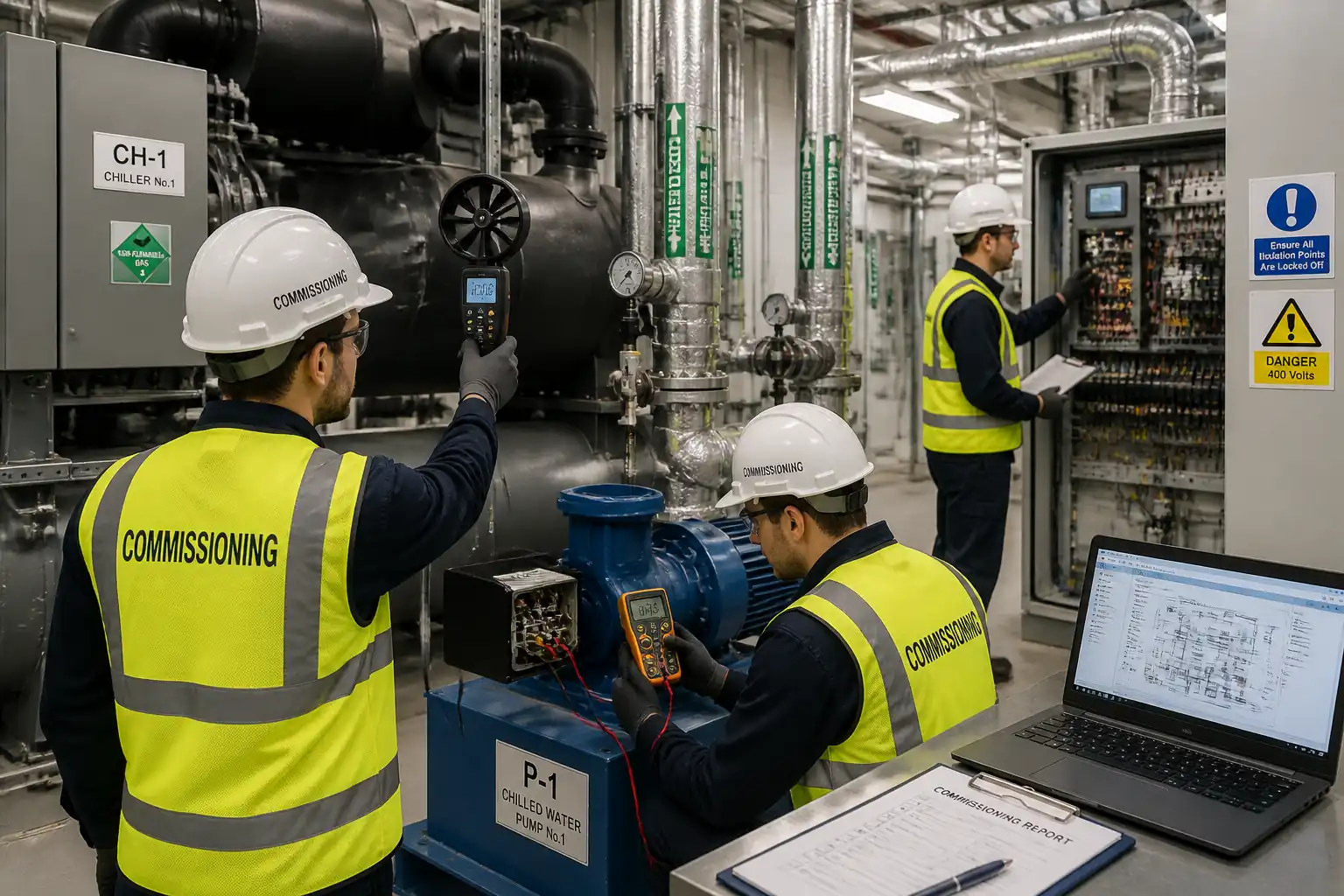
| Anemometer/manometer | Range as required; recently calibrated |
Prerequisites
Technical Readiness
- All SATs, pre-functional tests, point-to-point checks, dynamic commissioning completed and signed for each system.
- Approved and issued Cause & Effect Matrix and IST Test Scripts (unique IDs, revision-controlled).
- BMS/SCADA trending configured for critical points; network NTP time-synchronised across panels/servers/loggers.
- Power systems available: generator fuel ≥ 75% tank capacity; UPS batteries within capacity and alarm-free [Verify per project specifications].
- Life-safety authority permits/notifications arranged; impairment plans approved where any system is temporarily isolated.
- Clean agent/suppression systems isolated from discharge per approved impairment plan; fire watch assigned.
- Interfaces proven (I/O mapping, BACnet/Modbus nodes online) and alarm routing verified.
- Finalized test areas accessible, clean, safe, and protected; occupants notified per schedule.
- As-built drawings, O&M, vendor contact list available at site; change control process active.
HSE Readiness
- Activity risk assessment and method statement (RAMS) approved; toolbox talk conducted daily.
- Permits to Work: Electrical live testing, Fire Alarm Testing/Impairment, Lift/Elevator Recall, Generator Run, Confined space (if any), Hot works (if any) [Verify per project HSE plan and local regulations].
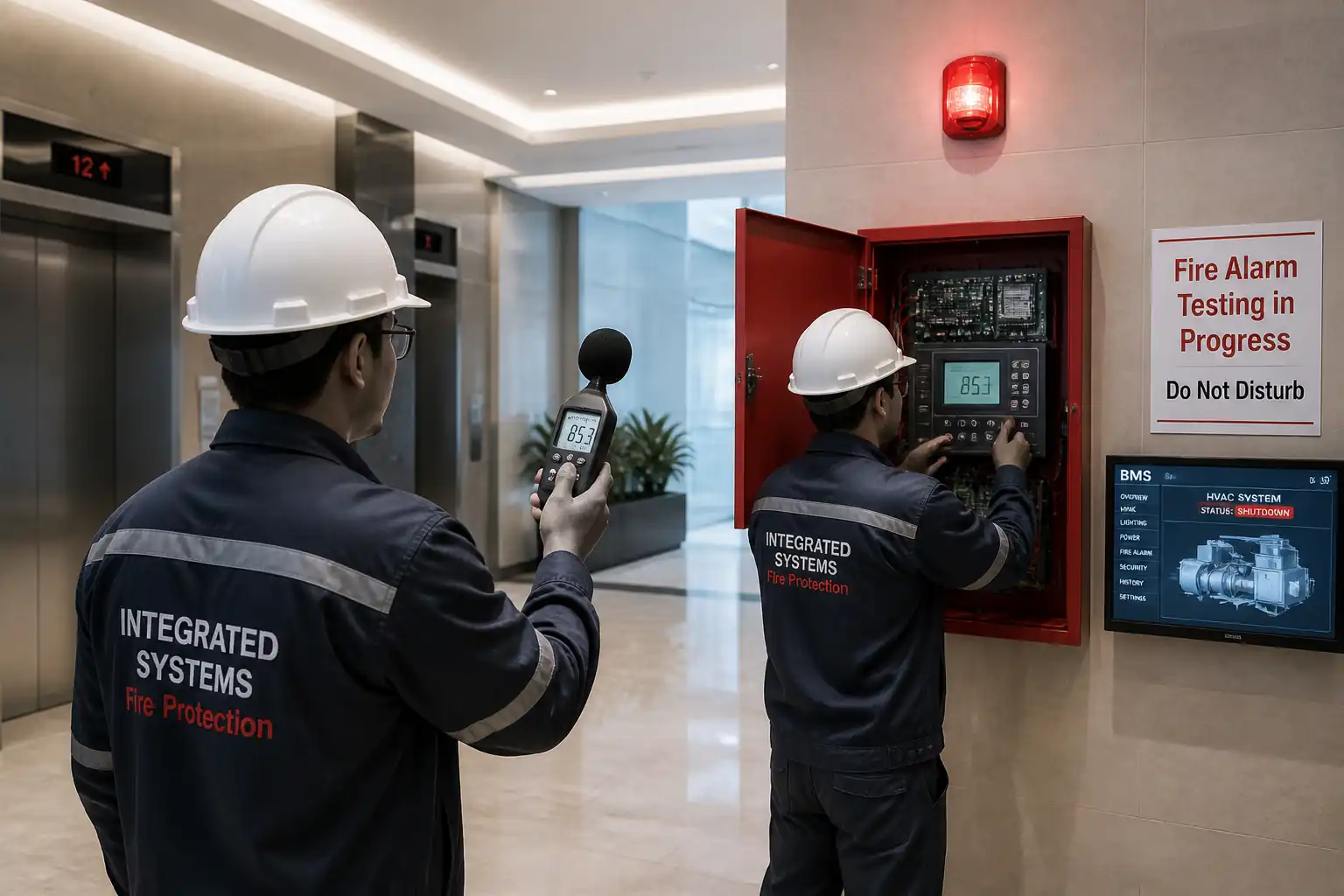
- Barricades/signage for egress paths, lift lobbies, mechanical rooms; hearing protection plan for alarm activation.
Administrative Readiness
- IST schedule with scenario IDs, sequence numbers, expected durations, witness invitations (Engineer/Client/AHJ) and hold/witness points issued ≥ 7 days prior [Verify per contract].
- Calibration certificates current and filed; forms prepared (checklists, punchlist, NCR, retest authorization).
Method Sequence
| Step | Activity | Description | Responsibility | Inspection / Hold Point |
|---|---|---|---|---|
| 1 | Kick-off and Readiness Gate (HP1) | Conduct IST kick-off meeting. Review roles, scripts, HSE controls, permits, communication protocol, and emergency stop conditions. Verify prerequisites via Readiness Checklist and sign HP1. | Commissioning Manager, QA/QC, HSE | Checklist review; permit verification; calibration certificates check |
| 2 | Dry-Run (non-witness) | Execute sample scenarios without witnesses to validate logistics, communications, and data capture settings. No formal pass/fail, record observations. | Commissioning Team | Internal observation |
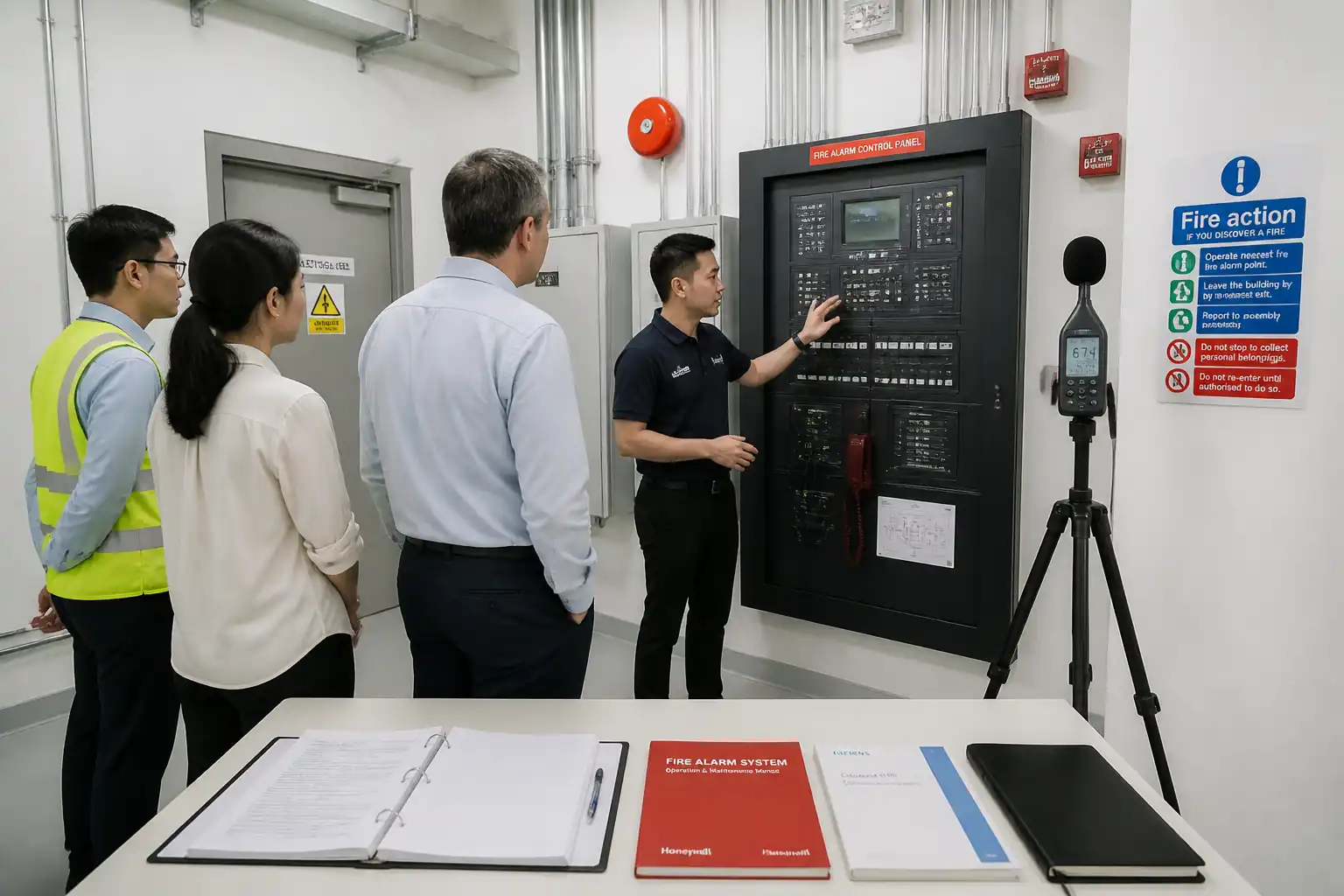
| 3 | Scenario Execution – Fire Alarm Floor Event (WP1) | Activate one detector/manual call point per selected floor/zone. Observe FDA panel annunciation, VA/PA messaging, EVC, access control door release, lift recall, AHU shutdown, smoke dampers/fans operation, BMS alarms, CCTV call-up. | Fire & Life Safety Lead, Electrical Lead, BMS Lead, Lift Vendor | Visual/functional checks; timing by logger/stopwatch |
| 4 | Scenario Execution – Power Failure and Restoration (WP2) | Simulate loss of normal power at main/sectional level per script. Observe ATS transfer, generator start, UPS performance, load restoration sequence, priority shedding/restoration. | Electrical Lead, Generator Vendor, BMS Lead | Panel indications; logger data; voltage checks |
| 5 | Scenario Execution – Smoke Control/Pressurization (WP3) | Trigger smoke control for selected fire zones/staircases. Measure fan start, damper positions, differential pressure/airflow; verify door operability under pressure. | Mechanical Lead, Fire & Life Safety Lead, TAB Specialist | Manometer/anemometer readings; door force gauge if applicable |
| 6 | Scenario Execution – Gas/Leak Detection and Purge (WP4) | Induce simulated gas/leak alarm per script. Verify alarm routing, mechanical purge start, interlocks (e.g., solenoid isolation), VA/PA messaging, access control actions. | Mechanical Lead, BMS Lead, Fire & Life Safety Lead | Panel/BMS alarms; device indications |
| 7 | Scenario Execution – Security/ELV Integration (WP5) | Simulate access control alarm/fire release, CCTV auto call-up to security workstation, intercom priority, door states, and muster reporting (if specified). | Security/ELV Lead, BMS Lead | Workstation screens; device states; logs |
| 8 | Abnormal/Degraded Modes (WP6) | Test representative failures (e.g., network segment down, BMS server failover, device offline) to confirm fail-safe and alarms to operators. | BMS Lead, IT/Network Rep, Discipline Leads | System status; alarm routing |
| 9 | Issue Logging and Categorization (HP2 for critical) | Log all deviations with unique IDs. Categorize: A (life-safety/critical), B (major functionality), C (minor/documentation). Agree immediate make-safe and rectification plans. HP2: No open Category A permitted to proceed to final acceptance. | QA/QC Manager, CxM, Engineer | Review of logs |
| 10 | Retesting Procedure (WP) | On rectification, request retest via formal RFI/Request to Test (RTT). Execute partial retest of affected functions. If root cause systemic, expand to adjacent/related scenarios as directed by Engineer/CxA. | Discipline Leads, QA/QC, Engineer | Verification of corrective evidence |
| 11 | Final Witness and Acceptance (HP3) | Present consolidated results to Engineer/Client/AHJ. Execute any final selected scenarios at random. Close out documentation for acceptance. | CxM, QA/QC, Engineer, Client | Document and field spot checks |
Safety Controls
Hazard: Life-safety system impairment during testing
- Likely consequence: Reduced fire protection; potential for uncontrolled discharge or disabled egress hardware.
- Engineering/procedural control: Formal Fire Alarm/Protection Impairment Permit; isolate clean-agent cylinders with lock-off devices; maintain fire watch and portable extinguishers; limit impairment duration; staged testing by zones.
- Required PPE: Safety footwear, hi-vis, gloves, eye protection.
- Collective preventive measure: Temporary fire detection in impaired area (spotter); maintain at least one clear egress path; coordinate with AHJ/insurer.
- Inspection/permit/supervision: HSE to issue impairment permit; CxM to verify isolation/reinstatement; Engineer witness for critical steps. [Verify per project HSE plan and local regulations]
Hazard: Exposure to high sound levels from alarms and plant
- Likely consequence: Hearing damage, disorientation.
- Engineering/procedural control: Pre-notify occupants; limit test duration; stage alarms; provide quiet refuges; use VA/PA at controlled volume where permissible.
- Required PPE: Hearing protection (ear defenders/plugs) for personnel in test zones.
- Collective preventive measure: Area cordons and signage; schedule off-peak hours.
- Inspection/permit/supervision: HSE noise assessment; toolbox talk documents.
Hazard: Energized electrical equipment and generator/ATS operations
- Likely consequence: Electric shock, arc flash, equipment damage.
- Engineering/procedural control: Electrically competent persons only; arc-flash boundaries; insulated tools; no live covers removed unless under permit; simulate outages at designated points; vendor attendance.
- Required PPE: Arc-rated clothing per arc incident energy assessment, insulated gloves, face shield.
- Collective preventive measure: Barriers and exclusion zones at switchgear rooms; second-person rule.
- Inspection/permit/supervision: Electrical Permit to Work; LOTO; pre/post test checks by Electrical Lead.
Hazard: Moving machinery (smoke fans, lifts, dampers)
- Likely consequence: Entrapment, impact injuries.
- Engineering/procedural control: Keep clear of rotating equipment; confirm guards in place; coordinate lift recall with OEM; barricade lift lobbies.
- Required PPE: Standard site PPE.
- Collective preventive measure: Barriers; spotters at lift lobbies; keys controlled by Lift Vendor.
- Inspection/permit/supervision: Lift recall permit; OEM supervision during tests.
Hazard: Pressurization forces on doors
- Likely consequence: Strain injuries; blocked egress if pressure too high.
- Engineering/procedural control: Measure differential pressure; verify door opening forces; limit fan speed if exceeding design; abort if egress compromised.
- Required PPE: Gloves; standard PPE.
- Collective preventive measure: Keep egress routes manned; staged ramp-up.
- Inspection/permit/supervision: Mechanical Lead and HSE present; calibrated manometer available.
Hazard: Network/controls changes during testing
- Likely consequence: Loss of control/monitoring; unintended activation.
- Engineering/procedural control: Freeze on non-essential changes; change control approvals; backups/snapshots of configurations before test.
- Required PPE: N/A beyond standard PPE.
- Collective preventive measure: IT change window; rollback plan.
- Inspection/permit/supervision: CxM to authorize any parameter change; logs retained.
Hazard: Crowd/occupant disturbance
- Likely consequence: Panic, business disruption.
- Engineering/procedural control: Communication plan; floor marshals; public notices; staged testing out of hours.
- Required PPE: Standard PPE for site personnel.
- Collective preventive measure: Security support; access control at test zones.
- Inspection/permit/supervision: HSE/Facilities approvals; records of notifications.
Environmental Controls
- Alarm noise management to prevent nuisance to surrounding properties; schedule within permitted hours [Verify per local regulations].
- Generator emissions: confirm exhaust systems operational; limit run time to test requirement; record fuel use; spill kits available.
- Avoid real discharge of suppression agents; use simulated/training mode to prevent atmospheric release; if discharge testing is mandated, capture and recharge plan approved by manufacturer/AHJ.
- Use low-residue smoke test aerosols; avoid over-application; ventilate spaces post-test.
- Waste management: dispose of spent aerosol cans and consumables per MSDS and local hazardous waste rules; collect any packaging or tags.
- Energy conservation: disable non-essential loads during extended IST; restore normal settings post-test.
- Noise and vibration monitoring near sensitive receptors if specified.
QA/QC
Controls and Documentation
- ITP implementation with defined Hold Points (HP) and Witness Points (WP). Minimum HP: HP1 (Readiness Gate), HP2 (Issue Log Review – zero Cat A open), HP3 (Final Acceptance).
- Calibration control: all instruments within valid calibration; records filed; field verification checks at start of day.
- Traceability: each scenario tagged with Script ID; all records cross-referenced to location, device IDs, and timestamps.
- Data capture: BMS trending at 1–5 s intervals for critical points; export raw CSV and screenshots with time sync evidence [Verify per project specs].
- Change control: pre-authorize setpoint/logic adjustments; backup configurations prior to change; record deltas.
- Nonconformance: raise NCR for deviations; categorize A/B/C; implement containment and corrective actions; retest authorization via RTT.
- Acceptance criteria: zero Category A defects; all life-safety scenarios passed 100%; non-critical sampling per project; outstanding B/C items subject to Engineer-approved punchlist with target dates.
- Handover dossier: IST Acceptance Report, signed checklists, trend logs, photos/videos, calibration certs, permits, redlined C&E and as-builts, training and O&M acknowledgments.
Attachments
- Approved IST Test Scripts (by ID and revision)
- Approved Cause & Effect Matrix (latest revision)
- IST Schedule and Attendance Plan
- Readiness Gate (HP1) Checklist
- Permits to Work and Impairment Permits
- Calibration Certificates and Verification Logs
- Scenario Checklists, Timing Sheets, Trend Logs (raw and annotated)
- Photo/Video Evidence Index
- Defect/NCR Register and Closure Evidence
- Retest Requests (RTT) and Results
- Final IST Acceptance Report and Sign-off Certificates
- Redlined As-Built Drawings and Updated O&M Extracts
This content is a read-only public reference. Download or customize to get an editable version.
ITP preview
The first inspection activities from the linked ITP for Method Statement: Final Integrated Systems Testing (IST) Demonstration for Project Completion:
| Activity | Inspection / Test | Acceptance Criteria | Responsibility | Record |
|---|---|---|---|---|
| HP1 – Pre-IST Readiness Gate | Verify prerequisites, permits, approved scripts, time sync, calibration certificates | All prerequisites met; documents approved and current; readiness checklist signed. HOLD POINT HP1. | CxM / QA-QC / Engineer | HP1 Readiness Checklist; approvals; calibration register |
| WP – Instrument Calibration Verification | Spot-check instrument zero/span; review cert validity | Certificates valid; spot checks within tolerance. WITNESS POINT. | QA-QC / Discipline Leads | Calibration certs; verification log |
| WP1 – Fire Alarm Floor Event Scenario | Initiate detector/MCP; verify FDA, VA/PA, access control, lifts, HVAC shutdown, BMS alarms | Timings and functions per approved script/C&E. 100% life-safety in witnessed zones. WITNESS POINT. | Fire & Life Safety Lead / Engineer Witness | Script checklist; timing sheets; BMS trends; photos/videos |
Showing 3 of 11 inspection activities. View full ITP →
Related Inspection and Test Plan
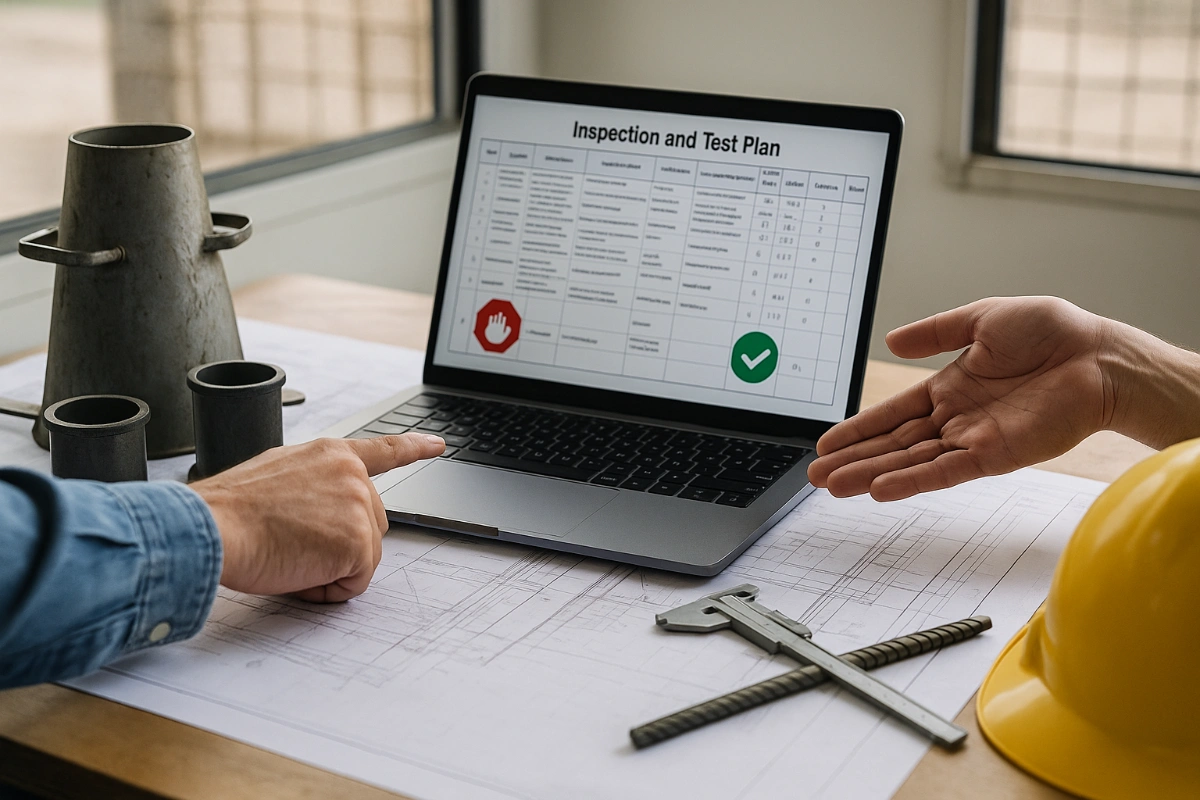
An Inspection and Test Plan (ITP) is available for Method Statement: Final Integrated Systems Testing (IST) Demonstration for Project Completion. The ITP defines the inspection activities, acceptance criteria, hold and witness points, responsible parties, and records required to verify the work described in this method statement.
View the Method Statement: Final Integrated Systems Testing (IST) Demonstration for Project Completion ITP →Frequently asked questions
Continue with related Quollnet resources connected to this method statement.