The checklist
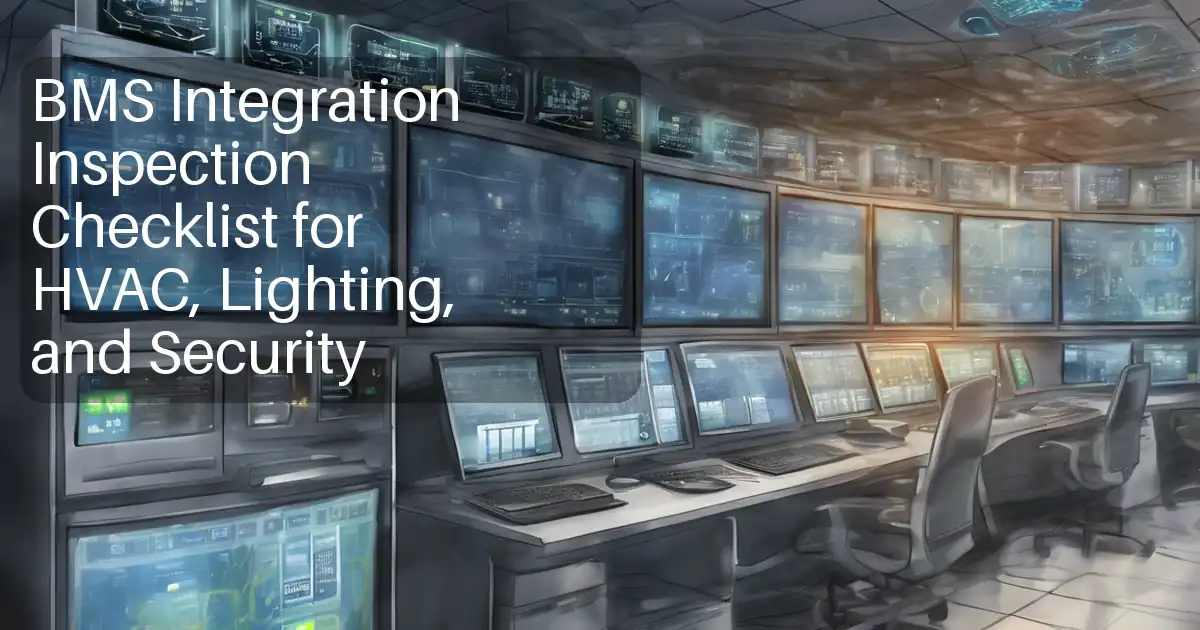
HVAC System Integration
- Verify that the BMS correctly interfaces with HVAC controllers and sensors.
- Check the accuracy of temperature and humidity data transmitted to the BMS.
- Ensure all HVAC alarms and alerts are properly configured and logged in the BMS.
Lighting System Integration
- Confirm that lighting schedules are accurately programmed and executed by the BMS.
- Verify that occupancy sensors relay correct status to the BMS for efficient lighting control.
- Check that manual override controls function correctly and report changes to the BMS.
Security System Integration
- Ensure all security cameras are integrated and accessible via the BMS interface.
- Verify that access control events are logged and monitored through the BMS.
- Check intrusion detection systems for correct alert integration with the BMS.
System Communication and Networking
- Review network configurations to ensure reliable communication between the BMS and integrated systems.
- Test network redundancy and failover protocols to ensure system reliability.
- Ensure all firmware and software updates are applied to maintain system compatibility.
Preview the printable checklist
Preview page one below. Open the image or download the PDF for all pages.

At a glance
- Ensure optimal performance and energy efficiency of integrated systems through a comprehensive inspection.
- Enhance building security and occupant comfort by verifying seamless integration of BMS components.
- Interactive online checklist with tick, comment, and export features secured by QR code.
- Identify and rectify integration issues to prevent system failures and operational disruptions.
How to Use This Checklist
- Click the “Use this checklist” button to start the interactive mode.
- Tick each item online as you complete it.
- Add comments on individual items or the entire checklist.
- Click Share or Download to export your completed checklist as PDF or Excel.
Importance of BMS Integration
BMS integration with HVAC, lighting, and security systems is pivotal in modern building management. It allows centralized control and monitoring, enhancing operational efficiency and reducing energy costs. Proper integration ensures systems work in harmony to provide optimal comfort and security.
- Centralized control enhances operational efficiency.
- Reduces energy consumption and operational costs.
- Improves occupant comfort and building security.
Best Practices for System Integration
To ensure successful BMS integration, follow industry best practices. These include thorough testing of communication protocols, regular updates of system software, and routine verification of system performance. Documenting integration processes and maintaining clear communication with all stakeholders is also crucial.
- Test communication protocols thoroughly.
- Regularly update system software.
- Document integration processes meticulously.