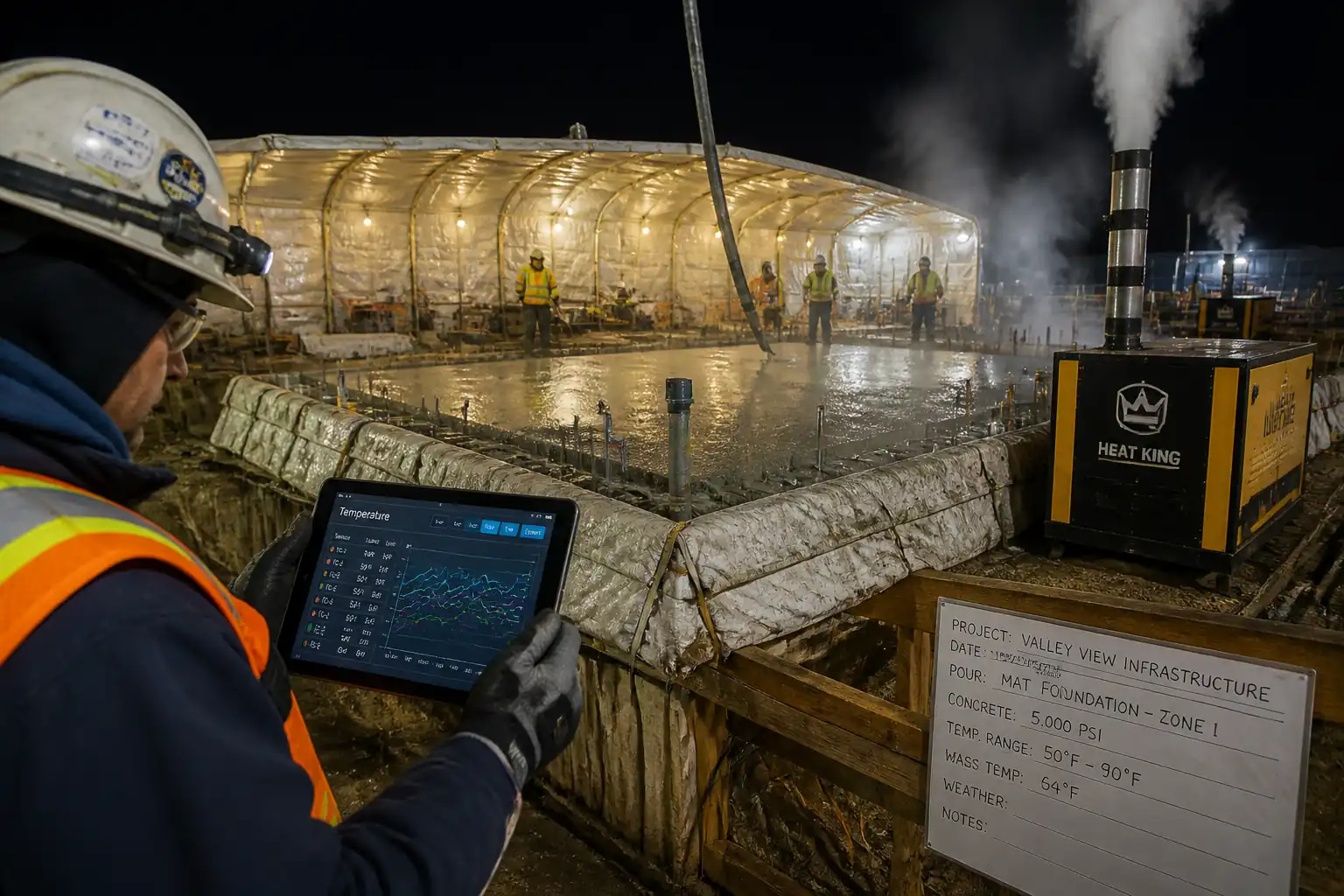

Method Statement: Cold-Weather Mass Concrete Placement, Thermal Control, and Monitoring – Method Statement
AI-assisted method statement with matching ITP, PDF download, and Excel export.
More than a static template
Unlike a downloadable Word or PDF template, this method statement is an AI-assisted editable starting point connected directly to a matching Inspection and Test Plan. Every section is structured, project-adaptable, and ready to export.
- AI-assisted drafting — Customize every section with AI for your specific project scope.
- Linked ITP — A matching inspection and test plan is generated alongside the method statement.
- Multiple export formats — Download as a formatted PDF or editable Excel spreadsheet.
- Editable starting point, not a final document — Review, verify, and adjust all content against your project requirements before use.
Static template vs. Quollnet workflow
| Feature | Static template | Quollnet |
|---|---|---|
| Project-specific content | Manual fill-in required | AI-assisted customization |
| Linked ITP | Separate document, no link | Matching ITP included |
| Export formats | Usually PDF only | PDF and Excel |
| Structured sections | Free-form layout | 13 standardized sections |
| Saved to your account | Local file only | Cloud-saved, reusable |
| Content accuracy | You verify everything | AI-assisted, you still verify |
| Cost | Often free but time-intensive | Free to customize and download |
What you can customize
When you save this method statement to your account, every section becomes editable. The following 13 sections are included:
- Scope — Defines the activity and its boundaries.
- References — Standards, specifications, and drawings.
- Responsibilities — Roles and accountabilities.
- Resources — Labour, plant, and equipment summary.
- Materials — Materials and compliance requirements.
- Equipment — Tools and equipment details.
- Prerequisites — Hold points and pre-conditions.
- Method sequence — Step-by-step construction sequence.
- Safety controls — HSE risk controls and PPE.
- Environmental controls — Environmental mitigation measures.
- QA/QC — Quality inspection and test requirements.
- ITP — Inspection and Test Plan table (has its own page).
- Attachments — Referenced drawings and documentation.
Why this method statement is used
This method statement is used to define and communicate the approved procedure for carrying out method statement: cold-weather mass concrete placement, thermal control, and monitoring on site. It ensures the work is planned in advance, the correct resources and controls are in place, and all personnel understand responsibilities, sequence, quality requirements, and safety controls before work begins. It aligns site execution with the documented scope and acceptance expectations.
Who uses this method statement
This method statement is used by contractors, site supervisors, project engineers, QA/QC engineers, HSE officers, consultants, and client representatives. It serves as a shared reference for planning, execution, supervision, inspection, and approval of the activity on site.
When it is prepared and submitted
The method statement is prepared before the work activity starts and submitted as part of the pre-construction documentation package for review and approval.
Who reviews or approves it
The method statement is usually submitted to the client representative, consultant, resident engineer, or project management consultant for review and approval before the work commences.
Important approval note
This method statement is an AI-assisted editable starting point, not a pre-approved document. Before use on any project, all content must be reviewed and approved by the relevant parties (superintendent, principal contractor, or client representative) in accordance with your contract and project quality plan.
For example: if your specification requires a departure from a referenced standard, that departure must be documented and approved separately — this method statement will not capture that automatically. Always verify against your applicable drawings, specifications, and regulatory requirements.
Method statement content
Scope
Purpose
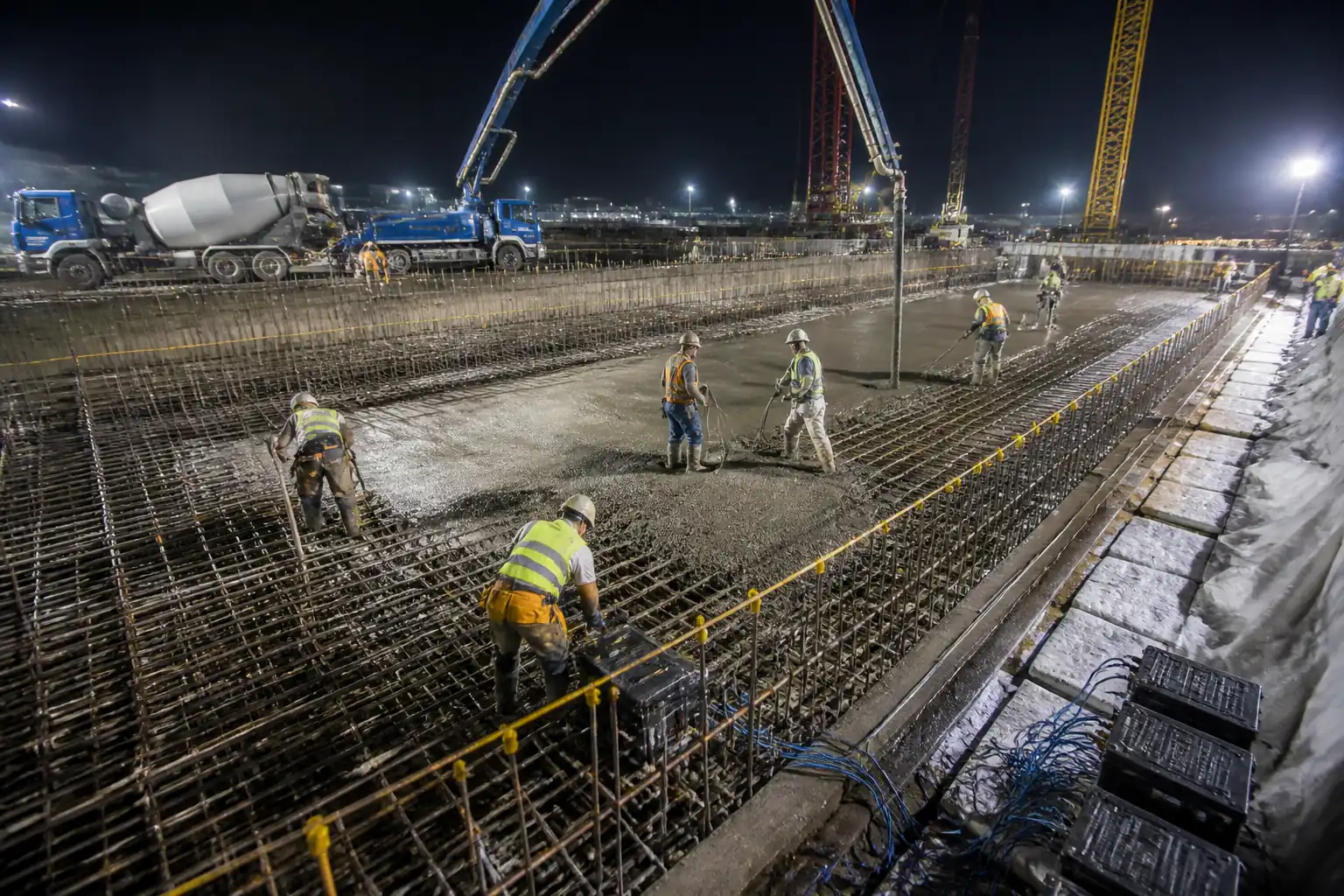
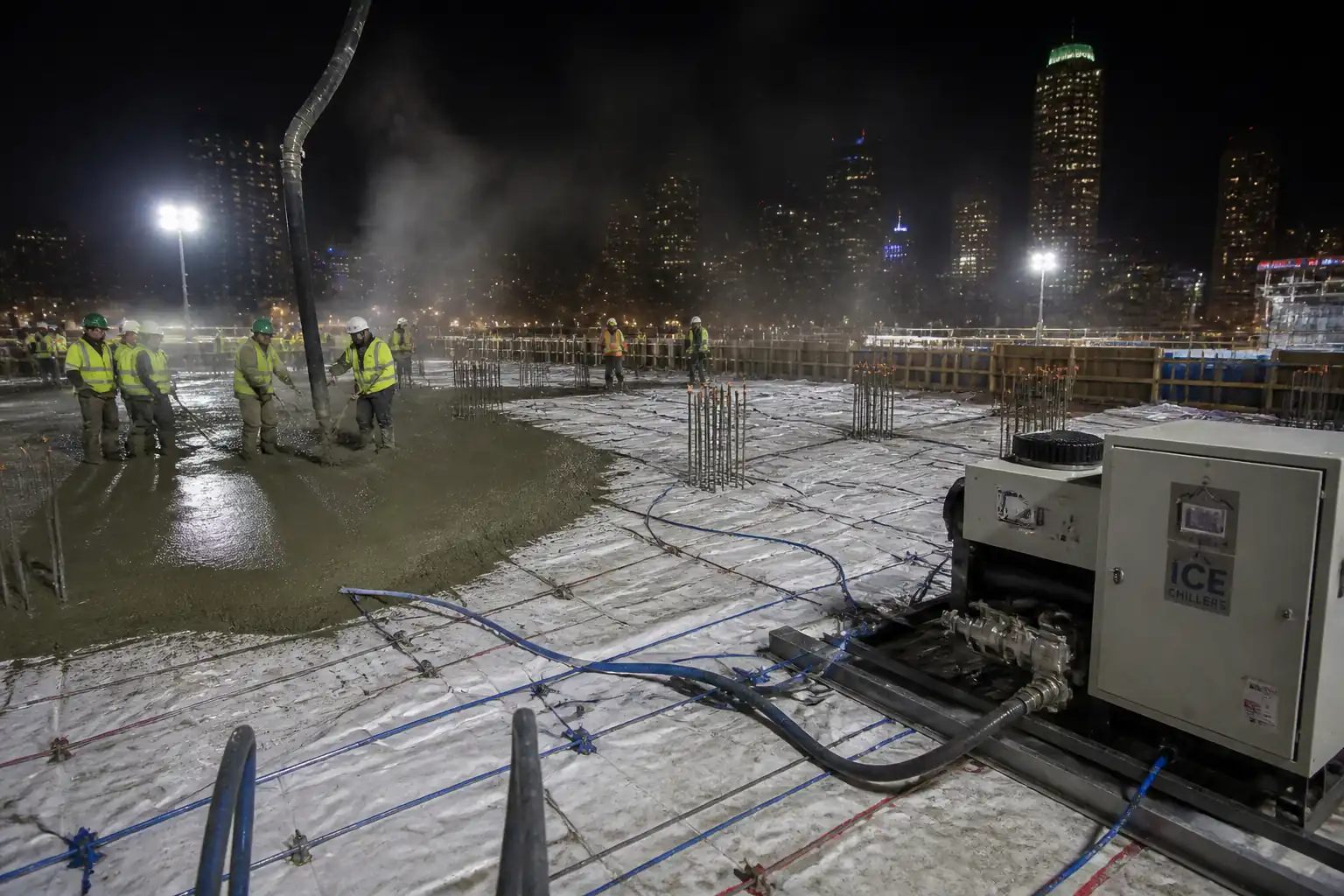
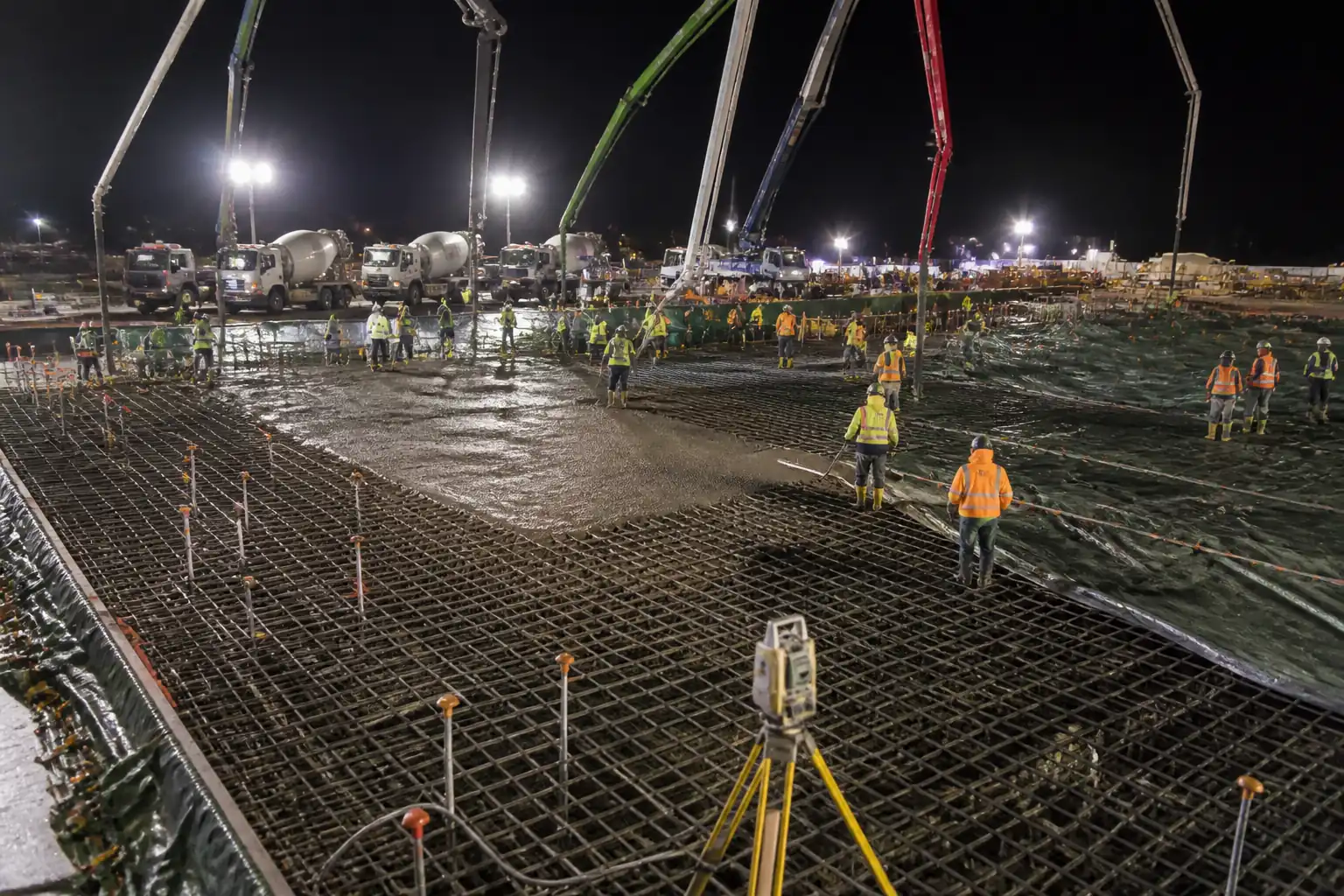
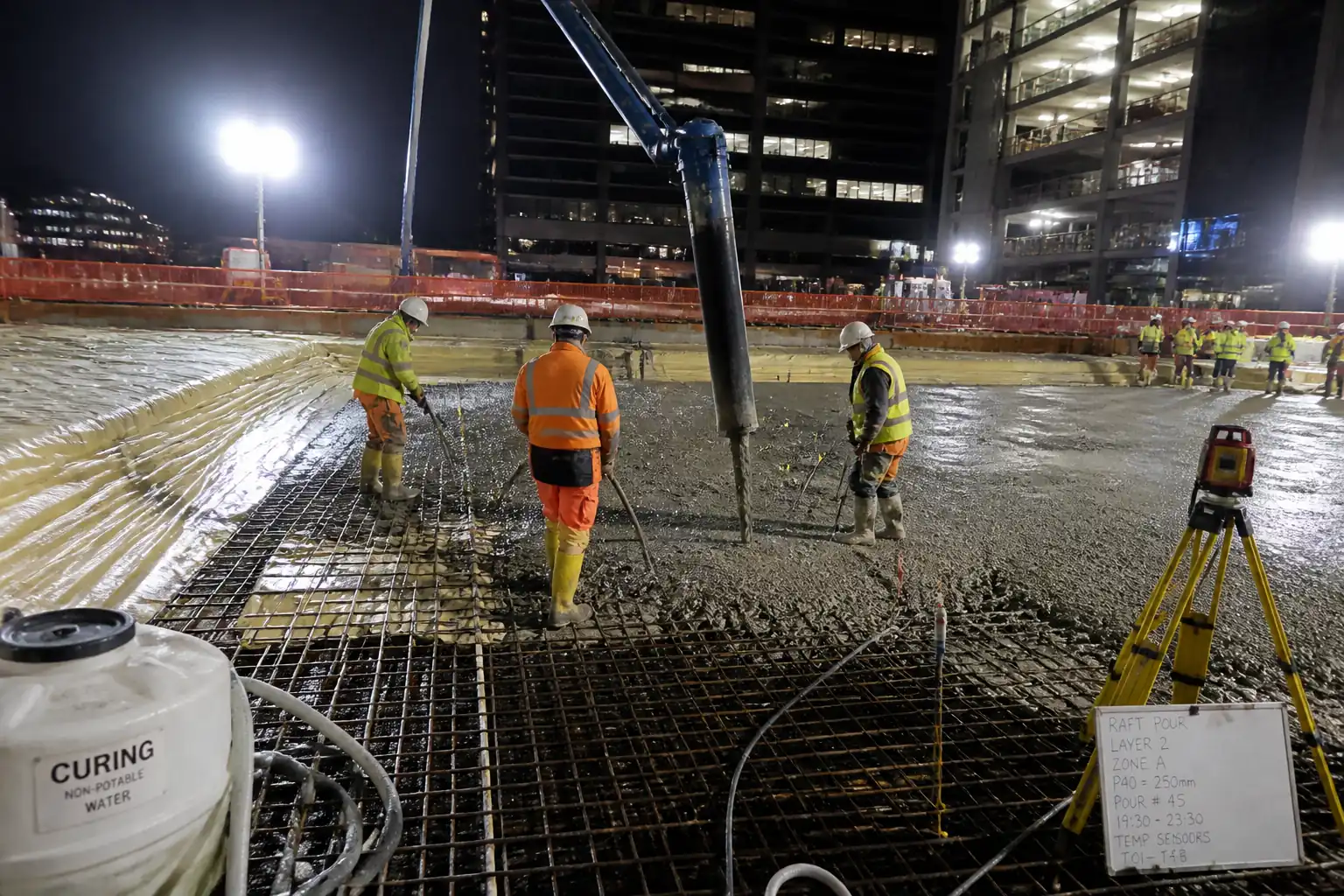
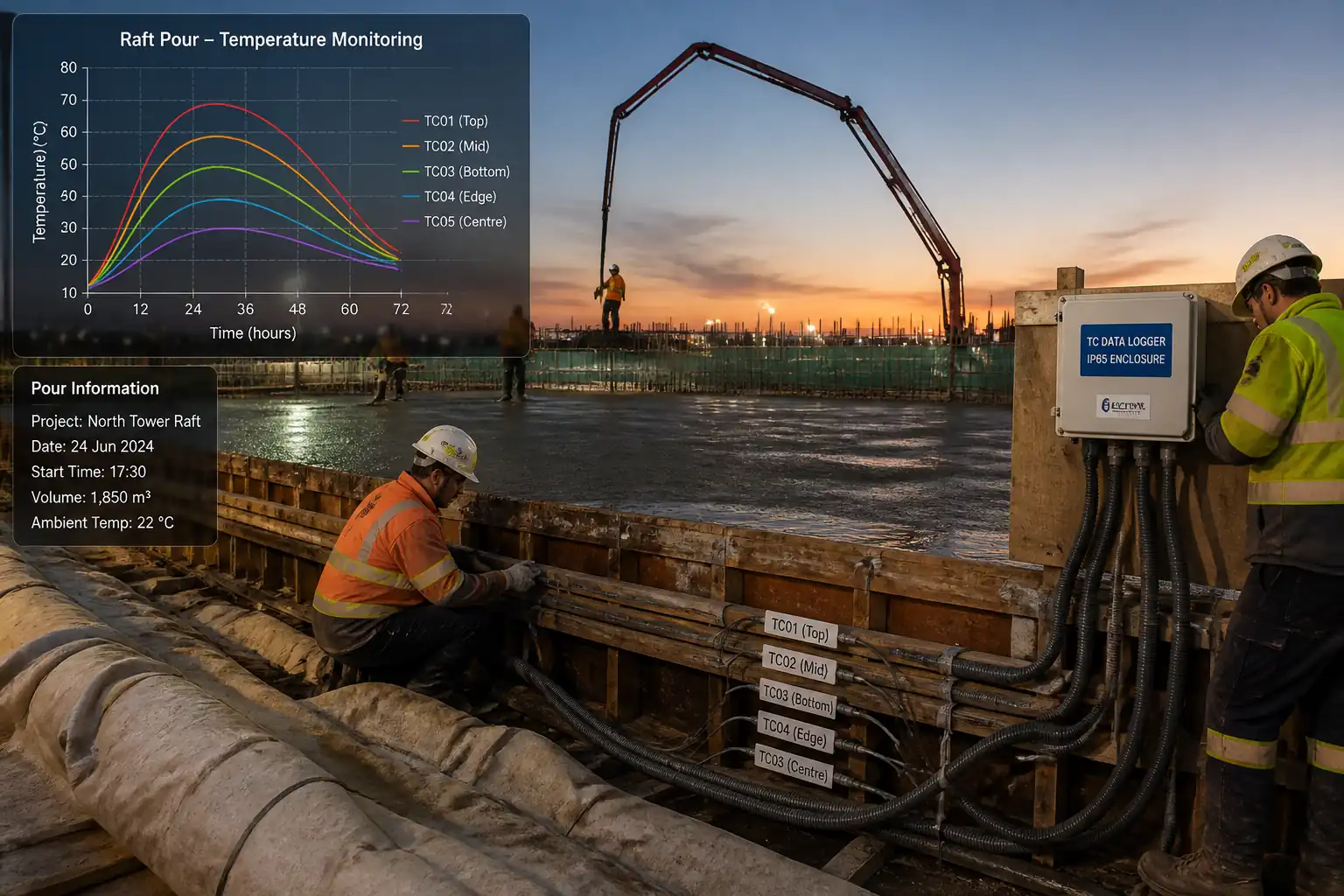
Define the procedures, controls, and inspection/testing requirements for cold-weather placement of mass concrete, including heating aggregates and mixing water, protection of freshly placed concrete from freezing, maintenance of minimum temperatures for hydration, and thermal monitoring to control temperature differentials and early-age thermal cracking.
Scope of Work
- Mass concrete elements (e.g., raft foundations, thick walls/footings, pile caps) exposed to cold-weather ambient conditions.
- Batch plant adjustments for aggregate and water heating.
- Site installation of thermal control measures (insulated forms, blankets, heated enclosures, windbreaks).
- Placement, consolidation, finishing, and protection of concrete in ambient temperatures at or below 5°C, or when the average daily air temperature is forecast to be below 5°C for more than 3 consecutive days.
- Continuous temperature monitoring, data logging, and acceptance verification.
Exclusions
- Non-mass concrete (<1.0 m minimum dimension) unless otherwise directed by the Engineer.
- Specialized steam curing or prestressed elements (separate procedures if required).
References
| Document Type | Reference / Number | Revision | Notes |
|---|---|---|---|
| ACI 306R | |||
| ACI 207.1R / ACI 207.2R | [Verify project adoption] | ||
| ACI 301 | Applicable project clauses prevail | ||
| ASTM C94/C94M | |||
| ASTM C1064/C1064M | |||
| ASTM C143/C143M | |||
| ASTM C231/C231M | |||
| ASTM C138/C138M | |||
| ASTM C31/C31M | |||
| ASTM C39/C39M | |||
| ASTM C1074 | |||
| ASTM C260/C260M | |||
| ASTM C494/C494M | Use non-chloride accelerators for reinforced concrete | ||
| ASTM E230/E230M | Type K typically used | ||
| BS EN 206 | Use if project is EN/Eurocode based | ||
| BS EN 12350 series | Project-dependent | ||
| BS EN 12390 series | Project-dependent | ||
| ISO 9001 | Contractor QA/QC system | ||
| Shall take precedence over guidance documents |
Responsibilities
| Role | Responsibility | Name / Party |
|---|---|---|
| Contractor Project Manager | Accountable | Contractor |
| Construction Manager / Superintendent | Responsible | Contractor |
| QA/QC Engineer | Responsible | Contractor |
| Batch Plant Manager | Responsible | Ready-Mix Supplier |
| M&E Supervisor (Heaters/Enclosures) | Responsible | Contractor |
| Independent Testing Agency (ITA) Technician | Responsible | ITA |
| HSE Manager | Responsible | Contractor |
| Engineer/Client’s Representative | Approver | Engineer/Client |
Resources
| Resource Type | Description | Quantity | Remarks |
|---|---|---|---|
| Supervision | Superintendent, Section Engineer, Foremen | As required [Verify per project] | |
| Skilled labor | Concrete finishers, pump crew, rebar/form carpenters | 8–20 crew per pour [Verify] | |
| Specialists | Heater technicians, enclosure riggers, instrumentation techs | 3–6 technicians [Verify] | |
| Lifting/logistics | Banksman, traffic marshals, crane operator (blankets/forms) | As required |
Materials
| Material | Specification / Grade | Quantity | Remarks |
|---|---|---|---|
| Cementitious materials | Per approved mix design; comply with ACI 301 / BS EN 197 | ||
| Fine and coarse aggregates | ASTM C33 or BS EN 12620 | ||
| Mixing water | ASTM C1602 / BS EN 1008 | ||
| Chemical admixtures | ASTM C494, ASTM C260 / BS EN 934 | ||
| Thermal protection | Manufacturer data; flame-retardant | ||
| Enclosure materials | Fire-retardant grade [Verify] | ||
| Thermal monitoring system | ASTM E230/E230M; data logging resolution ≤0.5°C [Verify] | ||
| Curing compound | ASTM C309 or C1315 / BS EN 934-2 [Verify] |
Equipment
| Equipment | Capacity / Type | Quantity | Inspection Required |
|---|---|---|---|
| Batch plant hot-water system | Up to 60–80°C outlet [Verify] | ||
| Aggregate heating system | Sized per tonnage and delta-T [Verify] | ||
| Heaters for enclosures | kW/BTU sized by heat loss calc [Verify] | ||
| Heated enclosures & windbreaks | As designed | ||
| Temperature monitoring system | -20 to 80°C range | ||
| Thermometers (IR/contact) | Accuracy ±1°C | ||
| Concrete delivery and placing | Per pour rate | ||
| Field testing apparatus | |||
| HSE equipment |
Prerequisites
- Approved mix designs, thermal control plan, and pour sequence drawings.
- Weather forecast (72 h minimum) indicating cold-weather criteria and wind chill; contingency plan for rapid temperature drops.
- Batch plant calibration certificates (≤3 months old) and heater commissioning records.
- Aggregate stockpiles prepared on well-drained, non-frozen pads; covers installed to prevent snow/ice contamination.
- Formwork and reinforcement inspected: free of snow/ice; substrate not frozen; preheat plan for rebar/forms to >5°C prior to placement [Verify per project].
- Enclosures and windbreaks erected where required; heater sizing calculations completed and reviewed.
- Thermocouple layout approved; sensors installed and continuity-tested before pour; data logger time-synced.
- HSE permits: fuel storage, hot works (if applicable), enclosed space heating, lifting plans, night-work lighting [Verify per project HSE plan and local regulations].
- Trial mix or initial pour completed if required by specifications.
- Materials on site: insulating blankets, curing compound (if permitted), evaporation retardant (if needed), spare heaters and fuel.
- ITP approved with defined hold/witness points by Engineer.
- Access/egress, lighting, slip prevention, and snow/ice removal plan in place.
- Communication plan and emergency contacts posted at pour control point.
Method Sequence
| Step | Activity | Description | Responsibility | Inspection / Hold Point |
|---|---|---|---|---|
| 1 | Pre-pour coordination and thermal control planning | Conduct pre-pour meeting covering mix, placement rate, target discharge temperature, thermal differential limits (typical ≤20°C between core and surface [Verify]), minimum maintained concrete temperature (typically ≥10°C until ≥5 MPa achieved [Verify]), monitoring locations, hold points, and contingency actions. | Construction Manager / QA-QC | ITP Hold Point: approve plan |
| 2 | Batch plant setup: heating aggregates and water | Start hot-water and aggregate heating. Maintain aggregate temperature typically 10–40°C (avoid >60°C) and prevent surface ice. Control water temperature typically up to 60–80°C to achieve target discharge temperature without exceeding mixer or material limits [Verify]. Blend to achieve uniform concrete temperature. | Batch Plant Manager | Check calibration and temps |
| 3 | Stockpile management | Remove contaminated (ice/snow) aggregate; keep piles covered; provide drainage. Use heated bins or ducts to prevent re-freezing. Avoid open flame on aggregates. | Batch Plant Crew | Visual |
| 4 | Subgrade, formwork, and reinforcement conditioning | Verify subgrade not frozen; preheat reinforcement and forms to >5°C [Verify]. Remove snow/ice. Install insulated form liners if specified. Record temperatures before pour. | Site Engineer | Engineer Witness |
| 5 | Enclosures, windbreaks, and heating setup | Erect enclosures to reduce convective heat loss. Install indirect-fired heaters with external exhaust. Provide air distribution to avoid hotspots. Install CO/NOx monitors and maintain ventilation. | M&E Supervisor | HSE inspection |
| 6 | Thermocouple installation and verification | Install paired surface and core thermocouples (min 3 pairs for first 500 m³; +1 per additional 250 m³ [Verify]). Secure leads; label sensors. Connect to logger; verify readings and channel mapping. | QA/QC Engineer | Witness |
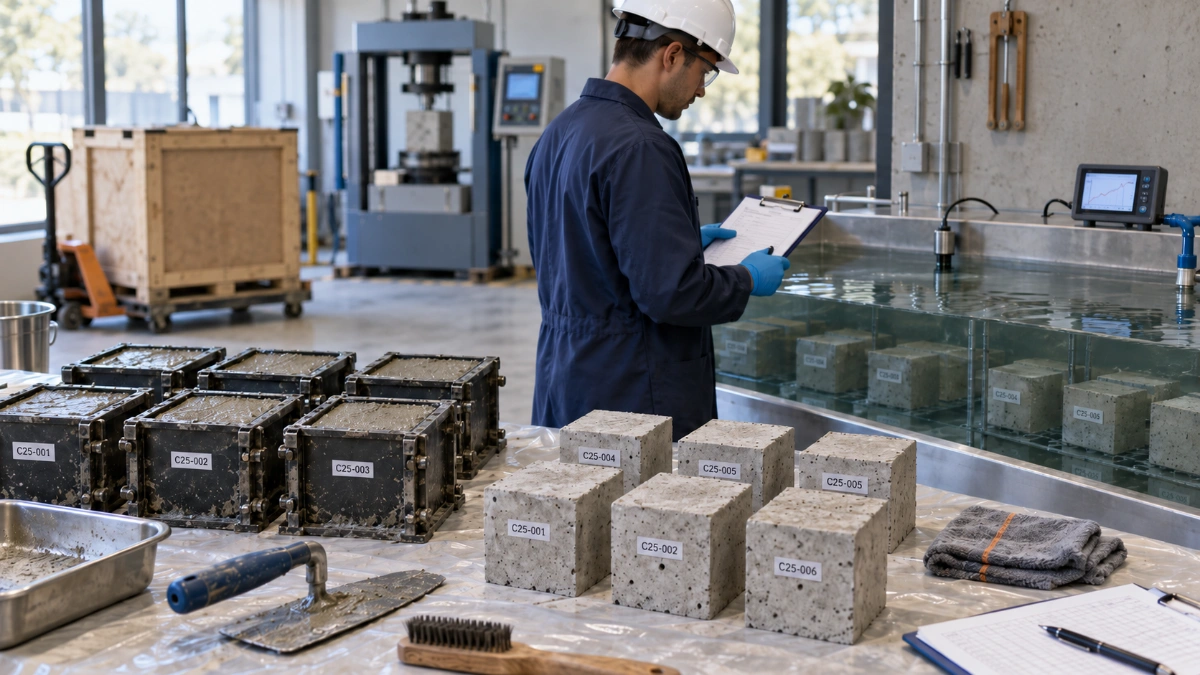
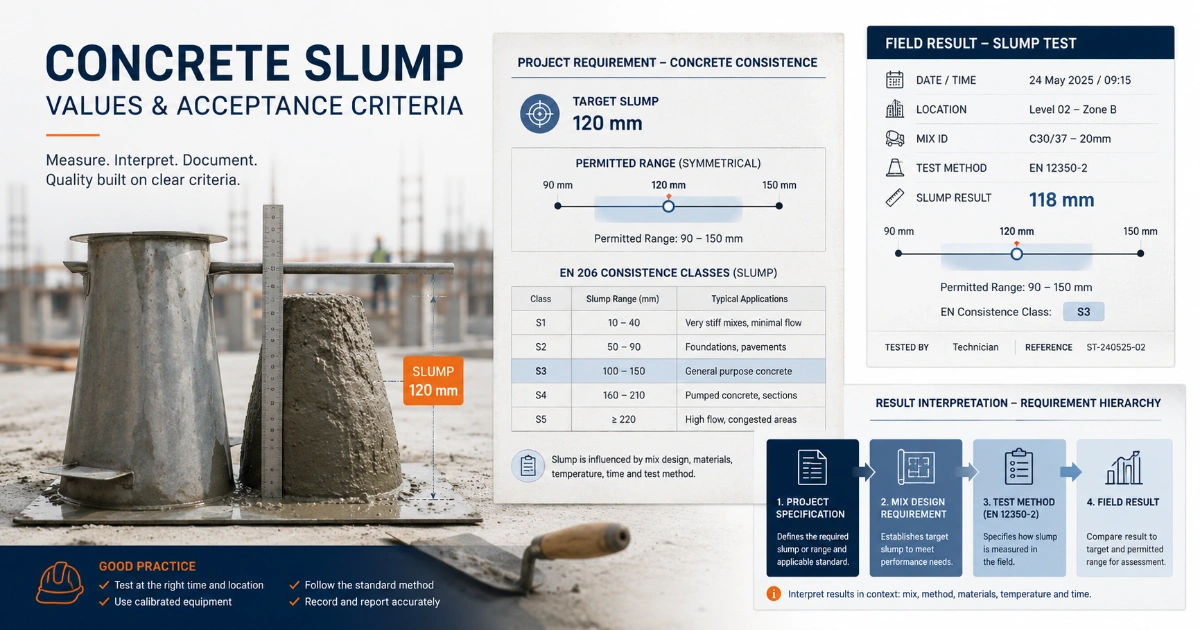
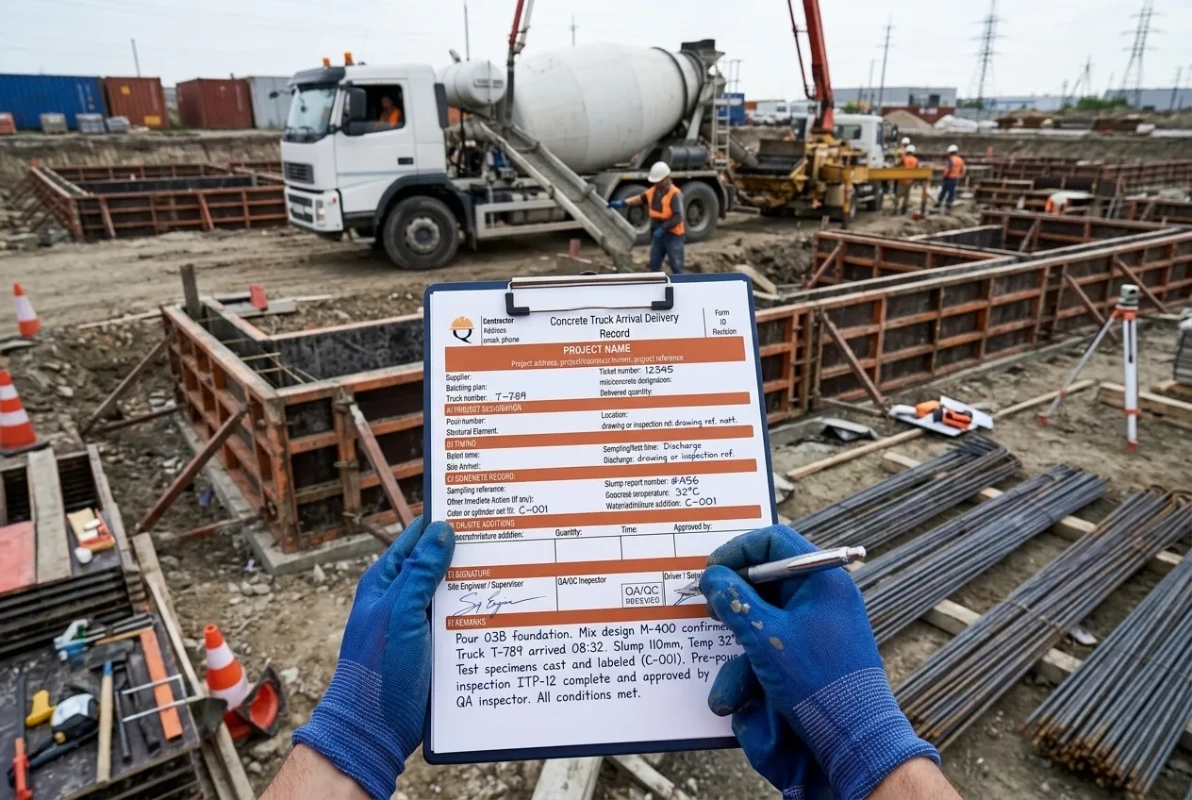
| 7 | Concrete delivery and acceptance | Schedule deliveries to maintain continuous placement. At each truck: sample per ASTM C172, test slump (ASTM C143), air (ASTM C231), temperature (ASTM C1064). Cast cylinders (ASTM C31) and/or activate maturity system (ASTM C1074). | ITA Technician / Site Engineer | Witness |
| 8 | Placement and consolidation | Place in lifts of controlled thickness (e.g., 300–500 mm [Verify]) to limit heat buildup and ensure consolidation. Use internal vibrators; avoid over-vibration and contact with sensors. Minimize rehandling and exposure to cold air. | Superintendent | Continuous supervision |
| 9 | Immediate protection and finishing | As finishing permits, immediately cover with insulating blankets or close heated enclosures to prevent rapid cooling. Apply curing compound only when surface temperature and condition meet manufacturer guidance [Verify]. | Finishing Foreman | Visual |
| 10 | Curing and temperature maintenance | Maintain internal/surface temperatures per thermal plan (typically ≥10°C) until concrete reaches at least 5 MPa or specified strength and not less than 72 h [Verify]. Control cooling rate typically ≤1–2°C/h and surface-to-core differential typically ≤20°C [Verify]. | QA/QC Engineer / M&E Supervisor | Hold/Witness as specified |
| 11 | Controlled cooling and removal of protection | When strength/temperature criteria met, reduce heat gradually. Do not remove protection until concrete temperature is within typically 10°C of ambient and cooling rate ≤1°C/h [Verify]. Stage removal to prevent thermal shock. | Superintendent / QA/QC | Witness |
| 12 | Post-pour review and reporting | Compile thermal graphs, field tests, cylinder results, maturity strength estimates, and any deviations. Submit to Engineer for acceptance. | QA/QC Engineer | Review |
| 13 | Contingency response (heater failure/extreme cold) | Activate backup heaters; deploy extra blankets; suspend placement if discharge temperatures cannot be maintained. Notify Engineer immediately. | Construction Manager | HSE/QA notification |
Health, Safety, and Environment (HSE) – Safety Controls
Key Task-Specific Hazards and Controls
1) Hazard: Indirect heaters and fuel systems (LPG/diesel)
- Likely consequence: Fire/explosion, burns, CO exposure
- Engineering/procedural control: Use indirect-fired heaters; exhaust outside enclosure; flame arrestors; leak tests; segregated fuel storage with bunds; fire watch during start-up; prohibit open flames near aggregates/forms.
- Required PPE: Flame-resistant gloves, eye protection, long sleeves, hearing protection.
- Collective preventive measure: Fixed CO/NOx detectors with alarms; automatic shutoff valves; fire extinguishers (foam/CO2) staged.
- Inspection/permit/supervision: Hot work/fuel storage permit as applicable; daily heater checklist; technician sign-off; [Verify per project HSE plan and local regulations].
2) Hazard: Enclosed/heated work area (restricted ventilation)
- Likely consequence: Asphyxiation/CO poisoning, heat stress, trip hazards
- Engineering/procedural control: Provide mechanical ventilation achieving required air changes; duct heaters to distribute heat; maintain clear egress routes; cable management for thermocouples.
- PPE: CO personal monitor (where required), high-visibility clothing, anti-slip footwear.
- Collective measure: Emergency lighting, marked escape routes, signage of maximum occupancy.
- Inspection/permit/supervision: Pre-entry gas test if risk identified; continuous CO/NOx monitoring; supervisor to control access.
3) Hazard: Slip, trip, and fall on ice/snow and wet surfaces
- Likely consequence: Sprains/fractures
- Engineering/procedural control: De-ice with non-chloride products; grit sand; remove snow/ice before work; install anti-slip mats and drip trays.
- PPE: Anti-slip insulated boots, gloves.
- Collective measure: Designated walkways with barriers; lighting ≥50 lux on walkways [Verify].
- Inspection/permit/supervision: Daily housekeeping inspection; toolbox talks before night shifts.
4) Hazard: Lifting insulated blankets and enclosure frames
- Likely consequence: Struck-by, crush injuries, dropped loads
- Engineering/procedural control: Use rated lifting points; tag lines; exclusion zones; wind limit per lift plan.
- PPE: Helmets with chin straps, gloves, steel-toe boots.
- Collective measure: Appointed lifting supervisor; certified crane/MEWP.
- Inspection/permit/supervision: Approved lifting plan; pre-lift checks; weather check.
5) Hazard: Electrical supply to heaters/loggers/lighting
- Likely consequence: Shock/electrocution, fire
- Engineering/procedural control: RCD/GFCI protection; weatherproof (IP-rated) connectors; cable trays; periodic PAT testing.
- PPE: Dielectric gloves as needed, eye protection.
- Collective measure: Lock-out/tag-out (LOTO) for maintenance; dedicated distribution boards.
- Inspection/permit/supervision: Electrical permit to work; weekly inspection logs.
6) Hazard: Exposure to hot water/steam during aggregate/water heating
- Likely consequence: Burns/scalds
- Engineering/procedural control: Guarding on hot lines; insulated hoses; pressure relief valves; clear signage.
- PPE: Heat-resistant gloves, face shield when opening lines.
- Collective measure: Barriers around heaters.
- Inspection/permit/supervision: Commissioning certificate; routine pressure/safety valve checks.
7) Hazard: Night work and reduced visibility
- Likely consequence: Struck-by, slips, quality defects
- Engineering/procedural control: Task lighting (≥200 lux at work face [Verify]); reflective PPE; backup power for lighting.
- PPE: High-visibility clothing (Class 2/3), headlamps as needed.
- Collective measure: Traffic management plan, horn/alarms on mobile plant.
- Inspection/permit/supervision: Night-work authorization; lighting inspection log.
8) Hazard: Vibration/noise from heaters and equipment
- Likely consequence: HAVS risk, hearing loss
- Engineering/procedural control: Low-vibration tools; job rotation; acoustic barriers where feasible.
- PPE: Hearing protection (SNR per risk assessment), anti-vibration gloves.
- Collective measure: Noise monitoring at perimeter when required.
- Inspection/permit/supervision: Noise survey reports; compliance with local limits.
9) Hazard: CO2 buildup from curing compound/solvents in enclosure
- Likely consequence: Respiratory irritation, flash fire risk
- Engineering/procedural control: Verify product compatibility; delay application until safe temperature/ventilation; use water-based products if possible.
- PPE: Respirators if required by SDS, gloves, goggles.
- Collective measure: SDS available; spill control.
- Inspection/permit/supervision: SDS review; COSHH/HAZCOM compliance.
10) Hazard: Concrete handling (skin contact, manual handling)
- Likely consequence: Cement burns, strains
- Engineering/procedural control: Wash stations with warm water; mechanical aids for moving blankets/forms.
- PPE: Alkali-resistant gloves, sleeves, safety glasses.
- Collective measure: Ergonomic training; team lifts.
- Inspection/permit/supervision: HSE observation cards; first-aid ready.
Environmental Controls
- Fuel management: Double-bunded tanks; drip trays; spill kits; emergency response plan. Refuel away from drainage; record volumes.
- Emissions: Use indirect-fired heaters with efficient combustion; position exhausts to avoid nuisance; monitor CO/NOx; optimize setpoints to reduce fuel use.
- Noise and lighting: Acoustic barriers near receptors; night lighting directed downward and shielded; comply with local curfew/noise limits [Verify].
- Waste and washout: Designated concrete washout (lined, contained); no discharge to soil/water; manage curing compound containers per SDS; recycle blankets if reusable.
- Stockpile runoff: Keep aggregates on paved pads with perimeter controls; prevent silt-laden runoff; cover during precipitation.
- Water management: Prevent hot-water/steam condensate from entering storm drains; collect and cool if necessary.
- Materials storage: Protect admixtures from freezing; secondary containment for liquids.
- De-icing agents: Use non-chloride de-icers around reinforcement-bearing areas to avoid chloride contamination.
- Documentation: Maintain environmental inspection checklists and incident logs; [Verify per project HSE plan and local regulations].
Quality Assurance and Quality Control (QA/QC)
General
- All works executed under approved Method Statement, ITP, and thermal control plan.
- Calibration certificates current for thermometers, loggers, scales, water meters, admixture dispensers.
Fresh Concrete Testing
- Temperature: Each truck (ASTM C1064) – acceptance: per mix/plan, typically 10–15°C at discharge for mass elements [Verify per project].
- Slump: At least per truck or 50 m³ (ASTM C143) – acceptance: within mix tolerance [Verify].
- Air content: At least per truck or 50 m³ (ASTM C231) – acceptance: per exposure/mix (e.g., 4–7% for freeze-thaw exposure) [Verify].
- Density/yield: As specified (ASTM C138).
Strength Verification
- Cylinders: Cast per ASTM C31; cure as specified (standard or field-cure). Test per ASTM C39 at specified ages (e.g., 7, 28, 56 days when SCMs used) [Verify].
- Maturity method: If adopted, develop calibration curve per ASTM C1074. Use to confirm minimum strength before reducing protection; cross-check with cylinders at agreed frequency.
- Freezing protection: Do not allow concrete to freeze before attaining minimum strength, typically ≥5 MPa [Verify per project].
Thermal Control and Monitoring
- Instrumentation: Minimum three surface-core pairs for first 500 m³, +1 pair per additional 250 m³ [Verify]. Log at ≥15-min intervals.
- Limits: Core–surface differential typically ≤20°C; max cooling rate typically ≤1–2°C/h; minimum maintained temperature typically ≥10°C until criteria met [Verify per project].
- Alarms: Trigger when approaching 80–90% of limit; implement corrective actions (add blankets, adjust heaters, reduce ventilation).
- Protection removal: Only when differential and cooling rate limits are satisfied and minimum strength/age achieved.
Records
- Batch tickets, fresh concrete test reports, temperature logs/graphs, cylinder test reports, maturity reports, inspection requests, permits, NCR/CAR closeout.
Nonconformance
- Actions may include increased insulation/heating, extended curing, additional testing (cores, extra cylinders), engineering review of thermal model. Document and obtain Engineer disposition prior to proceeding.
Attachments
- Example Thermal Control Plan and heater/blanket sizing calculation (heat loss, R-values, setpoints).
- Pour sequence drawing and placement rate plan.
- Thermocouple/sensor layout drawing and channel list.
- Pre-pour checklist (forms/rebar/subgrade temperature verification).
- Heater pre-start/operational checklist and fuel management plan.
- Sample field test forms (slump/air/temp/density; cylinder/maturity logs).
- Contingency plan for heater failure/extreme cold.
- Manufacturer data sheets: heaters, blankets, admixtures, curing compounds.
- Calibration certificates: thermometers, data loggers, batch plant meters.
- As-built thermal report template (graphs, alarms, acceptance summary).
This content is a read-only public reference. Download or customize to get an editable version.
ITP preview
The first inspection activities from the linked ITP for Method Statement: Cold-Weather Mass Concrete Placement, Thermal Control, and Monitoring:
| Activity | Inspection / Test | Acceptance Criteria | Responsibility | Record |
|---|---|---|---|---|
| Pre-pour inspection (forms, subgrade, rebar, cleanliness, temperatures) | Visual check; IR/contact temperature readings | No snow/ice; substrate not frozen; rebar/forms ≥5°C [Verify] | Site Engineer / Engineer’s Rep (W) | IR/ITP Form; photos |
| Aggregate and water heating setup and calibration | Measure aggregate/water temperatures; verify calibrations | Stable setpoints; no ice; calibration in date | Batch Plant Manager / QA-QC (H) | Calibration certs; temp log |
| Thermocouple installation and logger verification | Continuity test; channel mapping; baseline check | Sensors secure; readings stable within ±0.5°C | QA/QC Engineer (W) | Sensor layout; verification sheet |
Showing 3 of 10 inspection activities. View full ITP →
Related Inspection and Test Plan
An Inspection and Test Plan (ITP) is available for Method Statement: Cold-Weather Mass Concrete Placement, Thermal Control, and Monitoring. The ITP defines the inspection activities, acceptance criteria, hold and witness points, responsible parties, and records required to verify the work described in this method statement.
View the Method Statement: Cold-Weather Mass Concrete Placement, Thermal Control, and Monitoring ITP →Frequently asked questions
Continue with related Quollnet resources connected to this method statement.