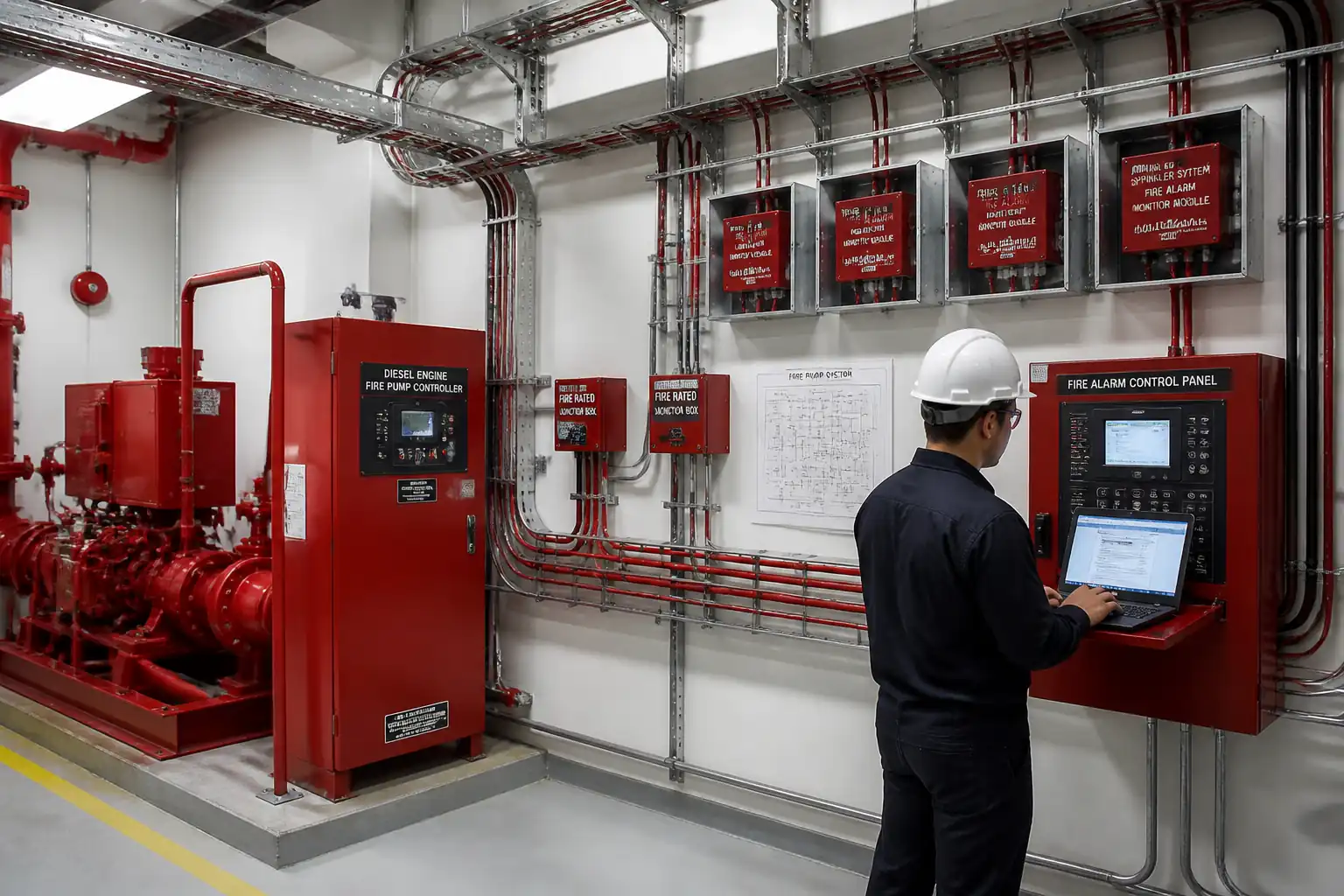

Inspection and Test Plan for Method Statement – Fire Alarm Monitoring Interface for Fire Pump and Firefighting Systems
AI-assisted inspection and test plan connected to a method statement, with PDF and Excel export.
More than a static template
Unlike a downloadable Word or PDF template, this ITP is an AI-assisted editable starting point directly connected to its method statement. Every inspection activity, hold point, and acceptance criterion is structured and ready to adapt to your project.
- AI-assisted customization — Tailor inspection activities and acceptance criteria to your specific project scope.
- Linked method statement — This ITP is connected to the corresponding method statement describing the work sequence.
- Multiple export formats — Download as a formatted PDF or editable Excel spreadsheet.
- Editable starting point, not a final document — Review and verify all content against your project specifications and standards before use.
What you can customize
When you save this ITP to your account, every inspection row becomes editable. You can add, remove, or modify:
- Inspection activity — Description of what is being inspected.
- Inspection type — Hold point (H), Witness point (W), Review (R), or Monitor (M).
- Responsibility — Contractor, subcontractor, engineer, or client.
- Frequency — How often the inspection occurs.
- Acceptance criteria — Referenced standard or specification requirement.
- Records — Forms, test reports, or checklists required as evidence.
Why this ITP is used
To verify conformance of installed interfaces with standards, drawings, and the approved Cause & Effect, ensuring reliable life-safety signaling.
Who uses this inspection and test plan
QA/QC engineers, fire alarm specialists, consultants, and authorities having jurisdiction.
When this ITP is prepared and submitted
From material receipt through installation, programming, functional testing, and final handover.
Who receives or approves this ITP
Consultant/Authority Having Jurisdiction (AHJ) as per contract.
Inspection scope
Material compliance, installation quality, wiring integrity, programming, point-to-point simulation, integrated live tests, and documentation.
Typical hold, witness, and review points
Programming review (W), point-to-point simulation (H), integrated pump run checks (W/H), final documentation review (W).
Typical inspection records
Material certificates, IR/continuity reports, programming printouts, test sheets, witness signatures, as-builts, O&M and training records.
Important approval note
This ITP is an AI-assisted editable starting point, not a pre-approved document. Before use on any project, all inspection activities, hold points, and acceptance criteria must be reviewed and approved by the relevant parties (superintendent, principal contractor, or client representative) in accordance with your contract and project quality plan.
Always verify acceptance criteria against your applicable drawings, specifications, and regulatory requirements. Hold points must be confirmed with the relevant authority before work proceeds past that point.
Inspection and test plan
| Activity | Inspection / Test | Acceptance Criteria | Responsibility | Record |
|---|---|---|---|---|
| Material receipt inspection | Materials per approved submittal; UL/EN54 listed; no damage; certificates available. | QA/QC Engineer / FA Subcontractor | Material inspection report, COC, delivery notes | |
| Shop drawings and I/O list approval | Approved drawings, point schedule, and C&E matrix issued IFC. | Consultant / Main Contractor | Approved drawings, C&E | |
| Containment and box installation inspection | Supports, IP rating, segregation, bonding compliant. | QA/QC Engineer | Containment/JB inspection checklist, photos | |
| Cable installation inspection | Correct cable type/size/color; bend radius; no damage; route as per drawings. | QA/QC Engineer | Cable installation checklist | |
| Termination inspection | Correct terminals, ferrules, torque, polarity; EOL at field end. | QA/QC Engineer / Consultant | Termination checklist | |
| Continuity and insulation resistance test | Continuity and IR at 250 V DC (devices disconnected) | Continuity per route; IR ≥2 MΩ [Verify per project specs]. | QA/QC Engineer | IR/continuity test report, instrument calibration certs |
| FACP programming review | Point database, descriptors, class (Alarm/Supervisory/Trouble) per C&E; backups taken. | Consultant / FA Programmer | Programming printout, backup file | |
| Loop integrity and supervision test | Open/short simulation | Trouble annunciate within OEM polling; restoration to normal; no nuisance faults. | FA Technician / QA/QC / Consultant | Loop test record, FACP logs |
| Point-to-point functional simulation | Simulate each monitored contact state change | 100% of points correct address, text, and event class; annunciation at FACP/repeaters; event log captured. | FA Technician / QA/QC / Consultant | Point-to-point test sheets, screenshots |
| Integrated interface verification during pump run | Live pump run or simulated demand | RUN/FAIL and ancillary statuses accurate; no unintended control of pump by FACP; logs recorded. | Commissioning Engineer / Firefighting Vendor / Consultant | Integrated test report, vendor report |
| As-built and documentation review | As-builts, point lists, O&M, training records complete and approved. | QA/QC / Consultant | Handover dossier, approvals |
This table is a read-only public reference. Download the PDF or Excel version, or customize this ITP to edit it for your project.
Frequently asked questions
Related method statement
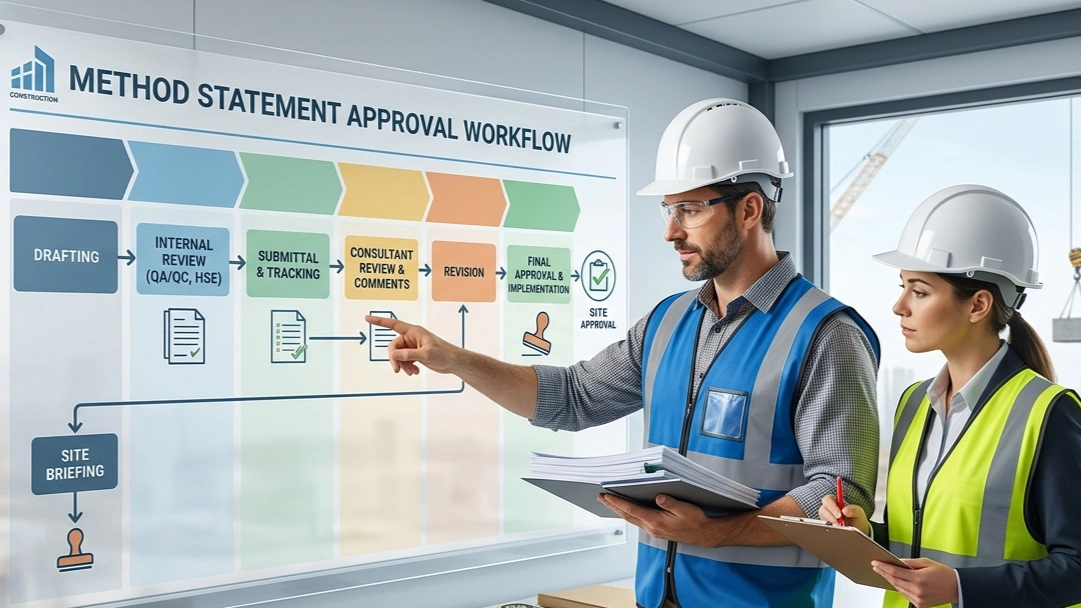
This Inspection and Test Plan is associated with the Method Statement – Fire Alarm Monitoring Interface for Fire Pump and Firefighting Systems method statement, which describes the step-by-step construction sequence, resources, materials, equipment, safety controls, and environmental controls for this activity.
View the Method Statement – Fire Alarm Monitoring Interface for Fire Pump and Firefighting Systems method statement →Continue with related inspection, method statement, article, and checklist resources.