G
Guest

Instrução Suplementar do Arquiteto da AIA (ASI) – Formulário gratuito e dicas de uso

Baixe nosso formulário gratuito de Instrução Suplementar do Arquiteto da AIA (ASI). Saiba como usá-lo para pequenas alterações sem impacto de custo/prazo.

Instrução Suplementar do Arquiteto da AIA (ASI) – Formulário gratuito e dicas de uso
Portuguese version

Instrução Suplementar do Arquiteto da AIA (ASI) – Formulário gratuito e dicas de uso


Introdução

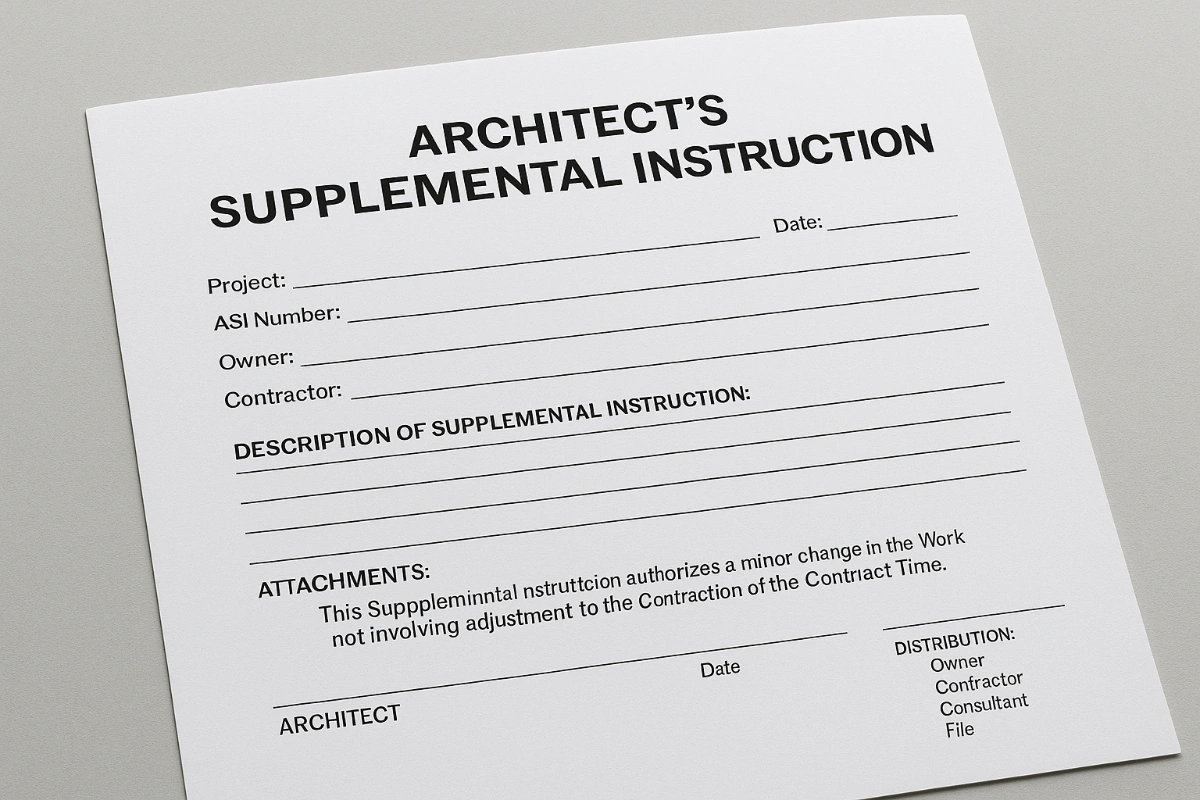
Nos termos das Condições Gerais do Contrato de Construção AIA A201, uma Instrução Suplementar do Arquiteto (ASI) permite ao arquiteto autorizar uma pequena alteração nos trabalhos que não afete o valor do contrato nem o prazo contratual.

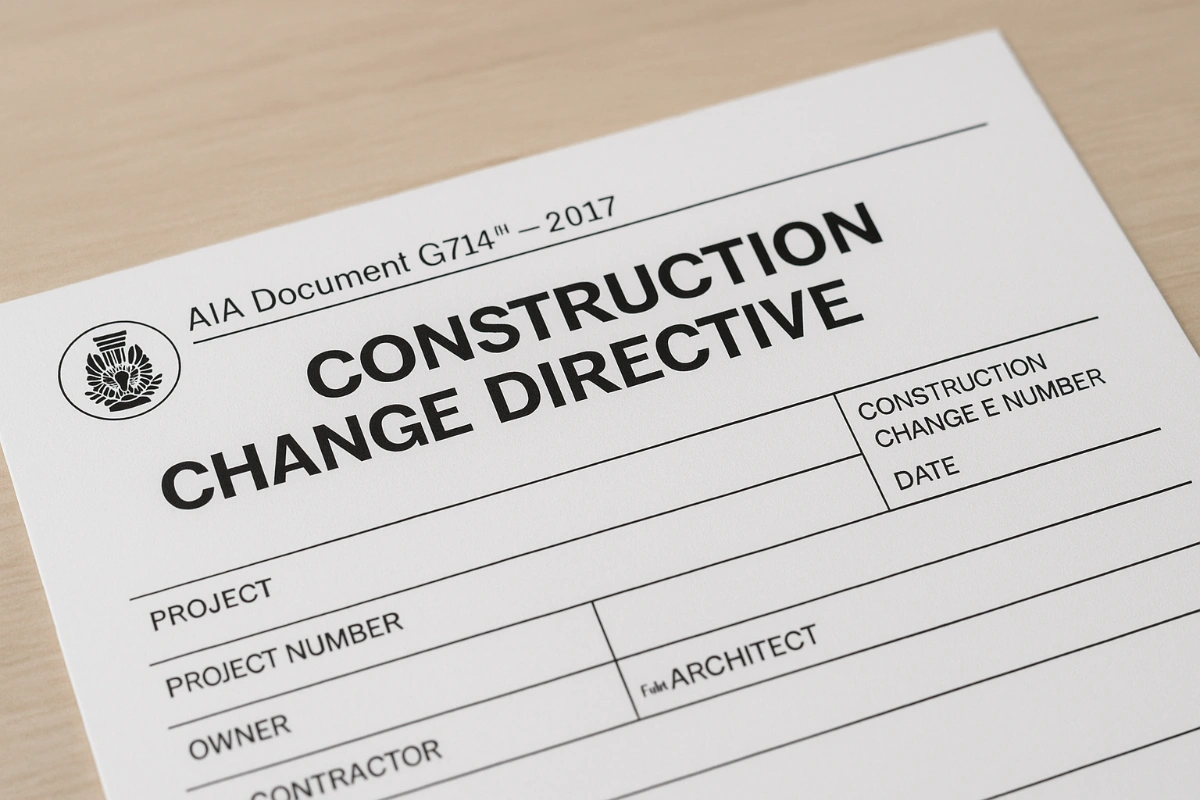
Como as ASIs se aplicam apenas a alterações sem custo e sem impacto de prazo, elas são frequentemente usadas para esclarecimentos, pequenos ajustes ou correções menores. Se o empreiteiro considerar que uma ASI terá impacto de custo ou prazo, ela deve ser convertida em uma Diretiva de Alteração de Construção (CCD) ou Ordem de Alteração.

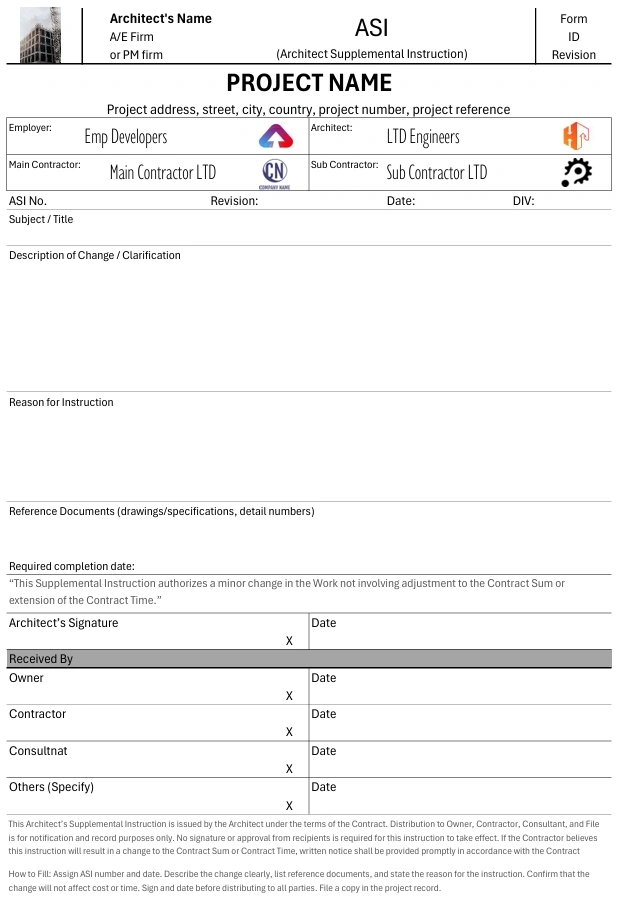
Este mini guia foca no formulário AIA ASI disponível para download gratuito na Quollnet, mostrando como usá-lo de forma eficaz nos seus projetos.

Baixar o formulário AIA ASI – PDF, Excel, WebP


Finalidade do formulário ASI

O formulário ASI fornece um método padronizado para emitir instruções que:

  • Esclarecem detalhes de projeto sem alterar preço ou cronograma.

  • Mantêm um registro escrito de ajustes menores.

  • Garantem que todas as partes relevantes (Proprietário, Empreiteiro, Consultores) sejam notificadas.


Quando usar uma ASI

Exemplos de situações válidas para ASI:

  • Ajustes menores de dimensões.

  • Esclarecimentos sobre acabamentos, cores ou materiais.

  • Detalhamento adicional de um projeto já aprovado.

  • Correção de erros não críticos em desenhos/especificações.

Se uma alteração proposta afetar custo ou cronograma — mesmo que ligeiramente — ela não deve ser emitida como ASI. Em vez disso, use uma CCD ou Ordem de Alteração.

Para um contexto mais amplo sobre instruções na construção, veja nosso Guia completo de instruções de obra.


Como preencher o formulário ASI

Cabeçalho:

  • Nome e número do projeto.

  • Nomes do Proprietário, Empreiteiro e Arquiteto.

  • Número da ASI e data.

Detalhes da instrução:

  • Descrição da alteração/esclarecimento.

  • Documentos de referência (desenhos, especificações, RFIs).

  • Motivo da instrução.

Declaração de autorização:

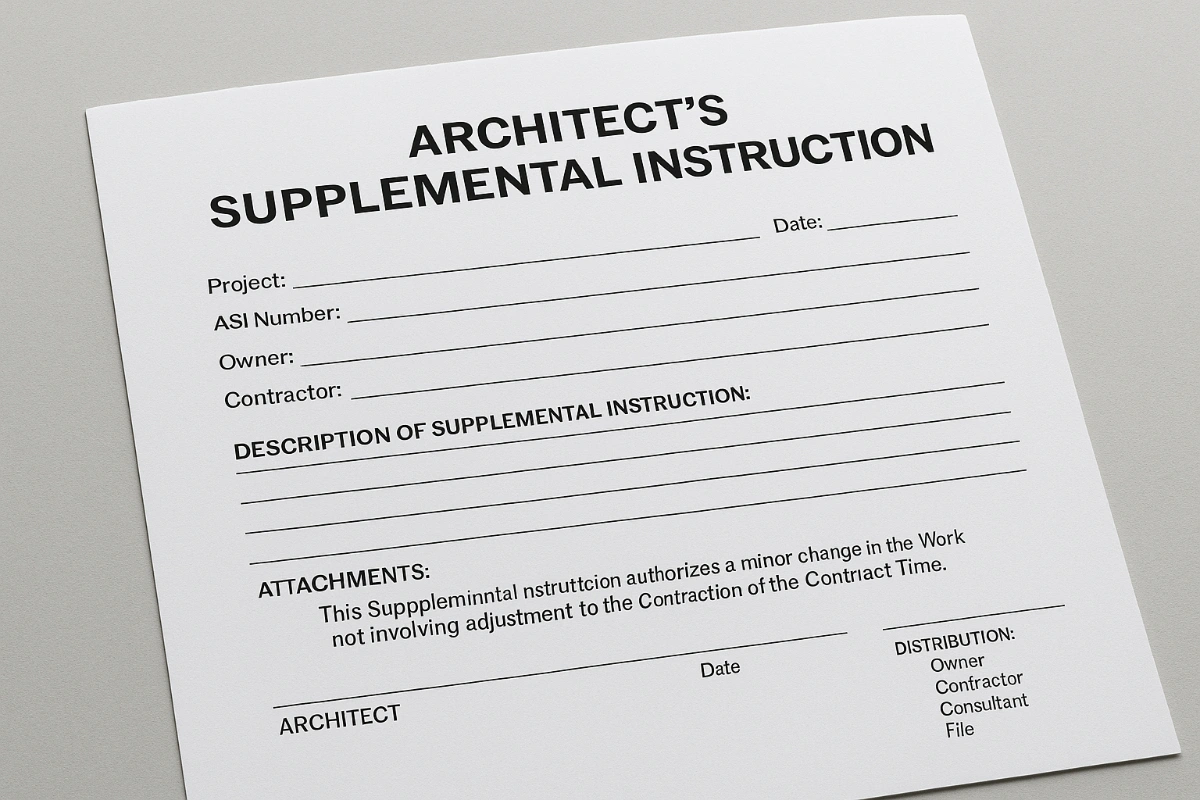
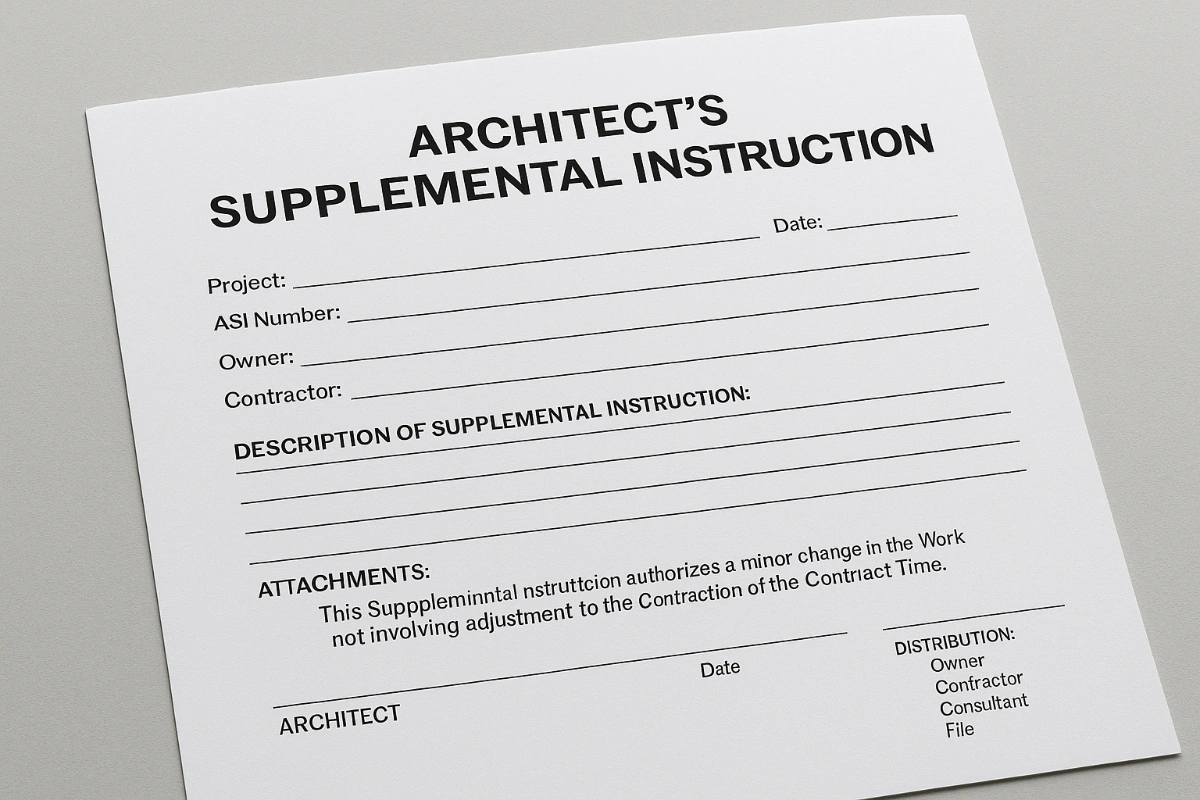
“Esta Instrução Suplementar autoriza uma pequena alteração nos Trabalhos, sem ajuste do Valor do Contrato nem prorrogação do Prazo do Contrato.”

Assinaturas e distribuição:

  • Assinatura e data do arquiteto.

  • Lista de distribuição (Proprietário, Empreiteiro, Consultores, Arquivo).


Melhores práticas para usar ASIs

  1. Confirme impacto zero em custo e prazo antes de emitir.

  2. Descreva as alterações com clareza para evitar ambiguidades.

  3. Inclua referências aos desenhos/especificações relevantes.

  4. Mantenha um registro de ASIs para acompanhar todas as instruções emitidas.

  5. Garanta distribuição imediata a todas as partes relevantes.


Baixar o formulário

Baixar formulário AIA ASI – PDF
Baixar formulário AIA ASI – Excel
Baixar formulário AIA ASI – WebP


Leituras relacionadas

Hugo Fernandez's photo
Hugo Fernandez
@TransitTechHugo
Oct 14, 2026
0
2
72
58

Related Checklists


Erosion and Sediment Control Inspection Checklist
✅ 12 items
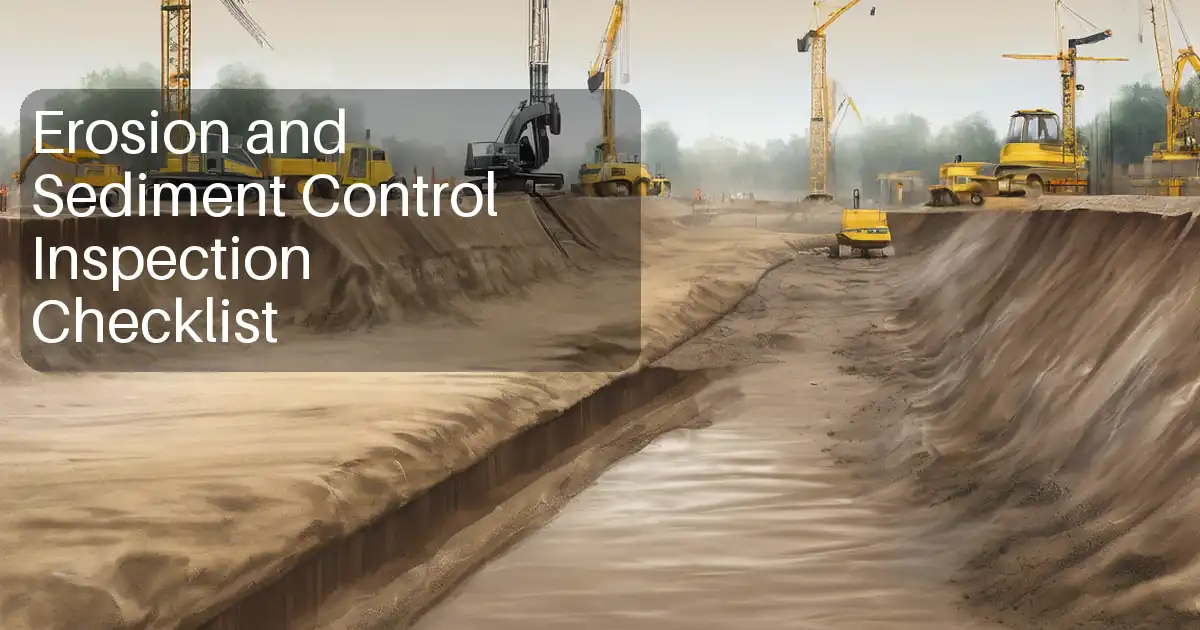
Erosion and sediment control inspections are critical for ensuring the integrity of construction sites, particularly during earthworks. These inspections focus on verifying that measures are in place to prevent soil erosion, manage stormwater runoff, and protect water quality. Not only do these controls help in minimizing environmental impact, but they also ensure compliance with regulatory standards. This checklist offers a systematic approach for inspectors, allowing them to track progress, document findings, and implement corrective actions effectively. Users can interact with this checklist online, ticking off items, leaving comments, and exporting reports in PDF or Excel format with a unique QR code for authenticity.
What to Do When the Contractor Receives an NCR: Action Guide
✅ 22 items
What to do when the contractor receives an NCR is a practical, step-by-step response plan for construction teams facing a nonconformance report, non-compliance notice, or quality deviation. This checklist focuses on immediate containment, factual root cause analysis, corrective and preventive actions, and transparent closeout—without drifting into unrelated scopes. By following a structured approach, you reduce rework, avoid safety incidents, protect delivery dates, and maintain a defensible contractual position. Every step emphasizes objective evidence: calibrated measurements, annotated photos, batch numbers, inspection reports, and signatures. You will find guidance for logging, isolating affected work, coordinating hold points, and aligning with stakeholder expectations per approved project specifications and authority requirements. The result is a clear record demonstrating control of the nonconformance, verification of the fix, and prevention of recurrence. Start in interactive mode to tick items, add comments, attach files, and export your record as PDF/Excel with a QR link for quick field access.
Review façade material compatibility before design release
✅ 24 items
Review façade material compatibility before design release is the critical gate that prevents costly rework and premature failures. This façade materials compatibility check focuses on how metals, sealants, gaskets, membranes, coatings, and fixings interact across the envelope. By conducting a thorough envelope interface review before drawings are frozen, teams mitigate galvanic corrosion, chemical attack, plasticizer migration, staining, loss of adhesion, and thermal or moisture traps. The checklist targets cladding system compatibility at contact points, bonded joints, interfaces with fire-stopping, and transitions to glazing and roofing. It standardizes evidence from manufacturer guidance, lab data, and calculations, ensuring selections meet performance criteria per approved project specifications and authority requirements. Outcomes include durable assemblies, fewer RFIs, faster submittal approvals, and a clear audit trail for sign-off. Use this interactive tool to assign actions, attach photos, record product data, and capture approvals. Start in interactive mode to tick, add comments, and export PDF/Excel with a QR-secured record.
Inspect aluminum cladding: alignment & joint width checklist
✅ 24 items
Inspect aluminum cladding panel installation for alignment and joint width is the critical quality gate for a clean, durable façade. This checklist helps you confirm panel alignment, module line continuity, and uniform joint gaps while documenting evidence. You will validate plumb and level against control datums, check joint gap tolerances, and verify that shims, brackets, and fixings do not force panels off line. By focusing on panel alignment and joint uniformity only, it avoids scope creep into unrelated weatherproofing or structural testing. Thorough inspections catch creeping drift across elevations, inconsistent reveals, and joint pinch points that can telegraph through the façade or compromise drainage. Following these steps reduces rework, protects warranties, and ensures the finished appearance matches approved shop drawings and mock-ups. Use this interactive tool to tick off tasks in sequence, add field comments, attach photos and readings, and export your sign-off as PDF/Excel with a QR for authentication.
Inspect waterproofing at façade base and plinth interfaces
✅ 26 items
Inspect waterproofing at façade base and plinth interfaces to ensure a durable, watertight building envelope. This checklist focuses on the critical transition where the façade meets the plinth, addressing façade base waterproofing, plinth interface sealing, and base flashing details. You will confirm substrate condition, membrane specification, termination bars, sealant continuity, drainage provisions, and protection layers—per approved project specifications and authority requirements. By controlling moisture pathways, capillary rise, splash-back, and ponding, you avoid mold growth, finishes deterioration, and structural damage. The outcome is documented compliance, clear acceptance criteria, and repeatable site practice that integrates with trade sequencing. Use this tool during pre-cover inspections, progressive works, and final handover to capture photos, readings, batch data, and signatures. Start interactive mode to tick tasks, add comments for nonconformances, and assign actions. When complete, export as PDF/Excel with QR authentication for audit and client records.

Related Articles


Can Ncr Lead To Termination
⏳ 8 min read
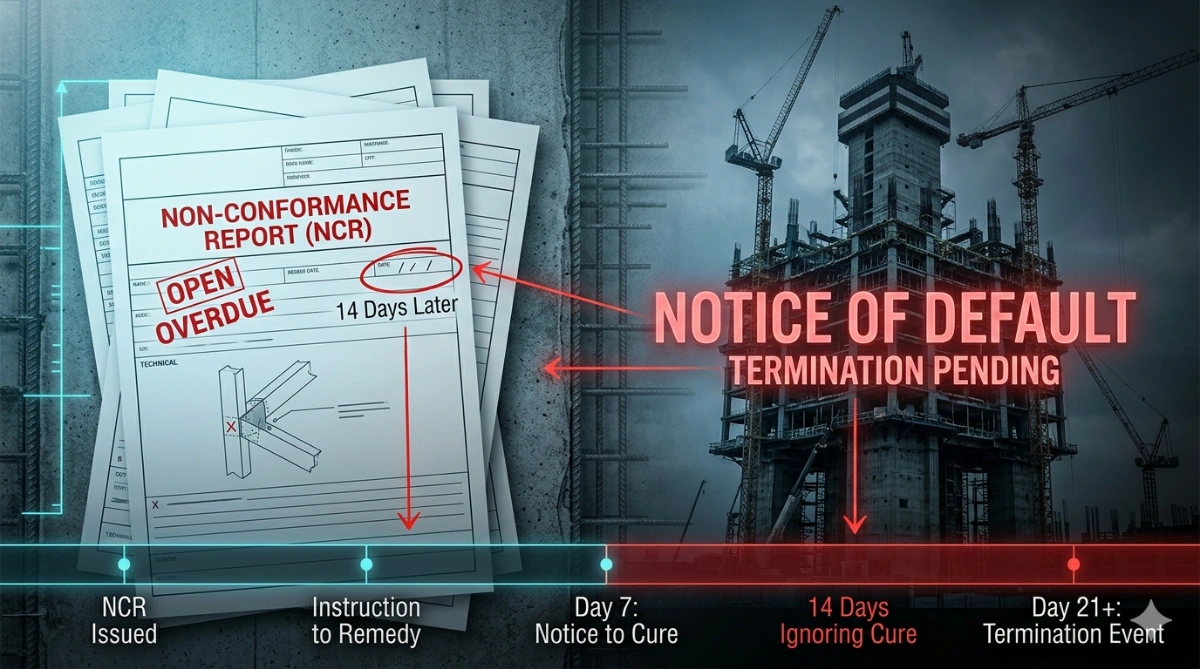
Um Ncr Pode Levar à Rescisão? o Risco Oculto Por Trás Do “notice To Correct”
Um NCR não rescinde um contrato por si só, mas pode gerar inadimplemento se um Notice to Correct/Cure for emitido e ignorado. Saiba como agir.
Aia Architects Supplemental Instruction Form
⏳ 2 min read
Instruction Complémentaire De L’architecte Aia (asi) – Formulaire Gratuit Et Conseils D’utilisation
Téléchargez notre formulaire gratuit d’instruction complémentaire de l’architecte AIA (ASI). Apprenez à l’utiliser pour des changements mineurs sans impact sur coût ou délai.
Aia Architects Supplemental Instruction Form
⏳ 2 min read
Aia Architect’s Supplemental Instruction (asi) – Free Form And Usage Tips
Download our free AIA Architect’s Supplemental Instruction (ASI) form. Learn how to use it for minor changes with no cost/time impact, per AIA contracts.
Construction Cashflow Prediction
⏳ 14 min read
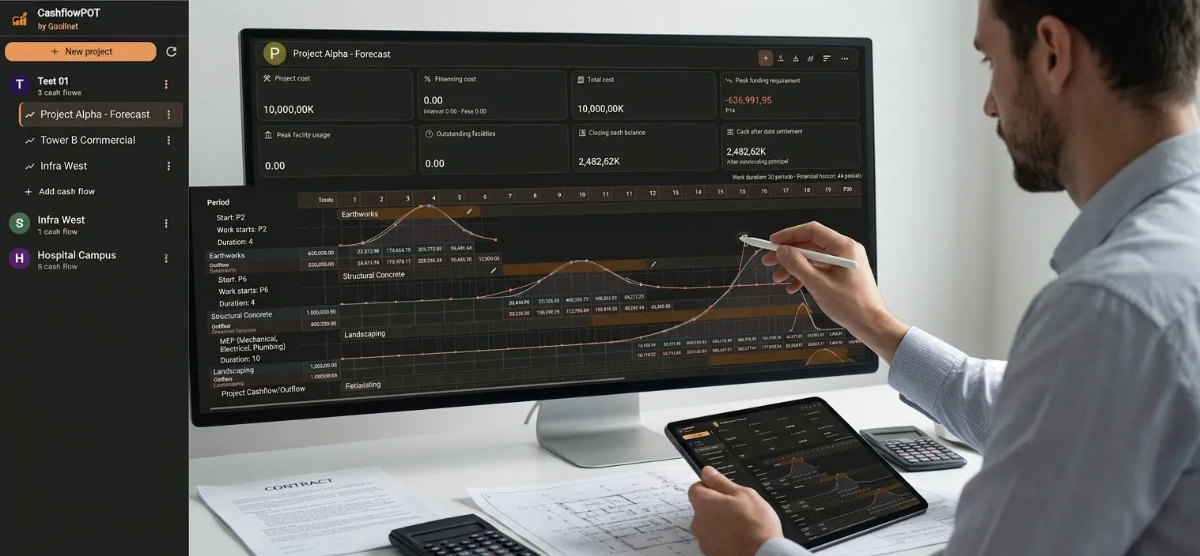
Previsão De Fluxo De Caixa Na Construção: Curvas De Custo e Faturação
Aprenda a prever o fluxo de caixa com curvas de atividade, WIEB, inspeções, materiais em obra e regras de faturação antes de construir o modelo completo do projeto.
Aia Construction Change Directive Form
⏳ 2 min read
Aia Construction Change Directive (ccd) – Formulário Gratuito e Dicas De Uso
Baixe nosso formulário gratuito AIA Construction Change Directive (CCD). Saiba como usá-lo para mudanças de custo/prazo quando os termos ainda não foram acordados.