G
Guest

Aia Architects Supplemental Instruction Form

قم بتنزيل نموذج تعليمات إضافية للمهندس المعماري من AIA مجانًا. تعلم كيفية استخدامه للتغييرات الطفيفة دون تأثير على التكلفة/الوقت، وفقًا لعقود AIA.

Aia Architects Supplemental Instruction Form
Arabic version

تعليمات إضافية من مهندس AIA (ASI) – نموذج مجاني ونصائح للاستخدام


مقدمة

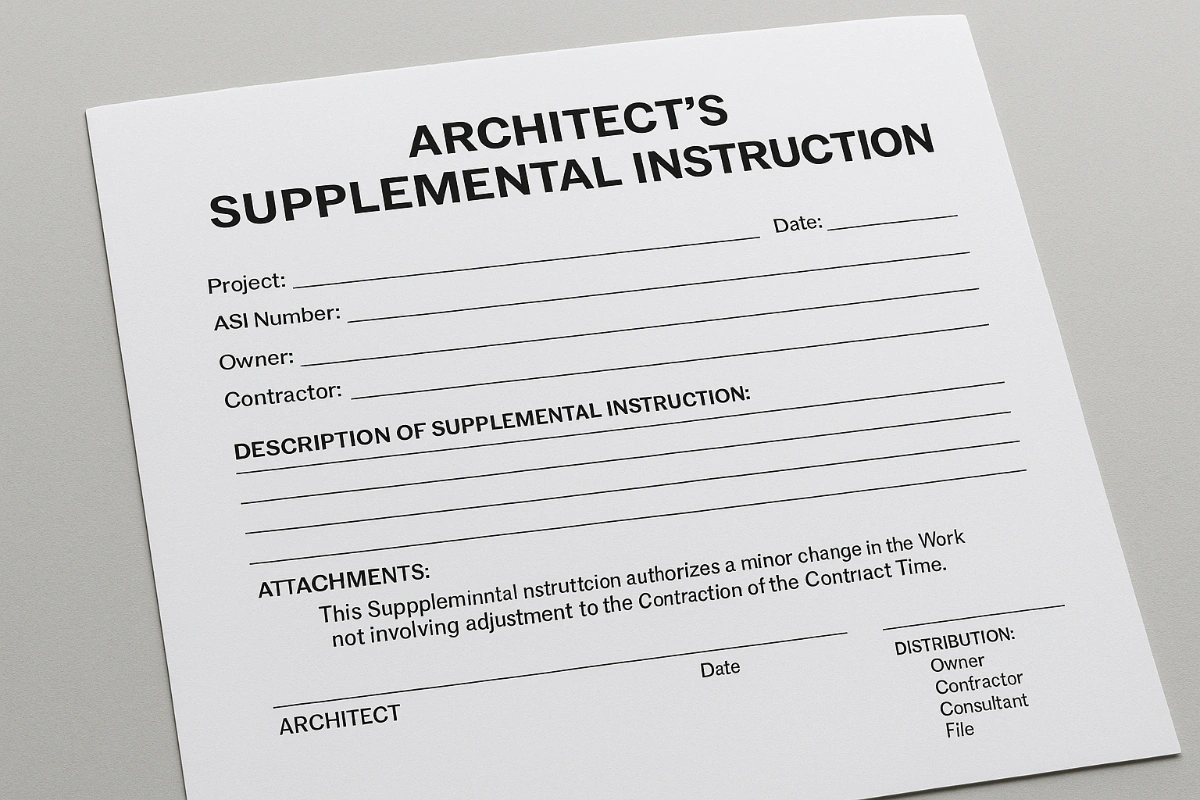
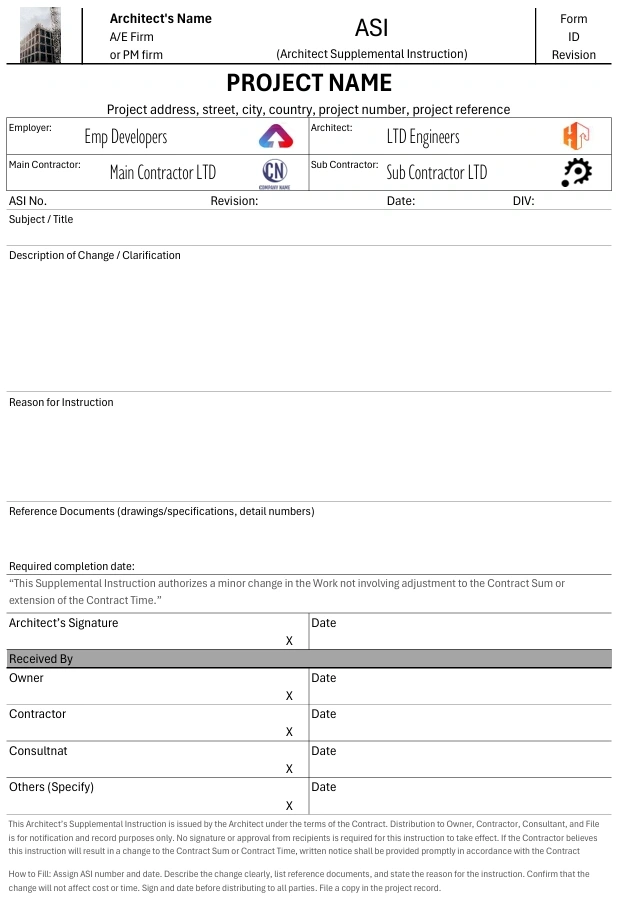
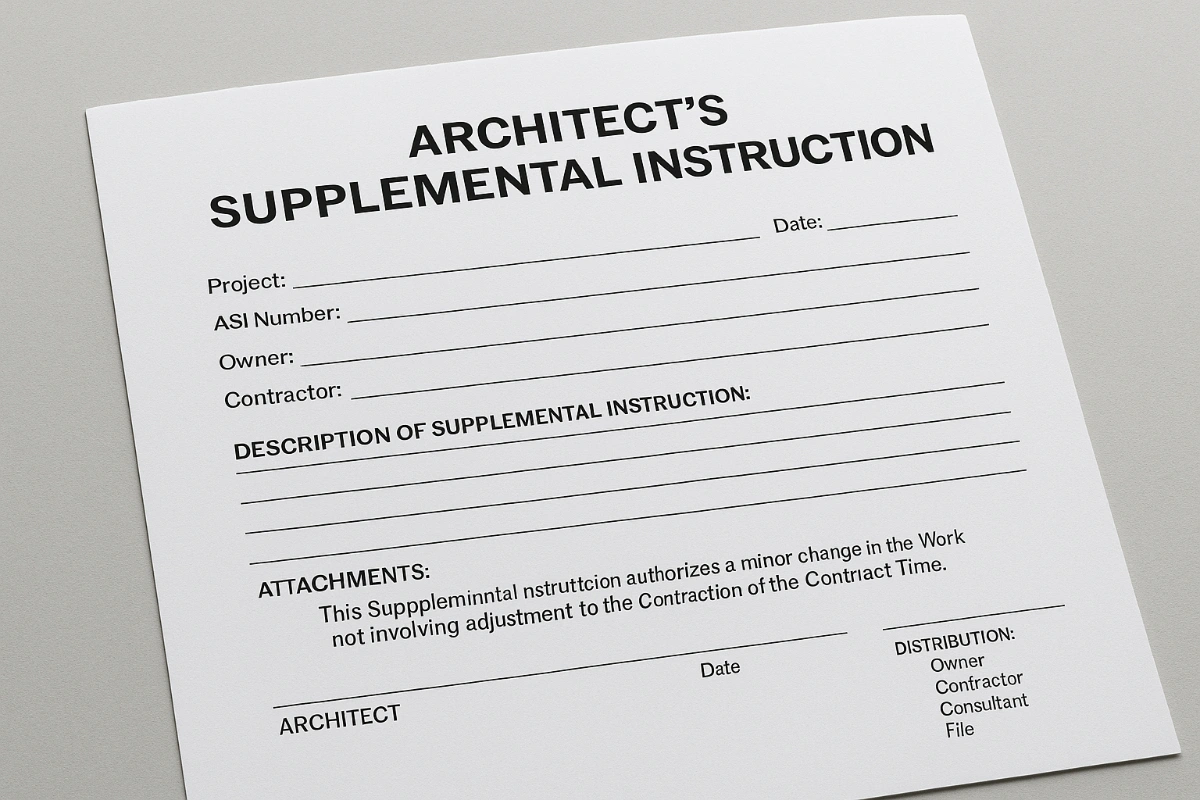
تحت AIA A201 – الشروط العامة لعقد البناء، تسمح تعليمات إضافية من المهندس (ASI) للمهندس بتفويض تغيير طفيف في العمل لا يؤثر على مبلغ العقد أو مدة العقد.

لأن ASIs تنطبق فقط على التغييرات بدون تكلفة أو وقت، فهي غالبًا ما تُستخدم للتوضيحات أو التعديلات الصغيرة أو التصحيحات الطفيفة. إذا كان المقاول يعتقد أن ASI سيكون له تأثير على التكلفة أو الوقت، فيجب تحويله إلى توجيه تغيير البناء (CCD) أو أمر تغيير.

يركز هذا الدليل المصغر على نموذج AIA ASI المتاح للتنزيل المجاني من Quollnet، موضحًا كيفية استخدامه بفعالية في مشاريعك.

قم بتنزيل نموذج AIA ASI – PDF، Excel، WebP


الغرض من نموذج ASI

يوفر نموذج ASI طريقة موحدة لإصدار التعليمات التي:

  • توضيح تفاصيل التصميم دون تغيير السعر أو الجدول الزمني.

  • الحفاظ على سجل مكتوب للتعديلات الطفيفة.

  • ضمان إعلام جميع الأطراف المعنية (المالك، المقاول، المستشارون).


متى يتم استخدام ASI

أمثلة على حالات ASI الصالحة:

  • تعديلات طفيفة في الأبعاد.

  • توضيحات للتشطيبات أو الألوان أو المواد.

  • تفاصيل إضافية لتصميم معتمد بالفعل.

  • تصحيح الأخطاء غير الحرجة في الرسومات/المواصفات.

إذا كان التغيير المقترح يؤثر على التكلفة أو الجدول الزمني — حتى بشكل طفيف — فيجب عدم إصداره كـ ASI. بدلاً من ذلك، استخدم CCD أو أمر تغيير.

للحصول على سياق أوسع حول التعليمات في البناء، انظر الدليل الكامل للتعليمات في الموقع.


كيفية ملء نموذج ASI

الرأس:

  • اسم المشروع ورقمه.

  • أسماء المالك والمقاول والمهندس.

  • رقم وتاريخ ASI.

تفاصيل التعليمات:

  • وصف التغيير/التوضيح.

  • المستندات المرجعية (الرسومات، المواصفات، RFIs).

  • سبب التعليمات.

بيان التفويض:

"تسمح هذه التعليمات الإضافية بتغيير طفيف في العمل لا يتضمن تعديلًا على مبلغ العقد أو تمديدًا لوقت العقد."

التوقيعات والتوزيع:

  • توقيع المهندس وتاريخه.

  • قائمة التوزيع (المالك، المقاول، المستشارون، الملف).


أفضل الممارسات لاستخدام ASIs

  1. تأكد من عدم وجود تأثير على التكلفة والوقت قبل الإصدار.

  2. وصف التغييرات بوضوح لتجنب الغموض.

  3. تضمين المراجع للرسومات/المواصفات ذات الصلة.

  4. الحفاظ على سجل ASI لتتبع جميع التعليمات الصادرة.

  5. ضمان التوزيع السريع لجميع الأطراف المعنية.


قم بتنزيل النموذج

قم بتنزيل نموذج AIA ASI – PDF
قم بتنزيل نموذج AIA ASI – Excel
قم بتنزيل نموذج AIA ASI – WebP


قراءة ذات صلة

C
Chen Zhang
@BIMCoderChen
May 26, 2026
0
0
31
59

Related Checklists


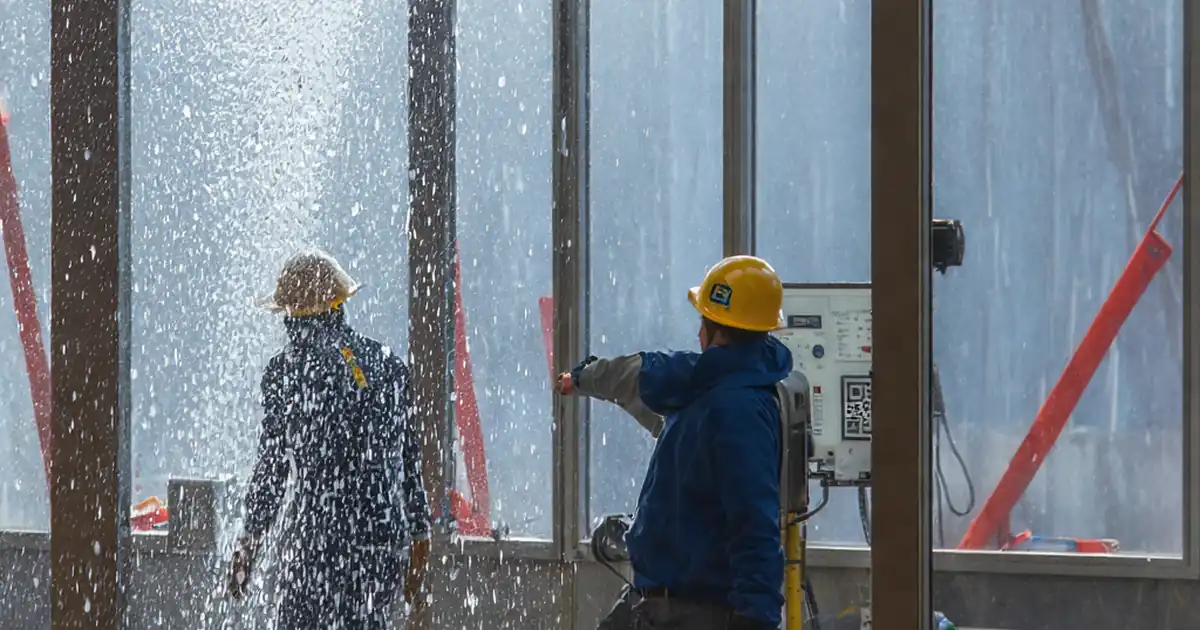
Inspect dynamic façade sensors for sun, wind and rain
✅ 28 items
Inspect dynamic façade sensors for sun, wind, and rain response is a focused checklist for commissioning agents, facility managers, and façade specialists. It targets solar irradiance sensors, anemometers, and rain detectors that drive dynamic shading, operable façades, and weather protection logic. By systematically checking mounting orientation, exposure, wiring, signal ranges, calibration, and BMS integration, you minimize risks such as glass or cladding damage from high winds, uncontrolled glare and heat gain, and nuisance rain responses. The scope covers field inspection and functional testing of weather sensors and their mapped points within the building management system; actuator sequencing and mechanical adjustment of shades are excluded. Practical methods—reference pyranometer comparisons, handheld anemometry, and controlled spray tests—verify accuracy, stability, and setpoints per approved project specifications and authority requirements. Use this interactive checklist to tick tasks, add comments, attach photos and logs, and export results to PDF/Excel with a secure QR code for records.
Test Façade Drainage Performance at Sills, Channels, Weeps
✅ 26 items
Test façade drainage performance at sills, channels, and weep outlets to prove that water sheds outwards quickly and safely. This checklist guides façade water discharge verification, sill drainage assessment, and weep hole performance testing using controlled dosing, flow timing, and moisture monitoring. Scope is limited to field testing at window and door sills, sub-sill channels/flashings, and weep outlets on completed exterior faces; it excludes full curtain wall air leakage testing, dynamic spray rack calibration, or structural evaluation. By confirming adequate outflow capacity, correct slopes, and zero interior wetting, teams avoid hidden moisture, efflorescence, rot, freeze–thaw spalls, and warranty disputes. Outcomes include measured drain-down times, residual head, outlet flow rates, photographic evidence, and documented retest actions where needed, all aligned with approved project specifications and authority requirements. Use this interactive checklist to tick steps, add comments, attach media, and export to PDF/Excel; finish each location with a QR-linked record for audit-ready traceability.
Test Façade Field Water Penetration at Critical Interfaces
✅ 24 items
Test façade field water penetration at critical interface locations to verify the building envelope resists leakage where systems meet. This checklist focuses on field water spray testing and curtain wall water penetration testing at transitions such as window-to-wall, slab edge, and expansion joints. By concentrating on interface leak investigation rather than whole-elevation testing, teams can validate the most failure-prone details without scope creep. You will prepare equipment, stabilize differential pressure, deliver a uniform spray pattern, and document any ingress with times, positions, and evidence. The workflow reduces rework, protects interiors, and provides traceable, defensible results per approved project specifications and authority requirements. Use this guide to align contractors, consultants, and owner representatives, ensuring acceptance criteria are clear: stable pressure, uniform water rate, and no water beyond the interior plane of protection. Start in interactive mode to tick steps, add comments, and export as PDF/Excel with a QR-secured record.
Concrete QA for Piles: Slump/Flow, Temperature, Cylinders/Cubes
✅ 25 items
Concrete QA for Piles ensures your pile concrete testing is performed consistently and traceably during deep foundation pours. This checklist focuses on fresh concrete sampling for bored piles, CFA piles, and drilled shafts, covering slump or flow measurements, temperature checks, and casting cylinders or cubes. It prioritizes accurate pile concrete sampling at the right time and location, proper compaction or non-compaction methods, and end-to-end identification of pile ID, truck/batch ID, and specimen ID. By keeping scope tight—on-site sampling and testing only—it avoids scope creep into mix approvals while reducing risks like segregation, blockages, excessive washout, or understrength sections. The result is reliable evidence that each pile pour met the approved project specifications and authority requirements, backed by photographs, readings, and signatures. Use this as a live tool: tick items in sequence, capture comments and photos, and export your complete record as PDF/Excel from the embedded QR code for authenticated sharing.
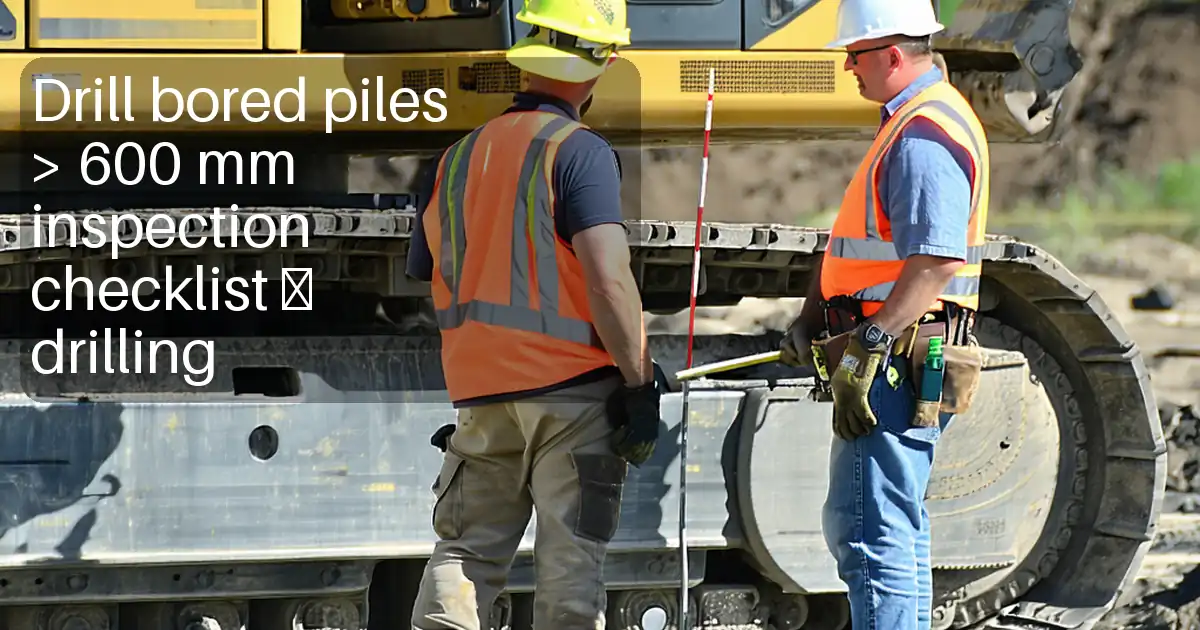
Drill bored piles > 600 mm inspection checklist – drilling
✅ 24 items
Drill bored piles > 600 mm require the same controls scaled to a larger diameter, with rigorous documentation of verticality and base sediment, and this checklist focuses strictly on drilling. It supports large-diameter bored piles and bored pile drilling activities, providing practical drilling inspection steps that prevent misalignment, necking, excessive overbreak, and contaminated bases. By standardizing pre-drill planning, rig/tooling verification, drilling operations, verticality checks, and base clean-out assessment, teams reduce rework, protect geotechnical capacity, and hand over a clean, compliant hole for subsequent concreting. The scope excludes concreting operations entirely; acceptance cues reference the approved project specifications and authority requirements. Use this interactive checklist to tick items, add time-stamped comments, attach readings and photos, and export PDF/Excel; a QR code secures the record for field verification.

Related Articles


Fidic Site Instruction Form Download Usage
⏳ 2 min read
نموذج تعليمات موقع Fidic - تنزيل مجاني ونصائح للاستخدام
قم بتنزيل نموذج تعليمات موقع FIDIC المجاني. تعلم كيفية استخدامه في أي إصدار من FIDIC، وتتبع التغييرات، والحماية من النزاعات بسجلات صحيحة.
Aia Architects Supplemental Instruction Form
⏳ 2 min read
Aia Architect’s Supplemental Instruction (asi) – Free Form And Usage Tips
Download our free AIA Architect’s Supplemental Instruction (ASI) form. Learn how to use it for minor changes with no cost/time impact, per AIA contracts.
Customize Your Company Qr Code
⏳ 1 min read
هل من المهم تخصيص رمز الاستجابة السريعة وكيفية القيام بذلك؟
تتناول هذه المقالة أهمية تضمين شعار الشركة في رمز الاستجابة السريعة لتحسين التعرف على العلامة التجارية والجماليات. تعرض نماذج تم إنشاؤها بواسطة مصمم رموز الاستجابة السريعة من Quollnet وتوفر دليلًا خطوة بخطوة حول تخصيص وإنشاء رمز الاستجابة السريعة باستخدام مولد رموز الاستجابة السريعة من Quollnet. يتضمن الدليل تحميل شعار، اختيار الألوان والأشكال، وإنشاء الرمز النهائي.
Aia Construction Change Directive Form
⏳ 2 min read
Aia Construction Change Directive (ccd) – Free Form And Usage Tips
Download our free AIA Construction Change Directive (CCD) form. Learn how to use it for changes affecting cost/time when terms aren’t yet agreed.
Prime Cost Sums Construction
⏳ 7 min read
مبالغ التكلفة الأولية في عقود البناء: المخاطر، أمثلة على جداول الكميات، واستراتيجية التسعير
تعلم كيف تؤثر مبالغ التكلفة الأولية على مخاطر المقاول، تعرض الهامش، واستراتيجية تسعير جداول الكميات. يتضمن أمثلة حقيقية من البناء، عناصر التكلفة الأولية المنفصلة مقابل المركبة، وإرشادات وضع النفقات العامة والأرباح.