Inspect Façade Submittals & Samples Before Procurement
Definition: Inspect façade material submittals and approved samples before procurement ensures QA/QC teams verify design intent, performance, and compliance against project specifications and authority requirements, reducing procurement risk and avoiding costly rework.
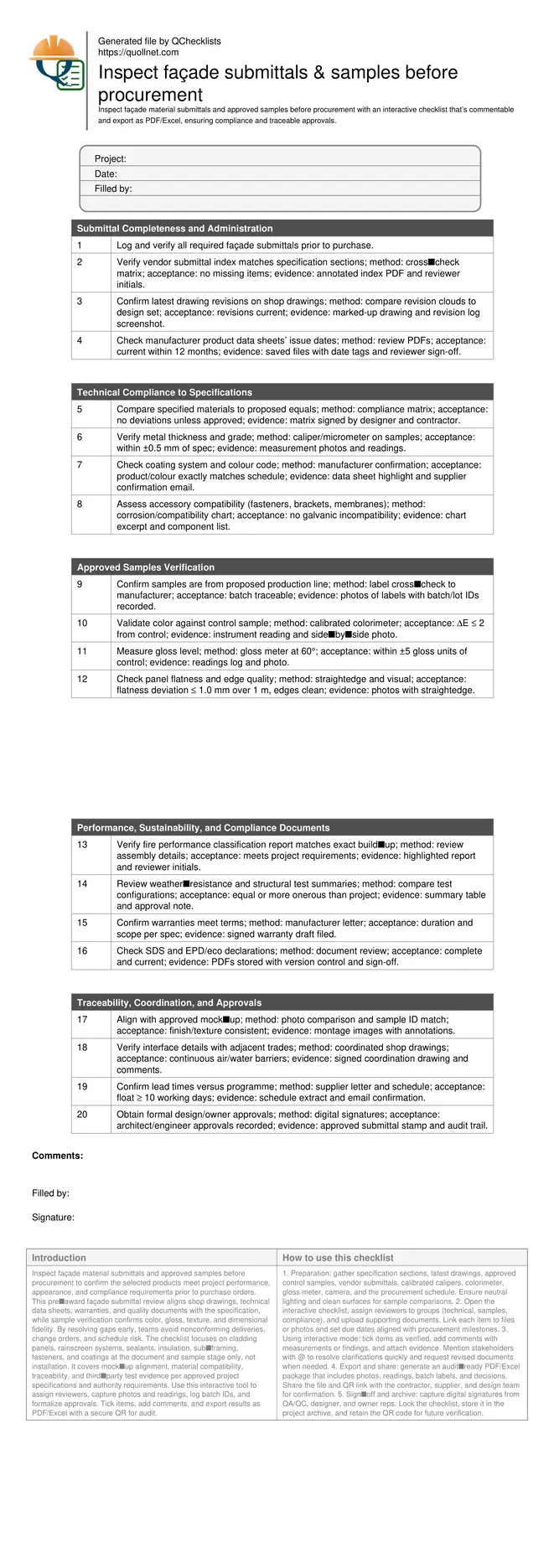
- Confirm completeness of submittals, samples, and traceable product data.
- Validate finishes, dimensions, and compatibility against approved control samples.
- Check third‑party performance evidence meets project and authority requirements.
- Interactive, commentable checklist with export and QR code verification.
Inspect façade material submittals and approved samples before procurement to confirm the selected products meet project performance, appearance, and compliance requirements prior to purchase orders. This pre‑award façade submittal review aligns shop drawings, technical data sheets, warranties, and quality documents with the specification, while sample verification confirms color, gloss, texture, and dimensional fidelity. By resolving gaps early, teams avoid nonconforming deliveries, change orders, and schedule risk. The checklist focuses on cladding panels, rainscreen systems, sealants, insulation, sub‑framing, fasteners, and coatings at the document and sample stage only, not installation. It covers mock‑up alignment, material compatibility, traceability, and third‑party test evidence per approved project specifications and authority requirements. Use this interactive tool to assign reviewers, capture photos and readings, log batch IDs, and formalize approvals. Tick items, add comments, and export results as PDF/Excel with a secure QR for audit.
- Reduce procurement risk by confirming façade products meet the specification, approved control samples, and authority requirements before purchase. The process standardizes technical reviews, highlights gaps early, and prevents rework by locking design intent into vendor commitments and quality records.
- Strengthen design coordination across cladding, sub‑framing, insulation, membranes, fasteners, and sealants. The checklist connects shop drawings, data sheets, mock‑up approvals, and system interfaces so material selections remain consistent with performance, warranty, and maintenance expectations throughout procurement.
- Interactive online checklist with tick, comment, and export features secured by QR code. Stakeholders capture photos, measurements, batch labels, and signatures, then issue an audit‑ready PDF/Excel package that documents approvals, exceptions, and responsibilities for transparent decision‑making.
Submittal Completeness and Administration
Technical Compliance to Specifications
Approved Samples Verification
Performance, Sustainability, and Compliance Documents
Traceability, Coordination, and Approvals
What to verify in façade submittals before ordering
Before any purchase orders, verify that the vendor’s submittal package is complete, current, and aligned with the specification and design intent. Start with a submittal index mapping each specification requirement to a document: shop drawings, product data sheets, finishes schedules, hardware lists, warranties, installation instructions, storage/handling guidance, and maintenance data. Confirm drawing revisions match the latest consultant issue, and that proposed products are not substituted without written approval. Cross‑review system build‑ups—panel, sub‑framing, insulation, membranes, fixings—so performance evidence actually represents the intended assembly. Ensure datasheets are current, and that warranties state duration and responsibilities clearly. Capture all sign‑offs in an auditable trail so procurement can proceed confidently. Completing these steps early prevents later contradictions, long‑lead surprises, and scope gaps that trigger rework.
- Use a compliance matrix for every spec clause.
- Check latest drawing revisions and clouds.
- Verify build‑ups match tested assemblies.
- File current datasheets with version control.
- Record approvals with digital signatures.
Approved samples: appearance, dimensions, and finish fidelity
Approved samples must represent the exact proposed production line and finish. Physically compare each sample to the control sample or mock‑up under neutral lighting. Measure critical dimensions with calibrated tools and document tolerances. Validate color and gloss with instruments rather than judgement alone. Inspect edges, coating continuity, and any protective films for defects that could telegraph after installation. Confirm sample labels include product name, batch or lot ID, production date, and manufacturer location so delivered materials can be matched later. Photos that include a ruler or gauge help establish objective evidence. Consistency between the approved sample, the finish schedule, and supplier documentation prevents mismatches that are expensive to resolve on site.
- Measure with calibrated tools and record.
- Use colorimeter and gloss meter readings.
- Photograph samples beside control references.
- Capture batch labels and lot numbers.
- Reject untraceable or damaged samples.
Compliance evidence, sustainability, and coordination with interfaces
Beyond looks, façade materials must meet performance and compliance expectations. Review third‑party test reports for fire, weather‑resistance, and structural performance and ensure the tested assembly matches the proposed build‑up. For sustainability and safety, gather current SDS and EPD or equivalent environmental declarations. Check compatibility of dissimilar metals and sealants to avoid galvanic corrosion or cure inhibition. Verify storage and handling instructions are practical for the site, and that lead times align with the programme. Coordinate interfaces with adjacent systems—windows, air and water barriers, movement joints—through signed shop drawings. Wrap up with formal approvals per approved project specifications and authority requirements so procurement proceeds with a clear, traceable record.
- Match reports to exact build‑ups.
- Confirm corrosion and sealant compatibility.
- Align storage and lead times.
- Coordinate interfaces in shop drawings.
- Secure formal approvals before purchase.
How to use this interactive pre‑procurement façade inspection checklist
- Preparation: gather specification sections, latest drawings, approved control samples, vendor submittals, calibrated calipers, colorimeter, gloss meter, camera, and the procurement schedule. Ensure neutral lighting and clean surfaces for sample comparisons.
- Open the interactive checklist, assign reviewers to groups (technical, samples, compliance), and upload supporting documents. Link each item to files or photos and set due dates aligned with procurement milestones.
- Using interactive mode: tick items as verified, add comments with measurements or findings, and attach evidence. Mention stakeholders with @ to resolve clarifications quickly and request revised documents when needed.
- Export and share: generate an audit‑ready PDF/Excel package that includes photos, readings, batch labels, and decisions. Share the file and QR link with the contractor, supplier, and design team for confirmation.
- Sign‑off and archive: capture digital signatures from QA/QC, designer, and owner reps. Lock the checklist, store it in the project archive, and retain the QR code for future verification.
Call to Action
- Start Checklist Tick off tasks, leave comments on items or the whole form, and export your completed report to PDF or Excel—with a built-in QR code for authenticity.
- Download Excel - Façade Submittals & Samples Pre‑Procurement Inspection
- Download PDF - Façade Submittals & Samples Pre‑Procurement Inspection
- View Image - Façade Submittals & Samples Pre‑Procurement Inspection
Cite & Embed
“Façade Submittals & Samples Pre‑Procurement Inspection by Quollnet”
with a link to
this source page.

FAQ
Question: Why review façade submittals and samples before issuing purchase orders?
Question: What evidence should I collect during the sample verification?
Question: How do I handle proposed substitutions or value engineering changes?
Question: What tolerances apply to color, gloss, and panel flatness at this stage?
Related Articles
Broader reading and guidance connected to this checklist topic.

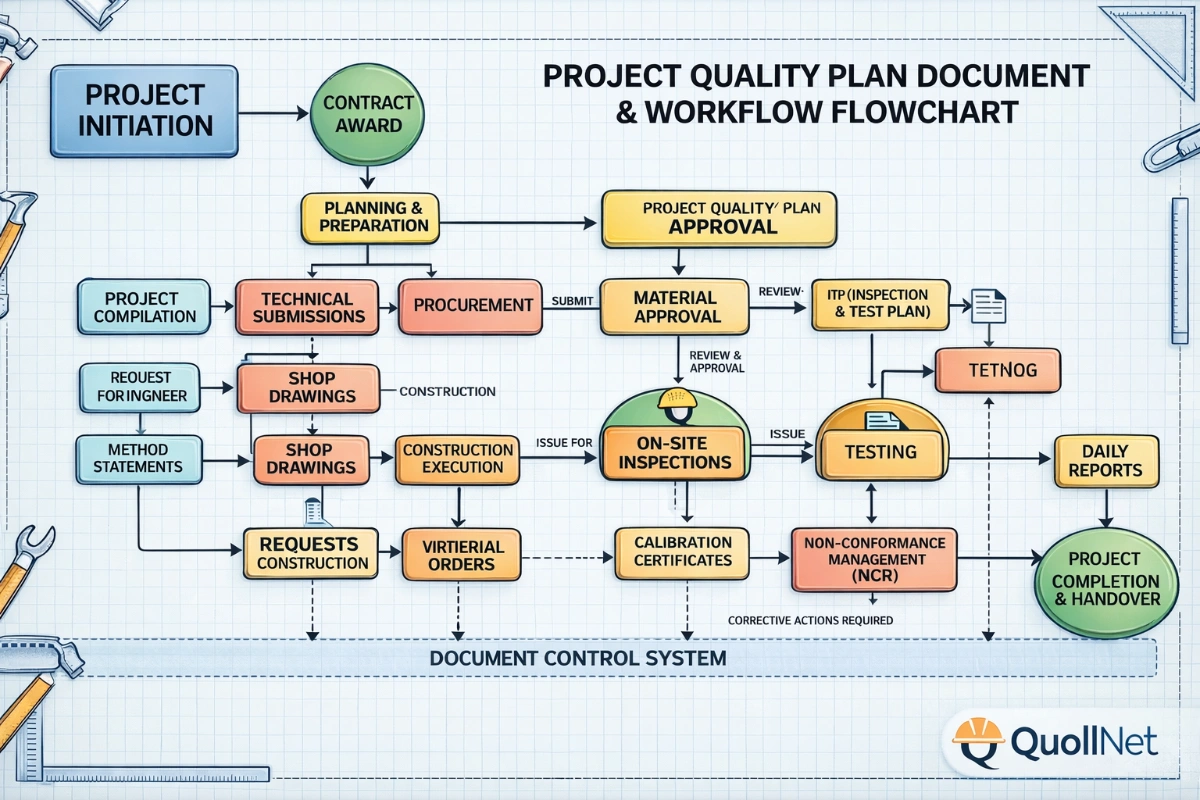
Requisition Form: Materials, Services, Budget Control, And Logs
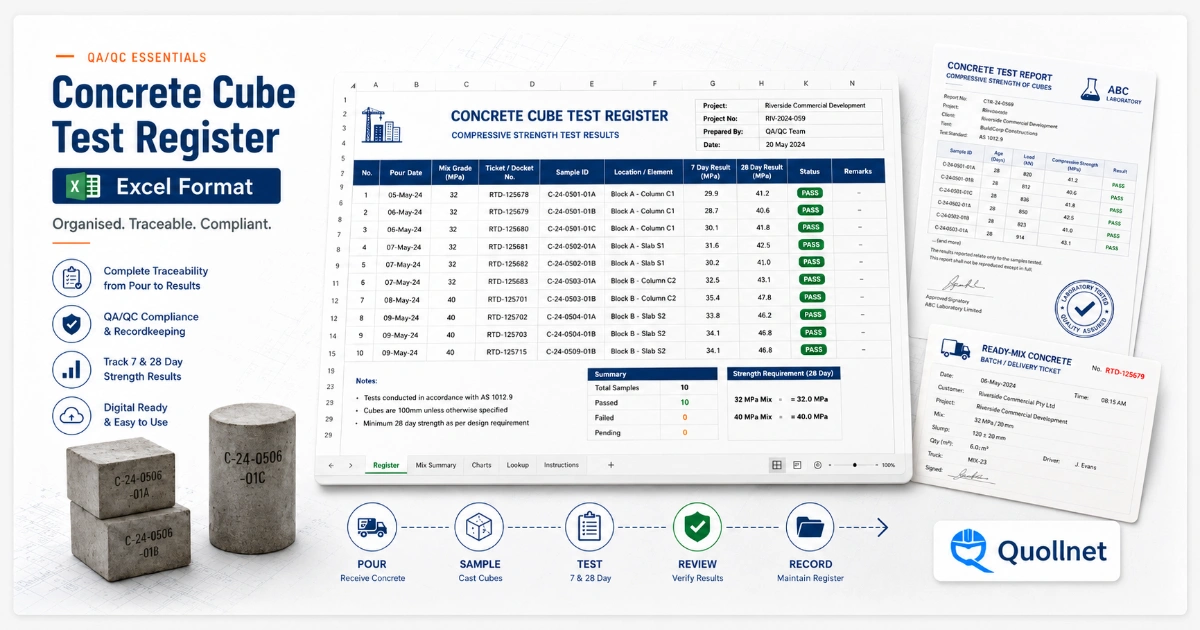
Concrete Cube Test Register Excel Format – Pdf & Excel Sample

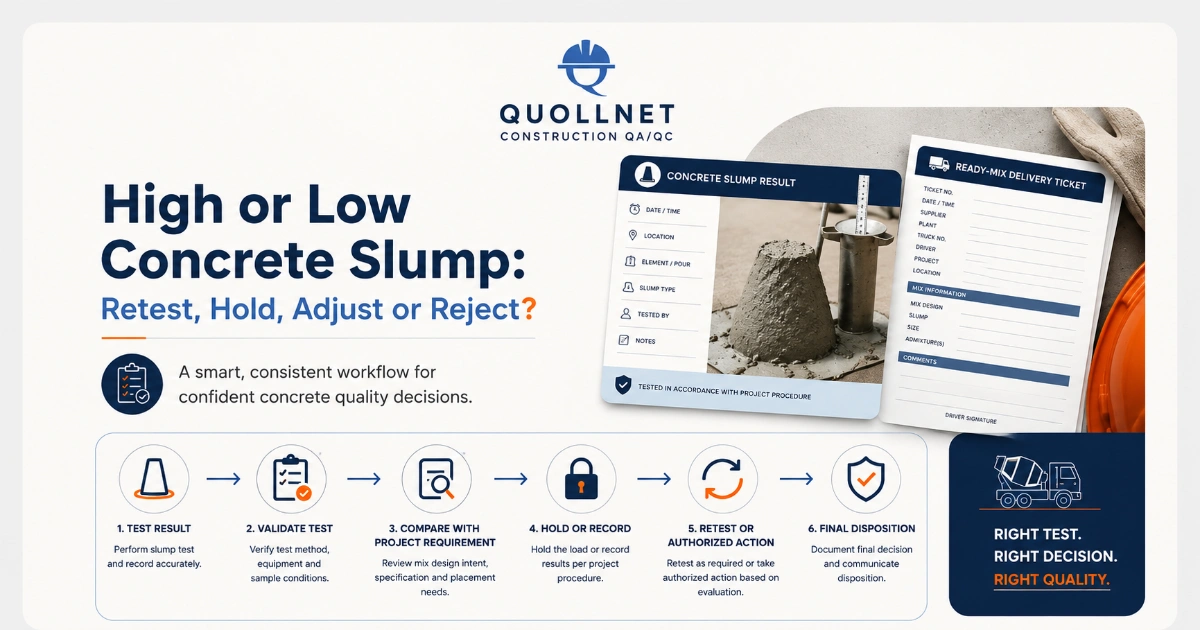
High Or Low Concrete Slump: Retest, Hold, Adjust Or Reject?
Related Checklists
Keep the workflow moving with nearby templates chosen from similar checklist content.