G
Guest

Tender Bid Bond Guide: Definitions, Best Practices & Free Templates

Discover the ultimate tender bid bond guide—covering requirements, best practices, and free templates to streamline construction bids. Download now!

Tender Bid Bond Guide
English version

Tender Bid Bond: Understanding Its Importance and Process

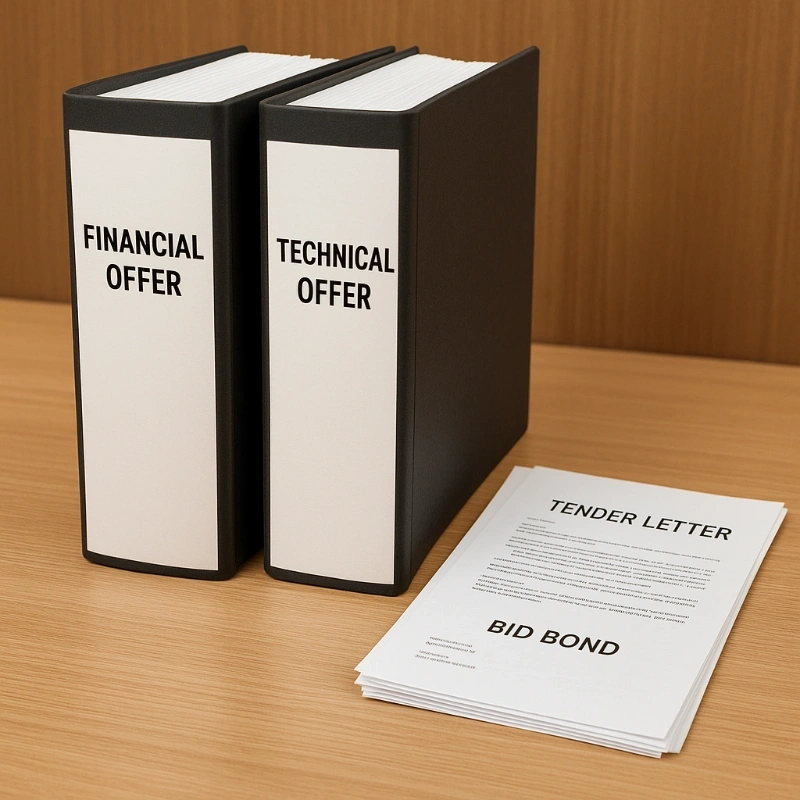
A tender bid bond is a critical financial guarantee required in construction tenders, protecting project owners by ensuring that contractors honor their bids and enter contracts upon award. Bid bonds reduce the risk of contractors withdrawing bids or failing to fulfill obligations after acceptance. Typically required in public sector projects and increasingly popular in private projects, bid bonds ensure serious, financially capable bidders, safeguarding the tendering process.


What Is a Tender Bid Bond?

A tender bid bond , commonly known as a bid bond , is a type of surety bond provided by contractors during the bidding phase of a construction project. This bond assures project owners that contractors will:

  • Honor the bid price submitted.

  • Enter into a contract if awarded the project.

  • Provide performance and payment bonds as required.

If contractors fail these obligations, the project owner can claim compensation, usually the difference between the defaulted bid and the next lowest offer. This ensures that only committed and capable contractors participate in bidding.


Why Are Bid Bonds Required in Construction Tenders?

Bid bonds fulfill several critical roles:

  • Ensuring Contractor Commitment: They discourage frivolous bids and deter withdrawal after a bid is selected.

  • Financial Protection: If a contractor defaults, the bond covers additional costs for the owner.

  • Fair Competition: Bonds ensure only serious, financially stable contractors participate.

  • Legal Compliance: Many jurisdictions mandate bid bonds for transparency in public sector projects.

These advantages collectively enhance the reliability and effectiveness of the construction tendering process.


How Much Is a Bid Bond Worth?

The value of a bid bond, known as the penal sum , is typically calculated as a percentage of the total bid amount:

  • 5% to 10% : Common for most projects.

  • Up to 20% : Often mandatory for federal and significant public projects.

For instance, a 10% bid bond on a $1,000,000 project equates to $100,000, providing sufficient financial recourse for owners if a contractor defaults.


How to Obtain a Bid Bond

Securing a bid bond involves these essential steps:

  1. Select a Surety Provider: Choose a reliable surety company experienced in construction.

  2. Application Submission: Provide financial statements, credit history, and past project details.

  3. Underwriting Evaluation: The surety assesses your financial stability and project track record.

  4. Bond Issuance: Once approved, submit the bid bond with your tender.

Best practice recommends contractors have pre-approved bid bond line facilities , significantly speeding up bond issuance. Contractors must exercise caution with automatically renewable bid bonds , as they entail high risks, potentially obligating contractors indefinitely if not explicitly canceled.
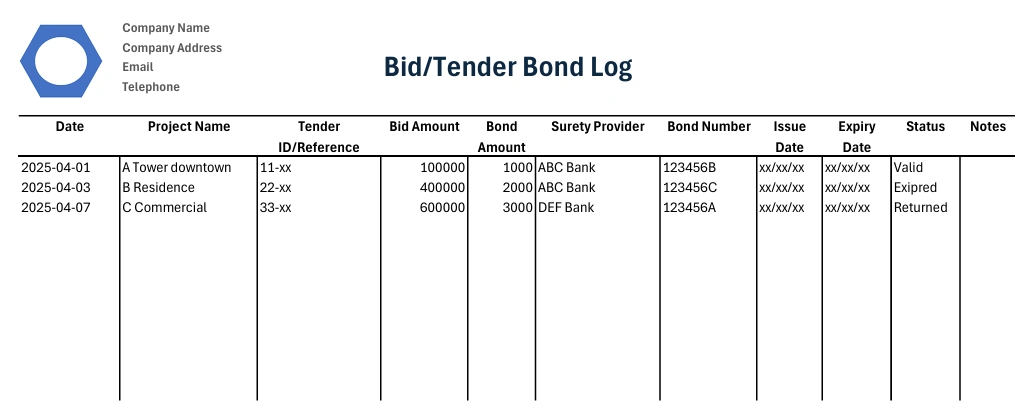
tender bond bid bond log


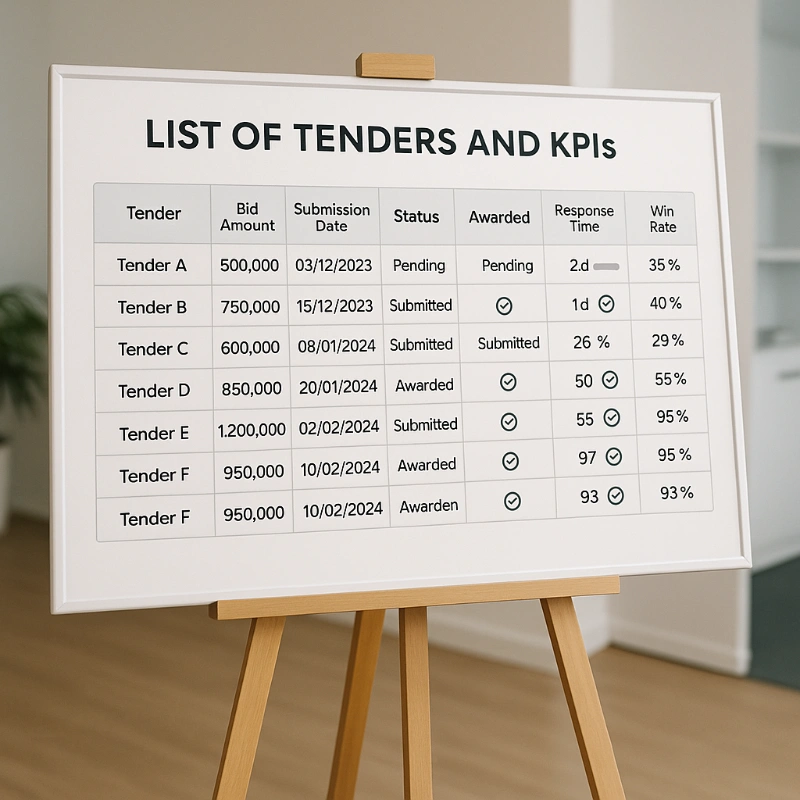
Bid bond / tender bond log


When is the Bid Bond Returned?

A bid bond is typically returned to contractors:

  • After awarding the contract to another bidder.

  • Upon submission and acceptance of performance and payment bonds by the successful bidder.

Once returned, the contractor’s total bonding capacity increases back to the original level, enabling participation in new projects.


Conclusion

Including a tender bid bond in your construction tender demonstrates your financial strength and commitment. It not only protects project owners but also reinforces fair competition. Avoid risks associated with automatically renewable bonds and establish pre-approved bond facilities to enhance your operational efficiency.

Ready to secure your next tender successfully? Engage with an experienced surety provider to secure your bid bond and ensure your competitive advantage.


Download Section

Ensure templates and logs are customized specifically for your project's unique requirements.


References

  1. JW Surety Bonds. "Bid Bond Guide." JW Surety Bonds

  2. Investopedia. "Bid Bond: What It Is, How It Works, Vs. Performance Bond." Investopedia

  3. Wikipedia. "Bid bond." Wikipedia


Elie Saad's photo
Elie Saad
Aug 29, 2025
2
67
1.28k+
1.49k+

Related Checklists


Construction Tender Document Review Checklist
✅ 14 items
The construction tender document review is a critical process undertaken by contractors upon receiving a tender invitation. This phase involves a thorough examination of all documents associated with the tender to determine the feasibility and desirability of bidding on the project. The review includes evaluating project specifications, timelines, costs, and legal implications. This checklist ensures that contractors meticulously assess each component to make an informed bid decision, minimizing risks and enhancing the quality of the bid. Users can interact with the checklist by ticking off items, adding comments, and exporting the results as PDF or Excel, complete with a QR code for authenticity.
Install Ground Anchors: Verify Lengths, Protection, Grouting
✅ 28 items
Install ground anchors correctly by verifying tendon length, corrosion protection, bond and free lengths, and grouting. This checklist supports ground anchor installation teams, field inspectors, and site engineers by focusing on tendon assembly verification, debonded free length, bonded length, and grout placement controls. It excludes proof tests and stressing results, keeping the scope tight to installation and documentation quality. You’ll confirm sheath continuity, grease fill where specified, centralizers for cover, trumpet and bearing details, and borehole depth versus design. Grouting controls include approved mix design, mixing time, water–cement ratio, pressure, temperature, bleed limits, placement via tremie, and collar returns. Acceptance cues and photo evidence requirements are embedded to prevent hidden defects, reduce corrosion risk, and ensure load transfer where designed. Use this interactive, commentable tool to standardize records across shifts and subcontractors. Tick items as you go, add comments and photos, and export to PDF/Excel with a QR for traceable sign-off.
Wallpaper Adhesion & Seam Alignment Inspection
✅ 11 items
Wallpaper adhesion and seam alignment inspections are critical to ensuring a professional and flawless finish in any interior space. This process involves checking the bond between the wallpaper and the wall surface, as well as ensuring that seams are aligned perfectly to maintain aesthetic continuity. This checklist covers all necessary inspection points to ensure quality and durability. Interactive elements allow users to tick off tasks, add comments, and export the completed checklist with a QR code for authenticity.
Soil Nail Pull-Out Testing Checklist and Acceptance Guide
✅ 24 items
Soil Nail Pull-Out Testing verifies bond capacity by applying controlled axial tension and measuring load–displacement response. This checklist covers soil nail proof test and performance test procedures focused on accurate instrumentation, stepwise loading, creep measurement, and clear pass/fail acceptance. It excludes installation checks such as drilling records, centralizers, grout take, or nail head construction. You will plan tests, set up a rigid reference beam, calibrate a hydraulic jack and load cell, and log displacement using LVDTs or dial gauges to produce a reliable load–displacement curve. The process mitigates risks like gauge drift, eccentric loading, reference movement, and unsafe exclusion zones, helping avoid false failures and rework. Outcomes include defensible acceptance decisions per approved project specifications and authority requirements, traceable data with photos and signatures, and a standardised report suitable for geotechnical design validation. Use this interactive checklist to tick items, add comments, and export a signed report as PDF/Excel via a secure QR code.
Soil Stabilization Inspection Checklist
✅ 16 items
Soil stabilization is a critical process in construction that involves altering soil properties to improve its strength and durability. This inspection checklist focuses on evaluating various stabilization techniques, ensuring they are implemented effectively to support infrastructure. By following this checklist, inspectors can verify the integrity of construction sites, reduce potential risks, and enhance safety. This interactive checklist allows users to tick off items, add comments, and export completed reports as PDF or Excel, complete with a QR code for authenticity.

Related Articles


Construction Tender Progress Log Template
⏳ 1 min read
Construction Tender Progress Log Template – Excel, Pdf & Image Download
Download our free Construction Tender Progress Log template from Quollnet to track every bid phase in Excel, PDF, or IMAGE. Automate tender management today.
Construction Tender Register Bid Tracker Template
⏳ 2 min read
Construction Tender Register & Bid Tracker Template – Free Excel, Pdf & Png
Download our free Construction Tender Register & Bid Tracker Template in Excel, PDF & PNG to streamline bids and track ITBs, decisions & outcomes with KPIs.
Construction Submittal Form Guide Free Download
⏳ 4 min read
Construction Submittal Form Guide: Free Downloadable Templates In Excel, Word, And Pdf
Learn how to properly complete a construction submittal form with our step-by-step guide. Download free, customizable submittal form templates in Excel, Word, and PDF formats to streamline your project documentation and approval process.
Difference Between Rfq Rfp And Tender In Construction Procurement
⏳ 11 min read
Rfq Vs Rfp Vs Tender In Construction Procurement: Key Differences Explained
What is the difference between an RFQ, an RFP and a Tender in construction procurement? Learn how each document works, their legal flavour, risk allocation, and when to use RFQ, RFP or Tender for suppliers, subcontractors and main contractors.
Construction Tender Preparation Guide
⏳ 4 min read
Construction Tender Preparation Guide | Step-by-step Bidding Process
Learn the complete construction tender preparation process—from receiving invitations to bid through strategic team mobilization, analysis, and winning proposals.