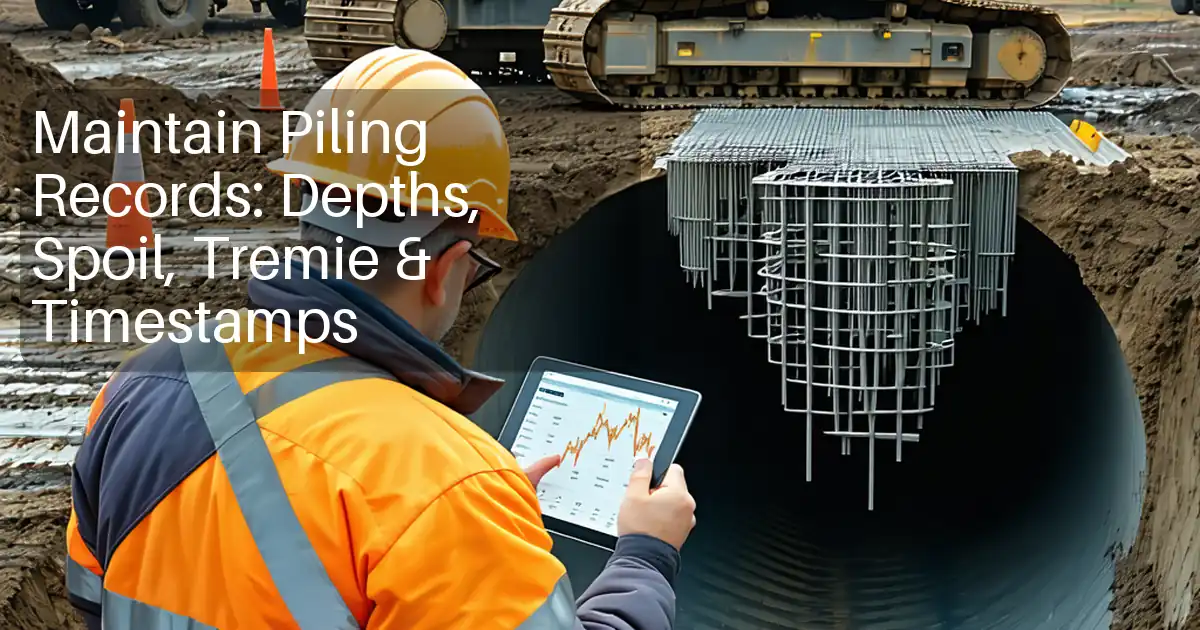
Install micropiles: Drilling, Casing, Grouting, Reinforcement Checklist
Definition: Install micropiles with this field-ready checklist for inspectors and superintendents, verifying drilling, casing, bond length, pressure grouting, and reinforcement placement per approved project specifications and authority requirements.
- Confirms drilling alignment, depth, and ground logging with documented evidence.
- Verifies casing dimensions, socket length, and bond length compliance.
- Controls pressure grouting, volumes, and returns for reliable load transfer.
- Interactive, commentable, export, QR code for traceable sign-offs.
Install micropiles with confidence using this field-ready inspection checklist. It guides micropile installation teams through drilling verification, casing placement, bond length confirmation, pressure grouting control, and reinforcement (bar or strand) placement. By focusing on correct drilling techniques, stable holes, accurate socketing, and continuous tremie grouting, you reduce risk of voids, soft inclusions, or inadequate bond. The checklist helps site engineers and inspectors document pressures, volumes, grout mix data, and alignment tolerances while capturing photos and readings. It excludes load tests, focusing solely on installation verification per approved project specifications and authority requirements. The result is predictable performance, cleaner records, and fewer reworks. Start in interactive mode to tick items, attach photos, add comments, and export PDF/Excel via a secure project QR code so field and office stakeholders stay aligned in real time.
- This checklist standardizes micropile installation QA in the field, from drill start to reinforcement placement, with SI-based tolerances and practical acceptance cues. It reduces installation errors, supports consistent supervision, and builds a complete audit trail with photos, readings, and approvals for each pile.
- Use it to verify casing dimensions, rock socket length, hole cleanliness, bond length, and continuous tremie grouting. Capture gauge pressures, theoretical versus actual grout volumes, and strata logs at 1 m intervals to validate the load-transfer zone and prevent voids or soft inclusions.
- Interactive online checklist with tick, comment, and export features secured by QR code. This enables immediate collaboration between contractor, inspector, and engineer-of-record, ensuring timely decisions, authenticated sign-offs, and reliable records that meet approved project specifications and authority requirements.
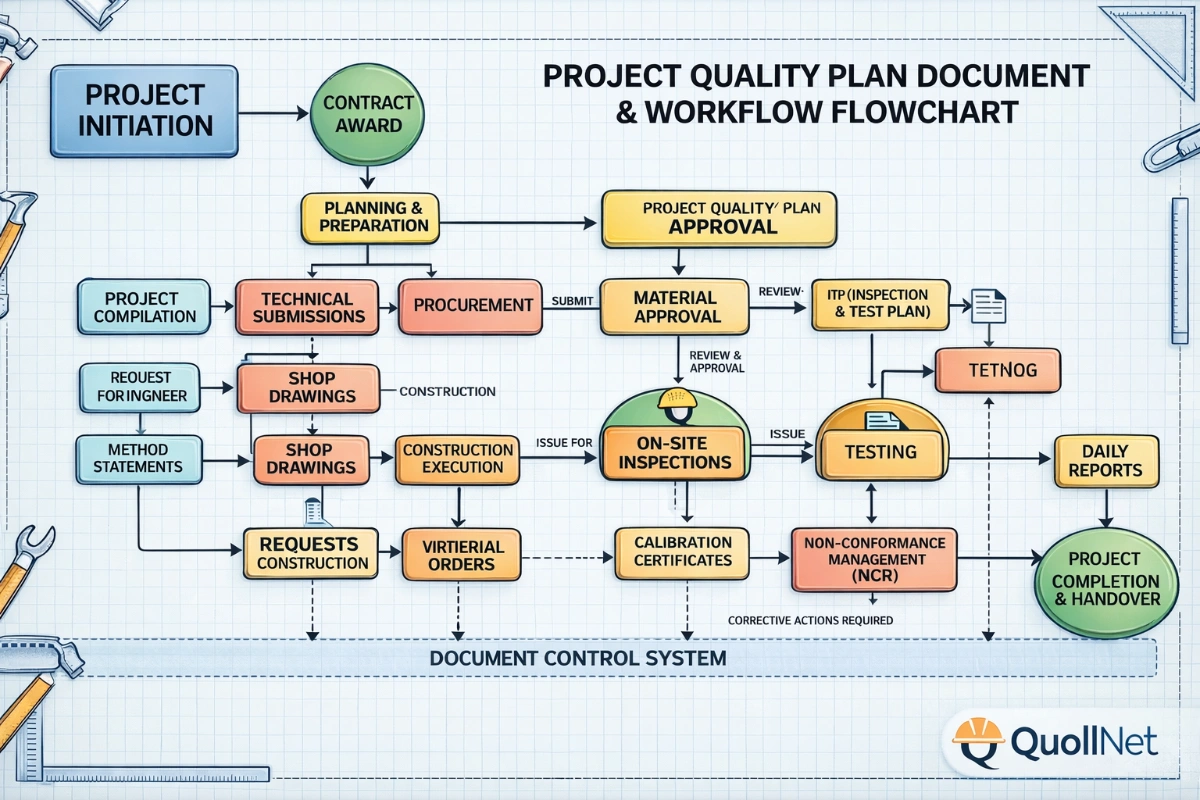
- The structure mirrors real site workflow: pre-install checks, drilling, casing, bond length verification, pressure grouting, and bar/strand placement. Each step names tools and evidence—calibrations, photos, batch tickets, gauge logs—so teams deliver quality piles and defensible documentation without load testing steps.
Pre-Installation Verification
Drilling Operations
Casing Installation
Bond Length Verification
Pressure Grouting
Bar/Cable Placement and Records
Drilling Alignment, Depth Control, and Ground Logging
Accurate drilling sets the foundation for reliable micropiles. Establish layout with a total station and verify offsets before drilling begins. Monitor alignment with a template or inclinometer, keeping deviation within 2% or ±50 mm at cut-off for predictable load paths. Log strata every 1 m and note penetration rates to identify changes in stiffness or voids; this supports later bond length confirmation and grouting decisions. Manage flush appropriately to keep the hole stable and prevent loss of fines. Before installing casing or grouting, circulate clean fluid until returns run clear and photograph the condition at the collar. Record the achieved design tip depth or refusal criteria per approved project specifications and authority requirements. Comprehensive logs make it easier to justify socket lengths, spot anomalies early, and avoid remediation.
- Set out locations with total station; verify offsets before drilling.
- Keep deviation within 2% or ±50 mm at cut-off.
- Log strata every 1 m; photograph representative cuttings.
- Circulate until clean returns before casing or grouting.
- Record refusal/design tip depth with timestamps.
Casing, Socket, and Bond Length Verification
Correct casing installation and bond length are critical to transfer loads into competent ground. Check casing OD/ID and wall thickness with calipers and retain mill certificates. Confirm socket penetration into rock or dense stratum matches design, supported by drill energy or penetration notes. Verify hole diameter in the bond zone using a caliper probe at several depths and confirm the planned bond interval has not collapsed using a weighted tape. Install centralizers at 2–3 m spacing to maintain at least 25–40 mm cover, ensuring reinforcement does not touch casing. Document elevations, lengths, and conditions with photos. These actions reduce the chance of debonding, necking, or soft inclusions that compromise capacity, keeping the installation aligned with approved project specifications.
- Measure bond zone diameter at multiple depths.
- Confirm socket length with drill logs and photos.
- Centralizers at 2–3 m; maintain ≥25–40 mm cover.
- Keep reinforcement isolated from casing.
- Retain heat numbers and mill certs.
Pressure Grouting and Reinforcement Placement Records
Pressure grouting must be continuous and controlled. Mix grout to the approved water–cement ratio and record batch tickets, temperature, and mix times. Tremie from the base upward, keeping the tremie tip embedded in the grout column to avoid segregation and air entrapment. Monitor pressure—typically within 0.5–1.5 MPa unless otherwise approved—and log volumes versus theoretical; expect overrun consistent with ground conditions. Clean returns at the collar signal adequate displacement of fluids and cuttings. After grouting, place the specified bar or strand, verify grade and length, and maintain the required cover with spacers. Photograph gauges, batch tickets, and reinforcement tags to create defensible records and streamline approvals per authority requirements.
- Record pressure and volume against depth in real time.
- Verify grout mix via tickets and temperature.
- Maintain continuous tremie flow without segregation.
- Expect volume overrun; reconcile deviations.
- Photo tags confirm reinforcement identity.
How to Use This Interactive Micropile Installation Checklist
- Preparation: Assemble total station, inclinometer/template, calipers, tremie, packers, grout pump with calibrated gauges, PPE, batch ticket forms, and camera. Confirm approved submittals and site access; brief crew on tolerances and documentation.
- Open the checklist on a tablet or phone and assign the pile ID. Enable offline mode if connectivity is limited; sync when back online to prevent data loss.
- Using the Interactive Checklist: Tick items as completed, attach photos (gauges, cuttings, tickets), and enter measurements (depths, pressures, volumes). Add time-stamped comments to flag anomalies or approvals.
- Capture Evidence: Scan batch tickets, photograph calibration labels, and record survey screenshots. Use required fields to prevent submission without critical readings or attachments.
- Quality Gate: Before moving to the next stage, review tolerance checks (alignment, cover, elevation) and reconcile grout theoretical versus actual volumes.
- Export: Generate an export as PDF/Excel with embedded photos, comments, and data logs. Include a QR code for authentication and easy site-to-office handover.
- Sign-Off: Collect digital signatures from the contractor, inspector, and engineer (if required). Archive the record per project retention policies and share with stakeholders.

Call to Action
- Start Checklist Tick off tasks, leave comments on items or the whole form, and export your completed report to PDF or Excel—with a built-in QR code for authenticity.
- Download Excel - Micropile Installation Inspection
- Download PDF - Micropile Installation Inspection
- View Image - Micropile Installation Inspection
Cite & Embed
“Micropile Installation Inspection by Quollnet”
with a link to
this source page.
FAQ
Question: What tolerances should I apply for micropile alignment and cut-off elevation?
Question: How do I confirm the bond length and avoid collapse before grouting?
Question: What pressure and volume records are needed during pressure grouting?
Question: How should reinforcement (bar or strand) be placed and documented?
Related Articles
Broader reading and guidance connected to this checklist topic.


Is It Important To Customize Your Qr Code And How To Do It?
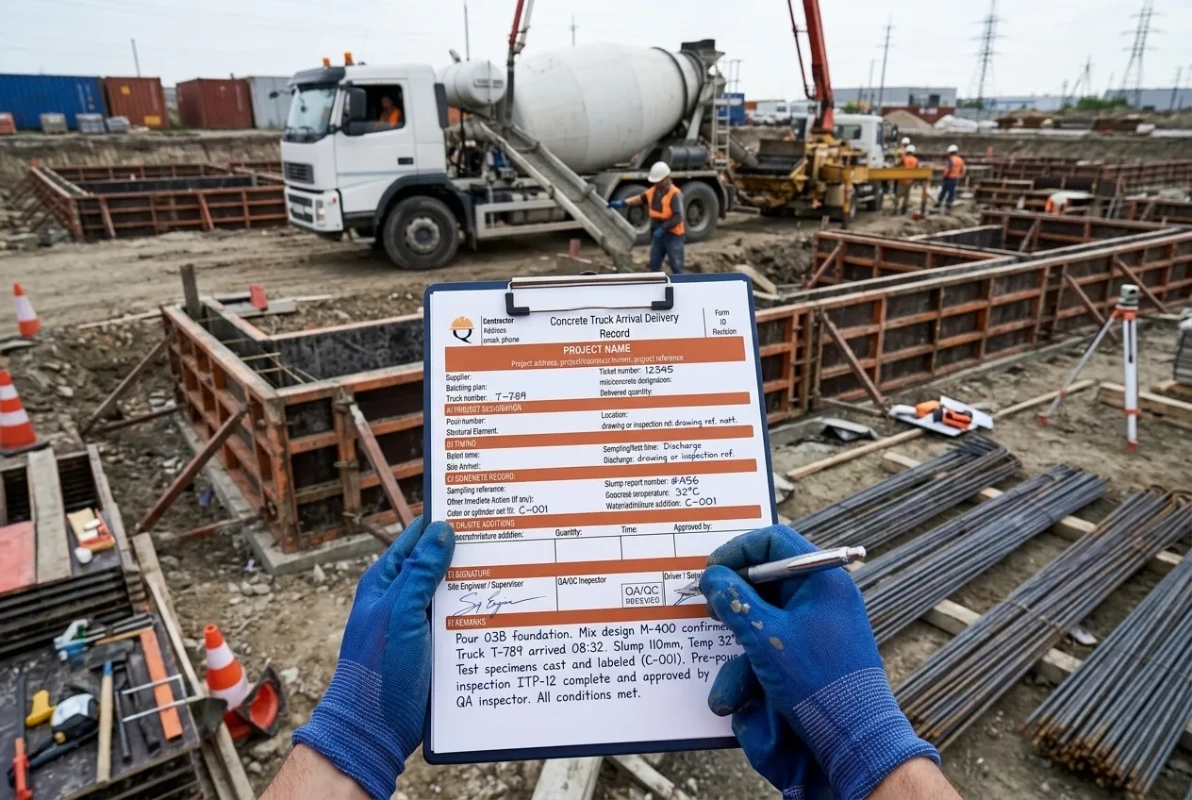
Concrete Truck Arrival & Delivery Record Template
Related Checklists
Keep the workflow moving with nearby templates chosen from similar checklist content.