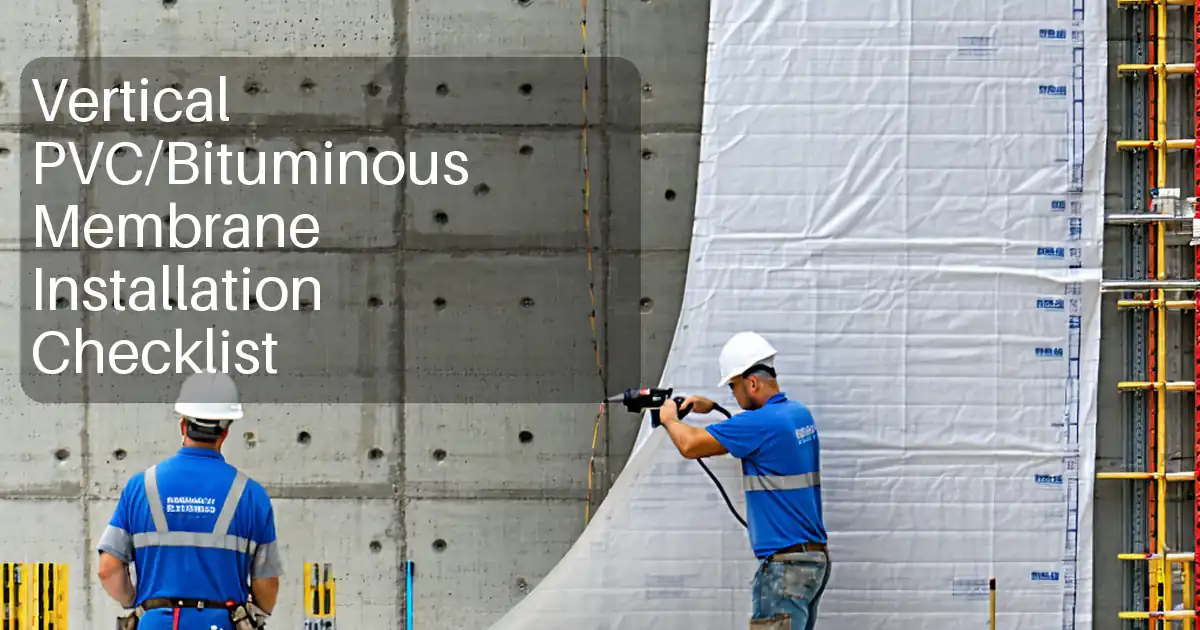
Façade Base and Plinth Waterproofing Inspection Checklist
Definition: Inspect waterproofing at façade base and plinth interfaces for construction managers and inspectors, verifying substrate readiness, membrane continuity, terminations, and drainage to prevent capillary ingress and splash-back damage.
- Confirm substrate dryness, soundness, and smoothness before membrane works.
- Verify membrane thickness, upturn height, laps, and reinforced corners.
- Check terminations, sealants, and drip edges for watertight continuity.
- Interactive, commentable checklist with export and QR code verification.
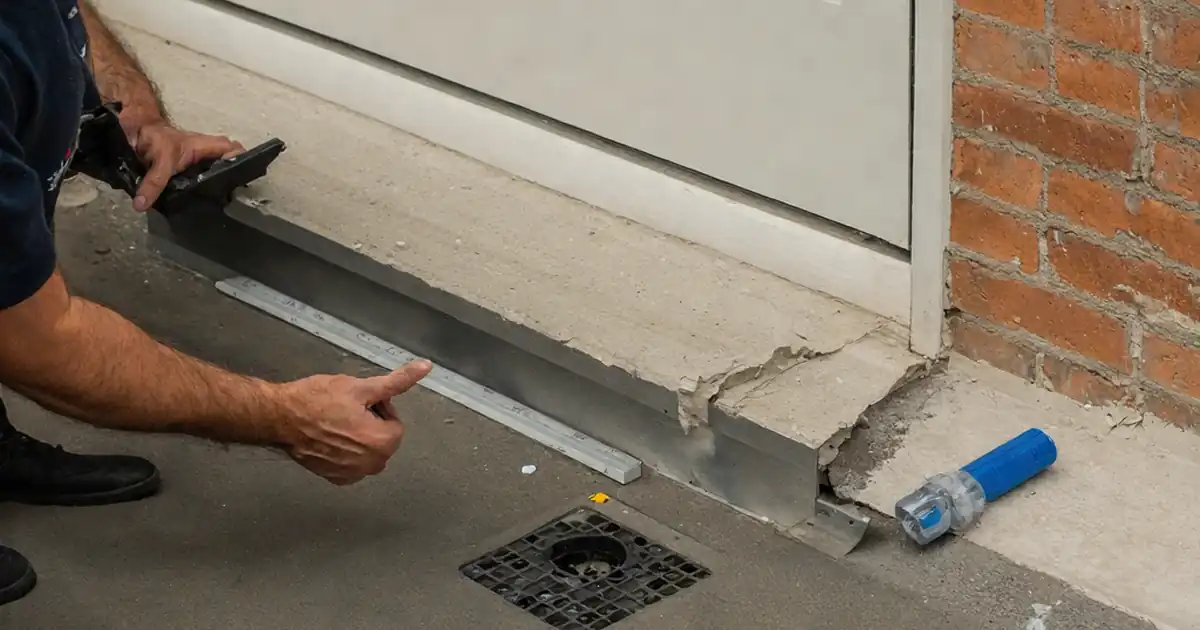
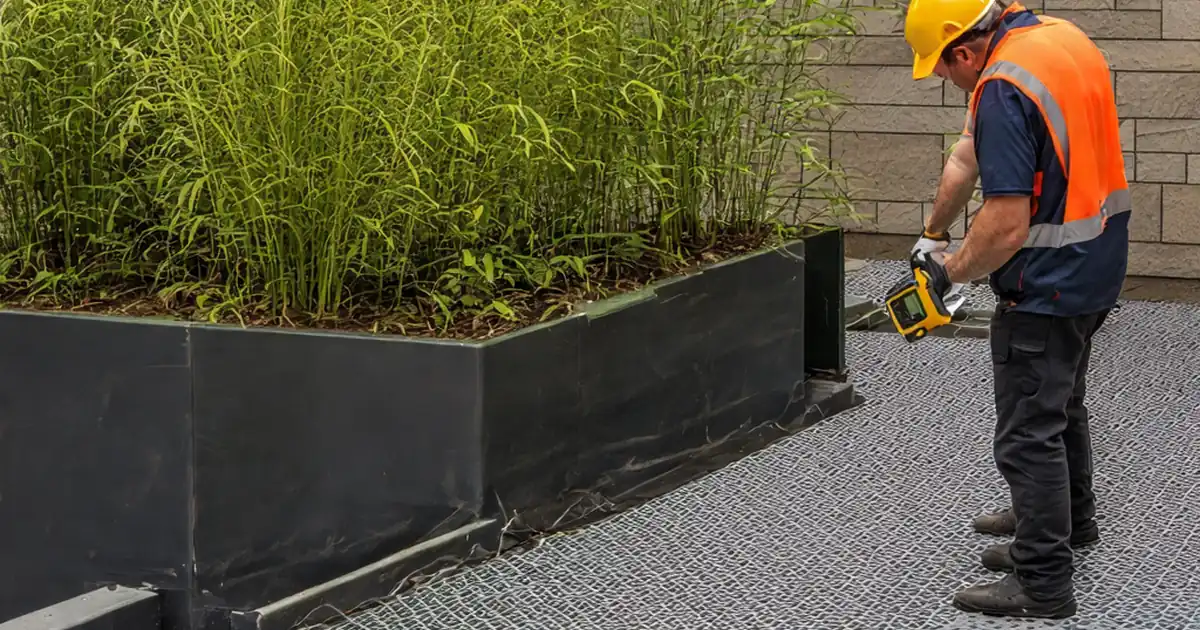
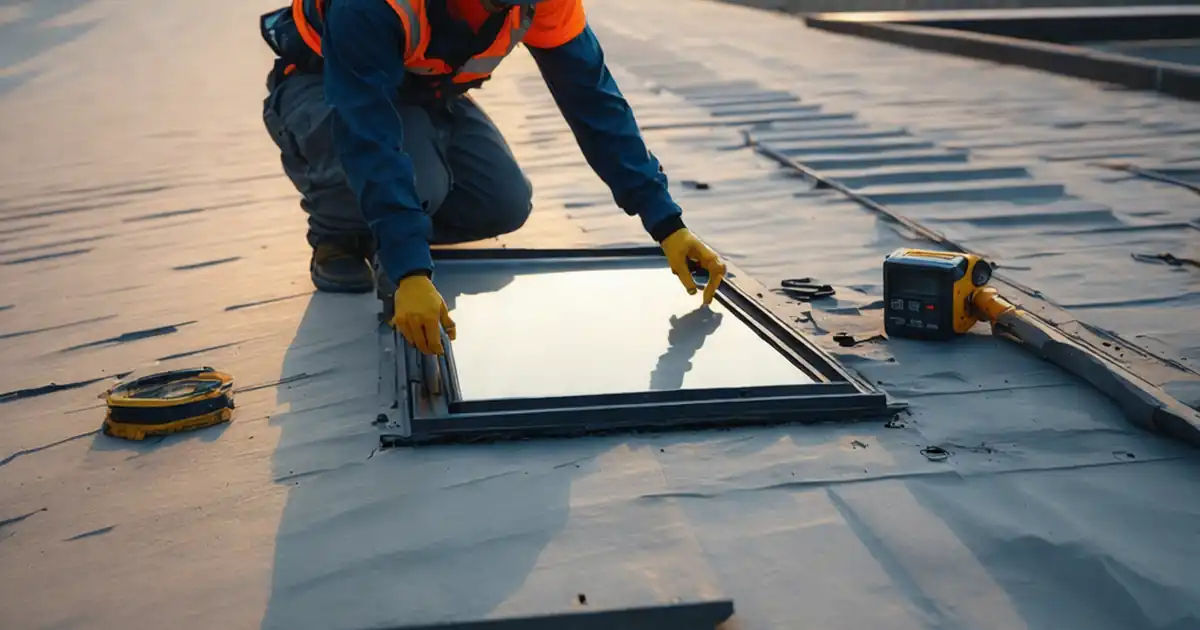
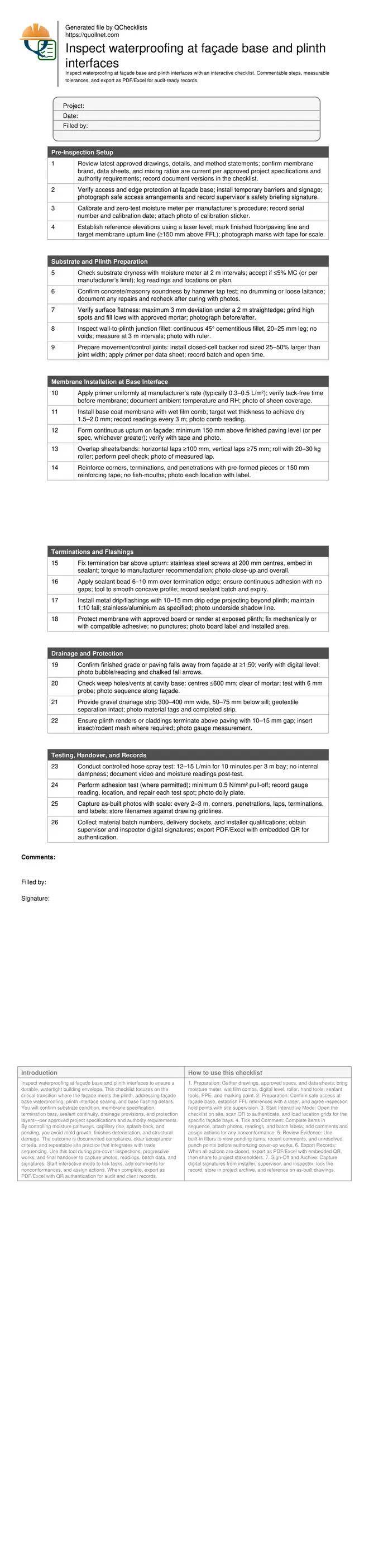
Inspect waterproofing at façade base and plinth interfaces to ensure a durable, watertight building envelope. This checklist focuses on the critical transition where the façade meets the plinth, addressing façade base waterproofing, plinth interface sealing, and base flashing details. You will confirm substrate condition, membrane specification, termination bars, sealant continuity, drainage provisions, and protection layers—per approved project specifications and authority requirements. By controlling moisture pathways, capillary rise, splash-back, and ponding, you avoid mold growth, finishes deterioration, and structural damage. The outcome is documented compliance, clear acceptance criteria, and repeatable site practice that integrates with trade sequencing. Use this tool during pre-cover inspections, progressive works, and final handover to capture photos, readings, batch data, and signatures. Start interactive mode to tick tasks, add comments for nonconformances, and assign actions. When complete, export as PDF/Excel with QR authentication for audit and client records.
- This checklist targets the base interface between façade and plinth, where water frequently accumulates and splashes. It guides inspectors to verify substrate dryness, membrane continuity, terminations, and drainage so that capillary action, ponding, and wind-driven rain do not compromise the envelope.
- Acceptance cues are specified in measurable terms: moisture content thresholds, membrane thickness, lap dimensions, upturn heights, slope ratios, and adhesion values. Each step requests evidence such as calibrated readings, batch numbers, photos with scale, and sign-offs to create defensible, audit-ready records.
- Practical tools and methods are embedded: moisture meters, pull-off testers, wet film combs, straightedges, and controlled spray tests. The workflow suits pre-cover, progressive, and final inspections, enabling coordination among façade, waterproofing, and hardscape teams without duplicating tasks or missing hidden interfaces.
- Interactive online checklist with tick, comment, and export features secured by QR code.
Pre-Inspection Setup
Substrate and Plinth Preparation
Membrane Installation at Base Interface
Terminations and Flashings
Drainage and Protection
Testing, Handover, and Records
Why the Façade–Plinth Interface Fails and What to Inspect
The façade base and plinth junction is a splash and capillary hotspot. Water rebounds from paving, accumulates at horizontal breaks, and wicks into microscopic cracks. If the substrate is damp, uneven, or contaminated, primers do not bond and membranes blister. Missing fillets, short upturns, open laps, or poorly tooled sealant leave capillary paths. Inconsistent drainage gradients and blocked weeps trap water against the façade, leading to staining, mold, and freeze–thaw spalls. This checklist targets these risks with measurable cues: substrate moisture, evenness, primer coverage, membrane thickness, lap sizes, and protected terminations. It also addresses compatible protection boards and flashings that prevent punctures and UV damage. Follow the sequence from preparation to testing, collecting evidence at each step. Insist on current data sheets and record ambient conditions to avoid applying beyond workable limits. Finally, test with controlled spray and verify no dampness appears internally or behind the plinth.
- Dry substrate supports durable primer adhesion.
- Fillets eliminate sharp 90° stress points.
- Upturn height resists splash and ponding.
- Drips and weeps discharge water outward.
- Photos with scale prove compliance.
Methods, Tools, and Acceptance Tolerances on Site
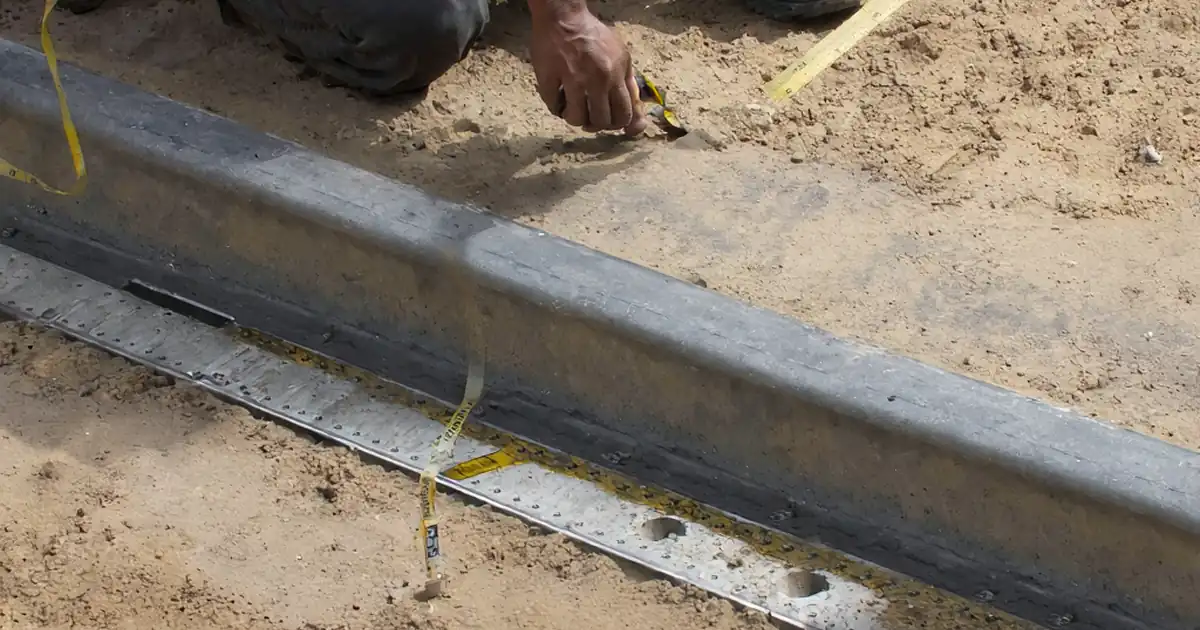
Use calibrated moisture meters for concrete or masonry and reject areas above specified limits. Confirm evenness with a 2 m straightedge and correct deviations using approved mortars. Apply primer at the manufacturer’s stated rate, checking tack-free time before laying membranes. Control thickness with wet film combs and verify dry film outcomes. Ensure laps are rolled and measured, and reinforce internal/external corners. Install termination bars with stainless fixings at defined centres, then tool sealant beads to a continuous concave profile. Set flashings with adequate drip edges and falls to shed water. Confirm site falls with digital levels, clear cavity weeps, and protect exposed membranes with boards or render systems compatible with the waterproofing chemistry. Conduct controlled hose tests under agreed conditions, then monitor interior and cavity for any dampness using moisture readings.
- Measure, don’t guess tolerances.
- Record batch numbers and expiry dates.
- Photograph each critical interface.
- Use compatible sealants and boards.
- Verify gradients using digital levels.
Coordination, Sequencing, and Evidence for Handover
Coordination across trades is vital because base interfaces often get buried by paving, render, or cladding before inspection. Sequence works to allow primer, membrane, and terminations to cure before protection and finishing. Agree inspection hold points and acceptance criteria with the contractor and consultant. Where pull-off testing is allowed, reinstate membrane after test and document repairs. Align flashings with façade cladding profiles, ensuring clear drip lines and unblocked weeps. Use the interactive checklist to flag punch items, attach geo-tagged photos, and track close-out dates. At completion, compile as-builts with drawings marked to show lap directions, upturn heights, and test locations. Export the package with QR-secured verification so anyone scanning on site can confirm records’ authenticity and version control.
- Set hold points before covering works.
- Coordinate flashings with cladding lines.
- Reinstate tested areas immediately.
- Tag photos to gridlines and bays.
How to Use This Interactive Façade–Plinth Waterproofing Checklist
- Preparation: Gather drawings, approved specs, and data sheets; bring moisture meter, wet film combs, digital level, roller, hand tools, sealant tools, PPE, and marking paint.
- Preparation: Confirm safe access at façade base, establish FFL references with a laser, and agree inspection hold points with site supervision.
- Start Interactive Mode: Open the checklist on site, scan QR to authenticate, and load location grids for the specific façade bays.
- Tick and Comment: Complete items in sequence, attach photos, readings, and batch labels; add comments and assign actions for any nonconformance.
- Review Evidence: Use built-in filters to view pending items, recent comments, and unresolved punch points before authorizing cover-up works.
- Export Records: When all actions are closed, export as PDF/Excel with embedded QR, then share to project stakeholders.
- Sign-Off and Archive: Capture digital signatures from installer, supervisor, and inspector; lock the record, store in project archive, and reference on as-built drawings.
Call to Action
- Start Checklist Tick off tasks, leave comments on items or the whole form, and export your completed report to PDF or Excel—with a built-in QR code for authenticity.
- Download Excel - Façade Base & Plinth Waterproofing Inspection
- Download PDF - Façade Base & Plinth Waterproofing Inspection
- View Image - Façade Base & Plinth Waterproofing Inspection
Cite & Embed
“Façade Base & Plinth Waterproofing Inspection by Quollnet”
with a link to
this source page.

FAQ
Question: What upturn height should the membrane achieve at the façade base?
Question: How do I verify substrate moisture before priming and membrane installation?
Question: When should I perform a hose test at the façade–plinth interface?
Question: What evidence is needed for handover and future maintenance?
Related Articles
Broader reading and guidance connected to this checklist topic.


Master Construction Project Cashflow With Cashflowpot


Download Excel Format Snag List
Related Checklists
Keep the workflow moving with nearby templates chosen from similar checklist content.