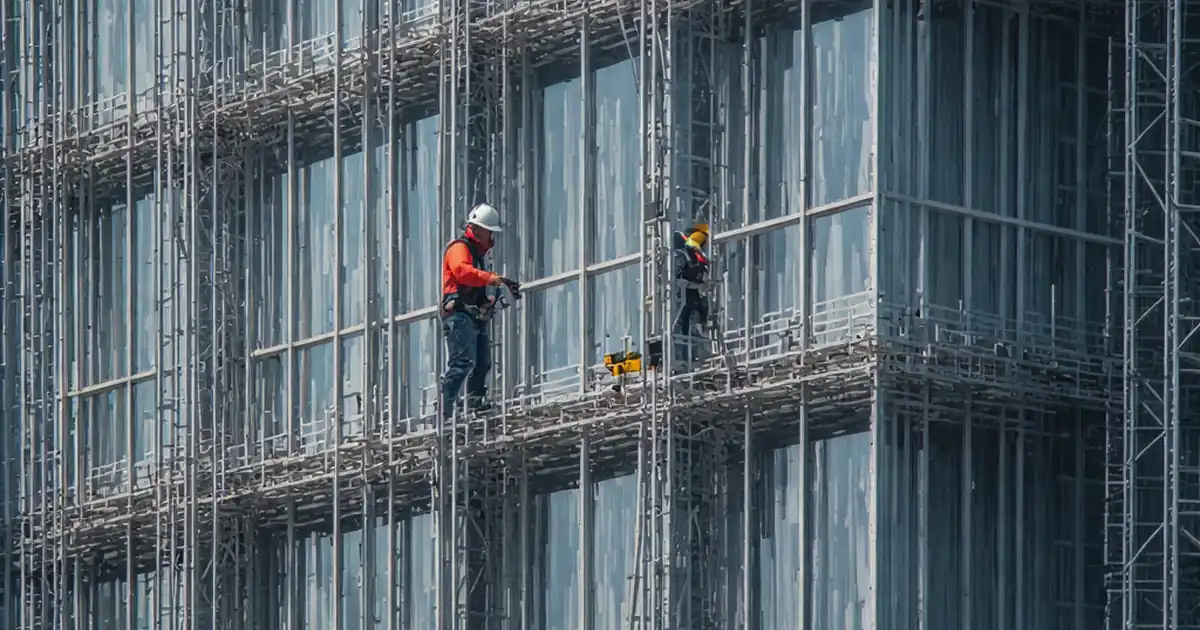
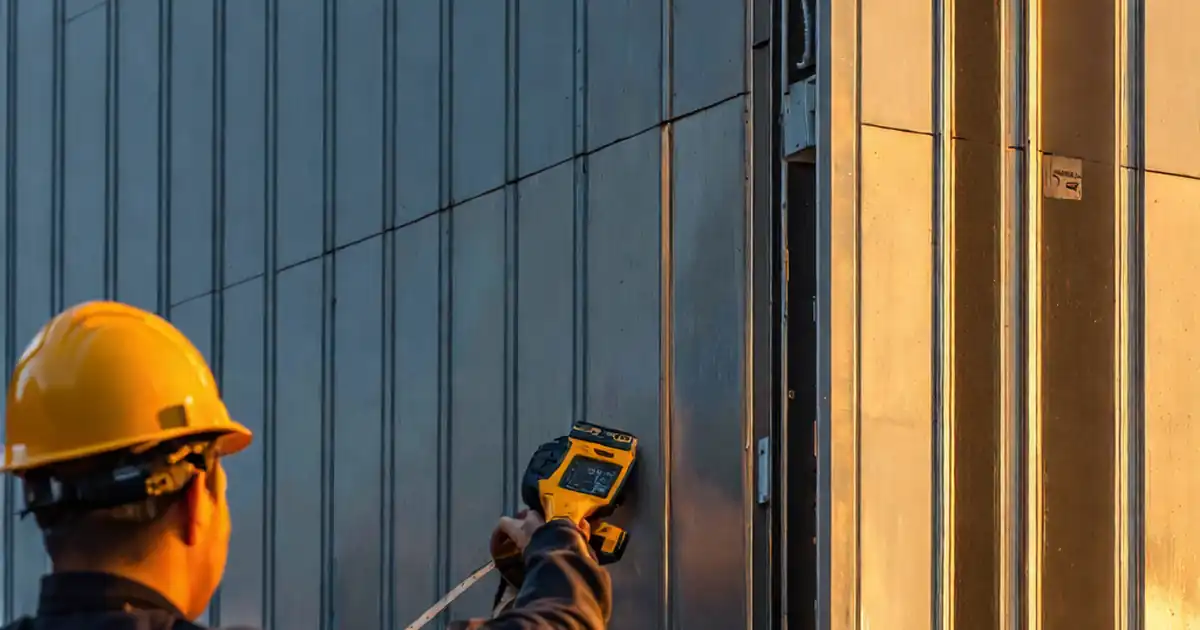
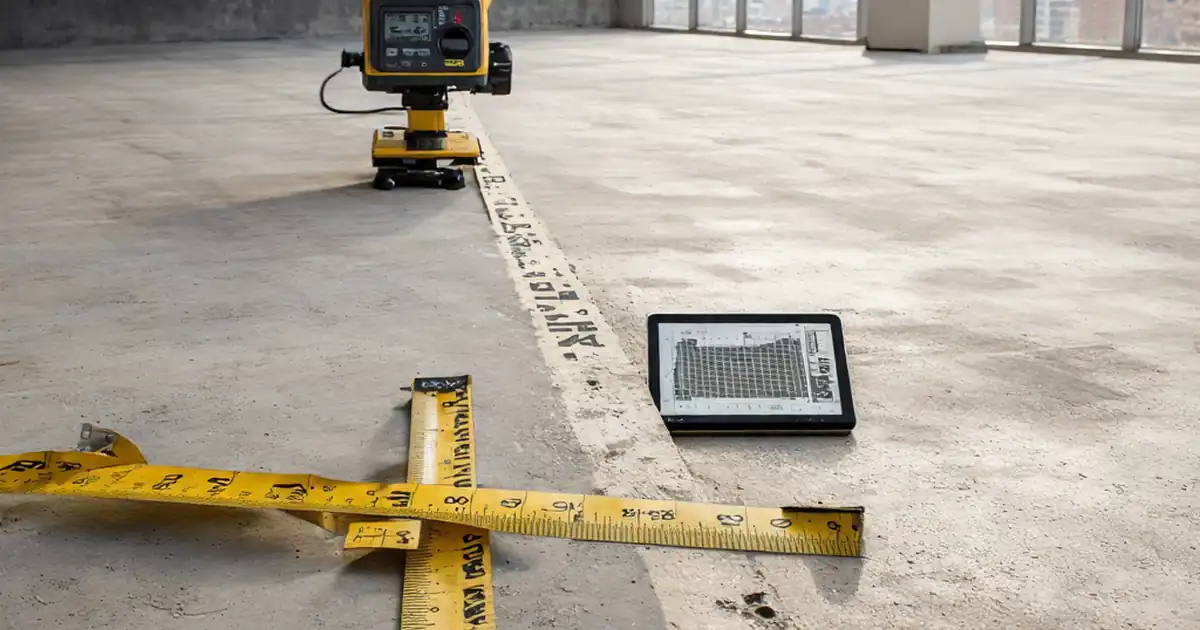
Curtain Wall Starter Bay Inspection & Benchmark Approval
Definition: Inspect curtain wall starter bay installation and benchmark approval is a jobsite checklist for site engineers, facade managers, and consultants to verify the first bay’s installation, interfaces, tolerances, and formal sign-off before production rollout.
- Confirms geometry, anchorage, and envelope interfaces meet design intent
- Reduces rework by locking a proven, repeatable installation standard
- Captures measurements, photos, and approvals for transparent QA records
- Interactive, commentable, export-ready checklist with QR code authentication
Inspect curtain wall starter bay installation and benchmark approval establishes the first installed bay as the reference for the entire facade. This field-first, first-article benchmark confirms installation methodology for either unitized curtain wall or stick system assembly, validates control lines, and proves interface performance. The scope covers survey transfer, anchorage and bracket setup, isolation and thermal breaks, plumb and level geometry, joint uniformity, and critical tie-ins to air and vapour barriers and fire safing. It excludes full-building testing and production-wide installation details beyond the reference bay. Done properly, the benchmark reduces cumulative alignment drift, prevents water ingress at transitions, and avoids costly rework from mislocated brackets, incorrect joint gaps, or incomplete membranes. It also clarifies acceptance tolerances and sets a repeatable, auditable standard for crews. Use this interactive checklist onsite: tick each item, add comments, attach photos and measurements, and export to PDF or Excel with a QR-linked record for stakeholder review.
- Create a reliable first-article reference that locks bracket positions, shimming strategy, joint widths, and interface details. This reduces dimensional drift, improves repeatability across floors, and prevents cascading errors that are expensive to correct once glazing and adjacent trades progress.
- Verify anchors, isolation pads, and thermal breaks meet design, then prove plumb/level, joint uniformity, and movement allowances. Document every reading with calibrated tools, geo-tagged photos, and lot numbers to provide defensible QA evidence at consultant and client walkdowns.
- Interactive online checklist with tick, comment, and export features secured by QR code. This enables quick field collaboration, authenticated approvals, and clean traceability from benchmark walkdown through production, with downloadable PDFs and Excel logs suitable for project records and audits.
- Demonstrate airtightness, weatherproofing, drainage, and fire safing continuity at slab edges and transitions. Controlled water checks, smoke-pencil continuity, and visual inspections prove performance at the most failure-prone interfaces, establishing a model for production crews to replicate.
Pre-Installation Controls
Anchorage and Brackets
Alignment and Geometry
Envelope Interfaces
Benchmark Documentation and Approval
Survey Control and Substrate Readiness
Benchmarks start with reliable control. Transfer gridlines and datums from the primary survey to the facade plane with a total station, then validate offsets at multiple heights. Slab edges and embeds must be within workable tolerances so bracket stand-off and shimming remain minimal and consistent. Identify chips, voids, or mislocated embeds early and document repairs before hardware goes in. Confirm materials match the approved submittals, including anchor grade, isolation pads, thermal breaks, and sealants. Set site conditions for safe lifting and accurate measuring: stable access, dry substrates, and wind within limits. These fundamentals reduce rework and prevent installing a “beautifully wrong” first bay that others will repeat. Capture all evidence—calibrations, photos with scales, and CSV as-builts—so the benchmark is defensible during consultant review and sets a trustworthy template for production crews.
- Transfer and verify control within ±2 mm in both axes
- Confirm slab edge straightness within ±5 mm before brackets
- Pre-verify materials and record batch and lot numbers
- Stabilize access and environment to support accurate measurements
Anchorage, Isolation, and Dimensional Tolerances
Anchors and brackets define geometry. Install per the approved drawings, verify torque with a calibrated wrench, and document results. Use noncompressible shims for full bearing, then maintain isolation and thermal break continuity to avoid cold bridging and galvanic contact. Check stand-off, edge distances, and slot lengths to preserve design movement. With the unit or starter mullion in place, tune plumb and level using a laser or digital level to tight tolerances, verify uniform joint widths, and confirm reveals. Lock in the result with photos and measurements before any covers or adjacent trades conceal the evidence. Systematically recording these metrics ensures the benchmark bay truly represents production capability, not a one-off crafted by senior installers only.
- Record actual torque values and gauge calibration dates
- Ensure no metal-to-metal contact across thermal breaks
- Achieve plumb within 2 mm in 3 m of height
- Maintain joint uniformity within ±2 mm across the bay
Envelope Continuity and Benchmark Sign-Off
Failures often originate at transitions, so prove continuity. Tie the curtain wall to surrounding air and vapour barriers with primed, rolled laps and secure terminations, then use a smoke pencil to check for leaks. Confirm weather seals and gaskets are continuous, correctly spliced, and not stretched. Keep drainage paths and weeps unobstructed; a controlled low-flow water check demonstrates egress. At slab edges, install and label fire safing, compressing mineral wool and applying smoke seal as specified. Document everything with geo-tagged photos before cladding conceals the details. Conclude with a structured walkdown and formal acceptance so the benchmark becomes the standard instruction for production crews.
- Lap membranes ≥ 100 mm and roll for adhesion
- Verify weeps clear and baffles correctly oriented
- Label fire safing and photograph before enclosure
- Obtain written acceptance before scaling production
How to Use This Interactive Benchmark Inspection Checklist
- Preparation: gather approved shop drawings, survey controls, calibration certificates, total station, laser level, torque wrench, feeler gauges, smoke pencil, PPE, and access permits. Brief the team on acceptance tolerances and hold-points.
- Open the checklist on your device and select project, building, elevation, and bay ID. Sync or download for offline use if connectivity is limited.
- Start interactive mode. Tick items as completed, add comments for context, and attach photos, measurements, and lot numbers at each step.
- Enter measured values directly from instruments and upload CSV exports from the total station. Tag readings to points (top-left, top-right, sill, jamb).
- Flag nonconformances, assign corrective actions, and set due dates. Re-inspect closed items and attach before/after evidence for traceability.
- Export the record to PDF or Excel for the walkdown. Share links with stakeholders and prepare printed sets with embedded QR codes if required.
- Sign-off: collect digital signatures from contractor, consultant, and client. Archive the approved benchmark package with QR authentication for future production checks.
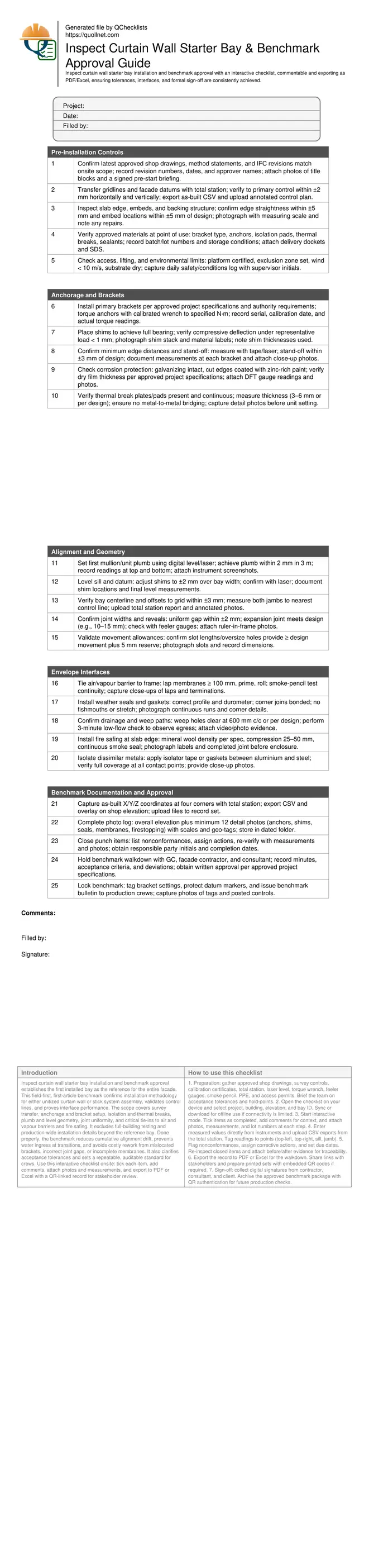
Call to Action
- Start Checklist Tick off tasks, leave comments on items or the whole form, and export your completed report to PDF or Excel—with a built-in QR code for authenticity.
- Download Excel - Curtain Wall Starter Bay Inspection & Benchmark Approval
- Download PDF - Curtain Wall Starter Bay Inspection & Benchmark Approval
- View Image - Curtain Wall Starter Bay Inspection & Benchmark Approval
Cite & Embed
“Curtain Wall Starter Bay Inspection & Benchmark Approval by Quollnet”
with a link to
this source page.
FAQ
Question: What qualifies as a curtain wall starter bay and why is it benchmarked?
Question: What tolerances should I apply for plumb, level, and joint widths?
Question: Should fire safing be installed in the starter bay before approval?
Question: How do I perform a quick water check on the benchmark bay?
Question: Who signs the benchmark approval and what records are required?
Related Articles
Broader reading and guidance connected to this checklist topic.
3d Printed Concrete Qa/qc: Inspection, Process Control & Acceptance


How To Specify Concrete Slump For Slabs, Beams, Columns And Walls

Concrete Cube Test Register Excel Format – Pdf & Excel Sample
Related Checklists
Keep the workflow moving with nearby templates chosen from similar checklist content.