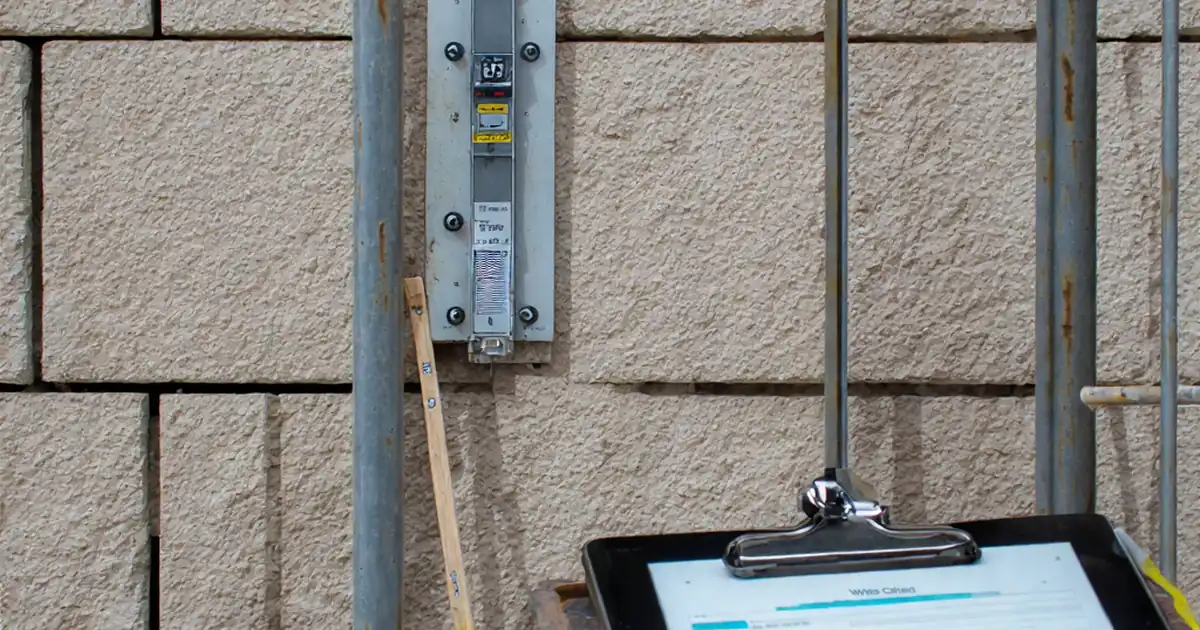
Inspect curtain wall mullion installation for plumbness and spacing
Definition: Inspect curtain wall mullion installation for plumbness and spacing equips site engineers and QA managers to verify verticality and center-to-center layout against drawings, using calibrated tools, documented tolerances, and photo-backed evidence.
- Confirm verticality with laser plumb, digital level, and measured offsets.
- Verify mullion center-to-center spacing and cumulative error across bays.
- Document readings, photos, and approvals for verifiable, traceable compliance.
- Interactive, commentable checklist with export and QR code verification.
Inspect curtain wall mullion installation for plumbness and spacing is a targeted field procedure ensuring every vertical mullion is truly plumb and correctly spaced. This guide focuses on mullion alignment, verticality checks, center‑to‑center spacing, and cumulative layout control—without drifting into glazing, sealants, or finishes. You will establish reliable control lines, measure plumbness with laser or digital levels, and confirm spacing with tapes or laser distance meters against approved shop drawings. By keeping alignment within stated tolerances, you avoid racking of frames, binding of operables, glazing stress, water ingress risks, and costly rework. Outcomes include verified mullion verticality, uniform joint dimensions, and a documented as‑built that supports façade performance and warranty requirements. Use this interactive, commentable checklist on site to capture readings, photographs, and approvals; then export your record as PDF/Excel with a secure QR for audit and handover.
- Ensure each mullion stands within approved verticality tolerances using calibrated laser plumb or digital levels, then verify cumulative alignment across the elevation. Consistent plumbness prevents glazing stress, air‑water leakage pathways, and premature hardware wear while supporting smooth envelope integration.
- Control horizontal layout by checking center‑to‑center spacing for every bay and cumulative error over multiple bays. Accurate spacing maintains uniform gasket pockets, maintains panel fit, and reduces shimming conflicts at corners, stack joints, and interface conditions with slabs and spandrels.
- Interactive online checklist with tick, comment, and export features secured by QR code. Capture photo evidence, instrument readings, calibration certificates, and approvals for a defensible audit trail and fast stakeholder sign‑off aligned with approved project specifications and authority requirements.
Pre-Inspection Setup
Reference Control & Benchmarking
Plumbness Verification
Mullion Spacing Verification
Fixings & Shims Related to Alignment
Documentation & Sign-Off
Establish dependable control before measuring
Accurate mullion inspection begins with control. Transfer gridlines and vertical datums onto the façade plane using a total station and laser plumb. Protect these marks so they survive daily site activity. Next, create a repeatable reference at sill or anchor channels, then mark centerlines at every bay. With dependable control in place, you avoid chasing errors caused by drifting baselines and unreliable marks. Always verify instrument calibration and environmental factors: strong sun, wind, or reflective cladding can distort readings. When in doubt, take repeat measurements and average them. Treat the structure as a closed system: bracket elevations, slot ranges, and shim availability all influence your ability to pull mullions into true. Document every step—photos of marks, laser dots against a rule, and as‑built sketches—so later checks and audits can reconstruct exactly how the elevation was set.
- Transfer and protect gridlines and benchmarks.
- Verify instrument calibration and stability.
- Create a consistent sill/head reference.
- Account for environment affecting readings.
- Document every reference with photos.
Plumbness: method, tolerances, and practical cues
Plumbness confirms verticality of each mullion. Measure bottom, mid, and top using a laser plumb or a digital level and record offsets relative to the base reference. A 2 m spirit level adds a fast analogue cross‑check. Typical acceptance is ≤2 mm per metre and ≤5 mm overall unless the approved project specifications state otherwise. Also check twist using a digital angle gauge; excessive torsion can cause glazing bite variations and gasket roll. After temporary bracing, let the system settle and retake readings before final torque. If you exceed tolerance, adjust through slots and shims, not by forcing frames. Retest and log the improvement. Photographs with visible scales and device readouts are essential proof, particularly at the top where movement often hides.
- Measure at bottom, mid, and top.
- Use laser/digital level plus 2 m level.
- Typical verticality ≤2 mm/m, ≤5 mm overall.
- Adjust via slots and shims only.
- Photograph readouts with scales.
Spacing control and cumulative error management
Spacing ensures panels and transoms fit without stress. Measure center‑to‑center distances at sill and head and compare with shop drawings. Record each bay and then check cumulative layout across multiple bays to prevent drift that only appears at corners or stack joints. Typical acceptance is ±2 mm per bay and ≤5 mm cumulative unless otherwise specified. Edge conditions matter: verify offsets to structural gridlines so interface trims and corners align cleanly. Confirm clear joint or gasket pocket widths remain uniform, as unequal pockets can telegraph in glazing lines. If a bay exceeds tolerance, redistribute small adjustments over adjacent bays rather than concentrating all correction in one location. Capture photos of tape pulls and laser distances, and annotate redlines to show where and how you corrected the set‑out.
- Check bay and cumulative spacing.
- Control edges to structural gridlines.
- Typical spacing ±2 mm per bay.
- Keep gasket pockets uniform.
- Redistribute small corrections.
How to use this interactive mullion plumbness and spacing checklist
- Preparation: Gather approved drawings, calibrated laser/digital level/tape, angle gauge, torque wrench, camera, and PPE. Establish access and fall protection, then transfer gridlines and datums to the façade work area.
- Using the Interactive Checklist: Open the checklist on your device, start a new elevation/bay record, and follow grouped steps. Tick items, enter readings, attach photos, and add comments for variances or constraints.
- Capture Measurements: For each mullion, log plumbness (mm/m and total), twist (°), and spacing (mm). Reference gridlines, bay IDs, and tool serials. Tag any NCRs and link corrective actions.
- Resolve Variances: Adjust via slots and shims, re‑measure, and update the entry. Use comments to document rationale, responsible party, and recheck timing until readings meet project tolerances.
- Sign-Off: Collect digital signatures from installer, QA/QC, and consultant. Export as PDF/Excel, embed the QR for authentication, and distribute to stakeholders for records and audit.

Call to Action
- Start Checklist Tick off tasks, leave comments on items or the whole form, and export your completed report to PDF or Excel—with a built-in QR code for authenticity.
- Download Excel - Curtain Wall Mullion Plumbness & Spacing Inspection
- Download PDF - Curtain Wall Mullion Plumbness & Spacing Inspection
- View Image - Curtain Wall Mullion Plumbness & Spacing Inspection
Cite & Embed
“Curtain Wall Mullion Plumbness & Spacing Inspection by Quollnet”
with a link to
this source page.
FAQ
Question: What are acceptable tolerances for mullion plumbness and spacing?
Question: Which tools give the most reliable plumbness and spacing results?
Question: How should I handle cumulative spacing errors across multiple bays?
Question: What if mullions are out of plumb due to structural irregularities?
Related Articles
Broader reading and guidance connected to this checklist topic.

3d Printed Concrete Qa/qc: Inspection, Process Control & Acceptance

Download Excel Format Snag List
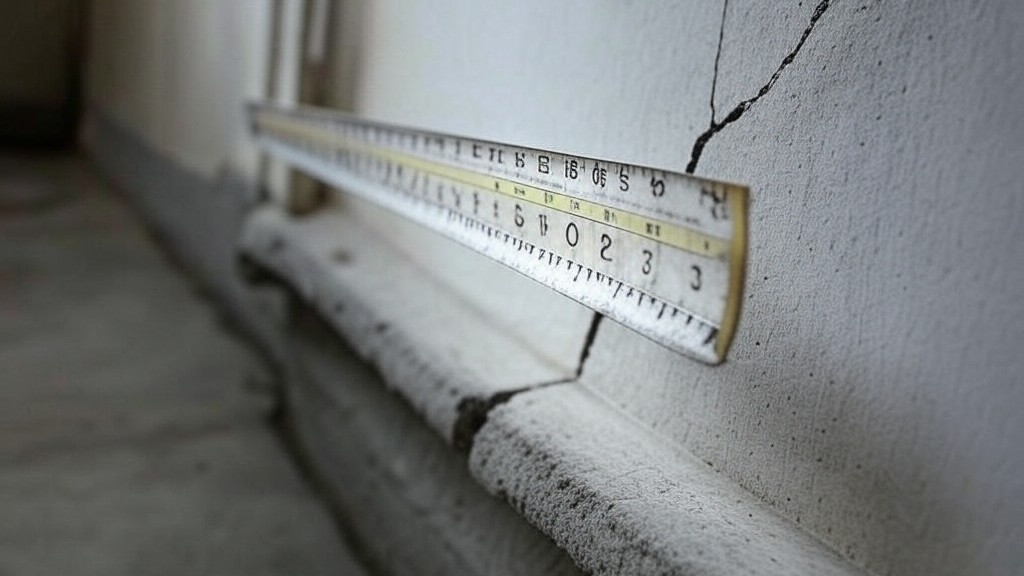
Is The Crack You See On Your Wall Serious Or Minor Cosmetic Issue?

Is It Important To Customize Your Qr Code And How To Do It?
Related Checklists
Keep the workflow moving with nearby templates chosen from similar checklist content.