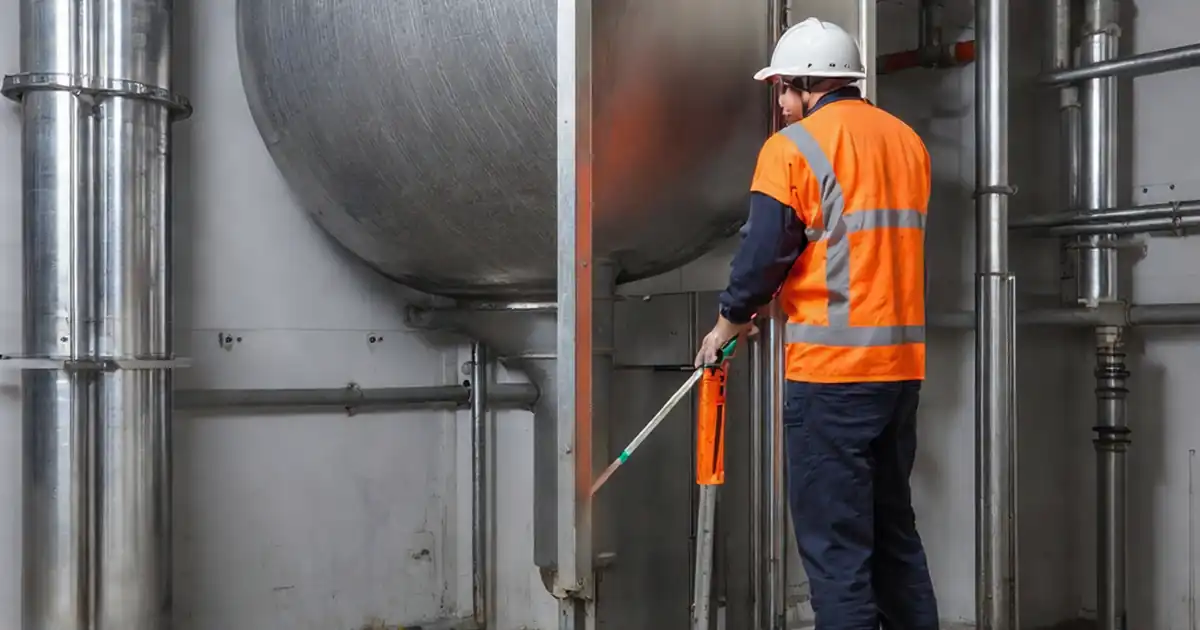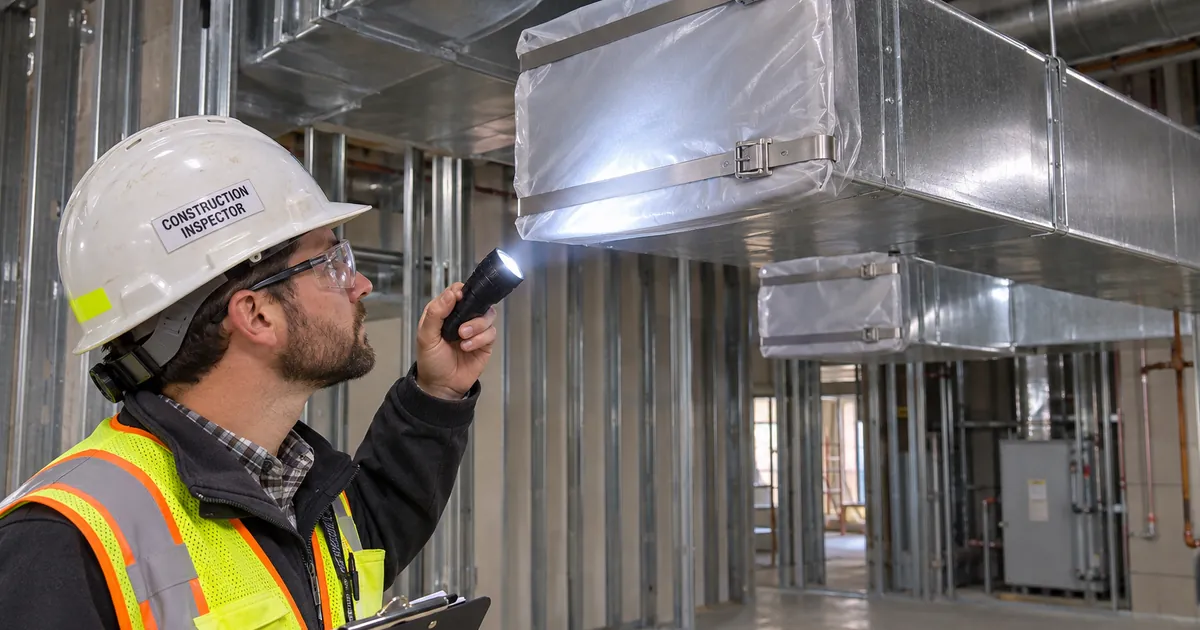
A temporary duct-end protection inspection checks that unconnected duct openings remain covered, clean, and protected from moisture and construction debris before closure conceals ductwork or prevents access.
- Protection must cover open duct ends, branch takeoffs, and unconnected fittings within the inspection area.
- An intact cover also needs secure attachment and gap-free edges.
- Accessible interiors are checked for contamination and evidence of moisture.
- Recorded defects and inspection access limitations must be resolved before the area is closed.
The checklist
Inspection Scope
- Identify and record the duct sections and openings included in this pre-closure inspection.
Opening Coverage
- Check every open duct end, branch takeoff, and unconnected fitting within the inspection area for a temporary cap or cover.
Cover Condition
- Inspect each temporary cover for tears, punctures, or other damage that could admit contaminants.
Cover Attachment
- Verify each cover is secured, with no loose attachment points that could allow displacement by nearby work or expected airflow.
Cover Fit
- Check cover edges for gaps that could admit dust, debris, or water.
Water Exposure
- Check for leaks, runoff, or nearby wet work that could reach duct openings. Verify exposed openings have protection positioned to prevent water entry.
Construction Debris Exposure
- Check for nearby cutting, drilling, sanding, or overhead work. Verify covers or additional barriers prevent resulting dust and debris from entering duct openings.
Clean Before Opening
- Verify loose dust and construction debris have been removed from covers and adjacent duct surfaces before opening covers for inspection.
Interior Cleanliness
- Inspect accessible interiors behind covers for dust deposits, offcuts, packaging, tools, or other foreign material. Keep removed covers on a clean surface and prevent nearby work from contaminating exposed openings.
Interior Moisture
- Inspect accessible duct interiors and internal lining for standing water, condensation, dampness, or water staining. Record any evidence of moisture for investigation.
Protection Restoration
- Verify covers removed for inspection are securely reinstated without gaps on every opening that remains unconnected.
Findings and Access Limitations
- Record the location and nature of damaged or missing protection, contamination, and moisture findings. Identify areas that could not be inspected and the reason.
Correction and Reinspection
- Before closure, reinspect recorded defects to verify protection is repaired, contamination is removed, and moisture sources are addressed with affected interiors clean and dry. Record the results.
Pre-Closure Completion
- Verify no unresolved defects or inspection access limitations remain in the area being closed. Confirm unconnected openings remain covered until connection.
Preview the printable checklist
Preview page one below. Open the image or download the PDF for all pages.
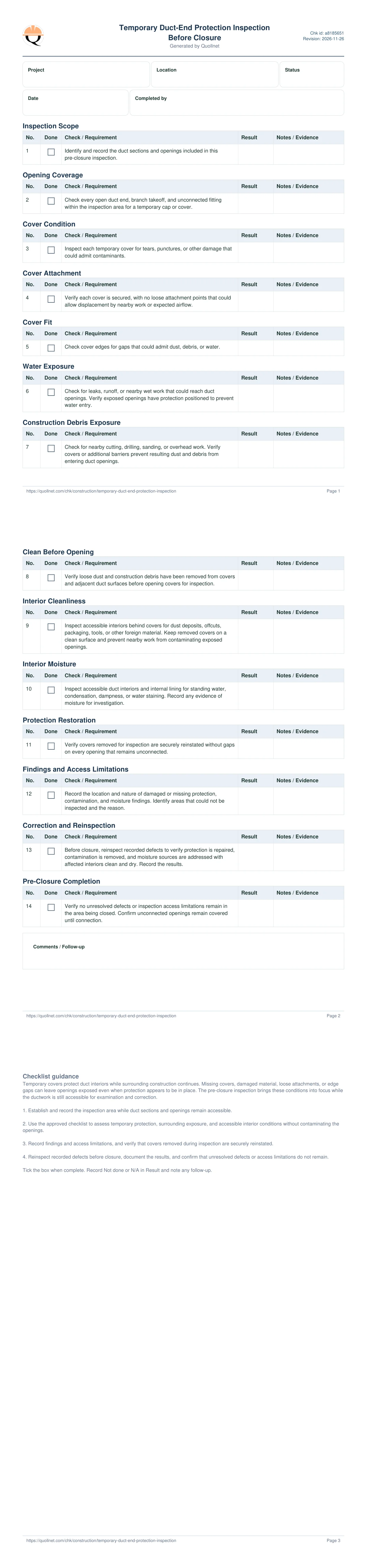
At a glance
- Assess both the condition of temporary covers and their exposure to nearby work.
- Avoid introducing surface debris into ducts when opening covers for inspection.
- Document contamination, moisture evidence, protection defects, and inaccessible areas.
- Verify corrections before closure and keep unconnected openings covered until connection.
How to Use the Approved Checklist Before Closure
- Establish and record the inspection area while duct sections and openings remain accessible.
- Use the approved checklist to assess temporary protection, surrounding exposure, and accessible interior conditions without contaminating the openings.
- Record findings and access limitations, and verify that covers removed during inspection are securely reinstated.
- Reinspect recorded defects before closure, document the results, and confirm that unresolved defects or access limitations do not remain.
Protection depends on more than a visible cover
The presence of a cap or cover does not establish that an opening is protected. Its condition, attachment, and fit determine whether it can keep contaminants out and remain in place during nearby work or expected airflow.
- Tears and punctures provide entry paths for contaminants.
- Loose attachment points can allow a cover to shift.
- Gaps at cover edges can admit dust, debris, or water.
Consider the surrounding construction activity
Protection should be assessed in relation to the work and water exposure around each opening. A cover may appear intact while its position leaves the opening vulnerable to runoff or debris from adjacent activities.
- Leaks, runoff, and nearby wet work are relevant sources of water exposure.
- Cutting, drilling, sanding, and overhead work can introduce dust and debris.
- Covers or additional barriers should prevent these materials from reaching duct interiors.
Inspect interiors without introducing contamination
Opening a cover creates a temporary exposure point. Loose material on the cover and adjacent duct surfaces should be removed first so it does not fall inside. Removed covers belong on a clean surface, and nearby work must not contaminate exposed openings.
- Accessible interiors may contain dust, offcuts, packaging, tools, or other foreign material.
- Standing water, condensation, damp lining, and water staining are moisture findings to record for investigation.
- Any opening that remains unconnected needs its protection securely restored after inspection.
Make closure decisions from verified findings
Inspection records should make clear where defects were found and where inspection was not possible. Before closure, reinspection verifies that protection has been repaired, contamination removed, and moisture sources addressed, with affected interiors clean and dry.
- Record the location and nature of findings.
- Identify inaccessible areas and explain the access limitation.
- Confirm that no unresolved defects or access limitations remain in the area being closed.