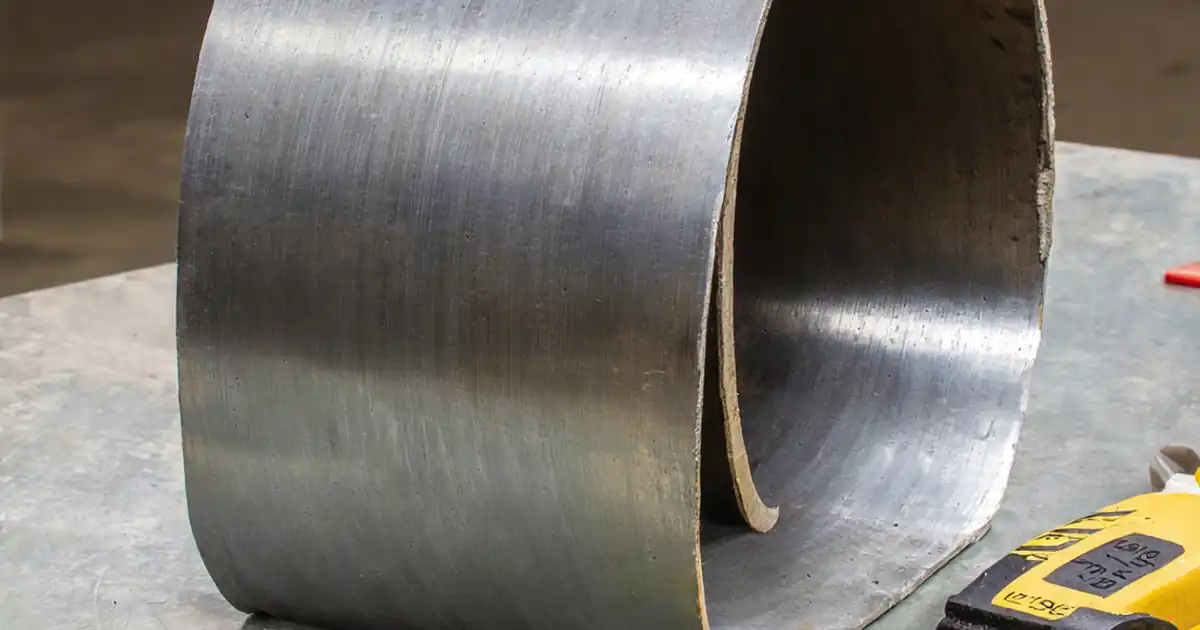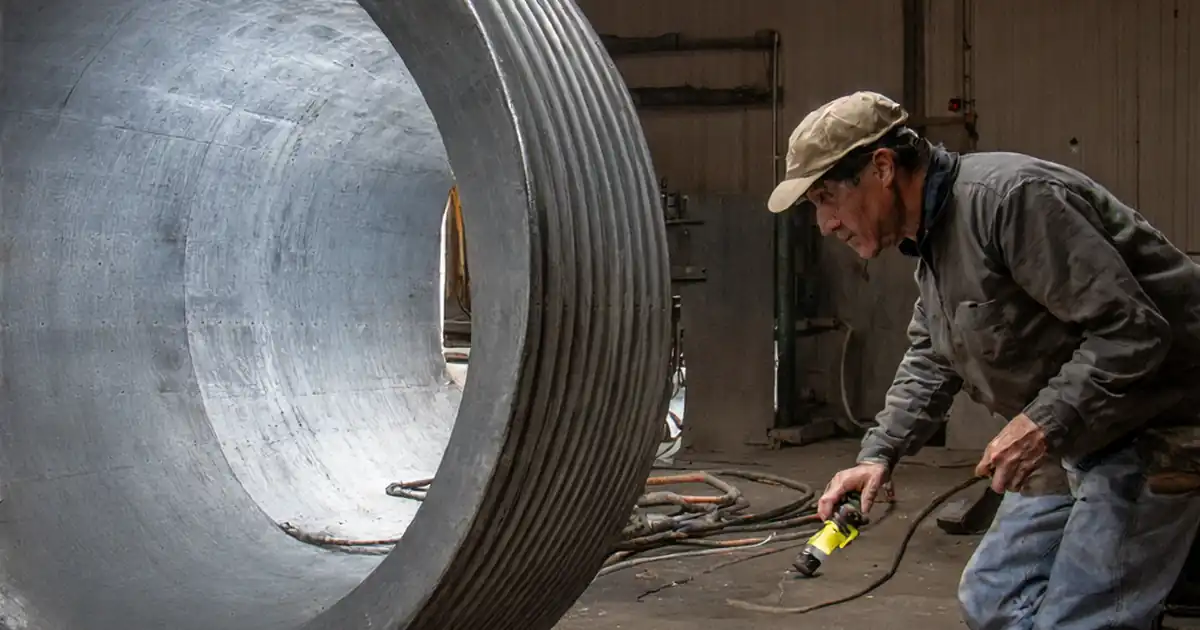
Circular spiral duct seam inspection checks the documented seam configuration, lock-seam engagement, surface condition, and any specified sealing treatment using approved details and inspection methods.
- Spiral duct normally has a helical lock seam; clarify conflicting references to a longitudinal seam before acceptance.
- Exterior appearance alone does not establish concealed engagement or airtightness.
- Apply sealing checks only where sealing is required by the project specifications and approved details.
- Keep satisfactory findings, defects, and unverified areas distinct in the inspection record.
The checklist
Duct Identification
- Record the duct section's identifier, drawing reference, or installation location so inspection results can be traced to that section.
Seam Configuration
- Confirm the actual seam configuration against the approved fabrication detail. Spiral duct normally has a helical lock seam; record and obtain clarification of any conflict with a requirement describing a longitudinal seam before accepting the configuration.
Engagement Verification Basis
- Identify the approved seam profile and inspection method used to verify engagement. If concealed engagement cannot be established by that method, record it as unverified rather than inferring it from the exterior appearance.
Sealing Applicability
- Record whether seam sealing is required by the project specifications and approved details, including the required location and extent. Resolve conflicting or missing requirements before accepting the sealing treatment.
Inspection Access
- Identify the seam areas accessible for examination, including visible interior surfaces and duct ends. Record concealed or inaccessible areas separately from inspected areas.
Continuous Seam Engagement
- Examine the full accessible seam length using the approved inspection method for continuous engagement matching the specified profile. Record gaps, lifted edges, separated folds, or other interruptions.
Seam Terminations
- Inspect seam terminations at accessible duct ends for incomplete engagement, separation, or unraveling.
Dents and Distortion
- Inspect the seam and adjacent duct wall for dents, crushing, or distortion. Record damage and evaluate its acceptability against the project requirements rather than assuming cosmetic damage is acceptable.
Cracks and Openings
- Inspect visible interior and exterior surfaces along the seam for cracks, tears, or punctures.
Corrosion and Coating Damage
- Inspect the seam and adjacent duct wall for corrosion and damage to any specified protective coating.
Sealing Product
- Where sealing is required, verify the installed or proposed sealing product against the approved material submittal and its suitability for the duct material under the manufacturer's instructions.
Surface Preparation
- For field-applied sealing, verify surface preparation against the sealing product manufacturer's instructions before application. If already concealed, record the preparation as unverified unless supported by an inspection record.
Sealing Coverage and Dimensions
- Where sealing is required, check uninterrupted coverage over the specified seam extent and verify any specified width, thickness, or overlap against the approved detail and product instructions.
Sealing Condition
- Inspect accessible sealing treatment for visible voids, cracks, peeling, or loss of adhesion. Use any additional adhesion verification method only when required by the approved inspection procedure.
Curing Requirements
- Where the sealing product requires curing, verify documented application conditions and elapsed curing time against the manufacturer's instructions before any specified testing or service exposure.
Defect Documentation
- Record each defect's type and location with a photograph or descriptive note sufficient to locate it for correction.
Repair Reinspection
- Reinspect corrected defects against the applicable seam, surface-condition, and sealing requirements; record the result for each repair.
Inspection Disposition
- Record the inspection outcome, identifying satisfactory checks, unresolved defects, and unverified areas. Do not mark unverified areas as passed; document the follow-up needed before final acceptance.
Preview the printable checklist
Preview page one below. Open the image or download the PDF for all pages.

At a glance
- Identify the duct section and confirm the seam configuration and verification basis.
- Examine accessible seam areas and adjacent surfaces against project requirements.
- Verify applicable sealing requirements, materials, application evidence, and condition.
- Document defects, reinspect repairs, and resolve unverified areas before final acceptance.
How to use the circular spiral duct seam inspection checklist
- Establish the duct section's identity and review the approved fabrication detail, seam profile, inspection method, and applicable sealing requirements.
- Use the approved checklist to examine accessible seam areas, terminations, and adjacent surfaces, recording limitations separately from findings.
- Where sealing is required, assess the treatment and supporting records against approved details, material submittals, and manufacturer instructions.
- Document defects, record repair reinspection results, and state the inspection disposition without treating unresolved or unverified areas as passed.
Clarify the seam configuration before acceptance
Although a request may refer to a longitudinal seam, circular spiral duct normally has a helical lock seam. The approved fabrication detail establishes the expected configuration. Any conflict needs clarification before the configuration can be accepted.
- Link findings to a duct identifier, drawing reference, or installation location.
- Use the approved seam profile and inspection method as the verification basis.
Separate observed condition from verified engagement
Accessible surfaces and duct ends provide opportunities to examine seam continuity, terminations, and damage. However, a satisfactory exterior appearance is not proof of concealed lock-seam engagement. Areas that cannot be established by the approved method remain unverified.
- Record accessible and inaccessible areas separately.
- Evaluate dents, distortion, cracks, openings, corrosion, and coating damage against project requirements.
- Do not treat visual seam inspection as proof of airtightness.
Evaluate sealing only against applicable requirements
Sealing is not assumed to be required on every seam. Its location and extent come from the project specifications and approved details. Where required, acceptance also depends on the approved product and relevant manufacturer instructions.
- Resolve missing or conflicting sealing requirements before acceptance.
- Do not infer concealed surface preparation without a supporting inspection record.
- Use additional adhesion verification only when required by the approved inspection procedure.
Make the inspection outcome traceable
The final record should distinguish satisfactory checks from unresolved defects and unverified areas. Clear defect locations support correction, while recorded repair reinspection results show whether the applicable requirements have been met.
- Use photographs or descriptive notes sufficient to locate defects.
- Document follow-up needed for unverified areas rather than marking them as passed.