The checklist
Mechanical Component Inspection
- Check all bolts and fasteners for proper torque and alignment.
- Inspect bearings for correct installation and lubrication.
- Verify that all pulleys and belts are aligned and tensioned correctly.
- Examine for any signs of physical damage or wear on moving parts.
- Ensure all guards and safety covers are installed as per specifications.
Electrical Connection Inspection
- Check all electrical connections for tightness and correct labeling.
- Inspect cable routing for potential interference or damage.
- Verify that all terminal blocks and enclosures are properly sealed.
- Confirm the grounding systems are installed and functioning correctly.
- Test electrical insulation resistance to ensure safety standards are met.
System Integrity Check
- Conduct a visual inspection of the entire system for integrity and compliance.
- Review installation documentation to ensure all steps were completed.
- Perform a functional test of the equipment to verify operational readiness.
- Ensure all safety systems and emergency stops are operational.
- Document any deviations or recommendations for corrective actions.
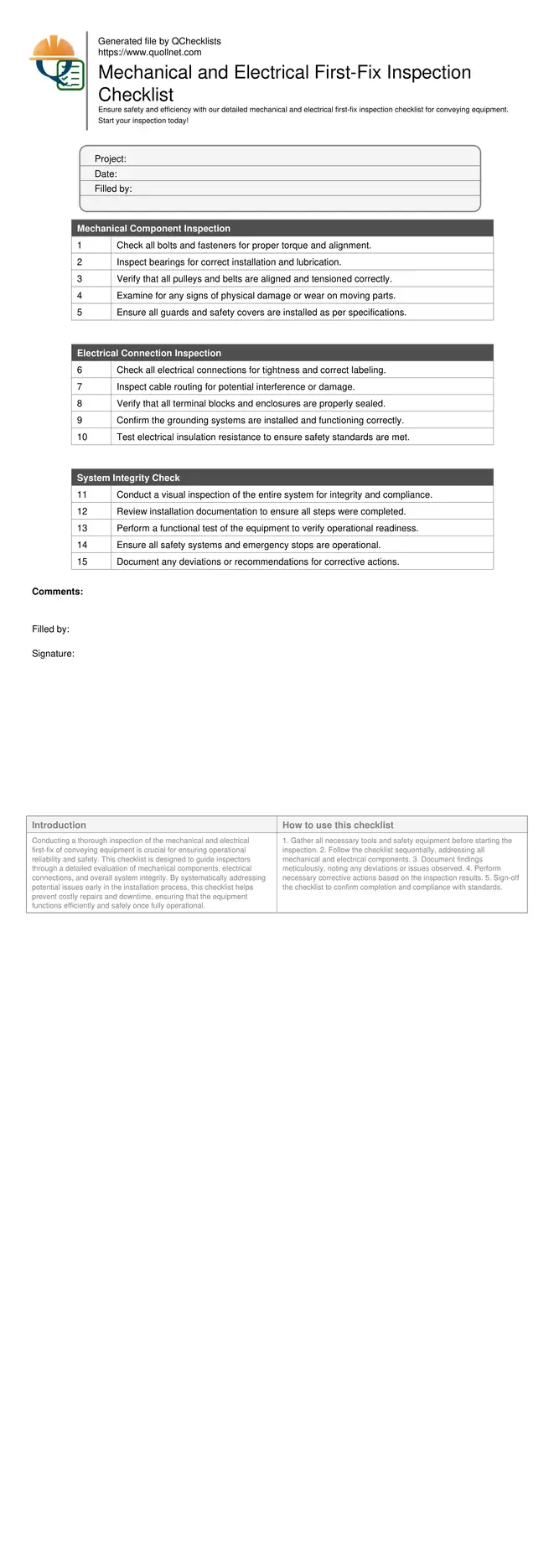
Preview the printable checklist
Preview page one below. Open the image or download the PDF for all pages.
At a glance
- Ensure mechanical components are correctly installed to prevent future malfunctions.
- Verify electrical connections to maintain system safety and reliability.
- Identify and address installation errors early to reduce potential downtime.
- Enhance operational efficiency through detailed inspection and documentation.
- Support regulatory compliance by following structured inspection procedures.
How to Use the Mechanical and Electrical First-Fix Inspection Checklist
- Gather all necessary tools and safety equipment before starting the inspection.
- Follow the checklist sequentially, addressing all mechanical and electrical components.
- Document findings meticulously, noting any deviations or issues observed.
- Perform necessary corrective actions based on the inspection results.
- Sign-off the checklist to confirm completion and compliance with standards.
Importance of Mechanical Inspection
Mechanical components are the backbone of conveying equipment, and their proper installation is vital. Any misalignment or incorrect assembly can lead to significant operational inefficiencies or failures. A thorough inspection helps identify these issues early, ensuring that the equipment runs smoothly and safely.
- Check for proper torque on bolts and fasteners.
- Inspect bearings for alignment and lubrication.
- Ensure pulleys and belts are correctly tensioned.
Critical Electrical Connection Checks
Electrical connections are crucial for the safe and efficient operation of conveying systems. Properly installed and maintained electrical systems prevent hazards such as short circuits or electrical failures. This section ensures that all connections are secure, labeled, and compliant with safety standards.
- Verify tightness and labeling of connections.
- Inspect cable routing for damage.
- Test insulation resistance for safety compliance.
Ensuring System Integrity
The overall system integrity check ensures that all components work together seamlessly. This includes verifying that all installation steps have been followed and that the system is ready for operation. Functional testing and documentation are key to this process, ensuring that the equipment is both reliable and compliant.
- Conduct a visual system inspection.
- Perform functional tests for readiness.
- Document deviations and corrective actions.