Guest

Elevator and Escalator Inspection: Ensuring Safety and Efficiency

Start Interactive
Checklist

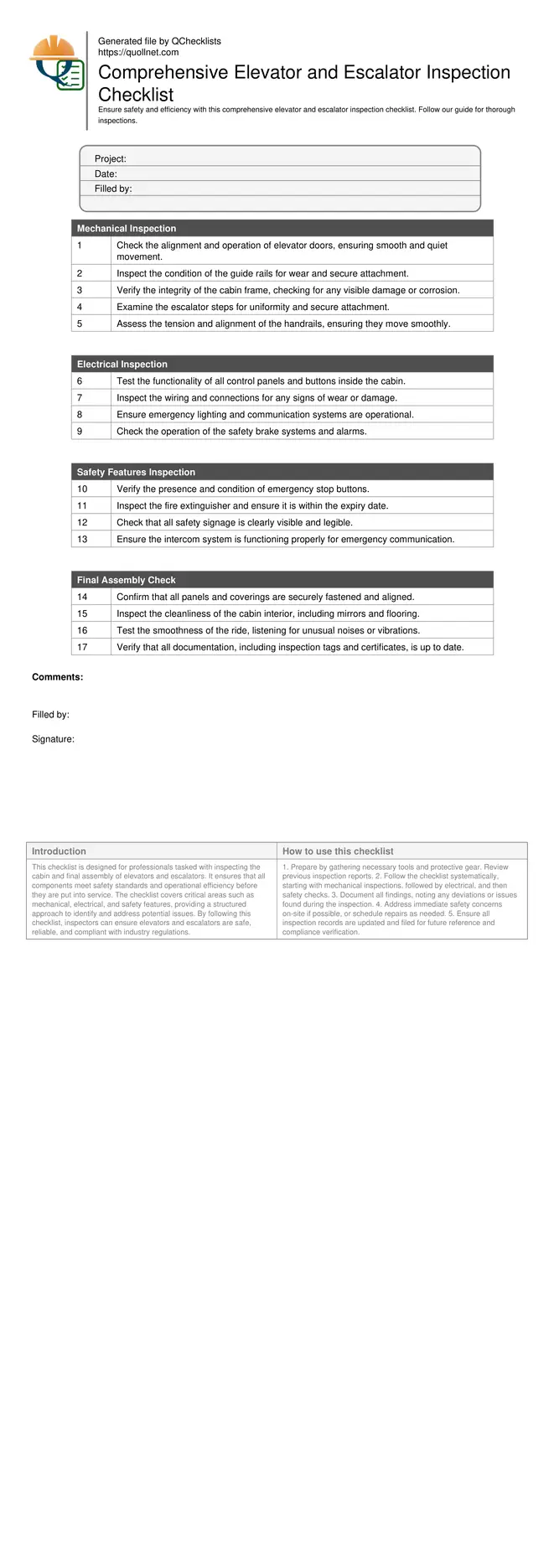
This checklist is designed for professionals tasked with inspecting the cabin and final assembly of elevators and escalators. It ensures that all components meet safety standards and operational efficiency before they are put into service. The checklist covers critical areas such as mechanical, electrical, and safety features, providing a structured approach to identify and address potential issues. By following this checklist, inspectors can ensure elevators and escalators are safe, reliable, and compliant with industry regulations.

  • Ensure safety and compliance: Follow a structured approach to verify all safety components in elevators and escalators.
  • Identify potential issues: Thorough inspection helps in early detection and correction of faults.
  • Boost operational efficiency: Ensure all mechanical and electrical systems function optimally.
  • Enhance reliability: Regular inspections reduce downtime and improve equipment longevity.
  • Facilitate documentation: Maintain comprehensive records for compliance and maintenance history.

Mechanical Inspection

Electrical Inspection

Safety Features Inspection

Final Assembly Check

Importance of Regular Inspections

Regular inspections are crucial in maintaining the safety and efficiency of elevators and escalators. These inspections help in identifying potential issues before they lead to malfunctions or accidents, thus ensuring the safety of users and prolonging the equipment's lifespan.

  • Preventative maintenance reduces downtime.
  • Early detection of faults saves on costly repairs.
  • Ensures compliance with safety regulations.
  • Improves user safety and satisfaction.
  • Enhances operational reliability.

Key Areas to Inspect

During an inspection, focus on mechanical, electrical, and safety components. Each area plays a vital role in the safe operation of the equipment. Mechanical inspections ensure physical components are in good condition, while electrical checks confirm the functionality of control systems. Safety features must be operational to protect users in emergencies.

  • Mechanical: Doors, guide rails, frames.
  • Electrical: Wiring, control panels, lighting.
  • Safety: Stop buttons, fire extinguishers, signage.
  • Documentation: Ensure all records are current.
  • Performance: Evaluate ride quality and noise.

Common Issues and Solutions

Inspectors often encounter issues such as worn-out components, electrical faults, and outdated safety equipment. Addressing these promptly is essential to maintain safety and compliance. Regular updates and maintenance are key to resolving these issues effectively.

  • Replace worn components to prevent failures.
  • Fix faulty wiring to avoid electrical hazards.
  • Update safety equipment regularly.
  • Conduct thorough documentation reviews.
  • Schedule regular maintenance checks.

How to Use This Inspection Checklist

  1. Prepare by gathering necessary tools and protective gear. Review previous inspection reports.
  2. Follow the checklist systematically, starting with mechanical inspections, followed by electrical, and then safety checks.
  3. Document all findings, noting any deviations or issues found during the inspection.
  4. Address immediate safety concerns on-site if possible, or schedule repairs as needed.
  5. Ensure all inspection records are updated and filed for future reference and compliance verification.
Hero image for Comprehensive Elevator and Escalator Inspection Checklist
Start Interactive Checklist
Elevator and Escalator Inspection Checklist

Call to Action


Mateo Gonzalez's photo
AndesRiderMateo
2613
1124
4
15

FAQ

Question: What should I do if I find a safety issue during inspection?

If a safety issue is found, take immediate steps to secure the area and prevent use until the issue is resolved. Document the problem and schedule repairs with a qualified technician.

Question: How often should elevators and escalators be inspected?

The frequency of inspections depends on usage and local regulations, but generally, elevators and escalators should be inspected at least once a year by a certified professional.

Question: What tools are necessary for an elevator and escalator inspection?

Basic tools include a flashlight, multimeter, inspection mirror, and personal protective equipment. Additional specialized tools may be required depending on the specific components being inspected.

Question: How can I ensure compliance with elevator and escalator safety standards?

Ensure compliance by following a comprehensive checklist, keeping up-to-date with regulations, and conducting regular training for inspection personnel.

Question: What are the signs of wear and tear in elevator components?

Signs include unusual noises, vibrations, slow operation, and visible damage or corrosion on mechanical parts. Regular inspections help identify these issues early.

Related Articles

Broader reading and guidance connected to this checklist topic.
Free Safety Functionality Checklist For Tools And Equipment – Download In Excel, Word, Pdf, And Image Formats
F
en
Free Safety Functionality Checklist For Tools And Equipment – Download In Excel, Word, Pdf, And Image Formats
EN
Free Safety Functionality Checklist For Tools And Equipment – Download In Excel, Word, Pdf, And Image Formats

Ensure workplace safety with our comprehensive Safety Functionality of Tools and Equipment Checklist. Download for free in Excel, Word, PDF, and image...

Article 2025-03-13
Scaffolding And Ladder Integrity: Weekly Inspection Checklist For Maximum Safety
S
en
Scaffolding And Ladder Integrity: Weekly Inspection Checklist For Maximum Safety
EN
Scaffolding And Ladder Integrity: Weekly Inspection Checklist For Maximum Safety

Enhance workplace safety with our free, OSHA-compliant scaffolding and ladder inspection checklists. Download customizable templates in PDF, Excel, an...

Article 2025-03-12
Comprehensive Free Weekly Crane And Heavy Machinery Inspection Checklist Templates (pdf, Excel, Word)
C
en
Comprehensive Free Weekly Crane And Heavy Machinery Inspection Checklist Templates (pdf, Excel, Word)
EN
Comprehensive Free Weekly Crane And Heavy Machinery Inspection Checklist Templates (pdf, Excel, Word)

Ensure safety and OSHA compliance with our free, customizable weekly crane and heavy machinery inspection checklist templates. Available in PDF, Excel...

Article 2025-03-12
Free Download: Osha-compliant Construction Safety Signage And Emergency Exit Checklist (pdf, Excel, Word, Image)
F
en
Free Download: Osha-compliant Construction Safety Signage And Emergency Exit Checklist (pdf, Excel, Word, Image)
EN
Free Download: Osha-compliant Construction Safety Signage And Emergency Exit Checklist (pdf, Excel, Word, Image)

Ensure your construction site meets OSHA standards with our free, downloadable safety signage and emergency exit checklist. Available in PDF, Excel, W...

Article 2025-03-13
Comprehensive Guide To Structural Integrity Assessments: Best Practices, Ndt Methods, And Monitoring Tools
C
en
Comprehensive Guide To Structural Integrity Assessments: Best Practices, Ndt Methods, And Monitoring Tools
EN
Comprehensive Guide To Structural Integrity Assessments: Best Practices, Ndt Methods, And Monitoring Tools

Explore best practices, non-destructive testing methods, and monitoring tools for effective structural integrity assessments. Download customizable ch...

Article 2026-03-29

Related Checklists

Keep the workflow moving with nearby templates chosen from similar checklist content.
Hero image for Conveying Equipment Inspection Checklist image
C
construction
Conveying Equipment Inspection Checklist
Construction
Conveying Equipment Inspection Checklist

This checklist is designed to guide inspectors and technicians in thoroughly examining conveying equipment, specifically focusing on embedded items an...

Hero image for Elevator Pit and Machine Room Inspection Checklist image
E
construction
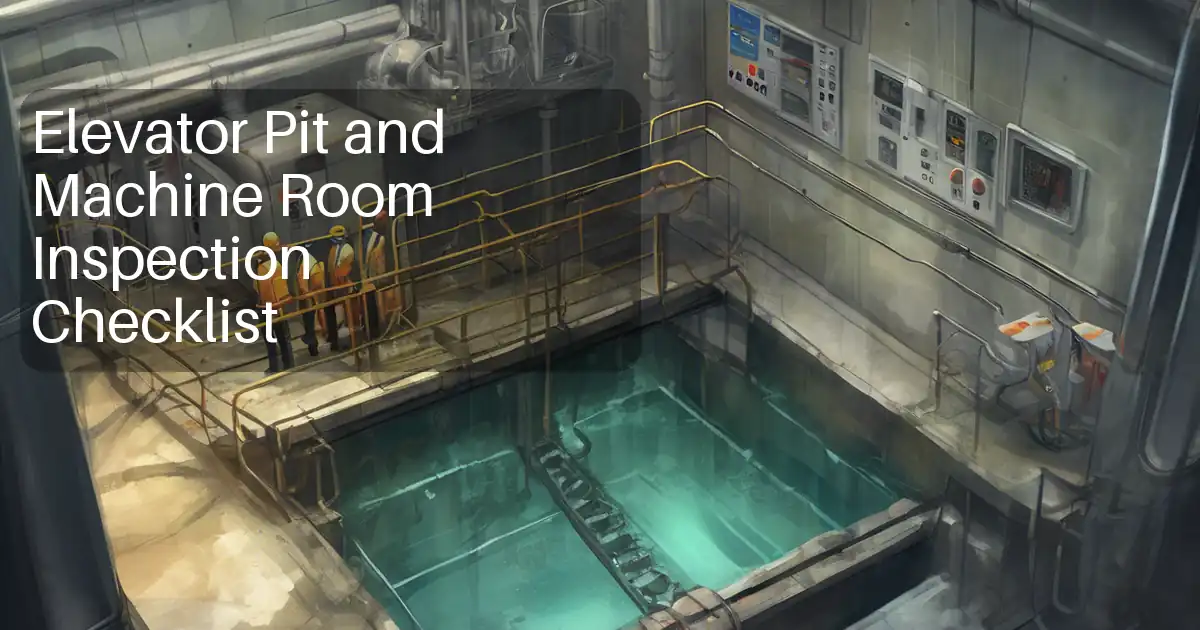
Elevator Pit and Machine Room Inspection Checklist
Construction
Elevator Pit and Machine Room Inspection Checklist

This checklist is designed for professionals tasked with inspecting elevator pits and machine rooms prior to equipment installation. It ensures that a...

Hero image for Mechanical and Electrical First-Fix Inspection Checklist image
M
maintenance
Mechanical and Electrical First-Fix Inspection Checklist
Maintenance
Mechanical and Electrical First-Fix Inspection Checklist

Conducting a thorough inspection of the mechanical and electrical first-fix of conveying equipment is crucial for ensuring operational reliability and...

Elevator and Escalator Dynamic Testing Checklist image
V
maintenance
Elevator and Escalator Dynamic Testing Checklist
Maintenance
Elevator and Escalator Dynamic Testing Checklist

Vertical transportation dynamic testing is a critical process in ensuring the safety and reliability of elevators and escalators. This inspection focu...

Hero image for Comprehensive Glazing and Hardware Inspection Guide image
G
construction
Comprehensive Glazing and Hardware Inspection Guide
Construction
Comprehensive Glazing and Hardware Inspection Guide

This comprehensive checklist is designed to guide professionals through the inspection of glazing and hardware installations. Ensuring that glazing an...