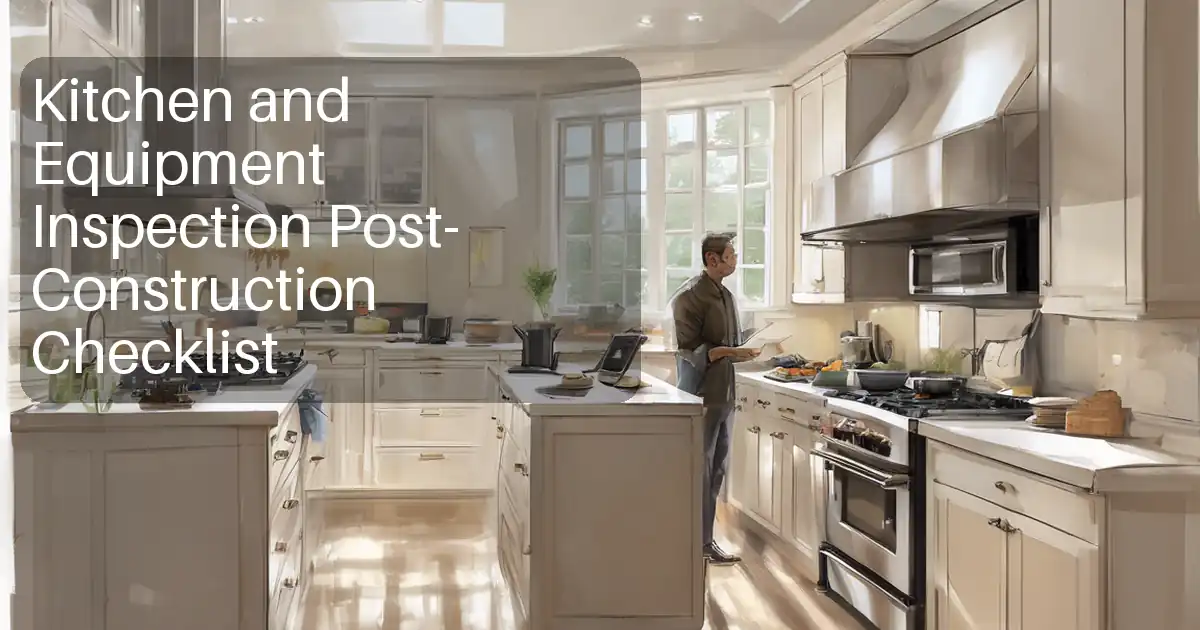
The checklist
General Kitchen Inspection
- Ensure all surfaces are clean and free from construction debris.
- Verify that all lighting fixtures are installed and operational.
- Check that all plumbing fixtures have been installed correctly and are leak-free.
Equipment Functionality
- Test all cooking equipment for proper operation and safety compliance.
- Ensure refrigeration units maintain the correct temperature settings.
- Check dishwashers for leaks and proper washing cycles.
Safety Compliance
- Verify that all fire safety equipment is installed and functional.
- Ensure all electrical outlets and switches are operational and compliant with safety standards.
Design Specifications
- Check that the kitchen layout matches the approved design plans.
- Ensure all cabinetry and countertops are installed as specified.
Final Touches
- Inspect all paintwork for uniformity and finish quality.
- Ensure all signage and labels are correctly placed according to safety guidelines.
Preview the printable checklist
Preview page one below. Open the image or download the PDF for all pages.

At a glance
- Ensure all kitchen equipment functions correctly and is safe to use.
- Verify compliance with design specifications and safety standards.
- Interactive online checklist with tick, comment, and export features secured by QR code.
- Facilitate a smooth final handover by addressing any issues promptly.
Using the Kitchen Inspection Checklist
- Prepare necessary tools such as a flashlight, checklist, notepad, and measuring tape to verify equipment and layout specifications.
- Click the 'Use this checklist' button to launch interactive mode.
- Tick each item online as you complete it.
- Add comments on individual items or the entire form for observations or issues.
- Click 'Share' or 'Download' to download your completed checklist as PDF or Excel.
- Scan the QR code in the exported report to verify authenticity.
Importance of Kitchen Inspection
A comprehensive kitchen inspection post-construction is vital to ensure that all installations are safe, functional, and meet design specifications. This phase helps identify any potential issues that could affect kitchen operations, allowing for timely corrections before use. By conducting a thorough inspection, you can avoid costly repairs and ensure a smooth transition to operational status.
- Identify potential hazards early.
- Ensure compliance with safety standards.
- Prevent future operational disruptions.
Key Elements to Inspect
Inspecting a kitchen involves several key elements, from checking the functionality of equipment to assessing the overall layout. Focus on ensuring that all equipment operates efficiently and that the kitchen design facilitates safe and effective operations. Address any discrepancies immediately to prevent future issues.
- Check equipment functionality and safety.
- Verify adherence to design specifications.
- Ensure efficient kitchen layout.