The checklist
Mechanical Inspection
- Check the alignment and operation of elevator doors, ensuring smooth and quiet movement.
- Inspect the condition of the guide rails for wear and secure attachment.
- Verify the integrity of the cabin frame, checking for any visible damage or corrosion.
- Examine the escalator steps for uniformity and secure attachment.
- Assess the tension and alignment of the handrails, ensuring they move smoothly.
Electrical Inspection
- Test the functionality of all control panels and buttons inside the cabin.
- Inspect the wiring and connections for any signs of wear or damage.
- Ensure emergency lighting and communication systems are operational.
- Check the operation of the safety brake systems and alarms.
Safety Features Inspection
- Verify the presence and condition of emergency stop buttons.
- Inspect the fire extinguisher and ensure it is within the expiry date.
- Check that all safety signage is clearly visible and legible.
- Ensure the intercom system is functioning properly for emergency communication.
Final Assembly Check
- Confirm that all panels and coverings are securely fastened and aligned.
- Inspect the cleanliness of the cabin interior, including mirrors and flooring.
- Test the smoothness of the ride, listening for unusual noises or vibrations.
- Verify that all documentation, including inspection tags and certificates, is up to date.
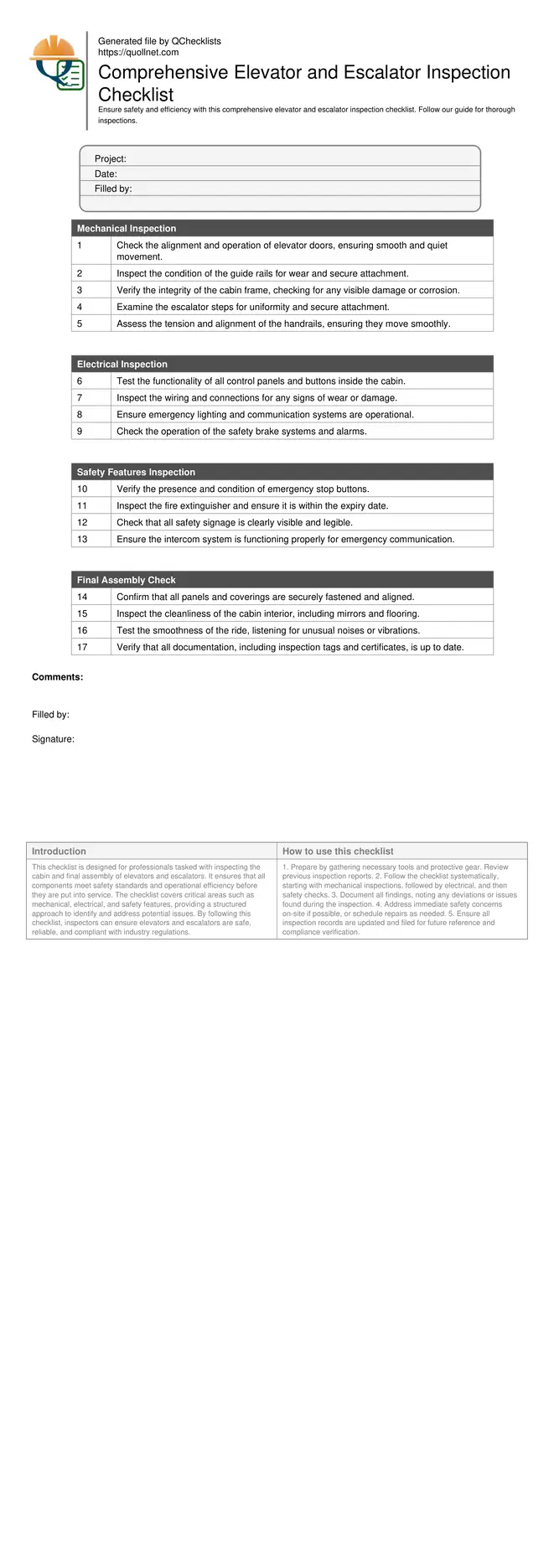
Preview the printable checklist
Preview page one below. Open the image or download the PDF for all pages.
At a glance
- Ensure safety and compliance: Follow a structured approach to verify all safety components in elevators and escalators.
- Identify potential issues: Thorough inspection helps in early detection and correction of faults.
- Boost operational efficiency: Ensure all mechanical and electrical systems function optimally.
- Enhance reliability: Regular inspections reduce downtime and improve equipment longevity.
- Facilitate documentation: Maintain comprehensive records for compliance and maintenance history.
How to Use This Inspection Checklist
- Prepare by gathering necessary tools and protective gear. Review previous inspection reports.
- Follow the checklist systematically, starting with mechanical inspections, followed by electrical, and then safety checks.
- Document all findings, noting any deviations or issues found during the inspection.
- Address immediate safety concerns on-site if possible, or schedule repairs as needed.
- Ensure all inspection records are updated and filed for future reference and compliance verification.
Importance of Regular Inspections
Regular inspections are crucial in maintaining the safety and efficiency of elevators and escalators. These inspections help in identifying potential issues before they lead to malfunctions or accidents, thus ensuring the safety of users and prolonging the equipment's lifespan.
- Preventative maintenance reduces downtime.
- Early detection of faults saves on costly repairs.
- Ensures compliance with safety regulations.
- Improves user safety and satisfaction.
- Enhances operational reliability.
Key Areas to Inspect
During an inspection, focus on mechanical, electrical, and safety components. Each area plays a vital role in the safe operation of the equipment. Mechanical inspections ensure physical components are in good condition, while electrical checks confirm the functionality of control systems. Safety features must be operational to protect users in emergencies.
- Mechanical: Doors, guide rails, frames.
- Electrical: Wiring, control panels, lighting.
- Safety: Stop buttons, fire extinguishers, signage.
- Documentation: Ensure all records are current.
- Performance: Evaluate ride quality and noise.
Common Issues and Solutions
Inspectors often encounter issues such as worn-out components, electrical faults, and outdated safety equipment. Addressing these promptly is essential to maintain safety and compliance. Regular updates and maintenance are key to resolving these issues effectively.
- Replace worn components to prevent failures.
- Fix faulty wiring to avoid electrical hazards.
- Update safety equipment regularly.
- Conduct thorough documentation reviews.
- Schedule regular maintenance checks.