The checklist
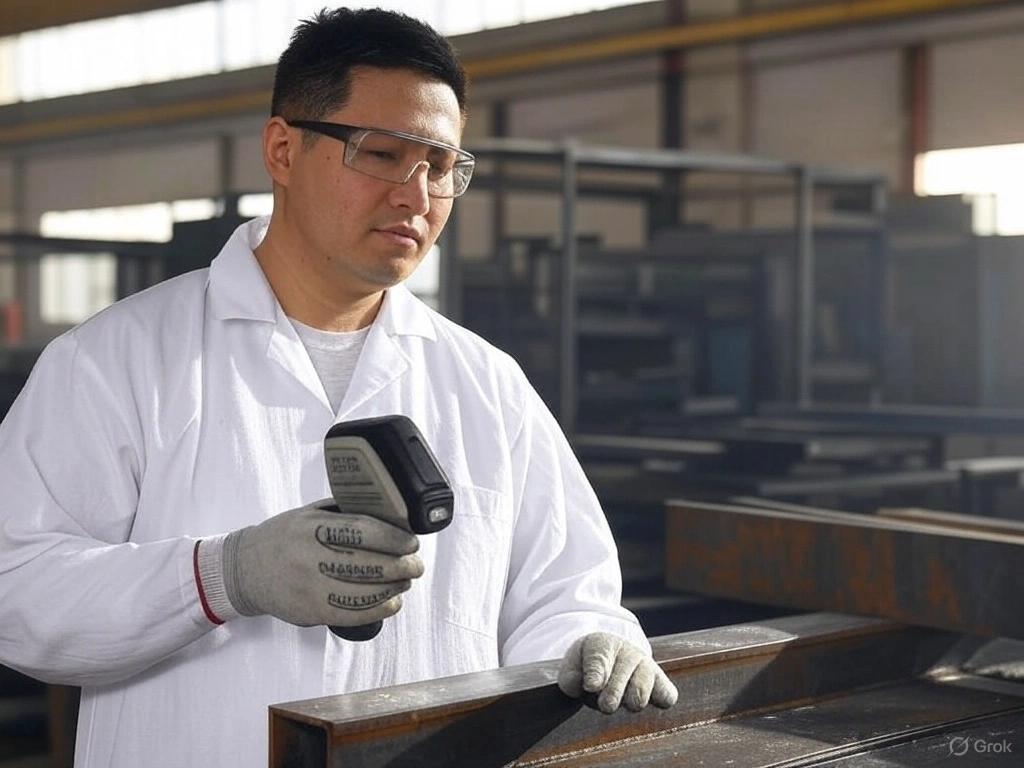
Material Verification
- Check the material specification of lifting anchors to ensure they match project requirements.
- Verify the corrosion resistance of anchors and plates, especially in coastal or industrial environments.
- Inspect embedded plates for any signs of rust or damage before installation.
- Confirm that all anchors and plates have the required certification and documentation.
Installation Checks
- Ensure lifting anchors are correctly positioned according to engineering drawings.
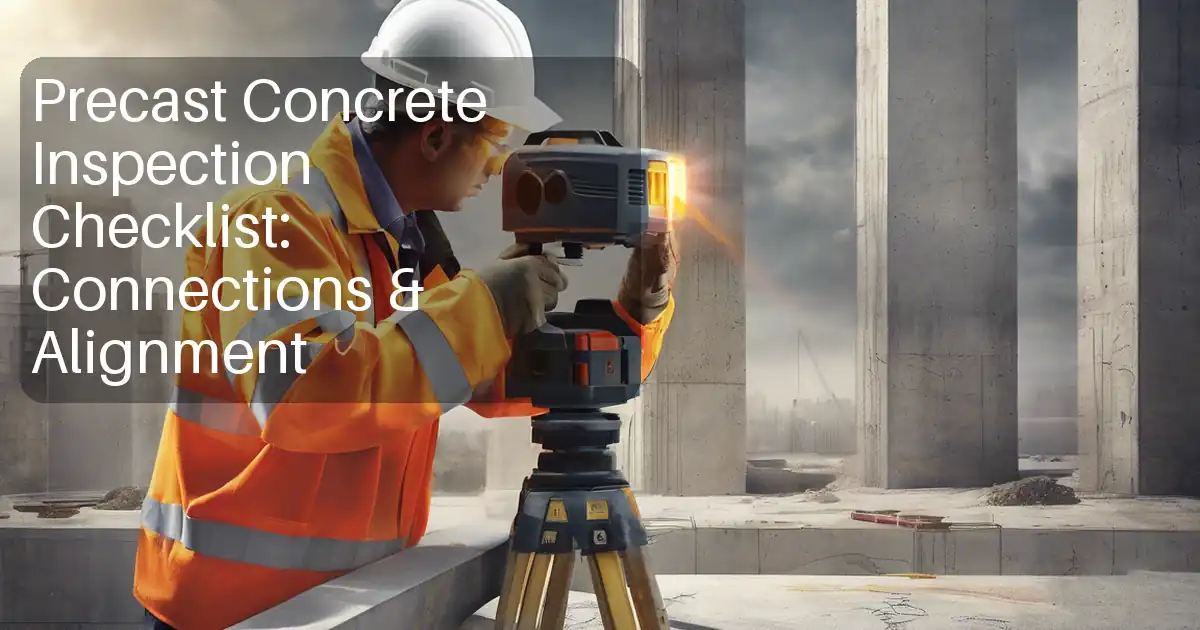
- Verify the alignment of embedded plates using a laser level for precision.
- Check that the spacing between anchors meets the specified requirements.
- Assess the depth of embedded plates to confirm they are flush with the concrete surface.
Safety Compliance
- Review the installation for compliance with local building codes and safety standards.
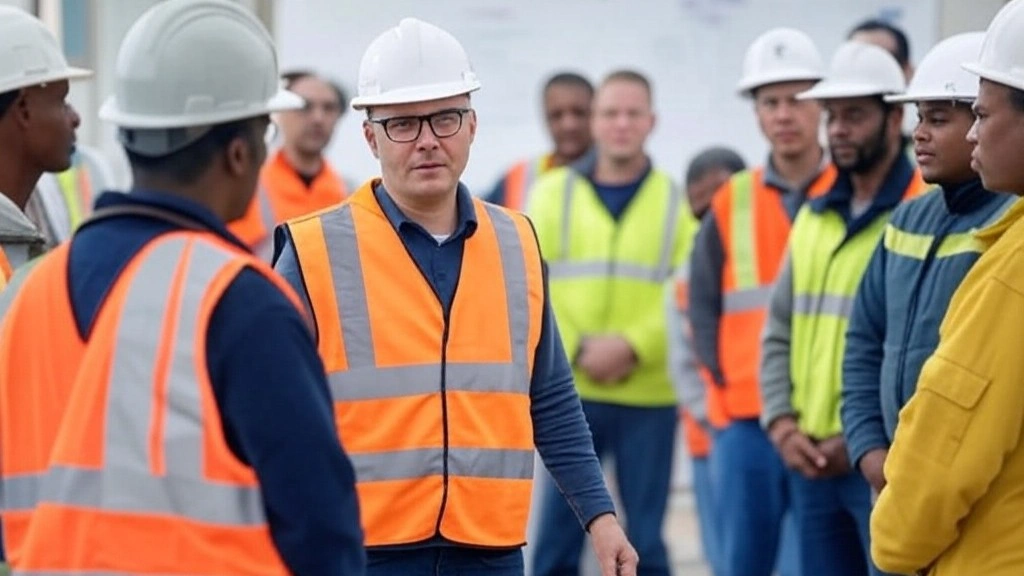
- Ensure all installation personnel are equipped with appropriate personal protective equipment (PPE).
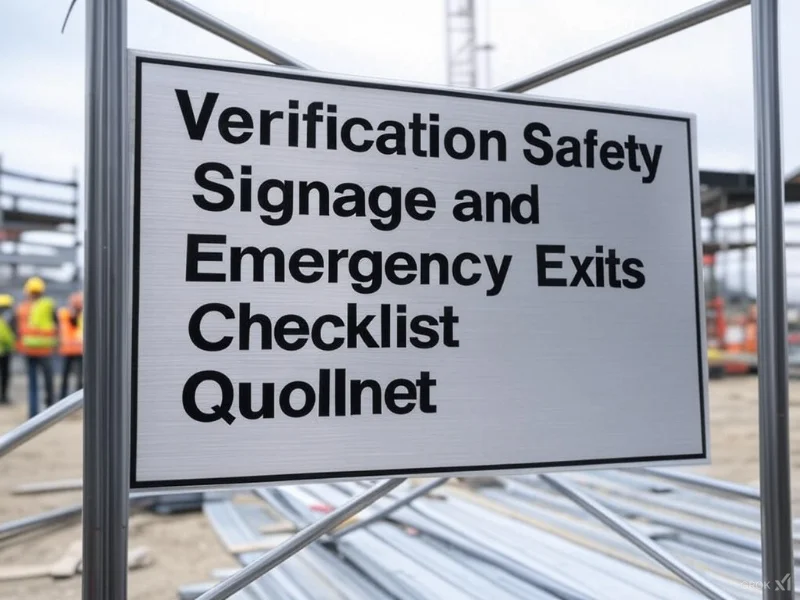
- Confirm that safety barriers and warning signs are in place around the installation area.
- Verify the load capacities of anchors to ensure they are not exceeded.
Documentation and Reporting
- Document all inspection findings with photographic evidence where necessary.
- Compile a report of inspection results, noting any discrepancies or issues found.
- Ensure all reports are signed off by the responsible inspector and stored for future reference.
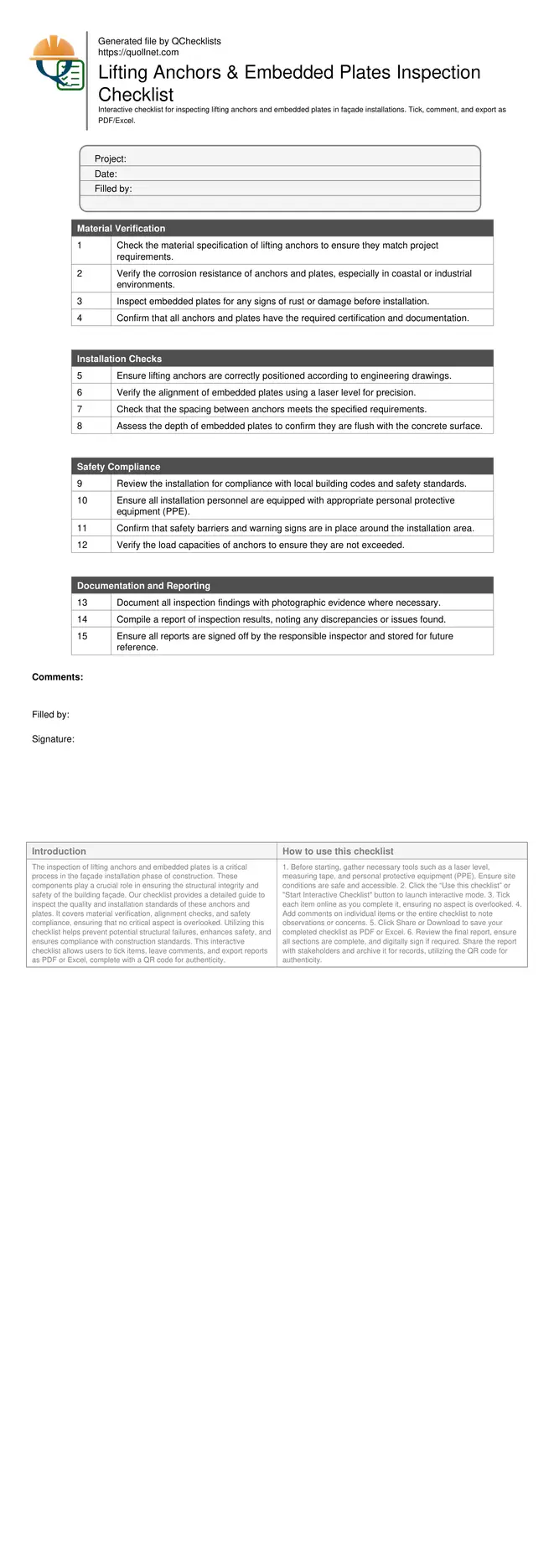
Preview the printable checklist
Preview page one below. Open the image or download the PDF for all pages.
At a glance
- Ensure the structural integrity and safety of façade installations through thorough inspections.
- Prevent potential structural failures by verifying quality and installation standards.
- Interactive online checklist with tick, comment, and export features secured by QR code.
- Facilitate compliance with construction standards for anchors and plates.
How to Use the Lifting Anchors and Plates Inspection Checklist
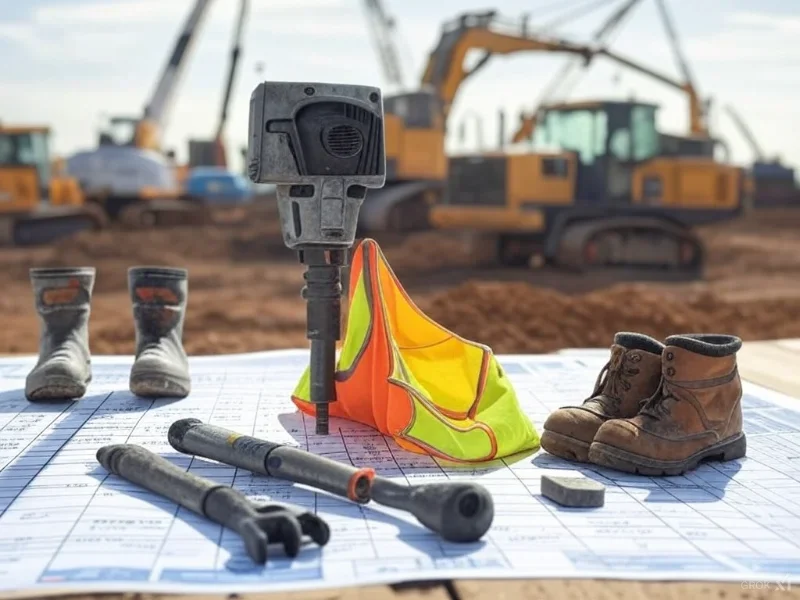
- Before starting, gather necessary tools such as a laser level, measuring tape, and personal protective equipment (PPE). Ensure site conditions are safe and accessible.
- Click the “Use this checklist” or "Start Interactive Checklist" button to launch interactive mode.
- Tick each item online as you complete it, ensuring no aspect is overlooked.
- Add comments on individual items or the entire checklist to note observations or concerns.
- Click Share or Download to save your completed checklist as PDF or Excel.
- Review the final report, ensure all sections are complete, and digitally sign if required. Share the report with stakeholders and archive it for records, utilizing the QR code for authenticity.
Importance of Material Verification
Material verification is a foundational step in ensuring that lifting anchors and embedded plates meet the necessary quality standards for façade installations. It involves checking the material specifications, corrosion resistance, and physical condition of the components. These checks are crucial, especially in environments prone to corrosion or where high structural loads are expected.
- Ensures materials meet project specifications.
- Prevents premature failure due to corrosion.
- Confirms the presence of necessary certifications.
- Identifies potential defects before installation.
Ensuring Proper Installation
Proper installation of lifting anchors and embedded plates is vital for the stability and safety of the façade. This involves precise positioning, alignment, and spacing checks to ensure the components function as intended. Inadequate installation can lead to structural failures, posing significant safety risks.
- Aligns with engineering drawings for accuracy.
- Ensures precise spacing and alignment.
- Verifies depth and flush installation with surfaces.
- Prevents installation-related structural issues.
Adhering to Safety Compliance
Safety compliance is non-negotiable in construction. This involves ensuring that all installation activities adhere to local building codes and safety standards, and that personnel are equipped with the necessary protective gear. Safety measures mitigate risks associated with the installation process.
- Prevents safety hazards on-site.
- Ensures compliance with local regulations.
- Protects personnel with appropriate PPE.
- Secures the worksite with barriers and signs.