Protect Open Pile Heads: Clean, Dry, and Cap Checklist
Definition: Protect open pile heads using this field-ready checklist for contractors and inspectors, ensuring clean, dry, capped conditions until permanent capping, with no long-term storage or deterioration risks.
- Cap and cover pile heads to exclude water, debris, contamination.
- Keep surfaces clean and dry for reliable bonding and capping.
- Practical tools, acceptance cues, and evidence capture at each step.
- Interactive, commentable, export, QR code for authenticated records.
Protect open pile heads is a critical control that keeps exposed pile tops clean, dry, and ready for capping. This checklist focuses on short-term pile head protection—often called pile head protection, temporary pile head cover, and pile cap preparation—between driving/trimming and permanent capping. You will cap, cover, and maintain dryness, while explicitly excluding long-term storage scenarios that demand separate, engineered solutions. By preventing rain ingress, soil splash, laitance loss, corrosion initiation, and oil or slurry contamination, you reduce remedial chipping, cutbacks, and schedule risk. The outcome is consistent, capping-ready pile heads with verifiable evidence of condition and protection. Use the structured steps to select materials, install caps and covers, manage cleanliness and dryness, and document compliance per approved project specifications and authority requirements. Start the interactive mode to tick tasks, add photos and comments, and export your records to PDF/Excel with a secure QR link for verification.
- This checklist ensures exposed pile heads are promptly capped and covered, kept dry and clean, and protected from rain, debris, and contamination. Clear acceptance cues, photos, and measurements support quick approvals and minimize rework before permanent capping proceeds.
- The workflow standardizes materials, installation, inspection, and documentation so every pile head reaches capping in a verifiable state. Crews get practical tools and tolerances, while supervisors gain reliable evidence to confirm cleanliness, dryness, and readiness without guesswork or delays.
- Interactive online checklist with tick, comment, and export features secured by QR code.
- Applying these steps reduces deterioration, laitance loss, corrosion initiation, and contamination that undermine bond and bearing at the cap interface. The process also clarifies responsibilities, accelerates sign-off, and limits disputes by capturing time-stamped, geotagged photos and material traceability.
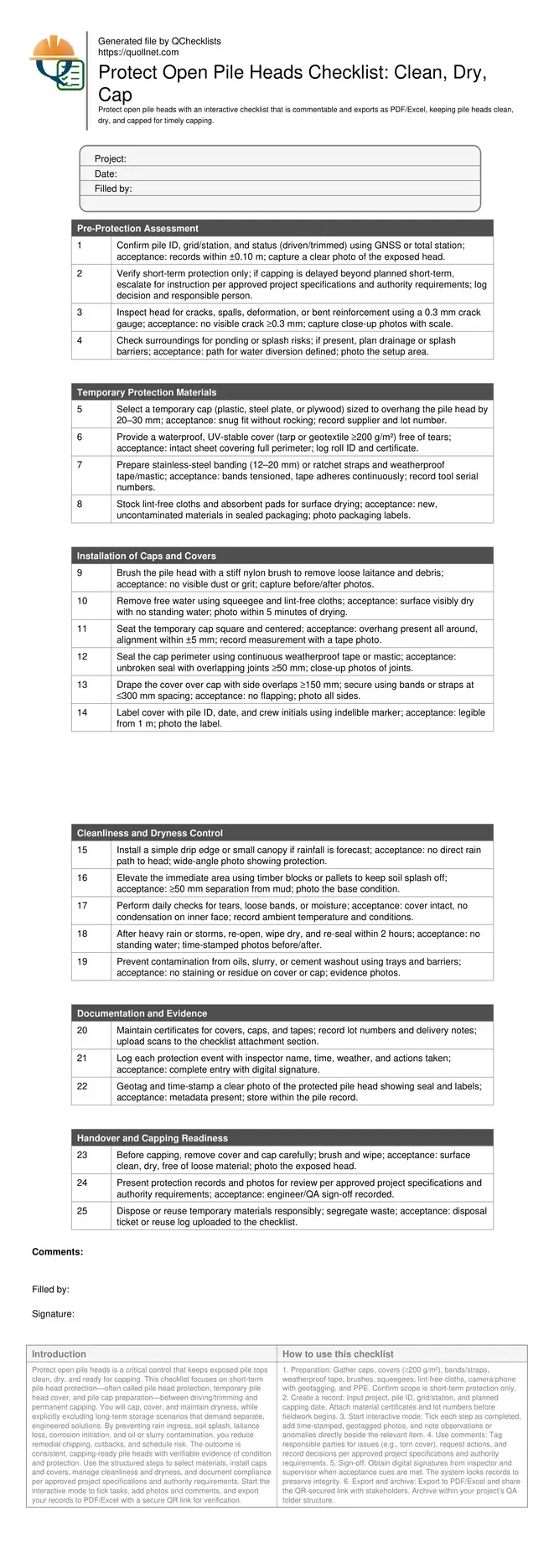
Pre-Protection Assessment
Temporary Protection Materials
Installation of Caps and Covers
Cleanliness and Dryness Control
Documentation and Evidence
Handover and Capping Readiness
Why protecting open pile heads matters
Open pile heads are vulnerable to rain, splash, dust, and site contaminants that quickly undermine bond and bearing at the cap interface. Moisture ingress softens laitance, corrosion can initiate on exposed steel, and debris embeds into the surface—each leading to extra trimming, delayed capping, or compromised performance. Short-term protection is a low-cost, high-impact control: cap the head, cover it, and keep it clean and dry until permanent capping proceeds. This checklist standardizes that process with practical tools, acceptance cues, and evidence capture, so crews act consistently and supervisors sign off confidently. It deliberately excludes long-term storage; if delays extend beyond short-term intent, escalate for engineered measures per approved project specifications and authority requirements. By focusing on prevention over repair, you’ll reduce rework, protect programme, and arrive at capping with verifiable quality that stands up to scrutiny.
- Moisture and debris drive rework and delays.
- Short-term controls beat after-the-fact repairs.
- Evidence-based steps speed engineer approvals.
- Escalate if delays exceed short-term intent.
Materials, methods, and acceptance cues on site
Successful protection pairs fit-for-purpose materials with clear acceptance criteria. Temporary caps should sit flat with slight overhang and a continuous weather seal. Waterproof, UV-stable covers prevent direct wetting while allowing robust strapping against wind. Cleanliness starts with brushing loose laitance and ends with a visibly dry surface that sheds water. Daily checks verify integrity and dryness; storm events trigger immediate re-inspection, drying, and re-sealing. Acceptance cues are practical and observable: no free water, no torn covers, secure bands, and labeled identification visible from one metre. Document each action—photos, lot numbers, signatures—so the protection story is auditable. This approach keeps the scope tight: short-term conditions only, targeting reliable capping readiness without over-engineering temporary storage solutions.
- Cap overhang present, seal continuous.
- Covers intact; bands tight and secure.
- Surface visibly dry, no standing water.
- Labels legible; records complete and signed.
Field execution tips and common pitfalls
Most issues arise from rushed installation and weak documentation. Take the extra minute to brush thoroughly and wipe dry before sealing. Avoid makeshift covers that tear in wind; use rated materials with traceability. Label every protected head immediately to prevent mix-ups. In wet seasons, add simple drip edges or small canopies to block vertical rainfall. After storms, re-open, dry, and re-seal quickly—time-stamped photos prove diligence. Keep the scope aligned: this is short-term protection only. If capping slips beyond short-term expectations, pause and seek direction per approved project specifications and authority requirements. Finally, centralize your evidence: geotag photos, tool serials, and material lots so the engineer can sign off without site revisits.
- Brush and dry before sealing every time.
- Use rated covers; avoid tear-prone tarps.
- Label immediately to prevent pile ID errors.
- Reopen and re-seal promptly after storms.
- Centralize photos and traceability records.
How to Use This Interactive Checklist
- Preparation: Gather caps, covers (≥200 g/m²), bands/straps, weatherproof tape, brushes, squeegees, lint-free cloths, camera/phone with geotagging, and PPE. Confirm scope is short-term protection only.
- Create a record: Input project, pile ID, grid/station, and planned capping date. Attach material certificates and lot numbers before fieldwork begins.
- Start interactive mode: Tick each step as completed, add time-stamped, geotagged photos, and note observations or anomalies directly beside the relevant item.
- Use comments: Tag responsible parties for issues (e.g., torn cover), request actions, and record decisions per approved project specifications and authority requirements.
- Sign-off: Obtain digital signatures from inspector and supervisor when acceptance cues are met. The system locks records to preserve integrity.
- Export and archive: Export to PDF/Excel and share the QR-secured link with stakeholders. Archive within your project’s QA folder structure.
Call to Action
- Start Checklist Tick off tasks, leave comments on items or the whole form, and export your completed report to PDF or Excel—with a built-in QR code for authenticity.
- Download Excel - Open Pile Head Protection Checklist
- Download PDF - Open Pile Head Protection Checklist
- View Image - Open Pile Head Protection Checklist
Cite & Embed
“Open Pile Head Protection Checklist by Quollnet”
with a link to
this source page.

FAQ
Question: How long can a temporary cover remain on an open pile head?
Question: What materials are suitable for temporary capping and covering?
Question: How do I ensure the pile head stays dry in wet conditions?
Question: What evidence should I capture for QA sign-off?
Related Articles
Broader reading and guidance connected to this checklist topic.


Download Excel Format Snag List

Master Construction Project Cashflow With Cashflowpot

How To Create Your First Sang In 4 Easy Steps

Related Checklists
Keep the workflow moving with nearby templates chosen from similar checklist content.