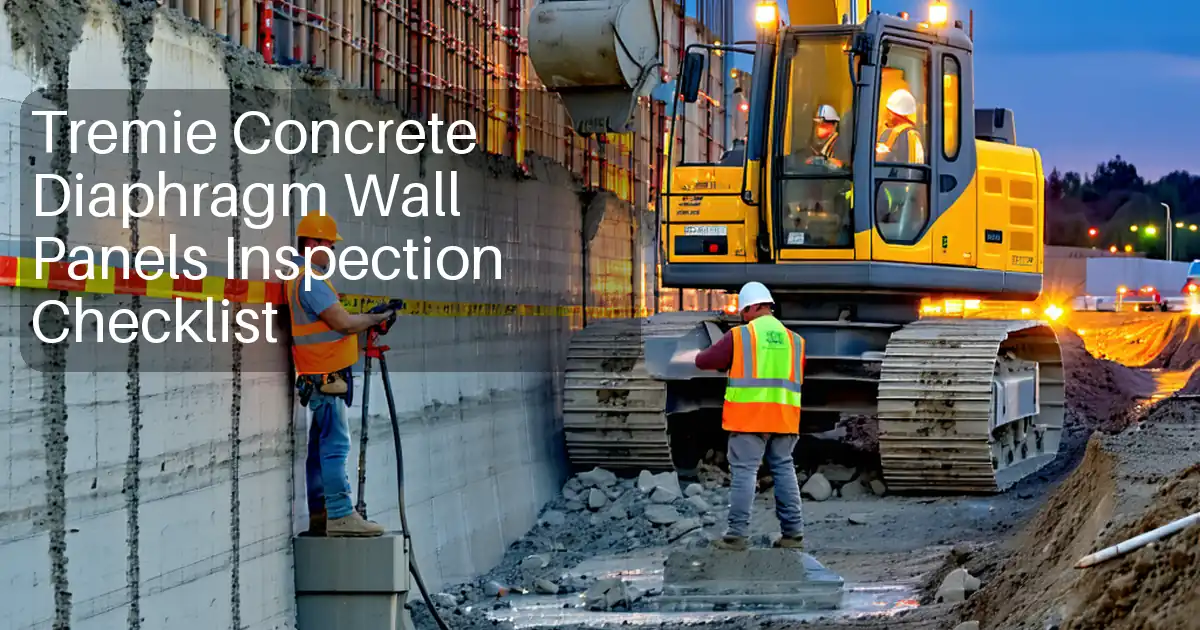
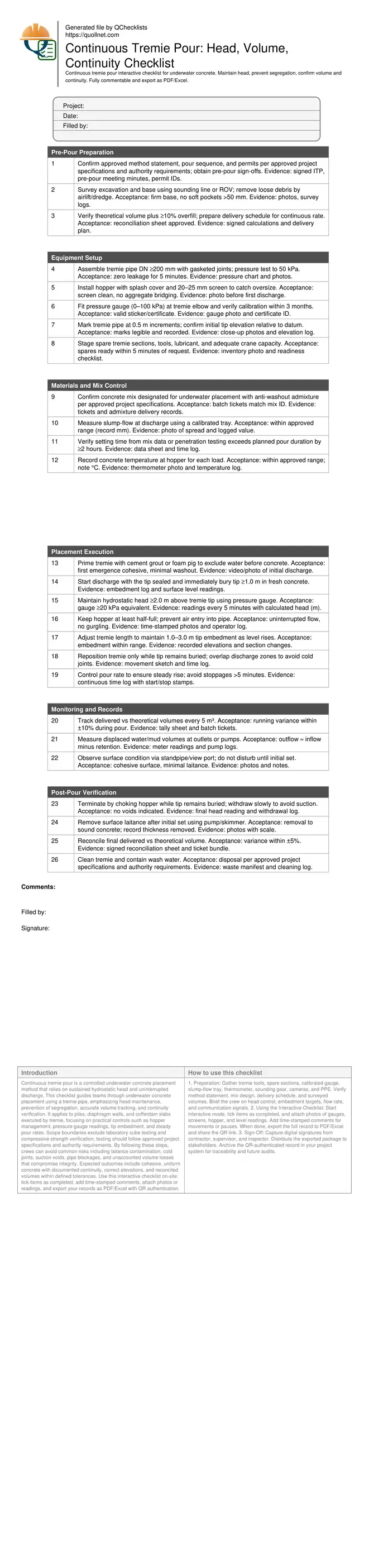
Continuous Tremie Pour: Head, Volume, Continuity Checklist
Definition: Continuous tremie pour checklist for underwater concrete crews, detailing head control, anti-segregation practices, volume reconciliation, and continuity monitoring to deliver uniform, defect-free placements in cofferdams, piles, and diaphragm walls.
- Maintain hydrostatic head and tip embedment to prevent washout and voids.
- Keep flow continuous, hopper charged, and tremie submerged to avoid segregation.
- Reconcile delivered versus theoretical volumes to confirm element continuity.
- Interactive, commentable checklist with export and QR code verification.
Continuous tremie pour is a controlled underwater concrete placement method that relies on sustained hydrostatic head and uninterrupted discharge. This checklist guides teams through underwater concrete placement using a tremie pipe, emphasizing head maintenance, prevention of segregation, accurate volume tracking, and continuity verification. It applies to piles, diaphragm walls, and cofferdam slabs executed by tremie, focusing on practical controls such as hopper management, pressure-gauge readings, tip embedment, and steady pour rates. Scope boundaries exclude laboratory cube testing and compressive strength verification; testing should follow approved project specifications and authority requirements. By following these steps, crews can avoid common risks including laitance contamination, cold joints, suction voids, pipe blockages, and unaccounted volume losses that compromise integrity. Expected outcomes include cohesive, uniform concrete with documented continuity, correct elevations, and reconciled volumes within defined tolerances. Use this interactive checklist on-site: tick items as completed, add time-stamped comments, attach photos or readings, and export your records as PDF/Excel with QR authentication.
- Control hydrostatic head and tip embedment to keep the tremie outlet submerged at all times. This prevents washout and segregation, delivering a dense, uniform mass and avoiding suction when sections are added or withdrawn. Acceptance cues include stable gauge readings and continuous rise levels.
- Confirm continuity by matching delivered concrete against theoretical volumes, tracking displaced water, and logging surface level rise. When your running variance stays within agreed tolerances and no breaks occur, you verify element integrity without intrusive rework or delays to follow-on operations.
- Interactive online checklist with tick, comment, and export features secured by QR code. Supervisors, inspectors, and contractors can collaborate in real time, attach evidence like photos and gauge logs, and produce a sign-off package that is traceable, auditable, and easy to archive.
Pre-Pour Preparation
Equipment Setup
Materials and Mix Control
Placement Execution
Monitoring and Records
Post-Pour Verification
Maintain Hydrostatic Head and Tip Embedment
Sustained hydrostatic head keeps the tremie outlet submerged, preventing washout and suction that can pull voids into the concrete mass. Use a calibrated pressure gauge at the tremie elbow to infer head in metres and log readings at set intervals. Combine gauge data with measured surface levels to confirm the tip remains buried within the fresh concrete. Maintain 1.0–3.0 m embedment while keeping the hopper charged to avoid air ingestion. When extending or shortening sections, plan ahead so adjustments occur without exposing the outlet. If head begins to drop, increase feed immediately or pause movements until levels recover. These controls directly reduce laitance, segregation, and cold joint risks. Acceptance cues are a steady surface rise, stable gauge readings, quiet flow without gurgling, and no sudden level drops during repositioning.
- Gauge readings logged every 5 minutes with calculated head.
- Tip embedment consistently between 1.0–3.0 m.
- Hopper at least half-full during discharge.
- No audible gurgling or cavitation at pipe.
- Surface level shows steady, uninterrupted rise.
Prevent Segregation and Keep Flow Continuous
Segregation underwater is controlled by protecting the flow stream and avoiding turbulence. Prime the tremie to exclude water before the first concrete. Keep the hopper screened and clean, maintain a smooth delivery rate, and avoid lateral pipe movements unless the tip is well buried. Any interruption that introduces air or allows the outlet to emerge can cause washout, laitance accumulation, and weak zones. Plan truck sequencing so arrival intervals sustain the target discharge rate with contingency capacity staged nearby. Where you must reposition, overlap the discharge zones and confirm embedment before advancing. Document every start/stop, movement, and section change to demonstrate continuous placement. When in doubt, increase feed rather than lifting the pipe.
- Prime tremie; exclude water before concrete.
- Avoid movements unless the tip is buried.
- Sequence trucks to prevent delivery gaps.
- Keep screen clean; prevent aggregate bridging.
- Document all movements and pauses.
Confirm Volumes and Verify Continuity
Volume reconciliation and continuity verification are essential acceptance checks for a tremie pour. Calculate theoretical volume from surveyed dimensions, then compare against delivered volumes using batch tickets and running tallies every few cubic metres. Cross-check by monitoring displaced water or mud at outlets and measuring the rise of the concrete surface at known locations. During the pour, aim for a running variance within agreed tolerances; large deviations may indicate loss of concrete into voids or measurement errors. After completion, reconcile final variance within a tighter band and obtain sign-off. Continuity is evidenced by uninterrupted logs, consistent level rises, and absence of air ingestion events. These records, combined with photographs and instrument readings, form your auditable completion file.
- Running variance within ±10% during placement.
- Final reconciliation within ±5% of theoretical.
- Displaced water/mud corroborates inflow volumes.
- Level measurements match expected rise profile.
- Logs show no prolonged interruptions.
How to Use This Tremie Pour Checklist
- Preparation: Gather tremie tools, spare sections, calibrated gauge, slump-flow tray, thermometer, sounding gear, cameras, and PPE. Verify method statement, mix design, delivery schedule, and surveyed volumes. Brief the crew on head control, embedment targets, flow rate, and communication signals.
- Using the Interactive Checklist: Start interactive mode, tick items as completed, and attach photos of gauges, screens, hopper, and level readings. Add time-stamped comments for movements or pauses. When done, export the full record to PDF/Excel and share the QR link.
- Sign-Off: Capture digital signatures from contractor, supervisor, and inspector. Distribute the exported package to stakeholders. Archive the QR-authenticated record in your project system for traceability and future audits.
Call to Action
- Start Checklist Tick off tasks, leave comments on items or the whole form, and export your completed report to PDF or Excel—with a built-in QR code for authenticity.
- Download Excel - Continuous Tremie Pour Execution
- Download PDF - Continuous Tremie Pour Execution
- View Image - Continuous Tremie Pour Execution
Cite & Embed
“Continuous Tremie Pour Execution by Quollnet”
with a link to
this source page.
FAQ
Question: What minimum hydrostatic head and tip embedment should be maintained?
Question: What should I do if flow stops or the head is lost during the pour?
Question: How do I confirm volume accuracy and continuity without intrusive testing?
Question: What tremie diameter and discharge rate should I plan for?
Question: Are trial mixes or cube tests part of this checklist?
Related Articles
Broader reading and guidance connected to this checklist topic.

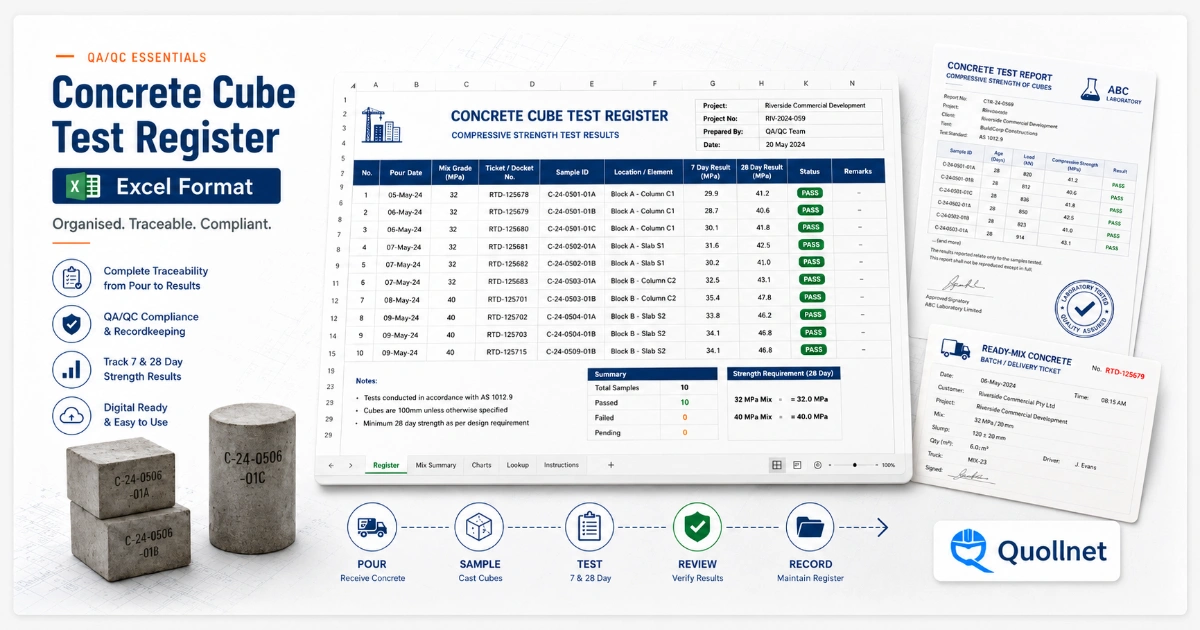
Concrete Cube Test Register Excel Format – Pdf & Excel Sample
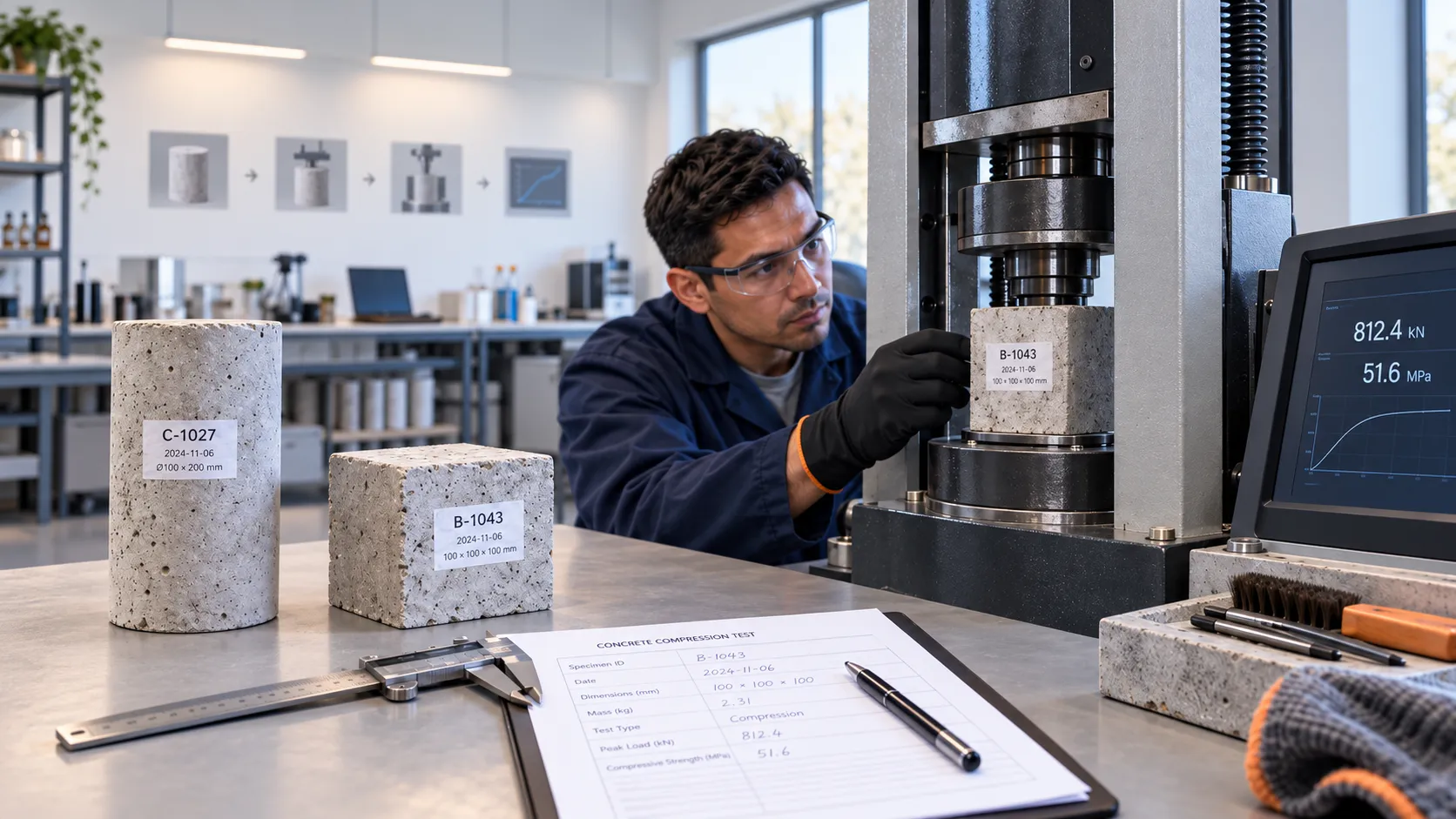
How To Perform a Concrete Compressive Strength Test: Cubes & Cylinders

Concrete Compressive Strength Acceptance Criteria: Aci 318-25 Vs En 206

Related Checklists
Keep the workflow moving with nearby templates chosen from similar checklist content.