QAUTH-MAIN
Centralized Auth, Units, Roles, and Permissions for Multi-App Platforms
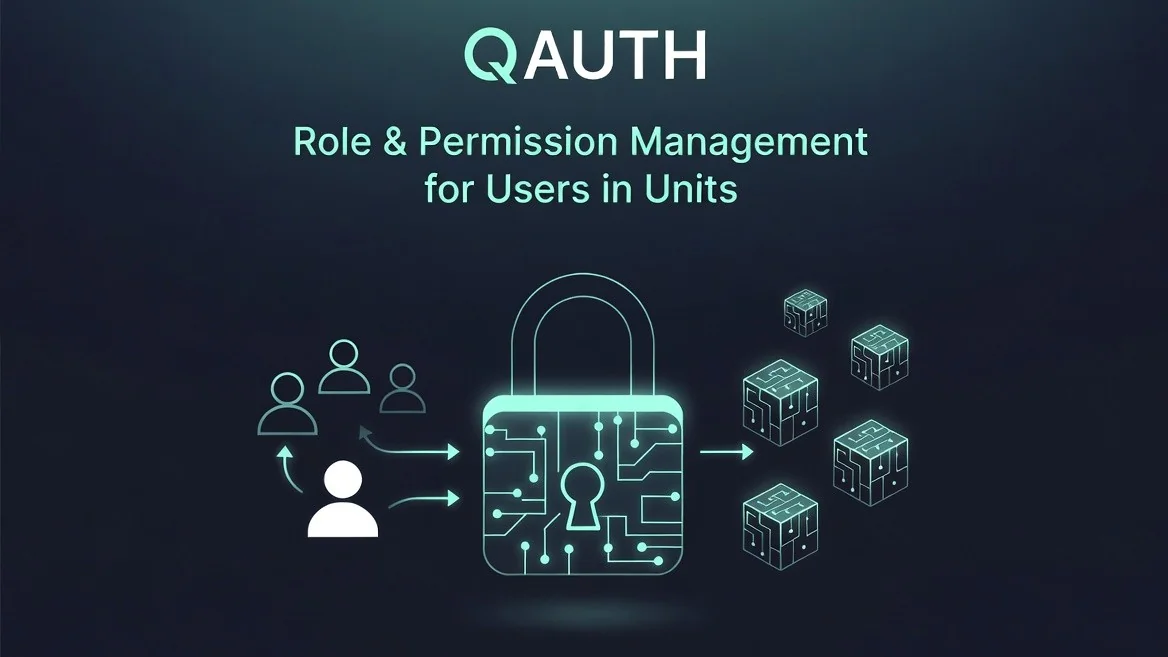
QAuth is a centralized authentication and access-management API for platforms that operate across multiple apps, teams, or co...

Powerful Features
Designed to enhance your productivity and experience
Centralized User Authentication
Register users, verify email, log in, reset passwords, resend codes, and manage user identity from one authentication service instead of rebuilding auth in every app.
Client App Management
Register and manage client applications, configure frontend and backend URLs, control signup modes, and expose public landing data for connected apps.
App-Level User Access
Allow one user to belong to multiple applications with app-specific membership records and app roles.
Unit Management
Create and manage units such as companies, teams, departments, or workspaces, and link them to one or more client applications.
Unit-Scoped Roles and Permissions
Define roles and permissions per unit and per app so each organization can have its own access structure.
Unit Tokens with Embedded Access Data
Generate unit-specific JWTs that include unit roles, permissions, and key unit metadata for downstream authorization.
Secure JWT Integration
Issue signed user and unit tokens, support refresh flows, and validate access per client application.
Invites and Member Lifecycle
Invite users, add existing users to units, activate or deactivate members, remove members, and manage controlled joining flows.
Webhook-Based Sync
Notify connected applications when users, units, roles, or permissions change so access can be refreshed immediately.
Public App Directory Support
Expose public app listings and public landing data for app directories, selectors, and marketing pages.
About QAUTH-MAIN
QAuth is a centralized authentication and access-management API for platforms that operate across multiple apps, teams, or companies. It handles user authentication, app-level access, unit creation and membership, unit-scoped roles and permissions, secure JWT token issuance, and app synchronization through webhooks. With QAuth, your applications can rely on one source of truth for identity, permissions, and organizational access.
Get StartedFrequently Asked Questions
Find answers to common questions about QAUTH-MAIN